What Film Should I Use? Film Stocks by Situation
27 pages in this section
The short answer
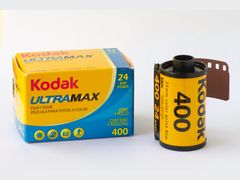
If you're not sure what film to use, buy an ISO 400 color negative film such as Kodak UltraMax 400, which cost $9.99 a roll at CineStill on October 28, 2026.
ISO 400 handles sun, shade, overcast days and bright interiors, suits point-and-shoot cameras, and nearly every lab can develop it. From there, pick by situation: Gold 200 for sunny days, Portra 400 for people, Ektar 100 for landscapes, CineStill 800T for night and HP5 Plus for black and white.
Choosing a film stock comes down to three questions: how much light you'll have, what ISO your camera can use, and which lab will develop the roll. The look (warm or cool color, fine or visible grain, soft or punchy black and white) comes after that. The table below matches 16 common situations to a 35mm film you can buy from US camera stores, with prices checked October 28, 2026.
Camera Dojo has not tested these films. The picks follow manufacturer descriptions from Kodak, Harman and CineStill, and advice from labs such as Kubus Photo in Brooklyn, editorial reviews and photographer forums. Where those sources disagree, this page says so.
Start here
- 01
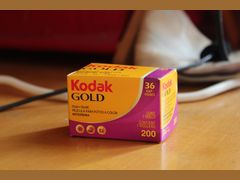
The first-roll decision for most people: Gold 200 ($8.49) for daylight, UltraMax 400 ($9.99) for mixed light and point-and-shoots, at CineStill prices checked October 28, 2026.
- 02
What the number on the box means, why ISO 400 is the usual starting point, and how to match film speed to your light and camera.
- 03
The portrait film, whose Eastman Kodak counterpart is now called Ektacolor Pro 400, and whether it's worth about twice the price of Gold.
- 04
The usual pick for night and artificial light: tungsten balance, the halation glow, and how to shoot it in daylight with an 85 filter or at ISO 400 to 500.
- 05
HP5 Plus, Tri-X, Kentmere Pan 400, XP2 Super and Delta 3200 compared, including the one any color lab can develop.
- 06
US stores that ship fresh film, and what they charge.
What film should I use? Pick by situation
Find the row that matches what you'll shoot most on the roll. If the light will change during the day, choose for the darkest part of it. Prices are for 35mm rolls.
If two rows apply, the ISO 400 color film in the first row is the safe compromise: it covers the widest range of light and works in nearly every camera that takes 35mm film.
| Situation | Film to buy | ISO | Why | Price |
|---|---|---|---|---|
| Not sure, first roll, mixed light | Kodak UltraMax 400 or Fujifilm 400 | 400 | Handles sun, shade, overcast days and bright interiors, and gives 30 to 60 more minutes of light at dusk than ISO 200, says Kubus Photo | $9.99 UltraMax at CineStill; $11.49 Fujifilm 400 at Glazer's |
| Point-and-shoot or fixed-setting reusable camera | Any ISO 400 color negative, such as UltraMax 400 | 400 | Kodak's reusable M35 and Ektar H35 are designed around ISO 400, and some simple point-and-shoots recommend ISO 100 to 400 | $9.99 at CineStill; $12.99 for a Walgreens UltraMax roll (exposures not listed) |
| Sunny days, beach, travel in good light | Kodak Gold 200 or Kodak Kodacolor 200 | 200 | Kodak's daylight film for everyday shooting; Kodak says Gold tolerates 2 stops of underexposure and 3 of overexposure | $8.49 Gold and $8.99 Kodacolor at CineStill; $9.49 Gold at District Camera |
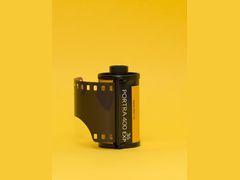
| Portraits, weddings, people | Kodak Portra 400 or Kodak Ektacolor Pro 400 | 400 | Kodak Alaris pitches Portra 400 for skin tones and saturation over a wide range of light | $18.49 Portra and $16.95 Ektacolor Pro 400, both at District Camera |
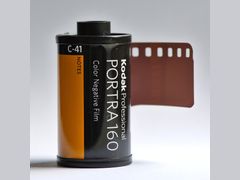
| Portraits in bright light | Kodak Portra 160 or Ektacolor Pro 160 | 160 | Kodak calls Ektacolor Pro 160 ultra-fine grain with exceptionally natural skin tones | $75.95 for 5 Portra 160 rolls at CineStill, about $15.19 each |
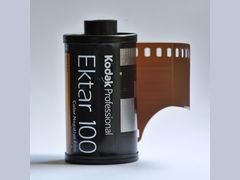
| Landscapes and travel, saturated color | Kodak Ektar 100 | 100 | Kodak calls it the finest-grain color negative film available; Fstoppers says it can render skin slightly warm or red | $15.49 at CineStill |
| Indoors, parties and events without flash | Kodak Portra 800 or Lomography 800 | 800 | Kodak Alaris says Portra 800 has best-in-class underexposure latitude and can be pushed to 1600 | $19.49 Portra 800 at CineStill; $57.90 for 3 Lomography 800 at Glazer's, $19.30 each |
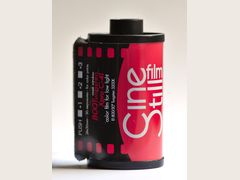
| Night streets, neon, tungsten light | CineStill 800T | 800 | Tungsten balanced, safe for C-41 labs, a slight halation glow around lights, and can be pushed to 3200 | $17.99 at CineStill |
| Cinematic daylight color | CineStill 400D, or Kodak Vision3 250D if your lab runs ECN-2 | 400 / 250 | Both come from Kodak motion picture film; 400D is similar to Vision3 250D without the remjet layer | $17.69 for 400D at District Camera (sold out at check) |
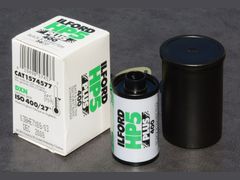
| Learning black and white | Ilford HP5 Plus | 400 | Flatter, lower-contrast negatives, and often pushed to EI 800, 1600 or 3200 for low light | $9.49 at CineStill |
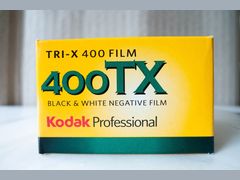
| Contrasty black and white, street | Kodak Tri-X 400 | 400 | Punchy contrast out of the lab; Kodak lists a maximum push of EI 1600 | $10.25 at Glazer's (sold out at check) |
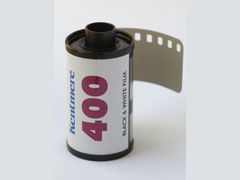
| Black and white on a budget | Kentmere Pan 400 | 400 | The cheapest 36-exposure black and white roll in this price check | $8.49 at Glazer's |
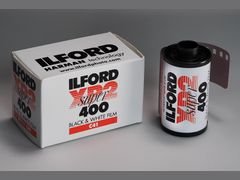
| Black and white from any color lab | Ilford XP2 Super | 400 | Develops in C-41, the color process nearly every lab runs; CVS lists black and white at about 3 weeks | $16.49 at CineStill |
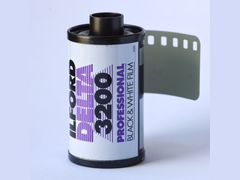
| Concerts and very dark rooms, black and white | Ilford Delta 3200 or Kodak T-Max P3200 | 1000 / 800, shot at 3200 | Both are made to be push-processed to EI 3200 or higher | $16.99 Delta 3200 at Glazer's; $18.99 at District Camera |
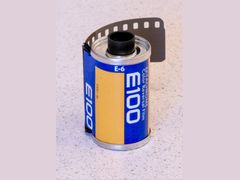
| Slides and projection | Kodak Ektachrome E100 | 100 | E-6 slide film; slide film holds only about 5 stops of range and needs exposure within about a third of a stop | $23.99 at District Camera (sold out at check) |
| Experimental color and contrast | Harman Phoenix II | 200 | Harman's revised version of its experimental Phoenix; Harman lists better contrast, grain, sharpness and color. The original had strong contrast and no anti-halation layer | $13.99 at District Camera |
Prices are for single rolls of 35mm film, 36 exposures wherever the store listed a count, from US store pages checked October 28, 2026. Several stocks were sold out at one or more stores that day, so check two sellers before you give up on a film.
Sources: kubusphoto.com, kodak.com, i-m-ageplayground.co.uk, analoguewonderland.co.uk, kodak.com, kodakprofessional.com, kodak.com, kodak.com, fstoppers.com, kodakprofessional.com, cinestillfilm.com, en.wikipedia.org, digitalcameraworld.com, kodakprofessional.com, kodakprofessional.com, es-reg2.cvs.com, kodak.com, alexburkephoto.com, harmanphoto.co.uk, cinestillfilm.com, glazerscamera.com, walgreens.com, districtcamera.com, districtcamera.com, districtcamera.com, districtcamera.com
How to choose a film stock in 6 steps
The same six checks work for a first roll in a thrift-store point-and-shoot or a new stock for an SLR you already know.
- 1
Check the film format
A camera built for 35mm film needs a 135 cassette, and 120 film will not fit it. Any 35mm film fits any 35mm camera. See 35mm vs 120 film if you're not sure which you have.
- 2
Check what ISO your camera can use
Some of the simple point-and-shoots that have become popular lately recommend ISO 100 to 400, and fixed-setting reusable cameras such as the Kodak M35 and Ektar H35 are designed for ISO 400. Most automatic compacts read the DX code on the canister and set exposure for you.
- 3
Pick the ISO for the darkest light
Choose for the dimmest part of the day you plan to shoot, not the sunniest. ISO 400 covers most days; go to 800 for indoor events and 800 to 3200 for night and concerts.
- 4
Choose color, black and white or slide by your lab
Color negative (C-41) is developed almost everywhere. True black and white and E-6 slide film go to fewer labs, so check where you'll send the roll before you buy.
- 5
Choose the look
Portra or Ektacolor Pro for skin, Ektar for saturated landscapes, CineStill 800T for night glow, Tri-X for punchy black and white or HP5 Plus for softer contrast.
- 6
Buy two rolls and shoot at box speed
Berlin Photo Studio says two rolls of the same stock are enough to start. Set the camera to the ISO printed on the box, and Fstoppers advises repeating one stock until you understand how it responds.
Sources: photostudioberlin.com, talkphotography.co.uk, analoguewonderland.co.uk, i-m-ageplayground.co.uk, kubusphoto.com, fstoppers.com
What ISO film should I use for the light?
Match the film speed to the darkest light you expect. Berlin Photo Studio's advice is to think about the darkest part of the day, not only the brightest. A higher ISO is more sensitive, so ISO 800 keeps working indoors after ISO 200 has run out of light.
ISO 400 covers the widest range. Kubus Photo says it handles bright sun (the camera just uses a faster shutter speed), overcast days, open shade and reasonably lit interiors, and gives 30 to 60 more minutes of shooting as the sun goes down than ISO 200. Cultured Kiwi calls it the safest all-round starting point for beginners and point-and-shoot cameras.
Check your camera before going much faster or slower. Analogue Wonderland notes that some of the simple point-and-shoots that have become popular lately recommend ISO 100 to 400, so a 3200-speed film would not suit them. Set the camera to the ISO on the box unless you plan to push or pull the film, which means asking the lab to change development. The basics are in film ISO explained and the exposure triangle.
| Light | ISO on the chart | Films that fit |
|---|---|---|
| Beach or snow | 50 | Ektar 100 or Ektachrome E100 (the slowest stocks on this page) |
| Sunny | 100 | Ektar 100, Ektachrome E100, Gold 200 |
| Light clouds | 200 | Gold 200, Kodacolor 200, Harman Phoenix II |
| Heavy clouds | 400 | UltraMax 400, Fujifilm 400, Portra 400, HP5 Plus, Tri-X 400 |
| Bright indoors | 800 | Portra 800, Lomography 800, CineStill 800T |
| Normal indoors | 1600 | Portra 800 or HP5 Plus pushed to 1600 |
| Dark indoors | 3200 | Delta 3200, T-Max P3200, CineStill 800T pushed to 3200 |
Sources: photostudioberlin.com, kubusphoto.com, culturedkiwi.com, analoguewonderland.co.uk, kodakprofessional.com, digitalcameraworld.com, cinestillfilm.com
Which film types can any lab develop?
Color negative film, developed in the C-41 process, is the easiest film to get processed. Digital Camera World calls color negative the easiest and most practical place to begin. C-41 also covers two films people don't expect: Ilford XP2 Super, a black and white film made for C-41, and CineStill 800T, which has no remjet backing, so it's safe for C-41 labs.
Slide film is the least forgiving. Alex Burke puts slide film at about 5 stops of dynamic range with detail and color and says negatives handle roughly twice that, and Kubus Photo says slide film needs exposure within about a third of a stop. Unique Photo adds that it can cost more or be less convenient to process, depending on your local labs.
True black and white and slide film go to fewer labs. CVS lists black and white and slide film at about 3 weeks, and Mpix does not accept E-6 slide film or true black and white such as T-Max or Ilford. For those films, a mail-in lab is usually simpler; the drugstore options are in developing film at CVS, Walgreens or Walmart.
| Film type | Process | Films on this page | Who develops it |
|---|---|---|---|
| Color negative | C-41 | Gold 200, Kodacolor 200, UltraMax 400, Fujifilm 400, Portra, Ektacolor Pro, Ektar 100, Lomography 800, CineStill 800T | Nearly every lab |
| Black and white, chromogenic | C-41 | Ilford XP2 Super | Any lab that runs C-41 |
| Black and white, traditional | Black and white chemistry | HP5 Plus, Tri-X 400, Kentmere Pan 400, Delta 3200, T-Max P3200 | Fewer labs: about 3 weeks at CVS, not accepted at Mpix |
| Slide (color reversal) | E-6 | Ektachrome E100 | Fewer labs: about 3 weeks at CVS, not accepted at Mpix |
| Motion picture | ECN-2 | Kodak Vision3 250D respooled for still cameras | Labs that run ECN-2 |
Sources: digitalcameraworld.com, en.wikipedia.org, cinestillfilm.com, alexburkephoto.com, kubusphoto.com, uniquephoto.com, es-reg2.cvs.com, mpix.com, kodak.com
How much does it cost to shoot a roll of film?
Kodak Gold 200 cost $8.49 for 36 shots at CineStill on October 28, 2026, about $0.24 a shot, and Analog.Cafe's price tracking puts the 2026 average for a 36-exposure roll at $10.34. Portra 400 cost $18.49 for 36 shots at District Camera, about $0.51 a shot.
Developing can cost as much as the film. Dwayne's Photo develops 35mm color from $7.50, and The Darkroom charges from $14 a roll with scans. Gold 200 with The Darkroom's starting price is $8.49 + $14 = $22.49 for 36 shots, about $0.62 each; Portra 400 with the same service is $18.49 + $14 = $32.49, about $0.90 each.
Compare price per shot, not per roll, because most 35mm rolls have 24 or 36 exposures. HP5 Plus was $8.49 for 24 exposures and $9.49 for 36 at CineStill, about $0.35 versus $0.26 a shot. Drugstores can charge more: Walgreens listed a roll of Kodak UltraMax at $12.99 (the listing doesn't say how many exposures) against $9.99 for 36 exposures at CineStill. Run your own numbers with the film cost per photo calculator, or see how much developing costs and why film is so expensive.
Sources: cinestillfilm.com, analog.cafe, districtcamera.com, dwaynesphoto.com, thedarkroom.com, culturedkiwi.com, cinestillfilm.com, walgreens.com
Portra or Ektacolor Pro, Superia or Fujifilm 400: film names in 2026
 Fujifilm 400
Eastman Kodak now sells its own professional color line, Ektacolor Pro 160, 400 and 800, daylight films it aims at wedding, portrait and commercial photographers. Kosmo Foto reports that Ektacolor Pro 400 replaces the Portra 400 name in Eastman Kodak's lineup, while Kodak Alaris still sells Portra, and The Darkroom's film index lists Portra 400 and Ektacolor Pro 400 together.
Whether they are the same film is unconfirmed: 35mmc says it certainly looks like it, but neither company will officially confirm. On price, Ektacolor Pro 400 was $16.95 at District Camera on October 28, 2026, against $18.49 for Portra 400 at the same store.
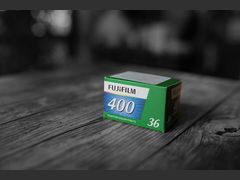
Fuji has its own name change. Fujifilm's US consumer film page lists two color negative films, Fujifilm 200 and Fujifilm 400. Fujifilm 400 replaced Superia X-tra 400 in North America in spring 2023 and is made by Eastman Kodak, and Fstoppers says it is widely reported to share its emulsion with Kodak's consumer color films. So the old shorthand that Kodak looks warmer and Fuji cooler, which Analogue Wonderland still uses, may not describe the Fuji-branded roll on a US shelf today. Guides that still tell US readers to buy Superia are out of date; see the Fujifilm 400 guide.
Sources: kodak.com, kosmofoto.com, thedarkroom.com, 35mmc.com, districtcamera.com, districtcamera.com, fujifilm.com, en.wikipedia.org, fstoppers.com, analoguewonderland.co.uk
Where film shooters disagree
Most sources steer new shooters toward inexpensive color negative film. Beyond that, they split on four questions.
- Gold 200 or UltraMax 400 first. Brooklyn Film Camera calls Gold 200 the best beginner film, at about $10 a roll and forgiving of three stops of overexposure. Cultured Kiwi says ISO 400 is the safest start for beginners and point-and-shoots because it handles changing light better. Both fit different days: Gold for daylight, UltraMax when the light will change or the camera has fixed settings. The full comparison is in Gold 200 vs UltraMax 400.
- Cheap film or Portra first. Kubus Photo says to save Portra until you've shot at least 10 to 20 rolls. Unique Photo makes the same case: a cheaper roll you can shoot three times as often may teach you more.
- Ektar for portraits. Fstoppers says Ektar can render skin slightly warm or red, and Cultured Kiwi says it can highlight imperfections. Analogue Wonderland notes that portrait films have mostly been balanced for white skin and cites a photographer who prefers Ektar for darker skin tones.
- Black and white first. Digital Camera World says color negative is the easiest place to begin, and lab black and white usually costs more: LensLurker found developing and scanning a black and white roll averages 19% more than C-41 color, and a TalkPhotography member says the same. Dwayne's Photo is an exception, listing 35mm black and white from the same $7.50 as color. XP2 Super sidesteps the lab problem because it runs in C-41.
Sources: brooklynfilmcamera.com, culturedkiwi.com, kubusphoto.com, uniquephoto.com, fstoppers.com, analoguewonderland.co.uk, digitalcameraworld.com, lenslurker.com, talkphotography.co.uk, dwaynesphoto.com
Everyday color film
Kodak and Fujifilm color rolls for daylight, mixed light and point-and-shoot cameras, plus Lomography's faster stocks.
Kodak Gold 200 is a warm ISO 200 color film in 35mm and 120, $8.99 to $10.90 a 36-exposure roll. What 139 opinions say about grain, skin and low light.
Kodak Ultramax 400 is a 35mm ISO 400 color film, $8.69 to $11.50 a 36-exposure roll. What 121 opinions say about its color, grain, latitude and low light.
Kodak UltraMax 400 vs Gold 200: UltraMax is one stop faster for shade, indoors and reusable cameras. Gold is warmer and cheaper, about $8.45 to $10 a roll.
Fujifilm 400 is a made-in-USA ISO 400 color film, $10.99 to $14 a roll in October 2026. What 61 opinions say about its look, grain, pushing and the Kodak link.
Lomography 800 is an ISO 800 C-41 color film with Portra 800-like grain, $57.90 a 3-pack. What 104 opinions say on color, latitude and ISO, plus the 400.
Professional color film
Portra and Ektar: finer grain, stronger skin tones or saturation, and about $15 to $20 a roll in October 2026.
Kodak Portra 400 is an ISO 400 color film loved for skin tones and latitude. What 113 opinions say, how to expose and push it, and US prices from $15.99.
Portra 400 vs 800: 400 has finer grain, sheet sizes and a lower price; 800 adds a stop of speed and pushes to 1600. October 2026 prices and when to pick each.
Kodak Portra 160 is a fine-grain ISO 160 color film, $13.99 to $17.99 a 35mm roll in Oct 2026. What 148 opinions say about skin tones, latitude and low light.
Kodak Ektar 100 is an ISO 100 color film with very fine grain, $13.99 to $19.00 a 35mm roll. What 141 opinions say about color, skin tones and exposure.
Cinema film and night
Kodak motion picture stocks prepared for still cameras, including the tungsten-balanced CineStill 800T for night.
CineStill 800T is an ISO 800 tungsten film made for night and neon. What 112 opinions say, how to shoot it in daylight, push it, and US prices from $17.00.
CineStill 400D is a daylight ISO 400 C-41 color film with warm color and soft halation. What 100 opinions say, how to expose and push it, and US prices.
Kodak Vision3 250D is ISO 250 daylight cinema film respooled for still cameras. What 125 opinions say, ECN-2 vs C-41, remjet vs AHU, and US prices from $10.
Black and white film
Traditional black and white from Ilford, Kodak and Kentmere, plus XP2 Super, which any C-41 lab can develop.
Ilford HP5 Plus is the best black and white film for most people. Compare Tri-X, Kentmere 400, Ektapan (T-Max), XP2 Super and Delta 3200, with US prices.
Ilford HP5 Plus is an ISO 400 black-and-white film known for latitude and easy pushing. What 112 opinions say, how to shoot it, and US prices from $9.99.
Kodak Tri-X 400 is an ISO 400 black-and-white film with classic grain and wide latitude, $8.99 to $10.41 a roll. What 116 opinions say about grain and pushing.
HP5 vs Tri-X: reviewers find Tri-X 400 punchier, HP5 Plus flatter and more forgiving. Grain, pushing, developing times and October 2026 US prices.
Kentmere 400 is Harman's budget ISO 400 black and white film, $8.39 to $10.99 a 36-exposure roll. What 135 opinions say about grain, contrast and pushing.
Ilford XP2 Super is an ISO 400 black-and-white film developed in C-41 color chemistry. What 119 opinions say, how to rate it, and US prices from $12.99.
Ilford Delta 3200 is sold as EI 3200 but measures ISO 1000. What 130 opinions say about grain and low light, how to rate and develop it, and US prices.
Slide, experimental and expired film
Ektachrome slide film, Harman's experimental Phoenix, and what to expect from old rolls.
Kodak Ektachrome E100 is ISO 100 E-6 slide film, $22.99 to $28.63 a 35mm roll in October 2026. What 147 opinions say about its color, grain and latitude.
Harman Phoenix began as an experimental ISO 200 color film. What 123 opinions say about Phoenix 200 and Phoenix II, what ISO to rate it at, and US prices.
Expired film still works if it was stored well. Rate color negative about one stop slower per decade, keep slide film near box speed, and develop normally.
ISO, formats, costs and where to buy
How film speed and pushing work, 35mm versus 120, what a roll really costs and the stores that ship fresh film.
Film ISO is a roll's light sensitivity: double the number, one stop faster, more grain. Which ISO to buy, box speed, push and pull, and what a wrong ISO does.
How to push film: what a stop means, what to set on your camera, how to tell the lab, one-stop fees from $0 to $4, home development times and how to pull film.
35mm vs 120 film: common 120 frames are 2.7 to 5.4 times bigger than 35mm but give 8 to 16 shots a roll. Cost per frame, lab prices and which to pick.
Where to buy 35mm film online in the US: B&H, CineStill, FPP, Midwest Photo and camera shops that ship. Kodak Gold 200 ran $8.49 to $9.49 in October 2026.
Film is expensive because a few low-volume factories face rising silver, chemical and shipping costs. See October 2026 prices and how to shoot film for less.
Questions people ask
What film should I use in a point-and-shoot camera?
An ISO 400 color negative film such as Kodak UltraMax 400 ($9.99 at CineStill on October 28, 2026) or Fujifilm 400. Fixed-setting reusable cameras such as the Kodak M35 and Ektar H35 are designed around ISO 400, and some of the simple point-and-shoots popular lately recommend ISO 100 to 400. Most automatic compacts read the DX code on the canister and set exposure for you. Camera picks are in [best point-and-shoot film cameras](/cameras/best-point-and-shoot-film-cameras/).
Sources: i-m-ageplayground.co.uk, analoguewonderland.co.uk, cinestillfilm.com
Can I use ISO 400 film on a sunny day?
Yes. Kubus Photo says ISO 400 handles bright sun because the camera just uses a faster shutter speed, and color negative film is tolerant of overexposure: Kodak says Gold 200 tolerates three stops of it. If you'll only shoot in bright daylight, Gold 200 is the cheaper daylight film at $8.49 a roll.
Sources: kubusphoto.com, kodak.com, cinestillfilm.com
What film should I use at night?
Under streetlights, neon and other tungsten light, CineStill 800T is the usual pick: it is tungsten balanced and can be push-processed to ISO 3200. CineStill says to keep it in the fridge and shoot it within 6 months of purchase. For color indoors, Portra 800 can be pushed to 1600; for black and white, Delta 3200 and T-Max P3200 are made to be pushed to EI 3200 or higher.
Sources: cinestillfilm.com, kodakprofessional.com, en.wikipedia.org, kodakprofessional.com
Is Kodak Portra worth the extra cost over Kodak Gold?
For portraits and changing light, that's what Portra is for: Kodak Alaris rates Portra 400 at true ISO 400 with strong skin tones over a wide range of lighting. It cost $18.49 at District Camera on October 28, 2026, against $9.49 for Gold 200 at the same store, about twice as much. Kubus Photo suggests shooting 10 to 20 rolls of cheaper film first.
Sources: kodakprofessional.com, districtcamera.com, districtcamera.com, kubusphoto.com
Can I run any film through an old 35mm camera?
Any 35mm film fits any 35mm camera, but 120 film does not. Test an unknown camera with a cheap fresh roll, such as Kentmere Pan 400 or Gold 200 at $8.49, and set the ISO dial to the number on the box. Loading instructions are in [how to load film](/cameras/how-to-load-film/).
Sources: talkphotography.co.uk, photostudioberlin.com, glazerscamera.com, cinestillfilm.com
Is expired film OK for a first roll?
Use fresh film first. Berlin Photo Studio says fresh film is better for a first test because it removes age and storage as possible problems, so anything wrong points to the camera or the exposure. Save old rolls for later ([shooting expired film](/film/expired-film/)).
Sources: photostudioberlin.com
What is the best black and white film for beginners?
Ilford HP5 Plus and Kodak Tri-X 400 are the usual answers. Fstoppers says HP5 Plus comes out flatter and lower in contrast while Tri-X arrives with punchy contrast, and Digital Camera World says HP5 is often pushed to EI 800, 1600 or 3200. Kentmere Pan 400 is the budget roll at $8.49, and XP2 Super is the one a color lab can develop. See [HP5 vs Tri-X](/film/hp5-vs-tri-x/).
Sources: fstoppers.com, digitalcameraworld.com, glazerscamera.com
Does Walgreens sell 35mm film?
Yes. Walgreens listed Kodak UltraMax film at $12.99 a roll on October 28, 2026. Camera stores listed 36-exposure UltraMax 400 for less that day: $9.99 at CineStill and $10.49 at Glazer's Camera. The Walgreens listing doesn't say how many exposures, so compare cost per shot. More stores are in [where to buy 35mm film](/film/where-to-buy-35mm-film/).
Sources: walgreens.com, cinestillfilm.com, glazerscamera.com
Sources
Show all 40 sources
retailer 14
- Kubus Photo: Best Film for Beginners
- Analogue Wonderland: Which 35mm Film Should I Use?
- Berlin Photo Studio: How to Choose Your First Film Roll
- Unique Photo: Best 35mm Film for Beginners: Color vs Black-and-White Options Compared
- The Darkroom: Film Index
- Dwayne's Photo: Services
- The Darkroom: 35mm Film Developing
- CineStill: Eastman Kodak still film collection
- District Camera: 35mm Film
- District Camera: 35mm Film (page 2)
- District Camera: 35mm Film (page 3)
- District Camera: 35mm Film (page 4)
- Glazer's Camera: 35mm Film
- Walgreens: 35mm film search
official 14
- Kodak: Gold 200 Film
- Kodak: UltraMax 400 Film
- Kodak: Ektacolor Film
- Kodak: Ektar 100 Film
- Kodak: Ektachrome E100 Film
- Kodak Alaris: Kodak Professional Portra 400 Film
- Kodak Alaris: Kodak Professional Portra 800 Film
- Kodak Alaris: Kodak Professional Tri-X Films
- Kodak Alaris: Kodak Professional T-Max P3200 Film
- CineStill: 800Tungsten High Speed Color Negative Film, 35mm
- Harman Photo: Phoenix
- Fujifilm USA: Consumer Film
- CVS Photo: Film Processing
- Mpix: Film Developing
Editorial reviews 6
- Cultured Kiwi: The Best 35mm Film
- Fstoppers: The 5 Best Film Stocks for Beginners in 2026
- Digital Camera World: Best 35mm film, roll film, and sheet film in 2026
- Brooklyn Film Camera: Kodak Gold review
- Kosmo Foto: Eastman Kodak is distributing all its films again. What happens next?
- 35mmc: Mapping the new Eastman Kodak film range