Film Photography Tips for Beginners: How to Get a Good First Roll
8 pages in this section
The short answer
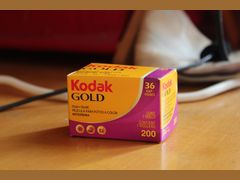
The film photography tips for beginners that save the most first rolls are simple: start with a forgiving ISO 200 to 400 color negative film such as Kodak Gold 200, check that the rewind knob turns every time you advance, and set the ISO dial to the film's speed.
When in doubt, give the film more light, since Kodak says Gold 200 handles three stops of overexposure but only two of underexposure. Indoors, use the flash or ISO 800 film, hand-hold at 1/60 second or faster with a 50mm lens, rewind fully before you open the back, and get that first roll developed (Dwayne's Photo's mail-in develop-only price starts at $7.50) before you shoot ten more.
Most ruined first rolls come from a few technical slips, not a lack of talent. Brooklyn lab Kubus Photo says 80% of the first-roll problems it sees are loading failures, light leaks or blur, and Reformed Film Lab says underexposure is the most common problem in the film it develops. Fstoppers puts the learning curve plainly: your first 10 rolls will be rough.
This is the hub for Camera Dojo's technique guides. The checklist below covers the habits that protect a roll, from buying film to developing it, and the guides listed further down go deeper on exposure, metering without a meter, flash, light leaks and double exposures, plus whether film is worth it next to digital and two calculators for cost and batteries.
Camera Dojo has not tested these cameras, films or labs. Each tip is credited to the lab, publication or photographer who gives it, and prices come from US stores and labs, checked October 28, 2026.
Start here
- 01
How aperture and shutter speed balance against the fixed ISO of the roll you load, and why a one-stop change doubles or halves the light.
- 02
Expose without a working meter: f/16 at 1 over the film's ISO in hard sun, one stop wider for each step down in light, plus zone focusing for quick street shots.
- 03
The fix for dark indoor and night frames, with sync speeds, guide numbers and bounce. The Darkroom says disposables used indoors without flash cause the most blank rolls.
- 04
Read streaks and fog on your scans and tell crumbling foam seals from a back opened too early, or add the look on purpose.
- 05
What film does better and worse than digital, including cost: about $0.83 a frame at starting prices for a mailed roll of Kodak Gold 200 in October 2026.
Film photography tips for beginners: 12 habits for your first roll
Twelve habits in the order you need them, from choosing a camera to flying home with exposed rolls. Each one is credited to the lab, publication or photographer who gives it.
- 1
Pick a camera for how you want to learn
Max Kent's beginner guide says to buy an SLR if you want to learn to shoot manually, and a point-and-shoot if you mainly want to document daily life, nights out and travel.
- 2
Test a used camera before it matters
Fit a fresh battery and look at the foam light seals: Kubus Photo says they turn to sticky goo after 20 to 30 years and finds this in about 60 to 70% of unserviced vintage cameras. Fulltone Photo advises running a sacrificial roll through any camera that is new to you before shooting anything important.
- 3
Buy forgiving film in the right format
First make sure the film fits your camera; 35mm, 120 and 110 are the common formats. Analogue Wonderland suggests an ISO 200 to 400 color film such as Kodak Gold or Ultramax for a first roll, and StudioBinder calls color negative the most forgiving type for beginners.
- 4
Load it and confirm the film is moving
Make sure the sprocket holes catch the camera's teeth (if they don't, the film won't advance even though the frame counter moves), then close the back and fire and advance twice, which Fulltone Photo says most cameras need to get past the leader fogged during loading. Kubus Photo's rule: if the rewind knob does not turn when you advance, stop and reload.
- 5
Set the ISO dial to the box speed
Some cameras from the mid-1980s on read DX codes, but most classic cameras do not, so turn the dial yourself as soon as the back is closed. Fstoppers suggests tucking the box's end flap into the memo holder on the back as a reminder, and Kubus Photo says this check alone prevents 40% of exposure errors.
- 6
Meter, then lean toward more light
For the first several rolls, check an old camera's meter against a free light meter app on your phone, as Fstoppers suggests. With negative film, when in doubt, give it more light: if the meter says f/8, consider f/5.6.
- 7
Indoors, use the flash or faster film
Fstoppers says handheld indoor shooting needs ISO 800 film at minimum or a flash, because ISO 100 film often meters at 1/8 second or slower indoors, even wide open. The Darkroom says disposables used indoors without flash are the most common source of blank rolls, so on a disposable, use the flash for every indoor or low-light shot.
- 8
Keep shots sharp
Hand-hold at 1 over the focal length or faster, so 1/60 with a 50mm lens, and use f/4 or f/5.6 instead of shooting wide open while you learn manual focus (Kubus Photo, Fstoppers). On cameras with a separate viewfinder, check for a lens cap or a finger at the edge of the frame, the two lens blocks Analogue Wonderland sees most.
- 9
Write down your settings
Reformed Film Lab suggests noting shutter speed, aperture and film speed for each shot and comparing the notes with your scans. It also suggests sticking to one color film stock for your first 5 to 10 rolls.
- 10
Rewind fully before opening the back
When the advance lever stops and the shutter won't cock, you have reached the end of the roll: don't force it, rewind it (Fulltone Photo). SlashGear's check: if the frame counter doesn't read S or 0, film is probably still loaded, and opening the back now ruins the exposed frames.
- 11
Develop the first roll right away
Reformed Film Lab says to finish your first roll in a new camera and get it developed as soon as possible, while you still remember what you did. Before you send it, Analogue Wonderland suggests checking a lab's recent reviews and results; see the best mail-in film labs.
- 12
Store and fly with film carefully
Keep film out of a car parked in the sun, and let refrigerated film warm to room temperature before you open it (Kodak). At the airport, TSA recommends putting undeveloped film in your carry-on, or taking it to the checkpoint and asking for a hand inspection.
Sources: maxkent.co.uk, kubusphoto.com, fulltonephoto.pixfizz.com, analoguewonderland.co.uk, studiobinder.com, fstoppers.com, thedarkroom.com, reformedfilmlab.com, slashgear.com, lightstalking.com, filmphotographyproject.com, tsa.gov
Why do first rolls come back blank, dark or blurry?
Labs see the same few faults again and again. Kubus Photo says a loading failure is the most common first-roll disaster, showing up in 15 to 20% of true beginner rolls. The Darkroom lists the causes of blank rolls as expired or damaged film, underexposure (especially in low light without flash), loading problems, camera malfunctions and severe light leaks, and says single-use cameras used indoors without the flash are the most common culprits.
Underexposure is the fault Reformed Film Lab says it sees most in developed film. Fstoppers says a color negative shot even one stop under comes out muddy and desaturated, with noticeable grain and a color cast, which is why most of the fixes below add light. For streaks and fog, light leaks shows how to tell a bad seal from a loading mistake.
| What you see | Likely cause | Fix |
|---|---|---|
| Whole roll blank | The film never advanced, or a disposable was used indoors without flash | Watch the rewind knob turn on every advance; use the flash indoors |
| Dark, muddy, grainy frames | Underexposure: dim light, an ISO dial set higher than the film's speed, or a weak meter battery | Use flash or ISO 800 film, match the dial to the box, and replace meter batteries every 12 to 18 months (Kubus Photo) |
| Pale, washed-out highlights | Three or more stops of overexposure, which Kubus Photo says starts washing out highlights | Set the ISO dial to the box speed; one or two stops over usually looks fine |
| Blurry frames | A shutter speed too slow to hand-hold, or missed manual focus | 1/60 or faster with a 50mm lens; f/4 to f/5.6 while you learn to focus |
| Streaks or fogged areas | Old foam light seals, or the back opened before the film was rewound | Replace the seals; open the back only when the counter reads S or 0 |
| Orange cast indoors | Daylight film under household tungsten bulbs | Use the flash |
| Dark blob at the edge, or a black frame | A finger or the lens cap in front of the lens on a non-SLR camera | Check the lens before you raise the camera |
Sources: kubusphoto.com, thedarkroom.com, reformedfilmlab.com, fstoppers.com, analoguewonderland.co.uk, slashgear.com
Should you overexpose or underexpose film?
With negative film, lean toward overexposure. Kodak says Gold 200 tolerates up to two stops of underexposure and three stops of overexposure, and negative film is exposed for the shadows, while digital favors the highlights. Fstoppers' working rule: when in doubt, give the film more light.
How much extra is a matter of taste, and sources differ. StudioBinder suggests a half or full stop, wedding photographer Kristine Herman rates 400-speed Fuji film at 200 on her meter (one stop over), Kubus Photo says one to two stops usually looks fine and three or more starts washing out highlights, and Reformed Film Lab says film can take up to three. About one stop over is the common ground.
Slide film is the exception: it has narrow latitude in both highlights and shadows, so it needs accurate metering. Be wary of one shortcut: StudioBinder presents setting the shutter speed to match the ISO (ISO 200 at 1/125) as a general rule. That only holds at f/16 in direct sun under the Sunny 16 rule, and it underexposes badly in shade or indoors. For shots that matter, bracket: one frame at the meter reading, one a stop over and one a stop under (Fulltone Photo).
- Direct sun, distinct shadows: f/16 at 1 over the film's ISO, or the nearest shutter speed (1/250 for ISO 200 film)
- Slight overcast, soft-edged shadows: f/11
- Overcast, barely visible shadows: f/8
- Heavy overcast, no shadows: f/5.6
- Open shade or sunset: f/4
Pushing film one or two stops at the lab adds contrast at night, but Shoot It With Film notes it does not correct underexposure: film still needs light. See push and pull processing.
Sources: kodak.com, en.wikipedia.org, fstoppers.com, studiobinder.com, kristineherman.com, kubusphoto.com, reformedfilmlab.com, en.wikipedia.org, fulltonephoto.pixfizz.com, shootitwithfilm.com
Which film camera and film should a beginner buy?
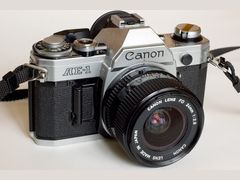
Wired's beginner picks cover the three usual routes: a new Kodak Ektar H35 half-frame, which puts two pictures on each 35mm frame and so gets 72 shots from a 36-exposure roll; a used Olympus Stylus point-and-shoot at around $100; and a used Canon AE-1 SLR at around $150. Wired names the Nikon FE2, Pentax ME and Minolta SRT 303b as similar all-metal SLRs for under $200. Those are Wired's estimates from November 2025; dated store prices are in the table further down (it lists the AE-1 Program, not the original AE-1), and the best film cameras for beginners compares eight picks with US shop prices.
Old cameras bring one catch Fstoppers points out: many 1960s and 1970s models were designed for 1.35-volt mercury batteries, now banned in most countries, and 1.5-volt replacements can throw meter readings off. Many film cameras also take batteries a convenience store won't stock, SlashGear notes, so carry a spare.
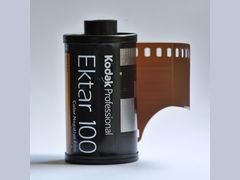
For film, most stocks run from ISO 100 to 800, with a few reaching about ISO 3200; faster film copes better with low light but shows more grain (Max Kent). Kodak designs Gold 200 for daylight or electronic flash and pitches Ultramax 400 for indoor, outdoor, low-light flash and action shots, and a CUNY photography textbook calls ISO 400 the best film to start with in normal light. Kodak Gold 200 vs Ultramax 400 compares the two. Analogue Wonderland also makes the case for starting with black-and-white Kentmere 400, to focus on composition and light.
Sources: wired.com, filmphotographystore.com, fstoppers.com, slashgear.com, maxkent.co.uk, kodakprofessional.com, pressbooks.cuny.edu, analoguewonderland.co.uk
What does film photography cost per photo?
Film costs about $0.83 to $1.50 a frame once developing and scans are included, so a ruined roll is an expensive mistake. Fstoppers estimates about $1.50 a frame, or $40 to $50 per 36-exposure roll, for film, developing and scans, though a reader comment on the same article says sensibly priced film and a local lab cost a fraction of that.
With October 2026 US prices, one budget roll works out like this: Kodak Gold 200 at $8.99 from the Film Photography Project store, plus The Darkroom's $14 starting price for develop and standard scans and $6.95 for its round-trip shipping, comes to $29.94 for 36 frames, about $0.83 each. The Darkroom calls $6.95 its base rate for shipping, so check the total at checkout. The film cost per photo calculator runs the numbers for your own film and lab, and the film developing price table shows what shipping adds at US labs.
Black and white does not cost more to develop at the two US mail-in labs checked here. Dwayne's Photo starts at $7.50 develop only for both color and black and white, and The Darkroom charges $11 develop only for C-41, black and white or E-6. UK-based Max Kent says black and white usually costs a little more to develop; at these two US labs it does not. Wired adds that black and white is also the easier process to develop at home.
Sources: fstoppers.com, filmphotographystore.com, thedarkroom.com, dwaynesphoto.com, thedarkroom.com, maxkent.co.uk, wired.com
Starter prices: film, cameras and labs, October 2026
| Seller | Item | Price | Note |
|---|---|---|---|
| Film Photography Project store | Kodak Gold 200, 35mm, 36 exposures | $8.99 | ISO 200 color negative, one roll |
| Glazer's Camera (Seattle) | Kodak Ultramax 400, 35mm, 36 exposures | $10.49 | ISO 400 color negative, one roll |
| Glazer's Camera (Seattle) | Kentmere Pan 400, 35mm, 36 exposures | $8.49 | Black and white negative, one roll |
| Glazer's Camera (Seattle) | Kodak one-time-use camera, ISO 800, with flash | $16.49 | 27 exposures |
| Film Photography Project store | Kodak Ektar H35 half-frame camera, new | $48.99 | 72 shots per 36-exposure roll |
| Procam | Canon AE-1 Program body, used | $149.99 | Body only, limited stock |
| Dwayne's Photo (mail-in) | 35mm color or black and white, develop only | $7.50 | Starting price; scans and return shipping extra |
| The Darkroom (mail-in) | 35mm develop and standard scans | $14 | Starting price, negatives returned; $6.95 base rate for round-trip shipping |
| The Darkroom (mail-in) | Develop only, C-41, black and white or E-6 | $11 | No scans |
| Old School Photo Lab (mail-in) | 35mm develop, scan and return | $25 | From price; develop only from $18 |
Prices checked October 28, 2026. They change often.
How should you store film and take it through airport security?
Keep film you haven't shot cool. Kodak says to keep film away from excessive heat and names a car parked in the sun and an attic in summer as places too hot for film. It recommends keeping its professional color films sealed in a refrigerator at 55°F (13°C) or lower. Let cold film warm to room temperature before you break the seal, so condensation doesn't form. Exposed film can sit in the fridge for a few days when necessary, but Kodak says to get it processed promptly.
Kodak also says to use film before the expiration date on the box for best results. Older film still works, with side effects: StudioBinder lists lower contrast, more grain and shifted or muted colors, and The Darkroom says film about 10 or more years past its date fades and skews toward magenta but can still be developed. Shooting expired film covers how much extra exposure to give.
At the airport, TSA recommends putting undeveloped film, and cameras with film inside, in your carry-on bags, or taking the film to the checkpoint and asking for a hand inspection. Kodak warns that the CT scanners now used on carry-on bags have been proven to fog all unprocessed film, so ask for the hand check instead of sending rolls through the scanner. Instant film and airport X-rays covers CT scanners and how to ask for a hand check.
Sources: filmphotographyproject.com, studiobinder.com, thedarkroom.com, tsa.gov, kodak.com
Get the exposure right
The skills that decide whether a frame comes back dark, blank or usable: balancing aperture and shutter speed, metering by the Sunny 16 rule and adding flash.
The exposure triangle links aperture, shutter speed and ISO: one stop on any side doubles or halves the light. How it works on film, where the roll sets ISO.
The sunny 16 rule: f/16 at 1/ISO in clear sun, wider for clouds and shade. Chart by ISO, backlight fixes, zone focusing presets and how to meter film.
How to use flash photography: stay at or below sync speed (1/60 on a Canon AE-1), set aperture as guide number divided by distance, then bounce and gel it.
Effects to try or avoid
Two images layered on one frame on purpose, and the streaks old cameras add on their own.
To make a double exposure on film, expose one frame twice and cut each shot by one stop (ISO 400 film set to 800). Methods by camera, prices, mistakes, fixes.
Light leaks are stray light fogging your film, usually from worn seals or an opened back. How to find the source, fix it for $80-120 or get the look on purpose.
Film vs digital, and the film look
Whether film is worth it for you, and how to get a film look from digital files with emulation software or free Lightroom presets.
Film vs digital photography: film costs about $29.94 a roll to shoot and scan, digital almost nothing per frame. Detail, low light, look and which to pick.
Film emulation software compared: Dehancer, DxO FilmPack 8 ($149.99), RNI All Films 5, VSCO, Fujifilm simulations and FilmBox, with October 2026 US prices.
Free Lightroom film presets from RNI, Gridfiti, Luke Taylor, PresetPro and more: what each one emulates, its license terms, and how to install it on any device.
Questions people ask
How do I know if my film is loaded correctly?
Watch the rewind knob as you advance: Kubus Photo says if it doesn't spin, the film isn't moving, so stop and reload. The usual cause, according to Fulltone Photo, is sprocket holes that didn't catch the camera's teeth, in which case the frame counter still moves while the film stays put. [How to load film](/cameras/how-to-load-film/) walks through loading step by step.
Sources: kubusphoto.com, fulltonephoto.pixfizz.com
Do I have to set the ISO on a film camera?
Yes, unless your camera reads DX codes, which some models from the mid-1980s on do and most classic cameras don't. The ISO dial only tells the built-in light meter what film is loaded, so cameras without a meter have no ISO setting at all. Get it wrong and the whole roll suffers: Kubus Photo notes that ISO 100 film with the dial at 1600 is four stops underexposed, which is 16 times too little light.
Sources: fstoppers.com, shootitwithfilm.com, kubusphoto.com
Can I shoot film indoors without a flash?
Only with fast film and a steady hand. Fstoppers says handheld indoor shooting needs ISO 800 film at minimum, because ISO 100 film indoors often meters at 1/8 second or slower even with the lens wide open. Analogue Wonderland notes that a dark room can have just 2 to 5% of the light of a sunny outdoor scene, and that most point-and-shoot film cameras have fixed exposure settings, so use their flash.
Sources: fstoppers.com, analoguewonderland.co.uk
Do I need a light meter for film photography?
Not a separate one to start. Use your camera's built-in meter if it works, and for the first several rolls compare its readings with a free light meter app on your phone, as Fstoppers suggests. With no meter at all, the Sunny 16 rule covers daylight: f/16 at 1 over the film's ISO in direct sun, opening up a stop for each step from slight overcast to open shade.
Sources: fstoppers.com, en.wikipedia.org
How many photos are on a roll of film?
Most 35mm rolls have 24 or 36 exposures, and a half-frame camera such as the Kodak Ektar H35 gets 72 shots from a 36-exposure roll. A 120 roll gives 16 frames at 6x4.5, 12 at 6x6, 10 at 6x7, 8 at 6x9 and 6 at 6x12, depending on the camera. Kodak's ISO 800 one-time-use camera sold at Glazer's has 27 exposures.
Sources: oldcamsbyjens.com, filmphotographystore.com, thedarkroom.com, glazerscamera.com
How do you shoot film at night?
Open the lens up and hand-hold at the slowest speed you can keep steady: photographer Sara Johansen writes that she usually goes to 1/60 and has gone as slow as 1/30. Below about 1/30, Max Kent says you will probably need a tripod. You can ask the lab to push the film one or two stops for more contrast, but Shoot It With Film notes that pushing does not correct underexposure, because film still needs light.
Sources: shootitwithfilm.com, maxkent.co.uk
How do I get better at film photography?
Shoot a roll, develop it right away and compare the results with your notes, as Reformed Film Lab suggests, and expect a learning curve: Fstoppers says your first 10 rolls will be rough. Fulltone Photo suggests shooting in the hour after sunrise and before sunset for warm light that scans and prints well, and bracketing shots that matter one stop over and one stop under the meter reading.
Sources: reformedfilmlab.com, fstoppers.com, fulltonephoto.pixfizz.com
Sources
Show all 33 sources
retailer 13
- Reformed Film Lab: Film Photography For Beginners
- The Darkroom: FAQ
- Analogue Wonderland: Shooting Your First Roll of Film, Top Tips
- The Darkroom: 120 Film (Medium Format) Guide
- The Darkroom: 35mm Film Developing
- The Darkroom: Developing Only
- Dwayne's Photo: Services
- Old School Photo Lab: Home
- Film Photography Project store: Kodak Gold 200, 35mm, 1 roll
- Film Photography Project store: Kodak Ektar H35 Half Frame Camera
- Glazer's Camera: 35mm Film
- Glazer's Camera: Single-Use Film Cameras
- Procam: Used Canon AE-1 Program
Independent blogs 7
- Kubus Photo: First Roll of Film Mistakes
- Fulltone Photo: Film Photography for Beginners, loading, shooting and light leaks
- maxsphotoblog: Beginners Guide To Film Photography
- Kristine Herman: Beginners Guide to Film Photography
- Shoot It With Film: Five Tips for Shooting Film at Night
- Shoot It With Film: Understanding Pushing Film
- OldCamsByJens: How to Load and Shoot Your First Roll of 35mm Film