Explainer
Can Polaroid Film Go Through TSA? Instax, X-Rays and CT Scanners
The short answer
Yes, Polaroid and Instax film can go through TSA in a carry-on or checked bag, but TSA, Polaroid and Fujifilm all recommend keeping unused packs in your carry-on and asking for a hand inspection instead of the X-ray.
Instant film is fast (ASA 640 for Polaroid i-Type, ISO 800 for Instax), and Kodak and Fujifilm warn that the newer CT scanners, at 255 of 432 US commercial airports as of April 2025, can fog film in a single pass. Polaroid says photos you have already taken are safe in any bag.
- TSA rule for film
- Allowed in carry-on and checked bags; hand inspection recommendedtsa.gov
- Instax Mini film speed
- ISO 800fujifilm.com
- Polaroid Color i-Type speed
- ASA 640polaroid.com
- CT scanners at US airports
- 968 machines at 255 of 432 airports (April 2025)tsa.gov
- Checked bags
- Keep unused film out; those scanners damage all filmphotographyblog.com
- Finished photos
- Safe in carry-on or checked bagspolaroid.com
Can Polaroid film go through TSA?
Yes, in the sense that it is allowed. TSA's film page lists film as allowed in both carry-on and checked bags, then adds a recommendation: put undeveloped film, and cameras with undeveloped film inside, in your carry-on, or take the film to the checkpoint and ask for a hand inspection. The page also says the final decision on what goes through the checkpoint rests with the TSA officer.
Polaroid gives the same advice for its own film: keep the camera and unused packs in your carry-on and ask the attendant for a hand check to avoid the X-ray machine. Its reason is that some airports have installed new machines that use a higher dose of radiation, and more radiation means less saturation in undeveloped instant film.
Fujifilm goes further for Instax. Its US travel notice from February 2020 asks you to carry Instax film in your carry-on, always ask for hand inspection, and never put the film, or an Instax camera or smartphone printer with film loaded, in checked baggage.
Unused packs and loaded cameras are what need protecting. Photos that have already come out of the camera are fine through an X-ray, in carry-on or checked bags, according to Polaroid.
Sources: tsa.gov, polaroid.com, asset.fujifilm.com, kosmofoto.com
X-ray, CT scanner or checked bag: what each one means for instant film
Not every scanner carries the same risk. The older carry-on X-ray is the mildest, the newer CT scanners on many carry-on lanes are stronger, and the machines that screen checked bags are the worst. The same rules apply to both brands; our Polaroid vs Instax comparison covers how the films differ otherwise.
Sources disagree on the standard carry-on X-ray. Instax says film usually comes through older carry-on scanners fine, and TSA said in 2020 that most of them should not damage film under ISO 800. Polaroid's advice is a hand check to avoid the X-ray machine, and a Manchester Airport (UK) security email posted on a forum says Polaroid film must not go in any X-ray machine.
| Unused packs | Camera with film loaded | Finished photos | |
|---|---|---|---|
| Standard carry-on X-ray | Usually fine per Instax, but damage adds up with each pass; Polaroid says avoid it | Same risk as loose packs | Fine |
| CT scanner (carry-on) | Can fog film after one pass, says Fujifilm | Same risk as loose packs | Fine |
| Checked-bag scanner | Damages all film regardless of speed (I3A and TSA, 2004) | Never check it; an empty Instax camera can be checked | Fine |
| Hand inspection | What TSA, Polaroid and Fujifilm recommend | Harder to get; shoot the pack out first | Not needed |
Sources: instax.co.uk, kosmofoto.com, polaroid.com, talkphotography.co.uk, kosmofoto.com, photographyblog.com, asset.fujifilm.com, tsa.gov
Is instant film under TSA's ISO 800 line?
TSA guidance quoted by Kodak Alaris in 2020 said most X-ray machines used for carry-on bags should not damage undeveloped film under ISO 800. The same TSA text asked travelers carrying film of ISO 800 or higher, or film of any speed that would be X-rayed more than five times, to pack it in a clear plastic bag, take it out at the checkpoint and ask for a hand inspection. TSA's current film page, last updated May 4, 2017, does not carry those numbers, so treat them as 2020 guidance.
Instant film sits right at that line. Fujifilm rates Instax Mini film at ISO 800, which puts it on TSA's own hand-inspection list, and Polaroid rates Color i-Type film at ASA 640, just under it. If film speed is new to you, the short version is that faster film reacts more to light, and to radiation.
| Film | Speed | Under TSA's 2020 guidance |
|---|---|---|
| Instax Mini | ISO 800 | Hand inspection (ISO 800 or higher) |
| Instax Wide and Square | ISO 800, per OldCamsByJens | Hand inspection (ISO 800 or higher) |
| Polaroid Color i-Type | ASA 640 | Just under the line; Polaroid still says hand check |
| Polaroid 600 | Around 640, per OldCamsByJens | Just under the line; Polaroid still says hand check |
| Kodak single-use camera | ISO 800 | Hand inspection (ISO 800 or higher) |
| Kodak Portra 400, for comparison | ISO 400 | Under the line, yet fogged by one CT scan in Kodak's test |
Film speed only helps on the older X-ray. Kodak says CT scanners have been proven to fog all unprocessed film, and that high-intensity scanners ruin film of any speed.
Sources: kosmofoto.com, tsa.gov, fujifilm.com, polaroid.com, oldcamsbyjens.com, kodakprofessional.com, kodak.com
Do airport CT scanners ruin instant film?
 Portra 400
A checkpoint CT scanner builds a 3-D view of your bag by shooting hundreds of images with an X-ray camera that spins around it, according to TSA. Kodak says these machines use higher-intensity energy and have been proven to fog all unprocessed film, and Fujifilm says instant film can show fogging, distorted shadows and poor image quality after just one pass.
The best-known test came from Kodak Alaris in 2020: one scan of Kodak Portra 400 in a new carry-on CT scanner at New York's JFK airport showed significant fogging, with smoky blacks and lost shadow detail, and Kodak said faster film would fare worse. Portra 400 is half the speed of Instax.
Results in the field vary. Blogger Jim Grey's backpack went through a CT scanner at the Indianapolis airport in 2023 with ten rolls of 35mm film in a plastic box and one roll in a camera, and only the frames already shot in the camera were ruined. We found no published, controlled CT test of Polaroid or Instax film, only the makers' warnings and a few YouTube experiments, so the safe reading is the official one: assume one CT pass can hurt fast instant film.
CT keeps spreading. As of April 2025, TSA had 968 CT machines at 255 of the 432 commercial airports in the US, and it does not expect to finish the rollout until 2043. New sites keep coming online; TSA announced CT scanners at Juneau, Alaska, in July 2026.
Sources: tsa.gov, kodak.com, asset.fujifilm.com, kosmofoto.com, kosmofoto.com, blog.jimgrey.net, tsa.gov
How to tell if your checkpoint has a CT scanner
In a standard lane, the screening rules give a CT scanner away. Watch what the officers ask people ahead of you to do:
- Laptops stay in the bag. TSA says laptops may remain inside the bag at CT checkpoints.
- Liquids stay in the bag too. TSA's announcement of CT scanners at Juneau says travelers in CT lanes do not need to remove travel-size 3-1-1 liquids.
- Everything goes in a bin, roller bags included, instead of straight onto the belt.
- A warning sign. TSA said in 2020 that checkpoints with X-ray equipment that may damage undeveloped film would post a sign in front of the X-ray.
TSA PreCheck lets you leave electronics and 3-1-1 liquids in your bag on any machine, so in a PreCheck lane, or whenever you can't tell which scanner you are facing, ask for the hand check anyway.
Sources: tsa.gov, tsa.gov, kosmofoto.com
How to get a TSA hand check for Polaroid and Instax film
These steps combine TSA, Polaroid and Fujifilm advice with what frequent film travelers report. They work for Polaroid i-Type, 600, SX-70 and Go packs and for Instax film of every size, from Mini to Wide. At $18.99 for 8 Color i-Type photos at Polaroid's US store (October 2026), a fogged pack costs more than the few minutes a hand check takes.
- 1
Shoot out the camera first
A loaded camera is hard to hand-inspect, and some officers insist on scanning it. Finish the pack, or travel with the camera empty, so only sealed packs need checking.
- 2
Pack every unused pack in your carry-on
Never in a checked bag. TSA, Polaroid and Fujifilm all point to the carry-on.
- 3
Lose the boxes, keep the foil
OldCamsByJens suggests taking the packs out of their cardboard boxes before you leave home and leaving the foil wrappers sealed. Instax says sealed foil can speed up a manual inspection.
- 4
Put all the film in one clear plastic bag
Fujifilm recommends a clear plastic bag for TSA inspectors, and TSA's 2020 guidance said to pack film on its hand-inspection list, which includes ISO 800 film, in a clear bag and take it out of your carry-on at the checkpoint.
- 5
Get to the airport early
Analog Postal suggests arriving 30 minutes earlier than usual, especially if you are carrying a lot of film.
- 6
Ask before anything goes on the belt
Have the film bag in hand as you reach the checkpoint and give it to the officer at the start of the belt, often the one behind the bins. Say you have unused instant film and would like a hand inspection instead of the X-ray.
- 7
Wait while they test it
Officers usually swab the packs or run a wand over them, then hand them back. OldCamsByJens says it adds maybe two minutes; Analog Postal says around 15 minutes at most.
- 8
If they say no, keep the film in your carry-on
Instax says not to move film into checked luggage as a backup, because the carry-on scanner is still far safer than the hold.
- 9
Carrying a lot? Plan ahead
Fujifilm suggests contacting the airline before your flight to arrange a special baggage inspection, or shipping film ahead with a carrier that certifies it won't be X-rayed.
Sources: tsa.gov, polaroid.com, asset.fujifilm.com, polaroid.com, talkphotography.co.uk, oldcamsbyjens.com, instax.co.uk, kosmofoto.com, kosmofoto.com, analogpostal.com
Can instant film go in checked luggage?
TSA allows it, but Fujifilm and Polaroid both say to keep unused film in your carry-on. The machines that screen checked bags and some cargo damage all film regardless of speed, according to a 2004 release from the imaging trade group I3A and TSA. Fujifilm says never to pack unprocessed film in checked baggage, Instax film and the film inside one-time-use cameras included.
The camera itself can be checked if it is empty. Fujifilm says empty Instax cameras and smartphone printers can be checked with no negative effect, while a loaded one belongs in your carry-on. Spare lithium batteries are a separate rule: TSA allows them in carry-on bags only.
Finished photos are the exception: Polaroid says exposed instant film can go in carry-on or checked luggage.
Sources: tsa.gov, photographyblog.com, kosmofoto.com, asset.fujifilm.com, tsa.gov, polaroid.com
Can you fly with a loaded Polaroid or Instax camera?
You can, and TSA and Fujifilm both say a loaded camera belongs in your carry-on. The hard part is getting it hand-checked. OldCamsByJens says TSA dislikes hand-inspecting loaded cameras because officers can't easily check what might be hidden behind the film pack without ruining the film, and may run a loaded Polaroid through the machine anyway.
Travelers on the UK forum TalkPhotography report both outcomes. An officer at Newark asked whether any film was left in the camera because he did not want it going through, while security in Greece refused to hand-inspect a part-shot film camera and scanned it. Jim Grey's CT story points the same way: the only frames ruined were the ones already in his camera.
The simple fix is to finish the pack before you fly and load a fresh one after security.
Sources: tsa.gov, asset.fujifilm.com, oldcamsbyjens.com, talkphotography.co.uk, blog.jimgrey.net
Are finished Polaroid and Instax photos safe from X-ray?
Yes. Polaroid says exposed film is totally fine through an X-ray and can go in carry-on or checked luggage. With instant film, exposed means the photo has already come out of the camera and developed, because each frame carries its own developer chemicals (how a Polaroid develops itself).
This trips up some guides. Kodak warns that high-intensity scanners ruin unprocessed film whether it has been exposed or not, but that is about roll film, which stays undeveloped in the camera or canister until a lab processes it. An instant photo develops right after you take it, so once it is out of the camera, the X-ray worry is over.
One older source disagrees: a 2004 release from the imaging trade group I3A said airport scanners can fog developed film as well as undeveloped film. Polaroid, which makes the film, says finished instant photos are fine in carry-on or checked bags.
Sources: polaroid.com, oldcamsbyjens.com, kodak.com, photographyblog.com
What does X-ray damaged instant film look like?
Polaroid describes washed-out, foggy photos with a pinkish hue, because radiation strips the saturation from undeveloped film. UK shop Parallax Photographic says unexposed Polaroid film that goes through an X-ray usually turns out cloudy and pink.
Instax damage can look different. OldCamsByJens says Instax tends to show wavy streaks of white or green, almost like water damage, while Polaroid shadows turn a milky gray. Analog Postal deliberately sent Instax Mini film through a scanner on a California trip and says it significantly affected the colors and quality.
If a pack came out dull and you are not sure whether to blame the airport or the film's age, check the date on the box first; our guide to whether Polaroid film expires explains how to read it.
Sources: polaroid.com, parallaxphotographic.coop, oldcamsbyjens.com, analogpostal.com
How many times can instant film go through airport X-ray?
There is no official number for instant film. TSA's 2020 guidance flagged film of any speed that would be X-rayed more than five times, and a 2004 I3A release said most damage on slower film was reported after more than five passes. Instax says the effect is cumulative, so fewer passes is better.
Instant film is faster than the slow film that five-pass figure describes, so don't count on five free scans. Photodom suggests working out how many times you will pass through security before you go. Count the outbound flight, the return and any connection where you clear security again.
Sources: kosmofoto.com, photographyblog.com, instax.co.uk, photodom.blog
Flying with instant film from airports outside the US
Abroad, a hand check is not guaranteed. Kodak says local inspectors may insist on X-ray inspection, and hand inspection may not be permitted at some airports outside the US. OldCamsByJens says asking at London Heathrow, Paris CDG or airports in Italy can go from a drawn-out argument to a flat refusal.
Rules vary even within one country. A Manchester Airport security email posted on TalkPhotography says Polaroid film must not go in any X-ray machine and no film should be CT-scanned. A Heathrow reply in the same thread allows other screening methods for film in CT lanes, but in standard lanes only for film over ISO 800, which, read literally, leaves out Instax at exactly ISO 800.
If you are refused, keep the film in your carry-on rather than moving it to the hold, as Instax advises. Fujifilm also points out that Instax film is widely available, so buying packs where you are going, and shooting them there, means no unused film has to cross a checkpoint.
Sources: kodak.com, oldcamsbyjens.com, talkphotography.co.uk, instax.co.uk, asset.fujifilm.com
What a fogged Polaroid pack costs to replace
| Seller | Item | Price | Note |
|---|---|---|---|
| Polaroid (US store) | Color i-Type film, 8 photos | $18.99 | About $2.37 per photo; $17.00 per pack when you buy 5 |
| Polaroid (US store) | Color 600 film, 8 photos | $20.99 | About $2.62 per photo |
| Polaroid (US store) | Color SX-70 film, 1 pack | $21.99 |
Prices checked October 28, 2026. They change often.
Questions people ask
Can you take Polaroid film on a plane?
Yes. TSA allows film in carry-on and checked bags, but recommends carrying undeveloped film in your carry-on and asking for a hand inspection at the checkpoint. Polaroid gives the same advice for its packs.
Sources: tsa.gov, polaroid.com
Will film get ruined in a carry-on bag?
Usually not on a standard X-ray, but instant film is a borderline case. TSA said in 2020 that most carry-on X-ray machines should not damage film under ISO 800, and Instax film is ISO 800 while Polaroid i-Type is ASA 640. CT scanners are the bigger risk, since Fujifilm says they can fog film after one pass, so ask for a hand check.
Sources: kosmofoto.com, fujifilm.com, polaroid.com, kosmofoto.com
Do disposable cameras get ruined in airport security?
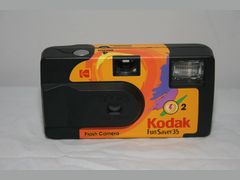
They can. Kodak's single-use camera is loaded with 800-speed film, the same speed as Instax, so treat them like unused film: carry-on only, and ask for a hand inspection. Kodak Alaris says TSA told it all screeners are trained to hand check single-use cameras. See our [best disposable cameras](/cameras/best-disposable-cameras/) guide for the models.
Sources: kodakprofessional.com, kosmofoto.com
Will TSA ruin my digital camera?
No. Tests in 2004 by I3A, SanDisk and TSA found no evidence of X-ray damage to memory cards or the images on them. Only unprocessed film needs special handling, though spare lithium batteries for any camera must stay in your carry-on.
Sources: photographyblog.com, tsa.gov
Should I take instant film out of the foil for security?
Instax says no: leaving the film in its sealed foil wrapper can speed up a manual inspection. Photodom disagrees and suggests opening the foil beforehand, because the attendant will most likely open it anyway. Either way, take the packs out of their cardboard boxes, as OldCamsByJens suggests.
Sources: instax.co.uk, photodom.blog, oldcamsbyjens.com
Do lead-lined film bags work at airports?
Richard Photo Lab says they are no longer recommended: the X-ray operator can't see inside, so they may turn up the machine's power until they can, which cancels the bag's protection. Photodom still suggests one for trips where a hand check may be refused. Polaroid and Fujifilm both point to a hand inspection instead.
Sources: richardphotolab.com, photodom.blog, polaroid.com, kosmofoto.com
How long does a film hand check take?
Usually a few minutes. OldCamsByJens says it adds maybe two minutes; Analog Postal says it is usually quick, around 15 minutes at most, and suggests arriving 30 minutes earlier than usual if you carry a lot of film.
Sources: oldcamsbyjens.com, analogpostal.com
Sources
Every fact on this page comes from one of these. How we choose and check sources is in our methodology.
Show all 25 sources
official 15
- TSA: Film (What Can I Bring?)
- TSA: Computed Tomography
- TSA: Oversight hearing testimony, May 20, 2025 (CT deployment numbers)
- TSA: CT screening technology installed at Juneau International Airport, July 13, 2026
- TSA: Lithium batteries with 100 watt hours or less in a device
- Polaroid: Off to the airport? Here's how to protect your instant film
- Polaroid: Color i-Type Film
- Polaroid: Color 600 Film
- Polaroid: SX-70 Film
- Fujifilm US: Traveling with your INSTAX film, camera or Smartphone printer (PDF, February 10, 2020)
- Fujifilm US: instax mini Film
- Instax UK: How to take your instax camera and film on holiday
- Instax UK: Can I take my film through airport X-Ray machines?
- Kodak: Transporting & Storing Film
- Kodak Alaris: Single Use Cameras
Independent blogs 5
- Richard Photo Lab: How to Travel with Film (and Avoid X-ray Damage)
- OldCamsByJens: Flying with Instant Film: Does Polaroid and Instax Fog in Airport X-Rays?
- Analog Postal: How to Fly with Film: A Comprehensive Guide
- Photodom: How To Travel With Film
- Down the Road (Jim Grey): Are airport CT scanners as bad for your film as everyone fears?
Editorial reviews 3
retailer 1
Forums 1
Keep reading
Instant cameras
Polaroid 600 film is ISO 640 with a battery in every 8-photo pack and costs $20.99. See which cameras take 600, i-Type, SX-70 or Go film, and how to store it.
Instant cameras
Yes. Polaroid film is best used within 12 months of the production date on the box. How to read the date, store packs, test old film and keep prints.
Instant cameras
Polaroid vs Instax: Instax Mini costs $0.77-0.91 a photo and develops in 90 seconds. Polaroid gives a bigger picture for $2.13-2.37. Here is which to buy.
Instant cameras
The best instant camera for most people is the Instax Mini 13, $89.95 in October 2026. See 8 picks from reviewer consensus, plus Polaroid film cost per photo.
Film cameras
The Kodak FunSaver is the best disposable camera for most people. Seven picks for color, black and white and water, with US prices checked October 2026.
Instant cameras
An instant camera prints a photo that develops itself in 90 seconds to 15 minutes. Compare Instax and Polaroid film, cost per shot and 2026 camera prices.