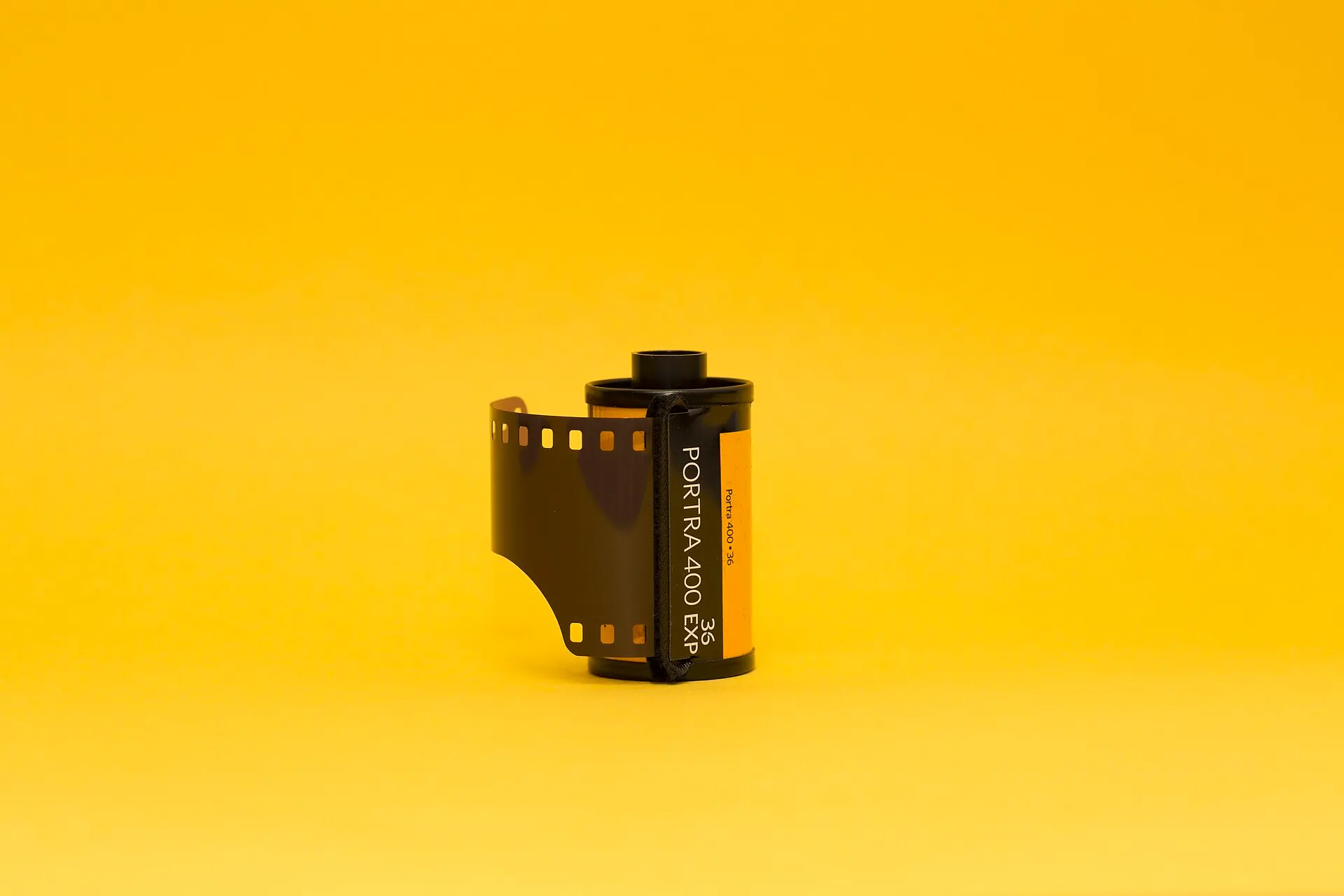
Kodak Portra 400: how it looks, how to shoot it, what it costs
The short answer
Kodak Portra 400 is an ISO 400, C-41 color negative film known for natural, slightly warm skin tones, very fine grain for its speed and a wide tolerance for overexposure.
A 36-exposure 35mm roll costs $15.99 to $18.50 at US film shops (October 28, 2026). Of the 113 opinions collected here from owners, reviewers and labs, 79 are positive, 17 mixed and 17 negative, and price is the most common complaint.
- Box speed
- ISO 400
- Process
- C-41
- Formats
- 35mm, 120, sheet film
- 35mm roll
- $15.99-18.50
Built from 113 opinions from 31 pages and videos. Not yet tested by Camera Dojo. Updated .
The short version
It is not the film for everything. Its restrained palette disappoints people who want punchy, saturated color straight from the scan (Rhode Island Film Lab sends them to Kodak Ektar 100), dim tungsten interiors need a push or extra light, and underexposure, not overexposure, is what ruins it. Many shooters give it extra light by rating it at ISO 200 to 320.
One 2026 wrinkle: Eastman Kodak, which makes the film, took distribution back from Kodak Alaris in March 2026 and sells its 400-speed pro color film as Ektacolor Pro 400, because Alaris owns the Portra name. Kosmo Foto says the Ektacolor Pro films appear to be new branding for Portra, but Kodak has not said so. Both boxes are on US shelves.
Good fit if
- You shoot people: portraits, weddings, family and street. Skin tones are what Portra is known for.
- You shoot in light you can't control, or moments you can't reshoot.
- You meter loosely or use a camera with a simple meter: a stop or two of overexposure barely shows.
- You want one color film for sun, shade and a push to 800 at dusk.
- You shoot 120 or sheet film and want very fine grain at ISO 400.
Think twice if
- You want bold, saturated color for landscapes or graphic street work. Ektar 100 is the usual pick.
- You shoot a lot of casual 35mm on a budget. Kodak Gold 200 and Ultramax 400 cost less.
- You shoot mostly indoors at night without flash. Portra 800 or a push gives more room; see Portra 400 vs 800.
- You tend to underexpose. Thin Portra negatives turn muddy and grainy.
Photos shot on Kodak Portra 400
Photos shot on Kodak Portra 400 in 35mm and 120, shared under free licenses on Wikimedia Commons.
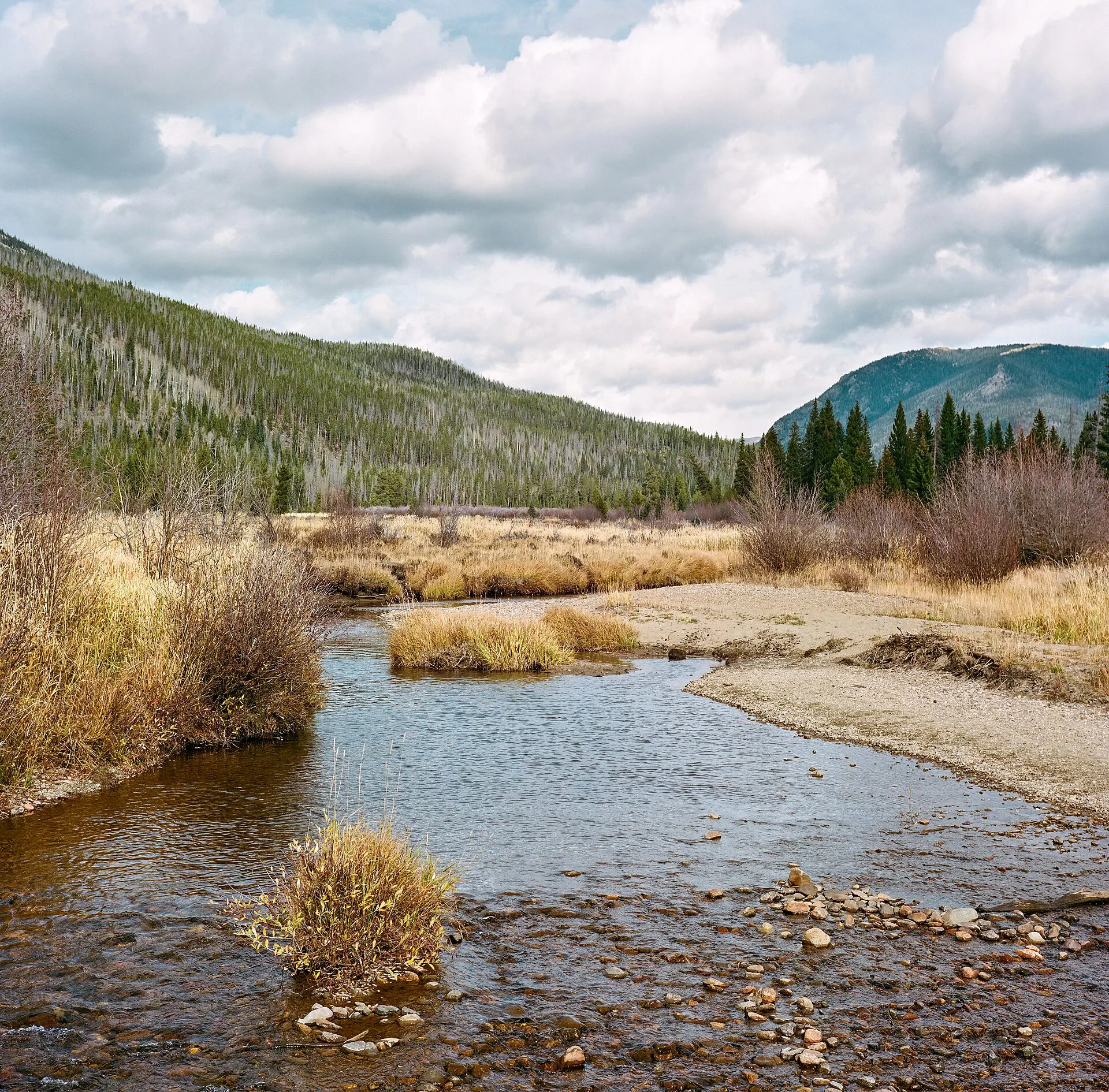
Colorado River near Holzwarth Historic District, Rocky Mountain National Park, Colorado, October 2024. Rolleiflex 3.5F.Photo: Frank Schulenburg, CC BY-SA 4.0 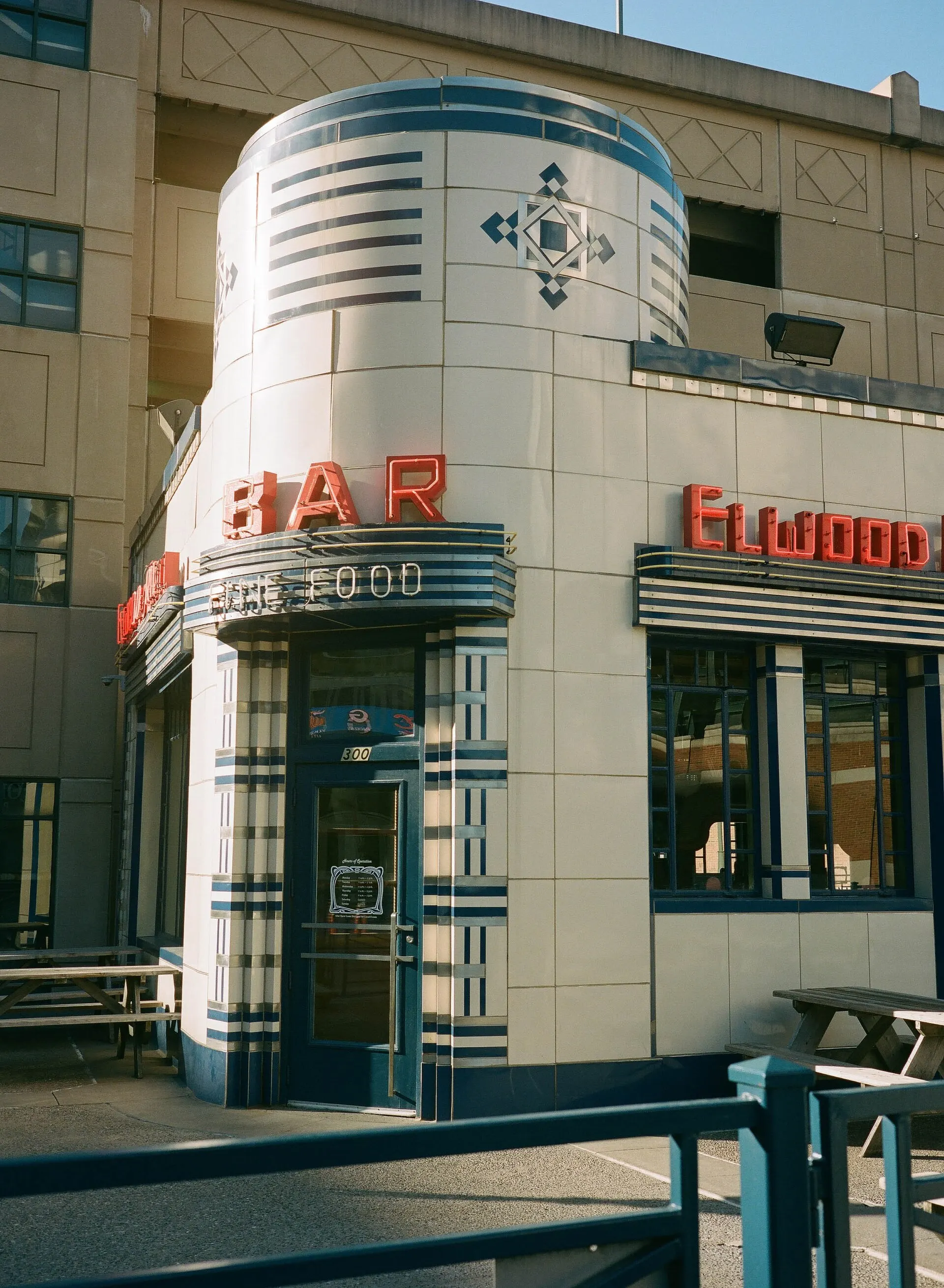
Detroit, April 2019. Fujifilm GA645i.Photo: Dane from Oxford, Mi, CC BY 2.0 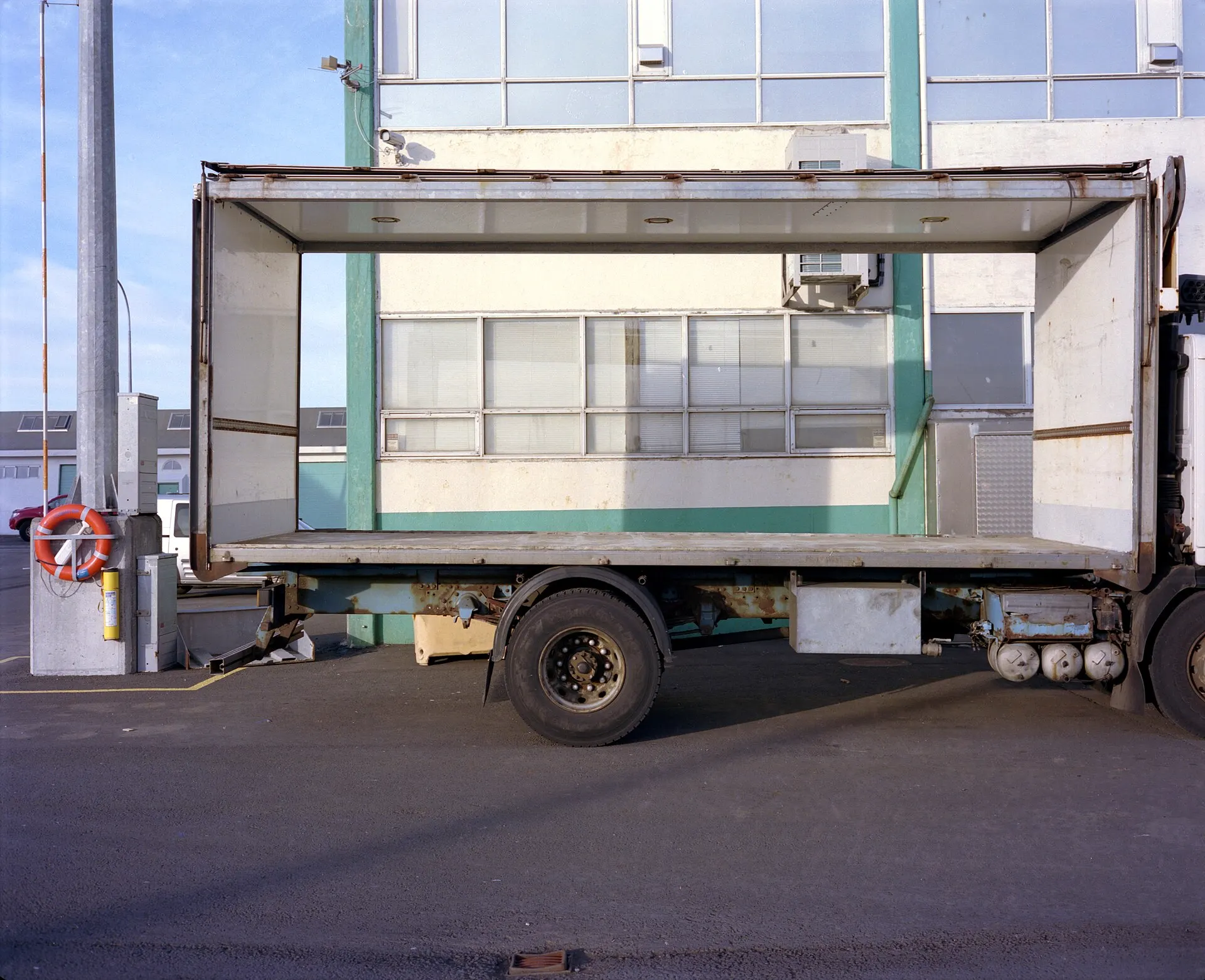
Reykjavik, Iceland, October 2012. Plaubel Makina 67.Photo: laurent gauthier from Rennes, France, CC BY 2.0 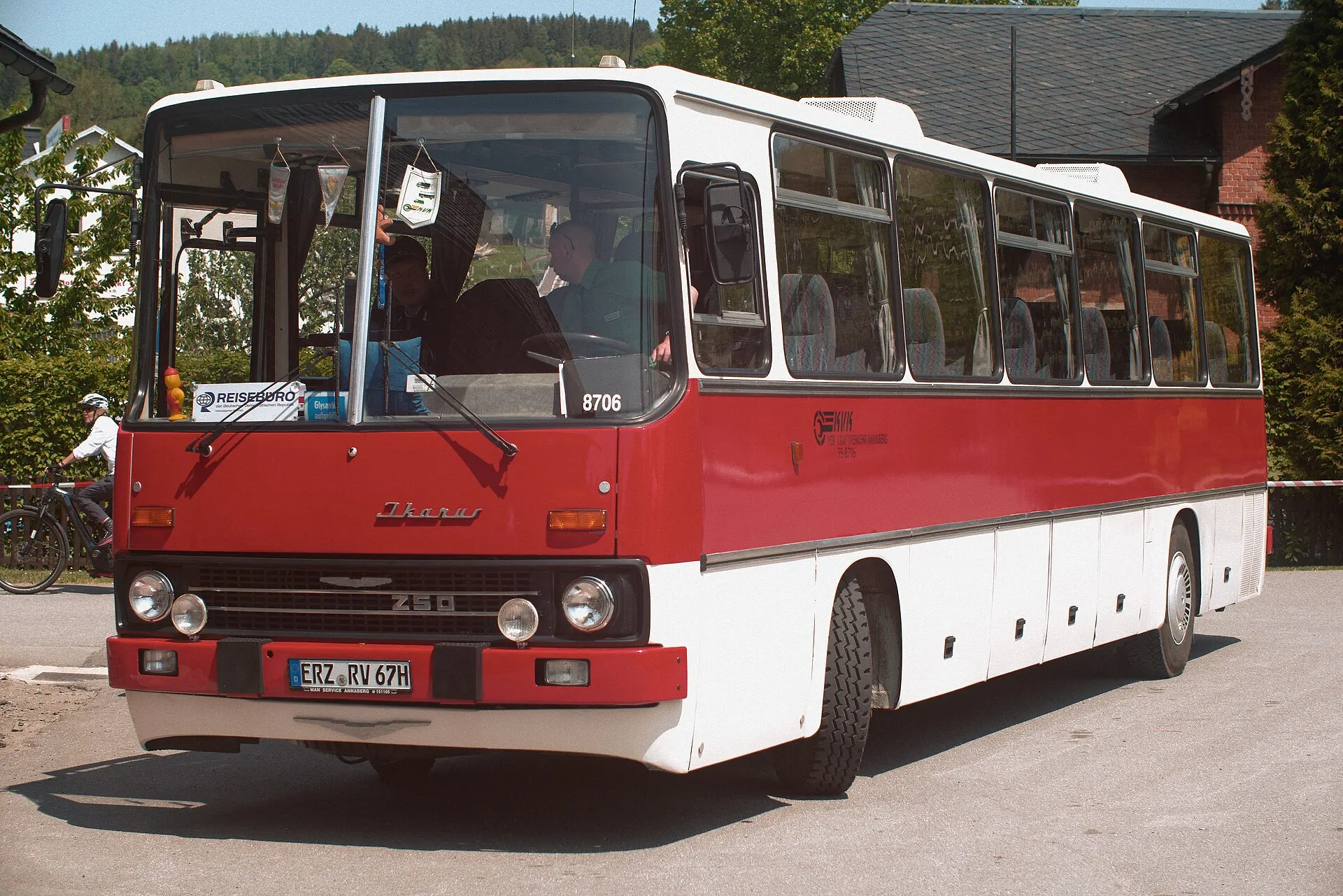
Ikarus 250 bus at Steinbach station on the Pressnitztalbahn, Germany, May 2023.Photo: Windo Wanda, CC BY-SA 4.0 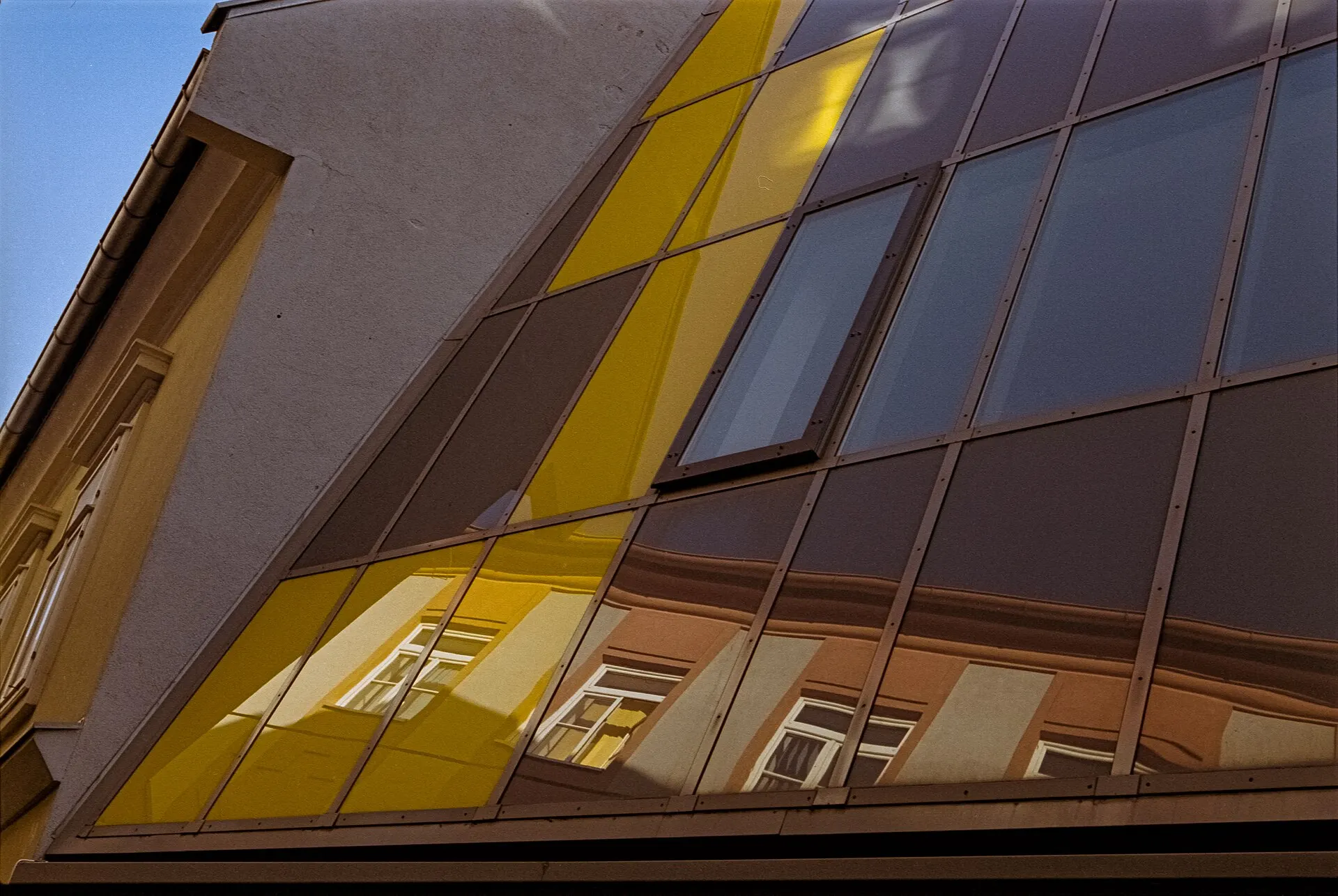
Graz, Austria, 2019.Photo: ::ErWin, CC BY-SA 2.0 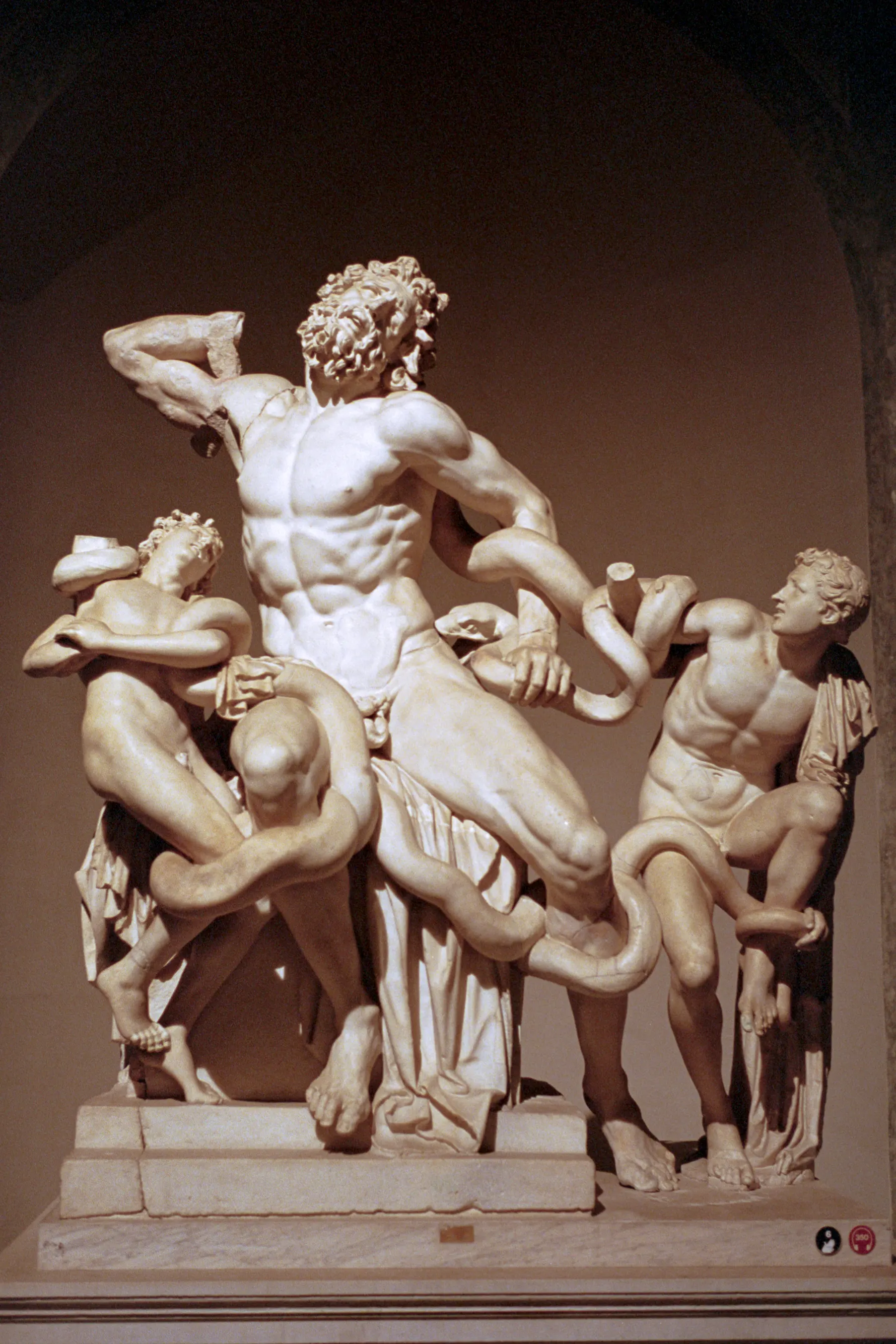
Laocoon and His Sons at night, Vatican. Leica M6 with a 50mm Summilux.Photo: Sodacan, CC BY-SA 4.0
What owners and reviewers say, topic by topic
We sorted 113 opinions about the Portra 400 from 31 pages and videos on 23 websites and channels. Each row shows how many people raised a topic and how many of them were positive. Open a row to read short quotes, each linked to its source.
Reddit threads, Quora and store reviews could not be read, so the opinions here come from photographers' blogs, lab guides, editorial reviews, the Flickr Portra group and five YouTube reviews. Several of the labs and shops quoted sell or develop the film.
Exposure latitude82% positiveof 22
The most praised trait. Sources agree it takes two stops of overexposure easily, and labs found usable, detail-holding images at three and four stops over, with some color or contrast shift that far out. Underexposure is the weak side: one video test saw muddy shadows and midtones at two stops under.
“It has an exposure latitude that just does not seem to end”
James Madison, Fstoppers 2020Owner
“I always rate my Portra 400 at 320. Actually, I always overexpose my negative films by 1/3 a stop.”
Flickr Portra groupOwner
“The wall on the outside still has plenty of detail, I have no way of knowing, how far from burning out it actually is.”
mindennapi fotós mocsok (theyallhatesheep.blogspot.com) 2013-03Owner
“as you overexpose more, red tones start to creep into your picture”
Richard Photo LabHands-on review
Pushing and pulling67% positiveof 15
Mostly positive. A one-stop push to 800 is widely called clean, a two-stop push to 1600 works with more grain and contrast, and some go further. Some small labs don't push C-41, and at 3200 one lab says color shifts significantly while a commenter on a 3200 test called the color awful.
“I personally under-rate this film to 1600 ALL THE TIME when shooting weddings”
Flickr Portra groupOwner
“The result will be a more contrasted look and sharper than if I had shot at ISO 400.”
Michael FilOwner
“I have done exactly this at 11pm at night under artifical lighting where I had to expose at 3200”
The Figital Revolution 2010-11Owner
“Pushing it to 1600 starts to get a bit iffier, but it can be done.”
Zeb Andrews, Blue Moon Camera Codex 2025-12Hands-on review
Color69% positiveof 13
Mostly positive. Owners and labs describe natural, slightly warm color that is never oversaturated, and some prefer it to digital. The mixed notes say it can look plain next to more saturated films and picks up a teal cast at four or more stops over; one commenter's bland roll was, he later suspected, underexposed.
“The colors aren't overly saturated but it still has a gorgeous vibrance that mimics reality.”
Myles Katherine Photography 2025-04Owner
“It has an amazing way of rendering colors in such a way that digital photographs just cannot compare.”
James Madison, Fstoppers 2020Owner
“Kodak Portra has a wonderful palette of saturated colors and each color will stick out in your photos.”
Morten Byskov, 5050 Travelog 2023-02Owner
“greens and blues tending to 'pop' more than in reality, but this is no bad thing, as the results are fantastic”
Gareth Bevan, Digital Camera WorldHands-on review
Overall look58% positiveof 12
Mostly positive, with pushback. Fans call it the king of color films and a near-perfect all-rounder for portraits, landscapes and street. Critics say its muted palette is wrong for punchy color and that it is good but overhyped.
“Portra 400 is not the right film if your goal is saturated, punchy color.”
“Even at box speed it has a muted palette that I love.”
“Images have a nostalgic feel as we associate this look with days gone by.”
Morten Byskov, 5050 Travelog 2023-02Owner
“It's a suitable replacement for 400h for sure, and that's the main concern really.”
Twin Lens Life 2010-12Hands-on review
Skin tones100% positiveof 11
Every mention is positive. This is what Portra is known for: warm, accurate, flattering skin across a wide range of light, which is why wedding and portrait photographers rely on it.
“If there's something that the Portra range is known for, it's brilliant skin tones.”
Max Kent 2024-01Owner
“I do find Kodak Portra film to have the prettiest skin tones of all of the film stocks out there.”
Myles Katherine Photography 2025-04Owner
“plays nice with skin tones in soft light”
Brendan KragelHands-on review
“It renders complexions with warmth and accuracy across a wide range of lighting conditions”
Grain88% positiveof 8
Positive. Reviewers call the grain very fine for ISO 400, one says it is impossible to spot in 4x6 prints, and a lab says 120 is noticeably finer than 35mm. The one negative note is about heavy underexposure, which brings grain up fast.
“The grain is extremely fine for a 400 speed film.”
Myles Katherine Photography 2025-04Owner
“Portra 400 has less noticeable grain than Portra 800 but neither of them really has a 'crunchy' or 'harsh' grain.”
Max Kent 2024-01Owner
“has solid grain for ISO 400”
Brendan KragelHands-on review
“The 120 format produces noticeably finer grain at the same ISO due to the larger negative size.”
Price and availability0% positiveof 8
The main complaint. Owners call it too expensive to shoot all the time, especially in 120, and say prices have climbed with demand and tight supply. One reviewer still says you get what you pay for.
“Unfortunately, it's just a bit too expensive to shoot with consistently.”
Myles Katherine Photography 2025-04Owner
“Unfortunately, as with all film, the price has risen a great deal over the last few years”
Max Kent 2024-01Owner
“Not a cheap film, by any means, though you do get what you pay for.”
Casual PhotophileOwner
“Despite the rising cost of film, the Kodak Portra 400 still seems to be in high demand.”
Morten Byskov, 5050 Travelog 2023-02Owner
Consistency86% positiveof 7
Positive. Owners say results are predictable enough to picture a frame before it is developed, across temperatures and light; one bracketing test saw small color differences between exposures.
“I always know what I'm going to get with Kodak Portra 400.”
Myles Katherine Photography 2025-04Owner
“It comes through in a pinch and helps me finish what I've started.”
“It is so remarkably consistent that after a while, you can know what your shot will look like before you even have it processed.”
James Madison, Fstoppers 2020Owner
“I found that all pictures look OK but that the colors are slightly different.”
Flickr Portra groupOwner
Low light and night50% positiveof 6
Leans positive, with limits. It stretches into dusk and kept some shadow detail in one dive-bar test, but dim tungsten interiors usually need a push or more light, and one writer failed with artificial light alone. Long exposures past 1 second need extra time.
“I've tried (and failed) to shoot it late in the evening with only artificial light.”
James Madison, Fstoppers 2020Owner
“Portra 400 lets you squeak the last bit of light out of the day and get what you need.”
“I've always found Portra 400 to be really good even in low light (especially since it has such good exposure latitude)”
Max Kent 2024-01Owner
“In dim or tungsten-heavy interiors, you'll likely need to push it or add some extra light.”
Natalie Carrasco, Long Weekend Zine 2025-05Hands-on review
Sharpness and detail100% positiveof 5
All positive. Owners and reviewers describe it as sharp with good contrast, and one found strong resolution in large scans.
“Generally, the whole Portra range is very high quality, it's sharp, fairly pastel and it has fine grain.”
Max Kent 2024-01Owner
“out of all of the film stocks I've ever tried, I do find Kodak (especially Kodak Portra) to be the sharpest of all of them.”
Myles Katherine Photography 2025-04Owner
“I found amazing resolution, and the beautiful grain that was rumored.”
Twin Lens Life 2010-12Hands-on review
“the film's sharpness in testing was excellent, with great contrast throughout the image”
Gareth Bevan, Digital Camera WorldHands-on review
Scanning and printing40% positiveof 5
Split. It scans cooperatively thanks to its wide tonal range, but automated lab scanners can clip its highlights, and home scanners report blue-channel and pink casts that need correcting.
“everything is good apart from overcast skies have a faint pinkness to them”
Flickr Portra groupOwner
“It's one of the more cooperative films in a scanning workflow”
Natalie Carrasco, Long Weekend Zine 2025-05Hands-on review
“every time I scan portra 400 I get this blue channel that extends almost a whole stop past the green/red channels”
Flickr Portra groupOwner
“When photo finishing labs develop and scan, the computerized scanners tend to clip the highlights.”
PositiveMixedNegative
What does Kodak Portra 400 look like?
Rhode Island Film Lab sums up the palette as natural and slightly warm, never oversaturated, with color tuned for skin. Brooklyn Film Camera adds natural greens and soft to moderate contrast, and Casual Photophile notes that whites are rarely blown out even on overexposed shots. Kodak Alaris calls it the world's finest-grain high-speed color negative film.
Grain depends on format. Kodak's Print Grain Index, where 25 is roughly the point at which grain becomes visible, puts a 35mm frame printed 4x6 at 37 and a 6x6 frame from 120 at 25, according to Kodak's data sheet and Blue Moon Camera's reading of it. Casual Photophile is more upbeat: it says grain is impossible to spot in 4x6 prints and that even 8x10 enlargements show none, without saying which format it shot. Rhode Island Film Lab says color and latitude are identical in 35mm and 120, with noticeably finer grain in 120; more on the trade-off in 35mm vs 120 film.
The current emulsion dates from late 2010, when Kodak replaced Portra 400NC (natural color) and 400VC (vivid color) with a single film built on technology from its Vision motion picture films. Photos labeled 400NC or 400VC show the older films.
| Negative | 4x6 print | 8x10 print | 16x20 print |
|---|---|---|---|
| 35mm | 37 | 59 | 89 |
| 6x6 cm (120) | 25 | 37 | 59 |
| 4x5 sheet | Less than 25 | Less than 25 | 36 |
Sources: rifilmlab.com, brooklynfilmcamera.com, casualphotophile.com, kodakprofessional.com, kodakprofessional.com, bluemooncameracodex.com, en.wikipedia.org
How to expose Kodak Portra 400
Color negative film forgives too much light far better than too little, and Portra 400 is one of the most forgiving. These are the habits owners and labs describe.
- 1
Rate it at 200 to 400
Box speed works, but many shooters set ISO 200 to 320 and develop normally for denser negatives and smoother shadows. Moment's tip: if your camera has no exposure compensation dial, set the ISO dial to 200.
- 2
Do not underexpose
Underexposure is what spoils Portra: two stops under gives muddy shadows and midtones, Kyle McDougall found in his exposure test. Snow can fool a meter into underexposing, and Moment suggests adding 1 to 2 stops there; a Casual Photophile commenter suspected white blossoms did the same to his muddy roll.
- 3
Don't fear overexposure
Blue Moon Camera says up to 2 stops over shows no appreciable loss, and Casual Photophile says it can still make striking images four stops over. Canadian Film Lab, which tested four stocks including Portra 400, lost no highlight detail at four over but saw a slight color or contrast shift in some frames, and more magenta in the highlights from +3. Richard Photo Lab saw red tones creep in and prefers to stay close to box speed, so a stop or two over is the zone most sources trust.
- 4
Push when the light goes
In dim light, shoot the whole roll at 800 or 1600 and ask the lab to push it. Blue Moon Camera finds a one-stop push close to Portra 800.
- 5
Add time for long exposures
Kodak's data sheet says no correction is needed from 1/10,000 s to 1 s. Blue Moon Camera adds about half a stop for 1 to 10 seconds, and at least a full stop, maybe two, from 10 seconds to a minute.
- 6
Use a filter under tungsten bulbs
Portra 400 is balanced for daylight and flash. Under 3200 K tungsten light, Kodak's data sheet calls for a No. 80A blue filter and a speed of ISO 100. Without the filter, plan on correcting color when the film is scanned, and Long Weekend says dim tungsten rooms usually need a push or more light anyway.
Sources: shopmoment.com, youtube.com, casualphotophile.com, bluemooncameracodex.com, canadianfilmlab.com, richardphotolab.com, kodakprofessional.com, longweekendgear.com
How far can you push or overexpose Portra 400?
Here is what labs, reviewers and Flickr's Portra group report at each speed setting. Opinions split at the edges: Blue Moon Camera has seen Portra overexposed by as much as 9 stops still produce an image, though it does not recommend it, while Richard Photo Lab prefers to stay close to box speed.
Pulling is rare. Moment describes pulling as metering at 200 and asking the lab to pull a stop, but says it is far less popular than simply rating the film at 200 to 320 and developing normally. The technique is covered in how to push and pull film.
| Rated at | Development | What sources report |
|---|---|---|
| EI 50 to 100 (2 to 3 stops over) | Normal | Up to 2 stops over shows no appreciable loss (Blue Moon Camera); 3 stops over is still usable (Rhode Island Film Lab) |
| EI 200 to 320 | Normal | A common choice for denser negatives and smoother shadows (Moment) |
| EI 400 | Normal | Box speed; Film Supply Club says it gives ideal color in direct front light |
| EI 800, not pushed (1 stop under) | Normal | Easy to get away with: a little less shadow detail and more grain (Blue Moon Camera, Flickr Portra group) |
| EI 800 | Push 1 stop | Minimal extra grain and accurate color (Rhode Island Film Lab); close to Portra 800 (Blue Moon Camera); more contrast and a sharper look (Michael Fil) |
| EI 1600 | Push 2 stops | Visible grain, higher contrast and slightly warm color, but it holds together (Rhode Island Film Lab); iffier but doable (Blue Moon Camera) |
| EI 3200 | Push 3 stops | Heavy grain, high contrast and big color shifts: a rescue push only (Rhode Island Film Lab) |
A push applies to the whole roll and costs extra (+$3 a roll at Rhode Island Film Lab), so write it on the lab order before you send the film.
Sources: bluemooncameracodex.com, richardphotolab.com, rifilmlab.com, shopmoment.com, youtube.com, flickr.com, michaelfil.com, rifilmlab.com
Developing and scanning Portra 400
Portra 400 is standard C-41, so any lab that develops color film can process it. Rhode Island Film Lab, for example, charges $10 to develop a 35mm roll and $18 for 120, or $18 and $28 with standard scans. More labs and prices are in how much it costs to develop film.
It scans well. Long Weekend calls it one of the more cooperative films in a scanning workflow, and Kodak listed improved scanning as a feature of the 2010 version. Automated lab scanning is one caution: a Flickr member says those scanners tend to clip the highlights, hiding how much detail Portra holds. If lab scans look soft, another member suggests asking for no sharpening and no noise or grain reduction.
Home scans bring their own casts. One Flickr member sees a stretched blue channel on every DSLR scan of Portra 400; another gets a faint pink in overcast skies on an Epson flatbed. Members' fixes: set the scanner to film negative with other options off, and remove the orange mask before color correcting. Our guides to scanning film at home and Negative Lab Pro cover the workflow.
Sources: filmphotographystore.com, rifilmlab.com, longweekendgear.com, en.wikipedia.org, flickr.com, flickr.com, flickr.com, flickr.com
Storing Portra 400 and flying with it
Heat is the most common cause of ruined Portra, says Rhode Island Film Lab, which suggests refrigerating film you won't shoot within a few months. Kodak's data sheet says to keep unexposed film at 70 F (21 C) or lower in its sealed package, or 55 F (13 C) for long periods, and to let refrigerated film warm up before opening it: about an hour for a 35mm cassette coming out of 55 F storage. Myles Katherine says rolls kept in her fridge for years still look like new.
At the airport, TSA allows film in carry-on and checked bags but recommends carrying undeveloped film on and asking for a hand inspection. Rhode Island Film Lab says traditional carry-on X-ray machines are generally safe for ISO 400 film through multiple passes, but CT scanners can fog it in a single pass. In a test reported in January 2020, Kodak Alaris saw smoky blacks and lost shadow detail after one CT pass of 35mm Portra 400 at JFK.
Ask for a hand check at security; the final decision rests with the TSA officer.
Sources: rifilmlab.com, kodakprofessional.com, myleskatherine.com, tsa.gov, kosmofoto.com
Portra 400 or Ektacolor Pro 400?
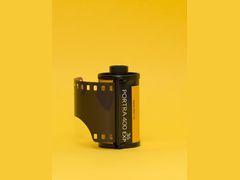 Kodak Portra 400 | Kodak Ektacolor Pro 400 | |
|---|---|---|
| Sold by | Kodak Alaris | Eastman Kodak, since March 2026 |
| Speed | ISO 400 color negative | 400-speed color negative |
| Roll film | 35mm (36 exp.) in 5-packs, 120 pro packs | 35mm (36 exp.) single and 5-pack, 120 5-packs |
| Sheet film | 4x5, 4x10, 5x7, 8x10, 11x14, 20x24 | 4x5 and 8x10 |
| Kodak's claim | World's finest-grain high-speed color negative film | World's sharpest and finest-grain 400-speed color negative film |
| 35mm roll at Film Photography Project Store | $15.99 | $15.99 |
| 120 5-pack at Film Photography Project Store | $73.99 | $73.99 |
| Same film? | Unconfirmed: Kosmo Foto says Ektacolor Pro appears to be new branding for Portra, with matching ISOs | Kodak's product pages don't say |
Pick the Kodak Portra 400 if
- You need 4x10, 5x7, 11x14 or 20x24 sheets.
- Your shop only stocks the Portra box.
Pick the Kodak Ektacolor Pro 400 if
- Portra 400 is sold out where you buy film.
- You buy from a shop that carries Eastman Kodak's range, such as CineStill.
Sources: kosmofoto.com, kosmofoto.com, kodakprofessional.com, kodak.com, filmphotographystore.com, filmphotographystore.com, filmphotographystore.com, filmphotographystore.com, cinestillfilm.com
What a roll of Portra 400 costs
New 36-exposure 35mm rolls cost $15.99 to $18.50 at US film shops, and 5-packs $76.95 to $84.99. In 120, single rolls run $14.99 to $17.50 and 5-roll pro packs $73.99 to $79.99. B&H, Adorama, Freestyle, Samy's and Walmart could not be checked, so they aren't listed.
Film Photography Project Store
New, 35mm, 36 exposures, 1 roll
$15.99
See listingLooking Glass Photographic Outfitters (Boulder, CO)
New, sold out, 35mm, 36 exposures, 1 roll
$16.99
See listingBrooklyn Film Camera (Brooklyn, NY)
New, 35mm, 36 exposures, 1 roll, in stock
$18.50
See listingMPEX (Columbus, OH)
New, 35mm, 36 exposures, 5-pack, in stock
$76.95
See listingFilm Photography Project Store
New, 35mm, 36 exposures, 5-pack ($16.00 a roll)
$79.99
See listingPro Photo Supply
New, 35mm, 36 exposures, 5-pack
$84.99
See listingFilm Photography Project Store
New, 120, 1 roll
$14.99
See listingPro Photo Supply
New, 120, 1 roll
$15.99
See listingLooking Glass Photographic Outfitters (Boulder, CO)
New, 120, 1 roll
$15.99
See listingBrooklyn Film Camera (Brooklyn, NY)
New, 120, 1 roll, in stock
$17.50
See listingFilm Photography Project Store
New, 120, 5-roll pro pack
$73.99
See listingPro Photo Supply
New, 120, 5-pack
$79.99
See listingFilm Photography Project Store
New, 4x5 sheet film, 10 sheets
$79.99
See listingFilm Photography Project Store
New, Ektacolor Pro 400 (Eastman Kodak box), 35mm, 36 exposures, 1 roll
$15.99
See listingCineStill Film
New, Ektacolor Pro 400, 35mm, 36 exposures, 5-pack; single roll out of stock
$79.99
See listingFilm Photography Project Store
New, Ektacolor Pro 400, 120, 5-roll pro pack
$73.99
See listingCineStill Film
New, Ektacolor Pro 400, 120, 5-pack
$75.99
See listing
Prices checked on October 28, 2026. They move every week, so treat them as a range, not a quote. Looking Glass listed its 35mm single as sold out. The Pro Photo Supply prices and the Looking Glass 120 price come from the stores' search results pages. At $15.99, a 36-exposure roll works out to about 44 cents a frame ($15.99 / 36) before developing. Kosmo Foto reported in September 2026 that US prices did not appear to have dropped the way UK prices did.
Technical data
Film
- Speed
- ISO 400
- Process
- C-41
- Edge print
- KODAK PORTRA 400, product code 516
- Current version
- Late 2010, replacing Portra 400NC and 400VC
Formats (Kodak Alaris)
- 120
- Pro pack
- Sheet sizes
- 4x5, 4x10, 5x7, 8x10, 11x14, 20x24
From Kodak's data sheet (E-4050, January 2025)
- Tungsten light (3200 K)
- ISO 100 with a No. 80A filter
- Reciprocity
- No correction from 1/10,000 s to 1 s
- Print Grain Index, 35mm at 4x6
- 37 (25 is about the visual threshold)
- Storage, unexposed
- 70 F (21 C) or lower; 55 F (13 C) for long periods
Who makes it
- Eastman Kodak version
- Ektacolor Pro 400, since March 2026
- Portra family introduced
- 1998
Video reviews worth your time

Testing The Exposure Limits Of Kodak's Portra 400 Film
Kodak Portra 400 offers impressive latitude against overexposure, remaining usable even several stops over, though underexposure quickly introduces grain and muddy shadows.

EKTAR 100 vs PORTRA 400 - A Review and Comparison of Two Kodak Color Negative Films
Kodak Portra 400 is a versatile color film renowned for natural skin tones and true-to-life colors, making it the preferred choice for portrait photography.

The Reason Everyone Shoots Portra 400 - In Depth Review!
Kodak Portra 400 is a versatile, reliable, and exceptionally sharp film stock with fine grain and forgiving exposure latitude.

Portra 400 Tips For BEST Results! (The most consistent film stock)
Kodak Portra 400 is an extremely versatile, consistent color film stock with excellent exposure latitude and balanced color rendering.

Kodak Portra 400 vs Kodak Ektar 100
Kodak Portra 400 is a highly versatile film that delivers natural skin tones and exceptional exposure flexibility across various lighting conditions.
Questions people ask about the Portra 400
Is Kodak Portra 400 still in production?
Yes. Eastman Kodak still makes it and Kodak Alaris still sells it as Portra 400; Alaris's product page was live in 2026. Since March 2026 Eastman Kodak also sells a 400-speed pro color film under its own name, Ektacolor Pro 400, because Alaris owns the Portra name. Kosmo Foto says it appears to be new branding for Portra, though Kodak hasn't said so.
Sources: en.wikipedia.org, kodakprofessional.com, kosmofoto.com, kosmofoto.com
How many photos does a roll of Kodak Portra 400 take?
A 35mm roll has 36 exposures. Kodak Alaris sells 35mm in 5-packs, so a pack holds 180 frames (5 x 36), as Digital Camera World notes. In 120 the count depends on your camera's frame size, and sheet film is one exposure per sheet, in boxes of 10, 25 or 50.
Sources: kodakprofessional.com, digitalcameraworld.com
When should I use Kodak Portra 400?
Use it when people are in the frame or the light is out of your control: portraits, weddings, travel, street, mixed light and anything you can't reshoot. Kodak Alaris pitches it for portrait, fashion, nature, travel and outdoor work, and Blue Moon Camera says it handles landscapes and still lifes too. For bright, predictable daylight on a tight budget, Rhode Island Film Lab suggests Gold 200 instead.
Sources: bluemooncameracodex.com, rifilmlab.com, kodakprofessional.com
Is Kodak Portra 400 worth the price?
For portraits, weddings and moments you can't repeat, most reviewers here say yes, for the skin tones, latitude and consistency. For casual 35mm it is harder to justify: at $15.99 to $18.50 a roll, Fstoppers finds it hard to rationalize next to the much cheaper Kodak Gold in 35mm, and Myles Katherine finds Portra too expensive to shoot all the time.
Sources: rifilmlab.com, fstoppers.com, myleskatherine.com, filmphotographystore.com, brooklynfilmcamera.com
Can you push Portra 400 to 800 or 1600?
Yes. A one-stop push to 800 shows little extra grain and keeps color accurate, says Rhode Island Film Lab, and Blue Moon Camera finds it close to Portra 800. At 1600, grain and contrast rise and color warms slightly, but the image holds together. Shoot the whole roll at the pushed speed and tell the lab before you send it.
Sources: rifilmlab.com, bluemooncameracodex.com, michaelfil.com
How many stops can you overexpose Portra 400?
Two stops is safe by nearly every account; Blue Moon Camera sees no appreciable loss. Rhode Island Film Lab calls three stops over still usable, and Canadian Film Lab, testing four stocks that included Portra 400, lost no highlight detail at four over, though color or contrast shifted slightly in some frames. Richard Photo Lab saw red tones creep in with heavy overexposure and prefers staying near box speed.
Sources: bluemooncameracodex.com, rifilmlab.com, canadianfilmlab.com, richardphotolab.com
Does Portra 400 need to be hand-checked at the airport?
Ask for it. TSA recommends carrying undeveloped film on and requesting a hand inspection. Rhode Island Film Lab says traditional carry-on X-ray machines are generally safe for ISO 400 film, but CT scanners can fog it in a single pass, and Fstoppers notes 400 is the fastest box speed before a hand check is advised.
Sources: tsa.gov, rifilmlab.com, fstoppers.com
What is the difference between Portra 400 and Portra 800?
Portra 800 is a stop faster, with more saturation, a slight yellow hue and a bit more grain, and Max Kent says it always costs more; Brooklyn Film Camera lists it at $20 a roll. Portra 400 is finer grained and more muted, and unlike 800 it comes in sheet film. A one-stop push of 400 gets close to 800, per Blue Moon Camera. Full comparison: [Portra 400 vs 800](/film/portra-400-vs-800/).
Sources: maxkent.co.uk, brooklynfilmcamera.com, fstoppers.com, bluemooncameracodex.com
What people compare it with
One stop faster for dim light and indoors, more saturated and a bit grainier, and not made in sheet film. Brooklyn Film Camera sells it for $20 a roll.
The slower sibling: softer and more pastel, for bright light. Brooklyn Film Camera sells it for $15 a roll.
Kodak's saturated, punchy color film; Rhode Island Film Lab sends vivid-color and landscape shooters there. It is ISO 100, so it needs more light.
The cheaper everyday Kodak color film. Rhode Island Film Lab says it is the right call in bright, predictable daylight on a tight budget.
Every source behind this page
Read them yourself. How we pick and count them is in our methodology.
Show all 57 sources
Manuals and references 26
- brooklynfilmcamera.com: Kodak Portra 400 Film
- cinestillfilm.com: KODAK EKTACOLOR PRO 400 Color Negative Film, 120 5-Pack 120 Medium Format, EI 400
- cinestillfilm.com: KODAK EKTACOLOR PRO 400 Color Negative Film, 35mm 135 36exp. EI 400
- en.wikipedia.org: Kodak Portra
- filmphotographystore.com: 120 Color Film - Kodak Ektacolor Pro 400 (5-Roll Pro Pack)
- filmphotographystore.com: 120 Color Film - Kodak Portra 400 (5-Roll Pro Pack)
- filmphotographystore.com: 120 Color Film - Kodak Portra 400 (Single Roll)
- filmphotographystore.com: 35mm Color - Kodak Ektacolor Pro 400 (1 roll)
- filmphotographystore.com: 35mm Color - Kodak Portra 400 (1 roll)
- filmphotographystore.com: 35mm Color - Kodak Portra 400 (5-Roll Pro Pack)
- filmphotographystore.com: 4x5 Sheet Film - Kodak Portra 400 (10 Sheets)
- kodakprofessional.com: Film Paragraph
- kodakprofessional.com: e4050.pdf
- kosmofoto.com: Kodak Alaris: Film damaged after just one pass in CT hand luggage scanners
- kosmofoto.com: Eastman Kodak reveals new Ektacolor Pro and Ektapan film ranges
- kosmofoto.com: Eastman Kodak is distributing all its films again. What happens next?
- kosmofoto.com: Eastman Kodak adds large format and bulk films to new film range
- mpex.com: Kodak Portra 400 Color Negative Film - 35mm Roll Film - 5
- prophotosupply.com: Search: 23 results found for "portra 400"
- rifilmlab.com: C-41 Film Developing Rhode Island
- flickr.com: Flickr: Discussing Weird effect on portra photos in Portra [Kodak Portra Film]
- kodak.com: EKTACOLOR PRO 400 Film
- lookingglassphoto.com: Kodak PORTRA 400 135-36exp Color Negative Film - Single Roll
- lookingglassphoto.com: Search: 13 results found for "portra 400"
- shopmoment.com: Kodak Portra 400 Review | The Film Stock Everyone Loves
- tsa.gov: Film
Independent blogs 16
- Myles Katherine Photography: Kodak Portra 400 Film Review
- Long Weekend Zine: Every Photographer's Guilty Non-Secret: Kodak Portra 400 Review
- Blue Moon Camera Codex: Film Friday Kodak Portra 400 Film Review with Sample Photos
- Rhode Island Film Lab: Kodak Portra 400
- 5050 Travelog: A Roll of Kodak Portra 400 and Nikon F3 HP
- Shoot Film, Ride Steel: Portra 400
- Brendan Kragel: Portra 400 Is Overrated - There, I Said It
- Michael Fil: Review: Pushing Kodak Portra 400 to 800 with examples ...
- Max Kent: Kodak Portra 400 VS Portra 800: What's The Difference?
- mindennapi fotós mocsok: mindennapi fotós mocsok: kodak's portra 400 vs 5d mark 2
- Canadian Film Lab: Kodak Portra and Fuji 400H comparisons and exposure tests
- Richard Photo Lab: Find Your Film: Stock and Exposure Comparisons
- The Figital Revolution: Kodak New Portra 400 Review Part 2
- The Figital Revolution: Kodak New Portra 400 Review Part 3: Usable EI Range
- The Figital Revolution: Kodak New Portra 400 Review Part 3a: 3200!
- Twin Lens Life: Twin Lens Life ~ Fine Art Film Photography ~ Los Angeles Southern California ~ Bwright Photography: It's Our Favorite Time of Light
Forums 7
- Flickr Portra group: Portra 400 at iso 100 accident
- Flickr Portra group: Flickr: Discussing Portra 400 PUSHED in Portra [Kodak Portra Film]
- Flickr Portra group: Flickr: Discussing Portra 400 in Portra [Kodak Portra Film]
- Flickr Portra group: Flickr: Discussing i dont know what happen, help in Portra [Kodak Portra Film]
- Flickr Portra group: Flickr: Discussing Rating Portra at speeds higher or lower than box speed. in Portra [Kodak Portra Film]
- Flickr Portra group: Flickr: Discussing dslr scanning porta 400 produces high contrast blue channel in Portra [Kodak Portra Film]
- Flickr Portra group: Flickr: Discussing Pink hue in Portra [Kodak Portra Film]
Video reviews 5
- Kyle McDougall: Testing The Exposure Limits Of Kodak's Portra 400 Film
- Dan Bullman Photography: EKTAR 100 vs PORTRA 400 - A Review and Comparison of Two Kodak Color Negative Films
- Skyler Wagoner: The Reason Everyone Shoots Portra 400 - In Depth Review!
- KingJvpes: Portra 400 Tips For BEST Results! (The most consistent film stock)
- Film Supply Club: Kodak Portra 400 vs Kodak Ektar 100
Editorial reviews 3
Keep reading
Film stocks
Portra 400 vs 800: 400 has finer grain, sheet sizes and a lower price; 800 adds a stop of speed and pushes to 1600. October 2026 prices and when to pick each.
Film stocks
Kodak Portra 160 is a fine-grain ISO 160 color film, $13.99 to $17.99 a 35mm roll in Oct 2026. What 148 opinions say about skin tones, latitude and low light.
Film stocks
Kodak Ektar 100 is an ISO 100 color film with very fine grain, $13.99 to $19.00 a 35mm roll. What 141 opinions say about color, skin tones and exposure.
Film stocks
How to push film: what a stop means, what to set on your camera, how to tell the lab, one-stop fees from $0 to $4, home development times and how to pull film.
Film stocks
35mm vs 120 film: common 120 frames are 2.7 to 5.4 times bigger than 35mm but give 8 to 16 shots a roll. Cost per frame, lab prices and which to pick.
Developing and scanning
A roll of 35mm film costs $5 to $11.50 to develop at US labs, or $11.50 to $29 with scans. Prices from 12 labs and the big chains, checked October 2026.