Kodak Ultramax 400: what it looks like and how to shoot it
The short answer
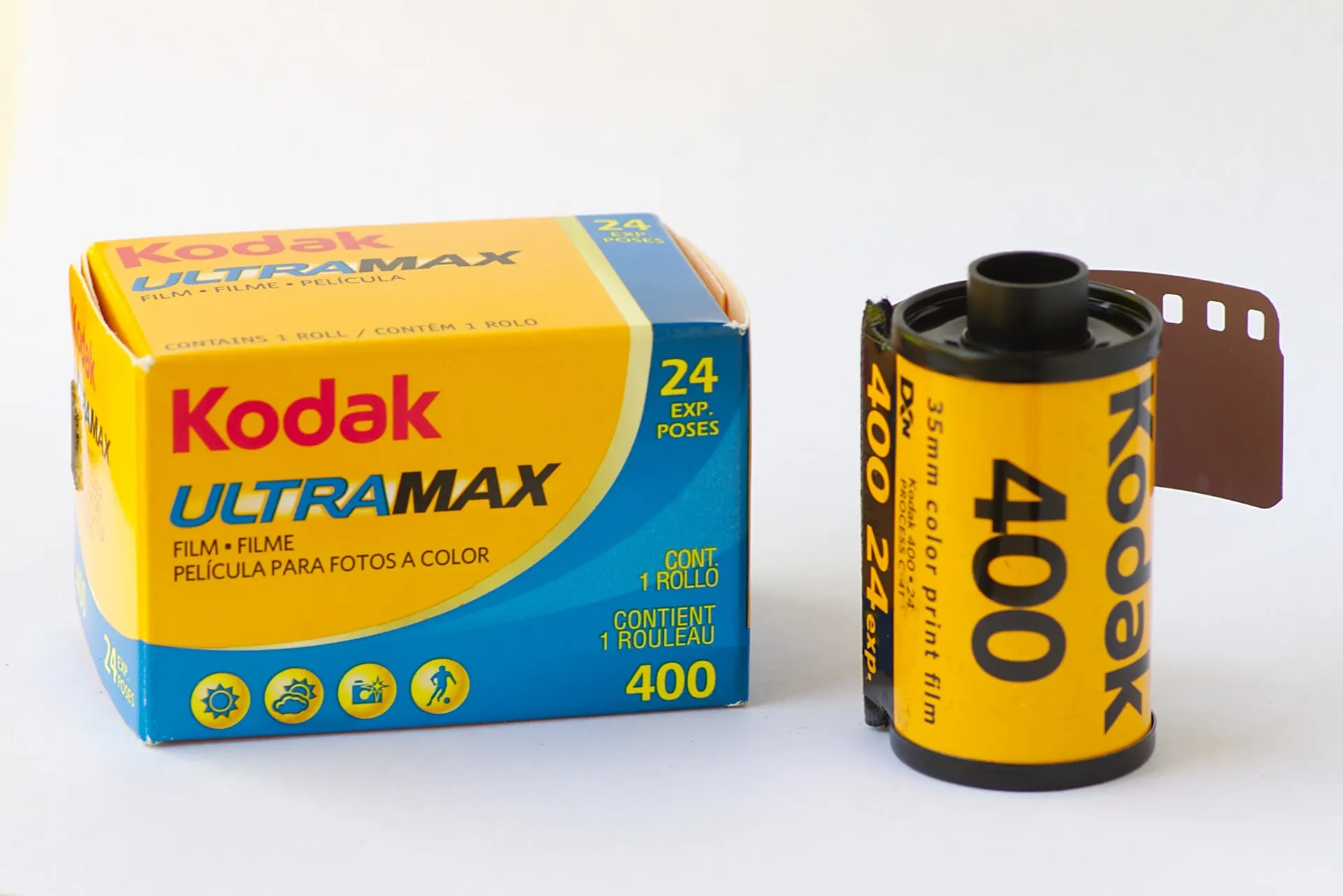
Kodak Ultramax 400 is a daylight-balanced ISO 400 color negative film (C-41) sold only in 35mm, and a 36-exposure roll cost $8.69 to $11.50 at US camera shops on October 28, 2026.
Reviewers like its punchy color, natural skin tones and forgiving exposure, and Analog.Cafe calls it maybe the best general-purpose ISO 400 film. The trade-offs are visible grain, color casts in gray or artificial light, and grainy, greenish shadows when it is underexposed.
- Speed
- ISO 400
- Process
- C-41
- Format
- 35mm, 24 or 36 exp
- Print Grain Index
- 46 (Analog.Cafe)
Built from 121 opinions from 24 pages and videos. Not yet tested by Camera Dojo. Updated .
The short version
Ultramax is the roll people load for trips, family days and thrift-store point-and-shoots. It is one stop faster than Kodak Gold 200, so it copes better with shade and bright interiors, and it costs about $6 less per roll than Kodak Portra 400 at Brooklyn Film Camera ($11.50 against $17.50). It still likes light: give it a little extra exposure rather than too little, and expect more grain than Portra when you crop in, and less latitude in harsh contrast.
Good fit if
- You want one color film for sun, shade and well-lit interiors.
- You shoot a point-and-shoot or auto-exposure camera: the roll is DX-coded, so the camera sets ISO 400 itself.
- You are learning film and want a cheap roll that forgives metering mistakes.
- You like punchy, saturated color more than Portra's softer look.
- You need a cheap test roll for a camera you just bought, as Derek Drapeau uses it.
Think twice if
- You want fine grain for big prints or tight crops. Portra 400 and Ektar 100 are finer.
- You shoot mostly under tungsten or mixed indoor light without flash. Colors drift, and a tungsten-balanced film such as CineStill 800T suits that work better.
- You shoot mostly on gray, rainy days and dislike color correction. Analog.Cafe finds the shadow casts hard to fix, though Kubus Photo says it handles overcast light well.
- You need 120 or sheet film. Ultramax 400 is sold in 35mm only.
Photos shot on Kodak Ultramax 400
Frames shot on Ultramax 400 by Wikimedia Commons contributors, in cameras from a Hanimex 35es to a Nikon EM; the reviews by Roberta Baker and Parallax Photographic show more.

Mount Dandenong, Victoria, Australia, 2017, Hanimex 35esPhoto: Matthew Paul Argall from Australia, CC BY 2.0 
Pohick Creek, Virginia, 2013, Nikon EMPhoto: dw_ross from Springfield, VA, USA, CC BY 2.0 
Heliconia flowers, 2009, Minolta XG-MPhoto: Vee Satayamas, CC BY 4.0 
Canon EOS-1N with a Sigma 105mm lens, 2014Photo: Kevin Dooley from Chandler, AZ, USA, CC BY 2.0 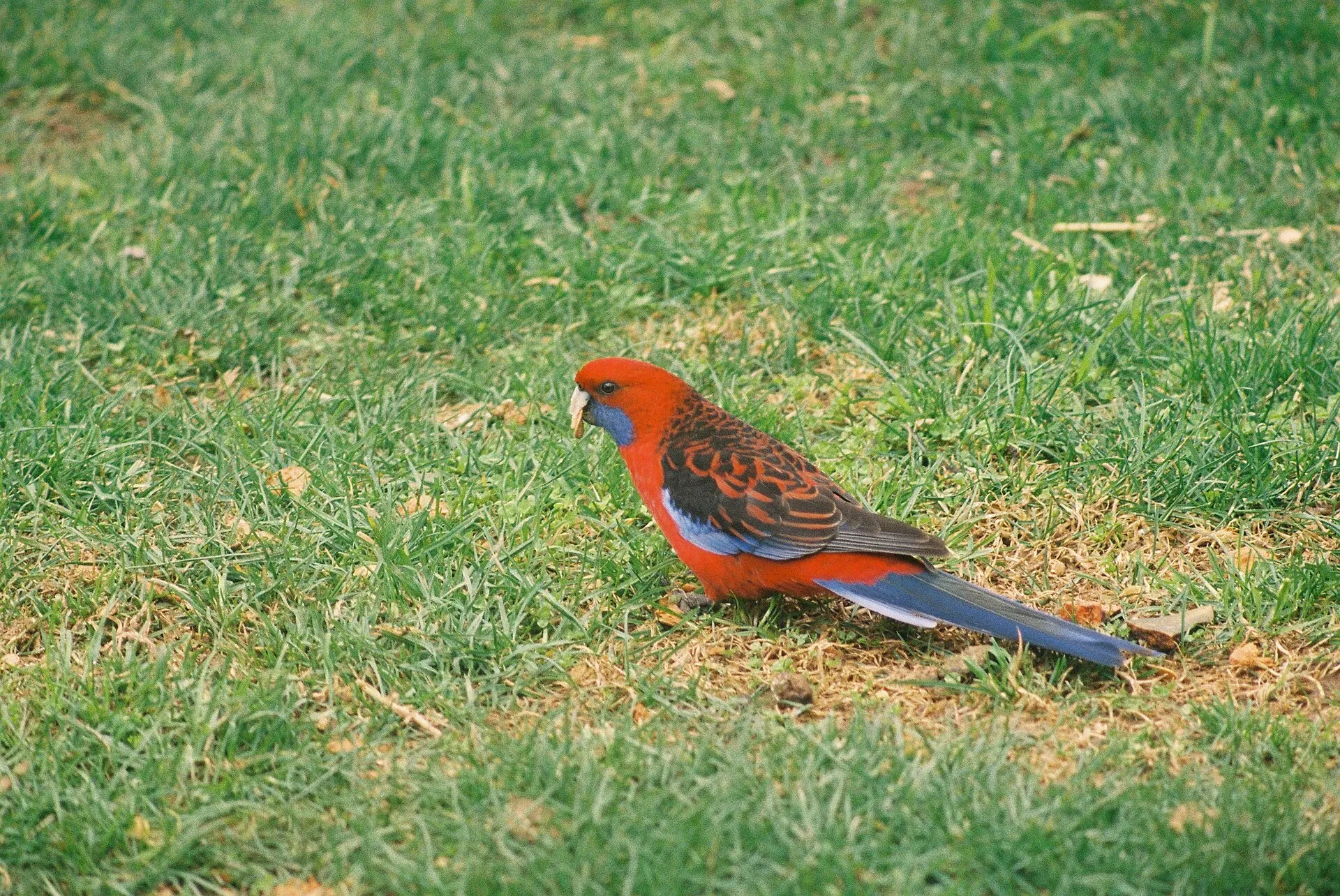
Male crimson rosella, 2026Photo: Ungherkedkin, CC BY-SA 4.0 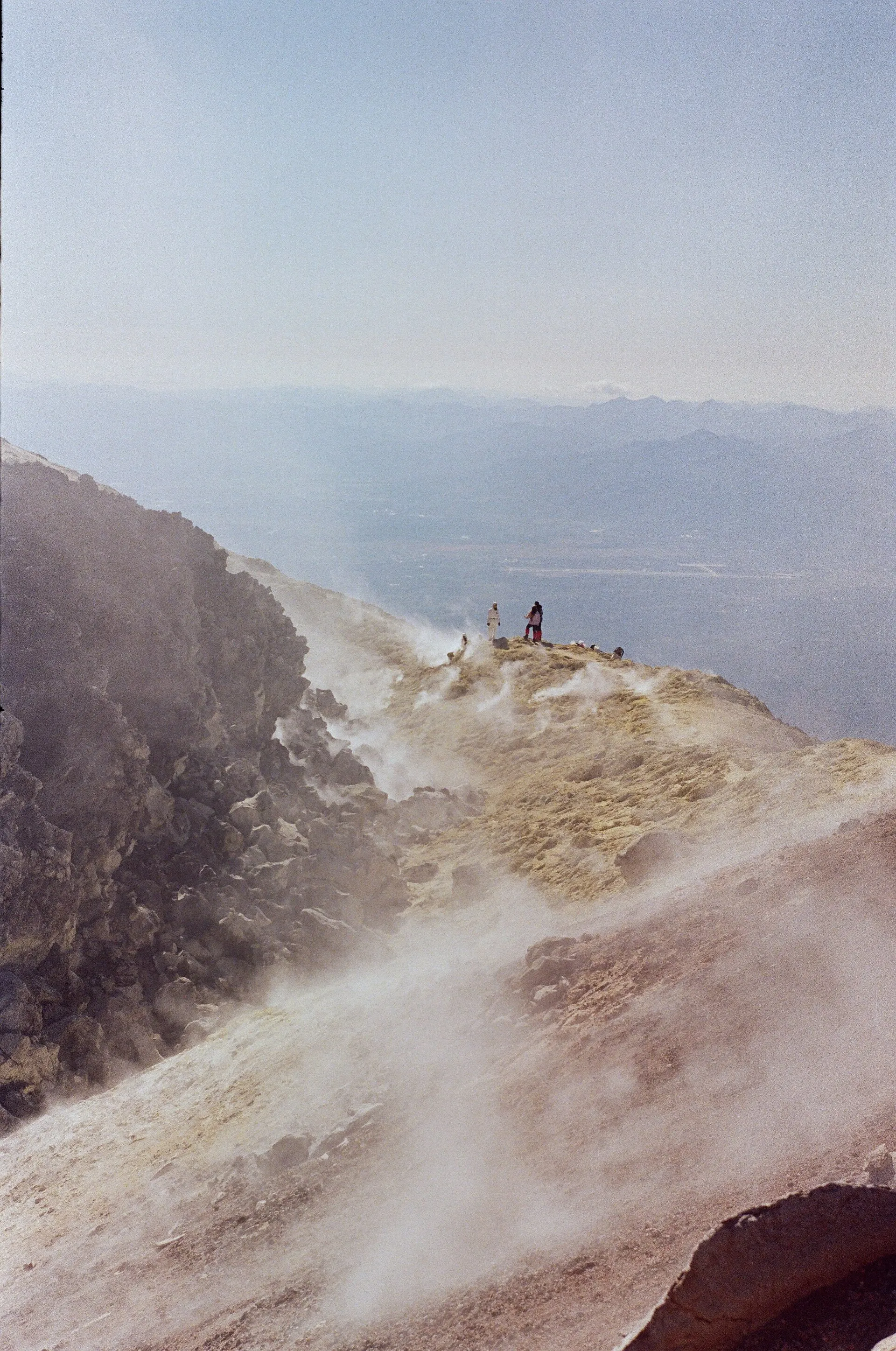
Zenit ET, October 2024Photo: mirrors are more fun from Saint-Petersburg, Russia, CC BY-SA 2.0
What owners and reviewers say, topic by topic
We sorted 121 opinions about the Ultramax 400 from 24 pages and videos on 22 websites and channels. Each row shows how many people raised a topic and how many of them were positive. Open a row to read short quotes, each linked to its source.
Most of these opinions come from photographers' blogs, editorial reviews and five YouTube reviews. Reddit, DPReview and big-retailer reviews could not be read, so everyday owner voices are thin and the mix leans positive. PetaPixel's August 2026 review is quoted from a full-text copy on Head Topics and was sponsored by Blue Moon Camera and Machine, a Portland shop. No source discussed halation on Ultramax, so that topic is missing.
Color48% positiveof 27
Reviewers split almost evenly. Thirteen of the 27 who comment on color are positive, praising punchy, saturated color, especially in sun. Most of the rest report casts: some see a cool blue or purple lean, others yellow or reddish shadows, and several say gray weather and mixed light throw it off.
“The yellow tinge can overpower white backgrounds”
Cultured Kiwi: Best 35mm Film, 12 Stocks TestedHands-on review
“likable slightly punchy colors in daylight scenarios”
BastianK, phillipreeve.net: Analogue Adventures Part 15, Kodak Ultramax 400 2023-03Hands-on review
“This film has bright, clean, poppy colors across the spectrum.”
PetaPixel: The Excellent Kodak Ultramax 400 Is an Unfortunate Victim of Bad Branding (Head Topics copy) 2026-08Hands-on review
“Superia has some real "special sauce" to it that Kodak really just doesn't match.”
Andrew L (commenter), 35mmc: Fujifilm 400 (made in the USA) vs. Kodak Ultramax 400 2023-07Owner
Exposure latitude56% positiveof 16
Most say it forgives exposure mistakes, especially overexposure, and some shoot it a stop over on purpose. Critics say underexposure turns shadows grainy and green, and that it holds less in harsh contrast than Portra.
“You won't get away with over-exposing it by three stops.”
Dmitri, Analog.Cafe: Kodak UltraMax 400 Film Review 2023Hands-on review
“I came to learn that, for me, it looks great when over-exposed.”
Aly's Vintage Camera Alley: Kodak Ultramax 400 - Still Reliable? 2026-02Owner
“Obviously Max 400 performs better and is thus easier to shoot with in perhaps challenging light.”
Thomas Fx (commenter), Shoot It With Film: Kodak UltraMax 400 vs Kodak Gold 200 Pushed One Stop 2026-03Owner
“it also has more grain and less latitude but the latitude difference isn't massive”
Last Good Film Lab: Portra 400 vs. Ultramax 400Hands-on review
Price and availability67% positiveof 15
Mostly praised as cheap and easy to find, even at drugstores. Critics say it is no longer cheap after price rises and that drugstore stock has been patchy.
“I haven't seen Ultramax on a drug store shelf in two years.”
Dave Palumbo, 35mmc: Fujifilm 400 (made in the USA) vs. Kodak Ultramax 400 2023-07Owner
“Consistently easy to find and use”
Digital Camera World: The best film for 35mm cameras, roll film, and sheet film in 2026 2026Hands-on review
“Gold and UltraMax are simply easier to find in most areas”
Kubus Photo: Best Film for Beginners, the Honest Guide from 30 Years Behind the Counter 2026-01Hands-on review
“That's why the Ultramax 400 really suits my needs, cheap, fast, versatile and easy to find.”
Carlos Garcia: Kodak Ultramax 400 Review 2017-03Hands-on review
Grain25% positiveof 12
Nearly everyone notices the grain. Most call it acceptable or even pleasing for an ISO 400 film, but it is clearly coarser than Portra 400 or Ektar, and one reviewer calls it the film's main drawback.
“very reasonable amout of grain”
BastianK, phillipreeve.net: Analogue Adventures Part 15, Kodak Ultramax 400 2023-03Hands-on review
“Ultramax's grain is where the film is fairly pedestrian. Yes, it is grainy.”
PetaPixel: The Excellent Kodak Ultramax 400 Is an Unfortunate Victim of Bad Branding (Head Topics copy) 2026-08Hands-on review
“if we pixel peep its easy to see the Ultramax does have a lot more grain than the Portra does”
Last Good Film Lab: Portra 400 vs. Ultramax 400Hands-on review
“the grain on Kodak Ultramax 400 is noticeable and more prominent compared to ultra-fine films such as Ektar”
Adam Insights: Kodak Ultramax 400 Film Review 2023-05Hands-on review
Overall look73% positiveof 11
Reviewers describe an honest, easygoing everyday film and a go-to for trips and family. One guide notes that experienced shooters sometimes find it unremarkable, and one lab prefers Portra's contrast.
“It is a good film to just have fun with.”
Adam Insights: Kodak Ultramax 400 Film Review 2023-05Hands-on review
“It's a good go-to for everyday shooting.”
Parallax Photographic Coop: Second Kodak Ultramax 400 Film ReviewHands-on review
“Kodak UltraMax 400 is one of those films I keep coming back to.”
Roberta Baker: Kodak Ultra Max 400 film samples and review 2023-06Hands-on review
“This isn't a pretty film, it's an honest one.”
Aly's Vintage Camera Alley: Kodak Ultramax 400 - Still Reliable? 2026-02Owner
Skin tones67% positiveof 9
Most who mention skin say it renders natural, flattering tones. The caveats are a yellow tint in some portraits or when overexposed, and one lab that says Portra does skin better.
“It portrays true to life skin tones and a warm feeling, when you treat it right.”
Aly's Vintage Camera Alley: Kodak Ultramax 400 - Still Reliable? 2026-02Owner
“I especially love the way it renders skin tones”
Cultured Kiwi: Kodak UltraMax 400 Review 2026 2026Hands-on review
“It renders scenes and skin tones realistically in fine grain”
Dmitri, Analog.Cafe: Kodak UltraMax 400 Film Review 2023Hands-on review
“It actually does a pretty decent job with skin tones, unless you overexpose the film”
PetaPixel: The Excellent Kodak Ultramax 400 Is an Unfortunate Victim of Bad Branding (Head Topics copy) 2026-08Hands-on review
Low light and night56% positiveof 9
More positive than negative: ISO 400 helps on gray days, in bright interiors and for tripod night shots. Two sources warn against dark scenes without flash, where shadows go grainy and green.
“Otherwise, the shadows can be very grainy and dark green.”
Aly's Vintage Camera Alley: Kodak Ultramax 400 - Still Reliable? 2026-02Owner
“Brilliant even in low lighting”
Cultured Kiwi: Best 35mm Film, 12 Stocks TestedHands-on review
“this film handles lower light situations more gracefully than slower stocks”
Digital Camera World: The best film for 35mm cameras, roll film, and sheet film in 2026 2026Hands-on review
“You're not going to shoot dark bars without flash, but well-lit interiors become accessible.”
Kubus Photo: Best Film for Beginners, the Honest Guide from 30 Years Behind the Counter 2026-01Hands-on review
Sharpness and detail57% positiveof 7
Reviewers mostly call it sharp enough for everyday use, and one says enlargements hold up. It does not match the detail of Portra or Ektar, and one roundup finds it fuzzy at times.
“Can be slightly grainy and even fuzzy at times”
Cultured Kiwi: Best 35mm Film, 12 Stocks TestedHands-on review
“So the images end up looking sharper than expected with this camera.”
Parallax Photographic Coop: Second Kodak Ultramax 400 Film ReviewHands-on review
“Enlarged, it actually holds up very well because of a fine grain structure.”
Adam Insights: Kodak Ultramax 400 Film Review 2023-05Hands-on review
“In practice, this means fewer fine details but a less gritty look.”
Dmitri, Analog.Cafe: Kodak UltraMax 400 Film Review 2023Hands-on review
Pushing and pulling43% positiveof 7
Pushing to 800 or 1600 works but adds contrast, grain and saturation, and Parallax's 1600 night roll blew some highlights. PetaPixel says ISO 100 to 800 needs no special development.
“Some of the very bright highlights have blown out, and there is very little detail in the shadows.”
Parallax Photographic Coop: Kodak Ultramax At 1600 Film ReviewHands-on review
“Shoot this stuff anywhere between ISO 100 and ISO 800 without having to worry about compensating development”
PetaPixel: The Excellent Kodak Ultramax 400 Is an Unfortunate Victim of Bad Branding (Head Topics copy) 2026-08Hands-on review
“You can push it one stop in development, but grain and contrast increase noticeably.”
Cultured Kiwi: Kodak UltraMax 400 Review 2026 2026Hands-on review
“And there is more information in the shadows than we expected.”
Parallax Photographic Coop: Kodak Ultramax At 1600 Film ReviewHands-on review
Scanning and printing100% positiveof 4
The few who mention it say it scans easily, with pleasant color on default scanner settings, and that the negatives dry flatter than Fujifilm's.
“I will agree though that Kodak does tend to dry a bit flatter.”
Andrew L (commenter), 35mmc: Fujifilm 400 (made in the USA) vs. Kodak Ultramax 400 2023-07Owner
“it's easy to scan, it gives really pleasant colors with the default settings of my scanner”
Carlos Garcia: Kodak Ultramax 400 Review 2017-03Hands-on review
“In my experience, Ultramax negatives dry relatively flat, where Fujicolor Superia negatives are cupped.”
Will Brown (commenter), 35mmc: Fujifilm 400 (made in the USA) vs. Kodak Ultramax 400 2023-07Owner
Consistency100% positiveof 4
All four voices praise its consistency, and one says she rarely has to correct colors to match what she saw.
“And I love its look and consistent nature!”
adventurepdx (commenter), Aly's Vintage Camera Alley: Kodak Ultramax 400 - Still Reliable? 2026-02Owner
“Consistency and predictability are other areas where this film shines.”
Cultured Kiwi: Kodak UltraMax 400 Review 2026 2026Hands-on review
“It's easy to shoot, consistently delivers strong colour, and works especially well for landscapes and nature photography.”
Roberta Baker: Kodak Ultra Max 400 film samples and review 2023-06Hands-on review
“I rarely have to adjust the colors in post to get what I saw when I took the photo.”
Aly's Vintage Camera Alley: Kodak Ultramax 400 - Still Reliable? 2026-02Owner
PositiveMixedNegative
How to shoot Kodak Ultramax 400
Ultramax is easy to use. The two rules: don't starve it of light, and watch the color of the light.
- 1
Set the camera to ISO 400
The cartridge is DX-coded, so automatic cameras set ISO 400 themselves, per Cultured Kiwi. On a manual camera, set the film speed dial to 400.
- 2
Start at box speed in good light
Analogue Wonderland suggests ISO 400 with a shutter speed of 1/125 to 1/250 second in good light. Roberta Baker says it works especially well for landscapes, foliage and bright summer daylight.
- 3
Lean toward overexposure
Aly's Vintage Camera Alley shoots outdoor rolls at ISO 200, one stop over, and Cultured Kiwi prefers ISO 200 with normal development to pushing. PetaPixel says Kodak states two stops of overexposure tolerance and bets three works, while Analog.Cafe says three is too many.
- 4
Don't underexpose
PetaPixel puts the limit at one stop under, as with most color negative films. Below that, shadows go grainy and can turn green, so meter for the shadows in high-contrast scenes.
- 5
Use flash or window light indoors
The film is daylight-balanced (5500K, per Cultured Kiwi), so indoor bulbs and mixed light throw colors off. Kubus Photo says well-lit interiors work but dark bars need flash, and Kodak.com says the film extends flash range.
- 6
Push only when you need the speed
PetaPixel says you can rate it anywhere from ISO 100 to 800 with normal development, and at 1600 with a lab push. Pushing adds contrast, grain and saturation; see how to push and pull film.
- 7
Load in subdued light and use any C-41 lab
Kodak's handling notes, reprinted by Unique Photo, say to load and unload the camera in subdued light. Any lab that develops color negative film in C-41 chemistry can process it.
Sources: culturedkiwi.com, analoguewonderland.co.uk, robertabaker.com, alysvintagecameraalley.com, co.headtopics.com, analog.cafe, kubusphoto.com, kodak.com, uniquephoto.com
What Kodak Ultramax 400 looks like: color, grain and skin
Most reviewers describe bright, punchy, saturated color. PetaPixel calls it clean and poppy across the spectrum, with more contrast than Portra but less contrast and saturation than Ektar, and Roberta Baker likes its full greens and rich blues. Where they split is the cast: Brooklyn Film Camera calls it warm with Kodak yellow in the highlights, while Shoot It With Film saw cool blue and purple undertones and a note.com writer found it bluer than expected. The light matters more than the label. In sun it pops, and Analog.Cafe says blue or gray weather can leave casts in the shadows that are hard to correct.
The grain is visible. Analog.Cafe reads Kodak's Print Grain Index as 46 for a 4x6 print from 35mm, about the same as Kodak Gold (44) and a little more than Portra 400 (37); PetaPixel gives Ultramax 44 instead. Analog.Cafe adds that the grain is chunkier than Portra's but looks smoother because the granules are softer, and from Kodak's curves it estimates about 8 stops of dynamic range.
Skin tones are a strength when the exposure is right. Kodak promises accurate skin-tone reproduction, and Cultured Kiwi and Aly's Vintage Camera Alley both praise them, but PetaPixel and Cultured Kiwi see a yellow tint on skin when the film is overexposed.
For frames shot in cool light that come back with casts, Analog.Cafe shifts the shadows toward yellow and the highlights toward blue when editing.
Sources: co.headtopics.com, robertabaker.com, brooklynfilmcamera.com, shootitwithfilm.com, note.com, analog.cafe, mpex.com, culturedkiwi.com, alysvintagecameraalley.com
Kodak Ultramax 400 vs Gold 200
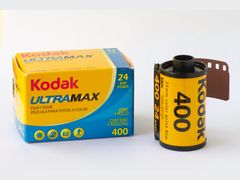 Ultramax 400 | 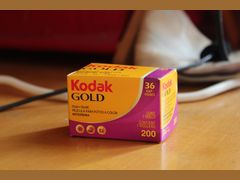 Gold 200 | |
|---|---|---|
| Speed | ISO 400 | ISO 200, one stop slower |
| Price at Brooklyn Film Camera (Oct 28, 2026) | $11.50 | $9.50 |
| Print Grain Index (Analog.Cafe) | 46 | 44 |
| Color | Punchy and saturated; reviewers split on a blue or yellow lean | Warmer, at its best in bright sun (Shoot It With Film) |
| Gray, overcast days | Kubus Photo says it handles them; Analog.Cafe sees shadow casts | Analog.Cafe recommends it for cool, overcast light |
Pick the Ultramax 400 if
- You shoot in changing light, shade or bright interiors.
- You want faster shutter speeds in shade or with a slow lens.
- You like punchier, more saturated color.
Pick the Gold 200 if
- You shoot mostly in bright sun.
- You want to spend about $2 less a roll ($9.50 against $11.50 at Brooklyn Film Camera).
- You prefer a warmer palette: Kubus Photo says Ultramax's color profile is slightly cooler than Gold's.
Sources: brooklynfilmcamera.com, analog.cafe, shootitwithfilm.com, kubusphoto.com
Ultramax 400 vs Portra 400, Fujifilm 400 and CineStill 400D
Portra 400 is the step up. Last Good Film Lab found the two very similar at first glance, with Ultramax much punchier in color and contrast and Portra subtler throughout; a post on Phillip Reeve's blog says the general consensus is that Portra is a bit sharper with less grain, and Brooklyn Film Camera credits it with more latitude. At that shop Portra 400 costs $17.50 a roll against $11.50 for Ultramax.
Fujifilm 400, the box marked "made in the USA" that followed Fujifilm's April 2023 pause of Superia X-Tra 400, is a near twin. 35mmc's side-by-side found no difference in sharpness or grain, only a very slight yellow bias in the Fuji against a bluer one in Ultramax, and Cultured Kiwi says it is rebranded Ultramax because the datasheets and DX codes match. Neither Kodak nor Fujifilm confirms that in any source checked.
CineStill 400D is the other 400-speed option Analog.Cafe mentions: it is made from Kodak motion picture film, costs more, is harder to find and adds halation. For the full head-to-head with Kodak's cheaper sibling, see Kodak Gold 200 vs Ultramax 400.
| Film | Price per roll | How it differs |
|---|---|---|
| Kodak Gold 200 | $9.50 | One stop slower, warmer, best in bright sun |
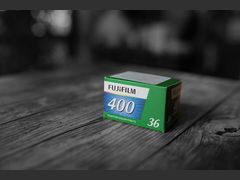 Fujifilm 400 | $14 | Near-identical, slightly lower contrast, a little yellower |
 Kodak Portra 400 | $17.50 | Finer grain (Print Grain Index 37), softer color, more latitude |
| CineStill 400D | Not checked | Costs more, harder to find, adds halation |
Sources: lastgoodfilmlab.com, phillipreeve.net, brooklynfilmcamera.com, 35mmc.com, culturedkiwi.com, analog.cafe
Developing, scanning and storing Ultramax 400
Ultramax is standard C-41 film; Kodak designed it for Flexicolor C-41 chemistry, so any lab that develops color negatives can process it. Develop-only at Dwayne's Photo starts at $7.50 for 35mm, The Darkroom's mail-in develop and scan starts at $14, and Brooklyn Film Camera charges $18 a roll with medium-resolution scans ($16 for members). At home, Shoot It With Film shot it at box speed and developed it in CineStill's CS41 two-bath kit, which sells for $31.99 for 24 rolls, about $1.33 a roll ($31.99 / 24). Compare labs in how much it costs to develop film.
The scan shapes the look. Carlos Garcia found it easy to scan, with pleasant color on his scanner's default settings; Shoot It With Film used SilverFast's Kodak Ultramax 400 template on an Epson V600; and Cultured Kiwi says its slightly flat look leaves room to adjust contrast and color. PetaPixel warns that many lab scanners suppress grain and replace it with digital noise. Brooklyn Film Camera's 4K scan upgrade costs $12 a roll ($6 for members).
Kodak's storage instructions, reprinted on Unique Photo's product page, say to keep unexposed film at 21°C (70°F) or lower in the sealed package and to process it as soon as possible after exposure. For flights, TSA recommends carrying undeveloped film in your carry-on bag or asking for a hand inspection at the checkpoint.
Sources: mpex.com, dwaynesphoto.com, thedarkroom.com, brooklynfilmcamera.com, cinestill.film, shootitwithfilm.com, carlosgrphoto.com, culturedkiwi.com, co.headtopics.com, uniquephoto.com, tsa.gov
Kodak Ultramax 400 history: Gold 400, Ultramax and Kodak.com
Ultramax has had several names. PetaPixel traces it to Kodacolor Gold 400 in the late 1980s, renamed Kodak Gold 400 in 1997 and Kodak Ultramax 400 in 2007, and says it shares the T-Grain technology used in Portra 400. Aly's Vintage Camera Alley adds that the 2007 change came with an emulsion adjusted for digital scanning in labs, and that Kodak's first 400-speed color film was Kodacolor 400 in 1977.
Kodak Alaris distributed Kodak still films from 2013, as part of Kodak's Chapter 11 bankruptcy protection, and Eastman Kodak added Ultramax 400 to its own Kodak.com range on November 3, 2025, per Kosmo Foto. US shops now list the 36-exposure roll under two part numbers, 7518285 (Kodak.com's current catalog number) and 6034060; no source says the film inside differs.
Supply has been tight before. A 2023 post on Phillip Reeve's blog said you could be happy to find Portra or Ultramax in stock at all, and Fujifilm paused Superia X-Tra 400 in April that year. Cultured Kiwi's 2026 review says Ultramax is still in production.
Sources: co.headtopics.com, alysvintagecameraalley.com, kosmofoto.com, kodak.com, procam.com, phillipreeve.net, 35mmc.com, culturedkiwi.com
What a roll of Ultramax 400 costs
On October 28, 2026, a single 36-exposure roll of Ultramax 400 cost $8.69 to $11.50 at US camera shops, MPEX sold a 24-exposure roll for $7.99, and 36-exposure 3-packs were listed at $26.49 to $33.95 (two of them sold out). B&H, Adorama, Walmart, Freestyle and KEH could not be checked, so they are not listed.
MPEX
New, 35mm, 24 exposures, single roll
$7.99
See listingMPEX
New, 35mm, 36 exposures, single roll (part 6034060)
$8.69
See listingProcam (Michigan, Illinois, Ohio)
New, 35mm, 36 exposures, single roll (part 7518285)
$9.95
See listingProcam (Michigan, Illinois, Ohio)
New, 35mm, 36 exposures, single roll (part 6034060)
$9.99
See listingCineStill
New, 35mm, 36 exposures, single roll
$9.99
See listingDistrict Camera
New, 35mm, 36 exposures, single roll
$10.49
See listingGlazer's Camera
New, 35mm, 36 exposures, single roll
$10.49
See listingPro Photo Supply
New, 35mm, 36 exposures, single roll
$10.99
See listingBrooklyn Film Camera
New, 35mm, 36 exposures, single roll
$11.50
See listingCineStill
New, 35mm, 36 exposures, 3-pack
$26.49
See listingDistrict Camera
New, 35mm, 36 exposures, 3-pack
$27.95
See listingUnique Photo (New Jersey, Pennsylvania)
New, 35mm, 36 exposures, 3-pack
$28.95
See listingFilm Supply Club
New, sold out, 35mm, 36 exposures, 3-pack
$26.99
See listingGlazer's Camera
New, sold out, 35mm, 36 exposures, 3-pack
$33.95
See listing
Prices checked on October 28, 2026. They move every week, so treat them as a range, not a quote. Per roll, CineStill's 3-pack works out to about $8.83 ($26.49 / 3) and District Camera's to about $9.32 ($27.95 / 3). Analog.Cafe's July 2026 price report found Ultramax 400 got 2.6% cheaper over the previous six months, averaged across 13 major stores. More shops in [where to buy 35mm film](/film/where-to-buy-35mm-film/).
Technical data
Film
- Speed
- ISO 400/27°
- Format
- 35mm (135) only
- Exposures
- 24 or 36
- DX coding
- Yes
- Color balance
- Daylight (5500K)
Image, as reviewers measure it
- Print Grain Index
- 46 (Analog.Cafe, from Kodak's data); PetaPixel says 44
- Rating range, normal development
- ISO 100 to 800 (PetaPixel)
- Underexposure limit
- About one stop (PetaPixel)
Kodak catalog numbers
History
- Ultramax name since
- 2007
- On Kodak.com since
- November 3, 2025
Video reviews worth your time

Kodak Ultramax 400
Kodak Ultramax 400 is an affordable, easily overlooked consumer film that offers vibrant colors, pleasing skin tones, and excellent highlight retention when overexposed.

Kodak UltraMAX 400 - Cheap & Reliable 35mm | ROLL REVIEW
Kodak Ultramax 400 is a versatile, affordable consumer film that delivers reliable, balanced color rendering when shot at box speed.

Kodak Ultramax 400 Review - Is this film a good alternative to pricey Portra 400?
Kodak Ultramax 400 is an affordable, versatile film stock with bold color saturation, making it great for casual everyday photography despite limited highlight retention in high-contrast light.

Kodak UltraMax 400 Review! Cheap Film Stock with Impressive Results
The reviewer concludes that Kodak UltraMax 400 is an excellent budget-friendly film stock that yields vibrant warm colors, natural skin tones, and good detail, particularly when shot in even lighting.

Is Kodak Ultramax 400 the Best Film for Night Photography?
The Kodak Ultramax 400 delivers clean results and performs remarkably well for long-exposure night photography.
Questions people ask about the Ultramax 400
Is Kodak Ultramax 400 good for beginners?
Yes. Cultured Kiwi says its wide exposure latitude forgives metering mistakes, ISO 400 works in most light and every C-41 lab can develop it, and it calls Ultramax one of the easiest color films to find. Kubus Photo, a film lab, says Gold and Ultramax forgive two or more stops of exposure error while you learn.
Sources: culturedkiwi.com, kubusphoto.com
What is the difference between Kodak Ultramax 400 and Gold 200?
Ultramax is ISO 400 and Gold is ISO 200, so Ultramax is one stop faster, which buys faster shutter speeds in shade, changing light and bright interiors. Gold 200 looks warmer and does best in bright sun, according to Shoot It With Film, and Analog.Cafe rates their grain as about the same (Print Grain Index 44 for Gold, 46 for Ultramax). Gold costs a little less, $9.50 against $11.50 at Brooklyn Film Camera in October 2026. The full comparison is in [Kodak Gold 200 vs Ultramax 400](/film/kodak-gold-200-vs-ultramax-400/).
Sources: shootitwithfilm.com, analog.cafe, brooklynfilmcamera.com
Is Kodak Ultramax 400 discontinued?
No. Eastman Kodak lists Ultramax 400 on Kodak.com in 24- and 36-exposure 35mm rolls, and Kosmo Foto reports it joined Kodak's own Kodak.com range on November 3, 2025, after years of distribution by Kodak Alaris. Cultured Kiwi's 2026 review also says it is still in production. Stock at individual shops is uneven, so a sold-out listing does not mean the film is gone.
Sources: kodak.com, kosmofoto.com, culturedkiwi.com
Can you push Kodak Ultramax 400 to 800 or 1600?
Yes. PetaPixel says you can shoot it anywhere from ISO 100 to 800 without changing development and go to 1600 with a lab push. Parallax Photographic pushed a roll two stops to 1600 and got hand-holdable night shots with a lot more contrast and grain, a noticeable increase in saturation and some blown highlights, and suggests a one-stop push might have given less grain and more clarity. Cultured Kiwi says even a one-stop push adds noticeable grain and contrast.
Sources: co.headtopics.com, parallaxphotographic.coop, culturedkiwi.com
How many stops can you overexpose Kodak Ultramax 400?
Sources disagree. PetaPixel says Kodak states two stops and bets three works, Cultured Kiwi says three stops over still keeps ample highlight detail, and Analog.Cafe says you won't get away with three. A common middle ground is rating it at ISO 200, one stop over, as Aly's Vintage Camera Alley and Cultured Kiwi do; heavy overexposure adds a yellow tint to skin.
Sources: co.headtopics.com, culturedkiwi.com, analog.cafe, alysvintagecameraalley.com
Is Fujifilm 400 the same film as Kodak Ultramax 400?
Possibly, but no source we checked shows Kodak or Fujifilm confirming it. Fujifilm's "made in the USA" 400 arrived after it paused Superia X-Tra 400 in April 2023, and 35mmc's side-by-side found no difference in sharpness or grain, only a very slight yellow bias in the Fuji against a bluer one in Ultramax. Cultured Kiwi says it is rebranded Ultramax because the datasheets and DX codes match. More in the [Fujifilm 400 guide](/film/fujifilm-400/).
Sources: 35mmc.com, culturedkiwi.com
Is Kodak Ultramax 400 good for low light and night photography?
It handles lower light better than ISO 200 film, but it is not a true low-light stock. Kubus Photo says well-lit interiors work but dark bars need flash, and Aly's Vintage Camera Alley found indoor shadows grainy and dark green unless she overexposed. At night, Reimann Pembroke's video review finds it handles long exposures well, so bring a tripod; otherwise push it or, for artificial light, try a faster tungsten-balanced film such as [CineStill 800T](/film/cinestill-800t/).
Sources: kubusphoto.com, alysvintagecameraalley.com, youtube.com, parallaxphotographic.coop
Is Kodak Ultramax 400 a good alternative to Portra 400?
For everyday shooting, yes, if you like more punch. Last Good Film Lab found the two very similar at first glance, with Ultramax punchier in color and contrast, grainier, and less flexible when pushed or in odd light; Analog.Cafe gives Portra 400 a finer Print Grain Index (37 against 46). Portra costs more: $17.50 a roll against $11.50 for Ultramax at Brooklyn Film Camera.
Sources: lastgoodfilmlab.com, analog.cafe, brooklynfilmcamera.com
What people compare it with
One stop slower and warmer, at its best in bright sun, and about $2 less a roll at Brooklyn Film Camera.
Finer grain, softer color and more latitude for portraits and mixed light, at $17.50 a roll against $11.50.
Near-identical results in 35mmc's side-by-side, with a slightly yellower bias and lower contrast.
A 400-speed color film made from Kodak motion picture stock; it costs more, is harder to find and adds halation.
Every source behind this page
Read them yourself. How we pick and count them is in our methodology.
Show all 45 sources
Manuals and references 21
- brooklynfilmcamera.com: Film Developing in Brooklyn - Drop-off & Mail
- brooklynfilmcamera.com: Kodak UltraMax 400 35mm Color Film
- cinestill.film: KODAK ULTRAMAX 400 Color Negative Film, 35mm 135, ISO 400
- cinestill.film: ULTRAMAX 400 Color Negative Film, 35mm 3
- filmsupply.club: Eastman Kodak Ultramax 400, 35mm, 36 Exposures, Color ...
- kosmofoto.com: Kodak now offers new-look Gold 200 and Ultramax 400 alongside Kodacolor films
- mpex.com: Kodak Ultramax 400 Color Negative Film
- mpex.com: Kodak UltraMax 400 Color Negative Film - 35mm Roll Film
- procam.com: Kodak Eastman UltraMax 400 Color Negative Film (35mm Roll Film, 36 Exposures) at PROCAM | Shop Camera, Photo & Video Equipment | In-Stock, Lowest Prices. Same Day Shipping
- procam.com: Kodak GC/UltraMax 400 Color Negative Film (35mm Roll Film, 36 Exposures) at PROCAM | Shop Camera, Photo & Video Equipment | In-Stock, Lowest Prices. Same Day Shipping
- thedarkroom.com: 35mm Film Developing by Mail - From $14
- districtcamera.com: Eastman Kodak UltraMax 400 Color Negative Film (35mm Roll Film, 36 Exp
- districtcamera.com: Eastman Kodak UltraMax 400 Color Negative Film (35mm Roll Film, 36 Exp
- dwaynesphoto.com: Film Processing Services
- glazerscamera.com: Kodak Ultra Max 400 Color Negative - 35mm Film, 36 Exposures, 3 Pack
- glazerscamera.com: Kodak Eastman UltraMax 400 Color Negative - 35mm Film, 36 Exposures, S
- kodak.com: KODAK ULTRAMAX 400 Film
- kodak.com: Consumer
- prophotosupply.com: Kodak UltraMax 400 Color Negative 35mm Film, 36 Exposures
- tsa.gov: Film
- uniquephoto.com: Kodak GC/Ultra Max 400 Color Film 35MM/36 EXPOSURES 1024389 7518335
Independent blogs 16
- Aly's Vintage Camera Alley: Kodak Ultramax 400 - Still Reliable?: Kodak Ultramax 400
- Adam Insights: Kodak Ultramax 400 Film Review: Kodak Ultramax 400 Film Review
- Carlos Garcia: Kodak Ultramax 400 Review: Kodak Ultramax 400 Review
- Derek Drapeau: Kodak UltraMax 400 Film Review: Kodak Ultramax 400 Film Review
- phillipreeve.net: Analogue Adventures Part 15, Kodak Ultramax 400: Analogue Adventures - Part 15
- Parallax Photographic Coop: Second Kodak Ultramax 400 Film Review: Second Kodak Ultramax 400 Film Review
- Parallax Photographic Coop: Kodak Ultramax At 1600 Film Review: Kodak Ultramax At 1600 Film Review
- Shoot It With Film: Kodak UltraMax 400 vs Kodak Gold 200 Pushed One Stop: Kodak UltraMax 400 vs Kodak Gold 200 Pushed One Stop
- Roberta Baker: Kodak Ultra Max 400 film samples and review: Kodak Ultra Max 400 film samples and review
- Cultured Kiwi: Kodak UltraMax 400 Review 2026: Kodak UltraMax 400 Review 2026
- Analogue Wonderland: A Guide to Shooting with Kodak UltraMax 400 Film: A Guide to Shooting with Kodak UltraMax 400 Film
- 35mmc: Fujifilm 400 (made in the USA) vs. Kodak Ultramax 400: Fujifilm 400 (made in the USA) vs. Kodak Ultramax 400
- Last Good Film Lab: Portra 400 vs. Ultramax 400: PORTRA 400 V.S. ULTRAMAX 400
- Kubus Photo: Best Film for Beginners, the Honest Guide from 30 Years Behind the Counter: Best Film for Beginners: Honest Guide from a 30-Year Film Lab
- note (neko_camera): Film Camera Notes Vol. 2, Comparing KODAK GOLD 200 and ULTRAMAX 400: Film Camera Notes Vol. 2: Comparing KODAK GOLD 200 and ULTRAMAX 400|ねこ
- Cultured Kiwi: Best 35mm Film, 12 Stocks Tested: The Best 35mm Film (I Shot and Reviewed 12 Rolls)
Video reviews 5
- Matt Day: Kodak Ultramax 400
- Analog Resurgence: Kodak UltraMAX 400 - Cheap & Reliable 35mm | ROLL REVIEW
- Ribsy: Kodak Ultramax 400 Review - Is this film a good alternative to pricey Portra 400?
- Skyler Wagoner: Kodak UltraMax 400 Review! Cheap Film Stock with Impressive Results
- Reimann Pembroke: Is Kodak Ultramax 400 the Best Film for Night Photography?
Editorial reviews 3
- Analog.Cafe: Kodak UltraMax 400 Film Review: Kodak UltraMax 400 Film Review
- PetaPixel: The Excellent Kodak Ultramax 400 Is an Unfortunate Victim of Bad Branding: The Excellent Kodak Ultramax 400 Is an Unfortunate Victim ...
- Digital Camera World: The best film for 35mm cameras, roll film, and sheet film in 2026: The best film for 35mm cameras, roll film, and sheet film in 2026
Keep reading
Film stocks
Kodak UltraMax 400 vs Gold 200: UltraMax is one stop faster for shade, indoors and reusable cameras. Gold is warmer and cheaper, about $8.45 to $10 a roll.
Film stocks
Kodak Gold 200 is a warm ISO 200 color film in 35mm and 120, $8.99 to $10.90 a 36-exposure roll. What 139 opinions say about grain, skin and low light.
Film stocks
Kodak Portra 400 is an ISO 400 color film loved for skin tones and latitude. What 113 opinions say, how to expose and push it, and US prices from $15.99.
Film stocks
Fujifilm 400 is a made-in-USA ISO 400 color film, $10.99 to $14 a roll in October 2026. What 61 opinions say about its look, grain, pushing and the Kodak link.
Film stocks
How to push film: what a stop means, what to set on your camera, how to tell the lab, one-stop fees from $0 to $4, home development times and how to pull film.
Developing and scanning
A roll of 35mm film costs $5 to $11.50 to develop at US labs, or $11.50 to $29 with scans. Prices from 12 labs and the big chains, checked October 2026.