CineStill 800T: shooting film at night, settings, look and price
The short answer
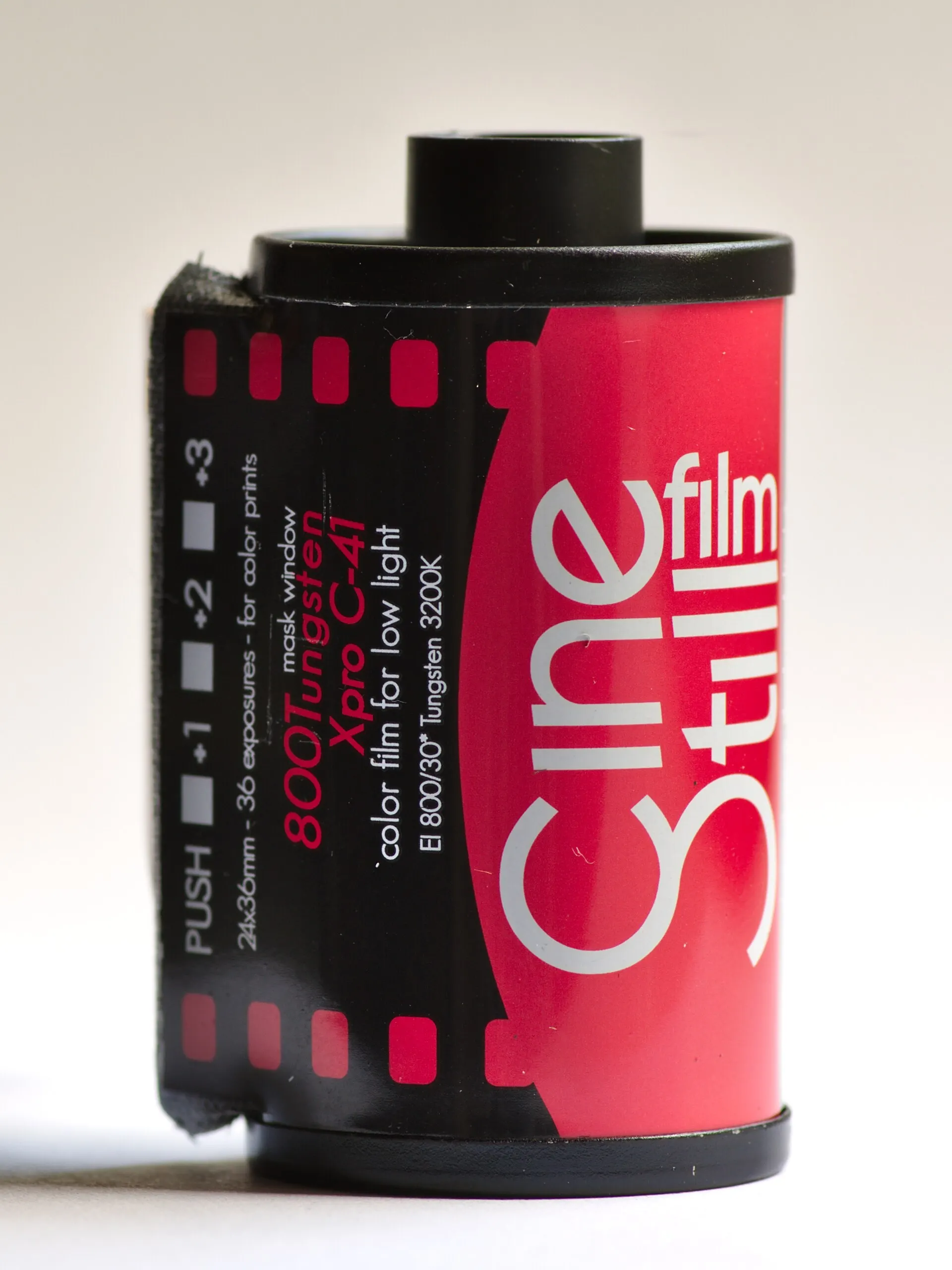
CineStill 800T is an ISO 800 color negative film balanced for 3200K tungsten light, based on Kodak Vision3 500T cinema film with the remjet backing removed so any C-41 lab can develop it.
In the 112 opinions collected here, mostly from owners and reviewers who used the film, it is the color film people reach for at night, under neon and in tungsten-lit rooms, prized for fine grain at ISO 800 and, by many, the red glow around lights. The complaints are a blue cast in daylight without an 85 filter, light leaks and static marks, and the price: $17.00 to $19.95 for a 36-exposure 35mm roll at US shops (October 28, 2026).
- Box speed
- EI 800 at 3200K tungsten
- Process
- C-41 (ECN-2 possible)
- Formats
- 35mm and 120
- 35mm roll
- $17.00-19.95
Built from 112 opinions from 26 pages and videos. Not yet tested by Camera Dojo. Updated .
The short version
Both signatures come from how it is made. With no remjet or anti-halation layer, bright points bloom into red or orange halos, which many owners love on night streets and a few find too strong in sun. And because it is balanced for tungsten bulbs, daylight frames turn cool and teal unless you add an 85 filter or rate the film at EI 400 to 500, as CineStill suggests.
It is also a fussier film than most. CineStill says 800T is more sensitive to light leaks and static than most films and especially sensitive to airport X-ray, and several owners say lab scans need color work. Kubus Photo, a Brooklyn lab that has developed it since launch, suggests learning on more forgiving stocks such as Kodak Portra 400 or Kodak Gold 200 first.
Good fit if
- You shoot at night: city streets, neon signs, concerts, bars and tungsten-lit rooms.
- You want a cinematic look with red glow around lights straight from the negative.
- You need ISO 800 color film you can push to 1600 or 3200 when the light drops.
- You scan your film and don't mind adjusting color afterward.
- You shoot 120 and want the glow toned down: CineStill says halation is much weaker in medium format.
Think twice if
- You mostly shoot in daylight and won't carry an 85 filter. CineStill 400D is the daylight-balanced sibling.
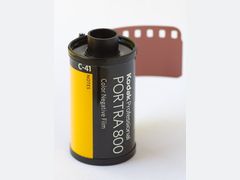
- You want natural low-light color with no halation. Kodak Portra 800 is the alternative that Analog.Cafe and Kubus Photo point to; see Portra 400 vs 800.
- You shoot a lot on a budget: Kubus Photo says it costs three times as much as consumer color negative film.
- You are new to film and want predictable results from every roll.
- Your camera's light seals are old or you shoot with a fast motor drive in cold, dry air.
Photos shot on CineStill 800T
Photos shot on CineStill 800T in 35mm and 120, shared under free licenses on Wikimedia Commons.
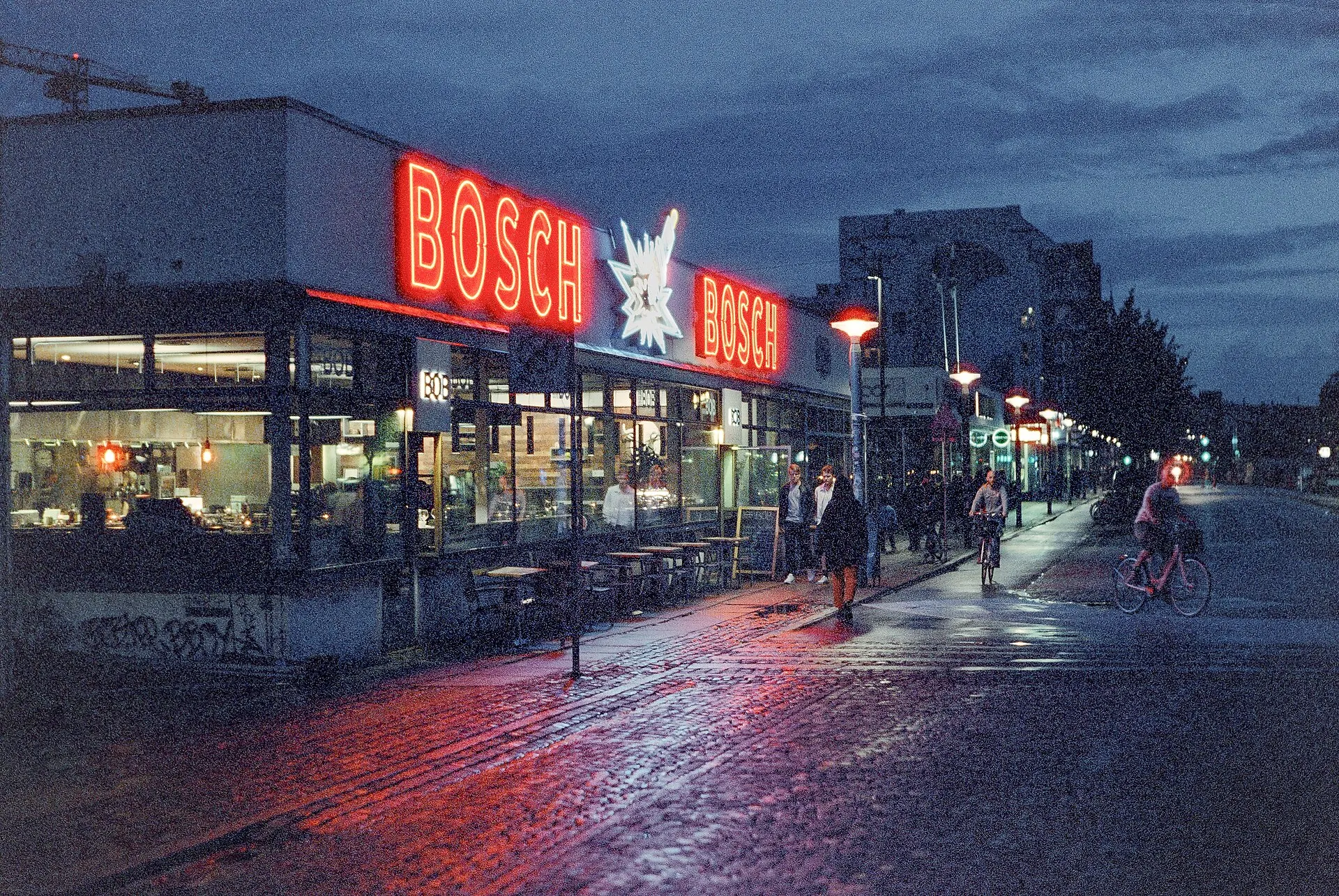
Kødbyen, Copenhagen, 2017, Minolta X-300Photo: Kristoffer Trolle from Copenhagen, Denmark, CC BY 2.0 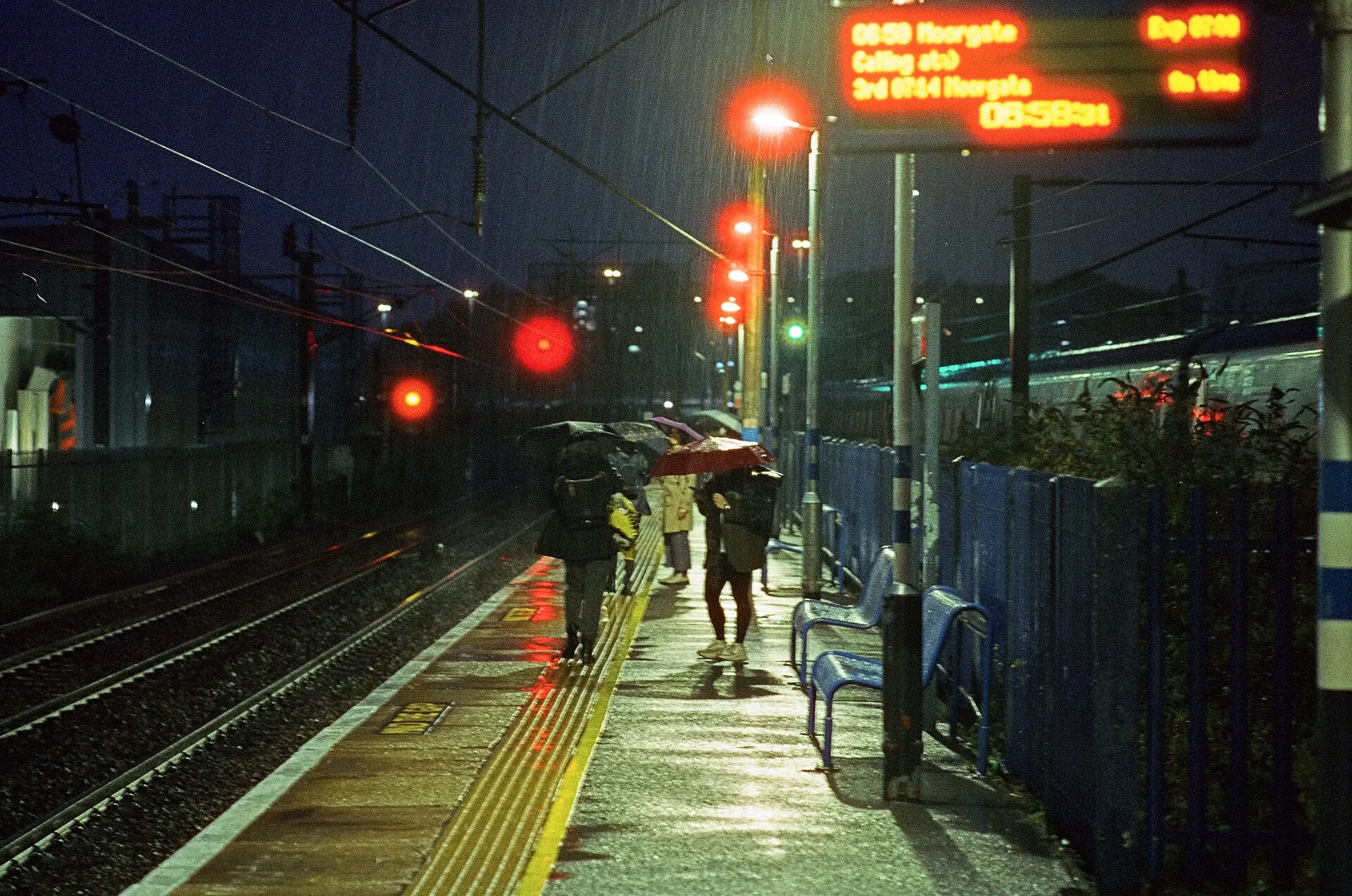
Hornsey station, London, October 2025, Nikon FE2Photo: Tom Page, CC BY-SA 4.0 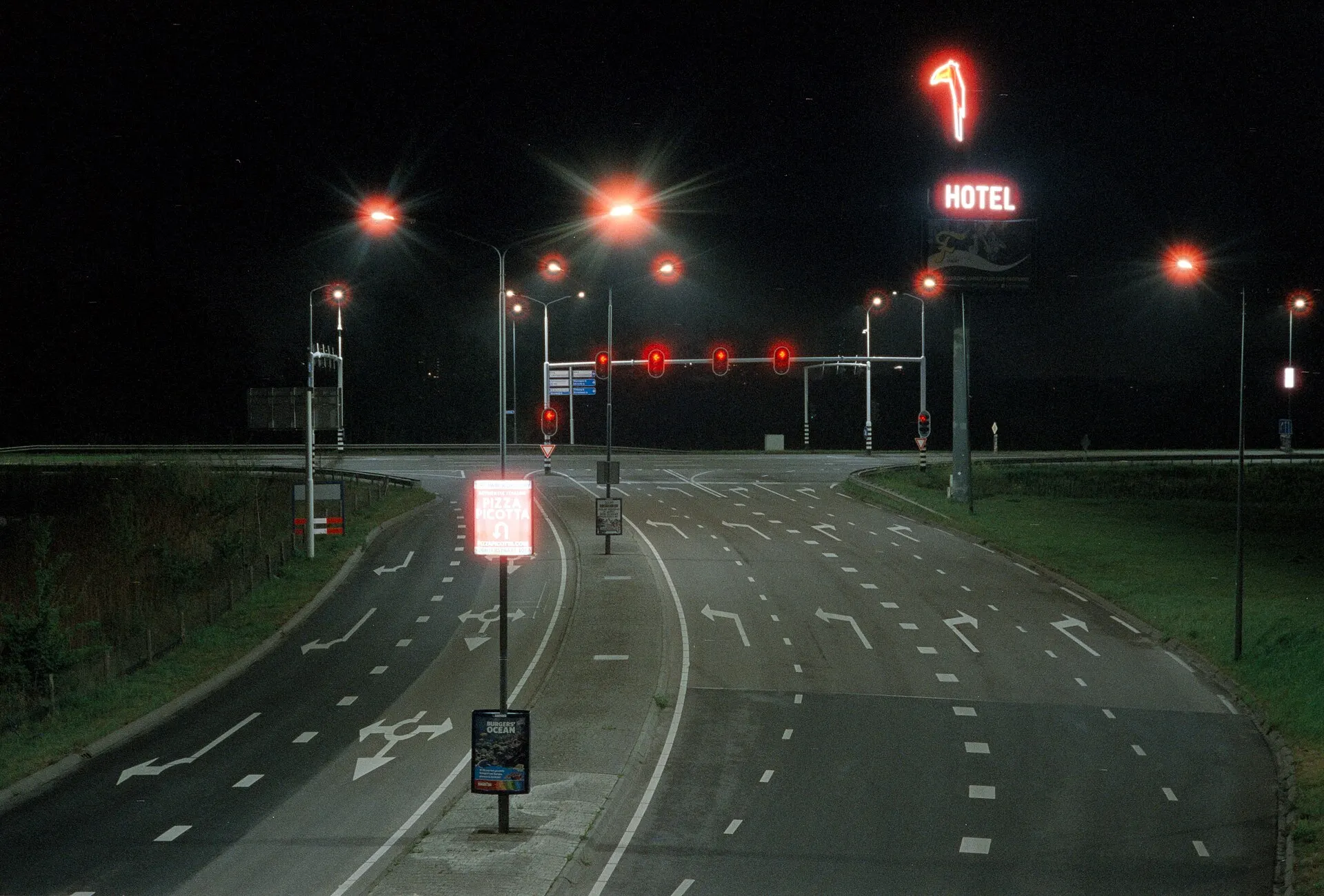
Long exposure in 's-Hertogenbosch, NetherlandsPhoto: Arandomphotographer, CC BY 4.0 
Fontaines D.C. at Primavera Sound Porto, 2025, Fujica ST701Photo: Boredintheevening, CC BY 4.0 
Paleis Noordeinde, The Hague, on 120 with a Hasselblad 500C/MPhoto: Arandomphotographer, CC BY 4.0 
Chance Street, London, May 2026, Nikon F100Photo: Tom Page, CC BY-SA 4.0
What owners and reviewers say, topic by topic
We sorted 112 opinions about the 800T from 26 pages and videos on 17 websites and channels. Each row shows how many people raised a topic and how many of them were positive. Open a row to read short quotes, each linked to its source.
Reddit, Photrio, DPReview, B&H reviews and Facebook groups could not be read, so the opinions come from photographers' blogs and their comment threads, editorial reviews (Analog.Cafe, EMULSIVE, The Phoblographer), one Brooklyn lab's guide and five YouTube reviews. Analog.Cafe and EMULSIVE supply the most voices, and the lab quoted develops the film for customers.
Color33% positiveof 18
Mixed, and it depends on the light. Under tungsten and neon, reviewers like the color: The Phoblographer likens it to Portra 400 NC and one side-by-side found it more vibrant than Fuji 800. Most mixed notes describe daylight without a filter, where frames go blue, teal or faintly green; a few owners got near-normal color anyway.
“the CineStill 800T images have a more normal warmth level and a modest amount of contrast”
John Adams III, Shoot It With Film 2022-07Owner
“each picture I took had a very slight overcast of the color green”
Aidan Bell, Casual Photophile 2020-09Owner
“the images looked to me like those I would expect from normal outdoor color film”
Photography & Vintage Film Cameras (connealy.blogspot.com) 2020-12Owner
“Cool and muted tones overall with the neon signs or bulbs bringing the highlights.”
Halation and glow46% positiveof 13
Split. Many owners treat the red glow as the point of the film and use it on purpose for night cityscapes; others call it neutral or simply unavoidable. Two find it unwanted, especially on sunny days and around bright light sources.
“the film is not suitable for sunny days due to those halation problems”
Phil Harrison, EMULSIVE 2017-08Owner
“Some see it as a flaw, but I think it's part of Cinestill's charm.”
“I love that you can use the halation (a glow that forms around bright highlights) to your advantage.”
Tanya Alexis, Shoot It With Film 2018-07Owner
“I don't get the red streaks in daylight”
Casual PhotophileOwner
Low light and night100% positiveof 11
Every mention is positive, and it is the main reason people buy it: night streets, neon, concerts and dim interiors at workable shutter speeds without pushing.
“Over all, I'd say it was a pretty successful first roll.”
Joe, The Resurrected Camera 2014-11Owner
“It's a film I love for night photography with strong neon around”
Lorraine Healy, EMULSIVE 2020-06Owner
“either Kodak Portra 400 pushed or CineStill 800T can provide you great results”
John Adams III, Shoot It With Film 2022-07Owner
“CineStill 800T comes alive in the nighttime.”
Gridfiti Staff, Gridfiti 2024-07
Overall look73% positiveof 11
Mostly positive. Owners and video reviewers describe a cinematic, cool-toned look unlike other stills films, and two argue it works in daylight street scenes too. The mixed notes are about the teal or grey daylight look, and one owner who likes the brand says he rarely makes 800T work.
“it is also great for the outdoors. Street scenes look fantastic.”
Kevan Wilkinson, Analog.Cafe 2019-04Owner
“If I had more occasions to use it, I would stock the Cinestill 800T by the brickload.”
Lorraine Healy, EMULSIVE 2017-06Owner
“I got a bunch of daylight shots with my 800T that look like no other film I've tried before.”
“Shooting in the daylight reminds me of the pastel colors that Kodak Portra offers with a bright, grey desaturated effect”
Aidan Bell, Casual Photophile 2020-09Owner
Grain70% positiveof 10
Mostly positive. Reviewers call it the finest-grained ISO 800 film they have seen, and one side-by-side found it much less grainy than pushed Portra 400. Two dissent: one owner got more grain than expected and used noise reduction, and a video reviewer found it heavy. Underexposure is what brings the grain out.
“I got a lot more grain than I was expecting, and did actually use some noise reduction when I edited my shots”
“the grain is very fine, the definition excellent”
Phil Harrison, EMULSIVE 2017-08Owner
“the 800T appears to be the finest-grained ISO 800 film”
Dmitri, Analog.Cafe 2023-10Owner
“It does produce very smooth results for an 800 speed film.”
Photography & Vintage Film Cameras (connealy.blogspot.com) 2020-12Owner
Consistency0% positiveof 10
The weakest topic, with no positive mentions. Owners report light leak streaks on the first frames, red static marks, purple dots and rolls with many discards. A lab finds it slightly more sensitive to tired C-41 chemistry, and camera light seals matter.
“my experience with it in daylight are completely hit and miss”
Anselm G, Shoot It With Film 2023-06Owner
“I've observed this artifact on some of my CineStill 800T frames”
Dmitri, Analog.Cafe 2022-09Owner
“The first few frames had light leak streaks across them, but the rest looked ok.”
Photography & Vintage Film Cameras (connealy.blogspot.com) 2020-12Owner
“The amount and severity of the light leaks you get can also depend on how good the seals on your camera are”
Skin tones78% positiveof 9
Mostly positive. Owners and reviewers praise accurate, natural skin with a cinematic warmth under tungsten and mixed indoor light. The one negative comes from a lab: unfiltered daylight portraits pick up a blue cast that looks cold and unflattering.
“The blue cast makes skin tones look cadaverous.”
Kubus Photo Service 2026-01Hands-on review
“Also, the skin tones are amazing!”
Tanya Alexis, Shoot It With Film 2018-07Owner
“Skin tones take on a cinematic warmth that feels like it belongs on a movie poster.”
“has a very pleasant palette of colours with lovely skin tones and is not over saturated”
Phil Harrison, EMULSIVE 2017-08Owner
Price and availability13% positiveof 8
Mostly negative. Owners and reviewers call it expensive, with a lab putting it at three times the price of consumer color film, and several say it sells out quickly. One owner says the look is worth every penny. In October 2026 US shops listed it at $17.00 to $19.95 for 35mm.
“stocks are often low or completely sold out in many places”
“I probably would not consider using this film again because of the twelve dollar cost per roll.”
Photography & Vintage Film Cameras (connealy.blogspot.com) 2020-12Owner
“CineStill 800T sells out quickly - wherever I shop - making hunting it down an adventure each time”
Dmitri, Analog.Cafe 2021-12Owner
“At retail, it costs three times what consumer color negative costs.”
Kubus Photo Service 2026-01Hands-on review
Scanning and printing14% positiveof 7
Mostly mixed. The negatives take heavy edits well, but owners say lab scans often look off until color and curves are adjusted, halation is tricky to edit, and automatic scanner corrections can fight the intended look.
“a lot of the time, this film doesn't look very good right out of the scanner”
Joe, The Resurrected Camera 2014-12Owner
“Halation and color balance can sometimes be tricky to edit”
“While it is certainly possible to fix the photos taken without the filter using software, the job isn't always simple or fast”
Dmitri, Analog.Cafe 2021-12Owner
“Auto-correction algorithms can fight against the intended look.”
Kubus Photo Service 2026-01Hands-on review
Exposure latitude67% positiveof 6
Mostly positive. Owners call it forgiving, with shadow and highlight detail that holds up better than most color films, and a video reviewer liked frames three stops over. The weak side is underexposure, which turns grainy, so The Phoblographer suggests overexposing a little.
“it does not like being underexposed at all and gets very grainy when it does”
Tanya Alexis, Shoot It With Film 2018-07Owner
“This film has one of the best latitudes I've ever seen”
Joe, The Resurrected Camera 2014-11Owner
“The shadows and highlights will retain more detail than most colour films, and the results maintain medium contrast across the frame.”
Dmitri, Analog.Cafe 2023-10Owner
“you may want to overexpose it a bit to expose for the shadows and develop for the highlights”
Chris Gampat, The Phoblographer 2015-05Hands-on review
Pushing and pulling100% positiveof 5
All positive. Owners push it to 1600 or 3200 and accept more grain, and one rated it near 1600 with normal development. Labs are a little more cautious: Kubus Photo calls one stop reasonable and two stops very contrasty.
“It pushes really well, too!”
Tanya Alexis, Shoot It With Film 2018-07Owner
“it can also be reliably pushed up to EI 3200 and pulled to EI 200”
Dmitri, Analog.Cafe 2023-10Owner
“the ability to expose this film at 1600 (and perhaps beyond) without pushing”
Joe, The Resurrected Camera 2014-11Owner
“Push it to 1600 or 3200, and it'll still deliver. Just expect some added grain.”
Sharpness and detail100% positiveof 4
All four mentions are positive: well detailed, holding fine detail in big enlargements. Few sources discuss sharpness on its own.
“I could enlarge the image hugely and still retain fine detail.”
Phil Harrison, EMULSIVE 2017-08Owner
“Super fine grain, I don't get that colour cast, and well, it's really sharp.”
Casual PhotophileOwner
“making for much sharper photos, free of motion blur”
Gridfiti Staff, Gridfiti 2024-07
“CineStill 800T is incredible with skin tones and also very well detailed.”
Chris Gampat, The Phoblographer 2015-05Hands-on review
PositiveMixedNegative
What does CineStill 800T look like?
Under the light it was made for, tungsten bulbs at about 3200K, CineStill 800T gives natural color, skin tones reviewers keep praising and fine grain for an ISO 800 film. The Phoblographer compared its color to Kodak Portra 400 NC, and Analog.Cafe, after six years with it, says it appears to be the finest-grained ISO 800 film, likely surpassing Portra 800.
The signature is the glow. Motion picture film carries a remjet backing that cuts halation; CineStill removes it so the film can run in C-41, and with no anti-halation layer, bright points bloom into red or orange halos around street lights, neon signs and other bright light sources. CineStill says the effect is much weaker in 120 because of the larger negative.
Other light sources keep their own color. Kubus Photo notes that tungsten reads warm, sodium vapor goes green-orange and LEDs and fluorescents show their actual color temperature, which separates the colors in a night scene. In daylight without a filter the whole frame turns blue or teal, most visibly on greens and browns, Analog.Cafe found.
Not everyone wants the cast corrected: a Casual Photophile writer compared unfiltered daylight frames to Portra's pastels with a grey, desaturated feel, and a reader on The Resurrected Camera likes the blue in some scans.
Sources: thephoblographer.com, analog.cafe, cinestillfilm.com, cinestillfilm.com, kubusphoto.com, analog.cafe, casualphotophile.com, resurrectedcamera.wordpress.com
How to shoot CineStill 800T at night
Night is where 800T earns its price. These are the habits CineStill, labs and owners describe for street, neon and indoor work.
- 1
Rate it at 800, or a little lower
CineStill says it performs best at EI 800 in tungsten light with normal C-41 development, and puts the ideal rating between 400 and 800. Kubus Photo rates it 500 to 800 for better shadow detail.
- 2
Meter a mid-tone, not the lights
Kubus Photo says the meter aims for middle gray, which often blows the bright lights and blocks the shadows. It suggests spot metering something that should be middle gray, such as a lit wall or the ground under a street light, and locking exposure there. Indoors under even tungsten light, it says to set 800 and trust the meter.
- 3
Don't underexpose
Shoot It With Film says underexposure brings out a lot of grain, and one My Favourite Lens reviewer, who got more grain than he expected, ran noise reduction on his scans. The Phoblographer suggests overexposing a little to hold the shadows.
- 4
Use a fast lens
Kubus calls the film fast enough for available light with f/2 or faster lenses. A Shoot It With Film writer kept a workable shutter speed in a very dim space without pushing.
- 5
Decide what to do with the glow
CineStill says a diffusion filter, less exposure or throwing highlights out of focus tames it; Analog.Cafe says keeping bright lights out of the frame is the only way to avoid it.
- 6
Push when the light runs out
Shoot the whole roll at 1600 and ask the lab for a one-stop push. CineStill's own chart goes to EI 3200; the table below has the ranges.
Sources: cinestillfilm.com, kubusphoto.com, shootitwithfilm.com, myfavouritelens.com, thephoblographer.com, shootitwithfilm.com, cinestillfilm.com, analog.cafe
Can you shoot CineStill 800T in daylight?
Yes, but plan for the color. Balanced for 3200K bulbs, 800T turns blue or teal in sun and shade. CineStill recommends an 85 filter and/or rating the film at EI 400 to 500.
Sources differ on how much light the filter costs. Kubus Photo says an 85B takes about two-thirds of a stop, for an effective speed near ISO 500, and Shoot It With Film meters at 400 with an 85B. Analog.Cafe prefers an 85C warming filter and found it needed no exposure change.
Without a filter, warmth can go back in at the scan. CineStill says that is not difficult and that overexposing reduces the editing; Analog.Cafe found it possible but not always quick, which is why it recommends the 85C. Some owners keep the cast on purpose, and an EMULSIVE reviewer argues 800T is not only a neon-and-night film.
| Method | How | Trade-off |
|---|---|---|
| 85 or 85B filter | Filter on the lens, meter at about 400 to 500 | About two-thirds of a stop lost (Kubus Photo); corrects the blue cast |
| 85C filter | Warming filter on the lens, box speed | Analog.Cafe needed no exposure change |
| No filter, EI 400 to 500 | Rate it slower, as CineStill suggests | Cool cast to correct in the scan, or keep |
| No filter, EI 800 | Shoot at box speed | Blue-teal cast to fix in the scan, with no extra exposure to ease the edit |
Kubus Photo calls unfiltered daylight 800T an expensive mistake if you aren't expecting the blue cast. For regular daytime shooting, CineStill 400D is the daylight-balanced version.
Sources: cinestillfilm.com, kubusphoto.com, shootitwithfilm.com, analog.cafe, cinestillfilm.com
Pushing and pulling CineStill 800T
It pushes well, and owners shoot it at EI 1600 or 3200 when the light drops. CineStill says it can be push processed up to three stops without base fog problems, and every owner and reviewer opinion collected here that mentions pushing is positive.
Labs are more cautious than the box. Kubus Photo calls a one-stop push to 1600 reasonable, with more contrast and grain and shadows that block up faster, and finds two-stop pushes to 3200 very contrasty. At the other end, Analog.Cafe pushed a roll to EI 6400 and liked the results, and a pull to EI 320 looked virtually the same as box speed.
Shoot the whole roll at one rating and tell the lab how many stops to push. Our guide to pushing and pulling film covers the basics.
| Development | Exposure index range |
|---|---|
| Normal (no push) | EI 200-1000 |
| Push 1 stop | EI 800-2000 |
| Push 2 stops | EI 1250-3200 |
| Push 3 stops | EI 1600-3200, with added contrast |
Some retailer pages still carry CineStill's older copy (rated ISO 200 to 2000, pushed to 3000); the current CineStill product page shows the ranges above.
Sources: cinestillfilm.com, cinestillfilm.com, kubusphoto.com, analog.cafe, filmsupply.club
Developing and scanning CineStill 800T
Any lab that runs C-41 can develop it, and so can home C-41 kits. CineStill's CS41 two-bath powder kit lists at $31.99 for 24 rolls, about $1.33 a roll in chemistry ($31.99 / 24), and The Darkroom, a US mail-in lab, lists film developing by mail starting at $14 (October 2026). See how to develop film at home and what developing costs.
ECN-2 works too: CineStill says full ECN-2 or its CS2 kit gives a flatter, lower-gamma negative that some people like for scanning, but its color curves don't suit RA-4 darkroom printing. CineStill recommends C-41 for most users. Fresh chemistry matters: Kubus Photo finds 800T slightly more sensitive to exhausted C-41 chemistry than some other C-41 films.
Scans are the other common complaint: owners say lab scans often look off until color and curves are adjusted. Kubus Photo says automatic corrections can fight the film's intended look, so ask the lab to go light on them. The negatives take heavy edits well thanks to fine grain and medium-low contrast, Analog.Cafe says, and they dry flat, which makes scanning at home easier.
The look also depends on the scan: Unique Photo notes that halation intensity varies with the scene, lens, exposure and scanning interpretation.
Sources: cinestillfilm.com, cinestillfilm.com, thedarkroom.com, kubusphoto.com, analog.cafe, uniquephoto.com
CineStill 800T vs CineStill 400D
 CineStill 800T | CineStill 400D | |
|---|---|---|
| Color balance | Tungsten, 3200K | Daylight, about 5500K |
| Box speed | EI 800 | ISO 400 |
| Halation | Strong red glow | Present but subtle, per Brooklyn Film Camera; Kubus Photo says it is the same effect |
| In daylight | Needs an 85 filter or EI 400 to 500 | No filter needed |
| Static | CineStill calls it more prone than most films | Has an anti-static lubricant coating, per CineStill |
| Process | C-41 | C-41 |
| Best for | Night, neon, tungsten interiors | Daylight, golden hour, mixed light |
Pick the CineStill 800T if
- You shoot mostly after dark or under tungsten bulbs.
- You want the strongest red glow.
- You need speed: 800 at box speed, pushable to 3200.
Pick the CineStill 400D if
- You shoot mostly in daylight and don't want to carry a filter.
- You want the CineStill look in daylight, with halation Brooklyn Film Camera calls subtler.
- You wind fast or with a motor drive in cold, dry weather, when static is a risk.
Sources: kubusphoto.com, brooklynfilmcamera.com, cinestillfilm.com, cinestillfilm.com, analog.cafe
What a roll of 800T costs
New 36-exposure 35mm rolls cost $17.00 to $19.95 at the US shops below, and 120 rolls $17.95 to $18.00. B&H and Adorama could not be checked, so they aren't listed.
Bellows Film Lab (Miami)
New, 35mm, 36 exposures, 1 roll
$17.00
See listingCineStill (maker's store)
New, 35mm, 36 exposures, 1 roll
$17.99
See listingUnique Photo
New, in stock, 35mm, 36 exposures, 1 roll
$17.99
See listingFilm Supply Club
New, 35mm, 36 exposures, 1 roll
$17.99
See listingTreehouse Analog Selects (Honolulu)
New, 35mm, 36 exposures, 1 roll
$19.95
See listingTreehouse Analog Selects (Honolulu)
New, 120, 1 roll
$17.95
See listingCineStill (maker's store)
New, 120, 1 roll
$17.99
See listingUnique Photo
New, in stock, 120, 1 roll
$17.99
See listingFilm Supply Club
New, 120, 1 roll
$17.99
See listingBellows Film Lab (Miami)
New, 120, 1 roll
$18.00
See listing
Prices checked on October 28, 2026. They move every week, so treat them as a range, not a quote. Unique Photo drops to $16.99 a roll for 20 or more rolls of 35mm, and to $16.95 (10+) and $15.99 (20+) for 120. CineStill limits orders to 20 rolls per customer, citing limited supply. At $17.99, a 36-exposure roll works out to about 50 cents a frame ($17.99 / 36) before developing.
Technical data
Film
- Speed and balance
- EI 800 under 3200K tungsten light
- Base
- Acetate
- Anti-halation layer
- None, hence the red glow
Exposure (CineStill)
- No push
- EI 200-1000
- Maximum push
- 3 stops, to EI 3200, with added contrast
- Daylight
- 85 filter and/or EI 400-500
Formats
Storage and travel
- Shoot within
- 6 months of purchase
History
- Beta test
- Late 2012
- Release as 800T
- 2013
- 120 version
- About 2017, per The Phoblographer
Video reviews worth your time

Cinestill 800T Review at Night
The reviewer enjoyed shooting CineStill 800T at night, praising its high sensitivity and distinctive tungsten color balance despite its high cost and scarce availability.
Cinestill 50D & 800T Review
CineStill 800T delivers vibrant colors and a refreshing look with good grain performance, though the distinctive red halation around bright light sources might not suit every photographer.

Is CineStill 800T worth the hype? TOKYO Night Film Photography
The reviewer considers CineStill 800T a unique and fun film stock for low-light night photography, though its high price tag and susceptibility to static marks require careful shooting.

Is CineStill 800T Worth All The Hype?
CineStill 800T is a unique and popular film stock that excels in low-light night photography, but its high price, prominent grain, and cold color cast make it less versatile for general daylight shooting.

WHAT IS CINESTILL 800T FILM? (The best way to shoot it)
CineStill 800T brings a unique cinematic motion-picture aesthetic with distinctive halation highlights to 35mm night photography.
Questions people ask about the 800T
Is CineStill 800T C-41?
Yes. CineStill removes the remjet backing from the cinema film it starts with, so any lab that runs standard C-41 can develop 800T, and so can home C-41 kits such as CineStill's CS41. It can also go through ECN-2 or CineStill's CS2 kit for a flatter, lower-gamma negative, but CineStill recommends C-41 for most users.
Sources: cinestillfilm.com, cinestillfilm.com
Can I shoot CineStill 800T during the day?
Yes, with a correction. Because it is balanced for 3200K tungsten light, daylight frames come out blue or teal. CineStill recommends an 85 filter and/or rating the film at EI 400 to 500, and Kubus Photo says an 85B costs about two-thirds of a stop. Some owners skip the filter and correct or keep the cool look in the scan.
Sources: cinestillfilm.com, kubusphoto.com, analog.cafe
Does CineStill make 800T in 120?
Yes. CineStill's film-family guide lists 120 for all four of its stocks (800T, 400D, 50D and BwXX). The 800T 120 version followed the 35mm film, around 2017 according to The Phoblographer. A 120 roll of 800T costs $17.95 to $18.00 at US shops (October 28, 2026), and CineStill says halation is much weaker in medium format. Sheet film was only a limited 4x5 run from its 2016 Indiegogo campaign; see [35mm vs 120 film](/film/35mm-vs-120-film/).
Sources: cinestillfilm.com, thephoblographer.com, treehouse-shop.com, bellowsfilmlab.com, cinestillfilm.com
How many photos are in a roll of CineStill 800T?
A 35mm roll has 36 exposures in a factory-spooled steel cassette. At $17.99 that is about 50 cents a frame ($17.99 / 36) before developing. CineStill lists the cassettes as DX-coded; early rolls were not, and some retailer pages still say non-DX. A 120 roll's count depends on your camera's frame size.
Sources: cinestillfilm.com, uniquephoto.com, thephoblographer.com
What ISO should I shoot CineStill 800T at?
EI 800 under tungsten light: CineStill says that is where it performs best with normal C-41 development, and it puts the ideal range at 400 to 800. Kubus Photo rates it 500 to 800 for better shadow detail. In daylight, rate it at 400 to 500 or use an 85 filter, and in dim scenes you can shoot it at 1600 or 3200 and have it pushed. More in [film ISO explained](/film/film-iso-explained/).
Sources: cinestillfilm.com, kubusphoto.com, cinestillfilm.com
Why does CineStill 800T have red halos around lights?
Motion picture film carries a remjet backing that reduces halation. CineStill removes it so the film can run in C-41, and with no anti-halation layer, bright points bloom into red or orange halos. Less exposure, a diffusion filter or out-of-focus highlights reduce it, and it is much weaker in 120, but it can't be removed.
Sources: cinestillfilm.com, cinestillfilm.com, cinestillfilm.com, analog.cafe
Is CineStill 800T just Kodak Vision3 500T?
It started that way. Wikipedia and Analog.Cafe describe it as Kodak Vision3 500T with the remjet removed, and CineStill says 800T was originally based on a 500-speed motion picture film that it converted for still photography. Kodak rates the original 5219 at EI 500; CineStill rates 800T at EI 800 in C-41. Rebranded Vision3 with the remjet left on has no halation, but not every lab will take it.
Sources: en.wikipedia.org, analog.cafe, cinestillfilm.com
What happened to my CineStill 800T photo?
The usual causes owners report are light leak streaks on the first frames, red or pink static sparks from fast winding in dry air, a blue or teal cast from daylight without a filter, and small purple dots on some frames. CineStill says 800T is more sensitive to light leaks and static than most films, and that it replaces rolls customers believe are defective.
Sources: cinestillfilm.com, myfavouritelens.com, cinestillfilm.com, shootitwithfilm.com
What people compare it with
Daylight balanced with no halation, more traditional color and better shadow detail, according to Kubus Photo, which adds that it handles mixed light less gracefully than 800T handles tungsten. Analog.Cafe names it the fast color film to use if you don't want the glow.
The daylight-balanced sibling at ISO 400, so no filter is needed in sun. Brooklyn Film Camera calls its halation subtle next to 800T's, while Kubus Photo says it is the same effect.
Kubus Photo's cheaper low-light route: more traditional color, more grain and contrast, and no halation. A Shoot It With Film comparison found pushed Portra 400 and 800T both worked in low light.
Reflx Lab 800
Another tungsten film converted from Kodak Vision3 500T, sold as Reflx Lab 800T until CineStill asked for a name change in 2023. People compare it as a lookalike; its price wasn't checked.

Every source behind this page
Read them yourself. How we pick and count them is in our methodology.
Show all 45 sources
Manuals and references 19
- bellowsfilmlab.com: Cinestill 800T - 120
- bellowsfilmlab.com: CineStill Film 800T - 35mm
- brooklynfilmcamera.com: CineStill 400D Review
- cinestillfilm.com: CineStill 800T In Your Toolbox
- cinestillfilm.com: The CineStill Film Family: A Photographer’s Guide to Our 4 Film Emulsi
- cinestillfilm.com: Identifying and Preventing Static Discharge on Your Film
- cinestillfilm.com: What Makes 800T the Original and Only True 800-Speed Tungsten-Balanced
- cinestillfilm.com: Frequently Asked Questions
- cinestillfilm.com: CineStill 800Tungsten High Speed Color Negative Film, 35mme 135 36exp. EI 800, 3200K
- cinestillfilm.com: CineStill 800Tungsten High Speed Color Negative Film, 120 120 Medium Format, EI 800
- en.wikipedia.org: CineStill
- filmsupply.club: CineStill 800T 35mm Film
- filmsupply.club: Cinestill 120 Medium Format 800 Tungsten High Speed Color Film (Single
- thedarkroom.com: Film Developing by Mail - 35mm, 120 & More
- treehouse-shop.com: CineStill 800T/36
- treehouse-shop.com: Cinestill 800T/120
- uniquephoto.com: CineStill 800T Profile: Tungsten Film, Halation Glow, and Night Streets
- uniquephoto.com: Cinestill 800 Tungsten C
- uniquephoto.com: CineStill 800T ISO 800 Tungsten Xpro C
Editorial reviews 13
- Analog.Cafe: CineStill 800T Film Review
- Analog.Cafe: CineStill 400D Dynamic Film Review
- Analog.Cafe: Going Against the Grain
- Analog.Cafe: How to Shoot CineStill 800T in Daylight
- Shoot It With Film: How To Shoot CineStill 800T by Tanya Alexis
- Shoot It With Film: CineStill 800T vs Portra 400 Pushed One Stop » Shoot It With Film
- Casual Photophile: Breaking Rules with Cinestill 800 T in Daylight
- The Phoblographer: Review
- EMULSIVE: A word on: Cinestill 800T (35mm)
- EMULSIVE: Film review: Cinestill 800T vs Fuji 800 (35mm) inside the Buenos Aires underground aka Subterranean Explorations
- EMULSIVE: Blind film review #02: CineStill 800T vs Kodak Portra 400 in 120 format
- EMULSIVE: Film Stock Review: CineStill 400D
- Gridfiti: CineStill 800T Sample Photos (Portraits, Daylight & More)
Independent blogs 8
- My Favourite Lens: CineStill 800T 35mm Film Review
- Kelsey Smith Photography: Cinestill 800T Review: The Ultimate Film for Cinematic Night Photography - Kelsey Smith | Film Photographer
- Photography & Vintage Film Cameras: Cinestill 800T
- The Resurrected Camera: The learning curve with Cinestill 800T
- The Resurrected Camera: Cinestill 800T, before and after
- Kubus Photo Service: CineStill 800T Complete Guide
- EMULSIVE: 5 Frames... Of fun at the fair on CineStill 800T (EI 800 / 35mm format / Leica M3)
- Gregory Owain: CineStill 400D Film Review
Video reviews 5
Keep reading
Film stocks
CineStill 400D is a daylight ISO 400 C-41 color film with warm color and soft halation. What 100 opinions say, how to expose and push it, and US prices.
Film stocks
Portra 400 vs 800: 400 has finer grain, sheet sizes and a lower price; 800 adds a stop of speed and pushes to 1600. October 2026 prices and when to pick each.
Film stocks
How to push film: what a stop means, what to set on your camera, how to tell the lab, one-stop fees from $0 to $4, home development times and how to pull film.
Film stocks
Kodak Vision3 250D is ISO 250 daylight cinema film respooled for still cameras. What 125 opinions say, ECN-2 vs C-41, remjet vs AHU, and US prices from $10.
Developing and scanning
Scanning film with a DSLR, step by step: gear and October 2026 prices, exact camera settings, how it compares with a flatbed and fixes for common scan problems.
Techniques and editing
Light leaks are stray light fogging your film, usually from worn seals or an opened back. How to find the source, fix it for $80-120 or get the look on purpose.