How-to
How to Push Film (and Pull It): Stops, Lab Fees and Dev Times
The short answer
To push film, set your camera or light meter to a higher ISO than the box speed, shoot the whole roll at that setting, then have it developed longer than normal; each doubling is one stop, so ISO 400 film shot at 800 is a +1 push and at 1600 is +2.
One stop is the most common and dependable push, labs charge from nothing to $4 for a one-stop push as of October 2026, and at home you simply extend the developer time, often by 30 to 50 percent per stop. Pulling is the reverse: rate the film slower and shorten development, which is done mostly with black and white film.
- One stop of push
- Double the ISO: 400 film at 800 is +1thedarkroom.com
- Most dependable push
- 1 stopuniquephoto.com
- Kodak Tri-X 400 maximum
- EI 1600 (+2)kodakprofessional.com
- Ilford HP5 Plus
- Rated up to EI 3200 (+3)glazerscamera.com
- Home push time
- About 30 to 50 percent more per stopglass.photo
- Dwayne's Photo push fee
- $4.00 a roll, any amount from -2 to +2dwaynesphoto.com
What does it mean to push film?
Pushing film means rating a roll at a higher speed than the box says, then developing it longer than normal to make up for the underexposure. The Darkroom puts it plainly: pushing and pulling only happen in processing. If you shoot at a higher ISO and the roll gets normal development, it is simply underexposed.
The number you set is called the exposure index (EI). The film's real speed does not change; you are telling the meter to give it less light. Some guides, including The Shutterbug and Analogue Wonderland, call the higher ISO setting itself the push, which is where a lot of the confusion starts. In practice you need both halves: the higher setting in the camera and the longer development.
Pushes are counted in stops. A stop doubles or halves the light, so each doubling of the ISO setting adds one stop of push: ISO 400 film shot at 800 is +1, at 1600 is +2 and at 3200 is +3. Pulling runs the other way, so 400 film at 200 is -1. If ISO numbers are new to you, start with film ISO explained.
| Box speed | Pull -1 | Push +1 | Push +2 | Push +3 |
|---|---|---|---|---|
| ISO 100 | EI 50 | EI 200 | EI 400 | EI 800 |
| ISO 200 | EI 100 | EI 400 | EI 800 | EI 1600 |
| ISO 400 | EI 200 | EI 800 | EI 1600 | EI 3200 |
| ISO 800 | EI 400 | EI 1600 | EI 3200 | EI 6400 |
Sources: thedarkroom.com, en.wikipedia.org, theshutterbug.com, analoguewonderland.co.uk
When should you push film, and when should you not?
The usual reason is light. The Darkroom suggests a push when, at box speed, you cannot keep the shutter at 1/60 second or faster handheld with an SLR, or 1/30 with a rangefinder. Dim interiors and night streets are the typical cases. It is an old trick: Andy Warhol's 1965 film Empire was shot on ASA 400 Tri-X 16mm and pushed to ASA 1000.
The second reason is the look. A pushed roll has more contrast, more saturation on color film and more visible grain, and some photographers rate film higher on purpose to get exactly that.
If there is enough light, The Darkroom recommends not pushing at all, because box speed usually performs best. Harsh, contrasty light is a poor match too: The Darkroom says a push makes it harder to keep highlights from blowing out and reduces shadow detail.
If you know before loading that the light will be low, a faster film at box speed, such as Portra 800 or CineStill 800T, saves the push fee and leaves room to push later if you need it.
Sources: thedarkroom.com, en.wikipedia.org, shootitwithfilm.com, uniquephoto.com, glass.photo, kodakprofessional.com, cinestillfilm.com
What does pushing do to grain, contrast and color?
Longer development builds up the highlights and midtones while the shadows and blacks stay about where they were, according to The Shutterbug. That is why contrast climbs with every stop. Shoot It With Film lists the side effects: more contrast, more saturation, more grain and possible color shifts.
A push is not a free ISO upgrade. A 400 film shot at 800 and pushed will not look as if it was shot at 400, and Analogue Wonderland notes that Portra 400 pushed to 800 will not necessarily look like Portra 800. Pushing also cannot bring back shadow detail that never reached the film.
Color negative tends to over-saturate when pushed and under-saturate when pulled. Underexposed color can show greenish shadows and off-color skin tones, per The Darkroom. A 35mmc writer who shot Portra 400 at EI 1600 (+2) saw an occasional yellowish cast and a slight color shift in the shadows, which was easy to remove in Photoshop.
Sources: theshutterbug.com, shootitwithfilm.com, analoguewonderland.co.uk, thedarkroom.com, 35mmc.com
How many stops can you push film? Limits by film stock
One stop is the most common and dependable push, according to Unique Photo, and Glass says color negative usually handles it with modest shifts in color and contrast. Three stops is possible with some black and white films but costs shadow detail, and Analog.Cafe calls anything past three rare.
Manufacturers set the official limits in the table below, and owners often go further. Ilford stops at +3 (EI 3200) for HP5 Plus, yet a Shoot It With Film contributor who pushed it 3, 4 and 5 stops says they would feel comfortable going 3 or 4, and Emulsive found that even 5 to 6 stops (EI 12800 to 25600) work surprisingly well for a traditional-grain film. Kodak is more conservative with Tri-X 400, listing EI 1600 as its maximum.
Contrast matters as much as speed. The Darkroom finds lower-contrast films like HP5 and Kentmere 400 push very well compared with Tri-X, which starts out more contrasty.
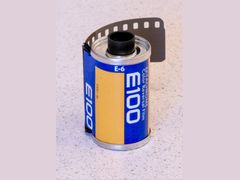
Slide film is where sources disagree. Glass says it responds poorly and is rarely pushed more than a stop. The Darkroom says E-6 is the least common film to push but can be pushed with good results, and shows Provia 100F shot at 200 (+1).
| Film | Box speed | Push guidance | Price, Oct 2026 |
|---|---|---|---|
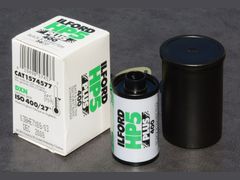 Ilford HP5 Plus | ISO 400 | Ilford: up to EI 3200 (+3); no official times beyond +3 | $9.99 a roll, Glazer's Camera |
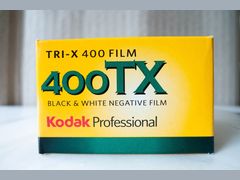 Kodak Tri-X 400 | ISO 400 | Kodak: maximum EI 1600 (+2); Wikipedia: EI 800 in a standard developer gives very good results | $10.25 a roll, Glazer's (sold out Oct 28) |
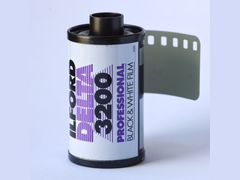
| Ilford Delta 3200 | Sold as EI 3200 | CineStill treats its native speed as 1000 to 1600, so 3200 works like a push | $16.99, Glazer's Camera |
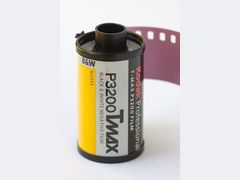 Kodak T-Max P3200 | ISO 800 nominal | Kodak: designed to be pushed to EI 3200 or higher | $15.50, Glazer's (sold out Oct 28) |
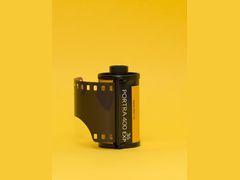 Kodak Portra 400 | ISO 400 | Color negative: +1 handled with modest shifts; +2 used by a 35mmc writer, with occasional casts | $87.95 for 5 ($17.59 a roll), Glazer's |
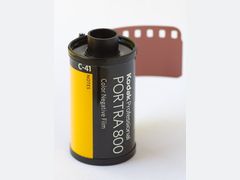 Kodak Portra 800 | ISO 800 | Kodak: can be pushed to 1600 (+1) | $19.49, Glazer's Camera |
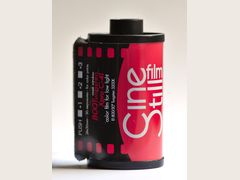 CineStill 800T | ISO 800 | CineStill: +1 at EI 800 to 2000, +2 at 1250 to 3200, +3 at 1600 to 3200 with added contrast | $17.99, CineStill and Glazer's |
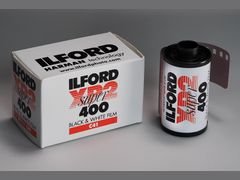 Ilford XP2 Super | ISO 400 | No push needed: shoot ISO 50 to 800 on one roll and process as standard C-41 | $16.99, Glazer's Camera |
If you shot XP2 Super at 800, send it as normal C-41. Ilford's product description, as carried by Glazer's, says the whole 50 to 800 range processes the same way.
Sources: uniquephoto.com, glass.photo, analog.cafe, kodakprofessional.com, en.wikipedia.org, glazerscamera.com, shootitwithfilm.com, emulsive.org, thedarkroom.com, glazerscamera.com, glazerscamera.com, cinestillfilm.com, kodakprofessional.com, glazerscamera.com, glazerscamera.com, 35mmc.com, kodakprofessional.com, glazerscamera.com, cinestillfilm.com, glazerscamera.com
What you need to push film (with prices)
To shoot a pushed roll, you need a way to tell the meter the new speed: a camera with a manual ISO dial, exposure compensation (set -1 for each stop of push, per Analog.Cafe), or a handheld meter. The camera's ISO setting only feeds its built-in meter, so if you use a handheld meter, set the EI there instead.
Many 35mm compacts read the DX code on the cassette and do not let you override it, as 35mmc points out, so check your camera before you plan a push. 35mmc also explains how some photographers recode the DX contacts.
After that, you need a marker for the cassette and either a lab that pushes your type of film or home chemistry with a known push time. At home the push itself costs nothing extra: the film just stays in the developer longer. As of October 2026, the CineStill Cs41 kit costs $32.99 for up to 24 rolls, about $1.37 a roll if you use all 24, and Df96 costs $19.99 for 16 or more rolls, $1.25 a roll or less.
| Item | Why it fits pushing | Price | Seller |
|---|---|---|---|
| Ilford Ilfotec DD-X, 1 liter (makes 5 L) | Black and white developer with published HP5 Plus push times | $42.99 | Glazer's Camera |
| Kodak HC-110, 1 liter | Black and white developer described as suitable for push processing | $43.99 | Glazer's Camera |
| Ilford Microphen, powder for 1 liter | Suited to the extended times used to push HP5 Plus, Delta 400 and Delta 3200 | $12.49 (sold out Oct 28) | Glazer's Camera |
| CineStill Cs41 kit, 1000 mL (24 rolls) | C-41 color kit that includes push and pull instructions | $32.99 | CineStill |
| CineStill Df96 monobath, 1000 mL (16+ rolls) | One-bath black and white; push by raising the temperature | $19.99 | CineStill |
Keep a Sharpie in your camera bag: the mark on the cassette is what tells the lab to push.
Sources: analog.cafe, thedarkroom.com, shootitwithfilm.com, 35mmc.com, glass.photo, glazerscamera.com, glazerscamera.com, glazerscamera.com, cinestillfilm.com, cinestillfilm.com
Lab push fees in October 2026
| Seller | Item | Price | Note |
|---|---|---|---|
| Boutique Film Lab | Push or pull, C-41 and black and white | $0 | E-6 is $3 per stop and ECN-2 $2 per stop |
| State Film Lab | Push or pull up to two stops | $0 | Free tier per Brooklyn Film Camera's lab roundup; pushes C-41 up to 3 stops; mark the roll itself |
| Indie Film Lab (Montgomery, AL) | Push, up to three stops | $1 per stop | Per Brooklyn Film Camera's lab roundup |
| Reed Photo (Denver, CO) | Push or pull, black and white only | $2.50 per stop | No longer pushes or pulls C-41 |
| The Darkroom (San Clemente, CA) | Push or pull add-on, mail-in developing | $3 | The order page shows $3; the FAQ still says $2 |
| Photoworks San Francisco | Push or pull, 35mm C-41, black and white or E-6 | $3.00 | Added to the processing price: $10.00 for 35mm C-41 and black and white, $15.00 for 35mm E-6 slides |
| Dwayne's Photo (Parsons, KS) | Push or pull, 35mm color, -2 to +2 in half stops | $4.00 | Flat per roll for any amount |
Prices checked October 2026. They change often.
How to push film, step by step
These steps work for any film. The camera half is the same whether a lab or your own sink does the developing.
- 1
Pick the number of stops
Count doublings from box speed: 400 film at 800 is +1, at 1600 is +2. Use the smallest push that gets you a safe handheld shutter speed, since one stop is the most dependable.
- 2
Set the EI for the whole roll
Set the ISO dial or handheld meter to the new EI, or dial in -1 exposure compensation per stop. Leave it there until the roll ends: a lab develops the entire roll at once and cannot push single frames.
- 3
Meter for the shadows
Pushing adds density to highlights and midtones, not shadows. The Darkroom recommends metering for the shadows in even light and for the midtones in high-contrast light.
- 4
Mark the cassette right away
Write +1 or +2 on the cassette with a Sharpie as soon as it comes out of the camera. HP5 Plus cassettes have printed boxes for box speed, +1 (800) and +2 (1600).
- 5
Tell the lab on the order form
Select the push and give both the box speed and the EI you used, for example HP5 Plus at EI 1600, push +2. State Film Lab says it cannot guarantee a push unless the roll itself is marked; for mail-in options to compare, see our mail-in lab guide and check each lab's push policy first.
- 6
Or extend the developer at home
At home, lengthen only the developer step, using the push time from your film's data sheet (see the home development times section below). Stop, fix and wash stay the same.
- 7
Review the scans and take notes
Expect more grain and contrast. Write down the film, EI and push, and as Unique Photo suggests, compare a box-speed roll with a pushed roll shot in similar light.
Sources: thedarkroom.com, analog.cafe, uniquephoto.com, glass.photo, shootitwithfilm.com, analoguewonderland.co.uk, photostudioberlin.com, statefilmlab.com
Push development times at home
At home, pushing is no more complicated than normal development: the film sits in the developer longer and every other step stays the same, as Shoot It With Film puts it. Glass gives 30 to 50 percent more time per stop as a starting point, but the film's data sheet has the exact figures. For the full process, see how to develop film at home.
Black and white example: the Ilford data sheet times quoted by Shoot It With Film for HP5 Plus in DD-X diluted 1+4 at 68°F are 9 minutes at box speed and 20 minutes at +3 (EI 3200). Ilford does not recommend pushing HP5 Plus past +3 or give times for it; the Shoot It With Film writer used 35 minutes for +4 and 55 minutes for +5 in the writer's own tests.
Color example: CineStill recommends 102°F for its Cs41 kit, and an Emulsive writer's chart for the kit, which does not state a temperature, gives 3:30 for fresh chemistry at box speed, 4:33 at +1, 6:08 at +2 and 8:45 at +3. That is about 30% longer for +1 and about 75% longer for +2 (6:08 against 3:30). CineStill also asks for 2% more time per roll already processed in the kit.
A 2005 Photo Forum thread gives a rule of thumb for other C-41 chemistry of about 30% more developer time for a one-stop push, and for E-6 slide film, 130% of the normal first developer time for one stop. With CineStill's Df96 monobath, you push or pull by adjusting the temperature instead of the time; CineStill's example is adding 10°F to push P3200 or Delta 3200 to 3200.
| Film and chemistry | Normal | Push | Pull |
|---|---|---|---|
| HP5 Plus in DD-X 1+4 at 68°F (Ilford data sheet) | 9 min | +3 (EI 3200): 20 min | See data sheet |
| C-41 film in fresh CineStill Cs41 (Emulsive writer's chart) | 3:30 | +1: 4:33; +2: 6:08; +3: 8:45 | -1: 2:45 |
| Black and white film in CineStill Df96 | Label time | Raise the temperature (CineStill's example: +10°F for P3200 or Delta 3200 at 3200) | Lower the temperature |
| E-6 slide film (forum rule) | Kit time | +1: 130% of first developer time | Not covered |
Sources: shootitwithfilm.com, glass.photo, shootitwithfilm.com, cinestillfilm.com, emulsive.org, thephotoforum.com, cinestillfilm.com
How to pull film
Pulling is the reverse of a push. Rate the film slower than box speed (400 film at 200 is -1), mark the cassette -1, and have it developed for less time; in the Emulsive Cs41 chart, -1 is 2:45 instead of 3:30 at box speed. According to The Darkroom, pulling reduces contrast and brings out detail in the shadows, and most people do it in sunny, bright or high-contrast light.
It is almost always done with black and white. The Darkroom says pulling color film can be done but is not recommended, and it also mutes colors and flattens the image. Color negative tends to under-saturate when pulled, and Reed Photo in Denver no longer pushes or pulls C-41 at all.
Often you do not need a pull. The Shutterbug says pulling is often deemed unnecessary if you overexposed by one stop. If you overexposed on purpose, say 400 film at 200, and want normal development, you do not even need to tell the lab.
Sources: thedarkroom.com, emulsive.org, analoguewonderland.co.uk, reedphoto.com, theshutterbug.com, shootitwithfilm.com
Push Portra 400 to 800, or buy Portra 800?
| Portra 400 pushed +1 | Portra 800 at box speed | |
|---|---|---|
| Film price, Oct 2026 | $17.59 a roll in a 5-pack ($87.95 at Glazer's) | $19.49 a roll at Glazer's |
| Lab push fee | $0 to $4 for one stop, depending on the lab | None |
| Look | More contrast and saturation; will not necessarily look like Portra 800 | Portra 800's own contrast and color, with no push |
| Room to go faster | +2 (EI 1600) is possible, with occasional color casts | Kodak says it can be pushed to 1600 |
Pick the Portra 400 pushed +1 if
- You already have Portra 400 loaded and the light drops
- You want the extra contrast and saturation of a push
- Your lab pushes C-41 for free, as Boutique Film Lab does
Pick the Portra 800 at box speed if
- You know before loading that you will shoot in low light
- You want color at EI 800 without a push, and the option of 1600 (more in Portra 400 vs Portra 800)
- Your lab does not push color film
Sources: glazerscamera.com, glazerscamera.com, analoguewonderland.co.uk, kodakprofessional.com, 35mmc.com, boutiquefilmlab.com, dwaynesphoto.com
Common mistakes when pushing film
These mistakes come up in the lab guides and photographer write-ups listed below.
- Forgetting to tell the lab. No lab can tell from the cassette what you rated it at, and a pushed roll developed normally comes back underdeveloped; Brooklyn Film Camera calls it 'thin and unfixable'.
- Marking only the order form. State Film Lab says it cannot guarantee a push or pull unless the roll itself is marked.
- Changing the EI mid-roll. Development applies to every frame, so shots at ISO 400 and 1600 cannot share a roll.
- Underexposing the pushed roll too. Underexposure is the most common mistake The Darkroom sees on regular and pushed black and white film. A push raises highlights and midtones but cannot add shadow detail, so meter at the new EI and protect the shadows.
- Assuming every lab pushes color. Reed Photo dropped C-41 pushing, The Shutterbug in Oregon does not push in-house, and a 35mmc writer found a lab willing to push C-41 harder to find than expected.
Sources: brooklynfilmcamera.com, mastinlabs.com, statefilmlab.com, glass.photo, thedarkroom.com, theshutterbug.com, reedphoto.com, 35mmc.com, 35mmc.com, shootitwithfilm.com
Troubleshooting pushed and pulled film
Match what you see on the negatives or scans to the likely cause. Development happens once, so most fixes apply to the next roll rather than this one.
| Problem | Likely cause | What to do |
|---|---|---|
| Thin, low-density negatives | Pushed roll developed at the normal time, or underexposed even for the push | Cannot be fixed after development; mark the cassette and the order next time, and meter for the shadows |
| Shot a roll at the wrong ISO by accident | Camera left on a higher setting than box speed | Before developing, ask the lab to push by the number of stops you were off and give both box speed and the ISO used; if you overexposed instead, develop normally |
| Heavy grain and harsh contrast | Normal result of a push, stronger at +2 and +3 | Push fewer stops, try a lower-contrast film such as HP5 Plus or Kentmere 400, or start with a faster film |
| Greenish shadows or odd skin tones on color | Underexposed color negative | Give more exposure next time; casts like the yellowish tint on pushed Portra 400 can be corrected in editing |
| Blown highlights in sun | Contrasty light plus extra development | Skip the push in harsh light, meter for the midtones, or pull black and white film instead |
| Flat, muted color after a pull | Color negative under-saturates when pulled | Overexpose color by a stop and develop it normally instead |
| Camera will not accept a new ISO | DX-coded compact with no override | Use exposure compensation if it has it, recode the DX contacts, or load the roll in a camera with an ISO dial |
| Home C-41 pushes thin after several rolls | Times not extended for a used kit | Follow CineStill's rule of 2% more developer time per roll already processed |
A roll can be developed only once, so settle the push and tell the lab before it goes in the tank.
Sources: brooklynfilmcamera.com, mastinlabs.com, thedarkroom.com, photostudioberlin.com, shootitwithfilm.com, theshutterbug.com, analoguewonderland.co.uk, 35mmc.com, 35mmc.com, emulsive.org
Questions people ask
What is pushing a stop in film?
It means rating film one stop faster than its box speed, for example ISO 400 film shot at EI 800, and then developing it longer to make up for the underexposure. Each extra stop doubles the number again, so +2 on 400 film is EI 1600. On the cassette and the lab order it is written +1, +2.
Sources: thedarkroom.com, dwaynesphoto.com
Is pushing done in the camera or in development?
The push itself is the longer development. The Darkroom says that if you shoot at a higher ISO and the roll is developed normally, it is simply underexposed. You need both: the higher EI in the camera and a matching push in processing.
Sources: thedarkroom.com
How much does it cost to push film?
As of October 2026, lab fees run from free at Boutique Film Lab (C-41 and black and white) to $3 at The Darkroom and Photoworks San Francisco and $4.00 a roll at Dwayne's Photo. Reed Photo charges $2.50 per stop for black and white. Pushing at home costs nothing extra, since you only extend the developer time.
Sources: boutiquefilmlab.com, thedarkroom.com, photoworkssf.com, dwaynesphoto.com, reedphoto.com, glass.photo
Can you push slide film?
Yes, with care. The Darkroom says E-6 is the least common film to push but can be pushed with good results, and shows Provia 100F at 200 (+1). Glass says slide film responds poorly and is rarely pushed more than a stop. Boutique Film Lab charges $3 per stop for E-6 pushes.
Sources: thedarkroom.com, glass.photo, boutiquefilmlab.com
Can you push film with a monobath like Df96?
Yes. CineStill says all films can be pushed or pulled in Df96 by adjusting the temperature, and that P3200 and Delta 3200 can go from their native 1000 to 1600 up to 3200 by adding 10°F. A liter costs $19.99 from CineStill and covers 16 or more rolls.
Sources: cinestillfilm.com
Is Delta 3200 really ISO 3200?
Ilford sells it with a nominal sensitivity of EI 3200, but CineStill treats its native speed as 1000 to 1600, so shooting it at 3200 works like a push. Kodak T-Max P3200 is similar: its nominal speed is ISO 800 and it is designed to be pushed to EI 3200 or higher.
Sources: glazerscamera.com, cinestillfilm.com, kodakprofessional.com
Should you push or pull expired film?
Sources word it in opposite ways. ExpertPhotography says to pull, meaning overexpose, one stop for every ten years past the expiry date, while Mastin Labs quotes 'pushing 1 stop for every decade'. Because the terms point opposite ways, tell the lab exactly how you exposed the roll and whether you want push processing. More in [shooting expired film](/film/expired-film/).
Sources: expertphotography.com, mastinlabs.com
Do I need to set the ISO on my camera if I use a handheld meter?
No. The camera's ISO setting only feeds its built-in meter, so set the EI on your handheld meter instead. Fully manual cameras without a meter can shoot a pushed roll for the same reason.
Sources: shootitwithfilm.com
Sources
Every fact on this page comes from one of these. How we choose and check sources is in our methodology.
Show all 42 sources
retailer 22
- The Darkroom: Film developing only (order options)
- The Shutterbug: FAQ, What is Pushing and Pulling Film?
- Analogue Wonderland: What is Pushing and Pulling Film?
- Berlin Photo Studio: What Does Pushing Film Mean?
- Unique Photo: Push and Pull Film Processing FAQ
- Dwayne's Photo: What is push-pull processing?
- Dwayne's Photo: 35mm color film processing (options)
- Brooklyn Film Camera: Film developing by mail (lab comparison)
- Boutique Film Lab: Pricing
- State Film Lab: Details
- Reed Photo: Film developing and processing
- Photoworks San Francisco: Film developing pricing
- Glazer's Camera: Ilford HP5 Plus 35mm
- Glazer's Camera: Kodak Tri-X 400 35mm
- Glazer's Camera: Ilford Delta 3200 35mm
- Glazer's Camera: Kodak T-Max P3200 35mm
- Glazer's Camera: Kodak Portra 400 35mm 5-pack
- Glazer's Camera: Kodak Portra 800 35mm
- Glazer's Camera: Ilford XP2 Super 35mm
- Glazer's Camera: Ilford Ilfotec DD-X developer
- Glazer's Camera: Kodak HC-110 developer
- Glazer's Camera: Ilford Microphen developer
Independent blogs 10
- The Darkroom: How to Push & Pull Film
- Shoot It With Film: Pushing Film, a Guide for Film Photographers
- Shoot It With Film: Ilford HP5+ Pushed 3, 4 and 5 Stops
- Analog.Cafe: A Beginner's Guide to Push & Pull Film Development
- 35mmc: How to recode the DX barcode on 35mm canisters
- 35mmc: Kodak Portra 400, pushing to 1600
- Emulsive: CineStill C-41 quart kit push and pull times
- Emulsive: Ilford HP5 Plus review
- Mastin Labs: How to Shoot Pushed Film
- ExpertPhotography: Pulling and Pushing Film
official 6
Manuals and references 2
Editorial reviews 1
Forums 1
Keep reading
Film stocks
Film ISO is a roll's light sensitivity: double the number, one stop faster, more grain. Which ISO to buy, box speed, push and pull, and what a wrong ISO does.
Developing and scanning
How to develop film at home: the gear and chemistry you need with October 2026 prices, black and white and C-41 steps with times, and fixes for bad negatives.
Film stocks
HP5 vs Tri-X: reviewers find Tri-X 400 punchier, HP5 Plus flatter and more forgiving. Grain, pushing, developing times and October 2026 US prices.
Film stocks
Ilford Delta 3200 is sold as EI 3200 but measures ISO 1000. What 130 opinions say about grain and low light, how to rate and develop it, and US prices.
Developing and scanning
A roll of 35mm film costs $5 to $11.50 to develop at US labs, or $11.50 to $29 with scans. Prices from 12 labs and the big chains, checked October 2026.
Developing and scanning
The best US labs for mail-in film developing, with October 2026 prices, shipping costs, turnaround times and scan sizes for The Darkroom, Dwayne's and more.