Classic Film Cameras: Where to Start and What to Buy First
35 pages in this section
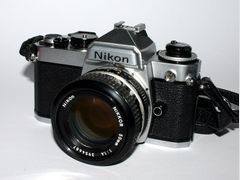
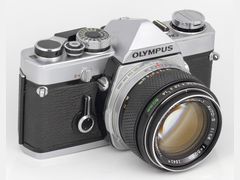
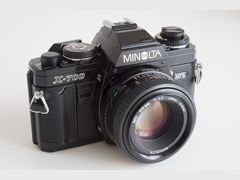
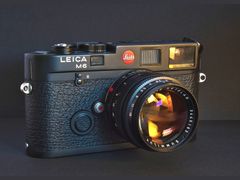
The short answer
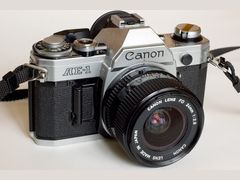
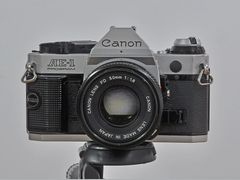
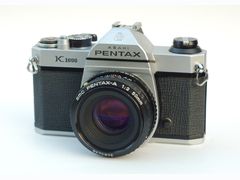
Most people start with a used 35mm film camera: an SLR such as the Pentax K1000 or Canon AE-1 Program to learn exposure, or an automatic point-and-shoot to just take pictures.
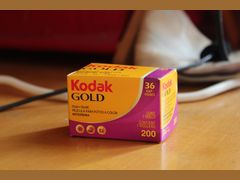
US shops listed those two SLRs from $149.99 (a used AE-1 Program body) to $400 (a serviced K1000 with a 50mm lens) on October 28, 2026. Buy from a seller that tests and warrants its cameras, then budget $8.99 for a 36-exposure roll of Kodak Gold 200 and at least $7.50 to $14 to have it developed by mail.
On this page a classic film camera means one that takes 35mm or 120 roll film: 35mm SLRs, rangefinders, point-and-shoots, half-frame cameras, medium format bodies and disposables. 35mm is still the most popular film size, with a 24 x 36 mm frame, and Digital Camera World says most people begin with it because it is accessible, versatile and at the center of the film revival. Instant cameras and early-2000s digital cameras have their own guides: instant photography and digicams.
The revival has pushed prices up. PopPhoto says used film camera prices have risen substantially, and TechRadar warns that popular models like the Canon AE-1 can change hands at inflated prices. New film cameras are back too: Digital Camera World calls the half-frame Pentax 17 the first new film camera from a major brand in over two decades, and Kodak-branded cameras such as the Ektar H35 are on shelves again, developed under license, according to Kodak.
Camera Dojo has not tested these cameras. Prices on this page come from US camera shops and labs, checked October 28, 2026, and opinions are credited to the reviewers and shops that gave them.
Start here
- 01
The shortlist for a first camera, from manual SLRs that teach exposure to point-and-shoots that handle it for you, with October 2026 US prices.
- 02
Where to buy a used camera that works, which shops give warranties, and how to test one before your first roll.
- 03
How the two classic designs frame and focus differently, and which one suits the way you shoot.
- 04
The easy route: compacts that focus and set exposure for you, from cheap zooms to the hyped premium models.
- 05
The camera The Darkroom names, with rare exception, as its beginner pick: fully mechanical, and the battery only runs the light meter.
- 06
Step-by-step loading for SLRs, rangefinders and point-and-shoots, so your first roll actually advances.
What kinds of film cameras are there?
Film cameras differ in how you frame and focus the picture and in how many shots you get from a roll. An SLR (single-lens reflex) shows you the scene through the same lens that takes the picture, so you see what the film will record. A rangefinder has a separate window and focuses by showing two images of the subject that merge into one when the lens is in focus; with no mirror inside, Kamerastore says rangefinders are usually smaller and lighter than SLRs.
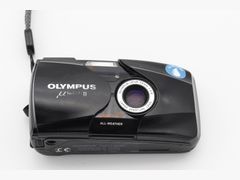
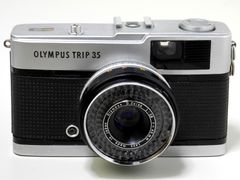
A plain viewfinder camera also has a separate window but no coupled rangefinder, so the window only gives an approximate view and does not help you focus. The Olympus Trip 35 works this way: Wikipedia calls it a point-and-shoot with a simple four-position zone focus system, so you estimate the distance instead of lining up two images. Point-and-shoots are built for simple operation with fixed-focus or autofocus lenses, and TechRadar suggests one if you are totally new to photography because it takes care of most or all of the settings.
Format matters as much as design. Half-frame cameras split the 36 x 24 mm frame in two, so each picture is 18 x 24 mm and a 36-exposure roll gives 72 shots. Medium format cameras use 120 film and make much bigger negatives but usually get only 8 to 16 frames per roll, depending on the frame size. Disposable cameras come loaded with 27 to 36 shots, so there is no film to choose or load.
| Type | How you frame and focus | Shots per roll | Prices seen | Start here if |
|---|---|---|---|---|
| 35mm SLR | Through the taking lens, focusing by eye | 36 on a 36-exposure roll | $69 (Minolta XG-1 body) to $400 (serviced Pentax K1000 with lens) | You want to learn exposure and change lenses |
| Rangefinder | Separate window; line up two images to focus | 36 | $179.99 (Olympus 35 RC) to $1,795 (Leica M3); new Leica M6 listed at $7,000 | You want a small, quiet camera and accept a learning curve |
| Point-and-shoot | Separate window; autofocus or fixed focus | 36 | $69 (Pentax Zoom 90WR) to $2,600 (Contax T2, out of stock) | You just want to take pictures |
| Half-frame | Depends on the model; the Pentax 17 sets exposure automatically, with no manual mode | 72 | $48.99 (Kodak Ektar H35, new) to $499.95 (Pentax 17, new) | You want twice the shots per roll |
| Medium format (120) | SLR, twin-lens reflex or rangefinder designs | 15-16 (6x4.5), 12-13 (6x6), 10 (6x7), 8 (6x9) | $399.99 (Mamiya RB67 body only) to $2,799 (Mamiya 7 body) | You want bigger negatives and accept fewer frames |
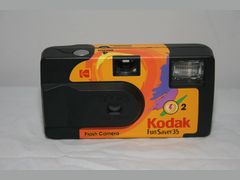
| Disposable | Preloaded with film; nothing to load | 27 (Kodak FunSaver) | $18.95 (Kodak FunSaver) | You want one roll for a trip or a party |
These are single store listings, not averages, and two of the most expensive, the Contax T2 and the new Leica M6, were out of stock when checked.
Sources: en.wikipedia.org, en.wikipedia.org, kamerastore.com, en.wikipedia.org, en.wikipedia.org, techradar.com, digitalcameraworld.com, digitalcameraworld.com, en.wikipedia.org, digitalcameraworld.com, rediscoveranalog.com, camera-wiki.org, glazerscamera.com, brooklynfilmcamera.com, coastalfilmlab.com, camerawest.com, leicastoremiami.com, lookingglassphoto.com, brooklynfilmcamera.com, filmphotographystore.com, glazerscamera.com, kmcamera.com, uniquephoto.com
Which film camera should you start with?
To learn how exposure works, you want a camera where you set it yourself, which points to a manual 35mm SLR. The Darkroom says that, with rare exception, its answer for a good beginner film camera is the Pentax K1000, a completely mechanical camera that sold more than 3 million copies. Digital Camera World disagrees: it says not to buy the K1000 if you are a photography beginner, because manual-only exposure means you need to know the exposure triangle or the sunny 16 rule. The K1000 also has no self-timer.
The Canon AE-1 was the first SLR bought by millions of amateur photographers, and the AE-1 Program added a program mode to the original's shutter priority, so the camera can set the exposure for you. Shotkit says SLRs are easier for beginners and that focusing a rangefinder has a steeper learning curve. Karen Nakamura's archived Photoethnography guide argues the other way, preferring leaf-shutter rangefinders because they are smaller, quieter and can be handheld at slower speeds.
Rangefinder prices are pulled up by Leica: the reissued M6 cost $5,295 in 2022, while a fixed-lens Olympus 35 RC was $179.99 at Coastal Film Lab. If you just want pictures, a point-and-shoot is the simpler route, but the hyped ones are expensive now. Brooklyn Film Camera says a serviced Contax T2 sells for around $2,000 in 2026 and that $300 to $600 buys an Olympus Mju II or Yashica T4, and Casual Photophile said in 2020 that every hyped point-and-shoot has ten or twenty near-equals at a tenth of the price.
The full shortlist with prices is in Best Film Cameras for Beginners, Rangefinder vs SLR explains the two main designs in more depth, and Half-Frame Cameras compares the Pentax 17 with the $48.99 Kodak Ektar H35 for anyone who wants 72 shots a roll.
Sources: thedarkroom.com, camera-wiki.org, digitalcameraworld.com, en.wikipedia.org, global.canon, shotkit.com, photoethnography.com, popphoto.com, coastalfilmlab.com, brooklynfilmcamera.com, casualphotophile.com
How much does it cost to start shooting film?
The camera is a one-time cost; film and developing are what you pay every roll. With a 36-exposure roll of Kodak Gold 200 at $8.99 (Film Photography Project store) and Dwayne's Photo's 35mm color processing from $7.50, one roll costs $16.49, about $0.46 a frame, before any scans or shipping. With The Darkroom's mail-in developing from $14 instead, the roll comes to $22.99, about $0.64 a frame.
Half-frame and medium format change the math. A half-frame camera gets 72 shots from the same roll, so $16.49 for film and Dwayne's developing spreads to about $0.23 a frame. A 6x7 medium format camera gets 10 frames from a roll of 120, so a $7.99 roll of Kodak Gold 200 in 120 is about $0.80 a frame before developing and Kodak Portra 400 at $15.99 is about $1.60. A Kodak FunSaver is $18.95 for 27 shots, about $0.70 each before developing.
For the film itself, TechRadar suggests ISO 100 for sunlight, ISO 800 for low light and ISO 400 as the middle ground, while The Darkroom suggests Kodak Gold 200 as a first film for daylight. Kodak Ultramax 400 was $10.49 a roll at Glazer's Camera. Lab prices by store are in How Much Does It Cost to Develop Film?.
| Setup | Film price | Frames | Film per frame | With developing |
|---|---|---|---|---|
| 35mm, Kodak Gold 200 | $8.99 | 36 | about $0.25 | about $0.46 (Dwayne's, from $7.50) or $0.64 (The Darkroom, from $14) |
| Half-frame, Kodak Gold 200 | $8.99 | 72 | about $0.12 | about $0.23 (Dwayne's, from $7.50) |
| 6x7 medium format, Kodak Gold 200 in 120 | $7.99 | 10 | about $0.80 | Developing extra |
| 6x7 medium format, Kodak Portra 400 in 120 | $15.99 | 10 | about $1.60 | Developing extra |
| Kodak FunSaver disposable | $18.95 (camera and film) | 27 | about $0.70 | Developing extra |
Sources: filmphotographystore.com, dwaynesphoto.com, thedarkroom.com, digitalcameraworld.com, en.wikipedia.org, glazerscamera.com, uniquephoto.com, digitalcameraworld.com, techradar.com, thedarkroom.com, glazerscamera.com
Used and new film camera prices at US shops, October 2026
| Seller | Item | Price | Note |
|---|---|---|---|
| Unique Photo (Fairfield, NJ) | Kodak FunSaver disposable, ISO 800, 27 exposures | $18.95 | In stock; $17.95 each for 20 or more |
| Film Photography Project store | Kodak Ektar H35 half-frame, new (sage) | $48.99 | Black and sand colors sold out |
| Glazer's Camera (Seattle, WA) | Minolta XG-1, used, body only | $69.00 | G grade |
| Looking Glass Photo (Berkeley, CA) | Pentax Zoom 90WR point-and-shoot, used | $69.00 | |
| Procam (Chicago, IL) | Canon AE-1 Program, used, body only | $149.99 | Good condition, no lens; 30-day used warranty |
| Coastal Film Lab (Tampa, FL) | Olympus 35 RC fixed-lens rangefinder, used | $179.99 | In stock |
| Austin Camera (Austin, TX) | Canon Sure Shot 90u, used | $199.99 | |
| Sidekick Camera | Canon Rebel 2000 35mm SLR | $199.99 | In stock; 30-day warranty |
| Coastal Film Lab (Tampa, FL) | Canon AE-1 with 50mm f/1.8 lens, used | $279.99 | In stock; listing notes a chip in the viewfinder and a little fungus near the lens edge |
| Cute Camera Co. (Austin, TX) | Pentax K1000 with Pentax 50mm lens, restored | $279.99 | Average cosmetic grade, fresh batteries; 60-day returns |
| Cute Camera Co. (Austin, TX) | Minolta X-700 with 50mm lens, restored | $309.99 | Average cosmetic grade |
| Brooklyn Film Camera (Brooklyn, NY) | Olympus XA2, serviced | $340.00 | 3-month warranty |
| Brooklyn Film Camera (Brooklyn, NY) | Canon AE-1 Program, CLA'd | $375.00 | Serviced, with warranty |
| K&M Camera (New York, NY) | Mamiya RB67 body with waist-level finder, used | $399.99 | No lens or film back |
| Brooklyn Film Camera (Brooklyn, NY) | Pentax K1000 with 50mm f/2, CLA'd | $400.00 | New seals and battery; 6-month warranty |
| Glazer's Camera (Seattle, WA) | Pentax 17 half-frame, new | $499.95 | In stock |
| Camera West | Leica M3 DS rangefinder body, used | $1,795.00 | In stock |
| Brooklyn Film Camera (Brooklyn, NY) | Contax T2, refurbished | $2,600.00 | Out of stock; 3-month warranty |
| Glazer's Camera (Seattle, WA) | Mamiya 7 body, used | $2,799.00 | VG grade, body only |
| Leica Store Miami | Leica M6 (2022 reissue), black, new, body only | $7,000 | Pre-order, out of stock |
Prices checked October 28, 2026. They change often.
How to buy a used film camera without getting a broken one
Kubus Photo, a Brooklyn lab, says that in its experience about 40% of untested used camera purchases need some repair, so where you buy matters as much as what you buy.
- 1
Buy from a seller that tests and warrants
Camera shops sell tested or refurbished cameras that are guaranteed to work, sometimes with a warranty, says Casual Photophile. Brooklyn Film Camera gives 6 months on SLRs and 3 on point-and-shoots, MPB gives six months plus 14 days to return, and PhotographyTalk reports that KEH covers graded gear from Bargain up for 180 days.
- 2
Ask for close-ups of the glass
If you buy from a private seller online, ask for close-up photos of the lens. Digital Camera World warns that fungus inside lenses or bodies is hard to remove without professional disassembly.
- 3
Put in a fresh battery
Many cameras need power to meter, and some to fire at all: the Canon AE-1 does not work without its 6V battery. A dead battery can make a working camera look broken.
- 4
Fire every shutter speed, slowest first
Light Stalking says slow speeds tend to fail before fast ones, so start at 1 second and work your way up.
- 5
Check the light seals
Kubus Photo says original seals on 1970s and 1980s cameras are almost certainly gone, and cameras from the 1990s often need new ones too. Brooklyn Film Camera's sample repair prices put light seal replacement at $85 to $150.
- 6
Shoot a test roll before you rely on it
Develop one cheap roll to check for leaks, focus and exposure. Brooklyn Film Camera's sample prices for a full CLA (clean, lubricate, adjust) are $325 to $850, so a cheap body that needs one can end up costing more than a serviced camera. The Where to Buy Used Film Cameras guide covers each type of seller in detail.
Sources: kubusphoto.com, casualphotophile.com, brooklynfilmcamera.com, intercom.help, photographytalk.com, digitalcameraworld.com, camera-wiki.org, thedarkroom.com, lightstalking.com, brooklynfilmcamera.com
Do film cameras need batteries?
It depends on the camera, and it is the first thing to check on a used one. Mechanical bodies use the battery only for the light meter: The Darkroom says a Pentax K1000 with a dead battery still works, you just lose the meter in the viewfinder, and the Nikon FM2's meter runs on two S76 or A76 cells or one 1/3N. The Nikon FE falls back to a mechanical 1/90 second, marked M90, when its batteries fail.
Electronic cameras can stop completely. The Canon AE-1 does not function at all without its 6V battery; Austin Camera sells a 4LR44 6V replacement for $5.99. The Olympus Trip 35 sits at the other end: its selenium meter sets the exposure and the camera needs no batteries.
Older cameras designed for mercury cells are the tricky ones. Mercury batteries are banned from sale in many countries, and Digital Camera World says zinc hearing-aid workarounds have left the Canonet G-III QL17 with an unpredictable light meter. Look up any model in the Film Camera Battery Finder.
Sources: thedarkroom.com, camera-wiki.org, camera-wiki.org, camera-wiki.org, austincamera.com, en.wikipedia.org, en.wikipedia.org, digitalcameraworld.com
Should you start with 35mm or medium format?
Most people should start with 35mm. It is the most popular film size, and The Phoblographer notes that the film is easy to find and easy to get developed. Medium format cameras use 120 film, the only medium format film still readily available from most major film makers, and make significantly larger negatives than 35mm.
The trade-off is frames per roll. On 120, a 6x4.5 camera gets 15 or 16 frames, a 6x6 camera 12 or 13, a 6x7 camera 10 and a 6x9 only 8, against 36 on a standard 35mm roll. The square 6x6 frame is commonly used in twin-lens reflex cameras, a design the Rolleiflex brought to the mass market in 1929. Large format goes further still, with sheet film that is most often 4x5 or 8x10 inches.
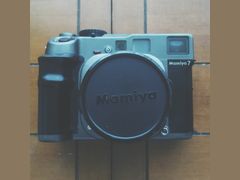
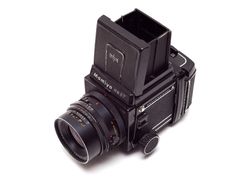
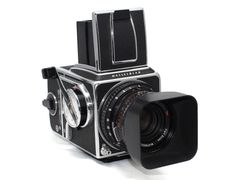
The classic medium format bodies are bigger investments. The Mamiya RB67 is a professional SLR designed mainly for studio use that weighs 2.69 kg (5.9 lb); the Mamiya 7 takes ten 6x7 frames per roll and was made from 1995 to 2014; and the Hasselblad 500C/M is a fully mechanical, modular 6x6 system with interchangeable backs, finders and leaf-shutter Zeiss lenses. Not everyone rates 35mm as highly: a 2015 Phoblographer guide says its author personally considers it a format for the amateur photographer. 35mm vs 120 Film compares the two in detail.
Sources: en.wikipedia.org, thephoblographer.com, en.wikipedia.org, digitalcameraworld.com, en.wikipedia.org, en.wikipedia.org, en.wikipedia.org, brooklynfilmcamera.com
Getting started with film cameras
Which camera to buy first, where to buy it, how the main designs differ and how to load your first roll.
The best film camera for beginners is usually a used Canon AE-1 Program or Pentax K1000. Compare 8 picks, October 2026 US shop prices and what to check first.
Where to buy film cameras used in the US: KEH, MPB, B&H, local shops, eBay and thrift, with warranties, October 2026 prices and a checklist to test one.
Rangefinder vs SLR: an SLR shows the scene through the lens, a rangefinder frames through a side window and focus patch. Lenses, size, flash and 2026 prices.
How to load film step by step in 35mm SLRs, point-and-shoots, 120 and instant cameras, plus how to check it caught, rewind it and fix film that won't advance.
Canon AE-1, AE-1 Program and A-1
The AE-1 was the first SLR bought by millions of amateur photographers. It does not work at all without its 6V battery, and the AE-1 Program adds a program mode to the AE-1's shutter priority.
Still the first film SLR many owners recommend. Easy in auto, cheap lenses, but buy a tested body: age-related squeals and stuck shutters are common.
What 116 owner and reviewer opinions say about the Canon AE-1 Program: $289-$445 shop prices, the 6V battery it needs, common faults and how to check one.
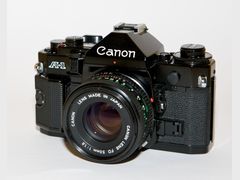
The Canon A-1 (1978) is widely called the first SLR with Program mode. Owner views, US used prices, the 4LR44 battery and the squeal to check before you buy.
Canon AE-1 vs AE-1 Program: the Program adds full auto, an LED finder readout and a grip on the same shutter and FD mount. Serviced copies run $375-$415.
The Canon AE-1 takes one 6V 4LR44 battery (PX28, A544 and PX28L fit too). How to open the front door, fit it the right way and check that it works.
Pentax, Nikon, Olympus and Minolta SLRs
Manual and automatic 35mm SLRs, from the fully mechanical Pentax K1000, which sold more than 3 million copies, to the Nikon FE, which keeps shooting at a mechanical 1/90 second if its batteries die.
The Pentax K1000 is a fully mechanical 35mm SLR made 1976-1997. What 150-plus owners and reviewers say, plus used prices ($250-$400), lenses and problems.
Canon AE-1 vs Pentax K1000: auto exposure vs fully manual, battery dependence, lenses, common faults and October 2026 prices, used and serviced.
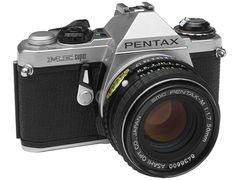
The Pentax ME Super is a tiny 1979 K-mount SLR with aperture-priority auto. What 111 owner and reviewer opinions say, a used body at $99.95, and what breaks.
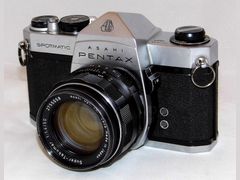
The Pentax Spotmatic is a mechanical M42 SLR from 1964. What 150 owner and reviewer opinions say, which model to buy, the battery, prices and common fixes.
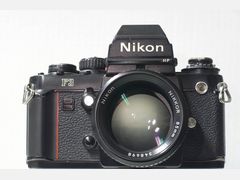
The Nikon F3 (1980) is Nikon's pro 35mm SLR. What owners say, US used prices from $895 with a lens, which batteries it takes and what to check before buying.
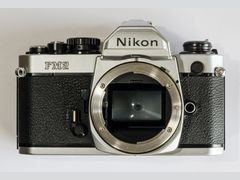
The Nikon FM2 is a fully mechanical 1982 SLR with a 1/4000 shutter. What 145 owner and reviewer opinions say, 2026 prices, versions and common problems.
The Nikon FE is a 1978 35mm SLR with aperture-priority auto and a needle meter. 125 owner and reviewer opinions, used prices from $225 and what fails.
The Olympus OM-1 is a small all-mechanical 1972 SLR with a huge 0.92x finder. What 111 opinions say, used prices from $275, battery fixes and what to check.
What 149 owner and reviewer opinions say about the Minolta X-700: $280-$475 shop prices, the capacitor fault, its batteries and what to check before buying.
Rangefinder cameras
Focused by lining up two images in a separate window, and often smaller and quieter than an SLR. Leica reissued the M6 in 2022 at $5,295.
What 144 owner and reviewer opinions say about the Leica M6: $3,595 to $4,495 used at US dealers, Classic vs TTL, batteries, flare and what to check.
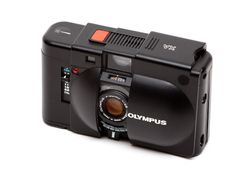
What 152 owner and reviewer opinions say about the Olympus XA: tested copies at $301-$410 in October 2026, its sharp f/2.8 lens, faint rangefinder and faults.
Point-and-shoot and half-frame cameras
Compacts that handle most or all of the settings for you, from a $69 used zoom to a Contax T2 listed at $2,600. Half-frame cameras get 72 shots from a 36-exposure roll.
The best point-and-shoot film camera for most people is the Olympus Mju II, about $250-$600 used. Eight picks from $34.99 to $2,000, prices checked Oct. 2026.
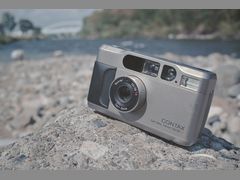
What 114 owner and reviewer opinions say about the Contax T2: $1,500-$2,800 serviced prices in 2026, its Zeiss lens, common faults and repair costs.
Olympus Mju II (Stylus Epic) guide: what 110 owner and reviewer opinions say, $399.99-$814 dealer listings in Oct 2026, common faults, film and battery tips.
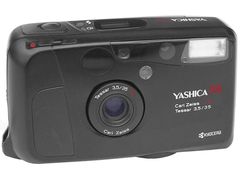
What 145 owner and reviewer opinions say about the Yashica T4: its Zeiss lens, $449.95-$1,100 used prices at US shops in 2026, common faults and fixes.
What 151 owner and reviewer opinions say about the Olympus Trip 35: restored copies at $269.99 to $349.99, no battery, best film and what to check.
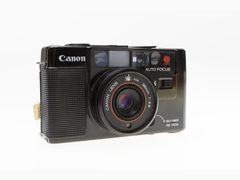
Canon Sure Shot guide: the 1979 AF35M and later models, what 152 owner and reviewer opinions say, used prices of $84.97-$315 in Oct 2026, batteries and faults.
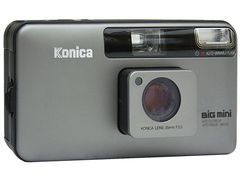
Konica Big Mini guide: what 131 owner and reviewer opinions say, BM-201 vs BM-302 vs Big Mini F, used prices in Oct 2026, common faults, film and battery tips.
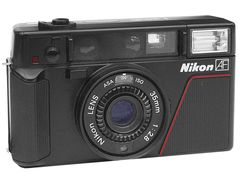
Nikon L35AF guide: what 140 owner and reviewer opinions say, $307-$550 with a warranty in October 2026, common faults, film, batteries and how to use it.
A half frame camera gets 72 shots from a 36-exposure roll. Pentax 17 ($500) vs Kodak Ektar H35 ($46-$50): lens, focus, film, labs and who should buy which.
Medium format cameras
Bigger negatives on 120 film, with 10 frames per roll on a 6x7 camera such as the Mamiya 7 and 12 or 13 on a 6x6 camera such as the Hasselblad 500C/M.
What 158 owner and reviewer opinions say about the Mamiya 7 and 7II: used 7II bodies at $2,495-$4,095 in October 2026, the six lenses, faults and repairs.
What 156 owner and reviewer opinions say about the Mamiya RB67: kit prices of $599.95 to $900 (Oct 2026), Pro-S vs Pro-SD, common faults and repair costs.
What 140 owner and reviewer opinions say about the Hasselblad 500C/M (500CM): used prices, serviced kits at $3,450-$4,200, batteries, CLA costs and jams.
Disposable cameras
Loaded with film out of the box: a Kodak FunSaver holds 27 exposures of ISO 800 film and was $18.95 at Unique Photo. Developing often costs about as much as the camera.
The Kodak FunSaver is the best disposable camera for most people. Seven picks for color, black and white and water, with US prices checked October 2026.
Kodak FunSaver: 27 shots of ISO 800 film for $15.95 to $21.99. What 94 reviewer and owner opinions say, flash tips, and what developing really costs.
Walgreens, CVS and Walmart still develop disposable cameras but rarely return negatives. Compare them with local and mail-in labs on price and wait, Oct 2026.
Questions people ask
Does anybody still use film cameras?
Yes. A YPulse study reported by Digital Camera World found that as many as two-thirds of Gen Z and younger millennials use analog tech, and YPulse suggested the trend is driven largely by digital burnout. New film cameras are on sale again too, such as the half-frame Pentax 17 and the Kodak Ektar H35 at US shops.
Sources: digitalcameraworld.com, digitalcameraworld.com
Why is film photography so expensive now?
Both film and used cameras have gone up. Analog.Cafe reported in 2022 that Kodak, Fujifilm and Ilford had announced price hikes of upwards of 30% over the previous two years, and PopPhoto says the revival pushed used camera prices up substantially. On October 28, 2026 a 36-exposure roll of Kodak Gold 200 was $8.99 at the Film Photography Project store, and mail-in developing started at $7.50 at Dwayne's Photo.
Sources: analog.cafe, popphoto.com, filmphotographystore.com, dwaynesphoto.com
Are old film cameras worth anything?
Many are, especially working, serviced ones. Brooklyn Film Camera listed a serviced Pentax K1000 with lens at $400 and a serviced Canon AE-1 Program at $375 on October 28, 2026, and PhotographyTalk says a clean Contax T2 went from about $250 a decade ago to roughly $1,000 today, and close to $2,000 serviced. Common bodies sell for much less: Glazer's Camera listed a used Minolta XG-1 body at $69. These are shop asking prices, not what a shop would pay you for yours.
Sources: brooklynfilmcamera.com, brooklynfilmcamera.com, photographytalk.com, glazerscamera.com
Can I still buy a new film camera?
Yes. On October 28, 2026 the half-frame Pentax 17 was $499.95 at Glazer's Camera, the Kodak Ektar H35 was $48.99 at the Film Photography Project store, and the Kodak Snapic A1 was listed at $99.99 at Looking Glass Photo but shown sold out. Kodak says its film cameras are developed under license. At the top end, Leica reissued the M6 in 2022 at $5,295, and Leica Store Miami lists a new body at $7,000 on pre-order.
Sources: glazerscamera.com, filmphotographystore.com, lookingglassphoto.com, kodak.com, popphoto.com, leicastoremiami.com
Is 200 or 400 film better for beginners?
Both get recommended. TechRadar says ISO 400 is often considered the best middle ground, with ISO 100 for sunlight and ISO 800 for lower light, while The Darkroom suggests Kodak Gold 200 as a first film because it is easy to find and good in many daylight situations. The [film stock guide](/film/) helps you match a film to your light.
Sources: techradar.com, thedarkroom.com
What does CLA mean on a used film camera?
CLA stands for clean, lubricate and adjust, a full service of the camera. Brooklyn Film Camera's sample repair prices run $325 to $850 for a camera CLA, $150 to $250 for a lens CLA and $90 to $150 to unjam a camera, so a serviced camera at a higher price can cost less than a cheap one that needs work. Kubus Photo says mechanical cameras can last essentially forever with proper maintenance.
Sources: brooklynfilmcamera.com, kubusphoto.com
Which 35mm film camera is considered the best ever?
There is no single answer. The Canon AE-1 was the first SLR bought by millions of amateur photographers, the Pentax K1000 sold more than 3 million copies, and PopPhoto says many purists still consider the Leica M6 the pinnacle of camera design. The reissued M6 is still hand-made in a German factory from more than 100 parts.
Sources: en.wikipedia.org, camera-wiki.org, digitalcameraworld.com, popphoto.com
Are disposable cameras still worth it?
They make sense for a single roll at a party or on a trip, since they come loaded with 27 to 36 shots and there is no film to load. The Kodak FunSaver was $18.95 at Unique Photo for 27 exposures of ISO 800 film, about $0.70 a shot, and Digital Camera World notes that developing often costs about as much as the camera. If you shoot more than a few rolls, a reusable camera wins: an $8.99 roll of Kodak Gold 200 gives 36 shots, about $0.25 each.
Sources: rediscoveranalog.com, imaging.kodakalaris.com, uniquephoto.com, digitalcameraworld.com, filmphotographystore.com
Sources
Show all 70 sources
retailer 32
- Kamerastore: The Beginner's Guide to Film Cameras: SLR vs. Rangefinder Explained
- The Darkroom: What is a good film camera for beginners?
- MPB Help: MPB policies (US)
- Brooklyn Film Camera: FAQ
- Brooklyn Film Camera: Film camera repairs
- Brooklyn Film Camera: Is the Contax T2 worth $2,000 in 2026?
- Brooklyn Film Camera: Hasselblad 500C/M + 80mm listing
- Brooklyn Film Camera: Pentax K1000, CLA'd
- Brooklyn Film Camera: Canon AE-1 Program, restored
- Brooklyn Film Camera: Vintage film cameras for sale
- Brooklyn Film Camera: Contax T2
- Unique Photo: Kodak FunSaver, ISO 800, 27 exp
- Film Photography Project store: Kodak Ektar H35 (sage)
- Film Photography Project store: Kodak Gold 200, 36 exp
- Looking Glass Photo: Point and shoot film cameras
- Glazer's Camera: Pentax 17
- Glazer's Camera: Used film cameras
- Glazer's Camera: 35mm film
- Glazer's Camera: 120 film
- Procam: Used Canon AE-1 Program (black)
- Sidekick Camera: Canon Rebel 2000
- Coastal Film Lab: Canon AE-1 + 50mm f/1.8
- Coastal Film Lab: Olympus 35 RC
- Cute Camera Co.: Pentax K1000
- Cute Camera Co.: Minolta X-700
- Austin Camera: Canon Sure Shot 90u, used
- Austin Camera: ACI 4LR44 6V battery
- K&M Camera: Used Mamiya RB67 body
- Camera West: Leica M3 DS
- Leica Store Miami: Leica M6, black
- Dwayne's Photo: Services
- The Darkroom: Film developing
Manuals and references 16
- Wikipedia: 135 film
- Wikipedia: 120 film
- Wikipedia: Single-lens reflex camera
- Wikipedia: Rangefinder camera
- Wikipedia: Twin-lens reflex camera
- Wikipedia: Point-and-shoot camera
- Wikipedia: Canon AE-1
- Wikipedia: Olympus Trip 35
- Wikipedia: Mercury battery
- Wikipedia: Mamiya RB67
- Wikipedia: Mamiya 7
- Camera-wiki: Pentax K1000
- Camera-wiki: Canon AE-1
- Camera-wiki: Nikon FE
- Camera-wiki: Nikon FM2
- Camera-wiki: Pentax 17
Editorial reviews 11
- Digital Camera World: The best film cameras in 2026
- Digital Camera World: The best point-and-shoot cameras in 2026
- Digital Camera World: What is a half-frame camera?
- Digital Camera World: Kodak Tri-X 400 single-use camera review
- Digital Camera World: Retro tech is back (YPulse study)
- TechRadar: Best film cameras
- PopPhoto: Leica M6 reissue
- PopPhoto: Five things to look for when buying an old film camera
- PhotographyTalk: Why are point and shoot film cameras so expensive now?
- PhotographyTalk: KEH Camera review
- The Phoblographer: How to choose your first film camera (2015)
Independent blogs 8
- Shotkit: Rangefinders vs SLR cameras
- Rediscover Analog: Best analog cameras for beginners
- Photoethnography.com: Buying / Testing a Classic Camera
- Casual Photophile: Ten great point and shoot film cameras from $25 to $99
- Casual Photophile: Things I learned in five years of thrifting film cameras
- Analog.Cafe: Film prices up since July 2021
- Kubus Photo: How to test a used film camera
- Light Stalking: Checklist for a film camera purchase