Nikon FE: what owners say, prices and what to check
The short answer
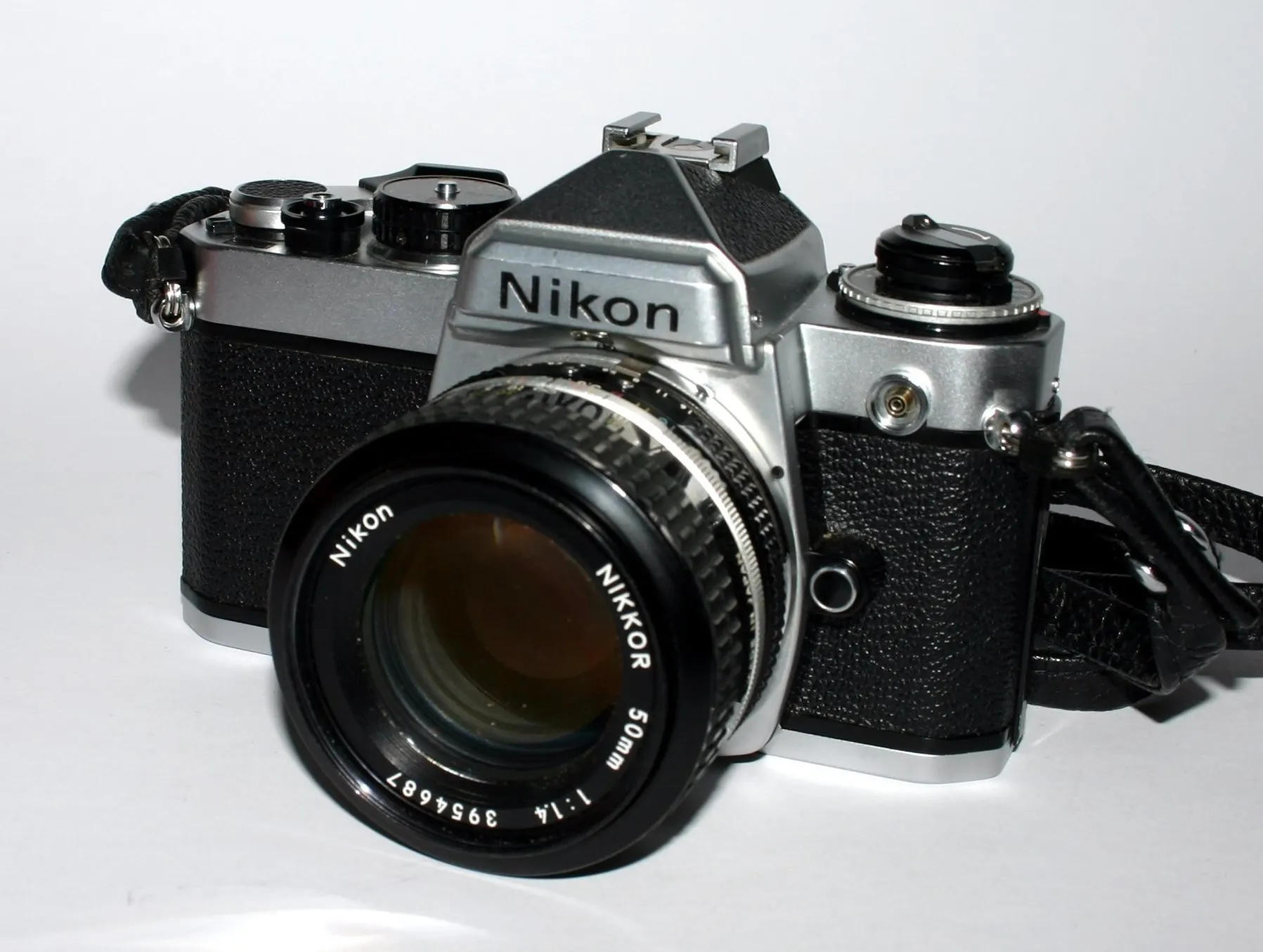
The Nikon FE is a manual-focus 35mm SLR that went on sale in June 1978, with aperture-priority auto, a full manual mode, a match-needle meter and shutter speeds from 8 s to 1/1000 s.
Owners rate it highly for its accurate meter, solid metal body and the flip-up tab that lets it mount cheap pre-AI Nikkors as well as AI and AI-S lenses. On October 28, 2026, in-stock used bodies were listed at $225 (Victory Camera) to $269.99 (K&M Camera), and kits with a 50mm lens ran $325 to $495 at Victory Camera.
- Lens mount
- Nikon F (AI, plus pre-AI)
- Shutter
- 8 s to 1/1000 s
- Weight
- 590 g body
- Batteries
- 2 x SR44 or LR44
Built from 125 opinions from 25 pages and videos. Not yet tested by Camera Dojo. Updated .
The short version
It is easy to start with: set the dial to AUTO, pick an aperture and shoot, then move to manual and line up the green needle with the black one. The trade-offs are the ones you would expect from a 1978 electronic camera. Only M90 and B work without batteries, the needles are unlit and fade in dim light, and the top speed is 1/1000 s.
Age is the bigger risk than design. Owners report dead meters, hanging mirrors, stiff advance levers and crumbling light seals, and several say a meter-board or shutter repair costs more than another working body. A dealer copy with new seals and a warranty, like the ones Victory Camera lists, costs more up front but takes much of that risk off you.
Good fit if
- You want aperture-priority auto plus a manual mode with a needle meter you can read at a glance
- You own or want cheap pre-AI Nikkor lenses, which the FE2 and FM2 can't mount
- You want a solid, compact SLR for travel and street that shares the F mount with later Nikons
- You are buying a first film SLR and want an auto mode to fall back on
Think twice if
- You need a shutter that works at every speed without batteries: look at the Nikon FM or FM2 instead
- You shoot fast lenses wide open in bright sun or want daylight fill flash above 1/125 s
- You wear glasses or shoot often in dim light: the needles are unlit and eye relief is short, which pushed one reader to an F3HP
- You can't absorb a repair bill: meter-board and shutter repairs often cost more than another body
What owners and reviewers say, topic by topic
We sorted 125 opinions about the FE from 25 pages and videos on 20 websites and channels. Each row shows how many people raised a topic and how many of them were positive. Open a row to read short quotes, each linked to its source.
Most voices are owners writing on blogs and in comment threads, plus editorial reviews and four YouTube videos. Reddit, Photrio, photo.net and Ken Rockwell's pages could not be read, so none of them is quoted. One of the videos compares the FE with the FE2.
Light meter and exposure88% positiveof 17
The most praised part of the camera: 15 voices praise the meter, most calling it accurate or the needle display intuitive. The two complaints are about the AE lock, which sits on the self-timer lever and doesn't freeze the needle.
“The FE's meter nailed exposure every time.”
Down the Road (Jim Grey) 2023-10Owner
“I do like the FE metering system slightly more than the FM red LED approach to metering.”
Vince Curletta, Mostly Film Photography (GotFilm.org) 2018-05Owner
“the light meter works in nearly total darkness when you can no longer see the needles at all.”
Ilya Inov, 35mmc (reader comment) 2019-11Owner
“Not surprisingly with Nikon's history on making well metering cameras, it is generally accurate.”
Photo Thinking 2024-02Owner
Controls and features65% positiveof 17
Owners like the double-exposure lever, the 2 to 8 second slow speeds and the advance lever that switches the meter on. The complaints are that lever pressing on your forehead when left out, the 1/1000 s top speed and no TTL flash.
“Manually setting the shutter speed and f-stop is a one-handed operation”
Gary Smith, 35mmc 2025-04Owner
“Ergonomics are how ever just fantastic. This is exactly the button layout that I want.”
Attempts at 35mm 2018-03Owner
“One of my favorite things about the Nikon FE is how simple it makes doing double exposures.”
James Baturin, Shoot It With Film 2019-11Owner
“The one thing I needed to get used to was the way the camera switched on.”
Peggy, Camera Go Camera 2016-10Owner
Reliability today33% positiveof 15
The most divided topic. Some owners report years of use through drops and a flooded bag, and one seller says he never met a dead FE, while others describe dead meters, hanging mirrors, advance jams and decayed seals. Several cameras that look jammed turn out to have flat batteries.
“the light meter no longer works on my specific model.”
Niall Keohane, 35mmc 2026-05Owner
“The camera can jjam if you wind the film too aggressively, part way and fast.”
William sheehy, Shoot It With Film (reader comment) 2023-04Owner
“Mechanically the FE is smooth as silk and runs really well”
“Nikon FEs commonly turn up "jammed", that is the shutter won't release, even though the shutter is cocked.”
Living Image Vintage Camera MuseumHands-on review
Viewfinder and focusing55% positiveof 11
Six of eleven voices like the uncluttered finder and the needle display, and one owner swaps focusing screens for a long mirror lens. The complaints are unlit needles that fade in dim light, short eye relief for glasses wearers and an eyepiece ring that unscrews itself.
“Love the FM & FE but it is a camera for unimpaired vision.”
Robert Selders, Down the Road (reader comment) 2023-10Owner
“I like the viewfinder a tad bit better than the FM as I like analog needles more than LED lights.”
RWB, Camera Fashion (Substack) 2021-08Owner
“The viewfinder is bright and the match needle system is exactly what you want in a modern version of the system.”
Alex Luyckx Blog 2017-11Owner
“If there is one thing I have to complain about the FE, it is the eyepiece ring.”
Photo Thinking 2024-02Owner
Ease of use80% positiveof 10
Eight of ten voices are positive about using it, and several call it a good first film camera with room to grow; one finds the combined ISO and compensation dial fussier than the FM's, and one dislikes that the shutter only fires with the advance lever pulled out.
“My only complaint as a Nikon newbie is the dreaded shutter lock mechanism.”
Attempts at 35mm 2018-03Owner
“Soon I found that the FE became my go to camera.”
Marc S Gordon, Casual Photophile (reader comment) 2025-12Owner
“The Nikon FE is a damned satisfying 35mm SLR to use.”
Down the Road (Jim Grey) 2023-10Owner
“I LOVE THIS CAMERA! It just works, plus it is so easy to use.”
Peggy, Camera Go Camera 2016-10Owner
Build quality70% positiveof 10
Owners and reviewers call it solid, metal and well put together; the mixed voices note some play and panel gaps, or prefer the feel of the FM or the older Nikkormat EL.
“Practical, durable, good-looking in a utilitarian way, and decidedly un-modern.”
RWB, Camera Fashion (Substack) 2021-08Owner
“the first thing you notice is the build quality it's really well put together, feels solid”
“The Nikon FE is a beautifully built semi professional camera”
Living Image Vintage Camera MuseumHands-on review
“From the build the Nikkormat is still a Level up”
Stefan Staudenmaier, Casual Photophile (reader comment) 2022-04Owner
Lenses90% positiveof 10
Nine voices praise its lens compatibility, above all the flip-up tab that lets it take cheap pre-AI Nikkors the FE2 and FM2 can't. The one mixed view is about the kit 50mm f/1.8's loose focus ring.
“Neither of the upgraded models allows the use of Non-AI lenses which are absolute bargains”
RWB, Camera Fashion (Substack) 2021-08Owner
“Love that I can put the FE and my Df in the camera bag and use these lenses on either camera”
Greg L, Casual Photophile (reader comment) 2021-10Owner
“one of the reasons I went with the Nikon over other brands was the compatibility of its lenses.”
James Baturin, Shoot It With Film 2019-11Owner
“The presence of the flip up tab is a godsend, allowing my to happily mount pre-AI lenses of all sorts”
Scott O'Brien, 35mmc (reader comment) 2026-01Owner
Price and value80% positiveof 10
Owners agree it is good value, mainly because it costs much less than the FE2 and FM2. Older reports put it under $100 (2016 to 2019), and one owner notes prices have started to climb.
“You can usually find them on eBay for under $100.”
Zulu Fox Photo 2017-03Owner
“I bought mine from my local camera shop in great shape, with a clean 50mm lens for about $75.”
James Baturin, Shoot It With Film 2019-11Owner
“The first camera I bought was this Nikon FE with a lens for $70, which I thought was a good price.”
Peggy, Camera Go Camera 2016-10Owner
“The prices of them is starting to climb a bit”
Photo Thinking 2024-02Owner
Batteries and power57% positiveof 7
Owners like that the cells last a long time and that the mechanical M90 speed works when they die; the mixed and negative voices point out that nothing else works without power, and a mirror stuck up drains fresh cells.
“With the mirror up, some of the circuitry is active, which rapidly depletes any remaining power in the batteries.”
Living Image Vintage Camera MuseumHands-on review
“The battery indicator is negligible; it seems to last forever.”
Walter Reumkens, 35mmc (reader comment) 2026-01Owner
“There is a 1/90s mechanical override should the batteries kick the bucket.”
Alex Luyckx Blog 2017-11Owner
“without batteries it only gives you bulb and M90 shutter speeds”
Size and weight71% positiveof 7
Most find it small and light enough for travel and long walks; two owners call it hefty next to modern cameras or a bit bulky for everyday carry.
“The Nikon FE body is very light, and very compact.”
Daniel Sigg, 35mmc 2019-11Owner
“The heat was a problem; the FE's weight slung over my shoulder was not.”
Down the Road (Jim Grey) 2023-10Owner
“As a travel camera, the FE is perfect being both small in size, lightweight and can support a broad range of lenses”
Alex Luyckx Blog 2017-11Owner
“Nikon FE isn't the biggest SLR, but definitely not the smallest one either.”
Attempts at 35mm 2018-03Owner
Repairs and servicing17% positiveof 6
Mostly negative: owners say a shutter or meter-board repair often costs more than another working FE, one warns that clean-looking copies may need a full overhaul, and one import from Japan needed a service costing about what the camera did. One owner says experienced shops service it easily.
“I have spent almost the same amount of money for the CLA of it.”
Cristian Ionescu, 35mmc (reader comment) 2025-04Owner
“it is usually the light meter due to a cracked FRE (a circuit board under the top cover) which will cost far more to fix”
Mike Ricciuti, Casual Photophile (reader comment) 2016-07Owner
“despite its age the camera is bulletproof and if it does have issues are easily serviced by an experienced shop.”
Alex Luyckx Blog 2017-11Owner
“take a hard look at used FE's and FM's to make sure you didn't get a good looking one that needed a full overhaul”
Image results100% positiveof 4
All four owners who comment on results praise them, and two credit sharp, contrasty Nikkor lenses.
“know it will deliver stunning results in whatever condition I throw at the camera”
Alex Luyckx Blog 2017-11Owner
“I have found it reliable, tough, convenient and continues to produce the results.”
Photo Thinking 2024-02Owner
“I can't believe how sharp the photos are and just how nicely the lens renders in every possible way.”
Attempts at 35mm 2018-03Owner
“So in short I flippin love this camera, it's very well put together, the lenses are sharp and contrasty just the way I like!”
PositiveMixedNegative
How to check a used Nikon FE before you buy
A few minutes with fresh batteries tells you a lot, and some listings sold as broken only need new cells. Owners on Flickr and Casual Photophile say a shutter or meter-board repair often costs more than another working body, so checking first matters more than haggling.
- 1
Fit fresh batteries
Put in two SR44 or LR44 cells the right way round; the camera won't work with them reversed. Push the battery check lever on the back: a red light inside it means the power is good.
- 2
Free a camera that looks jammed
If the mirror is up and the shutter won't fire, turn the speed dial to M90 or B. The shutter releases mechanically, and fresh cells then bring it back. The Living Image museum calls flat batteries the most likely cause of a jammed FE, and Analog.Cafe says some sellers list cameras as locked up when they only lack power.
- 3
Check the meter needle
Pull the advance lever out to switch the meter on and point the camera at bright and dark areas: the black needle should swing smoothly. One Casual Photophile commenter says a dead needle is usually a cracked circuit board under the top cover. Victory Camera listed one kit with a dead needle where auto exposure still worked.
- 4
Fire through the speeds
In manual, fire the long speeds (8, 4, 2 and 1 second) and listen for the shutter staying open for about the right time, then run through the fast ones. Wind in one smooth stroke: an owner of two FEs warns that fast, short strokes can jam the advance.
- 5
Check the seals and mirror foam
Decayed foam around the door and on the mirror buffer leaks light and can throw a sticky black residue onto the focusing screen. Victory Camera values its seal replacement at $75. Seal kits make it a home job. Our light leaks guide shows what leaks look like on film.
- 6
Inspect the lens and finder
Look for haze, fungus and scratches; Victory Camera's listings say when a lens has none. A 35mmc commenter warns that cameras imported from Japan can arrive with mold despite seller claims, so ask for photos through the lens and the finder.
- 7
Buy with a warranty if you can
Victory Camera lists FEs with new seals and Retrospekt with a full CLA, both with a 90-day warranty. That costs more up front, but Brooklyn Film Camera's general range for a full camera CLA is $325-$850. Our guide to where to buy used film cameras covers other stores.
Sources: licm.org.uk, analog.cafe, casualphotophile.com, victorycamera.com, victorycamera.com, shootitwithfilm.com, 35mmc.com, 35mmc.com, brooklynfilmcamera.com, retrospekt.com
How to load and shoot the Nikon FE
The FE has no power button and no mode dial beyond the shutter speed dial, so most of the learning is in a handful of controls. These steps follow the manual and owner reviews; our film loading guide covers threading the leader step by step.
- 1
Put in the batteries
Unscrew the round cover next to the tripod socket on the bottom plate with a coin, drop in two SR44 or LR44 cells with the polarity right, and check them with the lever on the back.
- 2
Load the film and set the ISO
After loading, hold down the small silver button beside the ISO dial and turn it until the box speed lines up with the red dot. The dial runs from ASA 12 to 4000, though some reviews and store listings say 3200.
- 3
Switch on with the advance lever
Pull the lever out to the red dot to turn the meter on, and push it flush when you are done. The manual warns that leaving it out drains the batteries in a few days.
- 4
Shoot in AUTO
Turn the speed dial to AUTO and pick an aperture on the lens. The camera sets the shutter speed, and the black needle shows what it chose on the scale at the left of the finder.
- 5
Or match the needles in manual
Choose a speed on the dial and the green needle moves to it, then turn the dial or the aperture ring until the green needle sits on the black meter needle. A 35mmc owner points out it is a one-handed job.
- 6
Lock exposure for backlit scenes
Push and hold the self-timer lever toward the lens. Exposure is locked even though the needle keeps moving. For a lasting correction use the compensation dial (plus or minus 2 EV), and reset it afterwards: nothing in the finder warns you it is set.
- 7
Make a double exposure
Pull the small tab under the advance lever toward you while winding; the shutter re-cocks without moving the film. Our double exposure guide explains how to meter them.
- 8
Rewind
At the end of the roll, press the silver button on the bottom plate under the advance lever, then crank the rewind lever before you open the back.
Sources: analog.cafe, en.wikipedia.org, mir.com.my, cameramanuals.org, casualphotophile.com, 35mmc.com
Nikon FE batteries: SR44, LR44 and what works without them
The FE runs on two 1.55V silver-oxide button cells or one 3V lithium cell. In store terms that means two SR44 (also sold as 357, S76 or A76) or LR44 alkaline cells, or one CR1/3N lithium. Camera-wiki lists silver-oxide SR44 as the recommended cell and says plain LR44s also work.
A set lasts about a year, depending on use, according to the MIR Nikon FE reference pages; one owner since 1979 says his seem to last forever. Check them with the lever on the back before every outing: a red light means they are good.
Without batteries only two settings work: M90, the mechanical 1/90 s just before B on the dial, and B itself. Every other speed, including AUTO, needs power. Nikon's manual words this differently, saying the shutter falls back to 1/90 s when the batteries are exhausted whatever the dial says, but Analog.Cafe, the Living Image museum and a Flickr member all say only M90 and B fire without power. If the cells die mid-roll, switch to M90 and set the aperture by the sunny 16 rule. Our film camera battery finder lists the cells for other cameras.
If the batteries die with the mirror up, fresh cells alone won't free it: turn the dial to M90 or B first so the shutter releases, then fit the new pair. A mirror stuck up also keeps some circuits live and drains new cells quickly.
Sources: mir.com.my, en.wikipedia.org, camera-wiki.org, mir.com.my, analog.cafe, licm.org.uk
Best lenses, film and flash for the Nikon FE
 Ultramax 400
The FE takes Nikon F-mount AI, AI-S and Series E lenses natively, and AF, AF-D, AF-I and AF-S lenses that have an aperture ring also fit and focus manually. Its standout feature is the flip-up meter coupling lever: raise it out of the way and the FE mounts older pre-AI Nikkors, then meters with the depth-of-field lever pressed. The FE2 and FM2 dropped that.
Pre-AI lenses usually cost less than their AI versions and perform about the same, according to Casual Photophile. On October 28, 2026, a non-AI Nikkor-S 50mm f/1.4 in excellent condition was $119.95 at Victory Camera, and the common Series E 50mm f/1.8 kit lens was $159.99 used at K&M Camera. Owners single out the Nikkor 105mm f/2.5 AI, which Photo Thinking calls legendary, and the small 50mm f/1.8 pancake, which a 2026 35mmc buyer chose for its reputation as one of Nikon's best manual-focus 50s.
Skip IX-Nikkor lenses and old fisheye Nikkors, which reach into the mirror box and can damage the shutter, and G or DX lenses, which have no aperture ring (DX lenses also leave a black circle on 35mm film).
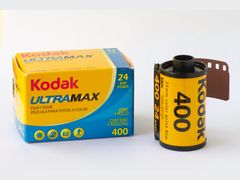
Any 35mm film from ISO 12 to 4000 works. A Zulu Fox Photo owner, who points out that Walmart still sold 35mm film when he wrote, suggests ISO 400 to start, such as Kodak Ultramax 400 or Ilford HP5 Plus. To rate film faster than the dial goes, Analog.Cafe set ISO 3200 with -1 compensation to shoot at EI 6400.
Flash connects through the hot shoe or the PC socket on the front, with sync at 1/125 s. With a dedicated SB-10 on the shoe and the dial on AUTO, the camera sets 1/90 s itself. There is no TTL flash metering, so use the flash's own auto sensor or guide numbers; our flash photography guide explains both.
Sources: analog.cafe, en.wikipedia.org, casualphotophile.com, victorycamera.com, kmcamera.com, photothinking.com, 35mmc.com, zulufoxphoto.com, mir.com.my
Nikon FE vs FE2: what changed in 1983
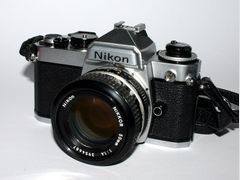 Nikon FE (1978) | Nikon FE2 (1983) | |
|---|---|---|
| Fastest shutter speed | 1/1000 s | 1/4000 s |
| Flash sync | 1/125 s | 1/250 s |
| TTL flash metering | No | Yes |
| Pre-AI lenses | Yes, with the flip-up lever | No |
| Slowest timed speed | 8 s | 8 s |
| Compensation warning in finder | No | Yes |
| Used price | Lower | Higher |
Pick the Nikon FE (1978) if
- You want to use cheap pre-AI Nikkors.
- 1/1000 s is enough, which Digital Camera World says is true unless you shoot fast glass in bright light.
- You want the lower price, which Camera Fashion calls the biggest reason to choose an FE.
Pick the Nikon FE2 (1983) if
- You shoot fast lenses wide open in sun or want daylight fill flash at 1/250 s.
- You want TTL flash with a dedicated Nikon unit.
Sources: en.wikipedia.org, casualphotophile.com, casualphotophile.com, digitalcameraworld.com, camera.fashion, youtube.com
Nikon FE problems and what repairs cost
Common FE problems trace back to batteries, foam and electronics that are over four decades old. No US shop we found publishes an FE-specific repair price, so the costs below are general rates from shops that list them, or what owners report.
Looks jammed: mirror up, shutter won't release
Raised in 3 opinions
- How you notice
- The mirror flips up but the shutter stays shut, or the advance lever and shutter button lock. Many cameras are listed as locked up or broken for this reason.
- Fix
- Turn the speed dial to M90 or B, which releases the shutter mechanically, then fit two fresh LR44 or SR44 cells with the polarity right. New batteries alone won't free it until the shutter has released.
- Typical cost
- The price of two button cells, done at home
Sources: licm.org.uk, analog.cafe, flickr.com
Decayed light seals and mirror foam
Raised in 2 opinions
- How you notice
- Red or white streaks or fogging on the film, usually near the door edges, and sometimes a sticky black residue on the focusing screen from the mirror buffer.
- Fix
- Replace the foam around the door and the mirror box. Seal kits make it a home job, and most good dealer copies already have new seals.
- Typical cost
- Victory Camera values its seal replacement at $75; Brooklyn Film Camera quotes $85-$150 for light seals (October 2026)
Sources: analog.cafe, 35mmc.com, victorycamera.com, brooklynfilmcamera.com
Hanging mirror or a shutter that won't fire with good batteries
Raised in 1 opinion
- How you notice
- The mirror hangs up, the shutter misfires or the camera stops mid-cycle. Analog.Cafe says this is much less common than a battery fault and may come from lack of use.
- Fix
- Switch to M90 first: MIR says that clears most of these, which are usually electrical-contact problems. If it doesn't, the camera needs a shop.
- Typical cost
- Brooklyn Film Camera quotes $90-$150 for an unjam plus a $50 inspection fee that is credited to the repair (general range, not FE-specific)
Sources: mir.com.my, analog.cafe, brooklynfilmcamera.com, 35mmc.com
Dead light meter or meter needle
Raised in 3 opinions
- How you notice
- The black needle doesn't move or reads wildly; sometimes AUTO still works while the manual readout is dead.
- Fix
- An owner on Casual Photophile says the usual cause is a cracked circuit board under the top cover and that fixing it costs more than the camera is worth, so most people buy another body or shoot with a handheld meter.
- Typical cost
- Often more than a working body, per owners; in-stock working FE bodies were $225 to $269.99 at Victory Camera and K&M Camera in October 2026
Sources: casualphotophile.com, victorycamera.com, 35mmc.com, kmcamera.com, victorycamera.com
Film advance lever won't move
Raised in 3 opinions
- How you notice
- The lever is stuck solid and the shutter won't fire.
- Fix
- Rule out batteries first by trying B or M90, then check that the motor drive coupling pin on the bottom plate isn't stuck. A Flickr member also blames a failed resistor in the exposure circuit, which is hard to replace, and another says a knock to the bottom plate once jammed his FM. Wind in full, gentle strokes to avoid jams.
- Typical cost
- Often more than a replacement body, per owners in the Flickr Nikon Film Cameras group
Sources: flickr.com, youtube.com, shootitwithfilm.com
Batteries die within days
- How you notice
- Fresh cells go flat between outings.
- Fix
- Push the advance lever flush after each session: it is the meter switch, and the manual warns that leaving it out drains the batteries in a few days. Take the cells out for long storage to avoid leaks.
- Typical cost
- Nothing but the habit
Sources: cameramanuals.org, cameragocamera.com
Haze, fungus or mold from humid storage
Raised in 1 opinion
- How you notice
- Haze or fungus inside the lens, which Victory Camera's listings say when they rule out.
- Fix
- Buy lenses described as free of haze and fungus, with a return window. A 35mmc commenter whose FE came from Japan paid almost as much for a CLA as for the camera.
- Typical cost
- Brooklyn Film Camera quotes $150-$250 for a lens CLA and $325-$850 for a camera CLA (October 2026, general ranges)
Sources: 35mmc.com, brooklynfilmcamera.com
Needles hard to see in low light
Raised in 3 opinions
- How you notice
- The needles and speed scale disappear against dark scenes because they are not lit.
- Fix
- This is the design, not a fault. A Casual Photophile commenter says swapping in a focusing screen from the FE2 brightens the finder significantly at the cost of +1/2 stop of compensation, and MIR says the later K2, B2 and E2 screens are brighter and need +1/3 to +1/2 stop.
- Typical cost
- The price of a used screen; no verified US price was found
Sources: casualphotophile.com, mir.com.my
Photos taken with a Nikon FE
Photos taken with a Nikon FE by Wikimedia Commons contributors, from Iceland in 1984 and Monaco in 1992 to a deep-sky exposure and a roll of expired Kodak Gold.
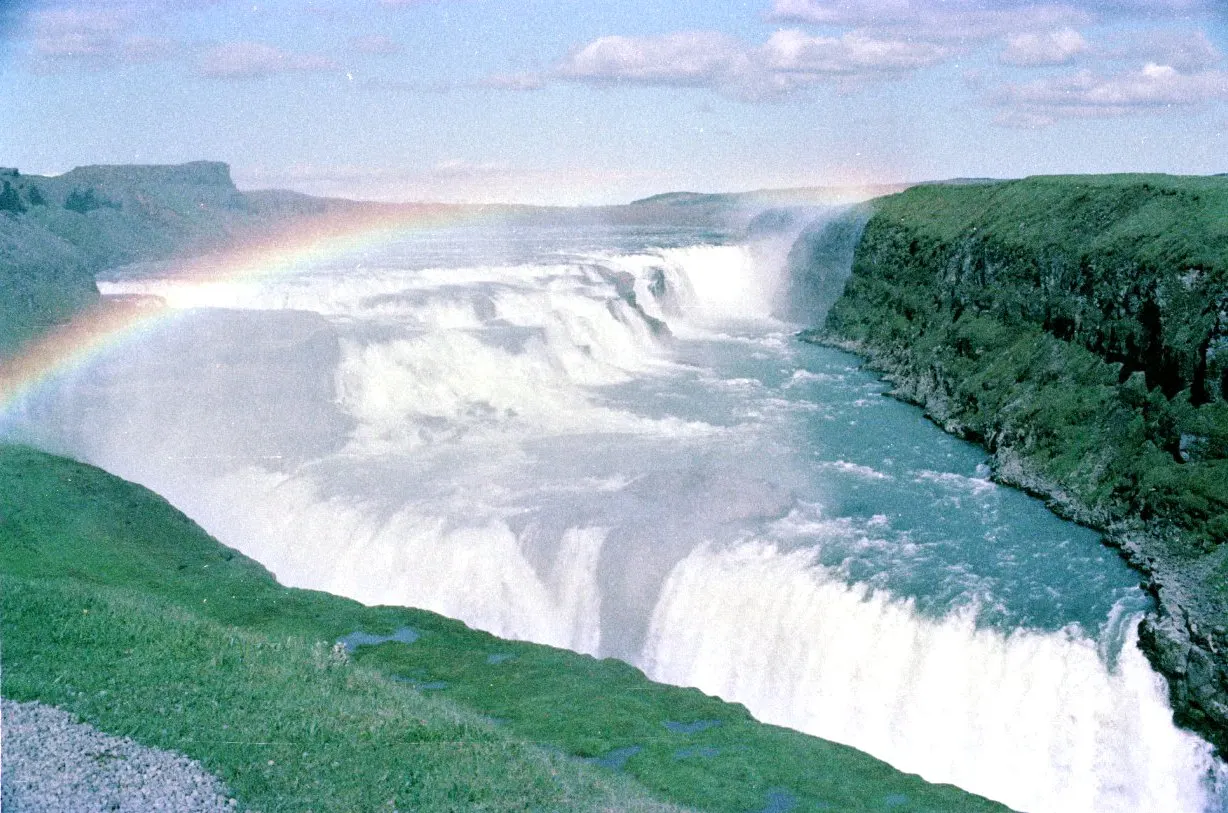
Gullfoss, Iceland, June 1984Photo: Roger Goodman, CC BY-SA 2.0 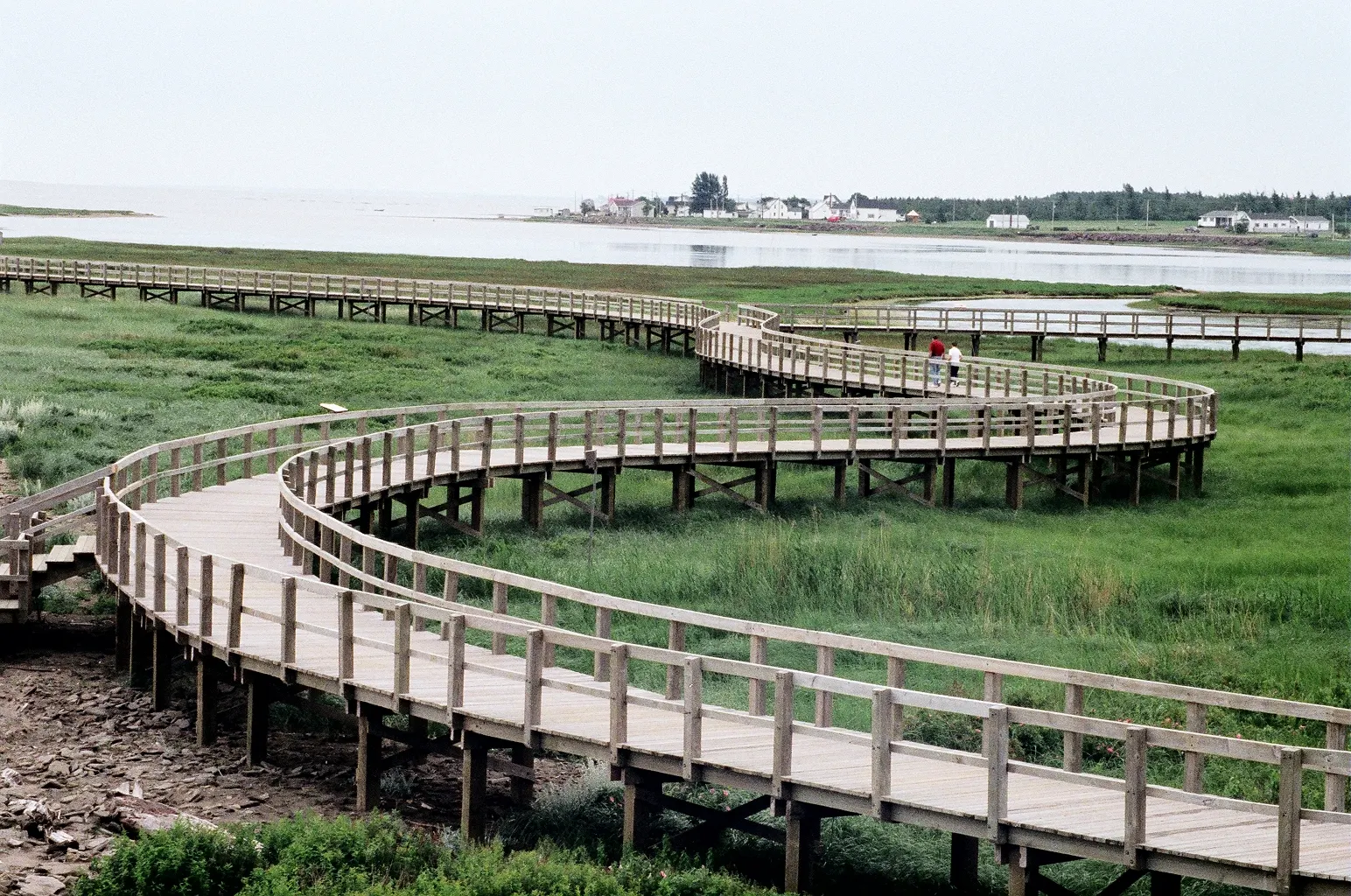
Irving Eco-Centre, Bouctouche, New Brunswick, 2006, on ISO 1600 Fujifilm SuperiaPhoto: Alex Vye (Alexvye, CC BY-SA 3.0 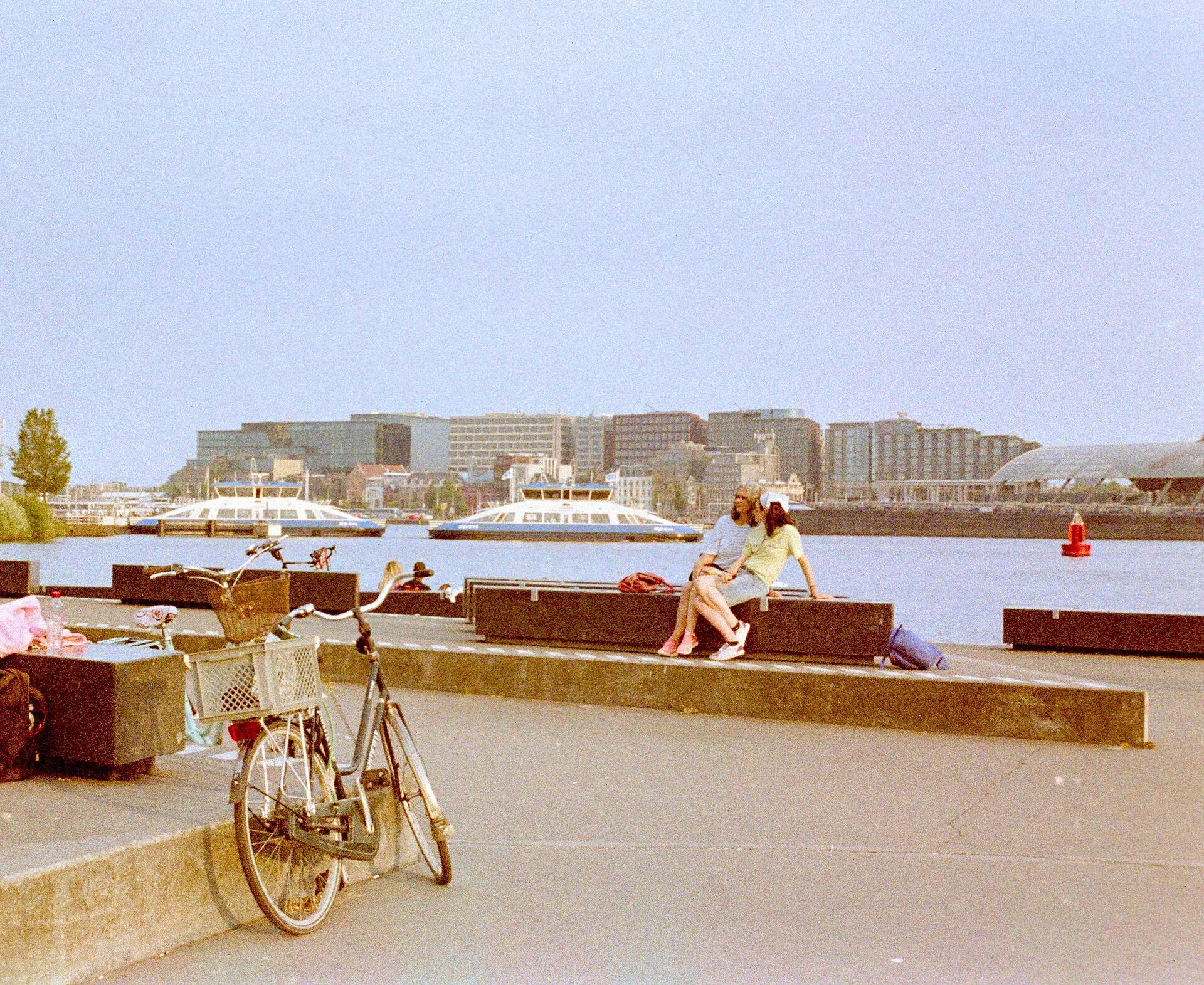
IJpromenade by the EYE, Amsterdam, 2022, on Kodak Gold 200 that expired in 2008, rated at ISO 50Photo: Frank Markesteijn, CC BY-SA 4.0 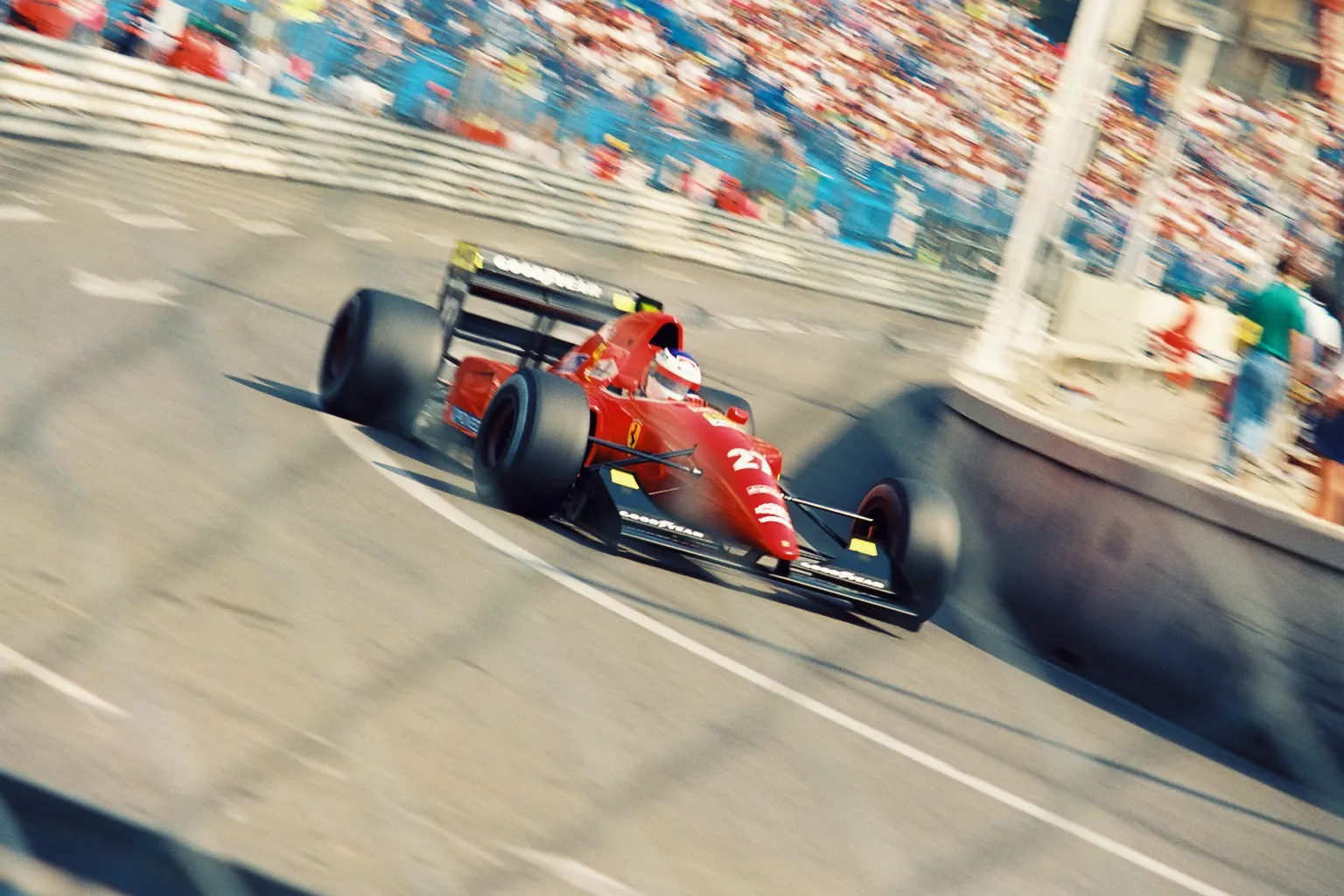
Jean Alesi in the Ferrari F92A, Monaco Grand Prix, 1992Photo: Iwao from Tokyo, Japan, CC BY 2.0 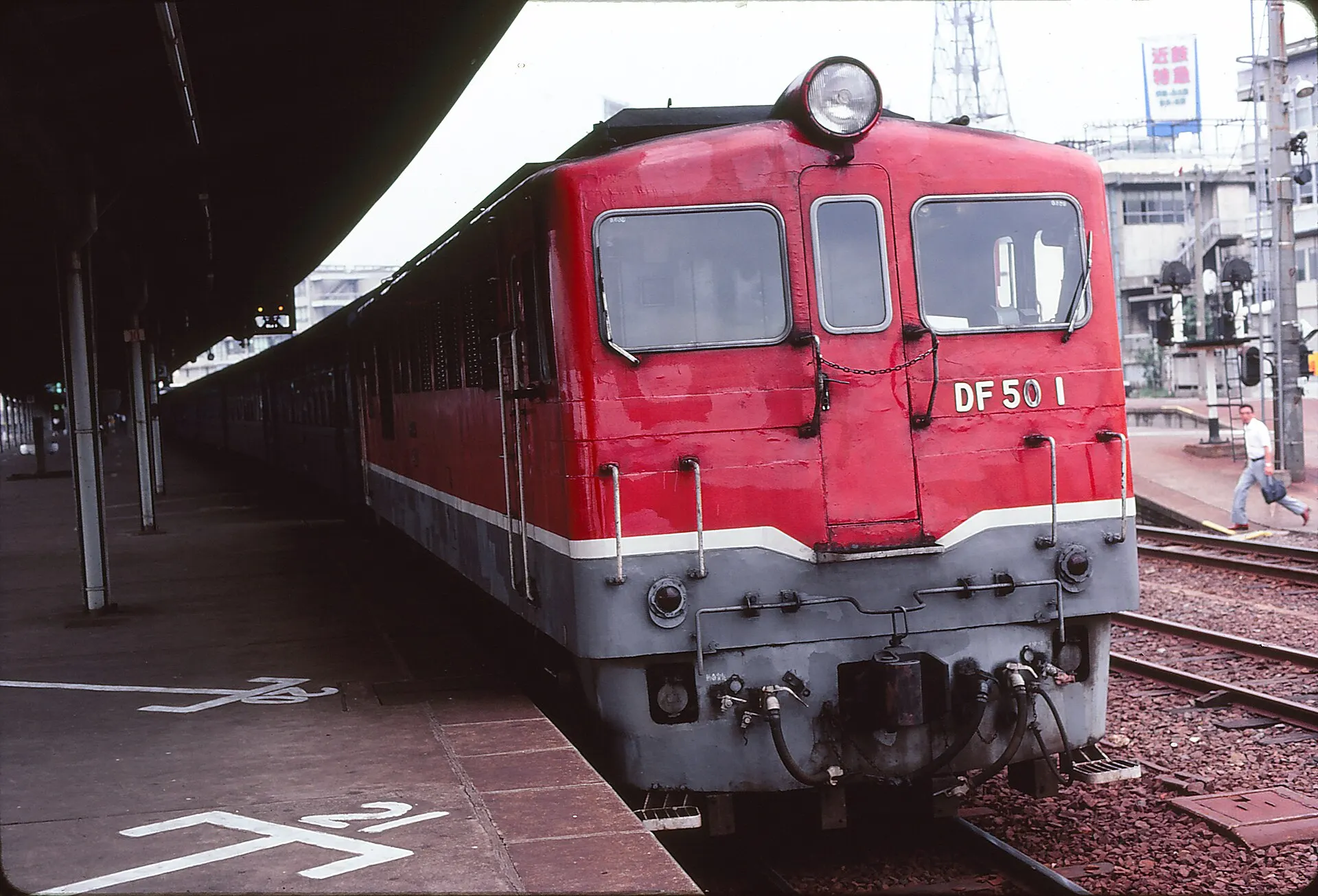
DF50 diesel locomotive at Takamatsu Station, Japan, August 1981Photo: Gohachiyasu1214, CC BY-SA 4.0 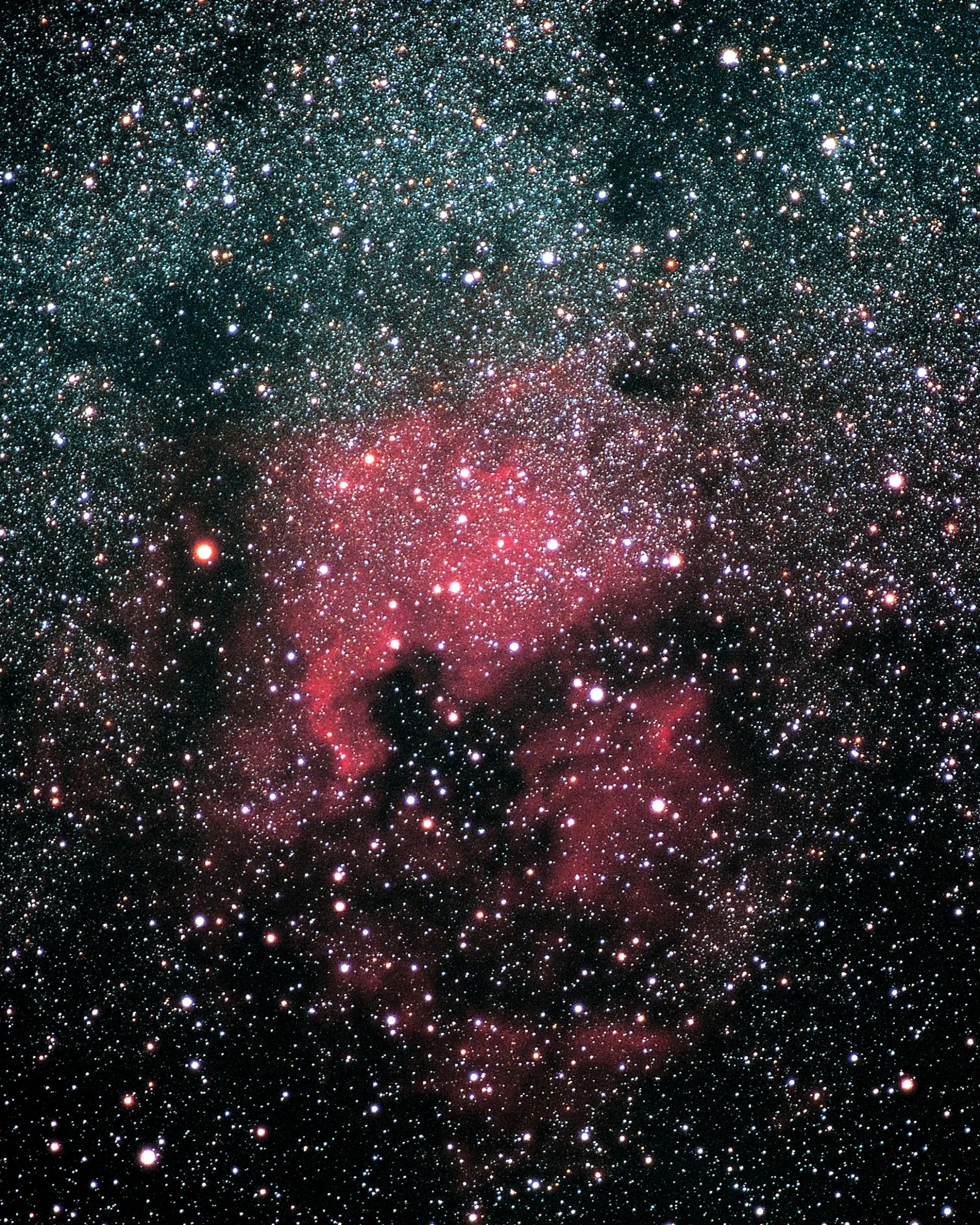
North America Nebula, photographed from Hamois, Belgium, 1997Photo: Lviatour, CC BY-SA 3.0
What a Nikon FE costs today
On October 28, 2026, US camera stores listed used Nikon FE bodies from $225 in stock to $269.99, plus one $199.99 K&M Camera body that was out of stock, and kits with a 50mm lens from $325 to $495. eBay, KEH, MPB, B&H and Adorama could not be checked, so they are not listed.
K&M Camera (New York)
Used U7, moderate wear (out of stock), Body only, chrome
$199.99
See listingVictory Camera (Colorado)
Used Good, new light seals, 90-day warranty, Body only, chrome
$225.00
See listingK&M Camera (New York)
Used U8, fully functional, Body only, chrome
$249.99
See listingK&M Camera (New York)
Used U8, moderate wear, fully functional, Body only, black
$269.99
See listingK&M Camera (New York)
Used U9, little to no wear, Body only, chrome
$269.99
See listingVictory Camera (Colorado)
Used Good, dead meter needle (auto works), new seals, Chrome body + 50mm f/2 AI lens
$325.00
See listingVictory Camera (Colorado)
Used Excellent-, engraving on front, new seals, Chrome body + Nikkor 50mm f/2 AI
$365.00
See listingVictory Camera (Colorado)
Used Excellent+, new seals, 90-day warranty, Black body + Series E 50mm f/1.8
$395.00
See listingRetrospekt (Milwaukee)
Refurbished, full CLA, 90-day warranty (sold out), Body + Series E 50mm f/1.8
$399.00
See listingRetrospekt (Milwaukee)
Refurbished, full CLA, 90-day warranty (sold out), Body + 28mm f/2.8
$399.00
See listingVictory Camera (Colorado)
Used Excellent, freshly CLA'd, new seals, 90-day warranty, Chrome body + Series E 50mm f/1.8
$495.00
See listing
Prices checked on October 28, 2026. They move every week, so treat them as a range, not a quote. Analog.Cafe's review, updated December 2025, puts typical selling prices at $100-$250 depending on condition and lens. Older owner reports were lower: $70 with a lens (CameraGoCamera, 2016) and about $75 with a 50mm (Shoot It With Film, 2019). Victory's freshly serviced kit costs $100 more than its otherwise similar kit ($495 vs $395).
Video reviews worth your time

Nikon FE Review
The Nikon FE is a highly recommended 35mm film SLR due to its durable build, intuitive needle metering system, compact form factor, and excellent value.

Nikon FE detailed review and demonstration
The Nikon FE is a robust, intuitive semi-professional film SLR that excels in exposure metering and offers versatile lens compatibility at an affordable price.

Review of the Nikon FE 35mm Film Camera for Landscape Photography
The reviewer considers the Nikon FE a fantastic, lightweight film camera for landscape and general photography due to its intuitive manual controls, reliable light meter, and broad lens compatibility.
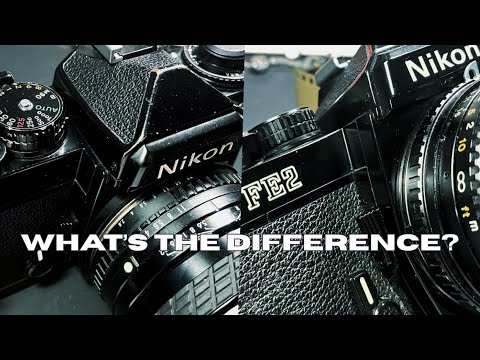
Is The Difference Worth HUNDREDS OF DOLLARS?? (Nikon FE vs Nikon FE2)
The reviewer highlights the Nikon FE as a classic, reliable electronic SLR camera while detailing the functional improvements introduced in its successor, the FE2.
Specifications
Camera
- On sale
- June 1978
Shutter and exposure
- Shutter speeds
- 8 s to 1/1000 s, plus B and mechanical 1/90 s (M90)
- Without batteries
- Only M90 and B
- Metering range
- EV 1 to EV 18 (ASA 100, 50mm f/1.4)
- Exposure compensation
- +2 to -2 EV (to -1 at ASA 3200 and 4000, to +1 at ASA 12)
Viewfinder
- Magnification and coverage
- 0.86x with a 50mm lens, 93% of the frame
Body and power
- Battery life
- About a year, depending on use
- Weight
- 590 g (21 oz), body only
- Motor drives
- MD-11 and MD-12, up to 3.5 frames per second
- Data back
- MF-12 (the later MF-16 does not fit)
Questions people ask about the FE
Is the Nikon FE a good camera?
Owners and reviewers mostly say yes. Digital Camera World calls it a perfect first film camera, and the praise centers on an accurate center-weighted meter, a solid metal body and lens compatibility that reaches back to pre-AI Nikkors. The caveats are age-related faults, unlit needles in dim light and the need for batteries on every speed except M90 and B.
Sources: digitalcameraworld.com, blog.jimgrey.net, casualphotophile.com
Is the Nikon FE good for beginners?
Yes. Aperture-priority AUTO lets you load film, pick an aperture and shoot with exposures in the right ballpark, and the manual mode is there when you want to learn with the needles. A 35mmc reader says it has been a small, unintimidating first camera for his teenage daughter. Compare it with other first cameras in our [best film cameras for beginners](/cameras/best-film-cameras-for-beginners/) list.
Sources: digitalcameraworld.com, 35mmc.com
What battery does the Nikon FE take?
Two 1.55V button cells, either SR44 silver oxide (also sold as 357, S76 or A76) or LR44 alkaline, or one 3V CR1/3N lithium. Camera-wiki recommends SR44. The compartment is on the bottom plate next to the tripod socket and opens with a coin, and a set lasts about a year.
Sources: camera-wiki.org, en.wikipedia.org, analog.cafe, mir.com.my
Does the Nikon FE work without batteries?
Only on M90 and B. M90 is a mechanical 1/90 s that sits just before B on the speed dial; every other speed and AUTO need power. Nikon's manual words it differently, saying the shutter falls back to 1/90 s when the batteries are exhausted, but Analog.Cafe and the Living Image museum report a dead FE locking up until the dial goes to M90 or B. If you want a shutter that works at every speed without batteries, the Nikon FM and [FM2](/cameras/nikon-fm2/) are the mechanical siblings.
Sources: mir.com.my, analog.cafe, digitalcameraworld.com, licm.org.uk, cameramanuals.org
Why won't my Nikon FE film advance or the shutter fire?
Most often the batteries died with the mirror up. Turn the speed dial to M90 or B to release the shutter, then fit two fresh LR44 or SR44 cells the right way round. If the lever is still stuck, check that the motor drive coupling pin on the bottom plate isn't jammed; Flickr owners also blame a failed resistor in the exposure circuit, which usually costs more to fix than another body.
Sources: licm.org.uk, flickr.com
Nikon FE or Nikon FM: which should I buy?
They share the same body. The FM is fully mechanical with red LED metering and works almost fully without batteries, but it has no auto mode and its slowest speed is 1 second. The FE adds aperture-priority AUTO, a needle display that two owners prefer to the FM's LEDs, and speeds down to 8 seconds, at the cost of needing batteries.
Sources: gotfilm.org, digitalcameraworld.com, casualphotophile.com, camera.fashion
Is the Nikon FE2 worth the extra money over the FE?
Only if you need what it adds: a 1/4000 s top speed, 1/250 s flash sync and TTL flash. The FE costs less and takes pre-AI lenses, and Digital Camera World says its 1/1000 s limit rarely matters unless you shoot fast glass in bright light.
Sources: en.wikipedia.org, casualphotophile.com, digitalcameraworld.com, camera.fashion
Can the Nikon FE use non-AI and autofocus Nikkor lenses?
Yes to both, with limits. Raise the flip-up meter coupling lever and the FE mounts pre-AI Nikkors with stop-down metering, which the FE2 and FM2 can't do. AF and AF-D lenses with an aperture ring fit the same F mount and focus manually, and one owner shares AI-S lenses between his FE and a Nikon Df digital body. G and DX lenses don't work properly, and IX-Nikkors and old fisheyes can damage the shutter.
Sources: en.wikipedia.org, analog.cafe, casualphotophile.com
What people compare it with
Nikon FE2
The 1983 successor with 1/4000 s, 1/250 s flash sync, TTL flash and a brighter screen, but no pre-AI lenses and a higher used price.
Nikon FM
The all-mechanical sibling on the same body: it works almost fully without batteries but has no aperture-priority auto.
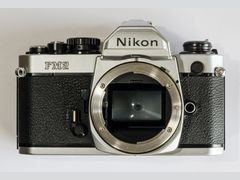
A mechanical 1/4000 s shutter and faster flash sync in the same compact body, for buyers who want battery independence.
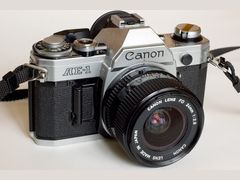
One of the most popular film cameras; Zulu Fox Photo calls the FE a great alternative to it, and one owner says the FE feels more rugged than most similar Canons.
Every source behind this page
Read them yourself. How we pick and count them is in our methodology.
Show all 49 sources
Manuals and references 24
- mir.com.my: Nikon FE, 1978
- mir.com.my: Nikon FE
- mir.com.my: Nikon FE
- mir.com.my: Nikon FE/FM/FA Series
- brooklynfilmcamera.com: Camera Repair NYC: Film Camera Repair in Brooklyn + Mail
- camera-wiki.org: Nikon FE - Camera-wiki.org
- casualphotophile.com: Nikon FE - Camera Review
- en.wikipedia.org: Nikon FE
- imaging.nikon.com: Nikon Family Cousins, Part 10 : "Nikon FE" | Camera Chronicle
- kmcamera.com: Used Nikon Series E 50mm f/1.8 Lens | Black
- kmcamera.com: Used Nikon FE 35mm SLR Camera Body | Black
- kmcamera.com: Used Nikon FE 35mm SLR Camera Body | Chrome
- kmcamera.com: Used Nikon FE 35mm SLR Camera Body | Chrome
- kmcamera.com: Used Nikon FE 35mm SLR Camera Body | Chrome
- retrospekt.com: Nikon FE 35mm Film Camera
- retrospekt.com: Nikon FE SLR 35mm Film Camera
- analog.cafe: Nikon FE Film Camera Review
- cameramanuals.org: nikon fe.pdf
- victorycamera.com: Nikon FE Black 35mm Film Camera with 50mm f1.8 AI
- victorycamera.com: Nikon FE Chrome 35mm Film Camera 50mm f1.8 AI-S Lens -CLA'd
- victorycamera.com: Nikon FE Chrome 35mm Film Camera 50mm f2 AI Lens [GOOD]
- victorycamera.com: Nikon FE Chrome 35mm Film SLR Camera 50mm f2 Lens -New Seals- [EXC
- victorycamera.com: Nikon Nikkor-S 50mm f1.4 Non
- youtube.com: Nikon FE - How to repair 'sticky' advance lever issue
Independent blogs 16
- Camera Fashion: The Nikon FE
- Shoot It With Film: Nikon FE 35mm Film Camera Review by James Baturin
- Alex Luyckx Blog: Camera Review Blog No. 74
- Mostly Film Photography: Nikon FE vs. Nikon FM
- Camera Go Camera: Nikon FE
- Zulu Fox Photo: Nikon FE - A great alternative to the Canon AE
- Casual Photophile: Nikon FE2
- Down the Road: Nikon FE
- Photo Thinking: Nikon FE - FEeling it!
- 35mmc: 5 Frames with a Nikon FE (and a return to film photography) - By Thorsten Wulff
- Adventures on Film
- Attempts at 35mm: First impressions & quick review: Nikon FE + Nikkor 35mm f2 AI-s
- 35mmc: Nikon FE Review - Returning to Film with a Fun, Compact, Affordable and Easy SLR - By Daniel Sigg
- 35mmc: 5 Frames with a Nikon FE
- 35mmc: 5 Frames with a classic SLR - Why I Chose the Nikon FE
- 35mmc: Nikon FE - Out of the Drawer and Into the Light - A Journey of Recovery and Rejuvanation (Part Four)
Video reviews 4
Editorial reviews 2
Other 2
Forums 1
Keep reading
Film cameras
The Nikon FM2 is a fully mechanical 1982 SLR with a 1/4000 shutter. What 145 owner and reviewer opinions say, 2026 prices, versions and common problems.
Film cameras
We sorted 168 owner and reviewer opinions on the Canon AE-1: what people love, the squeal and battery problems, repair costs and what a working one costs today.
Film cameras
The Olympus OM-1 is a small all-mechanical 1972 SLR with a huge 0.92x finder. What 111 opinions say, used prices from $275, battery fixes and what to check.
Film cameras
The best film camera for beginners is usually a used Canon AE-1 Program or Pentax K1000. Compare 8 picks, October 2026 US shop prices and what to check first.
Film cameras
Where to buy film cameras used in the US: KEH, MPB, B&H, local shops, eBay and thrift, with warranties, October 2026 prices and a checklist to test one.