Ilford HP5 Plus: how it looks, how to push it, what it costs
The short answer
Ilford HP5 Plus is an ISO 400 black-and-white negative film that owners and reviewers widely call forgiving and versatile: it handles exposure mistakes, pushes well to EI 1600 or 3200, and dries flat for easy scanning.
A single 35mm roll costs $9.99 to $12.99 at the US film shops checked (October 28, 2026), and of the 112 opinions collected here, 85 are positive, 22 mixed and 5 negative.
- Box speed
- ISO 400
- Push rating (Ilford)
- Up to EI 3200
- Process
- Standard B&W chemistry
- 35mm roll
- $9.99-12.99
Built from 112 opinions from 28 pages and videos. Not yet tested by Camera Dojo. Updated .
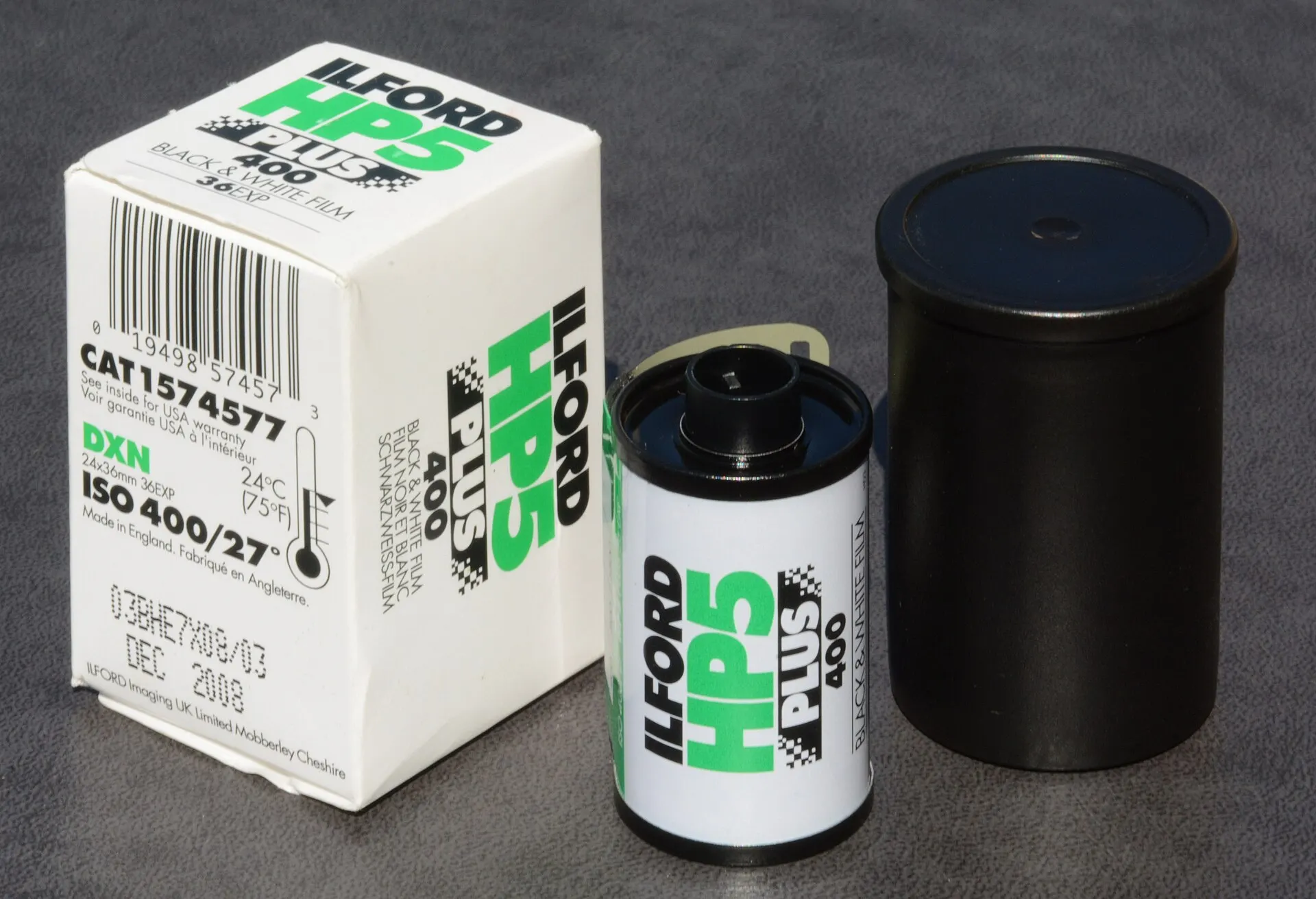
The short version
The trade-off is texture. HP5 Plus uses traditional cubic grain, so the grain is always visible, more so in 35mm and when pushed, and shadows drop to black faster than on some rivals. A few reviewers find it flat at box speed or too plain next to Ilford Delta 400, and Digital Camera World says to skip it if you want deep contrast or minimal grain. For a punchier classic look, see Kodak Tri-X 400 and the HP5 vs Tri-X comparison.
Price is a big part of its reputation. Jim Grey found it at least $2 a roll cheaper than Tri-X in 2022, when it was also in stock almost everywhere during the film shortages. It comes in 35mm, 120, 4x5 and 8x10 all year, and it is made by Harman Technology, the British company that holds the rights to the Ilford name for black-and-white materials.
Good fit if
- You want one black-and-white film for sun, indoors and night: shoot it at 400, or push the whole roll to 1600 or 3200.
- You are new to black and white or meter loosely. Reviewers call it remarkably tolerant of exposure errors.
- You develop at home. It works in every major developer, from D-76 and HC-110 to Rodinal and DD-X.
- You scan your own negatives. HP5 Plus dries flat, and one reader on Jim Grey's blog switched from Tri-X over cost and curl.
- You shoot 120 or 4x5 on a budget: 120 rolls from $9.99 and $66.99 to $78.95 for 25 sheets of 4x5 (October 2026).
Think twice if
- You want the smoothest tones and finest grain for landscapes or portraits. Slower Ilford FP4 Plus and Pan F are often favored for landscapes, and Ilford Delta 400 has finer grain.
- You want deep blacks and strong contrast straight from the lab at box speed. Rate it at 800, or look at Kodak Tri-X 400.
- Your only lab runs color (C-41) chemistry. HP5 Plus needs black-and-white processing; Ilford XP2 Super is the black-and-white film made for C-41.
- You want the cheapest 400-speed black-and-white film. Kentmere 400, from the same company, runs a couple of dollars a roll less, per a 2022 commenter on Jim Grey's blog.
Photos shot on Ilford HP5 Plus
Photos shot on Ilford HP5 Plus in 35mm and 120, shared under free licenses on Wikimedia Commons.

MS Diamant at Flüelen, Switzerland, on a Leica IIIc with a Summitar 5cm lensPhoto: NAC, CC BY-SA 4.0 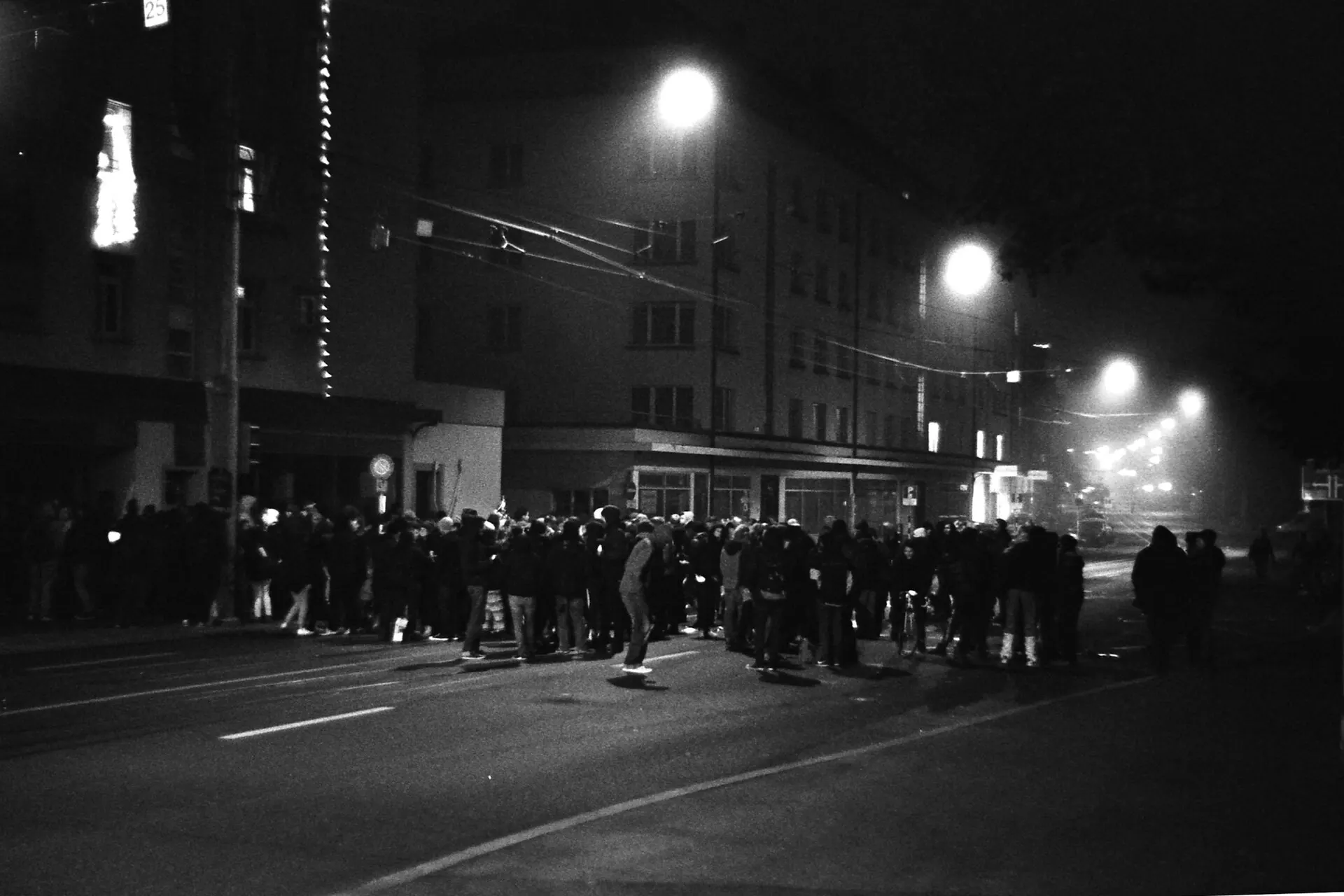
Effingerstrasse, Bern, December 2016, HP5 Plus rated at EI 1600Photo: NAC, CC BY-SA 4.0 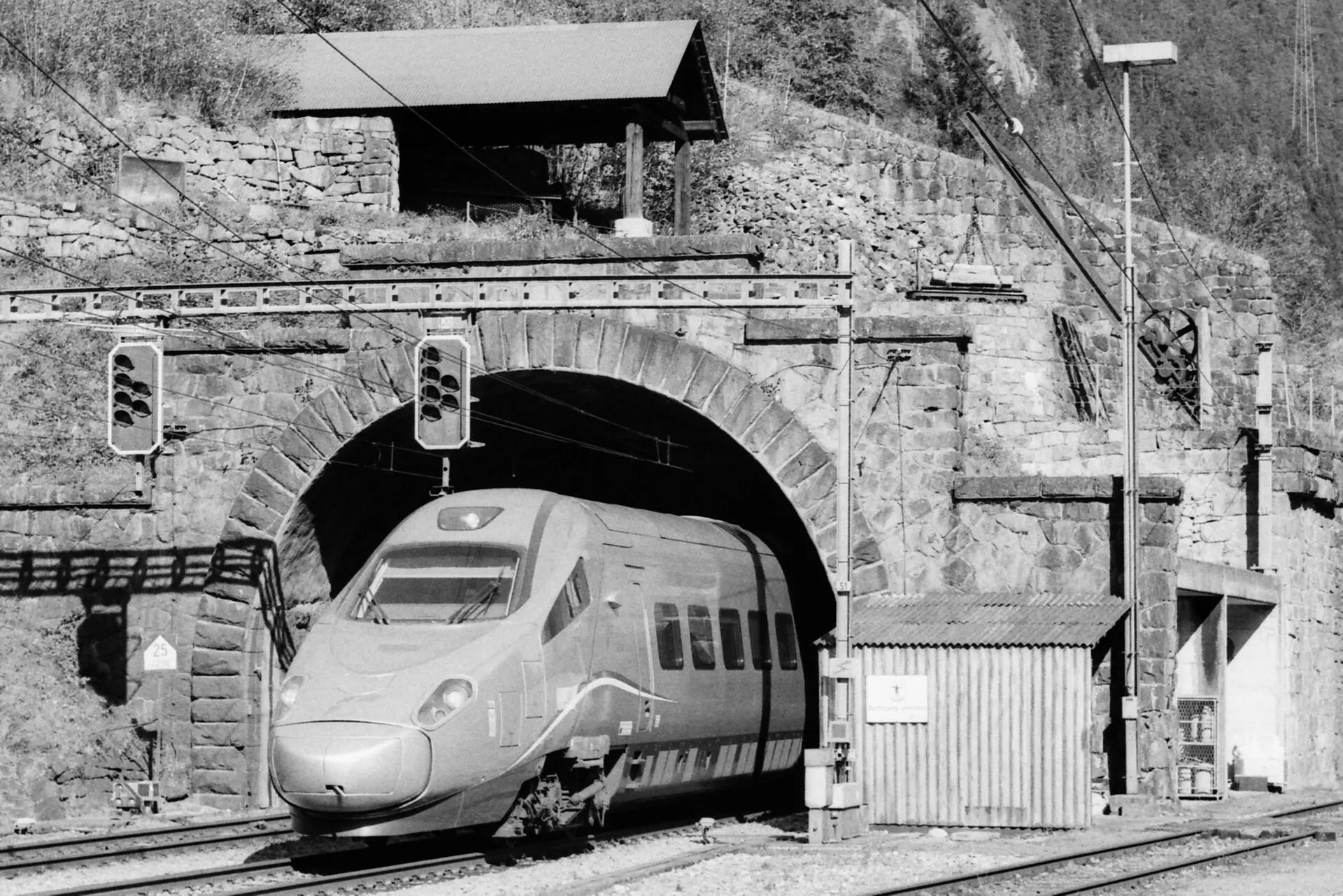
EuroCity 14 arriving at Wassen station, Switzerland, on a Leica IIIcPhoto: NAC, CC BY-SA 4.0 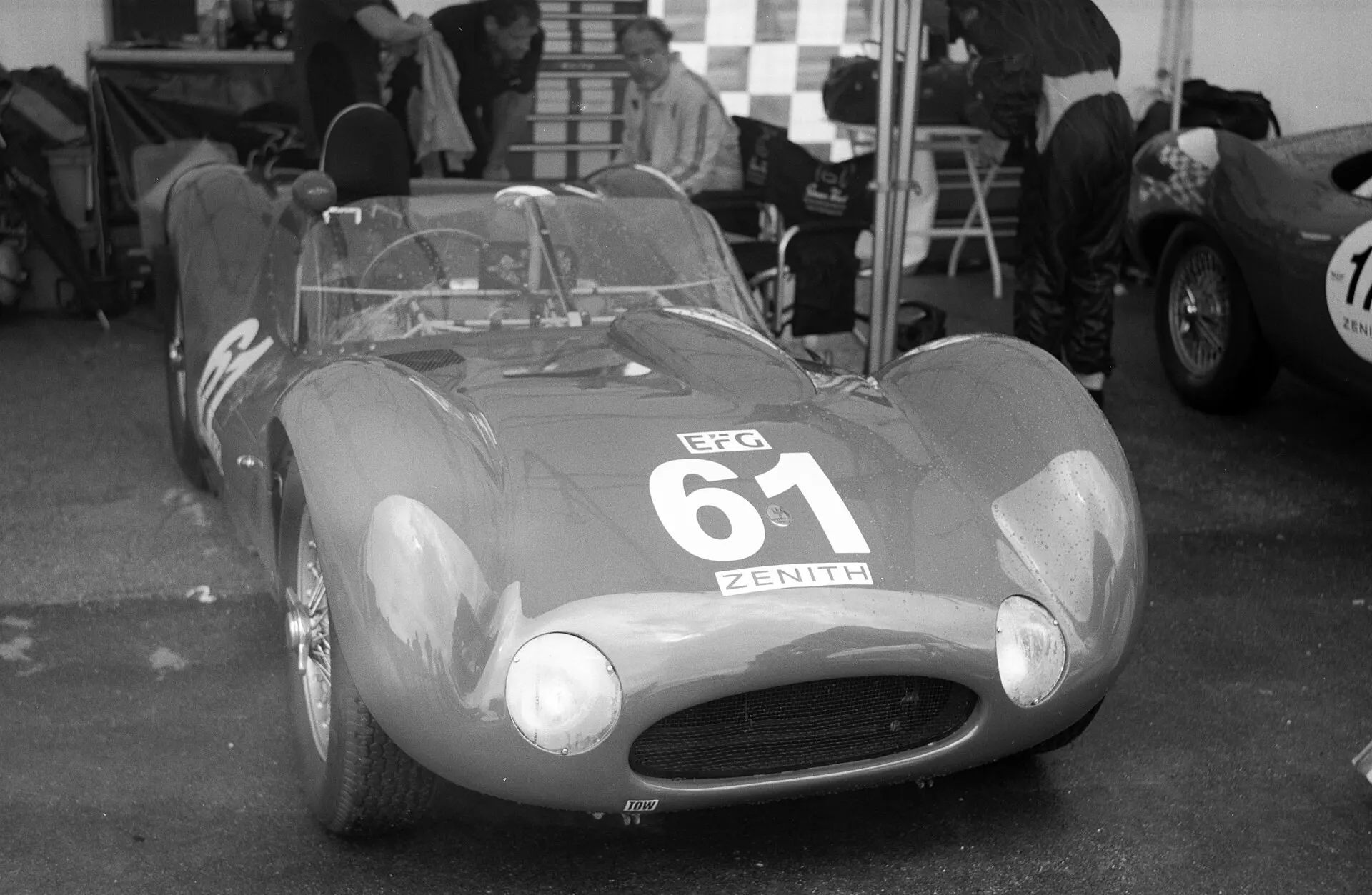
Grand Prix de l’Âge d’Or, Dijon-Prenois, 2018, shot on HP5 Plus in 120Photo: Akela NDE, CC BY-SA 2.0 fr 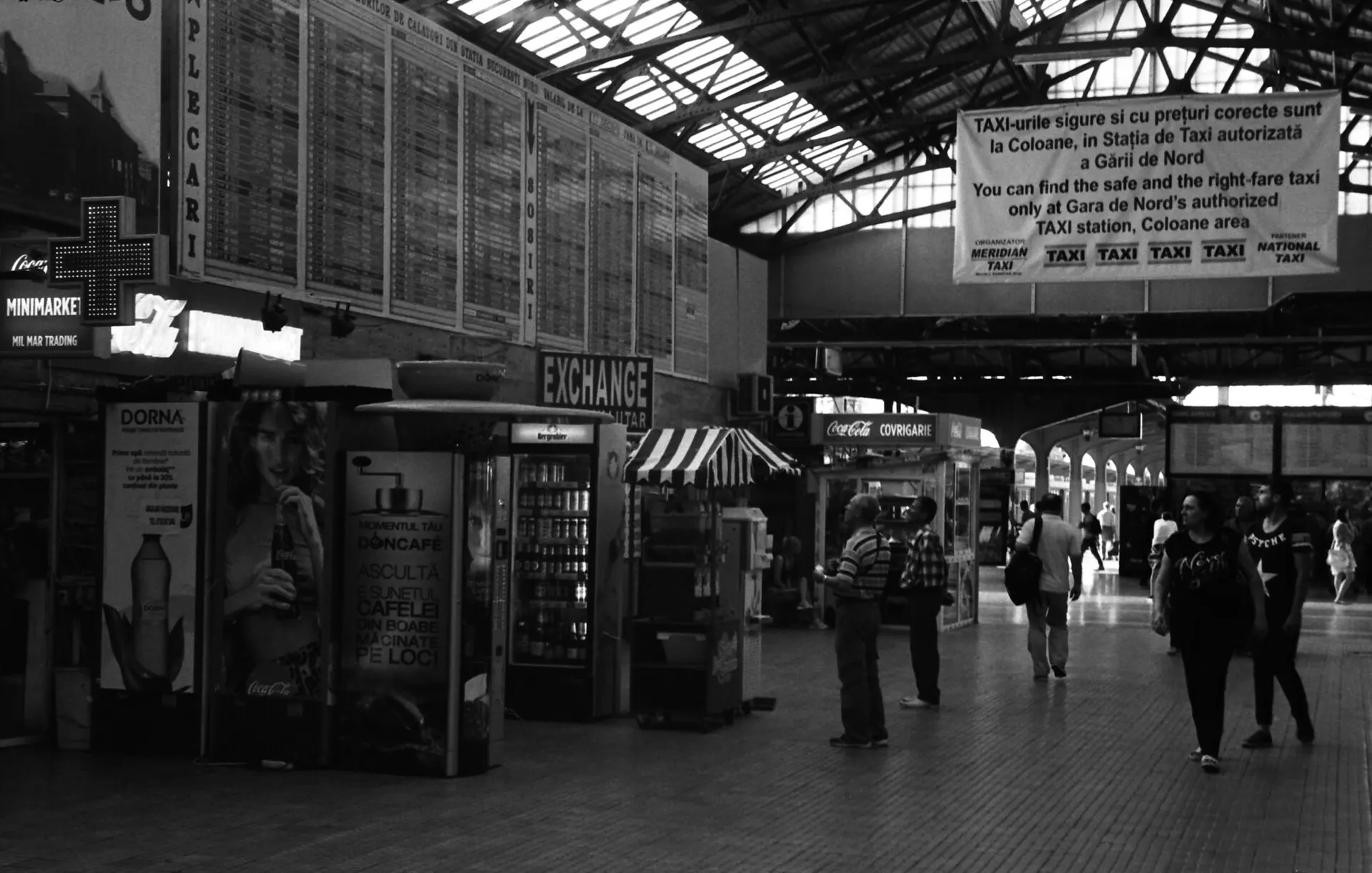
Gara de Nord, Bucharest, on a Leica IIIcPhoto: NAC, CC BY-SA 4.0 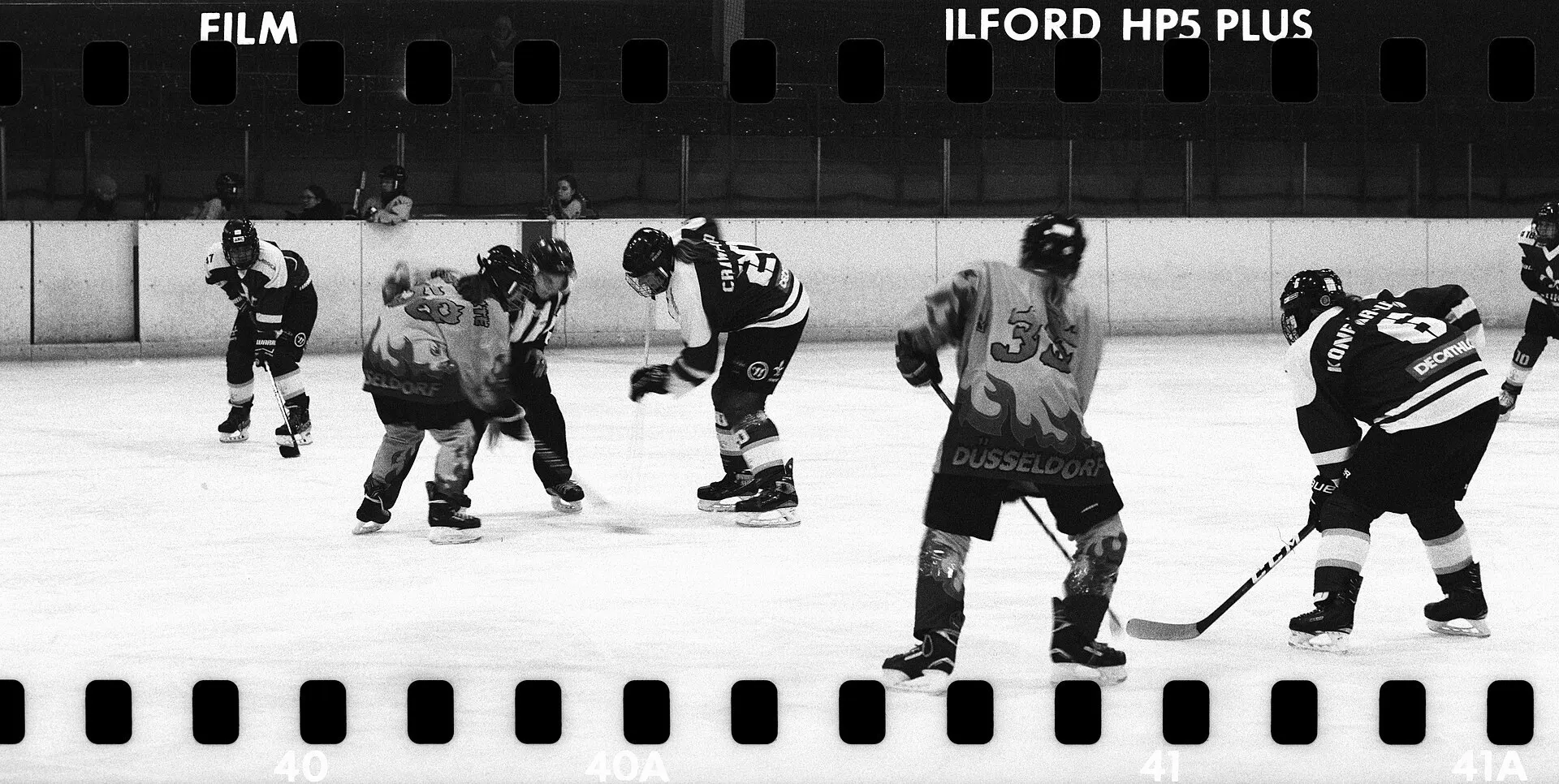
Darmstadt Dukes vs Düsseldorf Devils, 2025-2026 season, Pentax 6x7Photo: Eissportclub Darmstadt, Valerie Scheskat, CC BY-SA 4.0
What owners and reviewers say, topic by topic
We sorted 112 opinions about the HP5 Plus from 28 pages and videos on 17 websites and channels. Each row shows how many people raised a topic and how many of them were positive. Open a row to read short quotes, each linked to its source.
Reddit, Photrio, Lomography and store reviews could not be read, so the opinions come from photographers' blogs, editorial reviews, film shop write-ups and five YouTube reviews. Blue Moon Camera and Parallax sell film, one YouTube review comes from Analogue Wonderland, which Jim Grey says supplied the film for two of his posts, and several blogs carry affiliate links.
Grain56% positiveof 18
Everyone sees the grain. Most say it adds classic texture without hiding detail at box speed; the mixed voices call it gritty or intense, especially when pushed, and one reader moves to bigger film when he wants less of it.
“I am pleased with how managed the grain is in these photographs. It is much more noticeable at EI 1600.”
Down the Road (Jim Grey): Ilford HP5 Plus at EI 800 2022-02Owner
“the grain isn't distracting or too heavy that I lost detail”
Gareth Bevan, Digital Camera World: Ilford HP5 Plus 35mm film reviewHands-on review
“you'll find it has more grain and grittiness that the Neopan Acros 100 film”
Myles Katherine Photography: The 5 Best and Most Affordable Black and White Film StocksOwner
“If you embrace that grain, you might consider shooting on the street at 1600/3200 all the time”
Daniel Tim, EMULSIVE: Push processing ILFORD HP5 PLUS from EI 800 to EI 6400Owner
Overall look61% positiveof 18
Most describe a classic, medium-contrast look with plenty of gray tones. A minority find it flat at box speed, and two find it either too harsh or too clean and neutral.
“It's not as contrasty as Tri-X, but has much better mid tones”
Richard Hunter, Down the Road (Jim Grey): Ilford HP5 Plus at EI 800 2022-03Owner
“I love the gentle softness that I get with the Ilford HP-5 Plus. It's just the right level of contrast.”
Lisa Shea, Holga Photography: Ilford HP5 Plus 120 Film reviewOwner
“It definitely has that classic nostalgia that I'm always looking for when it comes to black and white film”
Myles Katherine Photography: The 5 Best and Most Affordable Black and White Film StocksOwner
“When shot and developed at box speed, it is a bit flat for my taste.”
iwantgrainadmin, I want Grain: Ilford HP5 Plus Review 2026-02Hands-on review
Pushing and pulling88% positiveof 16
The most-praised trait, with 14 of 16 opinions positive: pushes to 1600 and 3200 are widely praised, and EMULSIVE got usable frames at 5 to 6 stops. The complaints are longer development times and, per David Hancock, flatter contrast when pulled.
“To me, HP5+ shines at 800 and 1600.”
Rick, Down the Road (Jim Grey): Ilford HP5 Plus at EI 1600 2021-10Owner
“To my mind, there is no film as versatile as HP5+. I shoot it from EI 200 all the way to EI 3200 regularly.”
Daniel Tim, EMULSIVE: Push processing ILFORD HP5 PLUS from EI 800 to EI 6400Owner
“the film has some pretty amazing push capabilities”
Zeb Andrews, Blue Moon Camera Codex: Film Friday Ilford HP5+ review 2026-06Hands-on review
“When you push the film to ISO 800, 1600, or even 3200, it holds up remarkably well.”
Exposure latitude85% positiveof 13
Widely praised: owners and reviewers call it very forgiving of over- and underexposure. The caveats are shadows that fall off fast (Blue Moon Camera) and flat light that can look washed out (The Phoblographer).
“I find it hard to blow out the highlights or block up the shadows with this film.”
Down the Road (Jim Grey): Ilford HP5 Plus could be the best value in film today 2022-03Owner
“It is very tolerant of wayward exposure and processing, widely available and reasonably priced.”
Tobias Key, EMULSIVE: Film review: finding my 'do anything' film for 4x5, ILFORD FP4 PLUS and HP5 PLUS 2018-04Owner
“It's remarkably tolerant of exposure errors”
iwantgrainadmin, I want Grain: Ilford HP5 Plus Review 2026-02Hands-on review
“We got a really good range of tones. It retains a lot of shadow detail.”
Parallax Photographic Coop: Ilford HP5 Plus 400 120 Film ReviewHands-on review
Sharpness and detail70% positiveof 10
Mostly praised for holding detail, especially in 120. I Want Grain concedes it is not the sharpest film, EMULSIVE says fine detail has a slightly fuzzier edge than modern T-grain films, and The Phoblographer got sharper prints from Delta 400.
“but I find it to have a bit more detail in the shadows”
Myles Katherine Photography: The 5 Best and Most Affordable Black and White Film StocksOwner
“the sharper grain helps keep the image looking sharp”
Parallax Photographic Coop: Ilford HP5 At 1600 Film ReviewHands-on review
“I just prefer the rendering of detail versus say, a ILFORD Delta 3200 shot at 1600.”
Aislinn Chuahiock, EMULSIVE: ILFORD HP5 PLUS vs Kodak Tri-X 400 at EI 1600 in the Moscow Metro with the Mamiya 7IIHands-on review
“HP5 is not the finest grained film. It's not the sharpest. It's not even shining at box speed. But it has character.”
iwantgrainadmin, I want Grain: Ilford HP5 Plus Review 2026-02Hands-on review
Scanning and printing100% positiveof 10
All ten opinions are positive: negatives dry flat, scan easily and print well, and the film works with a wide range of developers.
“HP5+ is so much easier to scan because of lack of curl.”
Down the Road (Jim Grey): Ilford HP5 Plus could be the best value in film today 2022-03Owner
“From a scanning perspective, the film has been a joy to use.”
EMULSIVE: Film review: ILFORD HP5 PLUS in 35mm, 120 and sheet formatsHands-on review
“Ilford HP5 has a very classic look to it and it also prints very well and sharp.”
Chris Gampat, The Phoblographer: Film Emulsion Review: Ilford HP5 Plus 400 (35mm) 2017-11Hands-on review
“when dry, Ilford HP5 is completely flat. It is a bliss for both scanners and enlargers.”
iwantgrainadmin, I want Grain: Ilford HP5 Plus Review 2026-02Hands-on review
Price and availability100% positiveof 10
All positive: reasonably priced, usually cheaper than Kodak Tri-X, and in stock in 35mm, 120 and sheet sizes, even during the 2022 shortages.
“I like the Ilford HP5 Plus, which is black and white, for its price and good quality.”
Lisa Shea, Holga Photography: Ilford HP5 Plus 120 Film reviewOwner
“a 36-exposure roll of Ilford HP5 Plus is cheaper than Kodak Tri-X 400 or Kodak T-MAX 400”
Khurt Williams, Island in the Net: Ilford HP5 memories 2020-10Owner
“It's also in stock pretty much everywhere that sells film, unlike many other popular films in this era of shortages.”
Down the Road (Jim Grey): Ilford HP5 Plus could be the best value in film today 2022-03Owner
“it's reasonably priced for a professional-grade film that can tackle virtually any project”
Low light and night71% positiveof 7
Rated well for night and indoor work, usually pushed to 1600. The mixed notes say shadow detail drops in very dark scenes, which EMULSIVE says development can control.
“I love it that HP5 Plus is so versatile that I can push it to 1600 at night.”
Down the Road (Jim Grey): Downtown South Bend at night on Ilford HP5 Plus pushed to 1600 2023-08Owner
“To my mind, HP5 PLUS is the best film stock for night photography in general.”
Daniel Tim, EMULSIVE: Push processing ILFORD HP5 PLUS from EI 800 to EI 6400Owner
“this also means that it performs better in low light and is more versatile overall”
Myles Katherine Photography: The 5 Best and Most Affordable Black and White Film StocksOwner
“we did lose some shadow detail in exchange for the speed. We think this is a fair trade-off.”
Parallax Photographic Coop: Ilford HP5 At 1600 Film ReviewHands-on review
Consistency100% positiveof 5
All five who comment call it reliable: one reports outstanding frame-to-frame consistency, another finds it predictable once dialed in, and a third sees repeatable results over time.
“Once you have a handle on it it is totally predictable and reliable”
Tobias Key, EMULSIVE: Film review: finding my 'do anything' film for 4x5, ILFORD FP4 PLUS and HP5 PLUS 2018-04Owner
“HP5 Plus has settled in as my workhorse fast film and one of the few I buy in bulk.”
musickna, Casual Photophile: Ilford HP5 Plus Black and White Film Profile 2017-05Owner
“A film you can rely on in any situation.”
Parallax Photographic Coop: Ilford HP5 Plus 400 120 Film ReviewHands-on review
“the consistency between frames was outstanding, I barely got a single frame with any unintended exposure or defects”
Gareth Bevan, Digital Camera World: Ilford HP5 Plus 35mm film reviewHands-on review
Skin tones50% positiveof 4
Only four opinions cover skin. Two praise soft, nuanced skin tones, one reviewer likes it for portraits but not for street work, and Casual Photophile says it falls short for portraits that need smooth tonality.
“the film falls a little short when used for sweeping landscapes or portraits where we expect a smoother tonality and a more precise sharpness”
Josh Solomon, Casual Photophile: Ilford HP5 Plus Black and White Film Profile 2016-11Hands-on review
“On the plus side, the tonality of the picture has that extra something, especially in the skin tones.”
Tobias Key, EMULSIVE: Film review: finding my 'do anything' film for 4x5, ILFORD FP4 PLUS and HP5 PLUS 2018-04Owner
“The film's tonal range renders skin tones with softness and nuance, while its moderate contrast adds a polished, professional look.”
“Personally I think it's fantastic for portraits, but when it comes to street photography I prefer something more raw, gritty, and contrasty.”
Chris Gampat, The Phoblographer: Film Emulsion Review: Ilford HP5 Plus 400 (35mm) 2017-11Hands-on review
PositiveMixedNegative
What does Ilford HP5 Plus look like?
Ilford describes HP5 Plus as a high speed, fine grain, medium contrast film for journalism, documentary, travel, sports and indoor available light, according to its product copy as quoted by EMULSIVE. Blue Moon Camera calls the contrast very moderate, neither high nor low, and owners describe a classic look with lots of gray tones. One reader on Jim Grey's blog puts it this way: less contrasty than Tri-X, with much better midtones.
The grain is traditional cubic grain, as opposed to modern T-grain films, per Blue Moon Camera. At box speed it is visible, but Casual Photophile says it doesn't get in the way of sharpness or resolution; EMULSIVE admits it can be intense, and Jim Grey finds it much more noticeable at EI 1600 than at 800. Bigger negatives shrink it: Parallax found a 120 roll held a great amount of detail, and a reader who shoots everything from 35mm to 8x10 simply uses bigger film when he wants less grain. More on that trade-off in 35mm vs 120 film.
Shadows are its weak spot. Blue Moon Camera says they fall off fairly fast, which gives rich blacks but loses detail there sooner, and Casual Photophile says it keeps less shadow detail than other films in its class. The fix is simple: give dark scenes a little more exposure.
Sources: emulsive.org, bluemooncameracodex.com, blog.jimgrey.net, casualphotophile.com, parallaxphotographic.coop, blog.jimgrey.net
How to expose Ilford HP5 Plus
HP5 Plus forgives a lot, but a few habits get more out of it. These come from Ilford's product copy and the reviewers quoted on this page.
- 1
Start at box speed
Meter at ISO 400 for a normal result. The 35mm cassettes are DX-coded, so a camera that reads DX codes will set 400 by itself; set the dial by hand if you plan to rate the roll differently.
- 2
Give dark scenes extra light
EMULSIVE suggests overexposing half a stop to a full stop in darker places, and Blue Moon Camera says the highlights forgive it while the shadows gain detail and tone.
- 3
Try EI 800 for more punch
I Want Grain finds box-speed results a bit flat and prefers rating it at 800 with a one-stop push, where contrast is stronger and shadows punchier.
- 4
Push the whole roll at night
For 1600 or 3200, set the meter to the new speed for every frame and have the roll push processed. Ilford says HP5 Plus can be rated up to EI 3200 with push processing.
- 5
Skip reciprocity correction for short exposures
Ilford says exposures from 1/2 second down to 1/10,000 second need no reciprocity correction, as relayed by I Want Grain, whose reviewer doesn't bother correcting up to 5 seconds.
- 6
Mix speeds only in a pinch
I Want Grain says you can shoot ISO 200 and ISO 800 frames on the same roll and develop it at the default time. It is not ideal, but you will get usable shots.
- 7
Use it in cameras that underexpose
Blue Moon Camera tells Holga owners to stick with ISO 400 film because those cameras notoriously underexpose, and a Holga Photography reviewer likes HP5 Plus 120 in a Holga for its price and good quality.
Sources: emulsive.org, bluemooncameracodex.com, iwantgrain.com, camerax.com, holgaphotography.com
How far can you push Ilford HP5 Plus?
Ilford rates HP5 Plus up to EI 3200 with push processing, and EMULSIVE got usable results at extreme pushes of 5 to 6 stops (EI 12800 to 25600). Blue Moon Camera says it can also be pulled at least one stop and arguably two. Pushing adds contrast and grain and can cost shadow detail.
EI 1600 is the speed several reviewers single out. Casual Photophile calls HP5 Plus at 1600 its absolute favorite black-and-white film, and Jim Grey thinks it looks far better at 1600 than Kodak T-Max P3200 does at 3200. Parallax pushed a roll to 1600 at night on a Hasselblad XPan and kept plenty of midtone and highlight detail, losing some shadow detail in exchange. Step-by-step help: how to push and pull film.
| EI | Stops | What sources report |
|---|---|---|
| 100 to 200 | 1 to 2 stops pulled | Blue Moon Camera: pulls at least one stop, arguably two. David Hancock finds pulling flattens contrast. |
| 400 | Box speed | Ilford's nominal rating, medium contrast. I Want Grain finds it a bit flat. |
| 800 | 1 stop pushed | I Want Grain's preferred speed. Jim Grey found the grain well managed. |
| 1600 | 2 stops pushed | Casual Photophile's favorite. Parallax lost some shadow detail but kept midtones and highlights. |
| 3200 | 3 stops pushed | Ilford's top push rating. I Want Grain: contrast and grain go up, tonality holds. |
| 6400 to 25600 | 4 to 6 stops pushed | Jim Grey: some have pushed to 6400. EMULSIVE: works surprisingly well at 5 to 6 stops. |
Write the EI you shot the roll at on the cassette, as Digital Camera World suggests, so the lab knows how to develop it.
Sources: camerax.com, bluemooncameracodex.com, emulsive.org, casualphotophile.com, blog.jimgrey.net, blog.jimgrey.net, blog.jimgrey.net, parallaxphotographic.coop, iwantgrain.com, youtube.com, digitalcameraworld.com
Developing Ilford HP5 Plus at home or at a lab
HP5 Plus is a standard black-and-white film, so it does not go through C-41 color chemistry. Blue Moon Camera says it pairs well with every major developer, including D-76, Rodinal, HC-110, DD-X and Ilfosol, and Ilford says it runs in spiral tanks, deep tanks and automatic processors. New to it? See how to develop film at home.
Under best overall image quality, Ilford's developer chart, as reprinted by The Phoblographer, lists liquid Ilfotec DD-X at every speed from EI 400 to 3200, or powder ID-11 stock at 400 and 800 and powder Microphen stock at 1600 and 3200. For pushes, EMULSIVE suggests a high-acutance developer such as Rodinal (no more dilute than 1+25) or DD-X to hold the extra grain in check and sharpen edges. The same chart lists Ilford Rapid Fixer at 1+4 for 2 to 5 minutes.
Digital Camera World warns that labs often charge more for black and white than for color, but not all do. Richard Photo Lab lists develop-only at $10.00 for 135 or 120 black and white, the same as C-41; The Darkroom's mail-in 35mm developing starts at $14; and Brooklyn Film Camera charges $16 for members or $18 for guests to develop and scan a black-and-white roll, with push or pull processing billed per stop on top. More in how much it costs to develop film.
It also works as a slide film: EMULSIVE says HP5 Plus can be reversal developed with a typical two-bath process plus a second exposure.
| Developer | EI 400 | EI 800 | EI 1600 |
|---|---|---|---|
| Ilfotec DD-X 1+4 | 8:45 | 9:45 | Not listed (11:45 at EI 1000) |
| Ilfotec LC29 1+19 | 5:45 | 8:30 | 12:30 |
| Kodak HC-110 dilution B (1+31) | 4:30 | 6:45 | Not listed |
Sources: bluemooncameracodex.com, emulsive.org, thephoblographer.com, digitalcameraworld.com, richardphotolab.com, thedarkroom.com, brooklynfilmcamera.com
Ilford HP5 Plus or Kodak Tri-X 400?
 Ilford HP5 Plus | 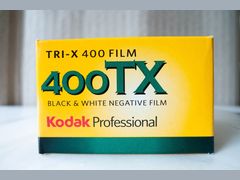 Kodak Tri-X 400 | |
|---|---|---|
| Speed | ISO 400 in every format | Speed varies between formats, per EMULSIVE |
| Look | Medium contrast, a neutral starting point that is easy to adjust | More contrast and a more distinctive look, per Digital Camera World |
| Midtones | Much better midtones, per a reader on Jim Grey's blog | More contrasty, per the same reader |
| Pushed to EI 1600 | EMULSIVE preferred the depth and detail it kept | Lovely blacks and more even grain, but too dense for that reviewer |
| Drying and scanning | Dries flat | 35mm curl and cost drove one Jim Grey reader to switch to HP5 Plus |
| Price | $9.99 to $12.99 a 35mm roll (October 2026) | At least $2 more a roll in 2022 (Jim Grey); a few dollars more, per Digital Camera World |
Pick the Ilford HP5 Plus if
- You want a forgiving, neutral negative you can push or shape later in the scan or print
- You scan at home and hate fighting curly film
- You shoot a lot and price per roll matters
Pick the Kodak Tri-X 400 if
- You want more contrast and grit straight from the lab
- You love the Tri-X look and don't mind paying more. Full breakdown: HP5 vs Tri-X
Sources: emulsive.org, digitalcameraworld.com, blog.jimgrey.net, emulsive.org, blog.jimgrey.net, blog.jimgrey.net
Formats, buying and flying with HP5 Plus
HP5 Plus comes in 35mm cassettes (EMULSIVE lists 24 or 36 exposures, but no shop checked in October 2026 listed a 24-exposure roll), 50-roll packs, 100 ft bulk reels, 120 roll film, and 4x5 and 8x10 sheets all year. Per EMULSIVE and Blue Moon Camera, other sheet sizes, plus 46mm rolls for people who spool their own 127, appear in Ilford's annual ultra large format ordering window, although Blue Moon also calls 5x7 easy to find. A 120 roll gives about 12 to 16 frames, depending on the camera's frame size.
Bulk loading saves money if you shoot a lot. A 100 ft reel costs $125.99 at Film Photography Project Store, and a commenter on Jim Grey's blog calls a bulk reel a commitment for the next 15 to 18 rolls: about $7.00 to $8.40 a roll ($125.99 divided by 18 or by 15) before reusable cassettes, against $9.99 for a boxed roll. Prices have climbed: Jim Grey found 36-exposure rolls at $8.00 to $8.50 in March 2022, and Digital Camera World put them just under $9 in January 2024. More shops in where to buy 35mm film.
At the airport, keep film in your carry-on and ask for a hand inspection, as TSA recommends. Parallax Photographic says a new generation of CT scanners has been going into airports since 2020 and, based on initial testing by Ilford, those used for cabin baggage run a high chance of damaging film of any ISO, so the hand check matters for HP5 Plus too.
Ilford's black-and-white single-use camera comes loaded with 27 exposures of HP5 Plus, an easy way to try the film.
Sources: emulsive.org, bluemooncameracodex.com, holgaphotography.com, filmphotographystore.com, blog.jimgrey.net, digitalcameraworld.com, tsa.gov, parallaxphotographic.coop, en.wikipedia.org
What a roll of HP5 Plus costs
A single 35mm roll costs $9.99 to $12.99 at the US film shops checked, and a 120 roll $9.99 to $10.50, except at The Camera Store, which lists 120 at $16.00. Boxes of 25 sheets of 4x5 run $66.99 to $78.95, and 100 ft bulk reels $125.99 to $149.20. B&H, Adorama, Freestyle and KEH could not be checked, so they aren't listed.
Film Photography Project Store
New, 35mm, 1 roll
$9.99
See listingBrooklyn Film Camera (Brooklyn, NY)
New, 35mm or 120, 1 roll
$10.50
See listingAlpine Camera
New, 35mm, 36 exposures, 1 roll
$12.99
See listingFilm Photography Project Store
New, 120, 1 roll
$9.99
See listingAlpine Camera
New, 120, 1 roll
$9.99
See listingLegacy Photo Lab (Texas)
New, 120, 1 roll
$9.99
See listingThe Camera Store
New, 120, 1 roll (page also prints 'Save $-16.00')
$16.00
See listingFilm Photography Project Store
New, 4x5 sheet film, 25 sheets
$66.99
See listingCamera Exchange (Austin and San Antonio, TX)
New, 4x5 sheet film, 25 sheets
$78.95
See listingBrooklyn Film Camera (Brooklyn, NY)
New, sold out, 4x5 sheet film
$78.00
See listingFilm Photography Project Store
New, 8x10 sheet film, 25 sheets
$195.99
See listingFilm Photography Project Store
New, 35mm bulk roll, 100 ft
$125.99
See listingMPEX
New, 35mm bulk roll, 100 ft
$149.20
See listing
Prices checked on October 28, 2026. They move every week, so treat them as a range, not a quote. Brooklyn Film Camera's 4x5 listing was sold out and doesn't state the sheet count, and Film Photography Project Store's search page doesn't state the 35mm exposure count. The Camera Store's 120 page also prints 'Save $-16.00', so treat its $16.00 as unconfirmed. Alpine Camera's 35mm page shows both 'In stock' and 'Sold out', while its search page lists the roll as in stock. At Alpine Camera's $12.99, a 36-exposure roll works out to about 36 cents a frame ($12.99 / 36) before developing.
Technical data
Film
- Contrast
- Medium (Ilford)
Formats
- Single-use camera
- 27 exposures of HP5 Plus (reintroduced 2005)
History and maker
- HP5 Plus
- Late 1989
Video reviews worth your time

Is Ilford HP5+ Overhyped? | Honest thoughts.
The Ilford HP5 Plus is an extremely versatile, forgiving, and accessible black-and-white film that excels across a wide variety of shooting conditions.

Ilford HP5+ 400 ISO Black and White Film Review | All About Film
Ilford HP5 Plus is an exceptionally versatile, reliable, and consistent 400 ISO black-and-white film that delivers outstanding results when paired with the right developer.

Why is everyone OBSESSED with HP5? ... a film stock review
Ilford HP5 Plus is a highly versatile black-and-white film that offers wide exposure latitude, pleasant grain, and reliable performance at a fair price.

Ilford HP5 - A Black & White Staple | ROLL REVIEW
Ilford HP5 Plus is a versatile, accessible, and forgiving 400 ISO black and white film that provides balanced contrast and smooth tonality across various formats.

Ilford HP5 Plus film review - 'Best-Selling B&W'
The Ilford HP5 Plus is a highly versatile and forgiving black and white film with broad latitude, ideal for both beginners and experienced photographers.
Questions people ask about the HP5 Plus
Is Ilford HP5 a good film?
For most black-and-white shooting, yes. Reviewers call it a versatile, forgiving all-rounder that pushes well and costs less than Kodak Tri-X, and only 5 of the 112 opinions collected here are negative (22 are mixed). The usual caveat: visible grain and shadows that fall off fast suit documentary, travel and night work better than landscapes or portraits that call for smooth tonality.
Sources: digitalcameraworld.com, casualphotophile.com, bluemooncameracodex.com
Is Ilford HP5 Plus a negative film?
Yes. It is a black-and-white negative film rated ISO 400, developed in standard black-and-white chemistry such as D-76, HC-110 or Rodinal, then scanned or printed. It does not go through C-41 color processing; if your lab only runs C-41, [Ilford XP2 Super](/film/ilford-xp2-super/) is the black-and-white film made for that.
Sources: en.wikipedia.org, legacy-photolab.com, en.wikipedia.org, emulsive.org
How old is Ilford HP5?
HP5 launched at Photokina in 1976 and became HP5 Plus in late 1989, so the current version has been around for more than 35 years. The HP line is older: Ilford's hypersensitive panchromatic plates appeared in 1931 and took the HP name in 1935. Sources disagree on the first HP roll film's speed: EMULSIVE and Casual Photophile say 160 ASA, Wikipedia lists 100.
Sources: emulsive.org, casualphotophile.com, en.wikipedia.org
How long does it take to fix HP5 film?
Ilford's processing chart, as reprinted by The Phoblographer, lists Ilford Rapid Fixer diluted 1+4 for 2 to 5 minutes. Fixing time depends on the fixer and its dilution, so check the instructions on yours before you start. Development time depends on the developer and the speed you shot; the table in the developing section lists EMULSIVE's times.
Sources: thephoblographer.com, emulsive.org
Can I use Ilford HP5 Plus 400 for everyday photos?
Yes. Ilford pitches it at journalism, documentary, travel, sports and indoor available light, and when a reader asked under Casual Photophile's profile whether 400 is a good general-purpose speed, James Tocchio replied that 400 is pretty much perfect for any shooting situation. Ilford also pitches its wide exposure latitude at beginners and people returning to film.
Sources: emulsive.org, casualphotophile.com
Can you push HP5 Plus to 3200?
Yes. Ilford says it can be rated up to EI 3200 with push processing, and I Want Grain says 3200 works, with more contrast and grain but intact tonality. EMULSIVE got usable results even at EI 12800 to 25600. Shoot the whole roll at the same EI and tell the lab.
Sources: camerax.com, iwantgrain.com, emulsive.org
What is the best developer for HP5 Plus?
There isn't a single best one. Ilford's chart, as reprinted by The Phoblographer, lists liquid Ilfotec DD-X for the best overall image quality at every speed from 400 to 3200, with powder ID-11 at 400 and 800 and powder Microphen at 1600 and 3200. Blue Moon Camera says D-76, Rodinal, HC-110 and Ilfosol all work well, so the choice comes down to the grain and contrast you want.
Sources: thephoblographer.com, bluemooncameracodex.com
Is HP5 Plus cheaper than Tri-X?
Usually. Jim Grey found HP5 Plus at least $2 a roll cheaper than Tri-X in 2022, Khurt Williams of Island in the Net says a 36-exposure roll costs less than Tri-X or T-Max 400, and Digital Camera World says Tri-X comes in a few dollars more per roll. In October 2026, 35mm HP5 Plus runs $9.99 to $12.99 a roll at US film shops.
Sources: blog.jimgrey.net, islandinthenet.com, digitalcameraworld.com, filmphotographystore.com, alpinecamerausa.com
What people compare it with
The classic rival: more contrast and a more distinctive look, per Digital Camera World, for a few dollars more a roll.
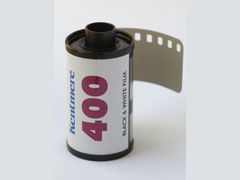
The budget 400-speed film from the same company. A 2022 commenter on Jim Grey's blog says it runs a couple of dollars a roll less; Kelsey Smith says it lacks HP5 Plus's fine grain and tonal richness.
Ilford Delta 400
Ilford's finer-grained 400 film. Digital Camera World praises its fine grain and The Phoblographer got sharper prints from it, but Digital Camera World also says it can't be pushed as far and forgives mistakes less.
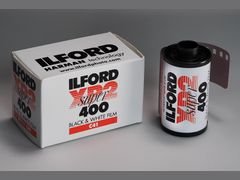
A 400-speed black-and-white film developed in C-41 color chemistry, for when only a color lab is nearby.
Every source behind this page
Read them yourself. How we pick and count them is in our methodology.
Show all 44 sources
Manuals and references 16
- alpinecamerausa.com: Ilford HP5 Plus 400 35mm Black & White Film, 36 Exp.
- alpinecamerausa.com: Search: 5 results found for "hp5"
- brooklynfilmcamera.com: Film Developing in Brooklyn - Drop-off & Mail
- brooklynfilmcamera.com: Search
- emulsive.org: Film review: ILFORD HP5 PLUS in 35mm, 120 and sheet formats
- en.wikipedia.org: Ilford HP
- en.wikipedia.org: Ilford Photo
- legacy-photolab.com: Ilford HP5 Plus ISO 400 120 B&W Film - Medium Format
- mpex.com: Ilford HP5 Plus 400 135 100'
- parallaxphotographic.coop: Guide To Travelling With Film
- thecamerastore.com: Ilford HP5 Plus 120
- thedarkroom.com: 35mm Film Developing by Mail - From $14
- camerax.com: Ilford HP5 PLUS 4x5 Black and White Print Film (25 Sheets)
- filmphotographystore.com: Search: 27 results found for "hp5"
- richardphotolab.com: Developing
- tsa.gov: Film
Independent blogs 15
- Blue Moon Camera Codex: Film Friday Ilford HP5+ review: Film Friday Ilford HP5 Film Review with Sample Photos
- Kelsey Smith Photography: Ilford HP5 Plus review: Ilford HP5 Plus Review: The Best Black-and-White Film for All Photographers - Kelsey Smith | Film Photographer
- I want Grain: Ilford HP5 Plus Review: Ilford HP5 Plus Review
- Parallax Photographic Coop: Ilford HP5 At 1600 Film Review: Ilford HP5 At 1600 Film Review
- Parallax Photographic Coop: Ilford HP5 Plus 400 120 Film Review: Ilford HP5 Plus 400 120 Film Review
- Parallax Photographic Coop: Ilford HP5 Plus 400 Film Review: Ilford HP5 Plus 400 Film Review
- Down the Road (Jim Grey): Ilford HP5 Plus could be the best value in film today: Ilford HP5 Plus could be the best value in film today
- Down the Road (Jim Grey): Ilford HP5 Plus at EI 1600: Ilford HP5 Plus at EI 1600
- Down the Road (Jim Grey): Ilford HP5 Plus at EI 800: Ilford HP5 Plus at EI 800
- Down the Road (Jim Grey): I love pushing HP5 Plus to 1600!: I love pushing HP5 Plus to 1600!
- Down the Road (Jim Grey): Downtown South Bend at night on Ilford HP5 Plus pushed to 1600: Downtown South Bend at night on Ilford HP5 Plus pushed to 1600
- Down the Road (Jim Grey): When you shoot Ilford film and develop it in Ilford developer, harmony breaks out: When you shoot Ilford film and develop it in Ilford developer, harmony breaks out
- Myles Katherine Photography: The 5 Best and Most Affordable Black and White Film Stocks: ilford hp5 plus 400 review
- Holga Photography: Ilford HP5 Plus 120 Film review: Ilford HP5 Plus 120 Film
- Island in the Net: Ilford HP5 memories: Ilford HP5 400 Memories (Old Negatives)
Editorial reviews 8
- Casual Photophile: Ilford HP5 Plus Black and White Film Profile: Ilford HP5 Plus
- Digital Camera World: Ilford HP5 Plus 35mm film review: Ilford HP5 Plus 35mm film review
- The Phoblographer: Film Emulsion Review: Ilford HP5 Plus 400: Film Emulsion Review
- EMULSIVE: Film review: ILFORD HP5 PLUS in 35mm, 120 and sheet formats: Film review: ILFORD HP5 PLUS in 35mm, 120 and sheet formats
- EMULSIVE: Film review: finding my 'do anything' film for 4x5, ILFORD FP4 PLUS and HP5 PLUS: Film review: finding my ‘do anything’ film for 4x5....a tale of ILFORD FP4 PLUS and HP5 PLUS
- EMULSIVE: ILFORD HP5 PLUS vs Kodak Tri-X 400 at EI 1600 in the Moscow Metro with the Mamiya 7II: ILFORD HP5 PLUS vs Kodak Tri-X 400 at EI 1600 in the Moscow Metro with the Mamiya 7II
- EMULSIVE: Push processing ILFORD HP5 PLUS from EI 800 to EI 6400: Push processing ILFORD HP5 PLUS from EI 800 to EI 6400
- EMULSIVE: 5 Frames of New York City on ILFORD HP5 PLUS: 5 Frames... Of New York City on ILFORD HP5 PLUS (35mm format / EI 320 / Nikon FM2 + Nikon Nikkor 50mm f/1.2) - by Ray Quy
Video reviews 5
- Aperture Dundee: Is Ilford HP5+ Overhyped? | Honest thoughts.
- David Hancock: Ilford HP5+ 400 ISO Black and White Film Review | All About Film
- Ribsy: Why is everyone OBSESSED with HP5? ... a film stock review
- Analog Resurgence: Ilford HP5 - A Black & White Staple | ROLL REVIEW
- Analogue Wonderland: Ilford HP5 Plus film review - 'Best-Selling B&W'
Keep reading
Film stocks
HP5 vs Tri-X: reviewers find Tri-X 400 punchier, HP5 Plus flatter and more forgiving. Grain, pushing, developing times and October 2026 US prices.
Film stocks
Kodak Tri-X 400 is an ISO 400 black-and-white film with classic grain and wide latitude, $8.99 to $10.41 a roll. What 116 opinions say about grain and pushing.
Film stocks
Ilford HP5 Plus is the best black and white film for most people. Compare Tri-X, Kentmere 400, Ektapan (T-Max), XP2 Super and Delta 3200, with US prices.
Film stocks
How to push film: what a stop means, what to set on your camera, how to tell the lab, one-stop fees from $0 to $4, home development times and how to pull film.
Developing and scanning
How to develop film at home: the gear and chemistry you need with October 2026 prices, black and white and C-41 steps with times, and fixes for bad negatives.
Film stocks
Kentmere 400 is Harman's budget ISO 400 black and white film, $8.39 to $10.99 a 36-exposure roll. What 135 opinions say about grain, contrast and pushing.