Explainer
35mm vs 120 Film: Negative Size, Cost per Shot and Which to Pick
The short answer
35mm film makes a 24 x 36 mm negative and gives 12, 24 or 36 shots a roll, while 120 film is about 61.5 mm wide and, at the common 6x4.5 to 6x9 frame sizes, makes a negative roughly 2.7 to 5.4 times larger but gives only 8 to 16 shots a roll.
Pick 35mm for cheaper frames (about $0.44 each on Kodak Portra 400) and the widest choice of cameras; pick 120 for more detail, less visible grain and shallower depth of field, at about $0.92 to $1.48 a frame on the same film.
- 35mm frame
- 24 x 36 mm (864 sq mm)thedarkroom.com
- 120 film width
- About 61.5 mm (2.4 in), no sprocket holesthedarkroom.com
- Shots per 35mm roll
- 12, 24 or 36thedarkroom.com
- Shots per 120 roll
- 16 at 6x4.5, 12 at 6x6, 10 at 6x7, 8 at 6x9thedarkroom.com
- Develop + scan, The Darkroom
- $14 for either format (Oct 2026)thedarkroom.com
- Portra 400 on 120, per frame
- $1.23 at 6x6, against $0.44 on 35mm (Oct 2026)filmphotographystore.com
35mm vs 120 film at a glance
| 35mm (135) | 120 (medium format) | |
|---|---|---|
| Film width | 35 mm strip with sprocket holes | About 61.5 mm (2.4 in), no sprocket holes |
| Frame size | 24 x 36 mm (half-frame: 18 x 24 mm) | From 56 x 41.5 mm (6x4.5) to 56 x 84 mm (6x9), set by the camera |
| Negative area vs 35mm | 1x (864 sq mm) | About 2.7x (6x4.5) to 5.4x (6x9) |
| Shots per roll | 12, 24 or 36 (up to 72 on half-frame) | 16 (6x4.5), 12 (6x6), 10 (6x7), 8 (6x9) |
| Packaging | Metal cassette, rewound after the last frame | Film on paper backing wound on a spool, never rewound |
| Film cost per frame, Kodak Portra 400 | About $0.44 | About $0.92 (6x4.5) to $1.48 (6x7) |
| Develop + standard scans at The Darkroom | $14 | $14 |
| Where to develop | The most common format at labs | Mail-in labs such as The Darkroom; most drugstore counters don't take it or send it out |
| Normal lens | 40, 50 or 55 mm | 75 mm (6x4.5), 80 mm (6x6), 90 mm (6x7) |
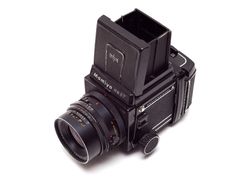
| Example cameras | Canon AE-1, Pentax K1000, Olympus Stylus | Holga 120N, Hasselblad 500 series, Mamiya RB67, Rolleiflex |
Pick the 35mm (135) if
- You are learning: more frames per roll and a lower cost per shot make mistakes cheaper.
- You want small, light cameras, from point-and-shoots to SLRs.
- You shoot street, travel or everyday snapshots and want 36 frames before reloading.
- You want the format most labs and drugstore counters handle, and the widest choice of cameras.
Pick the 120 (medium format) if
- You print big or crop hard and want less visible grain.
- You want shallow depth of field at normal framing, or a square 6x6 frame.
- You shoot slowly and deliberately, for portraits or landscapes.
- You accept paying about 2 to 3.6 times more per frame for film.
Sources: thedarkroom.com, thedarkroom.com, en.wikipedia.org, en.wikipedia.org, filmphotographystore.com, filmphotographystore.com, filmdeveloping.co, club35.co, longweekendgear.com
What do 35mm, 135 and 120 mean?
35mm and 135 are the same film. 35mm is the width of the strip; 135 is the catalog number Kodak gave its daylight-loading cassette in 1934, according to The Darkroom. Any camera sold as a 35mm camera takes 135 film.
120 is a roll-film spec, not a measurement. Kodak introduced it in 1901 for the Brownie No. 2, and Hasselblad notes the number says nothing about the film's width or the shape of the photo. The film is about 61.5 mm wide, so '120mm film' is a misnomer.
Medium format means any film bigger than 35mm and smaller than 4x5 sheet film. The Darkroom says 120 is the only medium format roll film still in regular production, so in practice 'medium format film' almost always means 120.
35mm overtook 120 in popularity by the late 1960s, and The Darkroom says it is still by far the most common format, with 120 second. Both are in full production from Kodak, Ilford, Fujifilm, Lomography and others.
Sources: thedarkroom.com, store-na.hasselblad.com, en.wikipedia.org, en.wikipedia.org, thedarkroom.com, thedarkroom.com
How much bigger is a 120 negative than 35mm?
It depends on the camera, because 120 film has no fixed frame size. Every 120 frame is about 56 mm tall, and the camera decides how long each one is: a 6x4.5 camera fits 15 or 16 frames on a roll, a 6x9 only 8. That is why sources quote such different ratios. Wikipedia says medium format is 2 to 6 times the size of 35mm, and The Darkroom says 3 to 4 times on one page and 3 to 5 times on another.
Doing the math with Wikipedia's actual frame sizes against a 35mm frame of 864 sq mm settles it: 6x4.5 is about 2.7 times the area, 6x6 about 3.6 times, 6x7 about 4.5 times and 6x9 about 5.4 times. Half-frame 35mm goes the other way, with half the area of a normal frame.
| Format | Actual frame | Area | vs 35mm | Shots per roll | Shape |
|---|---|---|---|---|---|
| Half-frame 35mm | 18 x 24 mm | 432 sq mm | 0.5x | Up to 72 | 3:4 (vertical) |
| 35mm (135) | 24 x 36 mm | 864 sq mm | 1x | 12, 24 or 36 | 2:3 |
| 120 at 6x4.5 (645) | 56 x 41.5 mm | 2,324 sq mm | About 2.7x | 15 or 16 | 4:3 |
| 120 at 6x6 | 56 x 56 mm | 3,136 sq mm | About 3.6x | 12 | 1:1 square |
| 120 at 6x7 | 56 x 70 mm | 3,920 sq mm | About 4.5x | 10 | About 4:5 |
| 120 at 6x9 | 56 x 84 mm | 4,704 sq mm | About 5.4x | 8 | 2:3, same as 35mm |
Wikipedia's normal-lens page lists 6x7 as 56 x 68 mm, so expect small differences between cameras and sources.
Sources: en.wikipedia.org, en.wikipedia.org, thedarkroom.com, thedarkroom.com, thedarkroom.com, store-na.hasselblad.com, club35.co
Which 120 frame size should you pick: 6x4.5, 6x6 or 6x7?
You pick the frame size when you pick the camera. The film is identical, and the backing paper carries three rows of frame numbers, for 6x4.5, 6x6 and 6x9, that older cameras show through a red window.
6x4.5 (645) gives the most frames, 15 or 16, and is the smallest and least expensive 120 size. Cameras range from the Fujifilm GA645, an autofocus point-and-shoot, to the Mamiya 645 system. At about 2.7 times the area of 35mm, it splits opinion on Fstoppers: one commenter calls 645 barely medium format next to 6x6, 6x7 or 6x9, while another says it holds as much usable film area as 6x6 in a 4:5 print.
6x6 gives 12 square frames. 6x7 gives 10 frames and enlarges almost exactly to 8x10 inch paper, which is why Wikipedia says its fans call it the ideal format. 6x9 gives 8 frames with the same 2:3 shape as 35mm.
Sources: thedarkroom.com, en.wikipedia.org, longweekendgear.com, fstoppers.com
Is 120 film more expensive than 35mm?
Per roll, often not. Per frame, yes. Ilford HP5 Plus is $10.79 in both formats at Film Developing Co in Eau Claire, Wisconsin, and Kodak Portra 400 works out to $14.80 a roll in 120 against $16.00 in 35mm at the Film Photography Project store. But a 120 roll holds 8 to 16 frames instead of 36, so each shot costs about 2 to 3.6 times as much at 6x4.5 to 6x7. Hasselblad says the same: cost per photo is generally higher on 120.
Add developing and the gap stays. With Portra 400 and The Darkroom's $14 develop and scan, 35mm comes to $16.00 + $14 = $30.00 for 36 frames, about $0.83 each; 120 at 6x6 comes to $14.80 + $14 = $28.80 for 12 frames, about $2.40 each, before shipping. To run the numbers for your own film and lab, use the film cost per photo calculator.
| Film | 35mm, 36 exp: per roll | 35mm: per frame | 120: per roll | 120 per frame at 6x4.5 / 6x6 / 6x7 |
|---|---|---|---|---|
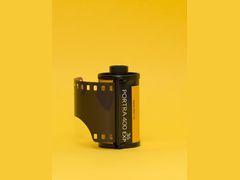 Kodak Portra 400 | $16.00 ($79.99 for 5) | $0.44 | $14.80 ($73.99 for 5) | $0.92 / $1.23 / $1.48 |
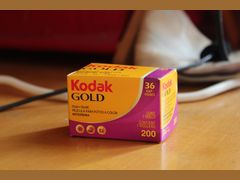 Kodak Gold 200 | $8.33 ($24.99 for 3) | $0.23 | $8.00 ($39.99 for 5) | $0.50 / $0.67 / $0.80 |
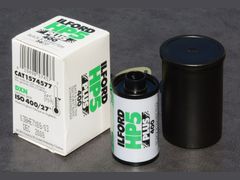 Ilford HP5 Plus 400 | $10.79 | $0.30 | $10.79 | $0.67 / $0.90 / $1.08 |
Most popular stocks come in both sizes, but not all: Kodak Gold 200 only arrived in 120 in March 2022, and Fujifilm Pro 400H in 120 has been discontinued.
Sources: filmphotographystore.com, filmphotographystore.com, filmphotographystore.com, filmphotographystore.com, filmdeveloping.co, filmdeveloping.co, thedarkroom.com, store-na.hasselblad.com, kosmofoto.com, everpresent.com
Does 120 film cost more to develop, and where can you take it?
At the US mail-in labs we checked, 120 costs about the same to develop as 35mm, within a dollar or two. The Darkroom in San Clemente, California charges $14 to develop and scan either format. Richard Photo Lab in Santa Clarita, California charges $10 develop-only for both, and its Noritsu process-and-scan starts at $23.98 for 135 and $21.98 for 120. Boutique Film Lab in Nashville charges $6 for C-41 process-only on 35mm and $7 on 120, and $17 versus $13 for processing plus a set of 4x6 prints, where a 120 roll has fewer frames to print (prices checked October 2026).
Everpresent says labs charge more for 120 and that not every lab takes it, so check before you send. The real limit is drop-off: The Darkroom says most drugstore and big-box photo counters don't accept 120 at all or send it to an outside lab. See our guides to CVS, Walgreens and Walmart developing and the best mail-in film labs.
Sources: thedarkroom.com, thedarkroom.com, richardphotolab.com, boutiquefilmlab.com, everpresent.com
Is 120 film sharper, with less grain?
On the same film stock, the grain is the same size; you just see less of it. Grain per square inch is the same on 120 and 35mm, Analogue Wonderland explains, but because the whole image is bigger, the grain is less noticeable. Hasselblad puts it the other way around: a larger negative needs less enlargement to make a print of the same size. That is why guides such as Everpresent and Club 35 simply say 120 has finer grain.
Print size is where the difference shows. A 35mm negative needs about 8x magnification for an 8x10 print, as one Fstoppers commenter puts it, while a 6x7 negative fits 8x10 paper almost exactly. At small sizes the gap narrows: a member of The Photo Forum says 8x10 prints from 35mm and 6x7 may show no difference in perceived sharpness, yet the prints still look different.
Sources: analoguewonderland.co.uk, store-na.hasselblad.com, fstoppers.com, en.wikipedia.org, thephotoforum.com, everpresent.com, club35.co
How many megapixels is 35mm vs 120 film?
There is no agreed number. Shotkit's chart puts 35mm at about 20 MP and 120 at about 80 MP (60 MP for 6x6, 120 MP for 6x9). PictureCorrect estimates 20 to 22 MP for high-end 35mm but 10 to 14 MP for an average 35mm photo, and says medium format often rivals or beats 40 to 50 MP digital cameras.
In practice, the scan decides your file size, and lab scans can flip the order. The Darkroom's super scan is 4492 x 6774 pixels for 35mm (about 30 MP) but 3533 x 4824 for 6x4.5 (about 17 MP), and a Noritsu HS-1800 lab scanner gives 30.4 MP for a 35mm frame versus 17 MP for 645. Club 35 notes that 35mm may need a 4,000 ppi scan to match the pixel size of a 120 scan at 2,000 ppi. If resolution matters, ask your lab for the pixel dimensions of each format before you order.
Sources: shotkit.com, picturecorrect.com, thedarkroom.com, luckybox.substack.com, club35.co
Does medium format have shallower depth of field?
Yes, at the same framing and f-number. A bigger negative needs a longer lens to show the same view, and Hasselblad explains that the longer lens can then give shallower depth of field. Wikipedia lists typical normal lenses of 40, 50 or 55 mm on 35mm, 75 mm on 6x4.5, 80 mm on 6x6 and 90 mm on 6x7.
Medium format lenses are generally slower than 35mm lenses, but Fstoppers notes some still give depth of field like an f/1.2 to f/1.4 lens on 35mm.
Sources: store-na.hasselblad.com, en.wikipedia.org, fstoppers.com
How do 35mm and 120 cameras compare in size and handling?
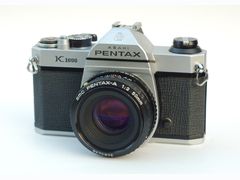 K1000
35mm covers nearly every SLR and point-and-shoot, from the Canon AE-1 and Pentax K1000 to the Olympus Stylus, plus disposable cameras and the Kodak Ektar H35, a half-frame camera that can double the shots per roll.
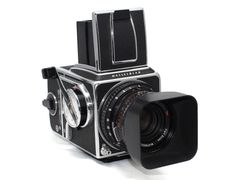
120 cameras run from the Holga 120N and Diana F+ to Rolleiflex and Yashica twin-lens reflexes, the Hasselblad 500 series, Mamiya RB67, RZ67 and 645, and the Pentax 67. The big systems are heavy: Club 35 lists the Mamiya RB67 at 2.8 kg (about 6.2 lb) and the Hasselblad 500C/M at 2.2 kg (about 4.9 lb), against 590 g (about 1.3 lb) for a Leica MP. Many of them take interchangeable film backs, so you can switch film stocks mid-roll.
For speed and portability, Long Weekend says 35mm wins, with smaller kits and quicker handling, while 120 rigs are slower, heavier and better for deliberate shooting. Is 120 too slow for events? Its writer says not necessarily: plenty of wedding and portrait pros use 6x4.5 or 6x7, as long as you plan your pace and bring extra backs or rolls.
Handling the film differs too. 120 has no metal cartridge, only backing paper wound on a spool, so it is never rewound: roll-film cameras have a winding knob but no rewind knob, and the empty spool becomes the take-up spool for the next roll.
Sources: thedarkroom.com, thedarkroom.com, club35.co, store-na.hasselblad.com, rolandandcaroline.co.uk, longweekendgear.com
How to load and unload a roll of 120 film
Coming from 35mm, the big change is that nothing goes back into a canister. For 35mm cameras, see how to load film.
- 1
Get out of direct sun
Load away from strong sunlight. 120 relies on its backing paper, not a cassette, to keep light out.
- 2
Place the fresh roll
Move the empty spool to the take-up side if needed, put the new roll in the supply position and remove its paper tab.
- 3
Thread the leader
Pull the backing-paper leader across the film path and push its tongue into the slot of the take-up spool.
- 4
Wind to the start arrow
Wind with even tension until the start arrow on the backing paper lines up with the camera's loading mark, then close the back.
- 5
Advance to frame 1
On a red-window camera, keep winding until the number 1 shows in the window, then wind to the next number after every shot. Other cameras advance differently, so follow the camera's manual.
- 6
Finish and seal
After the last frame, wind until all the backing paper is on the take-up spool. Remove it holding it tight and seal it with the gummed strip. Never rewind.
- 7
Store it out of bright light
With no cassette, an exposed roll should stay out of bright light, The Darkroom advises. Label it before mailing it to a lab and reuse the empty spool as your next take-up spool.
Sources: store-na.hasselblad.com, rolandandcaroline.co.uk, thedarkroom.com
Can you shoot 35mm film in a 120 camera?
Yes, in simple box cameras like the Holga. The Film Photography Project sells a 35mm to 120 adapter kit for $29.99 (October 2026) that lets you load a 35mm cassette in a 120 camera, so the image runs across the sprocket holes for a panoramic look.
Frames come out about 3.5 x 6 cm in a 6x6 camera, 3.5 x 7 cm in 6x7 and 3.5 x 9 cm in 6x9. The store says the adapters won't work in cameras with more involved loading, such as the Fuji GA645, Mamiya 645, Mamiya 7 or RB67.
Sources: filmphotographystore.com
Questions people ask
How many pictures do you get on a roll of 120 film?
It depends on the camera's frame size: 16 at 6x4.5 (15 on some cameras), 12 at 6x6, 10 at 6x7, 8 at 6x9 and 6 at 6x12. The roll is the same; the camera decides how much of it each frame uses.
Sources: thedarkroom.com, en.wikipedia.org
Which is better for beginners, 35mm or 120?
Start with 35mm. Long Weekend calls it the format most users start with, and Film Developing Co calls it the easier and more forgiving format to learn on, in camera cost as well as film cost. A 36-frame roll also leaves more room for mistakes. When Kodak released Gold 200 in 120 in 2022, its manager of film capture products pitched it as a chance for aspiring photographers to make the jump from 35mm to medium format.
Sources: filmdeveloping.co, longweekendgear.com, kosmofoto.com
Can CVS, Walgreens or Walmart develop 120 film?
Most won't develop it themselves. The Darkroom says most drugstore and big-box counters don't accept 120 or send it to a third-party lab. Mail-in labs such as The Darkroom and Richard Photo Lab develop it, often for the same price as 35mm.
Sources: thedarkroom.com, richardphotolab.com
Is 120 film harder to develop at home?
Not necessarily. On Talk Photography, one home developer finds 120 easier to load on a reel than 35mm: it is shorter, has no sprocket holes and has no leader to cut off. Another tip from the same thread: make sure the reel is completely dry, because any dampness can jam the film.
Sources: talkphotography.co.uk
Do 35mm and 120 come in the same film stocks?
Many of the same emulsions come in both, including Kodak Portra 400, Kodak Gold 200 and Ilford HP5 Plus. Availability differs: Kodak only released Gold 200 in 120 in 2022, and Fujifilm Pro 400H in 120 is discontinued.
Sources: kosmofoto.com, everpresent.com, filmphotographystore.com, filmphotographystore.com, filmphotographystore.com, filmphotographystore.com, filmdeveloping.co, filmdeveloping.co
What is 220 film, and can you still buy it?
220 is the same width as 120 but about twice as long, so it gives twice the exposures. It was introduced in 1965 and is no longer manufactured, which leaves 120 as the only medium format roll film in regular production.
Sources: en.wikipedia.org, thedarkroom.com
Is 645 really medium format?
Yes, it uses 120 film, but it is the smallest 120 frame size at about 2.7 times the area of 35mm. Commenters on Fstoppers disagree: one calls 645 barely medium format next to 6x6, 6x7 or 6x9, while another says it holds as much usable film area as 6x6 in a 4:5 print.
Sources: fstoppers.com, en.wikipedia.org
What print sizes do 35mm and 120 negatives make?
It depends on the lab. Film Developing Co matches print size to the format: 35mm prints at 4x6, while 120 prints follow the frame shape, 6x4.5, 6x6, 6x7 or 6x8, instead of being cropped to a standard size. For enlargements, Wikipedia notes that 6x7 enlarges almost exactly to 8x10 inch paper.
Sources: filmdeveloping.co, en.wikipedia.org
Sources
Every fact on this page comes from one of these. How we choose and check sources is in our methodology.
Show all 32 sources
retailer 15
- The Darkroom: Film formats guide
- The Darkroom: 120 film developing and format guide
- The Darkroom: 35mm film developing and format guide
- The Darkroom: Info on scanning your film
- The Darkroom: 35mm and 120 medium format film comparison
- Richard Photo Lab: Pricing
- Boutique Film Lab: Pricing
- Film Photography Project store: 35mm to 120 film adapter kit
- Film Photography Project store: Kodak Portra 400 35mm 5-pack
- Film Photography Project store: Kodak Portra 400 120 5-pack
- Film Photography Project store: Kodak Gold 200 35mm 3-pack
- Film Photography Project store: Kodak Gold 200 120 5-pack
- Film Developing Co: Ilford HP5 Plus 120
- Film Developing Co: Ilford HP5 Plus 35mm 36 exp
- Film Developing Co: 35mm vs. 120 film
Independent blogs 6
Manuals and references 4
Editorial reviews 4
Forums 2
official 1
Keep reading
Developing and scanning
A roll of 35mm film costs $5 to $11.50 to develop at US labs, or $11.50 to $29 with scans. Prices from 12 labs and the big chains, checked October 2026.
Film stocks
Film is expensive because a few low-volume factories face rising silver, chemical and shipping costs. See October 2026 prices and how to shoot film for less.
Film cameras
What 156 owner and reviewer opinions say about the Mamiya RB67: kit prices of $599.95 to $900 (Oct 2026), Pro-S vs Pro-SD, common faults and repair costs.
Film stocks
Ilford HP5 Plus is an ISO 400 black-and-white film known for latitude and easy pushing. What 112 opinions say, how to shoot it, and US prices from $9.99.
Developing and scanning
How to develop film at home: the gear and chemistry you need with October 2026 prices, black and white and C-41 steps with times, and fixes for bad negatives.
Developing and scanning
Scanning film with a DSLR, step by step: gear and October 2026 prices, exact camera settings, how it compares with a flatbed and fixes for common scan problems.