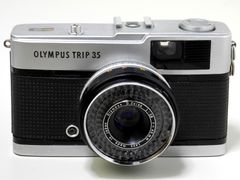
Comparison
Half-Frame Cameras: Pentax 17 vs Kodak Ektar H35
The short answer
A half-frame camera splits each 35mm frame in two, so a 36-exposure roll gives you 72 vertical pictures and a 24-exposure roll gives 48.
The two new cameras compared here are the Pentax 17, $499.95 to $500 at US stores in October 2026, with a sharp 25mm f/3.5 lens, zone focus and automatic exposure, and the Kodak Ektar H35, $46 to $50, with one shutter speed, one aperture and fixed focus. Get the Pentax if image quality and low light matter; get the H35 for cheap daylight snapshots.
- Pictures per roll
- 72 from 36 exposures, 48 from 24ricoh-imaging.co.jp
- Half-frame picture size
- About 18x24mm (Ricoh says 17x24mm)digitalcameraworld.com
- Pentax 17 price (Oct. 2026)
- $499.95 at Glazer's Cameraglazerscamera.com
- Kodak Ektar H35 price (Oct. 2026)
- $46 at Glazer's Cameraglazerscamera.com
- Pentax 17 lens
- 25mm f/3.5, 37mm equivalentricoh-imaging.co.jp
- Kodak Ektar H35 lens and shutter
- 22mm f/9.5 acrylic, 1/100 s onlyfilmphotographystore.com
What is a half-frame camera?
A half-frame camera takes regular 35mm film but uses half of each standard 36x24mm frame per picture, so every photo is about 18x24mm. Ricoh gives the Pentax 17's frame as 17x24mm, so quoted sizes differ slightly. Either way, you get double the count on the box: 72 pictures from a 36-exposure roll, 48 from a 24.
The frame sits on its side, so holding the camera the normal way gives a vertical picture in a 3:4 shape instead of the 3:2 of regular 35mm. Ricoh pitches that as a feature: the Pentax 17 frames like a smartphone held upright. Turn the camera sideways when you want a horizontal shot.
The format is not new. The Olympus Pen brought half-frame to Japan in September 1959, and the format was popular through the 1960s. The current revival comes from new cameras: the Pentax 17, the Kodak Ektar H35, the Alfie Tych+ and the Lomography Lomourette.
The trade-off is film area. Each picture uses half the negative, so grain looks bigger. Digital Camera World suggests a lower-ISO film if you want less grain.
Sources: digitalcameraworld.com, ricoh-imaging.co.jp, ilottvintage.com, techradar.com
Pentax 17 vs Kodak Ektar H35: specs side by side
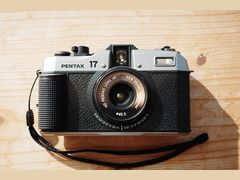 Pentax 17 | Kodak Ektar H35 | |
|---|---|---|
| Price, US stores (Oct. 2026) | $499.95 to $500 | $46 to $50 |
| Released | June 17, 2024 | 2022 |
| Made by | Ricoh Imaging (Pentax) | Reto Production, under Kodak license |
| Lens | 25mm f/3.5, 3 elements in 3 groups (Ricoh: 37mm equivalent) | 22mm f/9.5, 2-element optical-grade acrylic |
| Focus | Manual zone focus, 6 zones from 0.25m (0.82 ft) to infinity; fixed in Auto mode | Fixed; Tom's Guide lists 1m to infinity, an owner says past 1.5m |
| Shutter | Electronic, 1/350 to 4 seconds plus bulb; set by the camera in every mode except bulb | 1/100 second only |
| Exposure control | 7 shooting modes, ±2 EV compensation in 1/3 steps | None; relies on print film's latitude |
| Film speed setting | ISO 50 to 3200, set by hand | None |
| Flash | Built in, guide number 6 (meters, ISO 100), about 9 seconds to charge | Built in, useful to about 5 ft per an owner; no auto power-off |
| Battery | One CR2 lithium (rechargeable CR2 not supported), about 10 rolls of 36 with 50% flash, per Ricoh | One AAA alkaline; Tom's Guide got a full 72-shot roll from one |
| Long exposures | Bulb mode with a remote switch (Ricoh CS-205, $50 per one owner's blog) | No; the H35N adds bulb and a tripod hole |
| Weight | About 290g (10.2 oz) without film and battery | 100g (about 3.5 oz), ABS plastic body |
| Rewind | Crank; mid-roll rewind possible | Manual; forcing it can break the camera, per the Film Photography Project store |
Pick the Pentax 17 if
- You want sharp pictures you can crop or enlarge, not just phone-size scans
- You shoot indoors, at dusk or at night, where automatic shutter speeds down to 4 seconds and bulb mode help
- You want some control: zone focus, exposure compensation and ISO 50 to 3200
- You plan to shoot a lot of film and want a camera to grow into
Pick the Kodak Ektar H35 if
- You mostly shoot outdoors in daylight and want 72 cheap snapshots per roll
- You are trying film for the first time and want to spend $50 or less
- You want a 100g camera you will not worry about at a party or on a trip
Sources: ricoh-imaging.co.jp, kamerastore.com, filmphotographystore.com, tomsguide.com, 35mmc.com, digitalcameraworld.com, kodak.com, glazerscamera.com, glazerscamera.com
Image quality: how big is the gap between the Pentax 17 and the H35?
The lens is what you pay for. TechRadar says the Pentax 17 costs more than the Kodak H35 because its lens is much sharper, and CameraGX, which shot both from the same spot in Atlanta, says the Pentax costs 10 times as much but the difference in image quality is huge.
The H35's 22mm lens is two pieces of acrylic at a fixed f/9.5. Digital Camera World found its sharpness rough, especially at distance, with the best results around 1.5 to 2 meters (about 5 to 6.5 feet) from the subject.
The price gap is wide, too. At October 2026 US prices, $499.95 against $46 to $50 works out to roughly 10 to 11 times as much. Kamerastore, reviewing the Pentax at its June 2024 launch, said it costs over 5 times what the Kodak does and did not see the two as direct competitors.
Sources: techradar.com, cameragx.com, digitalcameraworld.com, digitalcameraworld.com, kamerastore.com
Focus and exposure: zone focus vs fixed everything
Neither camera has autofocus. The Pentax 17 uses zone focus: you turn a ring to one of six distance zones, from 0.25m (0.82 ft) up close to infinity. In the full Auto mode, focus is fixed and the ring is out of the loop, which keeps it as simple as a point-and-shoot.
Exposure on the Pentax is automatic. The camera always picks the shutter speed, from 1/350 to 4 seconds, except in bulb; you steer it with seven shooting modes and exposure compensation of ±2 EV in 1/3-stop steps. You set the film speed by hand, from ISO 50 to 3200, to match the roll you loaded.
Zone focus is where reviewers report trouble. Tom's Guide calls focusing hit-or-miss, and a Long Weekend reviewer remembers blurry close-ups even with the proper settings. The Phoblographer's list of cons: no real manual controls beyond exposure compensation, no autofocus, no weather resistance and a 1/350 top shutter speed.
The Ektar H35 has no exposure or focus controls: 1/100 second at f/9.5, focus fixed. It counts on color print film's exposure latitude, which TechRadar puts at about two stops either way. CameraGX calls it a sunny-16 camera whose best pictures come on bright days, mid-morning and mid-afternoon.
Sources disagree on how close the H35 can focus. Tom's Guide lists 1m to infinity, while Eric Woods at 35mmc says anything past 1.5 meters is in focus. Staying about 5 feet or more from your subject covers both.
The Pentax 17 has no autofocus and no manual shutter speeds outside bulb. The Ektar H35 has one shutter speed and one aperture, so nothing adjusts to the light, even though Tom's Guide's spec table lists its exposure as automatic.
Sources: ricoh-imaging.co.jp, kamerastore.com, tomsguide.com, longweekendgear.com, thephoblographer.com, techradar.com, cameragx.com, tomsguide.com, 35mmc.com
Which half-frame camera is better indoors and at night?
The Pentax 17, by a wide margin. Its shutter can stay open up to 4 seconds on its own, it meters down to EV 2.5 at ISO 100, and in Auto mode the flash fires by itself in dim light. The flash has a guide number of 6 (meters, ISO 100) and takes about 9 seconds to recharge.
For longer exposures there is bulb mode, which takes a remote switch. One owner's blog says Ricoh lists its CS-205 switch at $50 and that a generic one under $15 works just as well.
The H35 can only add light with its flash. With 1/100 second at f/9.5 locked in, there is no way to let more light reach the film, so indoors and at night you depend on a flash that an owner says is good to about 5 feet. Its flash has no auto power-off either, so forgetting to switch it off can drain the AAA battery, as Digital Camera World warns.
If you want a cheap half-frame camera for night shots, the step-up Kodak Ektar H35N adds a bulb shutter and a tripod hole.
Sources: ricoh-imaging.co.jp, ricoh-imaging.co.jp, kamerastore.com, randomphoto.blogspot.com, 35mmc.com, digitalcameraworld.com, kodak.com
What film should you use in a half-frame camera?
Any regular 35mm film works. The Pentax 17 handles ISO 50 to 3200 as long as you set the ISO to match the roll, so the choice comes down to light and look.
For the H35, sources disagree. The Film Photography Project store recommends ISO 100 or 200, Tom's Guide says ISO 200 or 400, and Digital Camera World says at least ISO 400, naming Kodak UltraMax and Fuji Superia X-Tra. Since the exposure never changes, match the film to your light: Kodak Gold 200 for bright sun, Kodak UltraMax 400 for shade, overcast days and flash shots indoors.
Half-frame also halves the film cost per picture. A $8.99 roll of Gold 200 spread over 72 pictures is about $0.12 each, before developing. More on how film speed works in film ISO explained.
| Film | Store | Price, 36 exp. | Per picture (72 shots) |
|---|---|---|---|
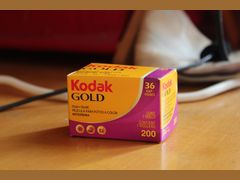 Kodak Gold 200 | Film Photography Project store | $8.99 | About $0.12 |
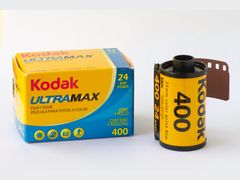 Kodak UltraMax 400 | Glazer's Camera | $10.49 | About $0.15 |
| Kodak UltraMax 400 | Reformed Film Lab | $11.00 | About $0.15 |
Sources: ricoh-imaging.co.jp, digitalcameraworld.com, filmphotographystore.com, tomsguide.com, digitalcameraworld.com, filmphotographystore.com, glazerscamera.com, reformedfilmlab.com
How to get half-frame film developed and scanned
Developing a half-frame roll is the same as developing any 35mm roll. Scanning is where you need a word with the lab.
- 1
Tell the lab it is half-frame
Ricoh's own instructions for the Pentax 17 say to tell the lab staff the roll was shot on a half-size camera. Note it on the order, whichever camera you used.
- 2
Choose singles or pairs
Labs can scan each picture on its own or keep the two halves together as a diptych. At The Darkroom you check the 1/2 frame box on the 35mm order and then pick 1-up (single) or 2-up (diptych) scans.
- 3
Watch for trimmed edges
A lab that scans the roll as normal 35mm frames can cut about 0.5mm off each picture, according to Expert Photography. Asking for half-frame scanning avoids it.
- 4
Budget for prints
Prints cost double per roll because there are twice as many pictures. Compare lab rates in how much it costs to develop film.
- 5
Pick a lab, or scan at home
See the best mail-in film labs for US labs, or how to scan film at home if you want to split the pairs yourself.
Sources: ricoh-imaging.co.jp, digitalcameraworld.com, thedarkroom.com, expertphotography.com, techradar.com
Pentax 17 review roundup: is it worth $500?
The reviews cited here praise the lens and the control, and flag the price. TechRadar likes the sharpness but still thinks the camera costs too much for its build quality, and Tom's Guide calls it expensive, points to its disposable CR2 batteries and calls focusing hit-or-miss. Kamerastore's case for it is control: programmed auto exposure, manual focus and exposure compensation, against the Kodak's single shutter speed.
Day to day, it runs on one CR2 lithium battery. Glazer's Camera sells an Ansmann CR2 for $4.95 (October 2026). The battery sits in the front grip behind a cover held by a screw, and Casual Photophile's reviewer dropped that screw in a car and spent five minutes finding it, because nothing keeps it attached once it is loose.
Is it still being made? In March 2025 Ricoh Imaging Japan said, per Kosmo Foto, that the Pentax film project was not paused but was seeking feedback before committing to more models; The Phoblographer's review, last updated May 2025, says Pentax is putting production on pause. Either way, Glazer's Camera and Reformed Film Lab listed it new at $499.95 and $500 on October 28, 2026.
It is worth it if you want a much sharper lens than the H35's and modes that work in low light. If you only want casual daylight snapshots, the H35 does that job for about a tenth of the price.
Sources: techradar.com, tomsguide.com, kamerastore.com, ricoh-imaging.co.jp, glazerscamera.com, kamerastore.com, casualphotophile.com, kosmofoto.com, thephoblographer.com, glazerscamera.com, reformedfilmlab.com
Kodak Ektar H35 review roundup: is it any good?
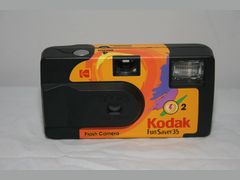 FunSaver
As a cheap, fun camera, yes; as a sharp one, no. TechRadar calls it essentially a reusable disposable camera with a Kodak badge, and Digital Camera World calls it an easy, fun point-and-shoot if you can accept many soft shots. It weighs 100g, measures 110 x 62 x 39mm and comes in black, brown, sage and sand.
Kodak does not make it. Reto Production Ltd. manufactures and sells the H35 and uses the Kodak name under license, as Kodak's own product page states. It came out in 2022.
The complaints are about small things. Tom's Guide found the viewfinder small and uncomfortable with glasses. The Film Photography Project store warns that advancing past the last exposure jams the camera and that forcing the rewind can break it, so keep count of your shots.
Next to a single-use camera like the Kodak FunSaver, the appeal is that you keep the camera and choose the film, and a 36-exposure roll gives you 72 pictures.
Sources: techradar.com, digitalcameraworld.com, filmphotographystore.com, filmphotographystore.com, kodak.com, expertphotography.com, tomsguide.com
Kodak Ektar H35 vs H35N: is the upgrade worth it?
The H35N costs about $14 to $15 more at the same store: $59.95 against $46 at Glazer's Camera, and $65 against $50 at Reformed Film Lab (October 2026). For that you get a lens with one glass element and one aspherical acrylic element, a bulb shutter, a tripod hole and a built-in star filter that turns lights into four-beam flares.
TechRadar's spec list gives the H35N lens as 22mm f/11 and recommends ISO 200 or 400 film. Kodak's own product page does not list an aperture.
Bulb plus the tripod hole is the change that matters: it lets the cheap camera do long exposures at night, which the H35 cannot. If you shoot mostly in daylight, the plain H35 is enough.
Sources: kodak.com, cameragx.com, techradar.com, glazerscamera.com, reformedfilmlab.com, glazerscamera.com, reformedfilmlab.com
Pentax 17 and Kodak Ektar H35 prices in the US
| Seller | Item | Price | Note |
|---|---|---|---|
| Glazer's Camera (Seattle) | Pentax 17, new | $499.95 | Add to cart available; up to $50 of 35mm film free with promo code |
| Reformed Film Lab | Pentax 17, new | $500.00 | Available to order |
| Glazer's Camera (Seattle) | Kodak Ektar H35, sage | $46.00 | |
| Film Photography Project store | Kodak Ektar H35, sage | $48.99 | Black and sand sold out |
| Reformed Film Lab | Kodak Ektar H35 | $50.00 | Black and brown available; sage and sand sold out |
| Glazer's Camera (Seattle) | Kodak Ektar H35N, striped green | $59.95 | |
| Reformed Film Lab | Kodak Ektar H35N | $65.00 | Six colors |
| Glazer's Camera (Seattle) | Ansmann CR2 lithium battery (for the Pentax 17) | $4.95 |
Prices checked October 2026. They change often.
Questions people ask
How many pictures do you get on a roll with a half-frame camera?
Twice the number on the box: 72 pictures from a 36-exposure roll and 48 from a 24-exposure roll. Each standard 35mm frame holds two vertical pictures.
Sources: ricoh-imaging.co.jp, ilottvintage.com
Can you use regular 35mm film in a half-frame camera?
Yes. Half-frame cameras such as the Pentax 17 and Kodak Ektar H35 load standard 35mm film. The only difference comes at the lab, where you should say the roll is half-frame so it gets scanned correctly.
Sources: digitalcameraworld.com, ricoh-imaging.co.jp
Are half-frame photos lower quality than full-frame 35mm?
Each picture uses half the film area, so grain is magnified, and Digital Camera World suggests a lower-ISO film to keep it down. Lens quality matters too: TechRadar rates the Pentax 17's lens as much sharper than the Kodak H35's.
Sources: digitalcameraworld.com, techradar.com
Does the Pentax 17 have autofocus?
No. It uses manual zone focus with six zones from 0.25m (0.82 ft) to infinity, and in Auto mode focus is fixed. Tom's Guide calls focusing hit-or-miss, and a Long Weekend reviewer got blurry close-ups.
Sources: ricoh-imaging.co.jp, kamerastore.com, tomsguide.com, longweekendgear.com
What batteries do the Pentax 17 and Kodak Ektar H35 use?
The Pentax 17 takes one 3V CR2 lithium battery, and Ricoh says rechargeable CR2s are not supported; it rates one battery at about 10 rolls of 36 exposures with half the shots using flash. The H35 takes one AAA alkaline battery, and Tom's Guide got a full 72-picture roll from one.
Sources: ricoh-imaging.co.jp, filmphotographystore.com, tomsguide.com
Who makes the Kodak Ektar H35?
Reto Production Ltd. makes and sells it and uses the Kodak trademark under license, according to Kodak's product page. It came out in 2022.
Sources: kodak.com, expertphotography.com
Is the Pentax 17 still being made?
In March 2025 Ricoh Imaging Japan said the Pentax film project was not paused, though it wanted more feedback before committing to new models; The Phoblographer's review, last updated May 2025, says Pentax is pausing production. US stores still had it new on October 28, 2026: $499.95 at Glazer's Camera and $500 at Reformed Film Lab.
Sources: kosmofoto.com, thephoblographer.com, glazerscamera.com, reformedfilmlab.com
Which half-frame camera should a beginner buy?
For a first roll on a small budget, the Kodak Ektar H35 at $46 to $50 has no exposure settings: load it, shoot in daylight and send it to a lab. The Pentax 17 has a full Auto mode and a sharper lens, but it costs about 10 times as much and you set the film speed by hand. For other first cameras, see [the best film cameras for beginners](/cameras/best-film-cameras-for-beginners/).
Sources: glazerscamera.com, ricoh-imaging.co.jp, techradar.com
Sources
Every fact on this page comes from one of these. How we choose and check sources is in our methodology.
Show all 35 sources
retailer 15
- Kamerastore: Pentax 17 Specifications & Details
- Kamerastore: Pentax 17 Review
- The Darkroom: FAQ
- Film Photography Project store: Kodak Ektar H35 (Sage)
- Film Photography Project store: Kodak Ektar H35 collection
- Film Photography Project store: Kodak Gold 200
- Glazer's Camera: Pentax 17 Film Camera
- Glazer's Camera: Kodak Ektar H35 (Sage)
- Glazer's Camera: Kodak Ektar H35N (Striped Green)
- Glazer's Camera: Kodak UltraMax 400
- Glazer's Camera: Ansmann CR2 lithium battery
- Reformed Film Lab: Pentax 17
- Reformed Film Lab: Kodak Ektar H35
- Reformed Film Lab: Kodak Ektar H35N
- Reformed Film Lab: Kodak Ultramax 400
Editorial reviews 11
- Digital Camera World: What is a half-frame camera?
- Digital Camera World: Kodak Ektar H35 review
- TechRadar: Pentax 17 review
- TechRadar: Kodak Ektar H35 review
- TechRadar: Kodak Ektar H35N review
- Tom's Guide: Pentax 17 review
- Tom's Guide: Kodak Ektar H35 Half Frame review
- Casual Photophile: Hands On with the Pentax 17
- The Phoblographer: Pentax 17 Review
- Kosmo Foto: Ricoh Imaging seeking further feedback before future film models
- Expert Photography: Kodak Ektar H35 Review
official 4
Independent blogs 4
Manuals and references 1
Keep reading
Film cameras
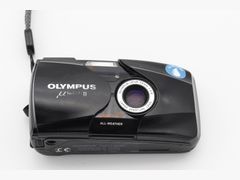
The best point-and-shoot film camera for most people is the Olympus Mju II, about $250-$600 used. Eight picks from $34.99 to $2,000, prices checked Oct. 2026.
Film cameras
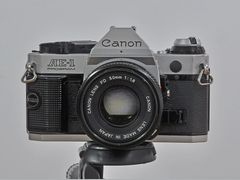
The best film camera for beginners is usually a used Canon AE-1 Program or Pentax K1000. Compare 8 picks, October 2026 US shop prices and what to check first.
Film stocks
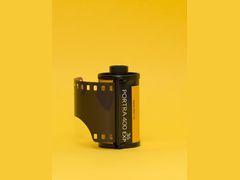
Kodak UltraMax 400 vs Gold 200: UltraMax is one stop faster for shade, indoors and reusable cameras. Gold is warmer and cheaper, about $8.45 to $10 a roll.
Developing and scanning
The best US labs for mail-in film developing, with October 2026 prices, shipping costs, turnaround times and scan sizes for The Darkroom, Dwayne's and more.
Film cameras
Kodak FunSaver: 27 shots of ISO 800 film for $15.95 to $21.99. What 94 reviewer and owner opinions say, flash tips, and what developing really costs.
Film cameras
What 151 owner and reviewer opinions say about the Olympus Trip 35: restored copies at $269.99 to $349.99, no battery, best film and what to check.