Kodak FunSaver: what reviewers say, how to use it, real cost
The short answer
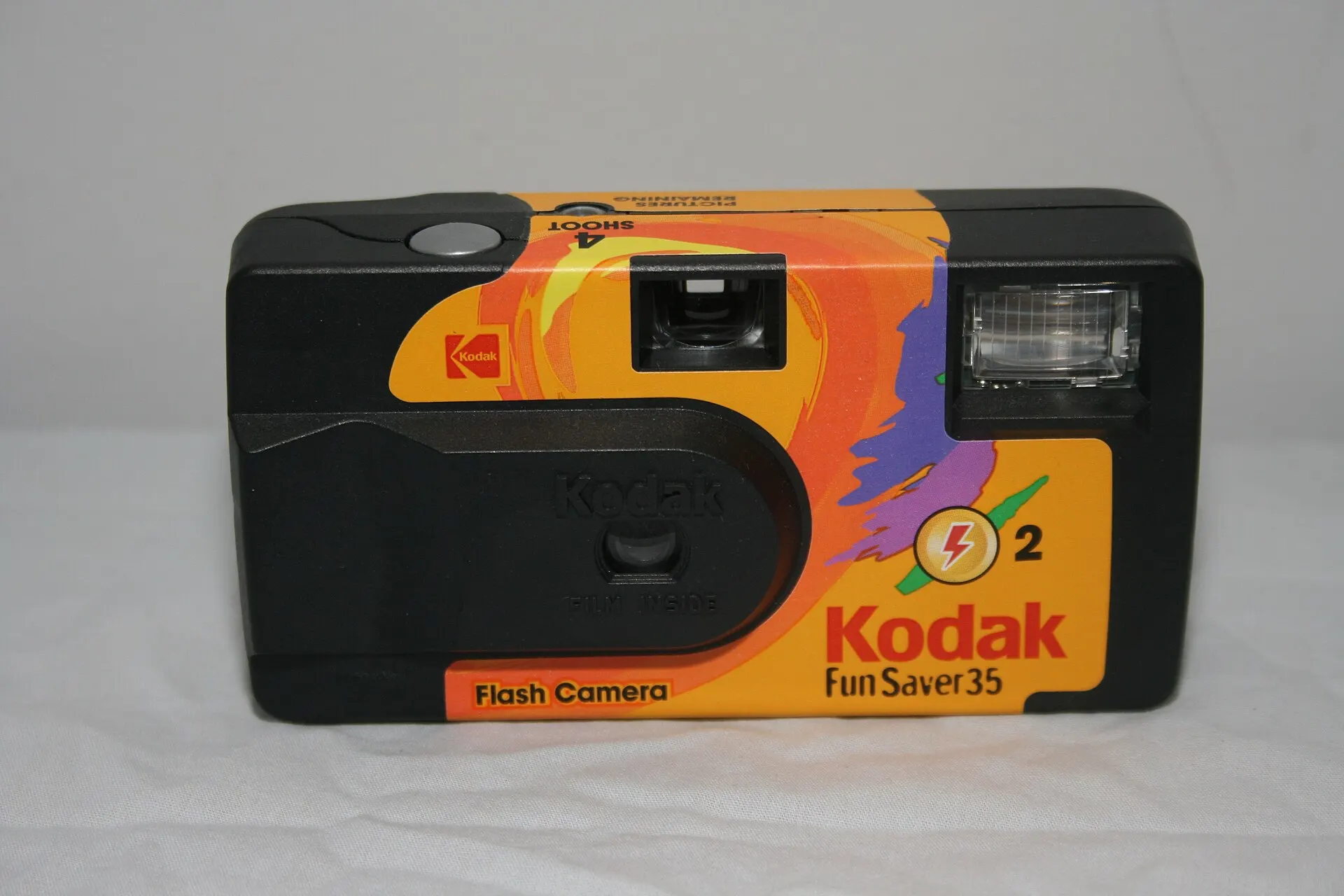
The Kodak FunSaver is a single-use 35mm camera with 27 exposures of ISO 800 color film and a flash you charge by hand, and it costs $15.95 to $21.99 at US camera shops (October 2026).
Reviewers and owners like its warm color and dead-simple operation, and The Darkroom said it performed best of the eight disposables it compared. Budget about as much again for developing, and use the flash for anything indoors.
- Film
- ISO 800 color
- Exposures
- 27
- Price
- $15.95-21.99
- Flash range
- 4-11.5 ft
Built from 94 opinions from 28 pages and videos. Not yet tested by Camera Dojo. Updated .
The short version
The catches are real. Next to any phone the pictures look soft, especially at the edges and past a few meters, the flash has to be charged by hand before every shot, and developing with scans usually costs as much as the camera. People who know that going in tend to enjoy the warm, slightly dreamy results. See how it stacks up against other single-use cameras in best disposable cameras.
Good fit if
- You want film photos at a party, wedding or on a trip without learning a camera.
- You want a camera you can hand to kids or guests.
- You shoot mostly outdoors in daylight.
- You like warm, slightly soft, nostalgic color.
Think twice if
- You expect phone-level sharpness. Reviewers say even a basic phone beats it.
- You shoot mostly indoors or at night and don't want to use flash.
- You plan to shoot a lot: at about $1.20 to $1.52 a photo with developing, a reusable point-and-shoot film camera gets cheaper fast.
- Single-use plastic bothers you.
- You want underwater shots. It isn't waterproof; Kodak's Sport camera is.
What every photo costs you
The camera is only half the bill. On its own it works out to about 59 to 81 cents a photo; add developing and scans and it is roughly $1.20 to $1.52 a shot.
Camera only, lowest in-stock price
$0.59 per photo
$15.95 at The Imaging World
Camera only, 100 or more
$0.61 per photo
$16.50 each at Unique Photo
Camera only, highest listed price
$0.81 per photo
$21.99 at Alpine Camera
$15.95 camera + develop, standard scans and shipping
$1.20 per photo
$32.45 at Dwayne's Photo
$15.95 camera + develop, scans and return shipping
$1.48 per photo
$39.90 at The Darkroom
$15.95 camera + all-in develop, scans and shipping
$1.52 per photo
$40.95 at Old School Photo Lab
Per-photo figures divide the total by 27 exposures, using prices from each seller's and lab's site on October 28, 2026. Lab prices are starting prices; prints and bigger scans cost extra.
What owners and reviewers say, topic by topic
We sorted 94 opinions about the FunSaver from 28 pages and videos on 22 websites and channels. Each row shows how many people raised a topic and how many of them were positive. Open a row to read short quotes, each linked to its source.
Most of these opinions come from editorial reviews, photographers' blogs and YouTube reviews. Reddit threads and big-retailer reviews could not be read, so only a handful of everyday buyers are quoted. Some reviewers are outside the US, so prices they mention are not US prices.
Image quality57% positiveof 21
Mostly positive for a disposable. Reviewers and owners praise warm, reliable color and a lens that is sharp by single-use standards, and The Darkroom said it performed best of the eight disposables it compared. Critics compare it with a phone and find it soft, especially at the edges and beyond a few meters.
“last time we tried a Fun Saver, the results were disappointing.”
Leslie LeBrun, Casual Photophile 2019-06Owner
“If you want reliable, classic color with warm tones, the Kodak Funsaver is hard to beat”
Alison Winterroth Photography 2026-03Owner
“Very happy with how this roll turned out, only good things to say”
Matt Moreland, Format MagazineHands-on review
“the images you take are going to look more like they were shot with a toy camera.”
Samantha Stortecky, Shoot It With Film 2020-07Owner
Ease of use86% positiveof 14
The most praised point: one winder, one shutter button, one flash button and instructions printed on the back. Owners hand it to their kids. The only gripes: one buyer struggled with the film advance, and the fixed focus blurs close and far subjects.
“You have only 2 things to consider, where to point, and whether to shoot or not.”
Photo by Tommy KuOwner
“one I reach for when I want to use a zero-thought camera, or when I give it to my children”
Alison Winterroth Photography 2026-03Owner
“one of the things I love about both cameras is that they both have the instructions on the back of the actual camera.”
Samantha Stortecky, Shoot It With Film 2020-07Owner
“In essence the camera works in 4 simple steps”
Jorge, Dusty Grain 2021-01Hands-on review
Indoors and low light31% positiveof 13
Mixed. The ISO 800 film gives more leeway than most disposables, but indoors and at night the flash is all but essential, and dim shots work best when you are close to the subject.
“You want better low-light performance without heavy flash use.”
“it works better in low light than most of the other disposable film cameras”
Alison Winterroth Photography 2026-03Owner
“film doesn't work well indoor without a flash”
Photo by Tommy KuOwner
“Low-light shots work best only if you're close and use the flash.”
Steve Thomas, Australian Photography 2026-03Hands-on review
Build and design83% positiveof 12
Positive. It is light, pocketable plastic that survives drops and spills, and one owner found it feels better made than the Fujifilm QuickSnap. The two mixed notes call it consumer grade with a loose shutter button, and basic but functional.
“the build quality is fine for drops and spills”
Alison Winterroth Photography 2026-03Owner
“The camera works perfectly fine despite branded to be "single-use" and "disposable".”
Photo by Tommy KuOwner
“I have noticed that the Kodak FunSaver does have a more high-quality feel to it as well as a more comfortably shaped camera.”
Samantha Stortecky, Shoot It With Film 2020-07Owner
“As anticipated, the FunSaver is basic but functional.”
Steve Thomas, Australian Photography 2026-03Hands-on review
Flash27% positiveof 11
Mostly mixed. The flash works and its AA battery easily outlasts the roll, but it never fires on its own: you hold the button before every flash shot, and people who forget get dark frames. It reaches about 4 to 11.5 ft.
“Flash needs to charge”
“Firing the flash will easily cover the 27 photos the camera offers.”
Jorge, Dusty Grain 2021-01Hands-on review
“Indoors with flash: Expect flat lighting but usable exposure.”
Alison Winterroth Photography 2026-03Owner
“when shooting in low light situations, you can't forget that the flash won't automatically turn on, you must press the button yourself”
Samantha Stortecky, Shoot It With Film 2020-07Owner
Waste and recycling22% positiveof 9
Mostly negative: a plastic camera used for one roll strikes many as wasteful. Defenders point out that labs recycle the bodies and that owners can reload them.
“Considering that and the plastic body, the camera isn't eco-friendly.”
The DarkroomHands-on review
“It's just more landfill junk. A single-use camera seems like such a waste”
kingeryjustin, Casual Photophile 2021-12
“That doesn't mean the FunSaver can be thrown away or stashed somewhere waiting to be forgotten. Instead, it should be passed on.”
Photo by Tommy KuOwner
“is not an ideal product from a sustainability standpoint, it is a textbook example of recycling and reuse”
Price and value88% positiveof 8
Most see it as fair value, mainly because Kodak color film alone is expensive. One reviewer felt paying for 27 shots through a plastic lens is poor value.
“despite these cameras being inexpensive and small, they are mighty and awesome”
Samantha Stortecky, Shoot It With Film 2020-07Owner
“I think the easiest and cheapest mean to experience film photography is to buy a disposable camera”
Photo by Tommy KuOwner
“Regardless of how you choose to shoot this film, it's a pretty good deal.”
Dmitri, Analog.Cafe 2026-06Hands-on review
“Considering the cost of Kodak colour film, the camera is reasonably priced”
Steve Thomas, Australian Photography 2026-03Hands-on review
Developing cost and hassle0% positiveof 6
Every mention is negative. Sources put developing and scans at roughly $12 to $30 per camera, so the total for a roll often lands around $25 to $40, and generic lab scans can be poor.
“So while the camera itself feels affordable, the total cost is usually $25-$40 per roll once everything is processed.”
Alison Winterroth Photography 2026-03Owner
“if you have a few dozen cameras, that adds up quickly.”
Maggie Panos, AOL 2024-07
“25-30$ per roll is really expensive and generic lab results are usually meh to terrible”
PeterK, Casual Photophile 2019-04
“These prices do not include developing and scanning, which usually adds another $12 to $20 per roll”
PositiveMixedNegative
Photos taken with a Kodak FunSaver
Photos taken with Kodak FunSaver cameras, shared under free licenses on Wikimedia Commons and all shot in daylight, where the camera does best.
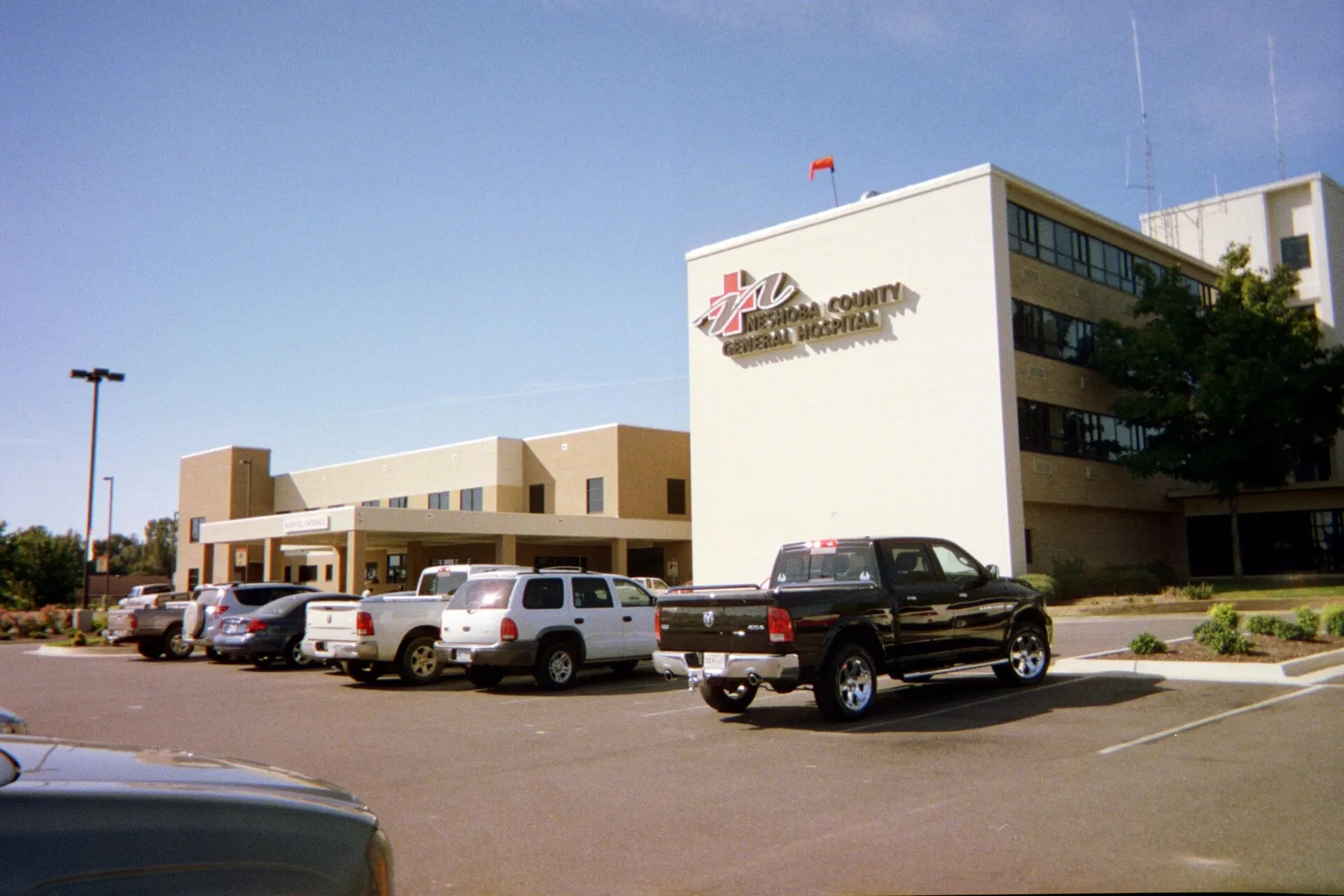
Neshoba County General Hospital, Philadelphia, MississippiPhoto: CapCase, CC BY 2.0 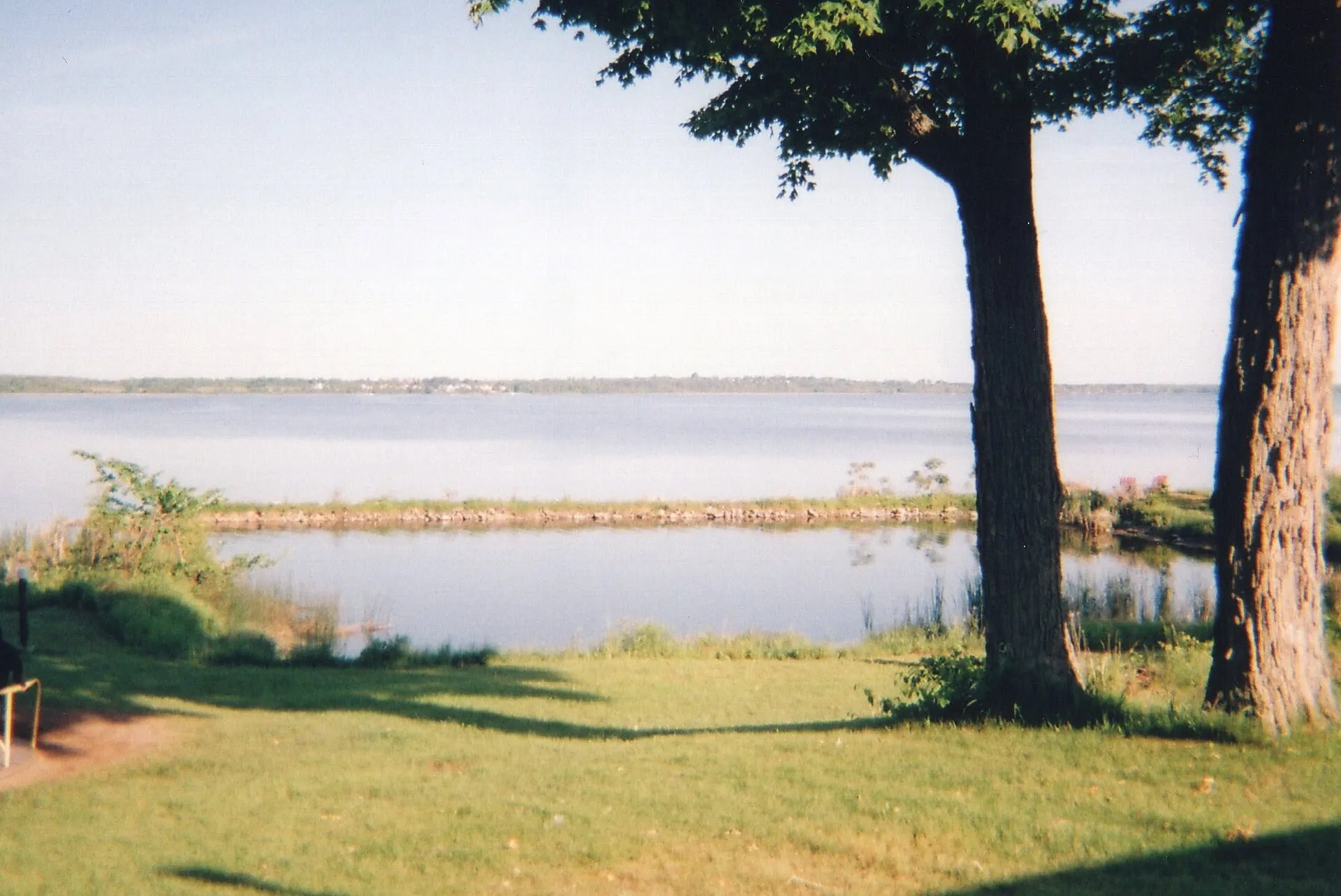
Pigeon Lake, Ontario, June 2015Photo: Dillan Payne, CC BY-SA 2.0 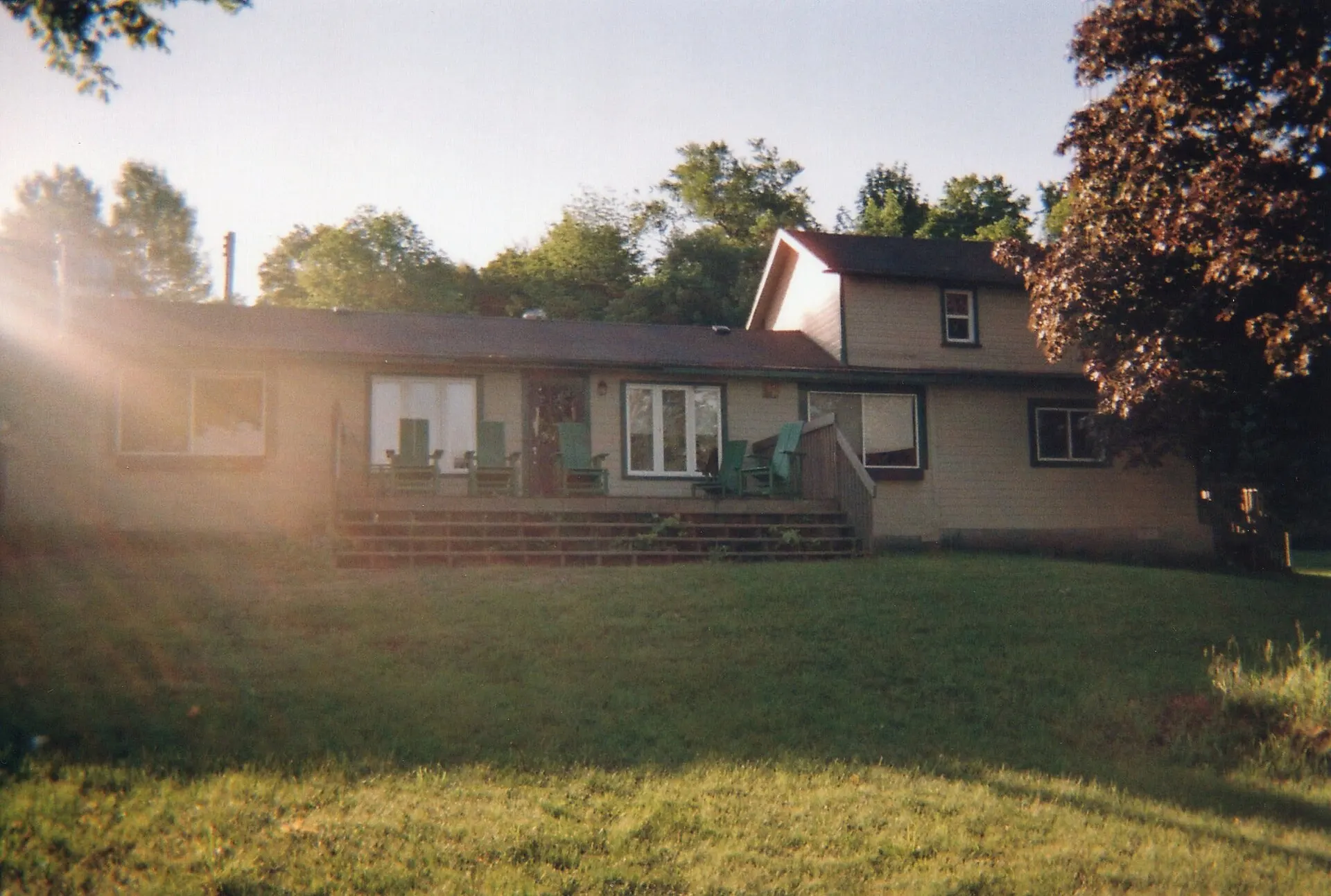
Pigeon Lake, Ontario, June 2015Photo: Dillan Payne, CC BY-SA 2.0 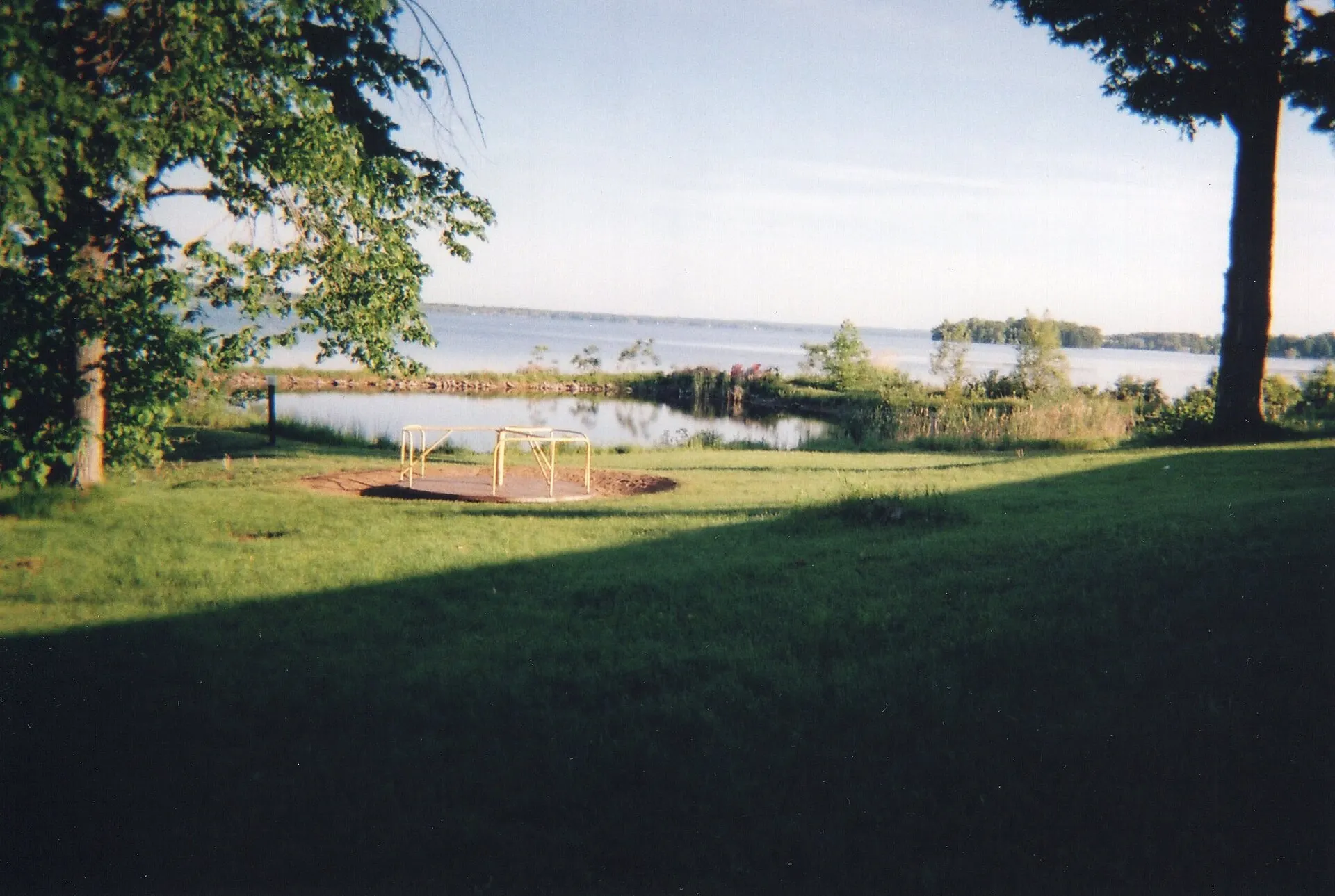
Pigeon Lake, Ontario, June 2015Photo: Dillan Payne, CC BY-SA 4.0
How to use the Kodak FunSaver
There are only three controls: a thumbwheel, a shutter button and a flash button. The same steps are printed on the back of the camera.
- 1
Wind it
Turn the thumbwheel until it stops. The wheel is interlocked with the shutter, so you can't double-expose a frame by accident.
- 2
Charge the flash if it's dim
Indoors, at dusk or in deep shade, hold the flash button on the front until the ready light on top glows. The flash never fires on its own, so do this before every flash shot.
- 3
Stand at least 4 ft away
Kodak lists fixed focus from 1 m (3.3 ft) to infinity and a flash range that starts at 4 ft, and Australian Photography found sharpness drops outside about 1 to 4 m. Up close, the lens sees slightly below and to the right of the viewfinder, so frame a little wider.
- 4
Keep fingers clear
Hold it by the edges, away from the lens and flash window. Unique Photo says many people end up with a full or partial finger in their shots.
- 5
Shoot and watch the counter
Press the shutter button on top. The frame counter counts down from 27 to zero.
- 6
Send the whole camera to a lab
Don't open it: light fogs the film, and the camera itself warns about the flash's high voltage. An unfinished roll can go in as it is; the lab develops every exposed frame.
Sources: thedarkroom.com, digitalcameraworld.com, kodakprofessional.com, australianphotography.com, uniquephoto.com, dwaynesphoto.com, thedarkroom.com
When to use the flash on a Kodak FunSaver
In bright sun or ordinary daylight, skip the flash. Analog.Cafe found the ISO 800 film takes a lot of overexposure and still holds the shadows, which is how one fixed shutter speed and aperture cope with a sunny day. Kodak pitches the camera for outdoor shooting in varying sunlight.
Use the flash indoors, at dusk, at night and in heavy shade. Reviewers agree it is all but essential inside, and dim shots work best when you are close. The flash covers about 4 to 11.5 ft (1.2 to 3.5 m), so a subject across a big room or on a stage will come out dark.
Alison Winterroth, who compared five disposables, says indoor flash shots from these cameras look flat but are usable, while indoor shots without flash will likely be underexposed and unusable. Fast film is why the FunSaver beats ISO 400 disposables in dim light; film ISO explained covers the basics.
If a roll comes back mostly dark, the usual cause is shooting indoors without charging the flash first.
Sources: analog.cafe, business.kodakmoments.com, kodakprofessional.com, shootitwithfilm.com, alisonwinterroth.com, digitalcameraworld.com
Where to develop a FunSaver and what it costs
You send the whole camera, not the film. Any lab that runs C-41 color film can develop it, and labs that take disposables remove the film for you. Digital Camera World's warning holds: developing and scans can cost as much as the camera, or more.
Drugstores still take disposables, but The Darkroom says Walgreens, CVS and Walmart ship film to outside labs and rarely return negatives. Walmart says most orders are ready in about six days. For better scans and your negatives back, mail-in labs are the usual choice. More in where to develop a disposable camera and developing film at CVS, Walgreens or Walmart.
| Lab | Price | What you get |
|---|---|---|
| The Darkroom (San Clemente, CA) | From $17, plus $6.95 return shipping | Scans in a web gallery, negatives returned, free inbound label |
| Dwayne's Photo | From $7.50, plus $4.00 standard scans and $5.00 shipping | The low-cost option; 4x6 prints are $5.00 a set |
| Old School Photo Lab (Dover, NH) | $25 all-in, or $18 develop only | All-in covers develop, scans and round-trip shipping |
| Process One | $5.99, plus $8.99 for scans only | Negatives always returned |
| The Great American Photo Lab | $24.24 | Develop, budget scan and upload |
| Mpix (Pittsburg, KS) | $13.95 per disposable | Standard scans; Mpix recycles the camera |
Lab prices change often; how much it costs to develop film compares more labs.
Sources: digitalcameraworld.com, thedarkroom.com, photos3.walmart.com, thedarkroom.com, dwaynesphoto.com, oldschoolphotolab.com, processonephoto.com, northcoastphoto.com, mpix.com, alpinecamerausa.com
Kodak FunSaver vs Fujifilm QuickSnap
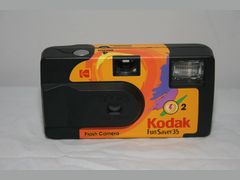 Kodak FunSaver | 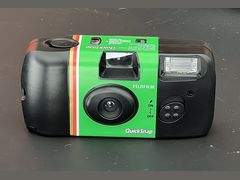 Fujifilm QuickSnap Flash 400 | |
|---|---|---|
| Film speed | ISO 800 | ISO 400 |
| Exposures | 27 | 27 |
| Color | Warm tones | Cooler, favors greens and blues |
| Flash | Hold the button before every flash shot | A switch keeps the flash on, so no button press per shot |
| Dim light | More leeway than most disposables, owners say | Slower film needs more light |
| Feel | More comfortable shape, feels better made (Shoot It With Film) | The smallest of the eight The Darkroom compared |
Pick the Kodak FunSaver if
- You want warm, Kodak-style color.
- You often shoot indoors or in dim light.
- You want the camera The Darkroom said performed best overall.
Pick the Fujifilm QuickSnap Flash 400 if
- You like cooler, greener color.
- You want a flash you can leave on at a party.
- You want the smallest camera to carry.
Sources: shootitwithfilm.com, thedarkroom.com, alisonwinterroth.com, thedarkroom.com
Buying, storing and flying with a FunSaver
Buy from a film or camera shop if you can. Analog.Cafe saw some shops price it over $35 while film retailers sold it around $16, and supply can be tight: CineStill limits orders to two per customer. For a wedding, Unique Photo charges $17.95 each for 20 or more and $16.50 each for 100 or more.
Store it somewhere cool. Old School Photo Lab says heat is worse than age, and old or hot-stored cameras tend to come back with magenta or yellow casts, flat contrast and more grain. A FunSaver found in a drawer is still worth developing; see shooting expired film for what to expect.
Flying: TSA recommends putting cameras with undeveloped film in your carry-on, or asking for a hand inspection at the checkpoint.
Sources: analog.cafe, cinestillfilm.com, uniquephoto.com, oldschoolphotolab.com, tsa.gov
Can you reload or recycle a Kodak FunSaver?
Kodak sells it as single-use, and Digital Camera World says it can't be reloaded. Owners do it anyway: Tommy Ku reloaded the same FunSaver four times and found it worked fine, and Australian Photography points to online reloading guides as a way to cut waste.
If you don't reload it, the lab usually recycles it. The Darkroom and Mpix recycle every disposable they develop, and The Darkroom puts the US recycling rate for these cameras at more than 70 percent (its page is undated).
Some photographers buy FunSavers just for the film. Analog.Cafe pulled the roll, shot it in a Nikon F2 and worked out 59 cents a frame at $16, against 56 cents for Portra 800 (Ektacolor Pro 800), but said the hassle, the extra 3 cents a frame and the plastic waste mean it may not be worth buying FunSavers just for the film. See Portra 400 vs Portra 800 for the film it was compared with.
Sources: digitalcameraworld.com, photo.tommyku.com, australianphotography.com, thedarkroom.com, mpix.com, analog.cafe
Common problems, blinking lights and fixes
A single-use camera can't be repaired, so most problems come down to how you shoot it and where you develop it.
Dark or blank photos indoors
Raised in 4 opinions
- How you notice
- Frames shot inside, at night or in deep shade come back nearly black or empty.
- Fix
- Hold the flash button until the ready light glows before every indoor or low-light shot, and keep subjects within about 4 to 11.5 ft. Nothing can be saved after the fact.
- Typical cost
- No fix afterward; the lab still charges to develop the roll (from $17 at The Darkroom, from $7.50 at Dwayne's Photo)
Sources: kodakprofessional.com, thedarkroom.com, thedarkroom.com, dwaynesphoto.com
Blurry close-ups and shifted framing
Raised in 1 opinion
- How you notice
- Subjects closer than about 1 m (3 ft) come out soft, and close shots are framed off because the viewfinder sits apart from the lens.
- Fix
- Stay at least 4 ft away, frame a little wider and allow for the offset on close subjects.
- Typical cost
- $0 (shooting technique)
Sources: kodakprofessional.com, australianphotography.com, uniquephoto.com
Finger in the frame
- How you notice
- Part of a finger shows up at the edge or corner of shots.
- Fix
- Hold the camera by its edges, away from the lens and flash window.
- Typical cost
- $0 (shooting technique)
Sources: uniquephoto.com, australianphotography.com
Color shifts on old or heat-stored cameras
- How you notice
- Magenta or yellow casts, flat contrast and heavy grain on cameras that sat in a drawer, attic or hot car.
- Fix
- Develop it anyway at a lab that corrects each frame, and keep new cameras somewhere cool.
- Typical cost
- $18 develop only, or $25 all-in with scans and shipping, at Old School Photo Lab
Sources: oldschoolphotolab.com, uniquephoto.com
No negatives and weak scans from drugstore developing
Raised in 1 opinion
- How you notice
- Walgreens, CVS and Walmart send the camera to an outside lab; prints or files come back after about a week, usually without negatives.
- Fix
- Use a mail-in lab that returns negatives and offers larger scans.
- Typical cost
- From $17 plus $6.95 return shipping at The Darkroom; $5.99 plus $8.99 for scans at Process One
Sources: thedarkroom.com, photos3.walmart.com, thedarkroom.com, processonephoto.com
Film ruined by opening the camera
- How you notice
- Prying the case open fogs film that is outside the cartridge, and the camera carries a warning about the flash's high voltage.
- Fix
- Never open it. Mail or drop off the whole camera and let the lab take the film out.
- Typical cost
- Included in the lab's disposable price (Dwayne's Photo from $7.50)
Sources: dwaynesphoto.com, digitalcameraworld.com, analog.cafe
Undeveloped film in checked bags
- How you notice
- TSA advises keeping cameras with undeveloped film out of checked luggage.
- Fix
- Pack the camera in your carry-on or ask for a hand inspection at the checkpoint.
- Typical cost
- $0
Sources: tsa.gov
Where to buy it
In stock at US camera shops, a new FunSaver costs $15.95 to $21.99. B&H, Adorama, Walmart.com and Target could not be checked, so they are not listed.
CineStill Film (Los Angeles, CA)
New, One camera, 27 exposures; limit 2 per customer
$15.95
See listingThe Imaging World (Brooklyn, NY)
New, One camera, ISO 800 with flash
$15.95
See listingGlazer's Camera (Seattle, WA)
New, One camera, 27 exposures
$16.49
See listingTuttle Cameras (Long Beach, CA)
New, One camera, 27 exposures
$17.99
See listingUnique Photo (Fairfield, NJ)
New, One camera; less each in bulk
$18.95
See listingPro Photo Supply (Portland, OR)
New, One camera, 27 exposures; stock not shown
$18.99
See listingAlpine Camera (Des Plaines, IL)
New, One camera, 27 exposures; low stock
$21.99
See listingFreestyle Photo (via Analog.Cafe, June 2026)
New, One camera
$16
See listingReformed Film Lab
New, sold out, One camera, 27 exposures
$15.00
See listingDirt Cheap Film
New, sold out, Camera with prepaid developing and scans; you pay shipping
$15.50
See listing
Prices checked on October 28, 2026. They move every week, so treat them as a range, not a quote. Reformed Film Lab and Dirt Cheap Film were sold out on the day we checked. Freestyle's $16 comes from Analog.Cafe's June 2026 review, not from Freestyle's own page. Unique Photo charges less in bulk: $17.95 each for 20 or more, $16.50 each for 100 or more.
Specifications
Lens and exposure
Film and flash
- Developing
- C-41 (standard color)
Body
- Frame counter
- Counts down from 27 to 0; flash-ready light on top
- Waterproof
- No
- Kodak part number
- 8617763
Video reviews worth your time

How to use Kodak Fun Saver Disposable Camera | Simple Beginners Guide, My first roll-film 🎞 코닥 펀세이버
The Kodak FunSaver is highlighted as an affordable, lightweight, and easy-to-use disposable camera with a cute retro design.

Kodak Funsaver Quick Review and Sample Photos
The Kodak FunSaver is a compact and convenient disposable film camera that captures charmingly imperfect photos suitable for both beginners and experienced photographers.

Disposable Camera Street Photography Challenge (Kodak FunSaver)
The reviewer found shooting with the Kodak FunSaver to be an enjoyable experiment with surprisingly good image quality in some conditions, but does not recommend it for regular use due to cost and environmental waste.

Kodak Funsaver | Test Photos from a Disposable Camera | Analog Photography India | Film Photography
The video demonstrates the Kodak FunSaver single-use camera by taking various sample photos across outdoor landscapes and indoor settings.

Guide to Using Kodak Funsaver Film Camera
The Kodak FunSaver is an easy-to-use disposable film camera suited for bright outdoor photography, though its simple plastic lens and limited flash range restrict low-light capabilities.
Questions people ask about the FunSaver
How many photos does a Kodak FunSaver take?
27. Kodak sells the FunSaver with 27 exposures of ISO 800 film, and the counter on top counts down from 27 to zero. Expert Reviews (UK) and Australian Photography mention a 39-shot version, but the US camera shops listed here sell the 27-exposure camera.
Sources: business.kodakmoments.com, digitalcameraworld.com, expertreviews.co.uk, australianphotography.com
How much does a Kodak FunSaver cost?
$15.95 to $21.99 at the US camera shops listed above on October 28, 2026, with CineStill and The Imaging World at the low end. Analog.Cafe found it for $16 at Freestyle in June 2026 and saw some shops charge over $35. Developing and scans usually add another $15 to $25.
Sources: cinestillfilm.com, alpinecamerausa.com, analog.cafe, alisonwinterroth.com
How do you use the Kodak FunSaver?
Turn the thumbwheel until it stops, look through the viewfinder and press the shutter button on top. For flash, hold the front flash button until the ready light on top glows, then shoot; you have to do this before every flash picture. Stay at least 4 ft from your subject.
Sources: thedarkroom.com, kodakprofessional.com
Do you need to buy film for a Kodak disposable camera?
No. The FunSaver comes loaded with 27 exposures of Kodak ISO 800 color film and an AA battery for the flash, and you send the whole camera to a lab when you finish. Kodak doesn't sell it as reloadable, though some owners reload the body with a fresh roll.
Sources: digitalcameraworld.com, thedarkroom.com, photo.tommyku.com
How do I get pictures off my Kodak disposable camera?
Send or drop off the whole camera at a lab that develops C-41 color film. Don't open it yourself: light fogs the film, and the camera warns about the flash's high voltage. Mail-in labs such as The Darkroom (from $17) or Dwayne's Photo (from $7.50 plus scans and shipping) post your scans online and return the negatives.
Sources: dwaynesphoto.com, digitalcameraworld.com, thedarkroom.com, dwaynesphoto.com
Is QuickSnap or Kodak better?
It depends on the look and the light. The FunSaver uses ISO 800 film with warm tones and handles dim light better, while the Fujifilm QuickSnap uses ISO 400 film with cooler, greener color and a flash that is easier to keep on. The Darkroom said the FunSaver performed best overall of the eight it compared and called the QuickSnap the easiest to use.
Sources: shootitwithfilm.com, thedarkroom.com, alisonwinterroth.com
Is the Kodak FunSaver waterproof?
No. For water, Kodak's Sport single-use camera is the option: Digital Camera World says it works down to 15 m (50 ft) and costs about the same as the FunSaver, but it has no flash.
Sources: shootitwithfilm.com, digitalcameraworld.com
What film is inside the Kodak FunSaver?
Kodak only says 800 speed color film. Digital Camera World calls it Kodak MAX 800, retailers such as Pro Photo Supply list Kodak Gold 800, and Analog.Cafe found the edge marking GT 800-5 on the negatives. Whatever the label, it is ISO 800 color negative film developed in standard C-41 chemistry.
Sources: kodakprofessional.com, digitalcameraworld.com, prophotosupply.com, analog.cafe
What people compare it with
Fujifilm QuickSnap Flash 400
The other drugstore disposable: ISO 400 film with cooler, greener color and a flash you can leave on. The Darkroom calls it the easiest to use; the FunSaver's faster film gives more leeway in dim light.
Kodak Power Flash single-use camera
Same Kodak 800 film and 27 exposures, but the flash recharges automatically and reaches 4 to 14.5 ft, which suits parties and indoor events.
Kodak Sport single-use camera
Waterproof to 15 m (50 ft) for about the same price, but no flash, so it is a daylight camera.
Lomography Simple Use reloadable camera
Looks like a disposable but is meant to be reloaded, and comes with a 36-exposure roll. It costs more up front, and Digital Camera World still preferred the FunSaver's image quality.
Every source behind this page
Read them yourself. How we pick and count them is in our methodology.
Show all 55 sources
Manuals and references 27
- alpinecamerausa.com: kodak funsaver
- business.kodakmoments.com: Kodak Fun Saver Single Use Camera
- cinestillfilm.com: funsaver 35mm single use film camera
- en.wikipedia.org: Disposable camera
- northcoastphoto.com: disposable cameras
- oldschoolphotolab.com: disposable camera processing
- photos3.walmart.com: film processing
- processonephoto.com: disposable camera developing
- prophotosupply.com: kodak funsaver one time use camera
- reformedfilmlab.com: kodak funsaver 27 exposure camera
- thedarkroom.com: disposable camera developing
- thedarkroom.com: faq
- thedarkroom.com: where should i get my film developed
- theimagingworld.com: kodak funsaver 35mm one time use disposable camera iso 800 with flash
- analog.cafe: fujifilm fujicolor 800 quicksnap camera film review 081n
- dirtcheapfilm.com: kodak funsaver disposable camera with prepaid developing
- dwaynesphoto.com: site faq
- dwaynesphoto.com: color film processing
- dwaynesphoto.com: services
- glazerscamera.com: single use film cameras
- kodakprofessional.com: Single Use Cameras
- mpix.com: film
- tsa.gov: film
- tuttlecameras.com: kodak funsaver one time use camera
- uniquephoto.com: when should i use the flash on a kodak funsaver disposable camera
- uniquephoto.com: kodak single use cameras which one to buy for parties trips and the be
- uniquephoto.com: kodak funsaver 35mm one time use disposable cameraiso 80027 exp
Independent blogs 12
- Casual Photophile: Leica M11, Hasselblad Masters, Kodak Disposable, and More / Weekly News Roundup
- The Darkroom: Kodak Funsaver
- The Darkroom: Best Single
- Analog.Cafe: Kodak FunSaver ISO 800 Colour
- Alison Winterroth Photography: Testing the Top 5 Disposable Film Cameras
- Shoot It With Film: Intro to Disposable Cameras
- Dusty Grain: The Ultimate Review Of the Kodak Disposable Camera
- KF Concept blog: Are all disposable cameras the same? Disposable Camera Comparison
- Photo by Tommy Ku: Kodak FunSaver & Dailylight | Gears
- Photo by Tommy Ku: 7 additional tips on using disposable camera
- Photo by Tommy Ku: Some more tricks on Kodak FunSaver
- Photo by Tommy Ku: Disposable camera for budget entry
Editorial reviews 10
- Casual Photophile: Kodak Funsaver Disposable Camera Review
- Australian Photography: Review
- Digital Camera World: Kodak Funsaver Single Use Camera review
- Digital Camera World: The best disposable cameras in 2026
- Stuff: Kodak FunSaver 35mm disposable camera review - If you remember these, you're old now
- Format Magazine: Finding the Best Disposable Camera
- AOL: Top Disposable Cameras for Weddings, Birthdays, and a Night out
- FixThePhoto: 5 Best Disposable Cameras
- Expert Reviews: Best disposable camera: The top single-use cameras for parties, holidays and weddings
- Fotografie.nl: Kodak Recycled 1.5 Billion Disposable Cameras in 19 Years
Video reviews 5
- sassyinkorea: How to use Kodak Fun Saver Disposable Camera | Simple Beginners Guide, My first roll-film 🎞 코닥 펀세이버
- GoneWithFilm: Kodak Funsaver Quick Review and Sample Photos
- Faizal Westcott: Disposable Camera Street Photography Challenge (Kodak FunSaver)
- Ashwyn Warrier: Kodak Funsaver | Test Photos from a Disposable Camera | Analog Photography India | Film Photography
- OrcaType: Guide to Using Kodak Funsaver Film Camera
Retailer customer reviews 1
Keep reading
Film cameras
The Kodak FunSaver is the best disposable camera for most people. Seven picks for color, black and white and water, with US prices checked October 2026.
Film cameras
Walgreens, CVS and Walmart still develop disposable cameras but rarely return negatives. Compare them with local and mail-in labs on price and wait, Oct 2026.
Developing and scanning
A roll of 35mm film costs $5 to $11.50 to develop at US labs, or $11.50 to $29 with scans. Prices from 12 labs and the big chains, checked October 2026.
Developing and scanning
Yes, CVS, Walgreens and Walmart still develop 35mm film and disposable cameras. Prices, wait times, formats and if you get negatives back, checked Oct 2026.
Film cameras
The best point-and-shoot film camera for most people is the Olympus Mju II, about $250-$600 used. Eight picks from $34.99 to $2,000, prices checked Oct. 2026.