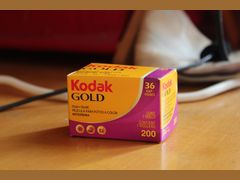
Explainer
Shooting Expired Film: How to Expose, Develop and Store It
The short answer
Expired film still works: it loses speed and gains fog, grain and color shifts gradually, and how it was stored matters more than the printed date.
The usual starting point is one stop of extra exposure per decade past expiry for color negative film of unknown storage, less for frozen film and slow black-and-white, and close to box speed for slide film.
- Common rule of thumb
- 1 stop more exposure per decade past the date (color negative)uniquephoto.com
- ISO 400, expired 10 years
- Meter at ISO 200uniquephoto.com
- ISO 400, expired 20 years
- Meter at ISO 100uniquephoto.com
- Expired slide film
- Box speed, a third of a stop over at mostfstoppers.com
- Kodak Professional color film storage
- Sealed, 55 F (13 C) or lowerfilmphotographyproject.com
- Freezing for long storage
- 0 to -10 F (-18 to -23 C), per Kodak's motion picture guidekodak.com
Does expired film still work?
Yes. Film does expire, in the sense that it ages, but it does not stop working on the date printed on the box. Kodak says film speed, contrast, color balance and fog level change gradually after manufacture, and its official advice is simply to use film before that date for best results.
Storage decides how far those changes have gone. Berlin Photo Studio puts it plainly: a refrigerated roll one year past date may behave normally, while a roll kept for years in a hot car can be badly fogged even before its expiry date. Kodak names a car parked in the sun and a summer attic as places too hot for film.
Color film suffers more than black-and-white. Kodak says poor storage hits color film harder because storage conditions affect its emulsion layers to different degrees. Storage also explains why two expired rolls with the same date can come back very different: the Berlin lab says such rolls may have lived at different temperatures for years.
There is no hard cutoff. EMULSIVE recommends shooting well-stored black-and-white film of ISO 100 and slower at box speed for up to 60 years past its date, while it expects heavy base fog on infrared film more than 15 years out, however it was stored.
Sources: filmphotographyproject.com, photostudioberlin.com, emulsive.org
What do photos on expired film look like?
The typical signs are lost sensitivity, more base fog, lower contrast, color shifts, more visible grain and weaker shadow detail. Extra exposure can make up for the lost sensitivity, but it cannot remove chemical fog or repair damaged color layers. Scanning can correct some casts and contrast, though missing color information and heavy fog stay.
Results range widely. Parallax Photographic shot a roll of Kodak Ultra 400 that expired in August 2004 at ISO 100, developed it normally and got saturated colors. At the other end, Fstoppers describes an expired Fujifilm Velvia 50 roll that came back with an extreme purple cast.
- Lost speed: thin, underexposed negatives if you shoot at box speed
- Base fog and lower contrast: muddier shadows and a flatter-looking image
- Color shifts and casts, especially on old color negative and slide film
- More grain, especially on fast film
- Less shadow detail
Sources: photostudioberlin.com, parallaxphotographic.coop, uniquephoto.com, fstoppers.com
How much should you overexpose expired film?
The common rule of thumb is one stop of extra exposure for every 10 years past the date. Unique Photo's starting points: ISO 400 film expired 10 years ago, meter at ISO 200; expired 20 years ago, meter at ISO 100; ISO 100 film expired 20 years ago, meter at ISO 25 to 50. Parallax and Fstoppers cite the same rule, and Parallax says it applies mostly to color negative film.
Not everyone agrees. EMULSIVE argues the rule is wrong when followed blindly: film frozen from new that expired a decade or two ago will likely give 95 to 100 percent of a fresh roll's result, and for film of unknown history from a temperate climate it suggests about half a stop per decade. Berlin Photo Studio calls one stop per decade only a rough starting point for some color negative films. Silvergrain Classics notes that following the rule on a 1978 slide film would have meant four stops over and a completely clear film.
Use the table as a first guess, then adjust for what you know about storage. Unique Photo says storage history matters more than the expiration date alone, and Parallax says results depend on the film itself and how it was stored.
| Film and storage | Starting point | Source notes |
|---|---|---|
| Color negative, unknown storage | About 1 stop slower per decade (ISO 400 expired 10 years ago at ISO 200) | Unique Photo, Parallax, Fstoppers; EMULSIVE says about 1/2 stop per decade for unknown history in a temperate climate |
| ISO 200-400 film, cold-stored from new (ideally frozen) | Box speed up to 10 to 20 years past date (ISO 400 color negative may need ISO 320 or 200 after 15 years); +1/2 stop at 20 to 40 years; +1 stop at 40 to 60 years | EMULSIVE, for well-stored film |
| Black-and-white, ISO 100 or slower | Box speed if well stored; one source suggests about 1 stop per 15 years for ISO 50 | Parallax (box speed at about 10 years); EMULSIVE (box speed up to 60 years); Fstoppers (Pan F Plus 50, about 1 stop every 15 years) |
| Black-and-white, faster film | 1/2 to 2 stops over (under 30 years old) | Silvergrain Classics |
| Slide film (E-6) | Box speed, at most 1/3 stop over | Fstoppers; EMULSIVE says box speed if chilled, up to 20 years expired |
| Infrared | Expect heavy base fog after 15 years | EMULSIVE, regardless of storage |
In low light, Silvergrain Classics adds one more stop for color negative film, because random reciprocity failure can underexpose the shadows.
Sources: uniquephoto.com, parallaxphotographic.coop, fstoppers.com, emulsive.org, photostudioberlin.com, silvergrainclassics.com
Why fast film ages faster
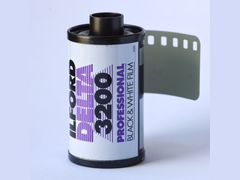 Delta 3200
Film speed matters as much as age. Silvergrain Classics and Parallax both say fast film loses more speed in storage than slow film. Kodak and Carmencita Film Lab point to background gamma radiation, which raises fog and grain, and say the higher the film speed, the more it is affected, even in the fridge.
Kodak's motion picture storage guide gives a number: a film rated EI 500 can show about three times the change in performance of an EI 125 film. Part of that radiation comes from cosmic rays, and Kodak says radiation stays a factor in long-term storage even with lead shielding or underground storage. Kodak, quoted by The Straight Dope, warned that high-speed film used after its date may show excessive graininess.
So an expired ISO 1600 or 3200 roll, such as an old Ilford Delta 3200, needs more extra exposure than a slow film of the same age, not less. Parallax says you are less likely to need to overexpose an ISO 100 film than an ISO 1600 one. Rate the fast roll slower than box speed and bracket.
Sources: silvergrainclassics.com, parallaxphotographic.coop, carmencitafilmlab.com, kodak.com, straightdope.com
How to shoot expired film, step by step
- 1
Find out what you have
Note the stock, box ISO and expiration date, and ask the seller or owner how it was stored: freezer, fridge, closet, attic or car. Storage history tells you more than the date.
- 2
Warm cold film before opening
Leave a frozen or refrigerated roll sealed until it reaches room temperature so no condensation forms. Carmencita Film Lab suggests 2 hours or more from the fridge.
- 3
Pick an exposure index
About one stop slower per decade for color negative of unknown storage, little or no change for cold-stored film and slow black-and-white, box speed for slide film. The exposure table above has the details.
- 4
Set that ISO on the camera
Set the lower ISO manually or dial in exposure compensation (see film ISO explained). A point-and-shoot that only allows one stop of compensation may not give a roll more than 20 years old the two to three stops it needed in the Fstoppers example.
- 5
Bracket the frames that matter
Parallax recommends bracketing important shots, for example by half a stop over and under each time.
- 6
Shoot a test roll from a batch
If you have several rolls that were stored the same way, Parallax says a test roll first is worth it. Shoot one roll at several settings, develop it, then set the exposure for the rest.
- 7
Develop normally and tell the lab
Write the stock, its date and the ISO you shot it at on the order, and ask for normal development.
Sources: emulsive.org, carmencitafilmlab.com, uniquephoto.com, fstoppers.com, parallaxphotographic.coop, photostudioberlin.com
Should you push or change development for expired film?
Usually not. Unique Photo says the first thing to adjust for expired film is exposure, not development, and Berlin Photo Studio warns against pushing automatically because longer development raises contrast but can also raise fog. See push and pull processing for when a push does make sense.
Silvergrain Classics disagrees for color negative film. It says exposing one stop less than the per-decade total and pushing one stop in development generally gives better results. Treat that as an option to try on a test roll, not a default.
Labs generally run C-41 and E-6 at standard times, so changing development is mainly an option for home black-and-white developing. For old black-and-white film, Silvergrain Classics suggests a 1% benzotriazole solution in the developer as an anti-fog agent.
Expired slide film has one more option: Parallax notes it can be processed in C-41 chemistry as a negative, known as cross-processing. A 35mmc writer cross-processed a 1995-dated Kodak Ektachrome Elite 100 roll of unknown storage at box speed and got high contrast with accurate colors.
Sources: uniquephoto.com, photostudioberlin.com, silvergrainclassics.com, parallaxphotographic.coop, 35mmc.com
When to send expired film to a specialist lab
A regular lab is fine for film that is only a few years past its date. Film Rescue International says color film expired only about 5 or 6 years generally comes out fine at a reputable local lab, unless it was stored in heat. It recommends a specialist for black-and-white 35mm or 126 film about 20 years past its process-before date.
Film Rescue International often processes old color film into black-and-white negatives on purpose, saying a higher-quality black-and-white image beats a lower-quality color one. Kodachrome can no longer be processed in color anywhere, so specialist labs can only develop it as black and white. Film Rescue's turnaround can be as short as 8 weeks after a cycle cutoff, and longer in busy cycles.
Old School Photo Lab in Dover, NH, processes 110, 126, 127, APS and C-22 films that most labs cannot. For regular C-41, E-6 and black-and-white, compare options in our guide to mail-in film labs.
Sources: filmrescue.com, en.wikipedia.org, oldschoolphotolab.com
What expired film and developing cost
| Seller | Item | Price | Note |
|---|---|---|---|
| Brooklyn Film Camera (Brooklyn, NY) | Random expired 35mm roll (color, slide or black-and-white) | $12.50 | Film sales are final |
| Brooklyn Film Camera (Brooklyn, NY) | Random expired 120 roll | $14 | Surprise stock |
| FilmWholesale (online) | Fuji C200 35mm, 36 exposures, expired 2013 | $15.00 | Most other expired listings were sold out |
| Dwayne's Photo (Parsons, KS) | 35mm color film processing (develop-only option) | From $7.50 | Mail-in; scans and prints cost extra; $5.00 shipping for the first roll, $0.50 for each additional |
| Dwayne's Photo (Parsons, KS) | 35mm black-and-white film processing | From $7.50 | Starting price; check the order page for what is included |
| Dwayne's Photo (Parsons, KS) | 35mm E-6 slide film processing | From $12.50 | Starting price; check the order page for what is included |
| Old School Photo Lab (Dover, NH) | 35mm develop, scan and return / develop only | From $25 / $18 | Mail-in |
| Old School Photo Lab (Dover, NH) | 117, 126 and old color film (such as C-22): develop, scan and return / develop only | From $40 / $25 | Discontinued processes |
Prices checked October 2026. They change often.
Is buying expired film worth it?
Sometimes. Parallax says you can find expired film on eBay at a cheaper price than new stock, but shop prices vary: a random expired 35mm roll was $12.50 at Brooklyn Film Camera and a 2013 Fuji C200 roll was $15.00 at FilmWholesale in October 2026. Compare against fresh stock in our guide on where to buy 35mm film.
The bigger risk is storage claims. Silvergrain Classics warns that many online sellers exaggerate how expired film was stored. The Film Photography Store says properly stored film can last 30 years or longer, but notes that not all the expired film it sells is cold-stored. Read each listing, and ask the seller how the film was kept, as Berlin Photo Studio suggests.
Remember the full cost. As Parallax points out, if the images do not come out, you have still paid for development. Our breakdown of what it costs to develop film covers lab prices by format.
Berlin Photo Studio advises using fresh film for irreplaceable work, so skip expired film for a wedding or a once-only trip.
Sources: parallaxphotographic.coop, brooklynfilmcamera.com, filmwholesale.com, silvergrainclassics.com, filmphotographystore.com, photostudioberlin.com
How to store film so it lasts past the expiration date
Cold slows aging. Kodak recommends storing Kodak Professional color films sealed and refrigerated at 55 F (13 C) or lower. Its motion picture guide recommends freezing at 0 to -10 F (-18 to -23 C) if film must be kept longer than 3 months, and Carmencita Film Lab says film you will not use for 6 months should go in a sealed container or zip bag in the freezer at 0 F or lower.
Cold is not a time machine, though. Kodak, quoted by The Straight Dope, did not recommend relying on refrigeration to extend film life beyond the printed date, and refrigeration cannot reduce the effect of gamma radiation on fast film.
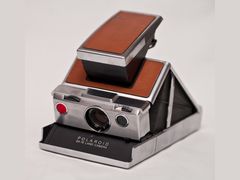
Exposed film should be processed promptly; Kodak says it can sit in a refrigerator for a few days when necessary. Instant film works differently: Polaroid prints a production date, not an expiration date, and says the film is best used within 12 months. See does Polaroid film expire for details.
| Coming from | Warm-up before breaking the seal | Source |
|---|---|---|
| Fridge | About 2 hours or more at room temperature | Carmencita Film Lab |
| Freezer (ideal) | 24 hours in the fridge, then a couple of hours at room temperature | Carmencita Film Lab |
| Freezer (in a hurry) | About 6 hours or more at room temperature | Carmencita Film Lab |
| Large packages and rolls of film | Remove from refrigeration the day before | Kodak |
Sources: filmphotographyproject.com, kodak.com, carmencitafilmlab.com, straightdope.com, polaroid.com
Questions people ask
Can you use 20-year-old expired film?
Often, yes, if it was stored reasonably. Parallax got saturated colors from Kodak Ultra 400 that expired in August 2004 by rating it at ISO 100, while Fstoppers describes a 20+ year Kodak Gold 400 roll that needed two to three stops. EMULSIVE says film frozen from new a decade or two past date will likely look 95 to 100 percent like fresh.
Sources: parallaxphotographic.coop, fstoppers.com, emulsive.org
Should I step down when using expired 1600 film?
Rate it slower, not faster. High-speed film loses the most speed and gains the most fog with age: Kodak says an EI 500 film can show about three times the change of an EI 125 film. Give it more exposure than a slow film of the same age and bracket.
Sources: kodak.com, silvergrainclassics.com
Can you shoot expired slide film?
Yes, but it is the least forgiving type, with little latitude for exposure error. Fstoppers says to add a third of a stop at most, and Silvergrain Classics warns that more than one stop over can wipe out the image. If you are unsure the film will work at all, Silvergrain suggests cross-processing it in C-41 as a negative.
Sources: fstoppers.com, silvergrainclassics.com, uniquephoto.com, photostudioberlin.com
Does freezing film stop it from expiring?
No, but cold slows aging, which is why Kodak's motion picture guide recommends freezing at 0 to -10 F for storage beyond 3 months. It cannot stop background gamma radiation, which Kodak says stays a factor in long-term storage, so fast film still gains some grain and fog.
Sources: kodak.com, carmencitafilmlab.com
Does expired film work in a regular camera?
Yes. It loads and shoots like fresh film; what changes is the exposure you choose. A point-and-shoot with only one stop of compensation may not give an old high-speed roll enough exposure, as in an Fstoppers example with a 20+ year Kodak Gold 400 roll.
Sources: fstoppers.com
Can a lab develop old Kodachrome?
Only as black and white. Kodachrome can no longer be processed in color anywhere, and Film Rescue International develops it into black-and-white negatives.
Sources: filmrescue.com, en.wikipedia.org
How long does film last before it is considered expired?
Until the date printed on the box, which Kodak advises using film before for best results. Polaroid instant film carries a production date instead and is best used within 12 months. After those dates the film still works, but results depend more and more on how it was stored.
Sources: filmphotographyproject.com, polaroid.com
How long can undeveloped film last?
Properly stored unused film can last 30 years or longer, according to the Film Photography Store. Exposed film is different: Kodak says to process it promptly and allows a few days in a refrigerator when necessary. For an old exposed roll, Film Rescue International recommends a specialist lab once black-and-white 35mm or 126 film is about 20 years past its process-before date.
Sources: filmphotographystore.com, filmphotographyproject.com, filmrescue.com
Sources
Every fact on this page comes from one of these. How we choose and check sources is in our methodology.
Show all 20 sources
retailer 8
- Parallax Photographic: Guide To Shooting Expired Film
- Parallax Photographic: Kodak Ultra 400 Expired Film Review
- Unique Photo: Expired Film Exposure Guide
- Film Photography Store: Expired film collection
- Old School Photo Lab (Dover, NH)
- Dwayne's Photo: Services
- Brooklyn Film Camera: Random Expired Film
- FilmWholesale: Expired film sale
official 4
Editorial reviews 4
Independent blogs 3
Manuals and references 1
Keep reading
Film stocks
How to push film: what a stop means, what to set on your camera, how to tell the lab, one-stop fees from $0 to $4, home development times and how to pull film.
Film stocks
Film ISO is a roll's light sensitivity: double the number, one stop faster, more grain. Which ISO to buy, box speed, push and pull, and what a wrong ISO does.
Developing and scanning
The best US labs for mail-in film developing, with October 2026 prices, shipping costs, turnaround times and scan sizes for The Darkroom, Dwayne's and more.
Developing and scanning
A roll of 35mm film costs $5 to $11.50 to develop at US labs, or $11.50 to $29 with scans. Prices from 12 labs and the big chains, checked October 2026.
Instant cameras
Yes. Polaroid film is best used within 12 months of the production date on the box. How to read the date, store packs, test old film and keep prints.
Film stocks
Where to buy 35mm film online in the US: B&H, CineStill, FPP, Midwest Photo and camera shops that ship. Kodak Gold 200 ran $8.49 to $9.49 in October 2026.