Explainer
ISO in Film Photography: What the Number on the Box Means
The short answer
In film photography, ISO is the film's rated sensitivity to light, printed on the box: the higher the number, the less light the film needs, and every doubling (200 to 400) is one stop more sensitive.
Most film is sold between ISO 50 and 3200, with 100 to 400 the common speeds, and the whole roll is shot at one ISO. Faster film shows more grain, and Bay Photo Lab suggests ISO 400 as the place to start.
- Common film speeds
- ISO 100 to 400bayphoto.com
- One stop faster
- Double the ISO (400 to 800)en.wikipedia.org
- Lab's starter pick
- ISO 400bayphoto.com
- ISO replaced ASA and DIN
- 1974en.wikipedia.org
- Sunny 16 exposure
- f/16 at 1/ISO in full sunen.wikipedia.org
- Push or pull fee, The Darkroom
- $2 feethedarkroom.com
What does ISO mean on film?
ISO is the film's light sensitivity. Bay Photo Lab puts it simply: the higher the number, the more sensitive the film. On a film box, ISO, ASA and film speed mean the same thing, so an old camera with an ASA dial takes the ISO number straight off a modern box.
ISO is not an acronym. Wikipedia says the short name of the International Organization for Standardization is derived from the Greek word isos, meaning equal, though that explanation was not mentioned at the organization's founding meetings. Its standards (ISO 6, ISO 2240 and ISO 5800) define film speed. Before that, the American Standards Association created the ASA rating in 1943, Europe used DIN, and the two were merged into ISO in 1974.
A full ISO rating has two parts. A roll marked ISO 100/21° is 100 on the old ASA scale and 21 on the DIN degree scale. This page uses the first number, the arithmetic ISO speed.
Some guides expand ISO as "International Standards Organization," but the letters do not officially stand for any words.
Sources: bayphoto.com, en.wikipedia.org, wolfcrow.com, en.wikipedia.org
How the film ISO scale works: stops and doubling
The number on the box is arithmetic: double the number and the film is twice as sensitive, which photographers call one stop. ISO 400 film needs half the light of ISO 200 film and a quarter of the light of ISO 100 film.
The degree number works differently: add 3° and sensitivity doubles, so ISO 200/24° is twice as fast as ISO 100/21°. The table runs the common speeds through both scales and through the Sunny 16 rule, which says that in bright sun you can shoot at f/16 with a shutter speed of 1 over the ISO. Use the closest shutter speed your camera has.
- Want the exposure math with aperture and shutter speed together? See the exposure triangle for film.
- Shooting without a meter? The Sunny 16 rule covers shade, overcast and backlight adjustments.
| ISO (box number) | Degrees (+3° per stop) | Stops faster than ISO 100 | Sunny 16 at f/16 |
|---|---|---|---|
| 100 | 21° | 0 | 1/100 s |
| 200 | 24° | 1 | 1/200 s |
| 400 | 27° | 2 | 1/400 s |
| 800 | 30° | 3 | 1/800 s |
| 1600 | 33° | 4 | 1/1600 s |
| 3200 | 36° | 5 | 1/3200 s |
Sources: en.wikipedia.org, en.wikipedia.org, en.wikipedia.org
Which ISO film should you buy?
Pick the speed for the light you will shoot most of the roll in, because you can't swap it halfway. If you are unsure, Bay Photo Lab suggests ISO 400: it is sensitive enough for many conditions and works at night with a flash.
Stores draw the slow and fast lines in different places. Parallax Photographic calls ISO 20 to 200 low speed and 400 to 3200 fast; Focus Camera calls ISO 400 versatile and ISO 800 to 3200 high speed. Treat the classes as rough. The prices below are single 35mm rolls from two US film sellers, the Film Photography Project store (FPP) and Glazer's Camera in Seattle, checked October 28, 2026.
| ISO | Light it suits | Example stocks | Price per roll |
|---|---|---|---|
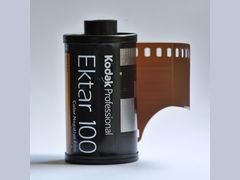
| 50 to 100 | Bright sun, smoothest grain | Ilford Pan F Plus 50, Kodak Ektar 100 | $13.99 (both, FPP store) to $16.99 (Pan F Plus 50, Glazer's) |
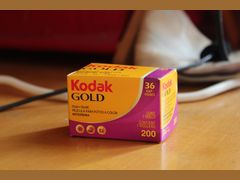
| 125 to 200 | Daylight or flash | Ilford FP4 Plus 125, Kodak Portra 160, Kodak Gold 200 | $8.99 (Gold 200, FPP) to $13.99 (Portra 160, FPP) |
| 400 | Mixed light, overcast, indoors or night with flash | Kodak Ultramax 400, Kodak Portra 400, Ilford HP5 Plus, Kodak Tri-X 400 | $8.99 (Tri-X 400, FPP) to $15.99 (Portra 400, FPP) |
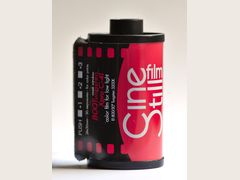
| 800 | Dim interiors, night, tungsten light (800T) | Kodak Portra 800, CineStill 800T | $17.99 (CineStill 800T, Glazer's) to $19.49 (Portra 800, Glazer's) |
| 3200 (marketed) | Night and very dim light, pushed black and white | Ilford Delta 3200, Kodak T-Max P3200 | $13.99 (T-Max P3200, FPP) to $16.99 (Delta 3200, Glazer's) |
Speeds go lower than ISO 50: the Film Photography Project store sells an ISO 1 specialty film, FPP Sun Color, for $13.99 a roll.
Sources: bayphoto.com, parallaxphotographic.coop, focuscamera.com, kodakprofessional.com, glazerscamera.com, glazerscamera.com, filmphotographystore.com, filmphotographystore.com, filmphotographystore.com
Does higher ISO film have more grain?
Generally, yes. Film gets its speed from larger silver halide grains in the emulsion, and larger grains catch light more easily but show up as visible texture. That is why ISO 800 and 3200 films generally look grittier than ISO 50 or 100 films.
For smooth, crisp images, Bay Photo points to low-ISO stocks like Kodak Ektar 100 and Ilford Pan F 50. Kodak says Ektar 100 has the finest, smoothest grain of any color negative film available today.
Exposure changes grain too: underexposed film looks grainier than overexposed film, so a roll shot under its box speed can look grainier than the number on the box suggests.
Sources: en.wikipedia.org, bayphoto.com, kodakprofessional.com
Can you change ISO in the middle of a roll of film?
No. With film, the entire roll is shot at one ISO, because every frame is developed together. Unlike a digital camera, you can't raise ISO for one dark frame and lower it for the next.
Turning the ISO dial on the camera only changes what the light meter assumes. Bay Photo's example: leave ISO 200 film in the camera, set the dial to 800, and you get muddy, underexposed photos, because the film's real sensitivity never changed.
Cameras that read DX codes set the speed for you. Kodak introduced DX encoding on January 3, 1983, a conductive pattern on the cartridge that automatic cameras read, and the first point-and-shoots to set film speed from it came out in 1984. On a camera that doesn't read DX, you set the ISO or ASA dial by hand each time you load a roll.
Sources: bayphoto.com, en.wikipedia.org
What happens if you shoot film at the wrong ISO?
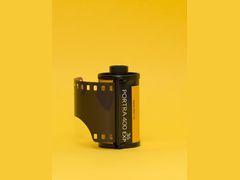 Portra 400
Set a higher number than the film and you underexpose it. Each doubling is one stop less light: ISO 400 film shot with the dial at 800 is one stop under, at 1600 two stops under. Underexposed color negatives get burnt shadows with no detail and more grain.
Set a lower number and you overexpose it. Color negative film handles that well because it has far more exposure latitude than slide film. Moment's Portra 400 guide says you can overexpose Portra 400 by one to two stops with excellent results, and many shooters rate it at ISO 200 to 320 for denser negatives, then have it developed normally.
Kodak, for its part, rates Portra 400 at true ISO 400 and says that is the speed that delivers its skin tones and saturation, so box speed is a safe default and overexposure is a choice.
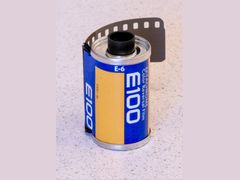
Slide film such as Kodak Ektachrome E100, an E-6 film, has very little latitude, so set the dial to box speed and meter carefully.
Sources: en.wikipedia.org, shopmoment.com, en.wikipedia.org, en.wikipedia.org, en.wikipedia.org, kodakprofessional.com, analoguewonderland.co.uk
Box speed, EI, push and pull
Box speed is the ISO printed on the box, the maker's recommended rating. Exposure index (EI) is the speed you choose to rate a film at for a situation, when it differs from box speed. Rating ISO 400 film at EI 800 and push-processing it is one way to get printable negatives in low light.
Each stop of push doubles the rating and each stop of pull halves it. From box speed 400, +1 is 800, +2 is 1600 and +3 is 3200; -1 is 200, -2 is 100 and -3 is 50. Pushing adds contrast and makes grain more noticeable. The table shows the push ratings Kodak states for its films, plus the figure Wikipedia lists for Ilford HP5 Plus. Our guide to pushing and pulling film covers development in detail.
| Film | Box or nominal speed | Stated push | Source |
|---|---|---|---|
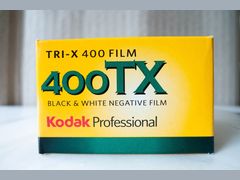 Kodak Tri-X 400 | ISO 400 | EI 1600 | Kodak |
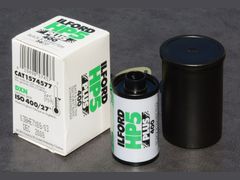 Ilford HP5 Plus | ISO 400 | 3200 | Wikipedia (Ilford HP) |
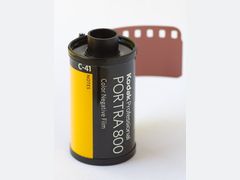 Kodak Portra 800 | ISO 800 | 1600 | Kodak |
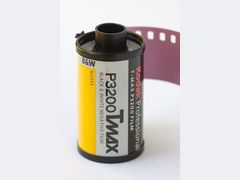 Kodak T-Max P3200 | ISO 800 (nominal) | EI 3200 or higher | Kodak |
Sources: parallaxphotographic.coop, en.wikipedia.org, thedarkroom.com, kodakprofessional.com, en.wikipedia.org, kodakprofessional.com, kodakprofessional.com
How to shoot a roll at a different ISO than the box
- 1
Pick one rating for the roll
The whole roll is developed the same way, so choose your EI before the first frame and keep it for every shot.
- 2
Set the camera
Turn the ISO or ASA dial to your chosen rating. To overexpose ISO 400 film by one stop on a camera without exposure compensation, Moment suggests simply setting the dial to 200.
- 3
Shoot the full roll
Meter every frame at that rating. Changing the rating partway leaves some frames off by the difference between the two settings.
- 4
Tell the lab only if you pushed or pulled
Write the stops on the order form and on the canister itself; The Darkroom lists a $2 fee for a push or pull. Moment notes that many shooters rate Portra 400 at ISO 200 to 320 and then have it developed normally, so mild overexposure like that needs no push or pull note.
Sources: bayphoto.com, shopmoment.com, thedarkroom.com
Is a 3200 film really ISO 3200?
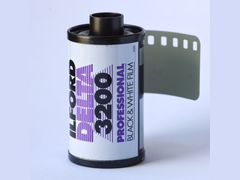 Delta 3200
Not quite. According to the data sheets, Ilford Delta 3200 is actually an ISO 1000 film, and Kodak says T-Max P3200 has a nominal speed of ISO 800; the P means it is designed to be push-processed to EI 3200 or higher.
The DX code on these cartridges carries the marketed speed, 3200, not the measured ISO speed, so that automatic cameras and labs can treat the roll as 3200. If your camera sets 3200 from the code, you are shooting P3200 two stops past its nominal 800 (800 to 1600 to 3200). Writing a push or pull on the canister and the order form, as The Darkroom asks, keeps development matched to how you exposed the roll.
Box numbers have shifted before. When the US ASA standard was revised in 1960, many black-and-white negative film speeds doubled on paper: Ilford HP3 went from 200 ASA to 400 ASA with no change to the emulsion.
Sources: en.wikipedia.org, kodakprofessional.com, thedarkroom.com
How to shoot low ISO film
Low ISO film (50 to 200) wants bright light. Sunny 16 gives the baseline: in full sun, f/16 at 1/100 s for ISO 100 film. As the light drops, open the aperture (f/11, f/8, f/5.6) or slow the shutter, one stop for each step.
Slow shutter speeds bring camera shake, so Parallax Photographic recommends a tripod when you shoot slow film in less light. Long exposures bring a second catch: film follows normal exposure math from about 1/1000 s to 1/2 s, and outside that range the relationship breaks down (reciprocity failure).
Sources: en.wikipedia.org, en.wikipedia.org, parallaxphotographic.coop
Does airport X-ray damage high ISO film?
It can, and faster film is more at risk. Parallax Photographic says traditional carry-on X-ray scanners are safe for all but the fastest films, ISO 800 and above, but that newer CT scanners for cabin bags run a high chance of damaging film of any ISO, citing initial testing by Ilford Photo.
TSA recommends packing undeveloped film in your carry-on, or taking it to the checkpoint and asking for a hand inspection. For instant film specifics, see instant film and airport X-ray.
Sources: parallaxphotographic.coop, tsa.gov
Questions people ask
What does ISO stand for in cinematography?
ISO is the International Organization for Standardization, and Wikipedia says its short name is derived from the Greek isos, meaning equal, so the letters are not initials. In cinematography, ISO follows the older ASA film rating. A cinematographer might also meter at an exposure index instead, for example Kodak film rated ASA 500 metered at EI 320, which gives it more light.
Sources: en.wikipedia.org, wolfcrow.com, wolfcrow.com
What happens if I shoot a 400 ISO film at 200?
You overexpose every frame by one stop. Color negative film handles that well: many Portra 400 shooters rate it at ISO 200 to 320 for denser negatives and have it developed normally. Slide film is less forgiving, so keep it at box speed.
Sources: shopmoment.com, en.wikipedia.org
Is ASA the same as ISO?
For the number on the box, yes. The arithmetic ISO scale is the old ASA scale, so ASA 400 film is ISO 400 film. A full ISO rating also adds a degree number from the DIN scale, as in ISO 400/27°.
Sources: en.wikipedia.org, en.wikipedia.org
What ISO film should a beginner use?
ISO 400. Bay Photo Lab recommends it as the place to start because it handles many conditions and can work at night with a flash. Kodak Ultramax 400 in color and Ilford HP5 Plus in black and white are 400-speed films, and [Kodak Gold 200 vs Ultramax 400](/film/kodak-gold-200-vs-ultramax-400/) compares Kodak's two everyday films.
Sources: bayphoto.com, kodakprofessional.com
Can you shoot ISO 100 film most of the time?
In daylight, yes: Sunny 16 puts ISO 100 at f/16 and 1/100 s in full sun, with room to open up as clouds roll in. In shade, indoors or at night you will need wide apertures, a tripod for slow shutter speeds, a flash, or faster film.
Sources: en.wikipedia.org, parallaxphotographic.coop
What ISO film is best for night or indoors?
Faster film, or ISO 400 with a flash. Focus Camera calls ISO 800 to 3200 high speed, and Bay Photo Lab says ISO 400 can work at night if you use a flash. Kodak says Portra 800 can be pushed to 1600 when you need extra speed, and CineStill 800T is an ISO 800 film balanced for tungsten light. Ilford Delta 3200 and Kodak T-Max P3200 are sold as 3200-speed films, though their data sheets put them at about ISO 1000 and 800.
Sources: bayphoto.com, focuscamera.com, kodakprofessional.com, glazerscamera.com, en.wikipedia.org
What is the 20 60 20 rule in photography?
It has nothing to do with ISO, and it has no single meaning. One blog uses it for a shoot plan: the first 20% safe shots, the middle 60% creative play, the last 20% risky ideas. Ulanzi uses the same name for a framing technique that splits the frame into zones for depth.
Sources: whosaidphotography.com, ulanzi.com
Sources
Every fact on this page comes from one of these. How we choose and check sources is in our methodology.
Show all 31 sources
retailer 12
- The Darkroom: FAQ (push and pull)
- Moment: Kodak Portra 400 Review
- Parallax Photographic: Guide to Film Speed
- Parallax Photographic: Airport X-ray and film
- Focus Camera: What Size & Speed Film Should I Use?
- Analogue Wonderland: Getting Into Film Photography, Films
- Glazer's Camera: 35mm Film
- Glazer's Camera: 35mm Film, page 2
- Film Photography Project store: 35mm Film, page 2
- Film Photography Project store: 35mm Film, page 3
- Film Photography Project store: 35mm Film, page 4
- Ulanzi: What Is the 20-60-20 Rule in Photography?
Manuals and references 8
official 7
Independent blogs 3
Editorial reviews 1
Keep reading
Film stocks
How to push film: what a stop means, what to set on your camera, how to tell the lab, one-stop fees from $0 to $4, home development times and how to pull film.
Techniques and editing
The exposure triangle links aperture, shutter speed and ISO: one stop on any side doubles or halves the light. How it works on film, where the roll sets ISO.
Techniques and editing
The sunny 16 rule: f/16 at 1/ISO in clear sun, wider for clouds and shade. Chart by ISO, backlight fixes, zone focusing presets and how to meter film.
Film stocks
Not sure what film to use? Start with ISO 400 color film like Kodak UltraMax 400 ($9.99), then pick by light, camera, lab and look, with 2026 US prices.
Film stocks
Kodak UltraMax 400 vs Gold 200: UltraMax is one stop faster for shade, indoors and reusable cameras. Gold is warmer and cheaper, about $8.45 to $10 a roll.
Film stocks
Expired film still works if it was stored well. Rate color negative about one stop slower per decade, keep slide film near box speed, and develop normally.