Explainer
The Exposure Triangle, Explained for Film Photography
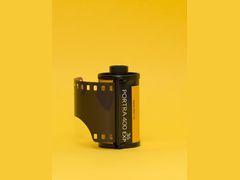
The short answer
The exposure triangle is the relationship between aperture, shutter speed and ISO, the three settings that decide how bright a photo comes out: a one-stop change in any of them doubles or halves the exposure, so f/2.8 at 1/125 s gives the same result as f/4 at 1/60 s.
On film, ISO is fixed by the roll you load, so mid-roll you balance only aperture and shutter speed, and each choice also changes the look: depth of field, motion blur and, through the film you buy, grain.
- One stop
- Twice or half the lighten.wikipedia.org
- Full-stop apertures
- f/1.4, 2, 2.8, 4, 5.6, 8, 11, 16, 22fstoppers.com
- Same exposure
- f/2 at 1/250 = f/2.8 at 1/125 = f/4 at 1/60en.wikipedia.org
- Sunny 16
- f/16 at 1/ISO in direct sunen.wikipedia.org
- Slowest handheld speed
- About 1/focal length (1/60 s with a 50mm lens)en.wikipedia.org
- Kodak Gold 200 latitude
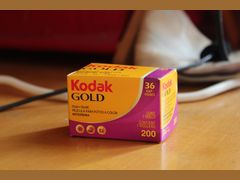
- 2 stops under, 3 stops overkodak.com
What is the exposure triangle?
Exposure is the amount of light that reaches each part of the film. Three settings decide how bright the result comes out: the aperture (how wide the lens opens), the shutter speed (how long the film is uncovered) and the ISO (how sensitive the film is). They are drawn as a triangle because they are linked: change one and you have to move another to keep the same brightness.
The unit that ties them together is the stop. One stop means twice or half the light, and it is the same size on all three sides: opening the aperture one stop, doubling the exposure time or using film twice as sensitive all have the same effect on the image. That is why f/2.8 at 1/125 s, f/2 at 1/250 s and f/4 at 1/60 s all give the same exposure.
| Setting | Full-stop scale | One step to the right |
|---|---|---|
| Aperture | f/1.4, f/2, f/2.8, f/4, f/5.6, f/8, f/11, f/16, f/22 | Half the light |
| Shutter speed | 1 s, 1/2, 1/4, 1/8, 1/15, 1/30, 1/60, 1/125, 1/250, 1/500, 1/1000 | Half the light |
| Film ISO | 100, 200, 400, 800, 1600, 3200 | Twice as sensitive, so it needs half the light |
The f-number is the focal length divided by the diameter of the lens opening, which is why a bigger number means a smaller hole.
Sources: en.wikipedia.org, en.wikipedia.org, en.wikipedia.org, fstoppers.com, en.wikipedia.org
What does each setting change besides brightness?
Brightness is only half of each choice, because every side of the triangle also changes how the picture looks.
Two blur limits are easy to mix up. Subject motion depends on the scene: photographer Cory Parris notes that below 1/60 s people walking or dancing blur, and athletic events can need 1/500 s. Camera shake depends on the lens: the slowest speed you can hand-hold comfortably is roughly 1 over the focal length, so 1/60 s with a 50mm lens on a 35mm camera.
On film, the price of a higher ISO is grain. The faster the film, the more grain, and underexposed film looks grainier than overexposed film, so a fast film that is also underexposed adds grain on both counts.
| Setting | For a brighter exposure | Side effect | Reference points |
|---|---|---|---|
| Aperture | A wider opening (f/2.8 instead of f/16) | Shallower depth of field | f/2.8 gives a shallow zone of focus, f/16 keeps most of the scene sharp |
| Shutter speed | A slower speed (1/30 s instead of 1/250 s) | Motion blur and camera shake | 1/30 s can blur a moving subject, 1/250 s can freeze action |
| ISO (film speed) | A faster film (ISO 1600 instead of 100) | More grain | Fast films, used in low light or for high-speed motion, are comparatively grainy |
Sources: pressbooks.cuny.edu, coryparris.com, en.wikipedia.org, en.wikipedia.org
How does the exposure triangle work on film?
The stop arithmetic is the same on film and digital. The difference is the ISO corner: on a digital camera it is a setting you can change for every shot, while on film it is the emulsion you loaded, and changing it mid-roll is very difficult, as Analogue Wonderland puts it. You choose your ISO at the store, then spend the roll balancing aperture and shutter speed.
The ISO dial on a film camera does not change the film. It only tells the built-in light meter what is loaded, which is why cameras without a meter have no ISO setting at all, according to Shoot It With Film. Many later cameras set it automatically from the DX code on the cartridge. Set it to box speed, the number printed on the box, unless you plan to push the roll.
That makes buying film your ISO decision for the day. The CUNY photography textbook suggests ISO 100 for bright sun, ISO 400 as the all-round film to start with and ISO 1600 for low light or indoors. Kodak lists what the extra speed of Ultramax 400 buys: better low-light performance, longer flash range, better action shots and less visible camera shake. For more on film speed itself, see Film ISO Explained.
Sources: analoguewonderland.co.uk, shootitwithfilm.com, en.wikipedia.org, pressbooks.cuny.edu, kodak.com
How to trade stops without changing the exposure
Once the meter gives you one correct combination, you can slide along a whole family of equivalent ones: every stop you take from the aperture, give back to the shutter speed, and the other way around. A light meter gives you a correct exposure, the CUNY textbook notes, but not necessarily the combination that gives you the look you want.
Its worked example: the meter suggests f/16 at 1/60 s, but you want to freeze a person jumping in mid-air at 1/500 s. Going from 1/60 to 1/500 is three stops faster (1/125, 1/250, 1/500), so you open three stops, from f/16 to f/11, f/8 and f/5.6. f/5.6 at 1/500 s is the same exposure, with the jump frozen and the background softer.
Exposure value (EV) is shorthand for these families. 1/125 s at f/16 is EV 15, which in Wikipedia's ISO 100 table matches a sunlit scene with distinct shadows, while home interiors sit at EV 5 to 7. That puts indoor light 8 to 10 stops below full sun (15 minus 7, or 15 minus 5), a gap that faster film, a wider aperture, a slower shutter or flash has to make up.
Sources: pressbooks.cuny.edu, en.wikipedia.org, en.wikipedia.org
How to set exposure on a film camera, step by step
A practical order of operations for a manual or semi-automatic 35mm camera.
- 1
Pick film for the light
Buy ISO 100 for bright sun, ISO 400 as an all-round starter and ISO 1600 for low light or indoors. That speed stays fixed for the whole roll.
- 2
Set the ISO dial to box speed
This tells the meter what is loaded. DX-coded cameras read it from the cartridge, and meterless cameras have no ISO dial.
- 3
Decide: depth or motion
If background blur or front-to-back sharpness matters most, set the aperture first. If freezing or blurring movement matters most, set the shutter speed first.
- 4
Check your handheld limit
Keep the shutter at or faster than 1 over the focal length, which is 1/60 s with a 50mm lens, unless the camera is on a tripod.
- 5
Meter, or use Sunny 16
Follow the camera's needle or LEDs, use a handheld meter, or in daylight use Sunny 16: f/16 at 1/ISO in direct sun.
- 6
Trade stops for the look
Whatever you take from one setting, give back with the other. Three stops faster on the shutter means three stops wider on the aperture.
- 7
On color negative, lean toward more light
Meter for the shadows in even light and for the mid-tones in high contrast, as The Darkroom recommends. Slide film needs an accurate reading instead.
- 8
If the light runs out, push the roll
Rate the rest of the roll one stop faster (ISO 400 film at 800) and write +1 on the cartridge and the lab order form.
Sources: pressbooks.cuny.edu, shootitwithfilm.com, en.wikipedia.org, en.wikipedia.org, en.wikipedia.org, thedarkroom.com, en.wikipedia.org
Sunny 16: the exposure triangle without a light meter
Sunny 16 estimates daylight exposure without a meter: in direct sun, set f/16 and a shutter speed of 1 over the film's ISO. With ISO 400 film that is 1/400 s, so 1/500 s, the nearest setting on most dials; with ISO 200 film, 1/200 s rounds to 1/250 s. As the light drops, keep the shutter speed and open the aperture.
From there, trade stops as usual: f/11 at 1/1000 s is the same exposure as f/16 at 1/500 s, if you want a faster shutter or a little less depth of field.
A meter still helps in shade, interiors and backlight. Many classic SLRs have one built in, and separate meters cover the rest: in October 2026 Glazer's Camera in Seattle listed compact Keks OLED meters at $84.99 (KM-Q) and $99 (KM02), the Sekonic Flashmate L-308X-U at $269 and the Sekonic Litemaster Pro L-478D-U at $419. The Sunny 16 guide covers metering and zone focusing in more depth.
| Light | Shadows | Aperture |
|---|---|---|
| Snow or sand in sun | Dark with sharp edges | f/22 |
| Direct sun | Distinct | f/16 |
| Slight overcast | Soft around the edges | f/11 |
| Overcast | Barely visible | f/8 |
| Heavy overcast | None | f/5.6 |
| Open shade or sunset | None | f/4 |
Sources: en.wikipedia.org, glazerscamera.com
Should you overexpose or underexpose film?
With color negative film, err toward more light. Negative film dislikes being starved of light, so the usual bias is to expose for the shadows, where digital shooters protect the highlights. Latitude also grows somewhat with faster negative stocks.
Underexposure is the bigger risk: the negative comes out thin, the print too dark and the grain more visible. The Darkroom, a US mail-in lab, says underexposure is the most common mistake it sees on regular and pushed black and white film. Its advice is to meter for the shadows in even light and for the mid-tones in high-contrast light.
Slide film is the exception. Transparency film has narrow latitude in both highlights and shadows, so exposure has to be more accurate than with negative film.
| Film type | Example | Tolerance | How to expose |
|---|---|---|---|
| Color negative | Kodak Gold 200 | Up to 2 stops under and 3 stops over (Kodak) | Lean toward more light and meter for the shadows |
| Color negative | Kodak Portra 400 | 1 to 2 stops over with excellent results (Moment) | Set the ISO dial to 200 for one stop extra |
| Black and white negative | Kodak Tri-X 400, Ilford HP5 Plus | No stop figure given; underexposure is the most common mistake (The Darkroom) | Meter for the shadows in even light |
| Slide (transparency) | Kodak Ektachrome E100 | Narrow in highlights and shadows (Wikipedia) | Meter carefully; there is little room for error |
Sources: en.wikipedia.org, kodak.com, shopmoment.com, thedarkroom.com, pressbooks.cuny.edu, en.wikipedia.org
Can you raise ISO on film? Push processing
You cannot make the film more sensitive mid-roll, but you can rate it faster and have the lab compensate. Setting ISO 400 film to 800 on the camera is one stop of underexposure; the fix is to develop the whole roll longer, called pushing. The Darkroom asks you to write +1 on the cartridge and the order form. Shoot a roll a stop under without pushing it and the photos come back underexposed.
Pushing a stop or two buys a faster shutter speed or a smaller aperture, which is the point in dim light. Kodak Alaris lists Tri-X 400's maximum push as EI 1600, two stops. Because development applies to the whole roll, frames already shot at box speed get pushed too. Pulling, the reverse, is almost always done with black and white film, and The Darkroom does not recommend it for color. Step-by-step instructions are in How to Push and Pull Film.
Sources: thedarkroom.com, en.wikipedia.org, kodakprofessional.com
Long exposures and reciprocity failure
The one-stop trade (halve the shutter time, open the aperture a stop) holds for most film between about 1 second and 1/1000 s. Past roughly 1 second, film needs more exposure than the meter calculates, which is called reciprocity failure.
The correction depends on the emulsion. Shoot It With Film gives Ilford HP5 Plus as an example: a 15-second meter reading needs an extra 1 minute 20 seconds, for 1 minute 35 seconds in total. The same author found Fuji Acros 100 unaffected until exposures reached 2 minutes. For any stock, the manufacturer's data sheet has the correction.
Sources: en.wikipedia.org, shootitwithfilm.com
Which camera modes control which settings?
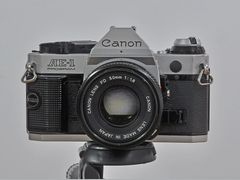
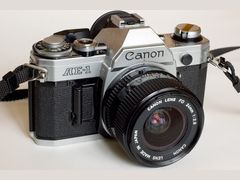
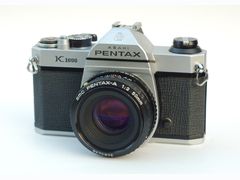
On a film camera ISO is always the film; the exposure mode only decides who sets the aperture and who sets the shutter speed. The Canon AE-1 is a shutter-priority camera, the Nikon FE is aperture priority, the Canon A-1 was the first SLR with an electronically controlled program mode, and the Pentax K1000 is fully manual and works without batteries.
Simple film cameras often have one fixed shutter speed, typically 1/60 or 1/80 s, so in dim light they depend on flash. The Darkroom says single-use cameras used indoors or in low light without the flash are the most common culprits behind blank rolls.
| Mode | You set | The camera sets | Classic example |
|---|---|---|---|
| Manual (M) | Aperture and shutter speed | Nothing; the meter only advises | Pentax K1000 (the battery only runs the meter) |
| Aperture priority (A or Av) | Aperture | Shutter speed | Nikon FE |
| Shutter priority (S or Tv) | Shutter speed | Aperture | Canon AE-1 |
| Program (P) | Nothing but framing and focus | Aperture and shutter speed | Canon A-1 |
| Fixed exposure | Nothing | Nothing; one shutter speed, typically 1/60 or 1/80 s | Simple film cameras |
Sources: pressbooks.cuny.edu, global.canon, en.wikipedia.org, en.wikipedia.org, en.wikipedia.org, analoguewonderland.co.uk, thedarkroom.com
Is the exposure triangle the wrong way to learn exposure?
Some teachers say the triangle is a misleading model. Exposure-Triangle.com argues that the model leaves out scene luminance, the brightness of the scene itself, which it calls the most important part of exposure, and that on a digital camera ISO is gain applied after the sensor has recorded the light. Simon d'Entremont's YouTube channel has a video titled "Why the Exposure Triangle IS THE WRONG WAY to learn photography."
On film the objection is weaker. Film ISO is the sensitivity of the emulsion itself, not gain added later, but it is fixed for the roll. In practice you read the scene's light, set aperture and shutter speed, and choose the third corner when you buy the film.
Sources: exposure-triangle.com, youtube.com, en.wikipedia.org
Questions people ask
What are the three parts of the exposure triangle?
Aperture, shutter speed and ISO. Aperture is the size of the lens opening and also sets depth of field, shutter speed is how long the film is exposed and also sets motion blur, and ISO is the film's sensitivity and also sets grain. One stop on any of them doubles or halves the exposure.
Sources: pressbooks.cuny.edu, en.wikipedia.org
Can you change ISO in the middle of a roll of film?
Not the film's real sensitivity, which is set by the emulsion. You can rate the rest of the roll faster, for example ISO 400 film at 800, but then the whole roll has to be push processed and marked +1, so earlier frames get pushed too. Turning the dial without telling the lab just underexposes those frames.
Sources: thedarkroom.com, analoguewonderland.co.uk
Is it better to overexpose or underexpose film?
With color negative film, overexpose rather than underexpose: Kodak rates Gold 200 at up to three stops over but only two under. Underexposed negatives come out thin and grainy and print too dark. Slide film has narrow latitude both ways, so aim for an accurate reading.
Sources: kodak.com, pressbooks.cuny.edu, en.wikipedia.org
What shutter speed freezes motion?
1/250 s can freeze action, and athletic events may need 1/500 s. Slower than 1/60 s, people walking or dancing blur. If you need a faster speed, open the aperture by the same number of stops to keep the exposure.
Sources: pressbooks.cuny.edu, coryparris.com
Do I need a light meter for film photography?
Not for daylight, where Sunny 16 works: f/16 at 1/ISO in direct sun, opening up as clouds roll in. For interiors, shade and backlight, use the camera's built-in meter or a handheld one. In October 2026 Glazer's Camera listed separate meters such as the compact Keks KM-Q at $84.99 and the Sekonic Litemaster Pro L-478D-U at $419.
Sources: en.wikipedia.org, glazerscamera.com
Why did my film photos come back dark or blank?
Often underexposure. The Darkroom lists it with expired film, loading problems, camera faults and light leaks as causes of blank rolls, and says single-use cameras used indoors or in low light without the flash are the most common culprits. Home interiors are 8 to 10 stops dimmer than full sun (EV 5 to 7 against EV 15 in Wikipedia's table), and a camera with one shutter speed cannot adjust for that without flash.
Sources: thedarkroom.com, en.wikipedia.org
How do I overexpose film on a camera without exposure compensation?
Set the ISO dial lower than box speed. With ISO 400 film, setting the dial to 200 tells the meter the film is a stop slower, so every frame gets one stop more exposure. Moment suggests this for Kodak Portra 400.
Sources: shopmoment.com
Sources
Every fact on this page comes from one of these. How we choose and check sources is in our methodology.
Show all 27 sources
Manuals and references 12
- Wikipedia: Exposure (photography)
- Wikipedia: F-number
- Wikipedia: Shutter speed
- Wikipedia: Film speed
- Wikipedia: Exposure value
- Wikipedia: Sunny 16 rule
- Wikipedia: Reciprocity (photography)
- Wikipedia: DX encoding
- Wikipedia: Nikon FE
- Wikipedia: Canon A-1
- Wikipedia: Pentax K1000
- CUNY Pressbooks, Photography: What, How, Why: Film exposure
official 4
retailer 4
Independent blogs 4
Editorial reviews 2
Video reviews 1
Keep reading
Film stocks
Film ISO is a roll's light sensitivity: double the number, one stop faster, more grain. Which ISO to buy, box speed, push and pull, and what a wrong ISO does.
Techniques and editing
The sunny 16 rule: f/16 at 1/ISO in clear sun, wider for clouds and shade. Chart by ISO, backlight fixes, zone focusing presets and how to meter film.
Film stocks
How to push film: what a stop means, what to set on your camera, how to tell the lab, one-stop fees from $0 to $4, home development times and how to pull film.
Film cameras
The best film camera for beginners is usually a used Canon AE-1 Program or Pentax K1000. Compare 8 picks, October 2026 US shop prices and what to check first.
Techniques and editing
How to use flash photography: stay at or below sync speed (1/60 on a Canon AE-1), set aperture as guide number divided by distance, then bounce and gel it.
Techniques and editing
Film photography tips for beginners: which film to buy, how to load it and set the ISO, why first rolls come back blank or dark, and what a roll costs in 2026.