Instant Cameras: The Complete Guide to Instant Photography
15 pages in this section
The short answer
An instant camera exposes self-developing film and pushes out a print that develops on its own, in about 90 seconds on Fujifilm Instax film and 10 to 15 minutes on Polaroid color film.
The two main film systems sold in the US today are Instax (Mini, Square and Wide, about $0.83 to $1.20 a shot) and Polaroid (Go, i-Type, 600 and SX-70, about $1.37 to $2.75 a shot), based on store prices checked October 28, 2026.
Instant photography means the camera hands you a finished print instead of a negative or a digital file. The film carries its own developing chemicals, so there is no lab and no darkroom. Polaroid's Model 95, sold in 1948, is widely considered the first commercial instant camera. Many people still call every instant photo a Polaroid, but Instax is a separate brand owned by Fujifilm.
Instax sales are at a record high. Fujifilm says Instax sales reached 200 billion yen in fiscal 2025, a fifth straight record year, and announced in April 2025 that Instax cameras and smartphone printers had passed 100 million units sold. On October 20, 2026 it announced a 3 billion yen investment to raise Instax film production capacity by about 20%, with the new lines fully running from spring 2028. Polaroid, rebuilt from the Impossible Project that restarted film production in the Netherlands in 2010, still makes film for new cameras and for vintage 600 and SX-70 models.
Camera Dojo has not tested these cameras. Specs and prices on this page come from Fujifilm, Polaroid and US stores, checked October 28, 2026, and opinions are credited to the reviewers who gave them.
Start here
- 01
The first decision, because the camera locks you into one film: Polaroid's full-size film gives a bigger, nearly square picture at about $2.37 to $2.75 a shot, Instax Mini a smaller one at about $0.83 to $0.91.
- 02
Which instant camera to buy in 2026, with current US prices and what reviewers like and dislike about each model.
- 03
How a print develops by itself after it leaves the camera, and why people use the word Polaroid for every instant photo.
- 04
Which Polaroid film fits your camera: 600 and SX-70 packs carry a battery, i-Type does not, and Go film only fits the Polaroid Go.
- 05
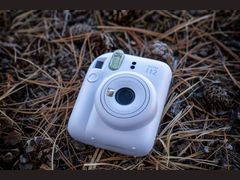
Tom's Guide's top pick for beginners: $93.95 at Fujifilm's US store, two AA batteries for about 10 packs, and it takes the cheapest film per shot.
How does an instant camera work?
An instant camera exposes self-developing film and starts the development itself, so you get a chemically developed print a short time after you press the shutter. The film holds the developing and fixing chemicals, which is the whole trick: nothing has to go to a lab.
Fujifilm says each Instax photo is only tens of micrometers thick yet has 18 layers, and every shot has its own pod of developer that a roller spreads across the picture as the camera ejects it. The image appears over about 90 seconds. Tom's Guide says its reviewers often found the full image took several minutes to settle, with richer color and sharper focus at the end.
Polaroid color film (Go, i-Type, 600 and SX-70) takes 10 to 15 minutes. A film shield, which Polaroid calls the frog's tongue, covers the print as it comes out to keep light off it. Polaroid says to wait ten seconds, flick the shield up, then put the picture somewhere cool and dark while it finishes.
Neither maker wants you to shake the print. Fujifilm says to hold an Instax photo steady while it develops, and Polaroid says not to shake a developing picture. For the longer story of how the print forms, see What is a Polaroid?.
Sources: en.wikipedia.org, en.wikipedia.org, instaxus.com, tomsguide.com, polaroid.com, polaroid.com
Instant film formats and cost per photo
The camera decides the film, and the film decides the print size and what every shot costs. Instax is cheaper per photo; Polaroid's full-size film gives a nearly square picture that is bigger than Instax Mini or Square. Prices below were checked at Glazer's Camera in Seattle (Instax film) and Polaroid.com (Polaroid film) on October 28, 2026, and the per-photo figure is the pack price divided by the number of shots.
Roundups quote lower numbers than today's shelf prices. Tom's Guide says film costs 50 cents and up per shot, and PCMag says about $0.80 for color Instax Mini and $1.25 for black and white. At the October 2026 prices checked for this page, the cheapest color instant film works out to about $0.83 a shot, in a 60-shot Instax Mini value pack at Glazer's.
- Instax Mini (ISO 800, a credit-card-size 54 x 86 mm print) fits Instax Mini cameras such as the Mini 12 and Mini 41, and the hybrid Mini Evo prints on it too.
- Instax Square and Instax Wide need cameras made for them. Wide gives the biggest Instax picture, about twice the Mini: see Instax Mini vs Wide.
- Polaroid 600 (ASA 640) has a battery in every pack and works in vintage 600 cameras as well as the I-2, Flip, Now, Now+, Lab, OneStep 2 and OneStep+.
- Polaroid i-Type (ASA 640) is the same size with no battery, made for modern cameras that have their own battery, such as the Now Gen 3, Flip and I-2. Polaroid says it does not work in vintage cameras.
- Polaroid SX-70 film is slower (ASA 160), carries its own battery and is made for SX-70 and I-2 cameras. The Polaroid film guide covers every Polaroid type.
- Polaroid Go film is a smaller format that only fits the Polaroid Go camera.
| Film | Picture size | Photos | Price | Per photo | Develops in |
|---|---|---|---|---|---|
| Instax Mini | 46 x 62 mm | 20 (twin pack) | $18.17 at Glazer's | $0.91 ($0.83 in the 60-shot pack) | About 90 seconds |
| Instax Square | 62 x 62 mm | 20 (2-pack) | $22.99 at Glazer's | $1.15 | About 90 seconds |
| Instax Wide | 62 x 99 mm | 20 (twin pack) | $23.99 at Glazer's | $1.20 | About 90 seconds |
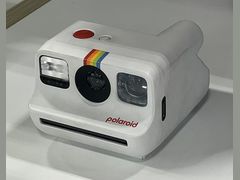 Polaroid Go | 47 x 46 mm | 16 (double pack) | $21.99 at Polaroid.com | $1.37 | 10-15 minutes |
| Polaroid i-Type | 79 x 77 mm | 8 | $18.99 at Polaroid.com | $2.37 | 10-15 minutes |
| Polaroid 600 | 79 x 77 mm | 8 | $20.99 at Polaroid.com | $2.62 | 10-15 minutes |
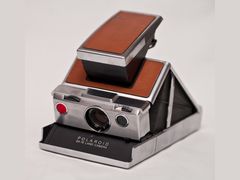 Polaroid SX-70 | 79 x 77 mm | 8 | $21.99 at Polaroid.com | $2.75 | 10-15 minutes |
Polaroid's film pages list the full-size picture as 79 x 77 mm, while Wikipedia's SX-70 article gives 79 x 79 mm; either way it is about 3.1 inches across.
Sources: glazerscamera.com, polaroid.com, polaroid.com, polaroid.com, polaroid.com, polaroid.com, en.wikipedia.org, en.wikipedia.org, fujifilm.com, instaxus.com, tomsguide.com, uk.pcmag.com
What does an instant camera cost?
| Seller | Item | Price | Note |
|---|---|---|---|
| Instax US store (Fujifilm) | Instax Mini SE | $69.00 | MSRP, Instax Mini film |
| Instax US store (Fujifilm) | Instax Mini 13 | $89.95 | MSRP, Instax Mini film |
| Instax US store (Fujifilm) | Instax Mini 12 | $93.95 | MSRP, Instax Mini film, two AA batteries |
| Instax US store (Fujifilm) | Instax Mini 41 | $116.95 | MSRP, Instax Mini film |
| Instax US store (Fujifilm) | Instax Square 2 | $119.95 | MSRP, Instax Square film |
| Instax US store (Fujifilm) | Instax Wide 400 | $175.95 | MSRP, Instax Wide film |
| Instax US store (Fujifilm) | Instax Mini Evo (hybrid) | $234.95 | MSRP, digital camera that prints on Instax Mini film |
| Instax US store (Fujifilm) | Instax Wide Evo (hybrid) | $409.95 | MSRP, prints on Instax Wide film |
| Glazer's Camera | Polaroid Go Gen 3 with film bundle | $99.99 | Go film only |
| Glazer's Camera | Polaroid Now Gen 3 | $129.99 | i-Type and 600 film |
| Glazer's Camera | Polaroid Flip | $219.99 | i-Type and 600 film |
| Glazer's Camera | Polaroid I-2 | $599.99 | Listed as sold out |
| Brooklyn Film Camera | Serviced vintage Polaroid 600 cameras | $125-$175 | Up to $400 for character editions such as Hello Kitty, 6-month warranty |
| Retrospekt | Refurbished Polaroid SX-70 (chrome) | from $399.00 | Takes SX-70 film |
Prices checked October 28, 2026. They change often.
How to choose your first instant camera
Work through these in order. The film choice comes first because it fixes everything else.
- 1
Pick the film system
Every camera takes one film: Instax Mini, Square or Wide, or Polaroid i-Type and 600, SX-70 or Go. Print size and cost per shot follow from that choice, so start with Polaroid vs Instax.
- 2
Price the film, not just the camera
Film is the running cost: about $0.83 to $0.91 a shot for Instax Mini against $2.37 for Polaroid i-Type at October 2026 prices. If you plan to shoot a pack a week, the film system matters more than the camera's sticker price.
- 3
Choose analog or hybrid
Analog cameras such as the Instax Mini 12 and Polaroid Now print every frame you take. Hybrids such as the Instax Mini Evo save a digital file first, about 45 images in internal memory plus a microSD slot, and print only the shots you choose.
- 4
Check how it is powered
The Instax Mini 12 takes two AA batteries, good for about 10 packs, and the Polaroid Now Gen 3 has a rechargeable battery rated for up to 15 packs. Vintage Polaroid 600 and SX-70 cameras run on the battery inside each film pack.
- 5
Buy vintage Polaroids serviced
Brooklyn Film Camera sells cleaned and tested 600 cameras for about $125 to $175 with a 6-month warranty, and a refurbished chrome SX-70 starts at $399 at Retrospekt. Brooklyn Film Camera notes that untested thrift-store cameras cost less, but many no longer work.
Sources: en.wikipedia.org, glazerscamera.com, polaroid.com, instaxus.com, instaxus.com, polaroid.com, brooklynfilmcamera.com, retrospekt.com
How to store instant film and fly with it
Polaroid prints a production date, not an expiry date, on the box and says the film is best used within 12 months of it. It recommends keeping packs cool, dry and flat in the fridge, away from sunlight, and letting them warm up before you shoot. Fujifilm only asks for a dry, cool place for Instax and says to leave the cartridge in its foil until you load it. More on shelf life in Does Polaroid film expire?.
Temperature matters when you shoot, too. Fujifilm US rates current Instax Mini film for 41 F to 104 F (5 C to 40 C). Polaroid says its film turns pink above 82 F (28 C) and blue below 55 F (13 C), so a cool bag helps in summer.
At the airport, TSA recommends carrying undeveloped film, and cameras loaded with it, in your carry-on or asking for a hand inspection. Polaroid gives the same advice and says photos you have already taken are fine through the X-ray. The details, including CT scanners, are in Can instant film go through airport X-ray?.
A developed Instax print can last for years if you keep it cool, dry and out of direct sunlight, according to Fujifilm. Tom's Guide adds that sunlight bleaches instant photos and that frames help them last longer.
Sources: polaroid.com, instaxus.com, fujifilm.com, polaroid.com, tsa.gov, polaroid.com, instax.co.uk, tomsguide.com
Is a Zink camera an instant camera?
Not in the film sense. Zink is a printing paper that uses heat to form the image, with color crystals built into each sheet, and Tech Advisor describes a Zink camera as a digital camera that prints onto that paper rather than one that exposes real film. Some best-instant-camera roundups, such as Tech Advisor's, still list Zink models like the Kodak Smile+ next to Instax and Polaroid cameras.
PCMag puts Zink prints at about $0.50 each, cheaper than any film, but says their tonality and color fidelity are not on the level of Instax and Polaroid film. Hybrids such as the Instax Mini Evo are a different thing again: they capture digitally but print on real Instax Mini film.
Sources: techadvisor.com, uk.pcmag.com, en.wikipedia.org, instaxus.com
A short history of instant photography
Polaroid film nearly disappeared in 2008, when the original company stopped making it. Fujifilm kept selling Instax, and the Impossible Project, later renamed Polaroid, brought the film back in 2010.
- 1948: Polaroid's Model 95, designed by Edwin Land, goes on sale. It is widely considered the first commercial instant camera.
- 1972: Polaroid introduces integral film, which develops and fixes itself with no peeling or timing by the photographer.
- Kodak's exit: Kodak sold its own, incompatible instant cameras until a Polaroid patent lawsuit forced it to stop making both the camera and the film.
- 1998: Fujifilm launches Instax on November 10.
- 2008: In February the original Polaroid files for bankruptcy protection a second time and says it will stop making instant film and cameras.
- 2010: The Impossible Project, using Polaroid's old equipment and plant in Enschede, Netherlands, starts mass-producing new film for existing Polaroid cameras.
- 2016: Fujifilm stops making peel-apart instant film; FP-100C is the last one.
- 2017: Instax Square film and its first camera arrive. The Polaroid brand is bought by Impossible's largest shareholder and the company becomes Polaroid Originals, shortened to Polaroid in March 2020.
- 2025: On April 8, Fujifilm says cumulative Instax camera and smartphone-printer sales have passed 100 million units.
- 2026: On October 20, after a fifth straight year of record Instax sales, Fujifilm announces a 3 billion yen investment to raise Instax film capacity by about 20% over fiscal 2026.
Sources: en.wikipedia.org, en.wikipedia.org, en.wikipedia.org, en.wikipedia.org, fujifilm.com, fujifilm.com
Instant camera basics
How the film works, how Polaroid and Instax differ, and which camera to buy.
A Polaroid is an instant photo or the camera that makes it: the print slides out and develops itself in 10 to 15 minutes. What the word means and what it costs.
Polaroid vs Instax: Instax Mini costs $0.77-0.91 a photo and develops in 90 seconds. Polaroid gives a bigger picture for $2.13-2.37. Here is which to buy.
The best instant camera for most people is the Instax Mini 13, $89.95 in October 2026. See 8 picks from reviewer consensus, plus Polaroid film cost per photo.
Fujifilm Instax cameras and film
Instax Mini, Square and Wide film shows its picture in about 90 seconds and, at October 2026 prices, costs less per shot than any Polaroid film.
The simplest Instax: twist the lens and shoot. Reviewers love how easy it is and how much better close-ups frame, but bright sun still washes prints out.
Is the Instax Mini 41 worth $116.95? What 114 reviewer and owner opinions say about its exposure, flash and close-ups, plus film cost per photo and fixes.
The Instax Wide 400 costs $175.95 plus $0.98-1.80 per print. What 105 reviewer opinions say about its prints, size, low light and missing controls.
Is the Instax Mini Evo worth $234.95? What 121 reviewer and owner opinions say about its prints, digital files and battery, plus film cost and fixes.
Instax Wide prints have about 2.15x the image area of Mini but cost about $1.20 a shot vs $0.91. Compare sizes, cameras, printers and Square at US prices.
Polaroid cameras and film
Polaroid's full-size prints take 10 to 15 minutes to develop. New cameras use i-Type or 600 film, and vintage SX-70 and 600 models still have film made for them.
Polaroid 600 film is ISO 640 with a battery in every 8-photo pack and costs $20.99. See which cameras take 600, i-Type, SX-70 or Go film, and how to store it.
Polaroid Go vs Polaroid Now: the Go Gen 3 is $89.99 with $1.37 photos; the Now Gen 3 is $129.99 with autofocus and a picture 2.8x bigger. Specs and picks.
What 155 owner and reviewer opinions say about the Polaroid SX-70: refurbished prices of $399-$685, film at about $3 a shot, common faults and how to test one.
Is the Polaroid I-2 worth $599.99? What 101 reviewer and owner opinions say about its lens, auto exposure and battery, plus film cost per photo and fixes.
Film care, travel and fixes
Storing film, getting it through the airport and reading your camera's warning lights.
Yes. Polaroid film is best used within 12 months of the production date on the box. How to read the date, store packs, test old film and keep prints.
Polaroid and Instax film can go through TSA, but unused packs belong in a carry-on with a hand check, since CT scanners can fog them. Finished photos are safe.
Instax Mini 12 flashing orange light? Slow blinks mean the flash is charging, slow plus quick means low batteries, and quick means a jam or lens error.
Questions people ask
Is Instax owned by Polaroid?
No. Instax is Fujifilm's brand, launched in 1998, and Polaroid is a separate company that grew out of the Impossible Project, became Polaroid Originals in 2017 and plain Polaroid in 2020. Each brand makes its own cameras and film, and the formats differ in size, so Instax film will not fit a Polaroid camera or the other way around.
Sources: tomsguide.com, en.wikipedia.org, en.wikipedia.org
Is Polaroid or Instax better?
Neither wins on everything. Polaroid's full-size picture is 79 x 77 mm against 46 x 62 mm for Instax Mini, but it costs about $2.37 to $2.75 a shot and takes 10 to 15 minutes to develop. Instax Mini runs about $0.83 to $0.91 a shot and shows its picture in about 90 seconds. [Polaroid vs Instax](/instant/polaroid-vs-instax/) compares the look and the cameras.
Sources: polaroid.com, en.wikipedia.org, glazerscamera.com, instaxus.com
How much does an instant photo cost?
At US store prices on October 28, 2026: Instax Mini about $0.83 to $0.91 a shot, Instax Square $1.15, Instax Wide $1.20, Polaroid Go $1.37, Polaroid i-Type $2.37, 600 $2.62 and SX-70 $2.75. Zink paper prints, which are not film, cost about $0.50 each according to PCMag.
Sources: glazerscamera.com, polaroid.com, polaroid.com, polaroid.com, polaroid.com, uk.pcmag.com
Should you shake an instant photo while it develops?
No. Polaroid says not to shake a developing picture, and Fujifilm says to hold an Instax print steady and let it develop. Polaroid also says to keep a developing picture in a cool, dark place. Instax takes about 90 seconds and Polaroid color film 10 to 15 minutes.
Sources: polaroid.com, instaxus.com, polaroid.com
Do instant cameras need batteries?
Most do. The Instax Mini 12 runs on two AA batteries, good for about 10 packs, and the Polaroid Now Gen 3 has a rechargeable battery rated for up to 15 packs. Vintage Polaroid 600 and SX-70 cameras run on the battery built into each 600 or SX-70 film pack.
Sources: instaxus.com, polaroid.com, polaroid.com, polaroid.com
Do instant cameras save a digital copy?
Analog instant cameras such as the Instax Mini 12, Polaroid Now and SX-70 do not: the print is the only copy. Hybrid models do. The Instax Mini Evo is a digital camera that stores about 45 images in internal memory, takes a microSD card and prints the shots you pick on Instax Mini film.
Sources: instaxus.com
Do instant photos fade over time?
Yes, like any printed photo. Tom's Guide says instant photos get bleached by the sun and deteriorate over time, and that frames help them last longer. Fujifilm says a developed Instax print can last for years if you keep it cool, dry and out of direct sunlight.
Sources: instax.co.uk, tomsguide.com
Are instant cameras still popular?
Yes, by the sales figures. Fujifilm announced in April 2025 that Instax cameras and smartphone printers had passed 100 million units, and Instax sales reached 200 billion yen in fiscal 2025, a fifth straight record. On October 20, 2026 it announced a 3 billion yen investment to raise Instax film capacity by about 20%.
Sources: fujifilm.com, fujifilm.com
Sources
Show all 36 sources
official 24
- Instax US: Film technology
- Instax US: Instax Mini 12
- Instax US: Instax Mini 13
- Instax US: Instax Mini SE
- Instax US: Instax Mini 41
- Instax US: Instax Mini Evo
- Instax US: Instax Square 2
- Instax US: Instax Wide 400
- Instax US: Instax Wide Evo
- Instax US: What's the best way to store my instax film?
- Fujifilm US: Instax Mini film
- Fujifilm: Instax cumulative sales exceed 100 million units (Apr 8, 2025)
- Fujifilm: Fujifilm reinforces production facilities for instax films (Oct 20, 2026)
- Instax UK: How to keep your instax film fresh and flawless
- Polaroid: Color 600 Film
- Polaroid: Color i-Type Film
- Polaroid: Color SX-70 Film
- Polaroid: Go Color Film Double Pack
- Polaroid: Go Color Film Double Pack x2
- Polaroid: Polaroid Now Gen 3
- Polaroid: Taking a picture that doesn't suck
- Polaroid: What's what with your camera and film
- Polaroid: X-ray tips for instant film
- TSA: Film