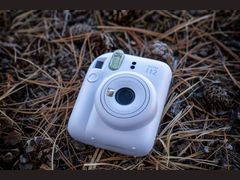
Explainer
What Is a Polaroid? Polaroid Meaning and How Instant Photos Work
The short answer
A Polaroid is an instant photo, or the camera that makes one: you press the shutter, a print slides out the front, and it develops by itself in 10 to 15 minutes on Polaroid's color film.
The word comes from Polaroid, the company that sold the first instant camera in November 1948, and people now use it for almost any instant print. It can also mean Polaroid's light-polarizing plastic (as in polarized sunglasses) or, in modeling, the plain unedited snapshots agencies ask for.
- First instant camera sold
- November 1948 (Land Camera Model 95)en.wikipedia.org
- Color development time
- 10 to 15 minutespolaroid.com
- Black-and-white development
- 5 to 10 minutespolaroid.com
- Classic print size
- 4.2 x 3.5 in (3.1 x 3.0 in picture)polaroid.com
- Cost per photo
- About $2.37 on i-Type (Oct 28, 2026)polaroid.com
- Cheapest new Polaroid camera
- $89.99, Polaroid Go Gen 3 (Oct 28, 2026)polaroid.com
Polaroid meaning: four things the word can refer to
Most of the time, a Polaroid is an instant photo: the print with the thick white border that comes out of the camera and develops in your hand. Polaroid is a trademark, and Dictionary.com defines it as the first brand of instant camera, developed by Edwin H. Land and sold since 1948.
Polaroid became so closely tied to instant photos that the name turned into a genericized trademark. That is why lowercase "polaroid" now gets used for instant photos and instant cameras in general, not only ones made by Polaroid.
The word is older than the camera, though. Land's polarizing plastic sheet came first, and he founded Polaroid in 1937 to sell it. So depending on context, "polaroid" can mean any of these:
- The photo or the camera: a self-developing instant print, or the instant camera that makes it.
- The brand: Polaroid, the company. The original corporation stopped making instant film in 2008; today's Polaroid grew out of The Impossible Project, which became Polaroid Originals in 2017 and simply Polaroid in 2020.
- The plastic: a synthetic sheet used as a polarizer or polarizing filter. In the plural, "polaroids" can also mean sunglasses with lenses made from it.
- The modeling term: "polaroids" (also called digitals) are plain photos with no editing, styling, makeup or filters that agencies ask models for. The fashion industry long relied on Polaroid prints as a record of models, and agencies still use the old name for these shots.
Sources: dictionary.com, digitalcameraworld.com, en.wikipedia.org, en.wikipedia.org, press.polaroid.com, mymodelreality.com, en.wikipedia.org
How do Polaroids work?
Each Polaroid frame is a sealed packet of chemistry. Polaroid says its film has 12 layers, each thinner than a human hair, and color film includes three light-sensitive silver halide layers that respond to blue, green and red light. The thick bottom border of every frame holds a pod of developer paste.
When you press the shutter, light from the lens bounces off a fixed mirror onto the film. The mirror is there because Polaroid film develops as a mirror image. Fujifilm's Instax film develops a normal image, so Instax cameras don't need one.
As the print ejects, rollers burst the paste pod and spread a blue paste across the picture, which both develops the image and shields it from light. The trick is Land's opacifier: it darkens as the print comes out, protecting the image while it forms, then turns clear to reveal the photo. The UK's National Science and Media Museum counts about fifty chemical reactions, each in sequence and precisely timed, before you hold a finished print.
Polaroid introduced this all-in-one integral film in 1972. It develops and fixes the photo with no help from the photographer. Before that, Polaroid prints had to be peeled away from a negative backing after the wait.
Don't trim the white border: the bottom strip held the developer paste, and Legacybox warns that cutting the border breaks the print's protective seal and lets air in.
Sources: digitalcameraworld.com, digitalcameraworld.com, scienceabc.com, blog.scienceandmediamuseum.org.uk, en.wikipedia.org, legacybox.com
How long does a Polaroid take to develop?
Plan on 10 to 15 minutes. That is what Polaroid lists for every one of its color films, and its black-and-white i-Type takes 5 to 10 minutes. A faint image usually shows up within the first minute, but colors and contrast keep building well after that.
Sources disagree a little here. ScienceABC puts black-and-white at about 5 to 7 minutes, while Polaroid's own product page says 5 to 10. Analogue Wonderland says the process takes around 60 seconds, and EverPresent says you can view a photo 60 seconds after taking it. That fits the first faint image, not Polaroid's numbers for a finished print on today's film. A minute was right for Land's first camera, the 1948 Model 95, which made sepia prints in about that time.
Don't shake it. Polaroid says shaking can ruin the chemistry of a developing picture, and back in 2004 the company warned that rapid movement can make parts of the film separate too early or leave blobs. Shaking once helped older prints dry; modern Polaroid film dries behind a clear plastic window.
| Film | Fully developed in |
|---|---|
| Color i-Type | 10 to 15 minutes |
| Black-and-white i-Type | 5 to 10 minutes |
| Color 600 | 10 to 15 minutes |
| Color SX-70 | 10 to 15 minutes |
| Polaroid Go color | 10 to 15 minutes |
| Land Camera Model 95 (1948, sepia) | About 1 minute |
Temperature matters as much as time: Polaroid says film colder than 55°F (13°C) comes out blue and film warmer than 82°F (28°C) comes out pink.
Sources: polaroid.com, polaroid.com, polaroid.com, polaroid.com, polaroid.com, scienceabc.com, everpresent.com, analoguewonderland.co.uk, en.wikipedia.org, polaroid.com, nbcnews.com
How to take a Polaroid picture, step by step
Polaroid tells you to think about five things before each shot: light, flash, distance, parallax and your subject. This is the full sequence for a current Polaroid camera such as the Now or the Flip.
- 1
Match the film to the camera
Polaroid's film names don't always match its camera names, so look inside the film door. The Now, Now+, Flip and Mod take i-Type or 600 film, the I-2 takes SX-70 film as well, vintage 600 cameras need 600 film because their battery is in the pack, SX-70 cameras take SX-70 film, and the Go takes only Go film.
- 2
Let cold film warm up
Polaroid recommends storing film in the fridge, then letting it settle to room temperature, around 68°F (20°C), before you shoot. Load it indoors to keep out moisture and cold.
- 3
Put the light behind you
Keep the light behind you so your subject is lit, and use the flash indoors. Polaroid suggests staying about 15 inches (40 cm) from your subject.
- 4
Correct for parallax
The viewfinder doesn't look through the lens. To center your subject, Polaroid says to move a little to the left or look over the lens barrel.
- 5
Press the shutter
The camera exposes the frame, then rollers burst the paste pod in the bottom border and push the print out of the slot.
- 6
Leave the film shield down
The flap over the print, which Polaroid calls the film shield and nicknames the frog's tongue, keeps light off the fresh photo. Wait about ten seconds, then flick it up from the bottom; it's attached, so don't pull it.
- 7
Hide it, don't shake it
Polaroid's advice is to put the picture in a cool, dark place and leave it alone. Shaking can ruin the chemistry.
- 8
Wait the full time
Give color film 10 to 15 minutes and black-and-white 5 to 10 minutes before you judge the picture.
- 9
Scan it for a digital copy
The print is the only copy. Polaroid's app can scan and share your photos.
Sources: polaroid.com, polaroid.com, polaroid.com, digitalcameraworld.com, polaroid.com, polaroid.com, polaroid.com
Polaroid film types, sizes and cost per photo
Polaroid sells four film types for its cameras (i-Type, 600, SX-70 and Go), plus 8x10 sheet film for large format cameras. i-Type, 600 and SX-70 all make the classic 4.2 x 3.5 inch print with a 3.1 x 3.0 inch picture. They differ in speed (SX-70 film is ASA 160, so Polaroid says to shoot it in lots of natural light) and in whether a battery is built into the pack: vintage 600 and SX-70 cameras have no battery of their own and draw power from the film, which is why i-Type film won't work in them.
Go film is the small format: Polaroid calls it four times smaller than the classic i-Type format (the picture is 47 x 46 mm against 79 x 77 mm), and it fits only the Polaroid Go. Every pack holds 8 photos except the Go double pack (16) and 8x10 (10 sheets). Buying in bulk helps a little: color i-Type drops from $18.99 to $17.00 a pack when you buy five.
Which pack fits which camera, including what happens if you load the wrong one, is covered in our Polaroid film guide.
| Film | Made for | ASA | Picture area | Pack price | Per photo |
|---|---|---|---|---|---|
| Color i-Type | Now, Now+, Flip, Mod, I-2 (no battery in pack) | 640 | 3.1 x 3.0 in | $18.99 for 8 | About $2.37 |
| B&W i-Type | Same cameras as color i-Type | 640 | 3.1 x 3.0 in | $18.99 for 8 | About $2.37 |
| Color 600 | Vintage 600 cameras, plus Now, Now+, Flip, Mod, I-2 (battery in pack) | 640 | 3.1 x 3.0 in | $20.99 for 8 | About $2.62 |
| Color SX-70 | SX-70 and I-2 (battery in pack) | 160 | 3.1 x 3.0 in | $21.99 for 8 | About $2.75 |
| Color Go | Polaroid Go only | 640 | 1.85 x 1.81 in | $21.99 for 16 | About $1.37 |
| Color 8x10 | 8x10 cameras with a Polaroid film holder and processor | 640 | 9.5 x 7.5 in | $199.99 for 10 (out of stock) | About $20 |
The date on a Polaroid box is the production date, not an expiration date, and Polaroid says the film is best used within 12 months of it.
Sources: polaroid.com, polaroid.com, polaroid.com, polaroid.com, polaroid.com, polaroid.com, polaroid.com
What is a Polaroid camera?
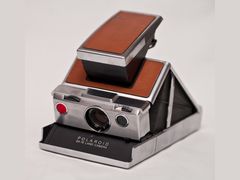 SX-70
A Polaroid camera is an instant camera: it uses self-developing film to produce a chemically developed print shortly after you take the picture. Strictly speaking it is a camera made by Polaroid, but people use the name for instant cameras from other brands too.
Polaroid's current lineup runs from the Go, which Polaroid calls the world's smallest instant analog camera, to the I-2, the only current model that also takes SX-70 film. Vintage models such as the 600 series and the folding Polaroid SX-70 still work with new film, and refurbishers sell them restored.
To choose between current models, see Polaroid Go vs Polaroid Now, our Polaroid I-2 page for the top of the range, and Best Instant Cameras if you are open to Fujifilm's Instax models as well.
Sources: en.wikipedia.org, polaroid.com, polaroid.com, retrospekt.com
What a Polaroid camera costs in 2026
| Seller | Item | Price | Note |
|---|---|---|---|
| Polaroid | Polaroid Go Instant Camera Generation 3 | $89.99 | Takes Go film only |
| Polaroid | Polaroid Now Instant Camera Generation 3 | $129.99 | Takes i-Type or 600 film |
| Polaroid | Polaroid Mod Instant Camera | $169.99 | Takes i-Type or 600 film, per Polaroid's film pages |
| Polaroid | Polaroid Flip Instant Camera | $219.99 | Takes i-Type or 600 film |
| Polaroid | Polaroid I-2 Instant Camera | $599.99 | Takes i-Type, 600 and SX-70 film |
| Retrospekt (Milwaukee, WI) | Refurbished vintage Polaroid 600 cameras | $139 to $199 | Take 600 film; the battery is in the pack |
| Retrospekt (Milwaukee, WI) | Refurbished Polaroid SX-70 folding cameras | $399 to $549 | Take SX-70 film |
Prices checked October 28, 2026. They change often.
Is an Instax a Polaroid?
Not technically. Instax is Fujifilm's instant system, introduced in 1998, and its film is a different size, so it doesn't fit Polaroid cameras. People still call Instax prints polaroids because the brand name became the everyday word for any instant photo.
The practical differences: an Instax Mini print is smaller and comes 10 to a pack, and because Instax film develops a normal, non-mirrored image, the cameras skip the internal mirror that Polaroid cameras need. The full breakdown is in Polaroid vs Instax.
| Polaroid i-Type / 600 | Instax Mini | |
|---|---|---|
| Maker | Polaroid | Fujifilm |
| Print size | 4.2 x 3.5 in (107 x 88 mm) | 2.1 x 3.4 in (54 x 86 mm) |
| Picture area | 3.1 x 3.0 in (79 x 77 mm) | 46 x 62 mm |
| Photos per pack | 8 | 10 |
| Mirror inside the camera | Yes, the film develops mirrored | No |
Sources: en.wikipedia.org, digitalcameraworld.com, polaroid.com, polaroid.com
A short history of Polaroid
Edwin Land founded Polaroid in 1937 to sell his polarizing plastic. The camera came from a family photo: Land took a picture of his three-year-old daughter, Jennifer, and she asked why she couldn't see it right away.
Polaroid's own newsroom dates the Land Camera to 1947, the year Land first showed it in public. The first one actually went on sale in November 1948: the Model 95, at the Jordan Marsh department store in Boston.
| Year | What happened |
|---|---|
| 1937 | Edwin H. Land founds Polaroid to make polarizing plastic |
| 1947 | First public demonstration of the Land Camera, in February |
| 1948 | The Land Camera Model 95 goes on sale in Boston in November, making sepia prints in about a minute |
| 1972 | The SX-70 and integral film arrive: $180 for the camera and $6.90 for each 10-picture pack |
| 2008 | The original Polaroid company stops making instant film; fans later save the last factory, in the Netherlands, as The Impossible Project |
| 2017 | The Impossible Project rebrands as Polaroid Originals |
| 2020 | The company becomes simply Polaroid |
Sources: en.wikipedia.org, en.wikipedia.org, en.wikipedia.org, en.wikipedia.org, en.wikipedia.org, press.polaroid.com
Do Polaroids fade?
Yes, and the damage can't be undone. Ultraviolet light breaks down the emulsion in instant film, and Getty Museum photography conservator Sarah Freeman told NPR in 2017: "You can't change fading. Fading is permanent." Her advice is to keep Polaroids somewhere cool, dry and dark, which also means not displaying them in direct sun.
Legacybox, a digitizing company, adds a few practical rules: don't cut the white border, store prints flat, hold them by the border, and use acid-free sleeves or boxes.
Unused film ages too: Polaroid says to shoot it within 12 months of the production date on the box. Shelf life and fridge storage are covered in Does Polaroid film expire?
Sources: npr.org, legacybox.com, polaroid.com
Do Polaroid cameras save pictures?
No. A Polaroid camera exposes the film and that is all: the print is the only copy. Polaroid describes its Now Generation 3 as an easy-to-use, completely analog camera, and the same goes for the vintage models.
To get a digital file, scan the print. Polaroid's app has a scan and share feature for exactly this.
If you want a print and a file from the same shot, look at a hybrid. Fujifilm's Instax Mini Evo prints instant photos and can save the printed pictures to your smartphone.
Sources: polaroid.com, instax.com
Questions people ask
What is a Polaroid shot?
Usually it just means an instant photo from a Polaroid camera, or from any instant camera. In modeling, "polaroids" (or digitals) are plain photos with no editing, styling, makeup or filters that agencies ask for. The fashion industry long relied on Polaroid prints as a record of models, and the name stayed with these shots.
Sources: mymodelreality.com, en.wikipedia.org
What does "polaroid girl" mean?
It has no settled definition: Urban Dictionary had no entry for it when checked in October 2026, and dictionaries don't list it. The closest documented use is the TikTok "Polaroid Trend" from September 2025, where people used Google Gemini and other AI tools to make their photos look like white-bordered Polaroids.
Sources: knowyourmeme.com, urbandictionary.com
Should you shake a Polaroid picture?
No. Polaroid says shaking can ruin the chemistry of a developing picture, and in 2004 it warned that rapid movement can separate parts of the film too early or cause blobs. Shaking helped older prints dry; modern film dries behind a clear plastic window.
Sources: polaroid.com, nbcnews.com
Why is the bottom border of a Polaroid thicker?
It holds the pod of developer paste. When the print ejects, rollers burst the pod and spread the paste over the picture. That is also why you should never trim the border.
Sources: digitalcameraworld.com, legacybox.com
Do Polaroids need light or darkness to develop?
Darkness, at least at first. The film shield over the exit slot protects the fresh print from light; Polaroid says to wait about ten seconds, flick the shield up and then keep the photo in a cool, dark place while it finishes. ScienceABC notes the film is highly sensitive to bright light in the first few minutes after it leaves the camera.
Sources: polaroid.com, scienceabc.com
How much does a Polaroid picture cost?
At Polaroid's US store on October 28, 2026, a photo costs about $2.37 on i-Type film ($18.99 for 8), $2.62 on 600 film ($20.99 for 8), $2.75 on SX-70 film ($21.99 for 8) and $1.37 on the smaller Go film ($21.99 for 16). A 5-pack brings i-Type down to $17.00 a pack.
Sources: polaroid.com, polaroid.com, polaroid.com, polaroid.com
Who makes Polaroid film now?
Polaroid, the company that grew out of The Impossible Project. Fans saved the last Polaroid film factory, in the Netherlands, after the original Polaroid stopped making instant film in 2008, and the business has been called simply Polaroid since 2020. Polaroid's film pages say the film is still made in the Netherlands, at the last Polaroid film factory.
Sources: press.polaroid.com, en.wikipedia.org, polaroid.com
What is a Polaroid in physics?
It is a synthetic plastic sheet used as a polarizer or polarizing filter, first patented in 1929 and developed further by Edwin Land. It came before the camera and gave the company its name. It is also why polarized sunglasses are sometimes called polaroids.
Sources: en.wikipedia.org, dictionary.com
Sources
Every fact on this page comes from one of these. How we choose and check sources is in our methodology.
Show all 38 sources
official 16
- Polaroid: Color i-Type Film
- Polaroid: B&W i-Type Film
- Polaroid: Color 600 Film
- Polaroid: Color SX-70 Film
- Polaroid: Polaroid Go Color Film Double Pack
- Polaroid: Color 8x10 Film
- Polaroid: Taking a picture that doesn't suck
- Polaroid: What's what with your camera and film
- Polaroid: Film care tips in cold weather
- Polaroid: Polaroid Now Instant Camera Generation 3
- Polaroid: Instant cameras
- Polaroid: Now cameras
- Polaroid: Flip cameras
- Polaroid: I-2 cameras
- Polaroid Newsroom: About us
- Fujifilm instax: instax mini Evo
Manuals and references 10
Editorial reviews 7
- Digital Camera World: Ever wondered how instant cameras work?
- Digital Camera World: Polaroid's developer paste
- ScienceABC: How Do Polaroid Pictures Work?
- National Science and Media Museum: Large format Polaroid photographs
- NBC News (Reuters): Polaroid warns customers not to 'shake it'
- NPR: How To Preserve Your Polaroid
- Know Your Meme: Polaroid Trend
Independent blogs 4
retailer 1
Keep reading
Instant cameras
Polaroid 600 film is ISO 640 with a battery in every 8-photo pack and costs $20.99. See which cameras take 600, i-Type, SX-70 or Go film, and how to store it.
Instant cameras
Polaroid vs Instax: Instax Mini costs $0.77-0.91 a photo and develops in 90 seconds. Polaroid gives a bigger picture for $2.13-2.37. Here is which to buy.
Instant cameras
Polaroid Go vs Polaroid Now: the Go Gen 3 is $89.99 with $1.37 photos; the Now Gen 3 is $129.99 with autofocus and a picture 2.8x bigger. Specs and picks.
Instant cameras
Yes. Polaroid film is best used within 12 months of the production date on the box. How to read the date, store packs, test old film and keep prints.
Instant cameras
The best instant camera for most people is the Instax Mini 13, $89.95 in October 2026. See 8 picks from reviewer consensus, plus Polaroid film cost per photo.
Instant cameras
Polaroid and Instax film can go through TSA, but unused packs belong in a carry-on with a hand check, since CT scanners can fog them. Finished photos are safe.