Comparison
Polaroid Go vs Polaroid Now: Which One Is Right for You?
The short answer
Buy the Polaroid Go if you want the smallest Polaroid and cheaper photos; buy the Polaroid Now if you want the classic, bigger Polaroid print and autofocus.
The Go Gen 3 costs $89.99, weighs 8.9 oz and its photos cost about $1.37 each; the Now Gen 3 costs $129.99 and makes a picture about 2.8 times bigger (79 x 77 mm vs 47 x 46 mm), at about $2.37 a shot. Prices are Polaroid US list prices checked October 28, 2026.
- Go Gen 3, Polaroid US
- $89.99 (Oct. 28, 2026)polaroid.com
- Now Gen 3, Polaroid US
- $129.99 (Oct. 28, 2026)polaroid.com
- Go picture size
- 47 x 46 mmpolaroid.com
- Now (i-Type) picture size
- 79 x 77 mmpolaroid.com
- Go film per photo
- About $1.37polaroid.com
- i-Type per photo
- About $2.37polaroid.com
Polaroid Go vs Polaroid Now: specs side by side
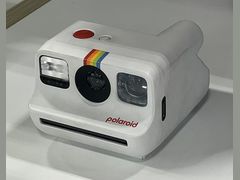 Polaroid Go Gen 3 | 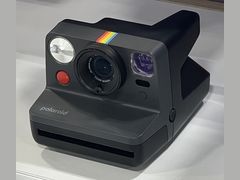 Polaroid Now Gen 3 | |
|---|---|---|
| Price, Polaroid US (Oct. 28, 2026) | $89.99 | $129.99 |
| Starter set with film | $99.99 (marked down from $111.98) | $144.99 |
| Launched | June 2, 2026 | March 4, 2025, at $119.99 |
| Film | Polaroid Go film only | i-Type or 600 film |
| Photos per pack | 16 (sold only as double packs) | 8 |
| Print size | 66.6 x 53.9 mm (2.6 x 2.1 in) | 107 x 88 mm (4.2 x 3.5 in) |
| Picture area | 47 x 46 mm | 79 x 77 mm, about 2.8 times the Go's |
| Cost per photo, single pack | About $1.37 | About $2.37 (i-Type) or $2.62 (600) |
| Cost per photo, 5 packs | About $1.25 | About $2.13 (i-Type) |
| Black-and-white film | No | Yes (i-Type and 600) |
| Size | 106.5 x 83.8 x 64.6 mm (4.2 x 3.3 x 2.5 in) | 150.2 x 112.2 x 94 mm (5.9 x 4.4 x 3.7 in) |
| Weight without film | 251.9 g (8.9 oz) | 448 g (15.8 oz) |
| Focus | Fixed focus | Autofocus, 2 zones: 0.40-1.3 m and 1.0 m to infinity |
| Apertures | f/14.4 and f/32 | Six, from f/11 to f/64 |
| Shutter speeds | 1/500 to 1 second | Not listed by Polaroid |
| Horizontal field of view | 38° | 40° |
| Selfie mirror | Yes | Not listed by Polaroid |
| Self-timer and double exposure | Yes | Yes |
| Tripod mount | Not listed by Polaroid | Yes |
| Battery | Built-in lithium-ion, up to 15 packs per charge | Lithium-ion, up to 15 packs per charge, charges over USB-C |
Pick the Polaroid Go Gen 3 if
- You want a Polaroid you will actually carry: at 8.9 oz it weighs a little over half as much as the Now (15.8 oz)
- You shoot a lot: Go film costs about $1.37 a photo against about $2.37 for i-Type at list price
- You take selfies: it has a selfie mirror, and Polaroid says the Gen 3 gives tighter selfies with less glare
- It is your first instant camera: T3 calls the Go Gen 3 an obvious choice for first-timers
Pick the Polaroid Now Gen 3 if
- You want prints to frame, pin up or hand around: the picture is about 2.8 times the area of a Go photo
- You want autofocus for close portraits (from 0.40 m) as well as landscapes
- You want black-and-white film or already own 600 packs: the Now takes i-Type and 600
- You want a tripod mount or exposure compensation. For app control and manual mode, step up to the Now+ Gen 3 at $149.99
Sources: polaroid.com, polaroid.com, polaroid.com, polaroid.com, polaroid.com, polaroid.com, polaroid.com, polaroid.com, persportaal.anp.nl, photographytalk.com, digitalcameraworld.com, t3.com
How much bigger are Polaroid Now photos than Polaroid Go photos?
Print size is the biggest practical difference, and it comes from the film, not the camera. Go film makes a 66.6 x 53.9 mm card (2.6 x 2.1 in) with a 47 x 46 mm picture. The i-Type and 600 film used by the Now makes a 107 x 88 mm card (4.2 x 3.5 in) with a 79 x 77 mm picture, about 3.1 x 3.0 inches.
Using Polaroid's own measurements, the Now's picture covers about 2.8 times the area of a Go picture (our arithmetic). Polaroid's marketing calls Go film "4 times smaller" than i-Type, and The Gadgeteer says nearly triple. Either way, Polaroid pitches Go film as small enough to fit in your phone case or wallet, while a Now print is the classic Polaroid you pin to a wall or hand around a table.
Otherwise the two films behave alike. Both are ISO 640, both give a square picture inside a frame, and both take about 10 to 15 minutes to develop. The Polaroid film guide covers every format and which cameras take it.
Go film fits only the Polaroid Go, and i-Type or 600 film won't go in a Go. Buy the film that matches your camera.
Sources: polaroid.com, polaroid.com, the-gadgeteer.com, techradar.com
Film cost per photo: Go film vs i-Type
The Go is cheaper to run. At Polaroid US list prices on October 28, 2026, a Go Color Film Double Pack is $21.99 for 16 photos, about $1.37 each. A pack of Color i-Type for the Now is $18.99 for 8 photos, about $2.37 each, and Color 600 film, which also fits the Now, is $20.99, about $2.62 each.
That is a gap of about $1.00 a photo. By our math, after about 40 photos, or five packs of i-Type, a Go owner has saved as much on film as on the camera itself ($89.99 vs $129.99, a $40 difference). If you plan to shoot a lot, the Go's cheaper film matters more than its cheaper body.
Buying five packs at a time lowers both: $20.00 per Go double pack (about $1.25 a photo) and $17.00 per i-Type pack (about $2.13 a photo). Digital Camera World puts Go film at $1.24 a shot, close to the five-pack price. The Gadgeteer quotes i-Type at $17.99, below the $18.99 Polaroid listed when we checked.
600 film costs more because every pack carries a battery to power vintage cameras that have none. The Now charges its own battery, so i-Type is the better buy unless you already have 600 packs. Go film comes only in color; i-Type and 600 also come in black and white.
| Film | Fits | Photos | 1 pack | Per photo (1 pack) | Each, in a 5-pack | Per photo (5-pack) |
|---|---|---|---|---|---|---|
| Go Color Film Double Pack | Polaroid Go only | 16 | $21.99 | $1.37 | $20.00 | $1.25 |
| Color i-Type | Now, Now+ | 8 | $18.99 | $2.37 | $17.00 | $2.13 |
| Color 600 | Now, Now+, vintage 600 cameras | 8 | $20.99 | $2.62 | $18.60 | $2.32 |
Run your own numbers with the film cost per photo calculator.
Sources: polaroid.com, polaroid.com, polaroid.com, polaroid.com, polaroid.com, polaroid.com, digitalcameraworld.com, the-gadgeteer.com
Size and weight: pocket Polaroid vs classic Polaroid
Polaroid calls the Go Gen 3 the world's smallest instant analog camera. It measures 106.5 x 83.8 x 64.6 mm (4.2 x 3.3 x 2.5 in) and weighs 251.9 g (8.9 oz) without film. The Now Gen 3 is 150.2 x 112.2 x 94 mm (5.9 x 4.4 x 3.7 in) and 448 g (15.8 oz), so the Go weighs a little over half as much.
TechRadar's 2021 comparison of the first models picked the Go for travel and for kids, and warned that the Now's bulk might limit how often you take it out. Both come with a wrist strap in the box.
Both run on a lithium-ion battery that Polaroid rates at up to 15 film packs per charge, and the Now Gen 3 charges over USB-C. Digital Camera World points out that the Go's built-in battery can't be replaced without taking the camera apart, which puts a limit on its lifespan.
Sources: polaroid.com, polaroid.com, polaroid.com, persportaal.anp.nl, techradar.com, digitalcameraworld.com
Autofocus vs fixed focus: lens and exposure
The Now has autofocus and the Go doesn't. The Now Gen 3 picks one of two focus zones, close (0.40 to 1.3 m) or far (1.0 m to infinity), and chooses from six apertures between f/11 and f/64. Polaroid says Gen 3 brought a better-placed light meter, an improved ranging sensor and an upgraded two-lens autofocus system.
The Go Gen 3 has a fixed-focus lens with two apertures, f/14.4 and f/32, and shutter speeds from 1/500 to 1 second. Polaroid doesn't publish a minimum focus distance for it. TechRadar says the original Go focused from 0.5 m, which rules out close-ups.
The new Go frames almost like the Now. Its 63.75mm lens is about a 42mm equivalent in full-frame terms, per Digital Camera World, against 34mm on the earlier Go models, and its 38° horizontal view is close to the Now's 40°. Older comparisons that call the Go the wider camera describe the earlier models; the Gen 2 has a 48.1° view.
Autofocus on the Now has a mixed history. Dan Finnen called the first Polaroid Now's autofocus its fatal flaw, and CNET's 2021 Now+ review said the autofocus was not the most precise. Polaroid says the Gen 3 system is better, but independent long-term reports on it are still thin. The Gadgeteer also mentions that some reviewers find the Now Gen 3 can crush shadow detail in high-contrast scenes.
The Now's viewfinder sits apart from the lens, so what you see isn't exactly what the lens sees. Polaroid's guide says to reframe slightly for close-ups.
Sources: polaroid.com, persportaal.anp.nl, polaroid.com, polaroid.com, digitalcameraworld.com, techradar.com, danfinnen.com, cnet.com, the-gadgeteer.com, polaroid.com
Which is better indoors and in low light?
Both cameras lean on their flash indoors. Polaroid gave the Go Gen 3 a stronger flash, but its widest aperture went from f/9 on the Gen 2 to f/14.4, so it lets in less light. Analog.Cafe expects it to need flash in most conditions short of direct sunlight, and T3 reports that backlit subjects still fool its light meter.
Polaroid says the Now's flash works best within about 2 meters, ideally with the subject against a wall. TechRadar's 2021 look at the first models found the Now's flash chamber slightly larger, which gave it a small edge indoors. Digital Camera World, for its part, reports much better exposures from the Go Gen 3 than from earlier Go models, especially outdoors.
With either camera, leave the flash on indoors and stay within about 2 meters of your subject. Outdoors in daylight, turn the flash off and keep the sun behind you.
Sources: polaroid.com, polaroid.com, analog.cafe, t3.com, polaroid.com, techradar.com, digitalcameraworld.com
Selfies, self-timer and double exposures
The Go is the selfie camera. It has a mirror next to the viewfinder, and Polaroid says the Gen 3's new lens and stronger flash give tighter selfies with less glare. A long press on the flash button starts a 10-second self-timer.
Polaroid doesn't list a selfie mirror for the Now Gen 3. Dan Finnen warns that the Now+ can't focus close enough for arm's-length selfies (his review covers the first Now+), so use the self-timer or, on the Now+, the app's remote shutter. The Now Gen 3 does have a tripod mount, which helps with self-timer group shots.
Both make double exposures. On the Go, double-press the flash button and the counter shows 1. On the Now and Now+ Gen 3, press the front button once for the self-timer and twice for double exposure, and long-press the flash button to adjust exposure. See double exposures on film for how to plan the two frames.
Sources: polaroid.com, polaroid.com, polaroid.com, polaroid.com, danfinnen.com, polaroid.com
What about the Polaroid Now+?
The Now+ Gen 3 is the Now with Bluetooth. It costs $149.99 at Polaroid US, $20 more than the Now, and its body is 2 mm deeper and 4 g heavier (452 g, or 15.9 oz). It takes the same i-Type and 600 film.
The Polaroid app adds aperture priority, remote controls, manual mode, and double exposure and self-timer controls. On the first Now+ from 2021, CNET found that manual mode offered f/11 to f/64 and shutter speeds from 1/60 to 30 seconds or bulb.
The Now+ makes sense if you want long exposures or remote shots from a tripod. If you aren't sure you'll use the app controls, The Gadgeteer's advice is to save the $20 and buy the regular Now.
Sources: polaroid.com, polaroid.com, cnet.com, the-gadgeteer.com
Polaroid Go Gen 3 or Go Gen 2?
The Go Gen 2 is still on sale at the same $89.99, at Focus Camera for example, so check which one you are buying. Digital Camera World confirms Polaroid kept the Gen 2 in the lineup at the same price after the Gen 3 launched.
The Gen 3 has a longer 63.75mm lens (about 42mm equivalent against 34mm), f/14.4 and f/32 apertures instead of f/9 and f/42, a 1/500 second top shutter speed instead of 1/300, and a stronger flash. It is about 13 g heavier. Reviewers report sharper photos and more even exposures, though T3 found the Gen 3 slower to switch on.
Pick the Gen 3 for people pictures and selfies. The Gen 2's wider 48.1° view suits group shots and rooms, and its f/9 aperture lets in more light when you can't use flash.
Sources: focuscamera.com, digitalcameraworld.com, polaroid.com, polaroid.com, polaroid.com, t3.com
Polaroid Go or Now: what do reviewers recommend?
Reviewers split on this one. T3 calls the Go Gen 3 "an obvious choice for anyone coming to instant cameras for the first time." The Gadgeteer points most people to the Now Gen 3 for its bigger print, and says the Go only wins if the smallest body matters more to you than print size.
TechRadar's 2021 comparison of the first models found the Now a little easier to use thanks to autofocus and a stronger flash, but liked the Go for travel and kids. There is still no independent full review of the Now Gen 3 among the sources we read, so its performance claims come from Polaroid, The Gadgeteer and reviews of earlier Now and Now+ models.
If neither print size nor film price feels right, Instax film is cheaper: Digital Camera World puts Instax Mini at $0.79 a shot. Our Polaroid vs Instax guide compares the two systems, and best instant cameras covers the wider field, including the Polaroid I-2.
Sources: t3.com, the-gadgeteer.com, techradar.com, digitalcameraworld.com
Polaroid Go and Polaroid Now prices in the US
| Seller | Item | Price | Note |
|---|---|---|---|
| Polaroid US | Polaroid Go Gen 3, camera only | $89.99 | List price |
| Polaroid US | Polaroid Go Gen 3 Starter Set (camera and film) | $99.99 | Marked down from $111.98 |
| Focus Camera | Polaroid Go Gen 3, camera only | $89.99 | Film bundle $99.99 (black) |
| Focus Camera | Polaroid Go Gen 2, camera only | $89.99 | Previous model, same price as Gen 3 |
| Polaroid US | Polaroid Now Gen 3, camera only | $129.99 | Launched at $119.99 in March 2025 |
| Polaroid US | Polaroid Now Gen 3 Starter Set | $144.99 | |
| Focus Camera | Polaroid Now Gen 3, camera only | $129.99 | Color film bundle $144.99 |
| Polaroid US | Polaroid Now+ Gen 3, camera only | $149.99 | Launched at $139.99 |
| Polaroid US | Polaroid Now+ Gen 3 Starter Set | $164.99 | |
| Focus Camera | Polaroid Now Plus Gen 3, camera only | $149.99 | Color film bundle $164.99 |
| Polaroid US | Go Color Film Double Pack (16 photos) | $21.99 | $20.00 each when buying 5 |
| Polaroid US | Color i-Type Film (8 photos) | $18.99 | $17.00 each when buying 5 |
| Polaroid US | Color 600 Film (8 photos) | $20.99 | Fits the Now and Now+, not the Go |
Prices checked October 28, 2026. They change often.
How to get good photos from a Polaroid Go or Now
Both cameras are point-and-shoot once the film is in. These steps follow Polaroid's own guides.
- 1
Buy the right film
The Go takes only Go film. The Now and Now+ take i-Type, which is cheaper and battery-free, or 600 film.
- 2
Load the Go
Slide the film door button and open the door. Match the color on the cassette to the camera, drop it in thick end first, close the door and pull out the dark slide.
- 3
Load the Now
Press the side button to open the door and slide the pack in belly up until it clicks. Close the door and remove the dark slide when it ejects.
- 4
Half-press, then press
On the Now, half-press the shutter button to set exposure, then press it all the way.
- 5
Shield the print
Keep the photo under the film shield for about 10 seconds, then lay it face down for about 10 minutes. Don't shake it.
- 6
Use the flash the right way
Indoors, keep the flash on and stay within about 2 meters. In bright sun, turn it off and keep the sun behind you.
- 7
Store film cool and use it within a year
Keep film cool, dry and flat, let it warm up for about an hour before shooting, and use it within 12 months of the production date on the box. More in does Polaroid film expire and, for trips, instant film and airport X-rays.
Sources: polaroid.com, polaroid.com, polaroid.com
Questions people ask
Is the Polaroid Go worth it?
Yes, if you want the smallest Polaroid and cheaper photos. The Go Gen 3 costs $89.99, its film works out to about $1.37 a shot, and Digital Camera World calls it Polaroid's best Go yet, with sharper, more even exposures. T3 also found its pictures sharper than the Gen 2's. The trade-off is a small 47 x 46 mm picture and fixed focus.
Sources: polaroid.com, polaroid.com, digitalcameraworld.com, t3.com
Is Polaroid Go film the same as i-Type?
No. Go film is a smaller format, a 66.6 x 53.9 mm card with a 47 x 46 mm picture, and it fits only the Polaroid Go. i-Type is 107 x 88 mm with a 79 x 77 mm picture and works in the Now, Now+, I-2 and Flip, but not in the Go. Both are ISO 640 and develop in about 10 to 15 minutes.
Sources: polaroid.com, polaroid.com, techradar.com
Is Polaroid Now better than Instax?
It's different rather than better. Polaroid gives a bigger square print with what Digital Camera World calls erratic exposure and eccentric colors, while CNET found Instax film cheaper and its shots sharper, though the prints are smaller. Digital Camera World puts Instax Mini film at $0.79 a shot, against about $2.37 for i-Type at Polaroid's list price. Our [Polaroid vs Instax](/instant/polaroid-vs-instax/) guide goes deeper.
Sources: cnet.com, digitalcameraworld.com, polaroid.com
Are Polaroids still trendy?
Yes. Polaroid released the Now Gen 3 in March 2025 and a third-generation Go on June 2, 2026, and the company points to Gen Z buyers who want slower, physical photos as a driver of demand.
Sources: photographytalk.com, theverge.com
What type of film does the Polaroid Now camera use?
The Now and Now+ take Polaroid i-Type film and Polaroid 600 film, but not Go film. i-Type is the cheaper choice, $18.99 a pack against $20.99 for 600 at Polaroid US on October 28, 2026, because 600 packs carry a battery that the Now doesn't need.
Sources: polaroid.com, polaroid.com, polaroid.com, polaroid.com
Does the Polaroid Go have autofocus?
No. The Go uses a fixed-focus lens, and TechRadar says the original Go focused from about 0.5 m, so it can't do close-ups. The Now and Now+ switch automatically between two focus zones, 0.40 to 1.3 m and 1.0 m to infinity.
Sources: polaroid.com, techradar.com, polaroid.com
How long does the battery last on the Polaroid Go and Now?
Polaroid rates both the Go Gen 3 and the Now Gen 3 at up to 15 film packs per charge. Digital Camera World notes that the Go's built-in battery can't be replaced without taking the camera apart. The Now Gen 3 charges over USB-C.
Sources: polaroid.com, polaroid.com, digitalcameraworld.com, persportaal.anp.nl
How long do Polaroid Go and Now photos take to develop?
Both Go film and i-Type take about 10 to 15 minutes. Polaroid says to keep the photo under the film shield for about 10 seconds after it comes out, then lay it face down, and not to shake it.
Sources: techradar.com, polaroid.com
Sources
Every fact on this page comes from one of these. How we choose and check sources is in our methodology.
Show all 31 sources
official 18
- Polaroid: Polaroid Go Instant Camera Generation 3
- Polaroid: Polaroid Go Instant Camera Generation 2
- Polaroid: Polaroid Now Instant Camera Generation 3
- Polaroid: Polaroid Now+ Instant Camera Generation 3
- Polaroid: Shop Polaroid Go Instant Camera
- Polaroid: Explore Polaroid Now Instant Camera
- Polaroid: Discover Polaroid Now+ Instant Cameras
- Polaroid: Polaroid Go Film
- Polaroid: Polaroid Go Color Film Double Pack
- Polaroid: Color i-Type Film
- Polaroid: 600 Film
- Polaroid: Your quick start guide to the Polaroid Now & Now+ Generation 3
- Polaroid: How to use the Polaroid Go Gen 2 camera
- Polaroid: How to take a selfie with the Polaroid Go camera
- Polaroid: How to take a double exposure with the Polaroid Go camera
- Polaroid: What's what with your camera and film
- Polaroid: What's New (and Blue) in Gen 2: Polaroid Go
- PR Newswire via ANP: Introducing Polaroid Now & Now+ Generation 3
Editorial reviews 7
- The Verge: Polaroid's colorful Now and Now Plus Generation 3 instant cameras are now available
- Digital Camera World: Polaroid Go Gen 3 review
- T3: Polaroid Go (Gen 3) review
- PhotographyTalk: Polaroid Go Generation 3 Review
- TechRadar: Polaroid Go vs Polaroid Now
- The Gadgeteer: If Polaroid Go Prints Feel Too Tiny, the Now Gen 3 Is the One to Buy
- CNET: Polaroid Now Plus review
retailer 4
Independent blogs 2
Keep reading
Instant cameras
Polaroid 600 film is ISO 640 with a battery in every 8-photo pack and costs $20.99. See which cameras take 600, i-Type, SX-70 or Go film, and how to store it.
Instant cameras
Polaroid vs Instax: Instax Mini costs $0.77-0.91 a photo and develops in 90 seconds. Polaroid gives a bigger picture for $2.13-2.37. Here is which to buy.
Instant cameras
The best instant camera for most people is the Instax Mini 13, $89.95 in October 2026. See 8 picks from reviewer consensus, plus Polaroid film cost per photo.
Instant cameras
Is the Polaroid I-2 worth $599.99? What 101 reviewer and owner opinions say about its lens, auto exposure and battery, plus film cost per photo and fixes.
Instant cameras
Yes. Polaroid film is best used within 12 months of the production date on the box. How to read the date, store packs, test old film and keep prints.
Instant cameras
We sorted 157 opinions on the Fujifilm Instax Mini 12: what people love, the overexposure and flash complaints, blinking-light fixes and what each print costs.