Free download
Film Cost per Photo: Formula, 2026 Sums and Free Calculators
The short answer
The film cost per photo in the US is about $0.64 for a 36-exposure roll of Kodak Gold 200 ($8.99) developed and scanned by The Darkroom ($14): $22.99 divided by 36 frames.
Mailing that roll alone adds $6.95 of shipping and makes it about $0.83, while 120 film runs $1.87 to $3.00 a frame and instant film $0.91 (Instax Mini) to $2.37 (Polaroid i-Type). The formula is film price per roll plus lab price per roll, divided by the frames on the roll, and every current price below was checked in October 2026.
- 35mm color, mail-in lab
- About $0.64 a photo ($22.99 / 36)thedarkroom.com
- Same roll mailed alone
- About $0.83 with $6.95 shippingthedarkroom.com
- 120 film, Portra 400
- $1.87 to $3.00 a frameartscameras.com
- Instax Mini film
- About $0.91 a photoglazerscamera.com
- Polaroid i-Type film
- About $2.37 a photopolaroid.com
- Free web calculator
- Lens Lurker, 4 inputslenslurker.com
How to calculate film cost per photo
Add the price of one roll to what the lab charges for that roll, then divide by the frames on the roll. That is the formula Lens Lurker's free calculator uses: ((film price / rolls per pack) + lab price per roll) / exposures per roll. The lab figure is the total for everything you order for that roll: developing, scans and prints.
Mail-in labs add shipping, so add the shipping charge divided by the number of rolls in the box. Instant film has no lab step: the pack price divided by the shots in the pack is the whole cost.
Example: a $8.99 roll of Kodak Gold 200 plus The Darkroom's $14 for developing and standard scans is $22.99, and $22.99 divided by 36 frames is about $0.64 a photo.
| Format | Frames | Note |
|---|---|---|
| 35mm, full roll | 36 | 24 and 12 exposure rolls also exist |
| Kodak disposable camera | 27 | The ISO 800 one-time-use camera sold at Glazer's Camera |
| 120 film at 6x4.5 | 15 or 16 | Depends on the camera |
| 120 film at 6x6 | 12 or 13 | Depends on the camera |
| 120 film at 6x7 | 10 | The fewest frames of any format here |
| Instax Mini twin pack | 20 | No lab cost |
| Polaroid i-Type pack | 8 | No lab cost |
Count only what you actually order: The Darkroom's $14 includes standard scans, while Art's Cameras Plus, Cameramall and Dwayne's list developing and scans as separate lines.
Sources: lenslurker.com, en.wikipedia.org, en.wikipedia.org, glazerscamera.com, glazerscamera.com, polaroid.com
Film cost per photo in October 2026: 14 worked sums
These sums use October 2026 prices from US camera stores, the Polaroid store and each lab's own price page. Most 35mm color rolls developed and scanned by a lab come to $0.64 to $0.94 a photo. Premium scans, disposables and medium format cost more, and home developing costs less before you count gear and scanning.
For comparison, Lens Lurker's January 2023 average was $27 a roll, or $0.75 a photo, and PhotoWorkout's July 2026 estimate of about $28 all in for a 24-exposure roll of UltraMax 400 works out to about $1.17 a frame ($28 / 24). Spread over 36 frames, the same $28 would be about $0.78. For every lab's full price list, see how much it costs to develop film.
| Setup | Film | Lab and shipping | Roll total | Frames | Per photo |
|---|---|---|---|---|---|
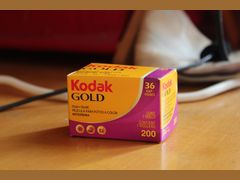 Kodak Gold 200 + The Darkroom, shipping not counted | $8.99 | $14.00 | $22.99 | 36 | $0.64 |
| Kodak Gold 200 + The Darkroom, one roll mailed alone | $8.99 | $14.00 + $6.95 shipping | $29.94 | 36 | $0.83 |
| Kodak Gold 200 + The Darkroom, four rolls in one box | $8.99 | $14.00 + $1.74 shipping share | $24.73 | 36 | $0.69 |
| Kodak Gold 200 + Dwayne's standard scans | $8.99 | $7.50 + $4.00 scans + $5.00 return shipping | $25.49 | 36 | $0.71, plus your postage to the lab |
| Kodak ColorPlus 200 + Art's Cameras Plus develop and standard scan | $8.49 | $6.50 + $8.50 | $23.49 | 36 | $0.65 |
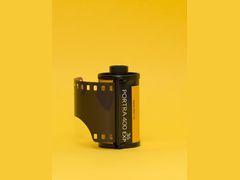 Kodak Portra 400 + Art's Cameras Plus develop and standard scan | $16.99 | $6.50 + $8.50 | $31.99 | 36 | $0.89 |
| Kodak Gold 200 + Old School Photo Lab, round-trip shipping included | $8.99 | $25.00 | $33.99 | 36 | $0.94 |
| Kodak Portra 400 + Richard Photo Lab Web scans | $16.99 | $23.98 | $40.97 | 36 | $1.14, shipping extra |
| Kodak 27-exposure disposable + The Darkroom | $16.49 | $17.00 | $33.49 | 27 | $1.24 |
| Kodak Portra 400 in 120 + The Darkroom | $15.99 | $14.00 | $29.99 | 16 / 12 / 10 | $1.87 / $2.50 / $3.00 |
| Kodak Gold 200 developed at home in CineStill Cs41 | $8.99 | $1.37 chemistry ($32.99 / 24 rolls) | $10.36 | 36 | $0.29, before gear and scanning |
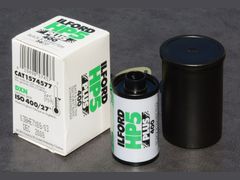 Ilford HP5 Plus developed at home in CineStill Df96 | $9.99 | $1.25 chemistry ($19.99 / 16 rolls) | $11.24 | 36 | $0.31, before gear and scanning |
| Instax Mini twin pack | $18.17 | None | $18.17 | 20 | $0.91 |
| Polaroid Color i-Type, one pack | $18.99 | None | $18.99 | 8 | $2.37 |
Kodak Gold 200 and UltraMax 400 showed as sold out at Art's Cameras Plus on the check date; Glazer's Camera listed Gold 200 at the same $8.99.
Sources: glazerscamera.com, artscameras.com, artscameras.com, thedarkroom.com, thedarkroom.com, thedarkroom.com, dwaynesphoto.com, artscameras.com, oldschoolphotolab.com, richardphotolab.com, cinestillfilm.com, cinestillfilm.com, glazerscamera.com, polaroid.com, lenslurker.com, photoworkout.com
How to work out your own film cost per photo, step by step
Use these steps with the price tables further down, or with your own receipts.
- 1
Price one roll
Divide a multipack's price by the rolls in it; Lens Lurker's calculator asks for the pack price and the number of rolls for the same reason. At Glazer's Camera a 3-pack of Fujifilm 400 is $29.95, about $9.98 a roll, against $11.49 for a single roll.
- 2
Add what you order from the lab
Use develop only or develop plus scans, at the scan size you really pick. Art's Cameras Plus charges $6.50 to develop and $8.50 to $20.50 for scans, so the same roll costs $15.00 to $27.00 to develop and scan at one lab.
- 3
Spread shipping across the box
The Darkroom's $6.95 round trip adds $6.95 to a single roll but about $1.74 a roll in a box of four. Brooklyn Film Camera says sending four or more rolls at once is far more economical per roll; compare labs in our best mail-in film labs guide.
- 4
Divide by the frames
Use 36 for a full 35mm roll, 27 for a Kodak disposable, and 16, 12 or 10 for 120 depending on the camera. ($8.99 + $14.00) / 36 = $0.64 a photo.
- 5
Optional: add gear and tax
The PopPhoto author spread a $195 Epson V550 scanner over five years at 35 rolls a year, about $1.11 a roll, and included 9.5% sales tax in his totals. The online store prices on this page are before tax and shipping.
- 6
Optional: divide by keepers
James Tocchio of Casual Photophile says slowing down took his keepers per roll from about three to, he guesses, twelve or fifteen. At $22.99 a roll, that is about $7.66 a keeper at three ($22.99 / 3), or $1.92 at twelve ($22.99 / 12).
Sources: lenslurker.com, glazerscamera.com, artscameras.com, thedarkroom.com, brooklynfilmcamera.com, popphoto.com, casualphotophile.com
Film cost calculators and spending apps, by maker
Camera Dojo has not tried these tools. Each entry follows the maker's own page or its App Store or Google Play listing, checked in October 2026, and its source link goes to the original. Latent and FilmStash had too few App Store ratings to show an overview, so there are no reviews to lean on yet.
- 01
Cost Per Film Photo Calculator (Lens Lurker)
A quick cost per photo and per roll in the browser
Free
Lens Lurker, a film photography blog, built a four-question web calculator: film price, rolls per pack, film type (which sets the exposures per roll) and your lab's total per roll for developing, scanning and prints. It returns the cost per photo and the cost per roll. Enter the whole pack price, then the number of rolls in the pack.
Watch out: There is no box for shipping, tax, bulk film or home developing, and the form includes an email step ("Where can we email you the results?") that Camera Dojo could not confirm you can skip.
Sources: lenslurker.com
- 02
Film Price Watch (Analog Cafe)
Checking whether your shop's film price is fair
Free; some features need Gold
Analog Cafe, written and edited by one person, Dmitri, describes Film Price Watch as a free web app listing market-average prices for common films. It tracks single 36-exposure 35mm rolls, ignores bulk discounts and counts sale prices. Look up your stock's average before you plug a price into the formula.
Watch out: Some features need a Gold membership, and it uses new Kodak names (Kodacolor Pro for Portra) that don't match the US store listings below, which still say Portra 400; Kosmo Foto reports Eastman Kodak's Ektacolor Pro range is replacing Portra.
Sources: analog.cafe, analog.cafe, kosmofoto.com
- 03
Bulk Roll Calculator (Analog Cafe)
Bulk loaders who want a roll count before buying
7-day free trial, then Gold
Enter a bulk length and it works out how many rolls you'll get, with an adjustable leader. Divide the bulk price by that count and compare the result with a single roll at the same store before you buy.
Watch out: It is free to try for 7 days with no credit card, then needs a Gold membership; the membership price was not on the pages checked.
Sources: analog.cafe, analog.cafe
- 04
Latent (Motoki Endo)
iPhone users who want monthly film spending
Free; Light $3.99 a month or $34.99 a year; Pro $6.99 a month or $69.99 a year
Latent is an iPhone and iPad film manager by developer Motoki Endo. You log the purchase price and development cost of each roll, and it shows how much you spend on film each month. Divide a roll's logged cost by its frames for the per-photo figure.
Watch out: Plans are set by image storage: free up to 100 images, Light up to 1,000 and Pro up to 10,000.
Sources: apps.apple.com
- 05
FilmStash (Santiago Pittella)
A free film inventory with spending stats
Free
FilmStash is a free iPhone and iPad app by Santiago Pittella for logging film and rolls. Version 1.2.0 added tracking of film and development costs, with spending stats. Enter both costs on each roll and read the totals.
Watch out: The listing had too few ratings for the App Store to show an overview.
Sources: apps.apple.com
- 06
Silverlog (Simon Westgate)
Shooters who already want a film logbook and light meter
Free; Pro $24.99
Silverlog is an App Store film app by Simon Westgate. Its paid Pro list includes cost analytics and advanced statistics, along with spot metering for the light meter, film presets for negative inversion and PDF export.
Watch out: The cost analytics are a Pro feature, a $24.99 in-app purchase.
Sources: apps.apple.com
- 07
Pellica (Imad Djebarni)
Android users, or anyone who wants a CSV export
Free for 2 active rolls; Pro from $3.99 a month
Pellica is a light meter and film log app by Imad Djebarni, on the App Store and Google Play. Its film inventory tracks quantities, costs, storage locations and expiration dates, and the Android listing says it exports all your rolls to one CSV file, so you can add lab costs in a spreadsheet.
Watch out: The free tier allows up to 2 active rolls; Pro is $3.99 a month or $119.99 lifetime, and the listing also shows a $29.99 Pro option without naming its term.
Sources: apps.apple.com, play.google.com
- 08
Kodak Film Calculator
Motion picture film only, not still photos
Free
Kodak's calculator on its motion picture site converts speed, feet, frames and time for cine film. It turns up in searches for film calculators, but it does not price still photos, so skip it for this job.
Watch out: Kodak calls it educational and does not guarantee its accuracy.
Sources: kodak.com
Film prices to plug in (October 2026)
| Seller | Item | Price | Note |
|---|---|---|---|
| Glazer's Camera (Seattle) | Kodak Gold 200, 35mm, 36 exp. | $8.99 | Online price, before shipping and tax |
| Art's Cameras Plus (Greenfield, WI) | Kodak ColorPlus 200, 35mm, 36 exp. | $8.49 | Analog Cafe says Kodak renamed it Kodacolor 100; the store uses the old name |
| Art's Cameras Plus (Greenfield, WI) | Kodak UltraMax 400, 35mm, 36 exp. | $9.49 | Listed sold out when checked |
| Glazer's Camera (Seattle) | Fujifilm 400, 35mm, 36 exp. | $11.49 | 3-pack $29.95, about $9.98 a roll |
| Art's Cameras Plus (Greenfield, WI) | Kodak Portra 400, 35mm, 36 exp. | $16.99 | In stock when checked |
| District Camera (DC area) | Kodak Portra 400, 35mm, 36 exp. | $18.49 | Kodak Alaris box |
| Art's Cameras Plus (Greenfield, WI) | Ilford HP5 Plus 400, 35mm, 36 exp. | $9.99 | Same price at Glazer's Camera |
| Cameramall | Kodak Tri-X 400, 35mm, 36 exp. | $8.99 | In stock when checked |
| Cameramall | Kentmere Pan 200, 35mm, 36 exp. | $8.49 | In stock when checked |
| Cameramall | Kodak Tri-X 400, 100 ft bulk roll | $219.99 | About 18 rolls, roughly $12.22 each |
| Art's Cameras Plus (Greenfield, WI) | Kodak Portra 400, 120 | $15.99 | In stock when checked |
| Art's Cameras Plus (Greenfield, WI) | Kodak Tri-X 400, 120 | $8.99 | In stock when checked |
| Glazer's Camera (Seattle) | Kodak disposable camera, ISO 800, 27 exp. | $16.49 | Film and camera in one |
| Glazer's Camera (Seattle) | Instax Mini film twin pack (20 photos) | $18.17 | About $0.91 a photo |
| Polaroid US store | Color i-Type film (8 photos) | $18.99 | About $2.37 a photo |
Prices checked October 2026. They change often.
Lab and home developing prices to plug in (October 2026)
| Seller | Item | Price | Note |
|---|---|---|---|
| The Darkroom (San Clemente, CA) | 35mm or 120 develop + standard scans | $14 | Starting price; $6.95 round-trip shipping per order; develop only $11 |
| The Darkroom (San Clemente, CA) | Disposable camera develop + scans | $17 | Starting price; send the whole camera |
| Dwayne's Photo (Parsons, KS) | 35mm color develop only | $7.50 | Scans +$4, +$6 or +$8; return shipping $5.00 first roll, $0.50 each extra; about 12 business days in the lab |
| Art's Cameras Plus (Greenfield, WI) | 35mm C-41 develop only | $6.50 | Scans $8.50, $11.50, $18.50 or $20.50 (TIFF) |
| Cameramall | 35mm C-41 develop only | $6.50 | Standard scans $8.50 |
| Reformed Film Lab (Ormond Beach, FL) | 35mm color develop + small / medium scans | $12.00 / $15.00 | Negative return $5.95 per order, free over $125 |
| Old School Photo Lab (Dover, NH) | 35mm develop + scans, round-trip shipping included | $25 | Starting price; develop only from $18 |
| Richard Photo Lab (Santa Clarita, CA) | 35mm C-41 + Noritsu scans (Web / Universal / Project) | $23.98 / $25.98 / $32.98 | Develop only $10.00; shipping not included |
| The Camera Company (Madison, WI) | 35mm C-41 + medium / high-res scans | $18.00 / $25.00 | Local lab; files delivered by email link |
| Walmart (drop-off, sent out) | 35mm, 36 exp., 4x6 prints | $13.96 | Third-party figure from Cultured Kiwi; negatives usually not returned (you get a CD copy instead) |
| CineStill (home developing) | Cs41 C-41 kit, 1000 mL, up to 24 rolls | $32.99 | About $1.37 a roll; ships ground only |
| CineStill (home developing) | Df96 black and white monobath, 1000 mL, 16+ rolls | $19.99 | About $1.25 a roll at 16 rolls |
Prices checked October 2026. They change often.
Why 120 film costs more per photo
Medium format costs more per photo because a 120 roll costs about the same to buy and develop as 35mm but holds far fewer frames. Kodak Portra 400 is $15.99 in 120 and $16.99 in 36-exposure 35mm at Art's Cameras Plus, and The Darkroom starts both formats at $14 with scans.
Spread over 36 frames, the 35mm roll is about $0.86 a photo ($30.99 / 36). The 120 roll, $29.99 all in, is $1.87 a frame at 6x4.5 with 16 frames, $2.50 at 6x6 with 12 and $3.00 at 6x7, where Lens Lurker points out you get just 10 photos. If cost is part of your format decision, 35mm vs 120 film covers what the extra money buys.
Sources: artscameras.com, artscameras.com, thedarkroom.com, lenslurker.com, en.wikipedia.org
Is black and white or slide film cheaper per photo?
Black and white costs about the same per photo as color once a lab is involved, and slide film costs more. Lens Lurker's January 2023 survey found black and white 35mm about 23% cheaper to buy than color, while developing and scanning it cost 19% more on average, so color and black and white photos came out about the same all in.
October 2026 shelf prices are mixed: Kodak Tri-X 400 is $8.99 at Cameramall and Ilford HP5 Plus $9.99 at Art's Cameras Plus, about the same as Gold 200 at $8.99 and far below Portra 400 at $16.99. Some labs charge the same for both; Richard Photo Lab's develop-only price is $10.00 for C-41 and black and white alike. At home the gap is small: a $19.99 bottle of CineStill Df96 monobath covers 16 or more rolls, about $1.25 a roll against $1.37 for the Cs41 color kit, and a roll of HP5 Plus costs more than Gold 200, so the two home sums above land at $0.31 and $0.29 a photo.
Slide film costs the most of the three in 35mm. Lens Lurker put it at about $1.25 a photo for film, developing and scanning, against $0.75 for color negative in the same survey; E-6 develop only is $17.99 at Richard Photo Lab, and The Darkroom adds $6 for E-6.
Sources: lenslurker.com, cameramall.com, artscameras.com, richardphotolab.com, cinestillfilm.com, thedarkroom.com
Does bulk loading lower the cost per photo?
Bulk loading saves $3 or more a roll on some black and white stocks and costs more than single rolls on others. A 100-foot bulk roll gives about eighteen 36-exposure rolls, so divide the bulk price by 18 and compare it with a single roll at the same store.
- Ilford HP5 Plus: $89.99 for 100 feet in PopPhoto's November 2022 example, about $5 a roll or 13.9 cents a photo.
- Fomapan 400: $85.99 for a 100-foot tin against $8.49 for a single roll in Digital Camera World's August 2024 example, about $4.78 a roll.
- Kodak Tri-X 400: $219.99 for 100 feet at Cameramall in October 2026, about $12.22 a roll, against $8.99 for a single roll at the same store. Analog Cafe calls Tri-X bulk rolls a famously bad deal.
Budget for the extras: the PopPhoto author priced reusable cassettes at about $1.25 each and a bulk loader at about $50 in 2022.
Sources: popphoto.com, digitalcameraworld.com, cameramall.com, analog.cafe
Developing and scanning at home: how much it saves per photo
Lab work is the bigger part of the bill: Lens Lurker says developing and scanning usually make up over half the cost of each film photo. Doing it yourself cuts that to chemistry, plus gear and your time.
Brooklyn Film Camera, which runs its own lab and says so, puts a basic black and white setup at about $80 to $100 up front and chemistry at about $1 to $3 a roll after that, a saving of $400 to $800 over 50 rolls. For color, CineStill's Cs41 kit is $32.99 for up to 24 rolls, about $1.37 a roll. Our guide to developing film at home covers the kit and the steps.
Scanning is a separate decision. Lens Lurker found home scanning 34% to 64% cheaper than lab scanning, but Analog Cafe warns it can take up to an hour to scan a single roll, and its example of one roll a month at $5 to develop and scan could take 5 to 10 years to pay off a scanner. The PopPhoto author reached 23.7 cents per frame for bulk black and white developed and scanned at home, at 2022 prices. See how to scan film at home for the setups.
Sources: lenslurker.com, brooklynfilmcamera.com, cinestillfilm.com, analog.cafe, popphoto.com
Guides that show their film cost math
These free articles show how their authors priced film, labs and gear. Use them for the method and the ratios, and swap in today's prices from the tables above.
- 01
How to Shoot Film on a Budget (Popular Photography)
Per-frame math for bulk film, home developing and home scanning
Free
Aaron Gold prices every piece of a bulk-loaded black and white workflow, from an $89.99 100-foot roll of HP5 Plus to a $195 Epson V550 spread over five years, and lands at 23.7 cents per frame, or $5.93 for a 25-exposure roll, including 9.5% sales tax. Copy the method and replace his prices with current ones.
Watch out: The article was updated in November 2022, so the dollar figures are dated.
Sources: popphoto.com
- 02
How Much Does it Cost to Develop Film in 2023? (Lens Lurker)
Ratios between film types and formats
Free
Lens Lurker charts average costs by film type, format and scan size, and finds that color and black and white photos cost about the same all in. It also hosts the calculator listed above.
Watch out: Its figures date from January 1, 2023.
Sources: lenslurker.com
- 03
How to Save Money on Film (Analog Cafe)
Ideas for cutting the cost of each roll
Free
A September 2026 list of ways to spend less on film, with an informal survey of more than 100 people (most pay $15 to $30 a roll to develop and scan), the Tri-X bulk warning and a scanner payback example. Skim it, then run any idea through the formula above.
Watch out: It puts the average roll at about $15 in 2026, well above the $8.49 to $9.49 US shelf prices for ColorPlus, Gold and UltraMax.
Sources: analog.cafe
- 04
The Complete Guide to Getting Film Developed in 2026 (Brooklyn Film Camera)
A sanity check on your lab number
Free
A cost-per-roll table comparing drugstores, professional labs, mid-range labs and home developing, with professional 35mm C-41 labs at $15 to $25 a roll including high-res scans and home chemistry at $1 to $3 a roll.
Watch out: The shop runs its own lab, which it discloses, and it gives ranges rather than per-photo figures.
Sources: brooklynfilmcamera.com
- 05
Is Film Photography More Expensive than Digital? (Shoot It With Film)
The camera-side costs a per-photo formula leaves out
Free
Neil Milton's January 2025 comparison assumes 50 rolls a year and counts cameras, upgrades and software over three years. It concludes there is very little difference in outlay between film and digital over that period.
Watch out: It estimates lab costs by doubling the film cost instead of using real lab prices.
Sources: shootitwithfilm.com
Questions people ask
Is film more expensive than digital per photo?
Per photo, yes. As Analog Cafe puts it, "each frame on film has a price tag", about $0.64 to $0.94 for most lab-developed 35mm color in October 2026. Over several years the gap can shrink: Shoot It With Film's three-year comparison, counting digital upgrades and software, found very little difference in outlay, though it estimated lab costs by doubling the film cost. [Why film is so expensive](/film/why-is-film-so-expensive/) explains where the roll price comes from.
Sources: analog.cafe, shootitwithfilm.com
How much does a disposable camera photo cost?
About $1.24 a photo: a Kodak 27-exposure disposable is $16.49 at Glazer's Camera, and The Darkroom develops and scans it from $17.00, so $33.49 divided by 27. Lens Lurker notes some labs add $1 or $2 to develop a disposable, and The Darkroom's develop-only service adds $3 for a single-use camera.
Sources: glazerscamera.com, thedarkroom.com, lenslurker.com, thedarkroom.com
How much does an instant film photo cost?
Instax Mini film is about $0.91 a photo ($18.17 for a 20-shot twin pack at Glazer's Camera), and Polaroid Color i-Type about $2.37 ($18.99 for 8 at Polaroid's US store), as of October 2026. There is no lab step, so the pack price is the whole cost. [Polaroid vs Instax](/instant/polaroid-vs-instax/) compares the two systems beyond price.
Sources: glazerscamera.com, polaroid.com
Does the developing price include scans?
It depends on the lab. The Darkroom's $14 starting price includes standard scans (1024x1536 pixels, meant for social sharing and prints up to 5x7), while Art's Cameras Plus, Cameramall and Dwayne's list developing and scans as separate lines. Richard Photo Lab's $10.00 is develop only; its cheapest developed-and-scanned price is $23.98.
Sources: thedarkroom.com, artscameras.com, dwaynesphoto.com, richardphotolab.com
How much does shipping to a mail-in film lab add?
The Darkroom charges $6.95 per order, covering both directions, which adds about 19 cents a photo to a single 36-exposure roll. Dwayne's charges $5.00 to return the first roll and $0.50 for each extra one, and you pay postage to the lab. Reformed Film Lab charges $5.95 to return negatives (free on orders over $125), and Old School Photo Lab includes round-trip shipping in its $25.
Sources: thedarkroom.com, dwaynesphoto.com, reformedfilmlab.com, oldschoolphotolab.com
Is drugstore film developing cheaper per photo?
Sometimes, but at Walmart you usually do not get your negatives back. Cultured Kiwi reports Walmart at $13.96 for a 36-exposure roll with 4x6 prints and Walgreens at $15.99 for 24 exposures; these are third-party figures, so confirm in store. With an $8.99 roll of Gold 200, the Walmart figure works out to about $0.64 a photo ($22.95 / 36), the same as The Darkroom before shipping.
Sources: culturedkiwi.com
What's the cheapest way to lower your film cost per photo?
Buy the cheapest stocks, batch your rolls and, if you shoot a lot, do the lab work yourself. Analog Cafe calls Kentmere Pan 200 and Kodak Gold the cheapest rolls, under $10 ($8.49 and $8.99 at US stores in October 2026). Sending four rolls together brings The Darkroom example from $0.83 to $0.69 a photo, and home developing takes it to about $0.29 to $0.31 before gear and scanning.
Sources: analog.cafe, cameramall.com, thedarkroom.com, cinestillfilm.com
Is there a free film cost per photo calculator?
Yes. Lens Lurker's free web calculator asks for film price, rolls per pack, film type and your lab's price per roll, and returns the cost per photo and per roll. It leaves out shipping, tax and gear, so add those with the steps on this page.
Sources: lenslurker.com
Sources
Every fact on this page comes from one of these. How we choose and check sources is in our methodology.
Show all 44 sources
retailer 17
- Art's Cameras Plus: Film Processing
- Cameramall: Film Development
- Art's Cameras Plus: 35mm Film
- Art's Cameras Plus: 120 Film
- Cameramall: 35mm Film (page 2)
- Cameramall: 35mm Film (page 3)
- Glazer's Camera: 35mm Film
- Glazer's Camera: Instant Film
- District Camera: 35mm Film
- CineStill: Cs41 Color Simplified 2-Bath Kit
- CineStill: Df96 Developer & Fix B&W Monobath
- Brooklyn Film Camera: The Complete Guide to Getting Film Developed in 2026
- App Store: Latent - Film Photo Manager
- App Store: FilmStash
- App Store: Silverlog
- App Store: Pellica
- Google Play: Pellica
official 13
- The Darkroom: 35mm Film Developing
- The Darkroom: 120 Film Developing
- The Darkroom: Film Developing Only
- The Darkroom: Disposable Camera Developing
- Dwayne's Photo: Services
- Dwayne's Photo: 35mm Color Film Processing
- Dwayne's Photo: FAQ
- Old School Photo Lab: Mail-In Film Developing
- Reformed Film Lab: Mail-In Color Film Processing
- Richard Photo Lab: Pricing
- The Camera Company: Film Developing
- Polaroid: Color i-Type Film
- Kodak: Film Calculator (motion picture)
Independent blogs 7
- Lens Lurker: Cost of Each Film Photo You Take (Free Calculator)
- Lens Lurker: How Much Does it Cost to Develop Film in 2023?
- Analog Cafe: How to Save Money on Film
- Analog Cafe: Film Price Watch
- Analog Cafe: Bulk Roll Calculator
- Casual Photophile: Worried about the rising cost of film photography?
- Shoot It With Film: Is Film Photography More Expensive than Digital?
Editorial reviews 5
Manuals and references 2
Keep reading
Developing and scanning
A roll of 35mm film costs $5 to $11.50 to develop at US labs, or $11.50 to $29 with scans. Prices from 12 labs and the big chains, checked October 2026.
Film stocks
Film is expensive because a few low-volume factories face rising silver, chemical and shipping costs. See October 2026 prices and how to shoot film for less.
Developing and scanning
The best US labs for mail-in film developing, with October 2026 prices, shipping costs, turnaround times and scan sizes for The Darkroom, Dwayne's and more.
Film stocks
Where to buy 35mm film online in the US: B&H, CineStill, FPP, Midwest Photo and camera shops that ship. Kodak Gold 200 ran $8.49 to $9.49 in October 2026.
Techniques and editing
Film vs digital photography: film costs about $29.94 a roll to shoot and scan, digital almost nothing per frame. Detail, low light, look and which to pick.
Developing and scanning
How to develop film at home: the gear and chemistry you need with October 2026 prices, black and white and C-41 steps with times, and fixes for bad negatives.