Explainer
Why Is Film So Expensive? The Reasons and What It Costs in 2026
The short answer
Film is expensive because digital photography shrank the industry to a few low-volume factories, demand came back faster than they could scale, and makers keep passing on higher costs for silver, chemicals, energy and shipping.
A roll of Kodak Portra 400 (also sold as Ektacolor Pro 400) costs $16.80 to $17.75 at US stores in October 2026, up from about $9 in 2016 by PhotoWorkout's estimate, and lab developing adds $7.50 to $14 or more per roll.
- Portra 400, 35mm 36 exp.
- $16.80 at Unique Photo (Oct. 2026)uniquephoto.com
- Kodak Gold 200, 36 exp.
- $8.99 at Glazer's (Oct. 2026)glazerscamera.com
- One roll with lab scans
- About $28 (UltraMax 400, 24 exp.)photoworkout.com
- US film sales
- 800M rolls (1999) to 20M (2011)marketplace.org
- Silver record
- Above $82 an ounce (Dec. 2025)ai-ap.com
- Price change, Jan to Jul 2026
- +2.5% across 37 films (Analog.Cafe)analog.cafe
Why is film so expensive? Digital shrank the factories
The switch to digital gutted the business. US film sales fell from 800 million rolls in 1999 to 20 million by 2011, according to Photo District News figures cited by Marketplace. Three of Kodak's major color film rivals, Agfa, Ferrania and Konica, disappeared when the market crashed in the mid-2000s, Kosmo Foto notes.
What survived is a small, costly kind of manufacturing. PhotoWorkout calls film coating a capital-heavy, low-volume business without the economies of scale that keep digital cheap. Marketplace reported that many of the factories that made photographic film have shut down. Brooklyn Film Camera's Ben Fraternale told the outlet that engineers are hard to train, the machines need repairing and a lot of specialty things go into producing film.
For some makers, film is also a side business. Mike Eckman points out that companies like Fujifilm make far more money from other products than from film, so winding down a low-profit film line can push prices up.
This page is about photographic film (35mm, 120 and instant), not movie budgets or film school tuition.
Sources: marketplace.org, kosmofoto.com, photoworkout.com, mikeeckman.com
Demand came back faster than production
Film's comeback ran into that shrunken supply. The Darkroom, a mail-in lab in San Clemente, California, saw the 35mm film it processed grow more than 20% a year starting around 2018, and Eastman Kodak said in October 2022 that it had hired more than 300 people over 18 months to keep up with 35mm demand, Marketplace reported.
Some of the money goes into catching up. Kodak Alaris said its 2020 increases were needed to invest in production capacity, Kodak has reportedly spent tens of millions of dollars upgrading its Rochester coating plant, and Harman says sales of its Phoenix color film will fund further work on formulations and coating.
Sources: marketplace.org, kosmofoto.com, photoworkout.com
Does the price of silver affect film prices?
Yes. Film is coated with light-sensitive silver halide crystals, so the silver price feeds almost directly into the cost of a roll, PhotoWorkout explains. Silver nearly doubled in price between 2020 and 2021, Analog.Cafe notes, then more than doubled again in 2025, hitting a record above $82 an ounce in December, as PetaPixel reported (via AI-AP).
The makers feel it. The Dead Pixels Society reported that Eastman Kodak's cash fell in the second quarter of 2026 partly because of increased inventory tied to higher silver and aluminum prices, and that those commodity costs also weighed on profitability. Other inputs follow other markets: some film chemicals track the price of oil, Analog.Cafe notes, and Kosmo Foto points out that film takes lots of chemicals and energy to make, which leaves it exposed to price shocks.
Silver does not explain every move, though. Analog.Cafe's editor wrote in January 2026 that film prices had actually fallen in late 2025 and stayed low in early 2026, the same stretch in which silver set its record.
Sources: photoworkout.com, analog.cafe, ai-ap.com, thedeadpixelssociety.com, kosmofoto.com, analog.cafe
Who raised film prices, and what did they blame?
Kodak, Fujifilm and Harman have each raised film prices more than once since 2019. The reasons they gave are mostly the ones above (materials, transport, inflation and the cost of adding capacity), plus US tariffs for Harman in 2025. Shipping, storage, wages and the margins of the companies that handle the film then add more between the factory and the shelf, Analog.Cafe notes.
| When | Maker | Change | Stated reason or detail |
|---|---|---|---|
| May 2019 | Fujifilm | +30% on all films | Included Velvia, Provia and Superia |
| December 2019 | Kodak Alaris | Tri-X at B&H went from $5.79 to $6.99 (reported January 2020) | Investment in production capacity |
| November 2021 | Kodak | 9 to 15% | Announced November 3, 2021 |
| March 2022 | Harman (Ilford, Kentmere) | Price increase | Inflation, supply chain problems, transport costs |
| 2024 | Kodak | Tri-X cut by up to 30% | A price cut, not an increase; the drop varied by retailer and region |
| January 2025 | Kodak Alaris | Mostly 5% to 8% | Most increases were under 10% |
| April 2025 | Fujifilm (Japan) | Up to 52% on slide film | Material, raw material and transport costs |
| April 2025 | Harman | 11 to 12% | US tariffs (up to 125% on China, 10% globally) |
| February 2026 | Kodak Alaris | $1 to $3 per roll (1% to 39%) | Varies by film |
Sources: mikeeckman.com, kosmofoto.com, 35mmc.com, exibartstreet.com, analog.cafe, kosmofoto.com, kosmofoto.com, cizucu.com, photoworkout.com, analog.cafe
Is film really more expensive than it used to be?
Compared with the mid-2000s, yes, by a lot. An Adorama ad in the August 2005 issue of Popular Photography listed a 36-exposure roll of Kodak Gold 200 at $3.19, according to Mike Eckman's price history; in October 2026 the same film is $8.99 at Glazer's Camera in Seattle. A steep climb came around the pandemic: Analog.Cafe measured a 42.6% jump in the cost of shooting 35mm film between November 2018 and December 2020, and Brooklyn Film Camera's Ben Fraternale told Marketplace that Kodak ColorPlus 200 went from about $6 to $8 a roll in 2021 to $17 to $20 in 2022.
After inflation, the answer depends on the year you compare against. Analog.Cafe found that a 24-exposure roll of Kodak Gold 100 sold for $4.60 in the 1990s, about $11.40 in today's money, while a 36-exposure roll of Gold 200 averaged $10.34 in 2026, so you get more frames for less real money. Digital Camera World made the same point. Against the 2005 low, though, Mike Eckman calculated that Gold 200 at $6.99 in 2021 was over 50% above its inflation-adjusted 2005 price of $4.46. Go back far enough and today's film looks cheap: Eckman cites inflation-adjusted prices of $32 to $65 a roll, developing included, for Kodachrome in the 1930s to 1950s.
Portra 400 shows the scale of it. PhotoWorkout estimates Kodak Portra 400 went from about $9 in 2016 to $18 to $22 in 2026, roughly triple; the US stores checked for this page in October 2026 charged a little less for it, $16.80 to $17.75.
| Film | Then | October 2026 |
|---|---|---|
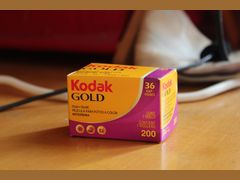 Kodak Gold 200, 35mm 36 exp. | $3.19 (Adorama ad, August 2005) | $8.99 (Glazer's) |
 Kodak Portra 400, single roll | About $9 (2016, PhotoWorkout estimate) | $16.80 (Unique Photo) to $17.75 (Pictureline, as Ektacolor Pro 400), 35mm 36 exp. |
| Kodak Portra 400, 5-pack | About $45 right before the pandemic, upward of $80 at some retailers in late 2022 (Marketplace, format not stated) | $87.95 for 35mm 36 exp. (Glazer's); $82.50 for 120 (Unique Photo) |
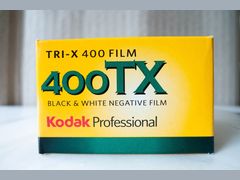 Kodak Tri-X 400, 35mm 36 exp. | $5.79 (B&H, before early 2020) | $10.25 (Glazer's, sold out at check) |
Eastman Kodak's own line-up sells Portra 400 under the name Ektacolor Pro 400, Kosmo Foto reports, so look for both names when you shop.
Sources: mikeeckman.com, glazerscamera.com, analog.cafe, marketplace.org, analog.cafe, digitalcameraworld.com, photoworkout.com, uniquephoto.com, pictureline.com, kosmofoto.com, kosmofoto.com
How much does one roll cost with developing?
The film is only half the bill. PhotoWorkout prices a 24-exposure roll of Kodak UltraMax 400 at $12 to $15, plus $12 to $18 for lab developing and scans: about $28 in total, or a little over $1 a frame. Ektachrome E100 slide film plus E-6 processing pushes an all-in roll past $30.
That is the context for Matt Wright's argument at 35mmc in 2021: a $1.50 increase on a roll costing at least $25 with lab work is only about 6%. It also means the lab is about half of what a roll costs, so how you get film developed matters as much as which film you buy. Our cost to develop film page compares labs and services.
| Roll | Film | Lab | Total |
|---|---|---|---|
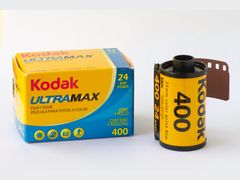 Kodak UltraMax 400, 24 exp. | $12 to $15 (PhotoWorkout, July 2026) | $12 to $18 for develop and scan (PhotoWorkout) | About $28 |
| Kodak Gold 200, 36 exp. | $8.99 (Glazer's) | From $7.50, develop only (Dwayne's) | $16.49 ($8.99 + $7.50), before shipping ($5 for the first roll) and any scans |
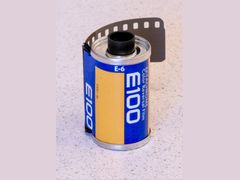 Kodak Ektachrome E100, 36 exp. | $25.95 (Glazer's, sold out at check) | From $12.50, E-6 processing (Dwayne's) | $38.45 ($25.95 + $12.50) or more |
Sources: photoworkout.com, 35mmc.com, dwaynesphoto.com, dwaynesphoto.com, glazerscamera.com
Why is Polaroid and Instax film so expensive?
Every instant photo carries its own darkroom. Instant film contains the chemicals needed to develop and fix the picture, and in a Polaroid camera, rollers break the seal on the developer paste in each frame and spread it between the negative and positive layers. Polaroid says its film is built from 12 layers, each thinner than a human hair.
Polaroid film also comes from one place. It is made in the Netherlands at what Polaroid calls the last Polaroid film factory, and every 600 pack contains a battery that powers the camera and flash. Polaroid film costs about $2.12 to $2.62 a photo in October 2026, against under $1 for Instax Mini. Fujifilm announced on October 20, 2026 a 3 billion yen investment to raise Instax film capacity by about 20%, with the new lines fully running from spring 2028.
Habits add to the bill. Most Instax cameras print every shot automatically, so mistakes still cost a print, Crazy About Fuji points out. For how the two systems compare beyond price, see Polaroid vs Instax.
| Film | Price | Photos | Per photo |
|---|---|---|---|
| Polaroid Color 600 (Polaroid.com) | $20.99 | 8 | About $2.62 |
| Polaroid Color i-Type (Polaroid.com) | $18.99 | 8 | About $2.37 |
| Polaroid Color i-Type five pack (Polaroid.com) | $84.99 | 40 | About $2.12 |
| Instax Mini twin pack (Glazer's) | $18.17 | 20 | About $0.91 |
| Instax Mini value pack (Glazer's) | $49.99 | 60 | About $0.83 |
Sources: en.wikipedia.org, digitalcameraworld.com, polaroid.com, polaroid.com, polaroid.com, glazerscamera.com, fujicrazy.com, fujifilm.com
Will film prices go down?
Probably not soon. Analog.Cafe's tracker shows prices across 37 film products rose 2.5% from January to July 2026, a calmer stretch than the 42.6% rise it measured between November 2018 and December 2020, with a regional split: film got 1% cheaper in Hong Kong but 6% more expensive in Europe and Canada.
Individual films moved both ways. Ektapan (T-Max) 400 fell 4.9%, Ilford Delta 3200 3.5% and UltraMax 400 2.6%, while Kodacolor (ColorPlus) 200 rose 10.5%, Ilford XP2 Super 10.4% and Ilford FP4 Plus 9.2%.
The wild card is distribution. Eastman Kodak began selling consumer films directly in the US and Canada in September 2025 and took back distribution of its stills films in March 2026, with new boxes and some new names. Kodacolor 100 and 200 launched about $1 cheaper in the US than their Alaris-distributed equivalents, and some commentators predicted the change would make film as much as 25 to 30% cheaper. Kosmo Foto is more cautious. Writing from the UK, it found pricing for the new films about the same as under Alaris, and it answered its own question with "Price drops? Perhaps, but most likely not in the short term."
Sources: analog.cafe, en.wikipedia.org, kosmofoto.com
What film costs in October 2026
| Seller | Item | Price | Note |
|---|---|---|---|
| Glazer's Camera (Seattle) | Kentmere Pan 400, 35mm 36 exp. | $8.49 | Lowest-priced 36-exposure roll on the page at check |
| Glazer's Camera (Seattle) | Kodak Gold 200, 35mm 36 exp. | $8.99 | Single roll |
| Glazer's Camera (Seattle) | Foma Fomapan 400 Action, 35mm 36 exp. | $8.99 | Single roll |
| Glazer's Camera (Seattle) | Ilford HP5 Plus 400, 35mm 36 exp. | $9.99 | Single roll |
| Glazer's Camera (Seattle) | Kodak UltraMax 400, 35mm 36 exp. | $10.49 | Single roll |
| Unique Photo (Fairfield, NJ) | Kodak Portra 400, 35mm 36 exp. | $16.80 | In stock at check |
| Pictureline (Salt Lake City) | Kodak Ektacolor Pro 400, 35mm 36 exp. | $17.75 | Sale price; Ektacolor Pro 400 replaces the Portra 400 name in Eastman Kodak's line-up |
| Glazer's Camera (Seattle) | CineStill 800 Tungsten, 35mm 36 exp. | $17.99 | Single roll |
| Glazer's Camera (Seattle) | Kodak Ektachrome E100, 35mm 36 exp. | $25.95 | Slide film; sold out at check |
| Unique Photo (Fairfield, NJ) | Kodak Portra 400, 120, 5-pack | $82.50 | Medium format |
Prices checked October 2026. They change often.
How to shoot film for less
None of these change what the makers charge, but each lowers what you pay per photo you keep. The film cost per photo calculator runs the numbers for your own film and lab.
- 1
Shoot budget film for everyday rolls
Kodak Gold 200 at $8.99 or Kentmere Pan 400 at $8.49 (Glazer's, October 2026) costs about half as much as Portra 400. Compare stores in our guide to where to buy 35mm film.
- 2
Try a half-frame camera
Half-frame cameras put two images in each 35mm frame, so a 36-exposure roll gives 72 photos and halves your cost per frame. See half-frame cameras for current models.
- 3
Bulk load black-and-white film
A 100 ft roll fills about 18 cassettes of 36 exposures. In August 2024 a 100 ft tin of Fomapan 400 cost $85.99, about $4.78 a roll ($85.99 / 18), versus $8.49 for a shop-bought roll at the time. Digital Camera World puts the loading tools at about $40. Casual Photophile says the savings can reach 45% a roll.
- 4
Cut the lab bill
Casual Photophile's James Tocchio says it has always been cheaper to develop and scan your own film than to pay a lab, and that anyone who can read numbers, hold things and pour liquids can do it; see how to develop film at home. If you use a lab, develop-only at Dwayne's Photo starts at $7.50 for 35mm color, plus $5 shipping and handling for the first roll and $0.50 for each extra one, so batching rolls cuts the cost per roll. The Darkroom starts at $14 with scans and a free prepaid shipping label.
- 5
Slow down
James Tocchio of Casual Photophile says questioning each shot before pressing the shutter raised his keepers from about 3 per roll to maybe 12 or 15, and that he wasted less film.
- 6
Buy instant film in bigger packs
Instax Mini drops from about $0.91 to $0.83 a photo in the 60-pack, and the Polaroid i-Type five pack is $84.99 versus $94.95 for five singles. A hybrid camera such as the Instax Mini LiPlay shoots like a digital camera and lets you print only the shots you choose.
Sources: glazerscamera.com, casualphotophile.com, digitalcameraworld.com, dwaynesphoto.com, dwaynesphoto.com, thedarkroom.com, glazerscamera.com, polaroid.com, fujicrazy.com
Questions people ask
Why is slide film more expensive than color negative film?
Slide film has long cost more than print film, Mike Eckman's price history shows, and it also costs more to process. Kodak Ektachrome E100 was listed at $25.95 a roll at Glazer's in October 2026 (sold out at check), and Dwayne's charges from $12.50 to process E-6 slide film versus $7.50 for C-41 color negative.
Sources: mikeeckman.com, glazerscamera.com, dwaynesphoto.com
Why is high-speed film more expensive than low-speed film?
Faster films have historically cost more than slower ones, according to Mike Eckman's long-run look at film prices. The gap today is uneven: Kodak UltraMax 400 is $10.49 at Glazer's versus $8.99 for Gold 200, while black-and-white Kentmere Pan 400 is $8.49, less than either.
Sources: mikeeckman.com, glazerscamera.com
What is the cheapest film to shoot?
On Glazer's 35mm film page in October 2026, Kentmere Pan 400 ($8.49) was the cheapest 36-exposure roll, followed by Kodak Gold 200 and Fomapan films at $8.99. Bulk loading can cut the cost per roll by up to 45%, according to Casual Photophile.
Sources: glazerscamera.com, casualphotophile.com
What is the cheapest way to get film developed?
Doing it yourself: Casual Photophile says developing and scanning at home has always cost less than a lab. Of the mail-in labs priced for this page, develop-only is the cheapest option, from $7.50 a roll of 35mm color at Dwayne's Photo in October 2026 plus $5 shipping and handling for the first roll, versus from $14 with scans at The Darkroom.
Sources: casualphotophile.com, dwaynesphoto.com, dwaynesphoto.com, thedarkroom.com
Why did Kodak Portra become Ektacolor Pro?
Kodak Alaris still owns the Portra name, so when Eastman Kodak took back distribution of its stills films in March 2026 it sold the film as Ektacolor Pro; T-Max became Ektapan for the same reason. Alaris-branded Portra is still on shelves, so you may see both: Portra 400 at $16.80 at Unique Photo and Ektacolor Pro 400 at $17.75 at Pictureline in October 2026.
Sources: kosmofoto.com, uniquephoto.com, pictureline.com
Why are instant cameras cheap but the film so expensive?
The camera is a one-time purchase, while every instant photo contains its own developing chemistry, so the recurring cost sits in the film. Most Instax cameras also print every shot automatically, so mistakes add to the bill.
Sources: en.wikipedia.org, fujicrazy.com
Will high film prices kill film photography?
There is no sign of that yet. Kodak has reportedly spent tens of millions of dollars upgrading its Rochester coating plant, Harman launched its Phoenix color film, Fujifilm plans about 20% more Instax film capacity by spring 2028, and tracked film prices rose only 2.5% from January to July 2026.
Sources: photoworkout.com, fujifilm.com, analog.cafe
Sources
Every fact on this page comes from one of these. How we choose and check sources is in our methodology.
Show all 36 sources
Editorial reviews 14
- Marketplace: Film photography has made a comeback. Can manufacturers keep up with demand?
- PhotoWorkout: Film Costs 3x What It Did in 2016
- PhotoWorkout: The Film Revival Is Real
- Kosmo Foto: Eastman Kodak is distributing all its films again
- Kosmo Foto: Kodak Alaris announces price rises for January 2025
- Kosmo Foto: Here's how much some Kodak Alaris films have increased in price
- Kosmo Foto: Fujifilm increases film prices in Japan by up to 52%
- cizucu: Ilford products to increase by up to 12%
- Exibart Street: Ilford film, paper, and chemicals price increases
- AI-AP Pro Photo Daily: Will skyrocketing silver prices make photo film even more expensive?
- The Dead Pixels Society: Kodak posts stronger second quarter
- Digital Camera World: Kodak film priced better than in the 1990s
- Digital Camera World: Polaroid's developer paste
- Digital Camera World: Bulk-loading film can save you a fortune
Independent blogs 9
- Analog.Cafe: Film Prices Up by 9% Since July 2021
- Analog.Cafe: Film Prices Up by 10.39% Since July 2022
- Analog.Cafe: The Growing Global Film Price Divide (Q3 2026)
- Analog.Cafe: Kodak price drop of up to 30% (January 2024)
- Analog.Cafe: Film price panic, 2026 edition
- Mike Eckman: A Look Back at the Prices of Film
- 35mmc: The Film Community has a Math Problem
- Casual Photophile: Worried about the rising cost of film photography?
- Crazy About Fuji: Why is Instax film so expensive?
retailer 7
official 4
Manuals and references 2
Keep reading
Developing and scanning
A roll of 35mm film costs $5 to $11.50 to develop at US labs, or $11.50 to $29 with scans. Prices from 12 labs and the big chains, checked October 2026.
Film stocks
Where to buy 35mm film online in the US: B&H, CineStill, FPP, Midwest Photo and camera shops that ship. Kodak Gold 200 ran $8.49 to $9.49 in October 2026.
Techniques and editing
Film vs digital photography: film costs about $29.94 a roll to shoot and scan, digital almost nothing per frame. Detail, low light, look and which to pick.
Instant cameras
Polaroid vs Instax: Instax Mini costs $0.77-0.91 a photo and develops in 90 seconds. Polaroid gives a bigger picture for $2.13-2.37. Here is which to buy.
Film cameras
A half frame camera gets 72 shots from a 36-exposure roll. Pentax 17 ($500) vs Kodak Ektar H35 ($46-$50): lens, focus, film, labs and who should buy which.