Comparison
Film vs Digital Photography: Cost, Look and Which to Choose
The short answer
In film vs digital photography, digital wins on cost per photo, speed, low light and detail compared with 35mm, while film wins on look, a slower way of shooting and cheaper cameras to start.
A 36-exposure roll of Kodak Gold 200 developed and scanned by mail came to about $29.94 in October 2026, or $0.83 a frame, while each extra digital frame costs close to nothing. Pick film for a few rolls a year and the look; pick digital for volume, action, low light or paid work.
- Film cost per 36 shots
- About $29.94 with Gold 200 and mail-in develop and scan (Oct 2026)thedarkroom.com
- Camera to start
- $48.99 new Kodak Ektar H35 vs $429.99 Canon EOS R100 body on salefilmphotographystore.com
- 35mm film detail
- About 10-22 MP by most estimates; Sony a7 IV records 33 MPclarkvision.com
- Top film speed
- Box speeds usually top out at ISO 3200; Sony a7 IV goes to ISO 51,200 nativelybayphoto.com
- Time to see photos
- Instantly vs 2-4 days in a mail-in lab, plus shippingthedarkroom.com
Film vs digital photography at a glance
| Film | Digital | |
|---|---|---|
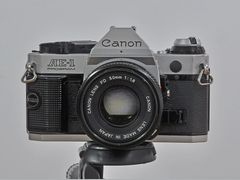
| Camera to start (Oct 2026) | $48.99 new Kodak Ektar H35; $149.99 vintage Canon AE-1 Program with 50mm lens, store-tested (listed, sold out) | $429.99 Canon EOS R100 body, $549.99 with 18-45mm lens (Glazer's sale prices) |
| Cost per 36 shots | About $29.94 with Kodak Gold 200, mail-in developing, scans and shipping | Close to $0 per frame; batteries, cards and backup storage cost extra |
| Shots before you reload | 24 or 36 per 35mm roll | Limited by card space; burst mode for fast action |
| Seeing results | 2-4 days in the lab at The Darkroom, plus shipping both ways | On the screen right after the shot |
| ISO | Fixed for the whole roll; most films are ISO 100-400, specialized ones reach 3200 | Change it shot to shot; Sony a7 IV runs ISO 100-51,200 natively |
| Detail | 35mm about 10-22 MP by most estimates; medium format about 60-125 MP | 33 MP on a Sony a7 IV, a full-frame mirrorless camera |
| Exposure | Color negative is forgiving (Portra 400 takes 1-2 stops of overexposure, per Moment); slide film has little latitude | More total dynamic range in most measurements; better shadow detail |
| Look | Grain, the color of each film stock, highlights that hold detail | Clean, low-noise files; film looks can be emulated |
| Batteries | Some film cameras, especially older ones, need none | Sony a7 IV: about 580 shots per charge (CIPA, rear screen) |
| Airport security | Carry on and ask for a hand check (TSA); CT scanners fog film (Kodak) | No X-ray damage to memory cards in 2004 tests |
| Archiving | Store color negatives at 40F or below (Library of Congress) | Keep 2+ copies apart, check yearly, recopy every 5 years (Library of Congress) |
| Repairs | About 40% of untested used cameras need some repair (Kubus Photo) | Current models are easier to replace if one breaks |
Pick the Film if
- You want the film look: grain, the color of a specific stock and highlights that hold detail
- You shoot a few rolls a year, so about $29.94 a roll stays manageable
- You like working slowly and want every frame to count
- You want a cheap way in: a new Kodak Ektar H35 is $48.99
- You want physical negatives you can rescan later
Pick the Digital if
- You shoot a lot, since each extra frame costs close to nothing
- You shoot sports, kids or wildlife and need burst mode
- You shoot in dim light: a Sony a7 IV runs ISO 100-51,200 natively
- You need results the same day, or you are paid to deliver images
- You are learning exposure and want to see every mistake right away
Sources: filmphotographystore.com, glazerscamera.com, glazerscamera.com, thedarkroom.com, annexphoto.ca, bayphoto.com, en.wikipedia.org, clarkvision.com, shotkit.com, en.wikipedia.org, shopmoment.com, en.wikipedia.org, tsa.gov, kodak.com, photographyblog.com, loc.gov, digitalpreservation.gov, kubusphoto.com, cruzvalentinphotography.com
Which is better, film or digital?
Neither wins everything, and the right answer depends mostly on how much you shoot. On most things you can measure, digital is ahead: at the same sensitivity it shows much less noise than color film shows grain, it reaches far higher ISO, it shows each photo instantly, and extra frames cost close to nothing. A full-frame Sony a7 IV records 33 megapixels, more than most estimates for a 35mm frame.
Film's case rests on things that don't fit on a spec sheet: the look of grain and film color, a slower way of working, physical negatives, and entry cameras that cost a fraction of a new digital body.
That is why the most useful question is not which is better, but what you want from photography. If you want lots of reliable pictures for little money per shot, buy digital. If the process and the look are the point, film is worth paying for by the roll.
Sources: en.wikipedia.org, en.wikipedia.org, filmphotographystore.com, glazerscamera.com
How much does film cost per photo compared with digital?
Film is the option where every frame has a price. Add up a budget roll: $8.99 for Kodak Gold 200, a $14 starting price for developing with scans at The Darkroom and $6.95 for round-trip shipping comes to $29.94, or about $0.83 per frame over 36 exposures.
Other estimates land in the same place. LensLurker's numbers from January 2023 averaged $27 a roll, or $0.75 per photo, and PhotoWorkout puts a 24-exposure roll of UltraMax 400 with lab developing and scans at about $28. At one roll a month, 12 x $29.94 = $359.28 a year, close to the $360 Mastin Labs estimates.
Prices have climbed. PhotoWorkout says a roll of Portra 400 that cost around $9 in 2016 now runs $18 to $22, roughly triple. To run the numbers for your own film and lab, use our film cost per photo calculator.
Digital's running costs are smaller but not zero. Annex Photo argues the cost per image is virtually zero once you own the camera, while Wikipedia lists the costs that remain: batteries, memory cards and long-term data storage.
| Item | Price | Where |
|---|---|---|
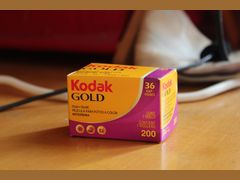 Kodak Gold 200, 35mm, 36 exp | $8.99 | Glazer's Camera, Seattle |
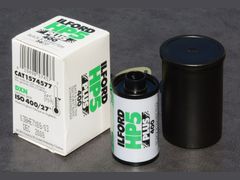 Ilford HP5 Plus 400, 35mm, 36 exp | $9.99 | Glazer's Camera, Seattle |
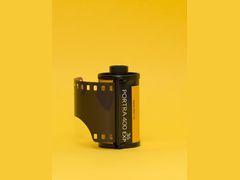 Kodak Portra 400, 35mm, 36 exp | $17.59 (sold out when checked) | Glazer's Camera, Seattle |
| 35mm developing with scans | From $14 | The Darkroom, San Clemente, CA (mail-in) |
| Round-trip shipping (base rate) | $6.95 | The Darkroom |
| 35mm color developing only | From $7.50 | Dwayne's Photo, Parsons, KS (mail-in) |
Sources: glazerscamera.com, thedarkroom.com, dwaynesphoto.com, lenslurker.com, photoworkout.com, mastinlabs.com, annexphoto.ca, en.wikipedia.org
Film and digital camera prices in October 2026
| Seller | Item | Price | Note |
|---|---|---|---|
| Film Photography Project store | Kodak Ektar H35 half-frame camera (new) | $48.99 | Some colors sold out |
| Film Photography Project store | Canon AE-1 Program with 50mm f/1.8 (vintage) | $149.99 | Store says its vintage cameras are fully tested; listed price, sold out when checked |
| Brooklyn Film Camera | Pentax K1000, serviced | $360-$400 | A or B grade, 6-month warranty; no lens listed |
| Brooklyn Film Camera | Canon AE-1 Program, serviced | $375-$415 | A or B grade, 6-month warranty; no lens listed |
| Glazer's Camera | Pentax 17 half-frame camera (new) | $499.95 | Seattle store, ships nationwide |
| Glazer's Camera | Canon EOS R100, body only (new) | $429.99 | Sale price, regular $559.99 |
| Glazer's Camera | Canon EOS R100 with RF-S 18-45mm lens (new) | $549.99 | Sale price, regular $679.99 |
| Glazer's Camera | Canon EOS R50 with RF-S 18-45mm lens (new) | $849.99 | Sale price, regular $899.99 |
Prices checked October 2026. They change often.
When does a cheap film camera stop being cheaper?
To buy, film is cheaper. In October 2026 listings, a vintage Canon AE-1 Program with a 50mm f/1.8 lens was $149.99 at the Film Photography Project store (sold out when checked; the store says its vintage cameras are fully tested), and a new Kodak Ektar H35 is $48.99. A Canon EOS R100 digital kit with an 18-45mm lens was $549.99 on sale at Glazer's Camera, down from $679.99.
Film then charges you by the roll. The $549.99 - $149.99 = $400 difference buys about 13 rolls at $29.94 each. Past about 13 rolls, film has cost more in total than the digital kit, not counting cards and batteries; below that, film stays cheaper.
The cheapest used cameras carry a risk. Kubus Photo, a Brooklyn lab, says about 40% of the untested used cameras it sees need some repair. A serviced AE-1 Program body from Brooklyn Film Camera costs $375 to $415 with a 6-month warranty, and the listing names no lens. Against the $429.99 R100 body, the gap shrinks to $429.99 - $375 = $54.99 at most, under 2 rolls, before you add a lens to the film camera. Our guide to where to buy used film cameras shows how to test one before you pay.
Sources: filmphotographystore.com, glazerscamera.com, thedarkroom.com, kubusphoto.com, brooklynfilmcamera.com
Is film higher resolution than digital?
Not 35mm film against a current camera. Estimates for a 35mm frame cluster around 10 to 22 megapixels: Roger Clark puts fine-grained Fujichrome Velvia at 10 to 16 MP, PictureCorrect says about 20 to 22 MP for high-end 35mm in perfect conditions and 10 to 14 MP for an average photo, and Wikipedia cites an early estimate of 20 million pixels for ISO 100 film. A Sony a7 IV records 7008 x 4672 pixels, or 33 MP.
Medium format changes the answer. By pixel density, Wikipedia estimates about 83 million pixels for a 6x6 cm frame and 125 million for 6x9 cm, and Shotkit's chart gives 60 to 120 MP. Mastin Labs' claim that medium format equals 400 MP is far above every other estimate. Our 35mm vs 120 film guide covers the format choice.
Your scan sets a ceiling too. The Darkroom sells three scan sizes, from the standard scan at 1024 x 1536 pixels (about 1.6 million) to the Super scan at 4492 x 6774 (about 30 million), so the file you get back is limited by the scan you order as well as by the film. The $14 in the cost math above is a starting price, so a larger scan may cost more.
Sources: clarkvision.com, picturecorrect.com, en.wikipedia.org, en.wikipedia.org, shotkit.com, mastinlabs.com, thedarkroom.com
Does film have more dynamic range than digital?
Sources disagree, partly because dynamic range and exposure latitude get mixed up. In Roger Clark's measurements, slide film recorded about 5 stops, print film about 7 and a DSLR at least 10. Wikipedia says modern digital cameras capture over 14 stops. Mastin Labs puts film at 13 stops and digital at 14, and Everpresent, a digitizing company, claims film holds more detail in very bright and very dark areas.
What holds up in practice is latitude. Color negative film tolerates overexposure well: Moment says you can overexpose Portra 400 by one to two stops with excellent results. Slide film has very little latitude. Wedding photographer Sheri McMahon, who shoots both, describes film as holding highlight detail while digital is better in the darker areas.
In practical terms, color negative film forgives a generous exposure and holds bright highlights, while digital has the edge in dim scenes where shadow detail matters.
Sources: clarkvision.com, en.wikipedia.org, mastinlabs.com, everpresent.com, shopmoment.com, en.wikipedia.org, sherimcmahonphotography.com
Is film or digital better in low light?
Digital, clearly. The speed printed on a film box usually runs from ISO 50 to 3200, and Bay Photo says the most common films are ISO 100 to 400, with 3200 a specialized choice. A Sony a7 IV has a native range of ISO 100 to 51,200, extendable to 204,800.
Digital also lets you change ISO from one shot to the next, while film locks you into one speed for the whole roll. At the same sensitivity, Wikipedia notes, digital shows much less noise than color film shows grain. Our film ISO explainer covers how to pick a speed for the light you have.
Sources: bayphoto.com, en.wikipedia.org, annexphoto.ca, en.wikipedia.org
What makes the film look, and can digital copy it?
The look is a big part of film's appeal: grain, the palette of a particular stock and the way color negative film holds bright highlights. Fstoppers calls the film look "a very real thing" and says new photographers spend a lot of money trying to replicate it digitally.
Digital can get close. Fujifilm builds Film Simulation modes into its X Series cameras: PROVIA, Velvia and ASTIA are designed for the deep color of its slide films, while PRO Neg. Std and PRO Neg. Hi emphasize skin tones. Presets and emulation apps do the same job in editing; our film emulation software comparison covers the main options.
Grain is part of the difference. Wikipedia notes that in black and white photography grain takes a more positive role in image quality, while in color it counts digital's lower noise as an advantage.
Sources: fstoppers.com, fujifilm-x.com, sherimcmahonphotography.com, en.wikipedia.org
How long until you see your photos?
Digital shows each image on the screen right after you take it, so you can check focus and exposure and reshoot on the spot. It also shoots bursts, a rapid series of frames for fast action.
Film makes you wait. A 35mm roll holds 24 or 36 exposures, and then it goes to a lab. The Darkroom scans most 35mm C-41 and black and white orders within 2 to 4 days, plus shipping both ways, while Dwayne's Photo quotes about 12 business days in the lab. Compare turnaround and prices in our list of the best mail-in film labs.
Many film shooters count the wait as part of the appeal. Wedding photographer Cruz Valentin describes film as a slower, more deliberate process that makes you think about each frame.
Sources: en.wikipedia.org, annexphoto.ca, thedarkroom.com, dwaynesphoto.com, cruzvalentinphotography.com
Batteries and breakdowns: which is more dependable?
Batteries favor film. Some film cameras, especially older ones, work with no battery at all. Digital cameras live on theirs: Sony rates the a7 IV at about 580 shots per charge using the rear screen and 520 using the viewfinder (CIPA method).
Replacement favors digital. Professional 35mm film cameras are no longer mass produced, as Cruz Valentin points out, so if a film body breaks or jams, a backup is harder to find than a current digital model. Valentin also notes that professionals often use digital cameras with dual memory card slots for security.
Sources: en.wikipedia.org, en.wikipedia.org, cruzvalentinphotography.com
Is film photography making a comeback?
Yes, from a low base. US film sales fell from 800 million rolls in 1999 to 20 million by 2011, according to Photo District News as cited by Marketplace. By October 2022, Kodak said its film finishing area had gone from a single five-day shift to a 24/7 operation, and that it had hired over 300 people across film and chemicals in the previous 18 months.
Recent numbers are mixed. In FilmFocus's Japan-focused 2025 survey, with 1,337 responses, 28% said they were shooting film more often and 26% less, and 62% of those cutting back named cost. Newcomers were the keenest: among people shooting film for less than a year, 49% were shooting more and 6% less. Buying a new film camera was the most common reason for shooting more, with the Pentax 17 named specifically.
Sources: marketplace.org, digitalcameraworld.com, digitalcameraworld.com
Should beginners start with film or digital?
Sources split. Mastin Labs, a preset maker, tells beginners to start with digital. Alan Klughammer, who used to shoot, develop and print film professionally, wrote in the Fstoppers comments that film is not better than digital, but "Film is a good way for new photographers to learn." A 2026 YouTube video by Jared Thomas Tapy takes the other side, with a title saying beginners should learn on film first.
The real difference is feedback and the price of a mistake. On digital you see a bad exposure instantly and fix it on the next frame for free; on film you find out days later, at about $0.83 a frame. In exchange, film makes each frame count: Casual Photophile's James Tocchio says judging each shot before he presses the shutter has raised his hit rate over a few years from around three keepers per roll to, maybe, twelve or fifteen.
You don't have to choose once. If you already own a digital camera, learning exposure on it while running an occasional roll of film adds about $29.94 per roll, plus a film camera. If you go film first, start with our picks of the best film cameras for beginners.
Sources: mastinlabs.com, fstoppers.com, youtube.com, casualphotophile.com
How to try film without spending much
One roll answers the film vs digital question better than any chart. This is the cheapest sensible way to do it at October 2026 prices.
- 1
Get a camera that works
A new Kodak Ektar H35 half-frame costs $48.99 at the Film Photography Project store. If you buy a used SLR instead, pay a little more for one that is tested or serviced.
- 2
Buy one roll of forgiving color film
Kodak Gold 200 is $8.99 for 36 exposures at Glazer's Camera. Color negative film tolerates exposure mistakes far better than slide film, so it suits a first roll.
- 3
Shoot the whole roll
The ISO is fixed for the whole roll, so choose a film speed that matches the light you will shoot in most. A standard 35mm roll gives 24 or 36 frames; a half-frame camera like the H35 fits about twice as many, and Tom's Guide shot a 72-exposure roll with one.
- 4
Mail it to a lab
The Darkroom charges from $14 for developing and scans plus $6.95 round-trip shipping, and scans most C-41 orders within 2 to 4 days.
- 5
Compare the scans with your digital photos
Put the roll next to digital shots of similar scenes and decide whether the look is worth about $30 a roll to you.
Sources: filmphotographystore.com, glazerscamera.com, en.wikipedia.org, annexphoto.ca, thedarkroom.com, tomsguide.com
Questions people ask
Why is digital photography better than film?
For most uses it is faster and cheaper per shot. You see each photo instantly, extra frames cost close to nothing, you can change ISO from shot to shot, and digital has much less noise than color film at the same sensitivity, so it handles low light better. A Sony a7 IV goes to ISO 51,200 natively, while film speeds usually top out at ISO 3200.
Sources: en.wikipedia.org, en.wikipedia.org, bayphoto.com
What are the negatives of a film camera?
Running cost is the big one: about $29.94 per 36-exposure roll bought, developed and scanned by mail in October 2026. You also get only 24 or 36 shots per roll, one ISO per roll, a wait of days for results and airport scanners to watch out for. Used cameras can need work: Kubus Photo says about 40% of untested used ones need some repair.
Sources: thedarkroom.com, annexphoto.ca, kubusphoto.com
Do any professional photographers still use film?
Yes, and some shoot both film and digital. Wedding photographer Sheri McMahon describes herself as a hybrid photographer who uses both film and digital. Fstoppers commenter Kirk Darling points out the trade-off: "Anyone who uses film to shoot a wedding cannot with any valid logic disparage a digital camera for having only one card slot." In cinema, directors Christopher Nolan, Paul Thomas Anderson and Quentin Tarantino have publicly criticized digital.
Sources: sherimcmahonphotography.com, cruzvalentinphotography.com, fstoppers.com, en.wikipedia.org
Are film cameras generally cheaper than digital cameras?
To buy, usually yes: a new Kodak Ektar H35 is $48.99 and a vintage Canon AE-1 Program kit was listed at $149.99, against $549.99 for a Canon EOS R100 kit on sale at Glazer's Camera in October 2026. To use, no: at about $29.94 per roll, the $400 difference is gone after roughly 13 rolls.
Sources: filmphotographystore.com, glazerscamera.com, thedarkroom.com
What is the difference between film and digital photography?
Film records light on a light-sensitive emulsion that has to be developed chemically into a negative or slide, which you then print or scan. Digital records light on an electronic sensor and saves it as a file you can view right away. Most other differences, from cost per frame to low-light ability, follow from that.
Sources: everpresent.com, en.wikipedia.org
Can film go through airport security?
Yes, but keep it in your carry-on and ask for a hand check. TSA allows film in carry-on and checked bags but recommends keeping undeveloped film, and cameras loaded with it, in your carry-on or asking for a hand inspection at the checkpoint. Kodak is stricter: it says never to pack unprocessed film in checked baggage and that the newer CT scanners used on carry-on bags have been proven to fog it. Memory cards showed no X-ray damage in 2004 tests by I3A, SanDisk and TSA.
Sources: tsa.gov, kodak.com, photographyblog.com
Do film negatives last longer than digital files?
Either can last if you look after it, and neither is safe if you don't. The Library of Congress recommends storing color negatives cold, at 40F or below. For digital photos it advises at least two copies on separate media, stored as far apart as practical, checked once a year and copied to new media every five years.
Sources: loc.gov, digitalpreservation.gov
Sources
Every fact on this page comes from one of these. How we choose and check sources is in our methodology.
Show all 36 sources
Editorial reviews 10
- Tom's Guide: Kodak Ektar H35 Half Frame review
- PhotoWorkout: Film Costs 3x What It Did in 2016
- PictureCorrect: How many megapixels is that?
- Bay Photo Lab: Film Basics, 3 Things to Know About ISO/Film Speed
- Annex Photo: Why Shoot Digital vs. Film? 8 Reasons Digital Photography Triumphs Over Film
- Fstoppers: Is Film Photography Better Than Digital?
- Photography Blog: Digital camera media safe in both carry-on and checked baggage (I3A, SanDisk, TSA, 2004)
- Marketplace: Film photography has made a comeback. Can manufacturers keep up with demand?
- Digital Camera World: Kodak, 'we're the last color film manufacturer standing' (Oct 2022)
- Digital Camera World: Kodak overtakes Fujifilm as the most-used film brand in new survey (Aug 2026)
Independent blogs 9
- LensLurker: How Much Does it Cost to Develop Film in 2023?
- Casual Photophile: Worried about the rising cost of film photography?
- Kubus Photo: How to Test a Used Film Camera Before Buying
- Clarkvision (Roger N. Clark): Film versus Digital Summary
- Shotkit: 35mm film resolution vs digital
- Mastin Labs: Film vs Digital Photography, Understanding the Differences
- Everpresent: Film vs Digital, The Pros and Cons of Each Photography Medium
- Sheri McMahon Photography: Digital vs Film Photography, What's the Difference?
- Cruz Valentin Photography: Digital vs. 35mm Film Photography
official 8
- The Darkroom: 35mm Film Developing
- Dwayne's Photo: Services
- Dwayne's Photo: FAQ
- Fujifilm X Series USA: Film Simulation 'CLASSIC CHROME'
- TSA: What can I bring? Film
- Kodak: Transporting and storing film
- Library of Congress: Care, Handling, and Storage of Photographs
- Library of Congress (Digital Preservation): Keeping Personal Digital Photographs
retailer 5
Manuals and references 3
Video reviews 1
Keep reading
Film cameras
The best film camera for beginners is usually a used Canon AE-1 Program or Pentax K1000. Compare 8 picks, October 2026 US shop prices and what to check first.
Film stocks
Film is expensive because a few low-volume factories face rising silver, chemical and shipping costs. See October 2026 prices and how to shoot film for less.
Developing and scanning
A roll of 35mm film costs $5 to $11.50 to develop at US labs, or $11.50 to $29 with scans. Prices from 12 labs and the big chains, checked October 2026.
Film cameras
A half frame camera gets 72 shots from a 36-exposure roll. Pentax 17 ($500) vs Kodak Ektar H35 ($46-$50): lens, focus, film, labs and who should buy which.
Techniques and editing
Film emulation software compared: Dehancer, DxO FilmPack 8 ($149.99), RNI All Films 5, VSCO, Fujifilm simulations and FilmBox, with October 2026 US prices.
Developing and scanning
Scanning film with a DSLR, step by step: gear and October 2026 prices, exact camera settings, how it compares with a flatbed and fixes for common scan problems.