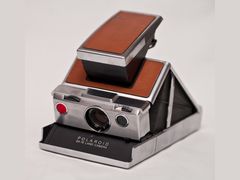
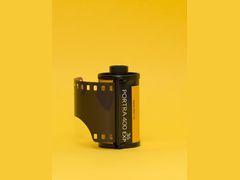
Comparison
Polaroid vs Instax: Which Instant Camera Should You Buy?
The short answer
Instax is the better pick for most people weighing Polaroid vs Instax: Instax Mini film costs about $0.77 to $0.91 a photo, develops in about 90 seconds and gives consistent, color-accurate prints.
Polaroid is worth the extra money if you want its bigger, nearly square 79 x 77 mm picture and warm, unpredictable look, at $2.13 to $2.37 a shot for i-Type film that takes 10 to 15 minutes to develop. For a first camera, reviewers point to the Instax Mini 12 or Mini 13 ($93.95 and $89.95 list); for the Polaroid look, the Now Gen 3 ($129.99) is Polaroid's classic camera, with prices checked October 28, 2026.
- Polaroid i-Type picture
- 79 x 77 mm (3.1 x 3.0 in)polaroid.com
- Instax Mini picture
- 62 x 46 mminstaxus.com
- Polaroid i-Type, per photo
- $2.13-2.37 (Oct. 28, 2026)polaroid.com
- Instax Mini, per photo
- $0.77-0.91 (Oct. 28, 2026)uniquephoto.com
- Polaroid color develop time
- 10-15 minutespolaroid.com
- Instax develop time
- About 90 secondsinstaxus.com
Polaroid vs Instax at a glance
| Polaroid | Instax | |
|---|---|---|
| Picture size | 79 x 77 mm (3.1 x 3.0 in) on i-Type and 600 film; 47 x 46 mm on Go film | 62 x 46 mm Mini, 62 x 62 mm Square, 99 x 62 mm Wide |
| Photos per pack | 8 (Go double pack: 16) | 10 per cartridge, usually sold in 20-photo twin packs |
| Cost per photo, Oct. 2026 | $2.13-2.37 i-Type, $2.62 600, $1.37 Go | $0.77-0.91 Mini, $0.98 Wide, $1.13 Square |
| Develop time | 10-15 minutes (color i-Type) | About 90 seconds |
| Film speed | ASA 640 (i-Type) | ISO 800 (Mini) |
| Temperature | Film develops best at 55-82 F | Cameras rated for 41-104 F |
| Film storage | Fridge, not freezer; best used within 12 months of the production date on the box | Dry, cool place; use before the expiration date on the box |
| Look | Warm, dreamy, unpredictable color, with more chemical artifacts | More neutral and color accurate, with more contrast |
| Power | Lithium-ion battery in the camera (Now Gen 3: up to 15 packs); 600 film carries its own battery for vintage cameras | Two AA batteries in the Mini 12, about 10 packs |
| New cameras | $89.99 (Go Gen 3) to $599.99 (I-2) at Polaroid.com | $69.00 (Mini SE) to $234.95 (Mini 99) list price for analog models |
Pick the Polaroid if
- You want the classic Polaroid frame: a 79 x 77 mm picture on a 107 x 88 mm card, about twice the picture area of Instax Mini
- You like warm, dreamy, unpredictable color and accept some misses as part of the look
- You want creative control: the Now+ Gen 3 ($149.99) adds aperture priority and manual mode through Polaroid's app, and the Polaroid I-2 ($599.99) is Polaroid's pro-grade camera
- You want to shoot a vintage 600 camera, since 600 film still carries a battery in every pack
- You take a few careful shots rather than dozens of party snaps: 8 photos a pack at $2.13 to $2.37 each adds up fast
Pick the Instax if
- You want prints in about 90 seconds to hand out at parties, weddings and trips
- You want the cheapest photos: Instax Mini runs $0.77 to $0.91 a shot, less than half the cost of i-Type
- You want consistent, color-accurate results from a camera that sets the exposure for you
- You're buying a first camera or a gift: the Instax Mini 12 ($93.95 list) or the Mini 13 ($89.95), which adds a self-timer
- You shoot in cold or hot weather: Instax cameras are rated for 41 to 104 F, while Polaroid film develops best between 55 and 82 F
Sources: polaroid.com, polaroid.com, polaroid.com, polaroid.com, polaroid.com, polaroid.com, polaroid.com, polaroid.com, polaroid.com, instaxus.com, instaxus.com, uniquephoto.com, uniquephoto.com, danfinnen.com, danfinnen.com
Print size: are Polaroid and Instax photos the same size?
No. A standard Polaroid picture on i-Type or 600 film is 79 x 77 mm (3.1 x 3.0 in) on a 107 x 88 mm (4.2 x 3.5 in) card, according to Polaroid. That is about twice the picture area of an Instax Mini, which Fujifilm describes as roughly the size of a credit card: a 62 x 46 mm picture on a 54 x 85 mm card.
If you want Instax at Polaroid size, look at Wide. Its 99 x 62 mm picture covers almost exactly the same area as a Polaroid picture, but as a landscape rectangle, and Dan Finnen calls Wide comparable to the size of a traditional Polaroid frame. Instax Square (62 x 62 mm) has the Polaroid shape at a smaller size; Wired calls it the most Polaroid-like Instax film. Instax Mini vs Wide covers that choice in detail.
Polaroid Go is the exception on the Polaroid side. Its 47 x 46 mm picture is smaller than an Instax Mini picture, which matters if you are choosing between the two pocket cameras. See Polaroid Go vs Polaroid Now.
| Format | Card size | Picture size | Picture area |
|---|---|---|---|
| Polaroid i-Type and 600 | 107 x 88 mm (4.2 x 3.5 in) | 79 x 77 mm (3.1 x 3.0 in) | 9.4 sq in |
| Polaroid Go | 66.6 x 53.9 mm (2.6 x 2.1 in) | 47 x 46 mm (1.85 x 1.81 in) | 3.4 sq in |
| Instax Mini | 54 x 85 mm (2.1 x 3.3 in) | 46 x 62 mm (1.8 x 2.4 in) | 4.4 sq in |
| Instax Square | 86 x 72 mm (3.4 x 2.8 in) | 62 x 62 mm (2.4 x 2.4 in) | 6.0 sq in |
| Instax Wide | 108 x 85 mm (4.25 x 3.35 in) | 99 x 62 mm (3.9 x 2.4 in) | 9.5 sq in |
Some comparison guides list the Polaroid picture as 79 x 79 mm. Polaroid's own spec page says 79 x 77 mm.
Sources: polaroid.com, polaroid.com, instaxus.com, danfinnen.com, wired.com, marszalstudio.pl
Cost per photo: is Polaroid or Instax cheaper?
Instax, by a wide margin. A pack of Polaroid i-Type film holds 8 photos and costs $18.99 at Polaroid.com, or $17.00 a pack when you buy five, which works out to $2.13 to $2.37 a picture. Instax Mini film comes in 10-shot cartridges sold in twin packs: $18.17 for 20 at Unique Photo, or $46.00 for 60, so $0.77 to $0.91 a picture.
Shoot 100 photos and, at those per-photo prices, the film alone comes to about $213 to $237 on i-Type versus $77 to $91 on Instax Mini. That gap is bigger than the price difference between a Polaroid Now Gen 3 ($129.99) and an Instax Mini 12 ($93.95), so count how many pictures you expect to take before you compare cameras.
Other sources differ a little. Wired's 2026 Instax guide says a Mini film pack usually costs about $14 for 20 prints, or 60 to 70 cents a print, and puts Wide at about $1 to $1.20. On the Polaroid side, Go film is the cheapest per shot at $1.37, but the picture is small. 600 film costs more than i-Type, and every 600 pack carries a battery for vintage cameras. The Polaroid film guide explains which film fits which camera.
| Film | Pack | Price | Per photo | Seller |
|---|---|---|---|---|
| Polaroid Color i-Type | 8 photos | $18.99 | $2.37 | Polaroid.com |
| Polaroid Color i-Type, bought in fives | 8 photos | $17.00 a pack | $2.13 | Polaroid.com |
| Polaroid Color 600 | 8 photos | $20.99 | $2.62 | Polaroid.com |
| Polaroid Go Color | Double pack, 16 photos | $21.99 | $1.37 | Polaroid.com |
| Instax Mini | Twin pack, 20 photos | $18.17 | $0.91 | Unique Photo |
| Instax Mini | 60 photos | $46.00 | $0.77 | Unique Photo |
| Instax Square | Twin pack, 20 photos | $22.50 | $1.13 | Unique Photo |
| Instax Wide | 20 photos | $19.65 | $0.98 | Unique Photo |
Sources: polaroid.com, polaroid.com, polaroid.com, polaroid.com, uniquephoto.com, uniquephoto.com, uniquephoto.com, uniquephoto.com, wired.com
Image quality: which looks better, Polaroid or Instax?
Instax is the more accurate film and Polaroid the more characterful one. In Dan Finnen's side-by-side shootout, which put Polaroid and Instax cameras through the same scenes on fresh film, Instax was "much more color accurate" and rendered blue sky and clouds better, while the Polaroid shots were "bathed in a dreamy, warm glow." Polaroid film also showed more chemical artifacts, such as blue streaks, spots and roller marks, across many of the images, and Finnen found the Instax pictures more contrasty.
Finnen stresses that which film looks better is subjective. He still prefers Polaroid's "wild colors and unpredictability" for artistic work and recommends Instax Mini for parties, weddings and other events. In his Polaroid Now+ Gen 3 review he writes that modern Polaroid film "is unpredictable and has cool color shifts" and that accuracy is not the point.
Wired's Scott Gilbertson, who has been testing and using Instax printers for almost two decades, says Instax cameras and printers have given the best image quality and most reliable results in his testing. He also finds Square and Wide prints generally sharper, with richer colors, than Mini.
Heat changes the Polaroid look as well. Polaroid says its film develops best between 55 and 82 F, and that above 82 F color photos tend to come out with a yellow or red tint.
Camera Dojo has not run its own side-by-side test. The image findings here come from Dan Finnen and Wired, and Finnen's shootout dates from 2018 (updated 2020), with cameras such as the Instax Mini 8 and film of that era.
Sources: danfinnen.com, danfinnen.com, danfinnen.com, wired.com, polaroid.com
Development time, weather and film care
Instax develops in about 90 seconds. Polaroid color i-Type takes 10 to 15 minutes, and the picture is sensitive to light at first: the camera ejects it under a film shield, and Polaroid says to keep it face down, or somewhere cool and dark, until it has developed.
Don't shake either one. Polaroid says shaking can ruin the chemistry of a developing picture, and Fujifilm says not to crease, bend or shake an Instax print while it develops.
Temperature matters more for Polaroid. Its film develops best between 55 and 82 F (13-28 C). Fujifilm rates Instax cameras for 41 to 104 F and says to keep the print somewhere warm if you shoot below 41 F.
Polaroid prints a production date on the box, not an expiration date, and says the film is best used within 12 months; store it cool, dry and flat in the fridge, but not the freezer. Instax boxes carry an expiration date, and Fujifilm says to keep the film in a dry, cool place and leave the cartridge in its foil until you load it. More in Does Polaroid film expire?
For finished photos, Polaroid says to keep them dry and dark for the first 30 days and to frame them behind UV-protective glass, since light fades them over time. Fujifilm says Instax prints can fade over time but stay fresh for years with proper care.
Flying with film: Polaroid says to ask for a hand check instead of the X-ray machine, and Fujifilm says to carry Instax film and loaded cameras in your carry-on, not checked bags. Photos you have already taken are not affected by X-rays, according to Polaroid.
Sources: instaxus.com, polaroid.com, polaroid.com, polaroid.com, polaroid.com, instax.co.uk
Polaroid and Instax cameras you can buy now (October 2026)
Both brands sell new cameras for under $100: the Polaroid Go Gen 3 at $89.99, and the Instax Mini SE, Mini 13 and Mini 12 at $69.00 to $93.95 list. Every current Polaroid except the Go takes full-size i-Type film, and every Instax Mini model takes the same Mini film.
On the Polaroid side, the Now Gen 3 ($129.99) is what Polaroid calls its classic instant camera, and the Flip ($219.99) adds sonar autofocus and a warning when a shot will be over- or underexposed. On the Instax side, Wired says the Mini 13 keeps the Mini 12's internals and adds a timer, and Dan Finnen calls the Mini 13 probably the best entry point into the analog film hobby these days.
Used cameras are another way into Polaroid. Dan Finnen calls the Impulse AF, a 1990s Polaroid 600 camera, the gold standard among affordable box-type Polaroids and says it usually sells for under $100 on eBay; 600 film's built-in battery powers it.
| Camera | Film | Price | What stands out |
|---|---|---|---|
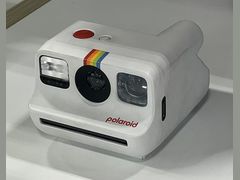 Polaroid Go Gen 3 | Go | $89.99 | Polaroid calls it the world's smallest instant analog camera; 8.9 oz without film |
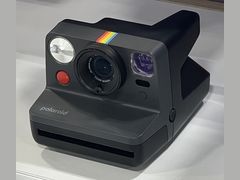 Polaroid Now Gen 3 | i-Type or 600 | $129.99 | Two fixed focus zones; self-timer and double exposure modes; battery rated for up to 15 packs |
| Polaroid Now+ Gen 3 | i-Type or 600 | $149.99 | Phone app adds aperture priority, manual mode and remote control |
| Polaroid Mod | i-Type | $169.99 | Marked new on Polaroid.com |
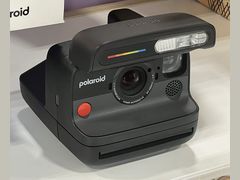 Polaroid Flip | i-Type | $219.99 | Sonar autofocus, hyperfocal four-lens system, over/underexposure warning |
| Polaroid I-2 | i-Type or 600 | $599.99 | Polaroid's pro-grade camera |
| Instax Mini SE | Mini | $69.00 | Cheapest current Instax; brightness adjustment |
| Instax Mini 13 | Mini | $89.95 | Newest entry model; 2- and 10-second self-timers |
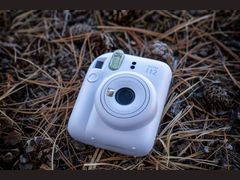 Instax Mini 12 | Mini | $93.95 | Automatic exposure and flash, close-up mode with parallax correction |
| Instax Mini 41 | Mini | $116.95 | Wired calls it essentially the same camera as the Mini 12 and 13 in a more camera-like body |
| Instax Mini 99 | Mini | $234.95 | Brightness, vignette and color effect controls; Wired's pick for manual controls |
| Instax Square SQ40 | Square | $199.95 | Analog camera for Square film |
| Instax Wide 400 | Wide | $175.95 | Biggest Instax picture; also $175.95 at Unique Photo |
Sources: polaroid.com, polaroid.com, polaroid.com, polaroid.com, polaroid.com, polaroid.com, polaroid.com, polaroid.com, polaroid.com, polaroid.com, instaxus.com, instaxus.com, instaxus.com, instaxus.com, instaxus.com, instaxus.com, instaxus.com, uniquephoto.com, wired.com, danfinnen.com, danfinnen.com
Is Instax or Polaroid better for beginners?
Instax, for most people. The Mini 12 sets exposure and flash automatically, so there is nothing to adjust, and at under $1 a shot a missed photo stings less. Dan Finnen calls the Mini 12 a breakthrough in consistent exposure metering. Wired's reviewer complains that the Mini 12 fires its flash far more than he would like, and says the Mini 13 hasn't changed that.
Polaroid asks more of you. Dan Finnen's review of the Now+ Gen 3 says its autofocus is still unreliable after three generations and that it can't focus close enough for handheld selfies at arm's length. With 8 shots a pack at more than $2 each, every miss costs more. Finnen tells beginners on that camera to buy black and white film instead of color, saying they will have a much better time with exposure.
If you want a Polaroid anyway, learn your camera's focus range. The Now Gen 3 picks between two fixed focus zones, about 1.3 to 4.3 ft and 3.3 ft to infinity, so keep your subject inside one of them.
Sources: instaxus.com, danfinnen.com, wired.com, danfinnen.com, polaroid.com, polaroid.com
Questions people ask
Is Polaroid Now better than Instax?
It depends on what you value. The Polaroid Now Gen 3 ($129.99) makes a bigger 79 x 77 mm picture with a warmer, dreamier look, but i-Type film costs $2.13 to $2.37 a shot, and Dan Finnen found the autofocus on the closely related Now+ Gen 3 still unreliable. An Instax Mini 12 ($93.95 list) costs less to run, under $1 a shot, and gives more consistent results.
Sources: polaroid.com, polaroid.com, danfinnen.com, instaxus.com, uniquephoto.com
Can I use Instax film in a Polaroid camera?
No. Instax and Polaroid film come in different sizes and don't fit each other's cameras. The one exception is the old Polaroid 300, a licensed version of the Instax Mini that takes Instax Mini film. Within Polaroid, i-Type film won't run vintage 600 cameras because it has no battery, but 600 film works in both.
Sources: 120pearls.wordpress.com, polaroid.com, polaroid.com
Why is Polaroid film so expensive?
Each pack holds only 8 photos, and Polaroid.com charges $18.99 for i-Type or $20.99 for 600 (which also carries a battery for vintage cameras), so a shot costs about $2.37 to $2.62. Instax Mini runs $0.77 to $0.91 a shot. Buying five packs at once brings i-Type to $17.00 a pack, or $2.13 a photo.
Sources: polaroid.com, polaroid.com, uniquephoto.com
Do Instax photos fade over time?
They can. Fujifilm says Instax prints can fade over time but stay fresh for years with proper care, and Dan Finnen says you can expect them to last a long time with minimal color shift. In a 2018 answer on Unique Photo's community Q&A, the writer couldn't find any long-term archival data for Instax and suggests keeping prints in a cool, dry, dark place. Polaroid gives similar advice for its photos: dark and dry for the first 30 days, then UV-protective glass if you frame them.
Sources: instax.co.uk, danfinnen.com, uniquephoto.com, polaroid.com
Should you shake a Polaroid or Instax picture?
No. Polaroid says shaking can ruin the chemistry of a developing picture, and Fujifilm says not to crease, bend or shake an Instax print while it develops. Lay a Polaroid face down or put it somewhere cool and dark for its 10 to 15 minutes.
Sources: polaroid.com, instaxus.com, polaroid.com
Polaroid Go vs Instax Mini: which is better?
Instax Mini, unless you specifically want the Polaroid look in your pocket. The Polaroid Go Gen 3 ($89.99) makes a 47 x 46 mm picture for about $1.37 a shot, smaller than the 62 x 46 mm Instax Mini picture at $0.77 to $0.91. Polaroid calls the Go the world's smallest instant analog camera, at 8.9 oz without film.
Sources: polaroid.com, polaroid.com, polaroid.com, polaroid.com, instaxus.com, uniquephoto.com
What are the key differences between the Instax Mini 12 and Mini 41?
Mostly the body and the price. Both take Instax Mini film and have automatic exposure and a close-up mode, and Wired calls the Mini 41 essentially the same camera in a more camera-like body. The Mini 41 lists at $116.95, against $93.95 for the Mini 12.
Sources: instaxus.com, instaxus.com, wired.com
Which is the best instant photo camera?
For most beginners, reviewers point to the Instax Mini 12 or the newer Mini 13 ($89.95 list), which adds a self-timer; Dan Finnen calls the Mini 13 probably the best entry point into the analog film hobby these days. For full-size Polaroid pictures, the Now Gen 3 ($129.99) is Polaroid's classic camera and the Flip ($219.99) adds sonar autofocus.
Sources: danfinnen.com, danfinnen.com, instaxus.com, polaroid.com, polaroid.com
Sources
Every fact on this page comes from one of these. How we choose and check sources is in our methodology.
Show all 40 sources
official 26
- Polaroid: Color i-Type Film
- Polaroid: Color 600 Film
- Polaroid: 600 Film
- Polaroid: Polaroid Go Color Film Double Pack
- Polaroid: Go Film
- Polaroid: Polaroid Now Cameras
- Polaroid: Polaroid Now Instant Camera Generation 3
- Polaroid: Polaroid Now+ Cameras
- Polaroid: Polaroid Now+ Instant Camera Generation 3
- Polaroid: Polaroid Go Cameras
- Polaroid: Polaroid Go Instant Camera Generation 3
- Polaroid: Polaroid Mod
- Polaroid: Polaroid Flip
- Polaroid: Polaroid I-2
- Polaroid: Taking a picture that doesn't suck
- Polaroid: What's what with your camera and film
- Polaroid: Our tips for capturing the best summer snapshots
- instax US: Support and FAQs
- instax US: instax mini SE
- instax US: instax mini 12
- instax US: instax mini 13
- instax US: instax mini 41
- instax US: instax mini 99
- instax US: instax square SQ40
- instax US: instax wide 400
- instax UK: Instant print cameras, the ultimate guide
Independent blogs 7
- Dan Finnen: The Ultimate Polaroid Instant Film Shootout
- Dan Finnen: Fuji Instax Instant Film Camera Buying Guide
- Dan Finnen: Polaroid Now+ Gen 3 Instant Camera Review
- Dan Finnen: Fuji Instax Mini Instant Film Review
- Dan Finnen: New Instax Mini 13 is here
- 120Pearls: Instant Film: Polaroid Vs. Instax
- Marszal Studio: Instax vs Polaroid: Which Instant Camera to Choose?
retailer 5
Editorial reviews 1
Forums 1
Keep reading
Instant cameras
The best instant camera for most people is the Instax Mini 13, $89.95 in October 2026. See 8 picks from reviewer consensus, plus Polaroid film cost per photo.
Instant cameras
Polaroid 600 film is ISO 640 with a battery in every 8-photo pack and costs $20.99. See which cameras take 600, i-Type, SX-70 or Go film, and how to store it.
Instant cameras
Instax Wide prints have about 2.15x the image area of Mini but cost about $1.20 a shot vs $0.91. Compare sizes, cameras, printers and Square at US prices.
Instant cameras
A Polaroid is an instant photo or the camera that makes it: the print slides out and develops itself in 10 to 15 minutes. What the word means and what it costs.
Instant cameras
Polaroid and Instax film can go through TSA, but unused packs belong in a carry-on with a hand check, since CT scanners can fog them. Finished photos are safe.