Instax Mini 41: what reviewers say, film cost and common problems
The short answer
The Instax Mini 41 is Fujifilm's $116.95 retro-styled instant camera (US price, October 2026), and most reviewers say it is worth it for easy, casual prints, especially selfies and portraits.
It shoots the same credit-card-size Instax Mini prints as the cheaper Mini 12, with a lens ring you twist to switch on and a close-up mode that corrects the viewfinder for near subjects. The common complaints are a flash that fires on every shot, overexposure in bright sun and paying extra mostly for the design.
- Released
- April 2025
- Price
- $116.95
- Film
- Instax Mini
- Per print
- $0.92-1.80
Built from 114 opinions from 21 pages and videos. Not yet tested by Camera Dojo. Updated .
The short version
Inside, it is the Mini 12: Camera Labs and Dan Finnen both say it has the same lens, exposure system and print quality. What you pay extra for is the body, black and silver with a textured grip, which most reviewers like and a few find awkward to hold.
Launch reports disagree on the starting price: Tom's Guide gave $99 at Fujifilm's US instax store in April 2025, while TechRadar and Digital Camera World listed $129.95. In October 2026 it is $116.95 at Fujifilm's US store and Precision Camera, and film adds $0.92 to $1.80 per print on top.
Good fit if
- You want a simple point-and-shoot instant camera that looks like a real camera rather than a toy.
- You take a lot of selfies, portraits and close-ups at 30 to 50 cm (11.8 to 19.7 in.).
- You want prints to hand around at parties, weddings and trips, with film you can buy at Walmart or Best Buy.
- You like that it runs on two ordinary AA batteries, good for about 100 shots.
Think twice if
- You mostly shoot outdoors in bright sun: prints tend to overexpose and there is no brightness control.
- You want to turn the flash off, use a self-timer or put it on a tripod.
- You want the cheapest way into Instax Mini: the Mini 12 and Mini 13 take the same prints for less.
- You want to choose which shots to print: every press of the shutter uses a sheet of film.
What every photo costs you
The camera is a one-time cost; film is the running one. Every press of the shutter uses one print, from $0.92 in a 60-shot pack to $1.80 in a specialty 10-pack.
60 prints
$0.92 per photo
$54.99 at Precision Camera
20 prints (Twin Pack)
$1.20 per photo
$23.99 at Fujifilm (instaxus.com)
20 prints
$1.25 per photo
$24.99 at Precision Camera
10 prints, Monochrome
$1.80 per photo
$17.99 at Fujifilm (instaxus.com)
Prices checked October 28, 2026. Black Border packs cost the same as Monochrome ($17.99 for 10). Two AA alkalines last about 100 prints, so batteries add little per shot.
What owners and reviewers say, topic by topic
We sorted 114 opinions about the Mini 41 from 21 pages and videos on 20 websites and channels. Each row shows how many people raised a topic and how many of them were positive. Open a row to read short quotes, each linked to its source.
Most of these 114 opinions come from editorial reviews and YouTube reviewers; only one source, a photographer's blog, is a confirmed owner. Reddit threads and retailer customer reviews could not be checked word for word, so long-term owner experience is thin on this page.
Design and grip73% positiveof 15
The black and silver body with its textured grip is one of the most liked things about the camera. A few reviewers find the side grip and front shutter button awkward, and Trusted Reviews blames the button placement for accidental presses.
“it didn't feel completely comfortable to hold in my grown-man-hands”
Michael Fil (blog) 2025-11Hands-on review
“a cool little instant film camera with a nice color scheme and design, much better looking than the bulbous party ones”
Boon, B-Vong journal (photographer blog) 2026-07Owner
“The Instax Mini 41 is a great general camera that looks absolutely fantastic.”
“The gray and black are insanely attractive, along with the heavily textured grippy areas.”
Chris Gampat, The Phoblographer 2025-04Hands-on review
Selfies and close-ups80% positiveof 15
The most praised feature. Parallax correction in close-up mode and the selfie mirror make close shots easier to frame, though Tom's Guide needed trial and error with distance and sunny close-ups can wash out.
“it takes a lot of trial and error to get the distance and focusing right”
Nikita Achanta, Tom's Guide 2025-04Hands-on review
“The mirror is a good feature”
Jim Fisher, PCMag Middle East 2025-04Hands-on review
“There's a small mirror beside the lens, so you can frame yourself without overthinking.”
MJ Jucutan, GadgetMatch 2025-07Hands-on review
“it's a great feature to have if you don't want to end up wasting photos through poor composition”
Sam Kieldsen, TechRadar 2025-05Hands-on review
Automatic exposure57% positiveof 14
More praise than complaints. Most reviewers say exposure is right indoors and in mixed light, and MobileSyrup says it is better than on the Mini 40, but bright sun and backlit scenes still trip it up.
“It also tends to over-expose in bright sunlight”
Evan Saunders, Fortress of Solitude 2025-06Hands-on review
“better auto exposure settings than the older model”
Brad Bennett, MobileSyrup 2025-05Hands-on review
“Like the Instax 12, the automatic exposure metering is stellar.”
Dan Finnen (blog) 2026-03Hands-on review
“its automatic exposure makes photo-taking in various lighting conditions a hit or miss”
Cianna Garrison, How-To Geek 2025-05Hands-on review
Image quality50% positiveof 10
Mostly positive: reviewers describe pleasant, faithful color and enough detail for a credit-card-size print. Several add that it is a soft, lo-fi look that trails any cheap phone, and distant subjects come out a little soft.
“The images are very high in contrast and saturated colours.”
Evan Saunders, Fortress of Solitude 2025-06Hands-on review
“it's nearly impossible for someone to look bad on Instax film”
Chris Gampat, The Phoblographer 2025-04Hands-on review
“I personally prefer the larger size of the Wide prints as they do have more visual impact”
Boon, B-Vong journal (photographer blog) 2026-07Owner
“I noticed that focus is a bit soft for landscapes and subjects far from the camera.”
Dan Finnen (blog) 2026-03Hands-on review
Ease of use100% positiveof 10
Unanimous: twist the lens to switch on, twist again for close-up mode and press the button. Loading film is just as simple.
“It's so easy to use that even a five-year-old could take photos with it.”
Nikita Achanta, Tom's Guide 2025-04Hands-on review
“Anyone coming to instant print cameras for the first time won't be baffled.”
Gavin Stoker, Trusted Reviews 2025-06Hands-on review
“It's easy to use. Just twist the lens to turn it on, and twist again for Close-up Mode.”
MJ Jucutan, GadgetMatch 2025-07Hands-on review
“The twisting control comes from the earlier SQ1, and makes the Mini 41 easier to use than previous models.”
Gordon Laing, Camera Labs 2025-04Hands-on review
Price and value60% positiveof 10
More positive than negative: reviewers call it a good budget Instax at a reasonable price. Critics say it costs more than the Mini 12 for the same pictures.
“However, I just think it's a bit too expensive.”
Dan Finnen (blog) 2026-03Hands-on review
“The price also feels very reasonable.”
Gavin Stoker, Trusted Reviews 2025-06Hands-on review
“For the price, the Fujifilm Instax Mini 41 is worth it.”
Michael Fil (blog) 2025-11Hands-on review
“But we can understand why older teens and adults would prefer the more stylish Mini 41, even though it costs a lot more.”
Jim Fisher, PCMag Middle East 2025-04Hands-on review
Flash and low light25% positiveof 8
Mostly negative. The flash fires on every shot, which reviewers call overkill in daylight and sometimes too strong for close-ups, and dark scenes beyond its reach of about 7 feet go black.
“The flash can also be a tad strong in some situations, especially close-ups.”
Gareth Bevan, Digital Camera World 2025-04Hands-on review
“it doesn't handle dark spaces without a clear subject to get lit up by the flash very well”
Brad Bennett, MobileSyrup 2025-05Hands-on review
“I'm not sure why Fujifilm opted for this design choice because you don't need the flash all the time.”
Nikita Achanta, Tom's Guide 2025-04Hands-on review
“Its Automatic Light Adjustment balanced flash and shadow, giving each print that signature soft, dreamy finish I've always loved from instax.”
MJ Jucutan, GadgetMatch 2025-07Hands-on review
Size and weight75% positiveof 8
Light at 345 g without batteries and easy to carry all day in a small bag. Pockets are disputed: Tom's Guide slipped it into a cargo-pants pocket, while Dan Finnen says it will not fit a pants or coat pocket.
“You're definitely not going to fit this into a pant or coat pocket.”
Dan Finnen (blog) 2026-03Hands-on review
“It fits into my smaller bags nicely too.”
Boon, B-Vong journal (photographer blog) 2026-07Owner
“It's also smaller than competing Polaroids, which is a nice plus.”
Brad Bennett, MobileSyrup 2025-05Hands-on review
“The camera weighs next to nothing at 12.16oz, so it's extremely easy to hold for long periods of time”
Nikita Achanta, Tom's Guide 2025Hands-on review
Features and modes0% positiveof 7
No one praises its features. There is no self-timer, exposure compensation, flash control or tripod thread, and inside it is the same basic camera as other analog Instax Minis.
“It can leave advanced-level photographers wanting more, however.”
Jim Fisher, PCMag Middle East 2025-04Hands-on review
“Without any screw thread provided at the base for possible tripod attachment, operation here is handheld all the way.”
Gavin Stoker, Trusted Reviews 2025-06Hands-on review
“The camera's flash is always on, and there are no options for adjusting exposure compensation or changing flash modes.”
“it's still pretty much the same camera as nearly every other fully analog Instax experience Fujifilm has created”
Chris Gampat, The Phoblographer 2025-04Hands-on review
Film cost17% positiveof 6
Mixed. Instax Mini film is easy to find at stores like Walmart and Best Buy, but every press uses a print that costs $0.92 to $1.80 at October 2026 prices.
“you'll need to continually invest in film (and AA batteries) while using it”
Sam Kieldsen, TechRadar 2025-05Hands-on review
“I think Instax film is very easy to find at stores like Walmart and Best Buy.”
Brad Bennett, MobileSyrup 2025-05Hands-on review
“Instax Mini film is cheap enough these days if you keep in mind that you're not going to shoot it a ton.”
Chris Gampat, The Phoblographer 2025-04Hands-on review
“The Mini 41's purely analog approach to capture means that you're spending some money, around $0.75, each time you press the shutter.”
Jim Fisher, PCMag Middle East 2025-04Hands-on review
Batteries and charging50% positiveof 6
Two AA batteries last about 100 shots, which reviewers find easy to live with. The complaints are disposable cells instead of a rechargeable battery and, for one owner, a camera that only works reliably with alkalines.
“This camera is finnicky about batteries though, it only works with real AA Alkaline throw away batteries.”
Boon, B-Vong journal (photographer blog) 2026-07Owner
“it runs on two common AA batteries, and the Instax 41 is the same”
Dan Finnen (blog) 2026-03Hands-on review
“On a fresh pair of batteries, I comfortably got through three packs of film.”
Nikita Achanta, Tom's Guide 2025-04Hands-on review
“It is a bummer to use physical batteries, though, when most tech these days doesn't require them.”
Cianna Garrison, How-To Geek 2025-05Hands-on review
Durability60% positiveof 5
Split, and based on few reports. Some reviewers say the plastic body feels solid and the battery door is sturdier than the Mini 12's; others call it not sturdy and easy to mark if dropped.
“That's to say that this camera isn't sturdy”
Chris Gampat, The Phoblographer 2025-04Hands-on review
“it will get marked and damaged quite easily if dropped or mistreated”
Sam Kieldsen, TechRadar 2025-05Hands-on review
“Overall, it doesn't feel fragile.”
Michael Fil (blog) 2025-11Hands-on review
“It's more substantial than the fragile Instax 12 door that snaps if you look at it wrong”
Dan Finnen (blog) 2026-03Hands-on review
PositiveMixedNegative
How to load Instax Mini film in the Mini 41
Loading takes seconds, but opening the back at the wrong moment ruins the rest of the pack. Fujifilm and Camera Labs describe the same routine.
- 1
Check that the camera is empty
Look through the film confirmation window on the back. A yellow mark means a pack is still inside; if the counter shows S, the camera is empty and safe to open.
- 2
Line up the yellow marks
Open the back and drop the cartridge in with its yellow stripe matching the yellow mark in the film compartment. It should slot in easily, so never force it.
- 3
Eject the black cover
Close the back, twist the lens ring to switch on and press the shutter once. The black film cover comes out; throw it away, and the counter shows 10.
- 4
Keep the back shut until the pack is finished
Fujifilm's manual says not to open the back until all 10 sheets are used. Opening it mid-pack fogs the remaining sheets, which come out blank white or black, and resets the counter.
Sources: instaxus.com, cameralabs.com, instax.com
Close-up mode, flash and bright sun: getting good shots from the Mini 41
The lens ring is the only control besides the shutter button. One twist turns the camera on and extends the lens; a second twist sets close-up mode. The ON, OFF and CLOSE-UP labels are printed on the body with only a marker on the ring, and Dan Finnen notes it can look as if the camera is always set to off. If you are not sure, look at the flash charging lamp: Fujifilm's manual says it blinks while the flash charges and stays lit when the camera is ready.
Use normal mode for anything farther than 50 cm (19.7 in.). Close-up mode covers 30 to 50 cm (11.8 to 19.7 in.), and in that mode the viewfinder target shifts slightly, so a subject centered on the mark stays centered on the print. It is not a macro mode: How-To Geek tried shooting closer than 11.8 inches and called the results atrocious.
The flash fires on every shot and reaches 0.3 to 2.2 m, so in a dark room anything beyond about 7 feet comes out dark. Close-up mode lowers flash power to avoid blown-out faces. In bright sun the camera tends to overexpose: its fastest setting is 1/250 sec at f/12.7, and Camera Labs says a slightly faster shutter would fix most outdoor overexposure. With no brightness control, the practical fix is to shoot people in open shade or softer light.
In dim light the shutter can slow to 1/2 second, and Fujifilm's manual says to hold the camera firmly in the dark to avoid blur. Keep your subject within flash range.
| Subject distance | Mode | Tip |
|---|---|---|
| Closer than 30 cm (11.8 in.) | None | Too close to focus: prints come out blurry |
| 30 to 50 cm (11.8 to 19.7 in.) | Close-up | Selfies, food, pets: center the subject on the target mark |
| Beyond 50 cm (19.7 in.) | Normal | In the dark, keep people within about 7 feet; in bright sun, look for open shade |
For selfies, twist to close-up mode and frame yourself in the small mirror next to the lens.
Sources: cameralabs.com, techradar.com, howtogeek.com, instaxus.com, fujifilm.com, danfinnen.com, instaxus.com, instax.com
Instax Mini 41 batteries: which AAs and how long they last
The Mini 41 runs on two AA alkaline (LR6) batteries, good for about 10 packs or 100 shots, and a pair comes in the box. Fujifilm says manganese (carbon-zinc) AAs cannot be used. The camera switches itself off after 5 minutes.
There is no battery gauge. If the lamp blinks and the shutter will not fire, weak batteries are the usual cause, so fit a fresh pair before a wedding or party. If it keeps blinking, Fujifilm US says to reinsert the batteries with the lens in the open position to reset the camera.
Rechargeables are a gray area. Tom's Guide says you can use them, Fujifilm's spec sheet lists AA alkaline only, and the owner behind the B-Vong photography blog says the camera only works reliably with disposable alkalines.
Whatever you use, take the batteries out if the camera will sit unused for a long time, as Fujifilm's manual advises. Dan Finnen warns that alkalines left inside eventually leak and corrode the camera.
Sources: fujifilm.com, danfinnen.com, instaxus.com, tomsguide.com, b-vong.com, instax.com
Which film works in the Instax Mini 41, and how to develop it
It takes any instax mini film: regular color, Monochrome and the patterned or colored-border packs, 10 shots per cartridge. It does not take instax Square, instax Wide or Polaroid film. If you are still choosing a format, see Instax Mini vs Wide and Polaroid vs Instax.
Film is the running cost. In October 2026 a 60-shot pack at Precision Camera works out to $0.92 a print, Fujifilm's Twin Pack to $1.20, and Monochrome or Black Border 10-packs to $1.80. The film cost per photo calculator does the math for other pack sizes.
Prints appear in about 90 seconds. Do not shake them: hold the print still and let it develop. Fujifilm lists an operating range of 41°F to 104°F, and below 41°F it suggests keeping the fresh print somewhere warm, like an inside pocket.
Flying with spare packs? Fujifilm's manual says to keep unused film away from checked-luggage X-ray and carry it in your carry-on. More detail: whether instant film can go through airport X-ray.
Dan Finnen recommends trying instax mini Monochrome alongside the classic color film.
Sources: instax.com, instaxus.com, instaxus.com, precision-camera.com, cameralabs.com, instaxus.com, instaxus.com, danfinnen.com
Instax Mini 41 vs Mini 12 vs Mini 13
| Mini 41 | 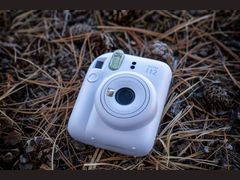 Mini 12 | Mini 13 | |
|---|---|---|---|
| US price (instaxus.com, Oct 2026) | $116.95 | $93.95 | $89.95 |
| Lens | 60 mm, f/12.7 | 60 mm, f/12.7 | 60 mm, f/12.7 |
| Power and close-up mode | Twist the lens ring | Twist the lens ring | Twist the lens ring |
| Parallax correction in close-up mode | Yes | Yes | Yes |
| Selfie mirror | Yes | Yes | Yes |
| Self-timer | No | No | Yes, 2 or 10 seconds |
| Look | Black and silver, textured, camera-like | Rounded, colorful | Bold, rounded |
| Film | Instax Mini | Instax Mini | Instax Mini |
Pick the Mini 41 if
- You want a camera that looks serious rather than toy-like. PCMag says older teens and adults may prefer its style even though it costs more.
- You like a textured grip and a black and silver finish.
Pick the Mini 12 if
- You want the same lens, exposure system and prints for less money.
- You prefer a rounder, colorful body. If you also want a self-timer, the Mini 13 adds one for even less.
Sources: cameralabs.com, danfinnen.com, instaxus.com, instaxus.com, instaxus.com, tomsguide.com, me.pcmag.com
Instax Mini 41 specs
The figures from Fujifilm's US spec sheet that matter for everyday shooting.
| Spec | Instax Mini 41 |
|---|---|
| Film | Instax Mini instant film, sold separately |
| Print size | 86 x 54 mm print, 62 x 46 mm image |
| Lens | 60 mm f/12.7, 2 elements (about 34 mm equivalent) |
| Shutter | Programmed electronic, 1/2 to 1/250 sec |
| Exposure | Automatic, LV 5.0 to 14.5 (ISO 800) |
| Focus range | 0.3 m and beyond; close-up mode for 0.3 to 0.5 m |
| Viewfinder | 0.37x real image finder with parallax correction |
| Flash | Always fires; 0.3 to 2.2 m; recycles in 7 sec or less |
| Developing time | About 90 seconds |
| Power | 2 AA alkaline (LR6), about 100 shots; auto off after 5 minutes |
| Size | 104.5 x 122.5 x 67.5 mm (4.11 x 4.82 x 2.65 in.) |
| Weight | 345 g (12.16 oz) without batteries, with film and strap |
| Operating temperature | 41°F to 104°F |
| In the box | Camera, 2 AA batteries, wrist strap (no film) |
| US color | Black |
Fujifilm's one-year US warranty covers only cameras bought from authorized US dealers. For repairs, call Fujifilm at 1-800-800-3854 and choose option 2.
Sources: fujifilm.com, instaxus.com, cameralabs.com, techradar.com, howtogeek.com, instaxus.com, instaxus.com
Common problems, blinking lights and fixes
Most Mini 41 problems come down to light, batteries or opening the back at the wrong time. These fixes come from Fujifilm's manual and support pages, plus what reviewers ran into. For more blinking-light fixes, see Instax Mini 12 flashing orange light.
Washed-out prints in bright sun
Raised in 5 opinions
- How you notice
- Outdoor shots in direct sun come out too bright, and close subjects look bleached because the flash fires every time.
- Fix
- Nothing to repair. The fastest shutter speed is 1/250 sec at f/12.7 and the flash cannot be switched off, so shoot people in open shade or softer light, and use close-up mode for near subjects, which lowers flash power. If you mostly shoot bright outdoor scenes, the Instax Mini SE or Mini 99, which have brightness control, suit you better.
- Typical cost
- $0 to fix; each wasted print costs $0.92 to $1.80 (October 2026)
Sources: cameralabs.com, tomsguide.com, fujifilm.com, instaxus.com
The lamp blinks and the shutter will not fire
- How you notice
- After twisting the ring to ON, the lamp keeps flashing instead of staying lit, and the camera will not take a picture.
- Fix
- Fujifilm's manual says repeated slow and quick flashing means low battery voltage: fit two new AA alkalines. If it keeps blinking, Fujifilm US suggests reinserting the batteries with the lens open to reset the camera. Quick flashing alone points to a film jam, a lens ring in the wrong position or another error.
- Typical cost
- A fresh pair of AA alkalines; the reset is free
Sources: instax.com, instaxus.com, danfinnen.com
Battery leaks after storage
- How you notice
- The camera will not power on after months in a drawer because the alkalines inside leaked and corroded it.
- Fix
- Take the batteries out when the camera will sit unused for a long time, as Fujifilm's manual advises. The manual also says not to mix old and new batteries, or alkaline, carbon-zinc, lithium and rechargeable cells.
- Typical cost
- Fujifilm's one-year warranty covers defects in workmanship and materials, not damage from mishandling, misuse or not following the operating instructions. Out of warranty, Fujifilm's repair department emails an estimate before any work; at $116.95 new, replacing the camera can be the practical choice.
Sources: danfinnen.com, instax.com, fujifilm.com, fujifilm.com, asset.fujifilm.com
Film jams or a print will not eject
- How you notice
- No print comes out and the lamp flashes quickly.
- Fix
- Do not pull the film out. Fujifilm's manual says to remove the batteries and insert new alkalines, after which the film may eject. If it keeps happening, contact Fujifilm or an authorized dealer.
- Typical cost
- Free under Fujifilm's one-year US warranty if bought from an authorized US dealer; otherwise Fujifilm repair emails an estimate first
Sources: instax.com, asset.fujifilm.com, fujifilm.com, instaxus.com
Blank white or black prints, or a wrong film count
- How you notice
- Several prints in a row from the same pack come out white or black, or the counter no longer matches the shots left.
- Fix
- Usually the back was opened with film inside, which fogs the remaining sheets and resets the counter. Only open it when the counter shows 0, or S with no pack loaded, and check the confirmation window for the yellow mark first.
- Typical cost
- The fogged sheets are lost: up to 10 prints at $0.92 to $1.80 each
Sources: instaxus.com, cameralabs.com, instax.com
Blurry or off-center close-ups and selfies
Raised in 2 opinions
- How you notice
- Close subjects come out soft or shifted in the frame.
- Fix
- Twist to close-up mode for 30 to 50 cm (11.8 to 19.7 in.), put the viewfinder target mark on the center of the subject and use the selfie mirror for self-portraits. Do not go closer than 30 cm: close-up mode is not a macro mode.
- Typical cost
- $0; each missed print costs $0.92 to $1.80
Sources: howtogeek.com, tomsguide.com, instax.com, cameralabs.com
Where to buy it
Fujifilm's US store lists the Mini 41 at $116.95, and Precision Camera in Austin charges the same. Launch reports disagree on where it started: $99 according to Tom's Guide, $129.95 according to TechRadar and Digital Camera World. Prices at Best Buy, Walmart, B&H and Adorama could not be confirmed on their own pages, so they are not listed here.
Fujifilm (instaxus.com)
New, camera, 2 AA batteries and wrist strap
$116.95
See listingPrecision Camera (Austin, TX)
New, camera only, in stock
$116.95
See listing
Prices checked on October 28, 2026. They move every week, so treat them as a range, not a quote. Fujifilm warns about fake websites posing as instax stores. Its one-year US warranty covers only the original buyer of a camera from an authorized US dealer; it does not cover cameras bought outside the US, from unauthorized sellers, or refurbished units.
Specifications
Lens and exposure
- Field of view
- About 34 mm equivalent
- Focus range
- 0.3 m and beyond; close-up mode 0.3 to 0.5 m
Film and prints
- Print size
- 86 x 54 mm print, 62 x 46 mm image
- Developing time
- About 90 seconds
Power and size
- Auto power off
- After 5 minutes
- Operating temperature
- 41°F to 104°F
- Model number
- 16844408
Video reviews worth your time

INSTAX Mini 41 Review
The Instax Mini 41 offers a stylish, tactile redesign and useful parallax correction for close-ups, but its un-disableable flash and basic auto-exposure make it best suited for fun, casual instant photography rather than precise image quality.

instax mini 41 REVIEW : low-cost but grown-up instant camera!
The Instax Mini 41 is an excellent budget analog instant camera that combines a stylish design with accurate close-up framing, though it still suffers from overexposure in bright sunlight.

Review | Fujifilm Instax Mini 41 - Fun or Fluff? 👀
The Fujifilm Instax Mini 41 is an accessible, stylish instant camera that delivers effortless photos with a refined retro design.

instax mini 41™ Tutorial Video/FUJIFILM
The video demonstrates how the Instax Mini 41 simplifies instant photography through automatic exposure, corrected close-up framing, a selfie mirror, and app integration.

Instax Mini 41 vs Instax Mini 40 | Is the Upgrade Worth It?
The Instax Mini 41 brings subtle design refinements and improved close-up framing over the Mini 40, making it an attractive option for new buyers though not an essential upgrade for current owners.
Questions people ask about the Mini 41
Is the Instax Mini 41 worth it?
For easy, casual instant photos, most reviewers say yes. Camera Labs calls it one of the best budget Instax cameras, especially for selfies and portraits, and Michael Fil says it is worth the price. The dissent is about money: Dan Finnen and MobileSyrup say it costs more than cheaper Instax models for mostly a design change, and in October 2026 it lists at $116.95 against $93.95 for the Mini 12.
Sources: cameralabs.com, michaelfil.com, danfinnen.com, mobilesyrup.com, instaxus.com, instaxus.com
Should I get the Instax Mini 12 or 41?
They take the same pictures. Camera Labs and Dan Finnen both say the Mini 41 has the Mini 12's lens, exposure system and print quality in a different body. Get the Mini 41 if you want the black, camera-like design and textured grip, and the Mini 12 if you would rather save the difference ($93.95 vs $116.95 at Fujifilm's US store).
Sources: cameralabs.com, danfinnen.com, instaxus.com, instaxus.com
Which is better, Instax Mini 41 or Instax Mini 13?
No review we could find compares them directly. Fujifilm's US pages list the same 60 mm f/12.7 lens, 1/2 to 1/250 sec shutter, always-firing flash and parallax-corrected close-up mode for both. The Mini 13 costs less ($89.95 vs $116.95) and adds 2- and 10-second self-timers, the one feature TechRadar misses on the Mini 41; the Mini 41's draw is its more grown-up design.
Sources: instaxus.com, fujifilm.com, techradar.com
Can you turn off the flash on the Instax Mini 41?
No. The flash fires on every shot and only adjusts its own brightness, and close-up mode lowers its power to avoid blown-out faces. It is one of the most common complaints in reviews, mainly because it is unnecessary in daylight and can wash out sunny close-ups.
Sources: tomsguide.com, fujifilm.com, cameralabs.com, trustedreviews.com
What film does the Instax Mini 41 use?
Instax Mini film only, sold separately. Any pack labeled instax mini works, including color, Monochrome and the border designs, with 10 shots per cartridge. Instax Square, Instax Wide and Polaroid film do not fit.
Sources: fujifilm.com, instaxus.com, cameralabs.com
How long do the batteries last in the Instax Mini 41?
About 100 shots, or 10 packs of film, on two AA alkaline batteries, according to Fujifilm. Tom's Guide comfortably got through three packs on a fresh pair. There is no battery gauge, so carry a spare pair to events.
Sources: fujifilm.com, tomsguide.com
Why is my Instax Mini 41 blinking and not taking pictures?
Usually the batteries are low. Fujifilm's manual says repeated slow and quick flashing means low battery voltage, so fit two new AA alkalines. If the lamp keeps blinking, reinsert the batteries with the lens in the open position to reset the camera. Quick flashing alone can also mean a film jam or a lens ring in the wrong position.
Sources: instax.com, instaxus.com, instax.ie
Is the Instax Mini 41 worth upgrading from the Mini 40?
Probably not, according to pal2tech and MinistryTech, who call the changes minor. The Mini 41 swaps the Mini 40's power button and pull-out lens for a twist ring, adds parallax correction in close-up mode and gets a textured body, but uses the same film. Digital Camera World does say the twist lens is much better than the Mini 40's push lever, which does not always open the shutter reliably.
Sources: youtube.com, youtube.com, cameralabs.com, digitalcameraworld.com
What people compare it with
Same lens, exposure system and prints in a rounder, colorful body, for $93.95 instead of $116.95 at Fujifilm's US store.
Fujifilm Instax Mini 13
Fujifilm's other budget twist-to-shoot model, $89.95 at its US store, with the same lens and close-up mode, adds the 2- and 10-second self-timers the Mini 41 lacks.
Fujifilm Instax Mini 99
At $234.95 it adds brightness control, color effects and a tripod thread: the step up if fully automatic exposure frustrates you.
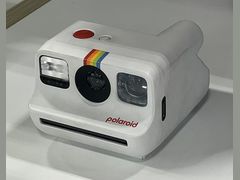
The small analog rival Tom's Guide sets it against. Tom's Guide notes that its Polaroid Go film costs more per shot than Instax Mini.
Every source behind this page
Read them yourself. How we pick and count them is in our methodology.
Show all 39 sources
Manuals and references 18
- asset.fujifilm.com: USA INSTAX Camera Warranty Instax.pdf
- instax.com: manual naen 202504.pdf
- fujifilm.com: instax mini 41™ Specifications
- fujifilm.com: repair locations
- instax.com: instax mini 41™
- instax.ie: Help with your instax
- instaxus.com: instax mini 12
- instaxus.com: instax mini 13
- instaxus.com: instax mini 41
- instaxus.com: instax mini se
- instaxus.com: contact us
- instaxus.com: film technology
- instaxus.com: mini monochrome film
- instaxus.com: mini white film
- instaxus.com: support
- precision-camera.com: fujifilm instax mini 41 instant film camera
- precision-camera.com: fujifilm instax mini instant film 20 exposures
- precision-camera.com: fujifilm instax mini instant film 60 exposures
Editorial reviews 12
- Camera Labs: Fujifilm instax mini 41 review
- Tom's Guide: Fujifilm Instax mini 41 review: The most user
- Tom's Guide: I'm a photographer and the Fujifilm Instax mini 41 totally ...
- MobileSyrup: The Instax Mini 41 is the instant camera for grown
- How-To Geek: Fujifilm Instax Mini 41 Camera Review: An Easy-To
- TechRadar: Fujifilm Instax Mini 41 review
- Digital Camera World: Fujifilm Instax Mini 41 review
- The Phoblographer: Fujifilm Instax Mini 41 Review
- GadgetMatch: A birthday reset with the instax mini 41
- PCMag Middle East: Fujifilm Instax Mini 41
- Trusted Reviews: Fujifilm Instax Mini 41 Review
- Fortress of Solitude: Fujifilm Instax Mini 41 Review
Video reviews 5
- pal2tech: INSTAX Mini 41 Review
- Gordon Laing: instax mini 41 REVIEW : low-cost but grown-up instant camera!
- Wilkinson Cameras: Review | Fujifilm Instax Mini 41 - Fun or Fluff? 👀
- FUJIFILMglobal: instax mini 41™ Tutorial Video/FUJIFILM
- MinistryTech: Instax Mini 41 vs Instax Mini 40 | Is the Upgrade Worth It?
Independent blogs 4
Keep reading
Instant cameras
We sorted 157 opinions on the Fujifilm Instax Mini 12: what people love, the overexposure and flash complaints, blinking-light fixes and what each print costs.
Instant cameras
The best instant camera for most people is the Instax Mini 13, $89.95 in October 2026. See 8 picks from reviewer consensus, plus Polaroid film cost per photo.
Instant cameras
Instax Wide prints have about 2.15x the image area of Mini but cost about $1.20 a shot vs $0.91. Compare sizes, cameras, printers and Square at US prices.
Instant cameras
Polaroid vs Instax: Instax Mini costs $0.77-0.91 a photo and develops in 90 seconds. Polaroid gives a bigger picture for $2.13-2.37. Here is which to buy.
Instant cameras
Instax Mini 12 flashing orange light? Slow blinks mean the flash is charging, slow plus quick means low batteries, and quick means a jam or lens error.