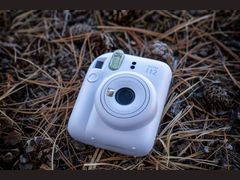
Fujifilm Instax Wide 400: big prints, no fuss, few controls
The short answer
The Instax Wide 400 is a good buy if you want big instant prints with no fuss: reviewers praise its sharp, colorful wide prints and one-button operation, and it costs $175.95 new plus about $0.98-1.80 per print.
The catches are its size, weak results in dim light and no way to adjust exposure or switch the flash on or off.
- Released
- June 2024
- Price
- $175.95
- Image size
- 2.4 x 3.9 in
- Per print
- $0.98-1.80
Built from 105 opinions from 19 pages and videos. Not yet tested by Camera Dojo. Updated .
The short version
Announced in June 2024 and on sale from July 12 at $149, it is Fujifilm's first new Instax Wide camera since the Wide 300 of 2014. Fujifilm stripped it down: the Wide 300's small screen and its lighten/darken and flash buttons are gone, and a self-timer lever and an angle wedge for tabletop shots were added. That makes it easier for parties and group shots, and less flexible for anyone who wants control.
Across the 105 opinions on this page, image quality and ease of use collect the most praise, while size and low-light results collect the most complaints. For other options, see the best instant cameras guide.
Good fit if
- You want the biggest Instax prints, twice the width of Instax Mini, for parties, weddings and group shots.
- You want a camera anyone can use: twist the lens to switch on, then press the one button.
- You like self-timer group photos: the timer lever and the included angle wedge make them easy.
Think twice if
- You want to control exposure or the flash. There are no buttons for either.
- You want an everyday carry camera: it measures 6.4 x 3.9 x 4.8 in (162 x 98 x 123 mm) and weighs 1.4 lb (616 g) before batteries and film.
- You mostly shoot indoors or at night, where reviewers got dark prints.
- You want to choose which shots to print. A hybrid such as the Instax Wide Evo lets you.
What every photo costs you
The camera is a one-time cost; film is the running one. Plain white-frame Instax Wide film costs about $0.98-1.15 per print at US stores, against $1.80 at Fujifilm's list price, and special frames run $1.65-1.80. Four AA batteries last about 100 prints.
White frame, 40 prints (four pack)
$0.98 per photo
$39.00 at Unique Photo
White frame, 20 prints (twin pack)
$0.98 per photo
$19.65 at Unique Photo
White frame, 20 prints (twin pack)
$1.12 per photo
$22.49 at Pictureline
White frame, 20 prints
$1.15 per photo
$22.99 at K&M Camera
White frame, 20 prints (list price)
$1.80 per photo
$35.99 at Fujifilm (instaxus.com)
Black frame, 10 prints
$1.65 per photo
$16.50 at Unique Photo
Monochrome, 10 prints
$1.78 per photo
$17.75 at Unique Photo
Brushed Metallics, 10 prints
$1.80 per photo
$17.99 at K&M Camera
Prices checked October 28, 2026. Each cartridge holds 10 prints. In 2024 reviewers put Wide film at roughly 90 cents (Camera Labs) to $1.11 (Tom's Guide) per print.
What owners and reviewers say, topic by topic
We sorted 105 opinions about the Instax Wide 400 from 19 pages and videos on 17 websites and channels. Each row shows how many people raised a topic and how many of them were positive. Open a row to read short quotes, each linked to its source.
Almost all of these opinions come from editorial reviewers, bloggers and YouTubers who used the camera for a review. We could not read owner reviews on Reddit, Best Buy or B&H, so long-term owner experience is thin on this page.
Image quality93% positiveof 14
The most praised part of the camera. Reviewers describe sharp, detailed, slightly saturated prints, and one likens the look to early-1990s disposable camera prints. The only caveat is overexposure in bright sun.
“In most situations, the WIDE 400 produced nice-looking prints”
Gordon Laing, Cameralabs 2024-06Hands-on review
“As with all Instax cameras, prints have a lovely vintage quality to them”
Timothy Coleman, TechRadar (launch article) 2024-06Hands-on review
“What you do get is a contextually very sharp image, which is rich with colour.”
Sam Cross, T3 2024-06Hands-on review
“the Instax Wide prints show a good level of detail with bold, oversaturated colours.”
Evan Saunders, Fortress of Solitude 2024-11Hands-on review
Design and grip62% positiveof 13
Mostly positive on the grip and the solid, textured body. The looks divide people: some find it plasticky or ugly, others prefer it to the Wide 300.
“I think it's one of the worst-looking instant cameras on the market”
Beth Nicholls, TechRadar 2024-07Hands-on review
“Overall, the camera has a stylish and sharp appearance.”
“While its body is made entirely of plastic, it doesn't feel cheap.”
Nikita Achanta, Tom's Guide 2024-08Hands-on review
“It's also quite plasticky, but some folks might really like that.”
Chris Gampat, The Phoblographer 2024-06Hands-on review
Features and modes54% positiveof 13
Leans positive. The self-timer lever gets steady praise, while the loss of the Wide 300's exposure and flash controls draws the criticism.
“There's not even exposure compensation on this guy, a big step back from the Instax Wide 300.”
Dan Finnen (danfinnen.com) 2024-11Hands-on review
“Self-timer lever is easy and fun to use”
Gareth Bevan, Digital Camera World 2024-09Hands-on review
“One other neat feature is the markings in the viewfinder.”
Sam Cross, T3 2024-06Hands-on review
“The camera is fun to use however there is not much control of what you can do here and no app to go with it”
Jim O Brien, TechBuzz Ireland 2024-07Hands-on review
Selfies and close-ups58% positiveof 12
Leans positive. The clip-on close-up lens and its mirror help, and the wide frame fits two or three faces, but some found selfies hard to focus and the lens easy to lose.
“how are you supposed to focus a selfie properly with this thing?”
Dan Finnen (danfinnen.com) 2024-11Hands-on review
“here the mirror is superfluous”
Timothy Coleman, TechRadar (launch article) 2024-06Hands-on review
“The wide format can comfortably fit two to three people in a selfie.”
MJ Jucutan, GadgetMatch 2024-08Hands-on review
“I found the attachment was good at helping for avoiding focus and blur issues when taking close-ups.”
Aisha Malik, TechCrunch 2026-06Hands-on review
Ease of use82% positiveof 11
Close to unanimous praise: twist the lens and press the button. The one catch is a viewfinder that does not quite match the print.
“The camera is simple to use with simple controls”
Jim O Brien, TechBuzz Ireland 2024-07Hands-on review
“All you have to do then is point, shoot, and admire.”
Chris Gampat, The Phoblographer 2024-06Hands-on review
“the Instax Wide 400 is an impressively simple camera”
Sam Cross, T3 2024-06Hands-on review
“Easy-to-use with only one button, this retro beast can be used by anyone.”
Nikita Achanta, Tom's Guide 2024-08Hands-on review
Size and weight10% positiveof 10
The most common complaint. Reviewers call it massive and say it needs a bag, which makes it better for events than everyday carry.
“Boy is it a big camera.”
Gareth Bevan, Digital Camera World 2024-09Hands-on review
“The Wide 400 is indeed large and bulky”
“Even though it has a large footprint and it weighs 1.35lbs, it never feels too heavy to carry around”
Nikita Achanta, Tom's Guide 2024-08Hands-on review
“it is a big boy this one, everywhere I went with it I was stopped and questions asked”
Jim O Brien, TechBuzz Ireland 2024-07Hands-on review
Flash and low light11% positiveof 9
The weakest area. Most reviewers got dark prints indoors and at night, and the automatic flash cannot be forced on or off; one found it decent at night.
“But like many instant cameras, the Instax Wide 400 struggles in low light”
Nikita Achanta, Tom's Guide 2024-08Hands-on review
“Sometimes it won't fire a flash even though we really think it should. That can result in badly exposed images.”
Chris Gampat, The Phoblographer 2024-06Hands-on review
“the Instax Wide 400 may struggle in low-light conditions and when shooting macro without the special attachment”
“the flash also does a decent job and isn't overly harsh to overexpose your images at night.”
Evan Saunders, Fortress of Solitude 2024-11Hands-on review
Automatic exposure14% positiveof 7
Mostly a complaint. Several reviewers saw overexposed prints in strong sun and say there is nothing to adjust, though Digital Camera World found the automatic exposure very reliable.
“like most analogue instax models, it can become overexposed in sunny conditions, even in England”
Gordon Laing, Cameralabs 2024-06Hands-on review
“there isn't much you can do to make photos brighter if you're not in an ideal lighting situation”
Aisha Malik, TechCrunch 2026-06Hands-on review
“The Wide 400 does very well nailing the automatic exposure and automatic flash, and the zone focusing system was very reliable”
Gareth Bevan, Digital Camera World 2024-09Hands-on review
“in most instances you will get good snaps some did come out overexposed as expected from an analogue camera which does waste expensive film”
Jim O Brien, TechBuzz Ireland 2024-07Hands-on review
Batteries and charging33% positiveof 6
Evenly split. Four AA batteries are easy to find, but some reviewers wanted a rechargeable pack and one calls the battery door flimsy.
“Sadly they resisted the opportunity to fit a rechargeable lithium pack.”
Gordon Laing, Cameralabs 2024-06Hands-on review
“Convenient AA battery power”
“I'm not a fan of using replaceable batteries on modern devices, but this is still the norm for instant cameras.”
Evan Saunders, Fortress of Solitude 2024-11Hands-on review
“There's a terribly flimsy battery door in the grip that houses four AA batteries.”
Dan Finnen (danfinnen.com) 2024-11Hands-on review
Price and value100% positiveof 5
Every opinion on value is positive, most of them written at the $149 launch price.
“So, is the Fujifilm Instax Wide 400 worth the money? Certainly.”
Nikita Achanta, Tom's Guide 2024-08Hands-on review
“which I think is a fair price compared with other Instax models”
Beth Nicholls, TechRadar 2024-07Hands-on review
“the price, coming in at 150 USD as of 2024, is low enough that I can overlook many of its flaws in a vacuum.”
Dan Finnen (danfinnen.com) 2024-11Hands-on review
“Importantly the camera remains in impulse purchase territory and is affordable enough to pick up a couple for a wedding or event.”
Gareth Bevan, Digital Camera World 2024-09Hands-on review
Durability67% positiveof 3
Few reports. Two reviewers call the plastic body robust; one worries about how the rubbery lens barrel will age.
“The lens barrel has a rubbery plastic that I worry about long-term durability.”
Dan Finnen (danfinnen.com) 2024-11Hands-on review
“the Wide 400 can withstand a lot thanks to its rugged and textured build, and it's very grippy too.”
Beth Nicholls, TechRadar 2024-07Hands-on review
“Secondly, it's incredibly robust. Its plastic build feels solid in hand, and there's much more room to allow for impact zones if dropped.”
Evan Saunders, Fortress of Solitude 2024-11Hands-on review
PositiveMixedNegative
Photos taken with a Fujifilm Instax Wide 400
A print shot on an Instax Wide 400 in New York in November 2024, shared on Wikimedia Commons.
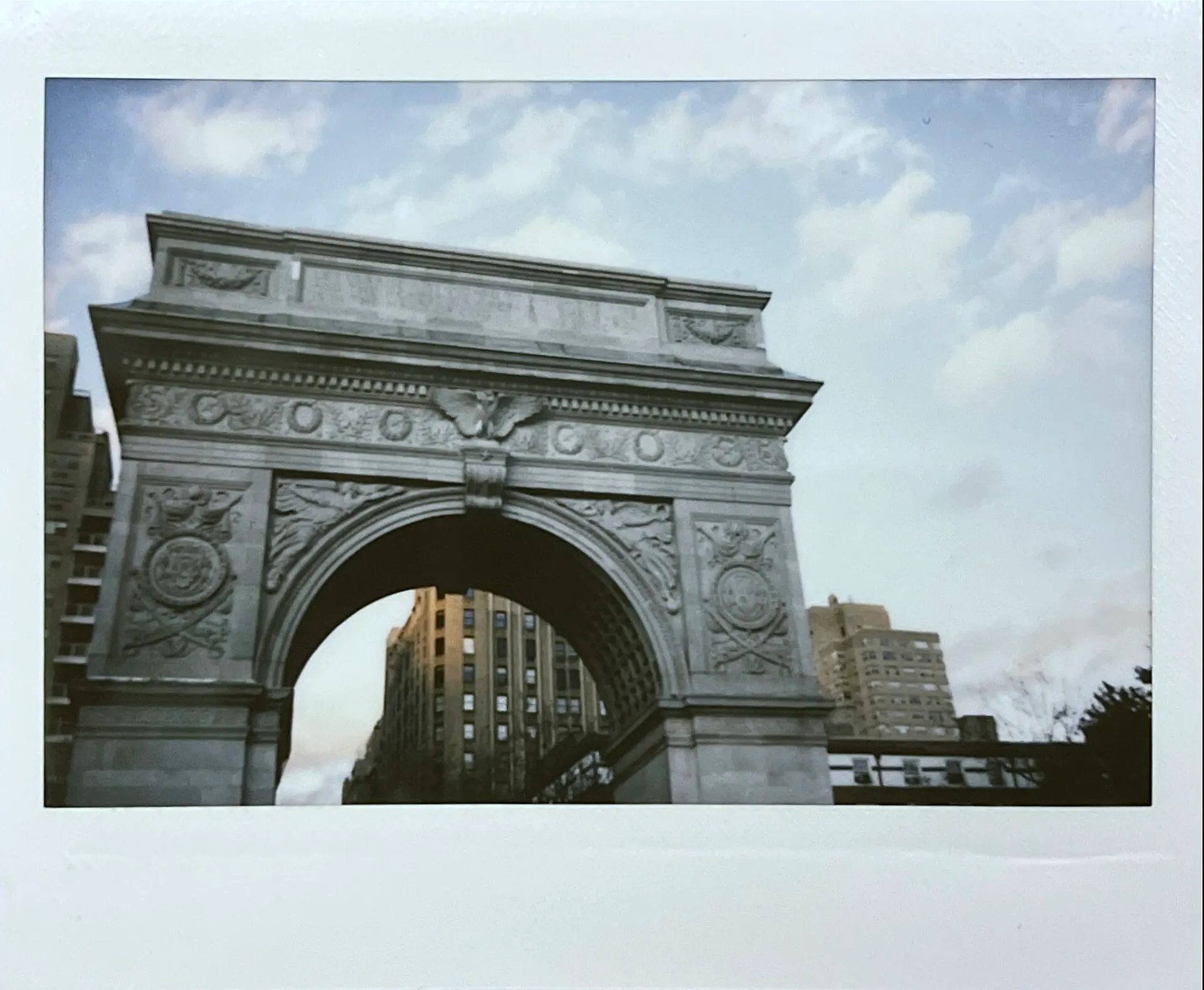
Washington Square Arch, New York, November 2024Photo: Paula Macovoz, CC BY-SA 4.0
How to use the Instax Wide 400
There is no power button and no settings menu, so setup takes a minute. These steps follow Fujifilm's instructions.
- 1
Fit four AA batteries
They go in the grip. Fujifilm says the included set is for trial use: when it runs out, replace it with alkaline AAs, never manganese (zinc-carbon) cells. A set lasts about 100 prints.
- 2
Load the film
Line up the yellow stripe on the Instax Wide cartridge with the yellow mark inside the film door and let it drop in; never force it. Close the door, and the first press of the shutter ejects the black film cover.
- 3
Twist the lens to pick a distance
The first click turns the camera on in Normal mode, for subjects 0.9-3 m (about 3-10 ft) away. Twist further for Landscape, 3 m (10 ft) and beyond. Twist back to switch off.
- 4
Frame with room to spare
The viewfinder is only a guide, and prints usually show a little more than you saw. TechRadar's editor placed the main subject toward the bottom left of the finder to land it in the center.
- 5
Shoot and wait
Press the shutter and the print slides out. It develops on its own in about 90 seconds; do not shake, bend or crease it.
- 6
Switch off between shots
The shutter is easy to press by accident with the lens out, and every press uses a print. Twist the lens back to OFF when you carry it. It also powers off by itself after 5 minutes.
Sources: instaxus.com, fujifilm.com, instaxus.com, instax.com, cameralabs.com, techradar.com, instaxus.com
Close-ups and selfies with the clip-on lens
On its own the lens focuses no closer than 0.9 m (about 3 ft). For anything nearer, clip the included close-up lens onto the barrel and shoot from 40-50 cm (16-20 in). It carries a small mirror for framing selfies, and the viewfinder has a separate set of close-up frame marks.
Reviewers are split on it. TechCrunch found it helped avoid blurry close-ups, and GadgetMatch says the wide frame fits two or three people in a selfie. Camera Labs calls the separate lens an easily lost accessory, noting that newer Mini and Square models build close focus into the lens housing, and TechRadar found selfies tricky to master.
Expect dark backgrounds on selfies: the flash lights your face, not the room behind you.
Sources: instaxus.com, tomsguide.com, techcrunch.com, gadgetmatch.com, cameralabs.com, techradar.com
Getting good exposures in bright sun and dim light
Exposure is fully automatic, with shutter speeds from 1/64 to 1/200 sec behind an f/14 lens, and there is no lighten/darken control. The flash fires on its own only in dim light. You cannot force it on or switch it off, and it does not know how far away the subject is.
Most reviewers got usable prints most of the time, and Digital Camera World called the automatic exposure very reliable. The misses cluster at the extremes: washed-out prints in strong sun, and dark prints indoors and at night.
- In bright sun, keep the sun behind or beside you and keep faces out of harsh light.
- Avoid scenes that mix very bright and very dark areas. Tom's Guide found highlights blow out and shadows go black in them.
- Indoors and at night, stay within the flash's 0.9-3 m (about 3-10 ft) range and add room light. The flash will not light a building or a skyline.
- To shoot without flash, TechRadar's reviewer covered it with a finger. Otherwise keep fingers off the flash and the light sensors.
- Below 41°F, keep each fresh print in an inside pocket while it develops.
Sources: instaxus.com, cameralabs.com, digitalcameraworld.com, tomsguide.com, techradar.com, instaxus.com
Instax Wide 400 vs Wide 300
| Wide 400 | Wide 300 | |
|---|---|---|
| Released | June 2024 | 2014 |
| Exposure control | None, fully automatic | Lighten/darken buttons |
| Flash | Automatic only | Flash mode button |
| Screen | None | Small LCD |
| Self-timer lever and angle wedge | Yes, both new on this model | No |
| Viewfinder | In the gap above the grip | Far right side, seen from the front |
| Where to get one | New, $175.95 | Discontinued, used only |
Pick the Wide 400 if
- You want the self-timer and angle wedge for group shots.
- You would rather buy new than hunt for a used camera.
Pick the Wide 300 if
- You want a lighten/darken control for sunny days and a flash you can switch.
- You find a working one for less. Dan Finnen thinks the 400 only slightly edges out the 300 and suggests buying whichever you can get cheaper.
Sources: cameralabs.com, digitalcameraworld.com, danfinnen.com, instaxus.com
Which film to buy, and how to store and fly with it
The Wide 400 takes any Instax Wide film, 10 prints per cartridge: white frame in single and twin packs, black frame, monochrome and Brushed Metallics. The image is 62 x 99 mm on an 86 x 108 mm sheet, twice the width of Instax Mini; the Instax Mini vs Wide comparison shows the difference.
Plain white-frame film is the cheapest: about $0.98-1.15 per print in twin packs and four-packs at US camera stores in October 2026, or $1.80 at Fujifilm's list price. Black frame, monochrome and Brushed Metallics packs run $1.65-1.80 per print, and TechBuzz Ireland's reviewer rated the monochrome film above the usual cartridges.
Store film somewhere cool and dry, and leave each cartridge in its foil until you load it. When flying, Fujifilm says to keep film, and the camera if it is loaded, in your carry-on so checked-bag X-ray scanners do not fog it. More in instant film and airport X-ray.
Never open the film door with film inside: Fujifilm says it turns the remaining sheets white and resets the counter.
Sources: instax.com, instaxus.com, uniquephoto.com, kmcamera.com, techbuzzireland.com, instaxus.com, instaxus.com, instaxus.com
Instax Wide 400 problems, blinking lights and fixes
Most Wide 400 problems come down to light, weak batteries or the film door. These are Fujifilm's own fixes, plus what reviewers ran into.
Washed-out prints in bright sun
Raised in 3 opinions
- How you notice
- Pale, overexposed prints outdoors on sunny days, with no lighten/darken control to correct them.
- Fix
- There is no setting to change, because the Wide 400 dropped the Wide 300's exposure buttons. Shoot with the sun behind or beside you and keep faces out of harsh light.
- Typical cost
- Nothing; it is technique, not a fault
Sources: cameralabs.com
Dark prints indoors and in low light
Raised in 7 opinions
- How you notice
- Muddy or black backgrounds indoors, a flash that sometimes does not fire when you expect it to, and no help for subjects beyond about 3 m (10 ft).
- Fix
- Get within the flash's 0.9-3 m (about 3-10 ft) range, add room light, and keep fingers off the light sensors and flash. Expect dark backgrounds on selfies and night shots.
- Typical cost
- Nothing; it is technique, not a fault
Sources: tomsguide.com, thephoblographer.com, instaxus.com
Print stuck halfway out of the slot
- How you notice
- The print stops partway out of the ejection slot, or the camera halts after the shutter fires.
- Fix
- Do not pull the print. Fujifilm says this is usually low battery power, since ejecting film takes most of it: put in four fresh AA alkalines with the lens in the open position, and the camera may push the print out. If it keeps happening, contact Fujifilm.
- Typical cost
- Four AA alkaline batteries; Fujifilm North America repair line 1-800-800-3854, option 2, if it persists
Sources: instaxus.com, instaxus.com, instax.com
Blinking self-timer lamps and a shutter that will not fire
- How you notice
- The top self-timer lamp flashes quickly and nothing happens when you press the shutter. Per Fujifilm's manual, slow flashing means the flash is still charging, and slow flashing mixed with quick flashing means the batteries are low.
- Fix
- Take the batteries out and put them back with the lens in the open position to reset the camera, and check the lens ring is fully in a mode. Dan Finnen found a blinking LED meant the batteries were too low to shoot. The same fixes cover other Instax models in [Instax Mini 12 flashing orange light](/instant/instax-mini-12-flashing-orange-light/).
- Typical cost
- Nothing for a reset; Fujifilm North America 1-800-800-3854 if the error stays
Sources: instaxus.com, danfinnen.com, instax.com
Blank white prints and a wrong film counter
- How you notice
- Several prints come out white or blank, and the counter shows the wrong number of shots left.
- Fix
- This happens when the film door is opened with film loaded: light fogs the remaining sheets and the counter resets. Only open the back when the counter reads 0, and shoot off or discard the fogged sheets.
- Typical cost
- The lost film, about $0.98-1.80 per sheet at October 2026 prices
Sources: instaxus.com, instaxus.com
Framing misses, especially on close-ups
Raised in 2 opinions
- How you notice
- Heads cut off or subjects off center, and prints that show more than the viewfinder suggested.
- Fix
- With the close-up lens on, use the separate close-up marks in the viewfinder and keep the subject 40-50 cm (16-20 in) away. On normal shots, leave extra room around the subject.
- Typical cost
- Nothing; it is technique, not a fault
Sources: cameralabs.com, t3.com, tomsguide.com
Accidental shots waste prints
- How you notice
- A print ejects while you are carrying or handling the camera with the lens out.
- Fix
- Twist the lens ring back to OFF between shots. Every press of the shutter uses a sheet.
- Typical cost
- The lost film, about $0.98-1.80 per sheet at October 2026 prices
Sources: cameralabs.com
Close-up lens is easy to lose
Raised in 3 opinions
- How you notice
- The clip-on close-up lens, which also carries the selfie mirror, gets left behind, or its clips feel fragile.
- Fix
- Keep it in the camera bag or case when it is not mounted, and ask Fujifilm North America about a replacement if it goes missing.
- Typical cost
- No published US price for a replacement; ask Fujifilm North America at 1-800-800-3854
Sources: cameralabs.com, instaxus.com
Where to buy the Instax Wide 400
Fujifilm and the US camera stores we could check (K&M Camera, Unique Photo and Pictureline) all list the Wide 400 at $175.95, in green or Jet Black. It launched at $149 in July 2024. We could not check prices at B&H, Adorama, Best Buy or Walmart, so they are not listed.
Fujifilm (instaxus.com)
New, camera, green, list price
$175.95
See listingK&M Camera
New, camera, green (16824147)
$175.95
See listingK&M Camera
New, camera, Jet Black (16975386)
$175.95
See listingUnique Photo
New, camera, green, in stock
$175.95
See listingPictureline
New, camera, black
$175.95
See listing
Prices checked on October 28, 2026. They move every week, so treat them as a range, not a quote. At launch, a US bundle with 20 shots of film and a shoulder bag cost $197 (Tom's Guide). Jet Black joined the original green on March 17, 2026.
Specifications
Lens and exposure
Film and prints
- Sheet size
- 86 x 108 mm (about 3.4 x 4.3 in)
- Image size
- 62 x 99 mm (about 2.4 x 3.9 in)
- Developing time
- About 90 sec, varies with temperature
Power, size and body
- Auto power off
- After 5 minutes
- Dimensions
- 162 x 98 x 123 mm (6.4 x 3.9 x 4.8 in)
- Operating temperature
- 41°F to 104°F (5°C to 40°C)
- Tripod socket
- Yes, on the bottom
- Colors and model numbers
- Green 16824147; Jet Black 16975386 (since March 2026)
Video reviews worth your time

Instant Film Meets Analog Video: Fujifilm Instax Wide 400 Review
The Fujifilm Instax Wide 400 is an easy-to-use, affordable wide-format instant camera ideal for beginners, though advanced users may miss manual exposure controls and flash override options.

Fujifilm INSTAX Wide 400 Camera - Review and Setup Guide
The Instax Wide 400 offers effortless point-and-shoot simplicity and large wide-format prints, making it a fun instant camera despite its bulky size and lack of manual flash control.

Instax Wide 400 - FujiFilm's first wide camera in a decade, is it worth the wait? [Instant Review]
The Fujifilm Instax Wide 400 is an easy-to-use and reliable wide-format instant camera with sharp optics, though it lacks manual controls like exposure compensation and flash toggles.

instax WIDE 400 review: Fujifilm's FIRST wide camera in ten years!
The Fujifilm Instax Wide 400 offers effortless point-and-shoot wide instant printing, but its lack of exposure control, flash settings, or integrated close-up lens feels like a step backward from its predecessor.

Fujifilm instax WIDE 400 Instant Camera - Wide Photo , Self timer , Camera Stand
The Fujifilm Instax Wide 400 is a user-friendly wide-format instant camera with simple zone focusing, an analog self-timer lever, and convenient included accessories.
Questions people ask about the Instax Wide 400
Is the Instax Wide 400 worth the money?
Most reviewers say yes for anyone who wants big prints without fuss. Tom's Guide answers "Certainly," and Digital Camera World calls it affordable enough to buy a couple for a wedding. Camera Labs disagrees: its reviewer would rather spend the same money on an Instax Wide printer than give up exposure control. It lists at $175.95, up from $149 at launch.
Sources: tomsguide.com, digitalcameraworld.com, cameralabs.com, instaxus.com
What is the difference between the Instax Wide 400 and the Instax Wide Evo?
The Wide 400 is a fully analog camera: every press of the shutter makes a print, and exposure is automatic. The Wide Evo is a hybrid digital camera and printer for the same Wide film, so you pick which shots to print, much like the [Instax Mini Evo](/cameras/instax-mini-evo/) in the smaller format. Digital Camera World calls the Wide Evo the most expensive Instax camera yet, though more slender than the Wide 400. In October 2026 Fujifilm lists the Wide Evo at $409.95 and the Wide 400 at $175.95.
Sources: digitalcameraworld.com, instaxus.com
Fuji Instax Wide 300 vs 400: which is best?
The 400 adds a self-timer lever, an angle wedge for tabletop shots and a viewfinder moved into the gap above the grip, but drops the 300's small LCD and its lighten/darken and flash buttons. Dan Finnen thinks the 400 ever so slightly edges out the 300 and suggests buying whichever you can get cheaper. The 300 is discontinued, so it is a used-only option now.
Sources: cameralabs.com, danfinnen.com, digitalcameraworld.com
Does the Instax Wide 400 have manual exposure or flash control?
No. Exposure and flash are fully automatic, and the flash fires only in dim light. The one workaround reviewers mention is covering the flash with a finger to shoot without it, which TechRadar's reviewer did.
Sources: cameralabs.com, techradar.com
How big are Instax Wide prints?
The image is 62 x 99 mm (about 2.4 x 3.9 in) on an 86 x 108 mm sheet, twice the width of Instax Mini film. That is why reviewers recommend it for groups and landscapes. The [Instax Mini vs Wide](/instant/instax-mini-vs-wide/) comparison covers the trade-offs.
Sources: instaxus.com, instax.com
Is the Instax Wide 400 good in low light?
Mostly no. Tom's Guide says it struggles in low light, TechRadar got dark prints in dim rooms even with the flash, and the flash only reaches 0.9-3 m (about 3-10 ft). Fortress of Solitude was happier, finding the flash decent at night and not so harsh that it overexposes images.
Sources: tomsguide.com, techradar.com, fortressofsolitude.co.za, instaxus.com
Can you use rechargeable batteries in the Instax Wide 400?
Fujifilm specifies four AA alkaline batteries and says manganese batteries cannot be used; it does not list rechargeables. Dan Finnen found his rechargeable AAs triggered the low-battery light within a few days, while Fortress of Solitude keeps rechargeables as a backup. Finnen also advises storing the camera without batteries, because old alkalines can leak.
Sources: fujifilm.com, danfinnen.com, fortressofsolitude.co.za
Why is my Instax Wide 400 not working?
Fujifilm says stalls and half-ejected prints are usually low batteries, since pushing the film out takes most of the power. Put in four fresh alkaline AAs with the lens open, which also resets the camera. If it still blinks or jams, call Fujifilm North America at 1-800-800-3854.
Sources: instaxus.com, instaxus.com, instaxus.com
What people compare it with
Fujifilm Instax Wide 300
The discontinued predecessor, now a used buy. It has the lighten/darken and flash-mode buttons the Wide 400 dropped, but no self-timer lever or angle stand.
Fujifilm Instax Wide Evo
Fujifilm's hybrid digital camera and printer for the same Wide film, for people who want to choose which shots to print. It lists at $409.95, more than twice the Wide 400.
Fujifilm Instax Link Wide 2 printer
Prints phone photos on the same Wide film. Camera Labs' reviewer would rather use a Wide printer than give up exposure control.
Lomography Lomo'Instant Wide
One of the few other cameras that shoots Instax Wide film. TechRadar points to it for multiple exposures and optional flash.
Every source behind this page
Read them yourself. How we pick and count them is in our methodology.
Show all 47 sources
Manuals and references 28
- instax.com: manual naen.pdf
- instax.com: wide400 en
- kmcamera.com: fuj16468498
- kmcamera.com: fuj16824147
- kmcamera.com: fuj16932102
- kmcamera.com: fuj16975386
- digitalcameraworld.com: Fujifilm Instax Wide Evo review
- fujifilm.com: specifications
- instaxus.com: instax wide 400 instant camera
- instaxus.com: instax wide evo
- instaxus.com: contact us
- instaxus.com: can i take my instax instant film through airport x ray machines
- instaxus.com: Film jammed while ejecting from my camera
- instaxus.com: how do i insert instax instant film into my instax instant products
- instaxus.com: what temperature can my instax instant camera operate in
- instaxus.com: whats the best way to store my instax instant film
- instaxus.com: why are my instax instant photos coming out blank white or all black
- instaxus.com: why are the lights blinking or flashing on my instax instant camera
- instaxus.com: why does the film counter on my instax instant camera show the wrong n
- instaxus.com: why has my instax instant film not developed properly
- instaxus.com: wide white film
- pictureline.com: fujifilm instax wide 400 instant film camera black
- pictureline.com: fujifilm instax wide film twin pack
- uniquephoto.com: fujifilm instax instant film twin 20 exposures 800 asa for instax 200
- uniquephoto.com: fujifilm instax wide 400 camera
- uniquephoto.com: fujifilm instax wide black instant film pack10 sheets
- uniquephoto.com: fujifilminstaxinstantwidefilmfourpack40exposures
- uniquephoto.com: fujifilminstaxwidemonochromefilm
Editorial reviews 11
- Cameralabs: Fujifilm instax WIDE 400 review
- The Phoblographer: Fujifilm Instax Wide 400 Review
- Tom's Guide: Fujifilm Instax Wide 400 review
- GadgetMatch: Fujifilm instax WIDE 400 review
- Fortress of Solitude: Instax Wide 400 Camera Review
- T3: I've used the Fujifilm Instax Wide 400 - is it the best large ...
- Digital Camera World: Fujifilm Instax Wide 400 review: new design, same big camera
- TechRadar: Fujifilm Instax Wide 400 review: wide appeal?
- TechRadar: Fujifilm Instax Wide Evo review
- TechRadar: Fujifilm unveils the Instax Wide 400 - the big print instant camera for big occasions
- TechCrunch: The Instax Wide 400 builds on instant photography’s simplicity and stretches it, literally
Video reviews 5
- PetaPixel: Instant Film Meets Analog Video: Fujifilm Instax Wide 400 Review
- pal2tech: Fujifilm INSTAX Wide 400 Camera - Review and Setup Guide
- In An Instant: Instax Wide 400 - FujiFilm's first wide camera in a decade, is it worth the wait? [Instant Review]
- Gordon Laing: instax WIDE 400 review: Fujifilm's FIRST wide camera in ten years!
- Miky Ancona: Fujifilm instax WIDE 400 Instant Camera - Wide Photo , Self timer , Camera Stand
Independent blogs 3
Keep reading
Instant cameras
Instax Wide prints have about 2.15x the image area of Mini but cost about $1.20 a shot vs $0.91. Compare sizes, cameras, printers and Square at US prices.
Instant cameras
The best instant camera for most people is the Instax Mini 13, $89.95 in October 2026. See 8 picks from reviewer consensus, plus Polaroid film cost per photo.
Instant cameras
We sorted 157 opinions on the Fujifilm Instax Mini 12: what people love, the overexposure and flash complaints, blinking-light fixes and what each print costs.
Instant cameras
Polaroid vs Instax: Instax Mini costs $0.77-0.91 a photo and develops in 90 seconds. Polaroid gives a bigger picture for $2.13-2.37. Here is which to buy.
Instant cameras
Polaroid and Instax film can go through TSA, but unused packs belong in a carry-on with a hand check, since CT scanners can fog them. Finished photos are safe.
Instant cameras
Is the Instax Mini Evo worth $234.95? What 121 reviewer and owner opinions say about its prints, digital files and battery, plus film cost and fixes.