Polaroid I-2: what reviewers and owners say, film cost and problems
The short answer
The Polaroid I-2 is Polaroid's $599.99 manual-control instant camera (US price, October 2026), and reviewers mostly praise its sharp prints, credited to a 98mm f/8 three-element lens and LiDAR autofocus.
Polaroid bills it as the first analog instant camera with built-in manual controls. The common complaints are the price, an Auto mode that several reviewers and owners say overexposes, a sealed battery and film that costs $2.00 to $2.75 a photo.
- Released
- Sept. 2023
- Price
- $599.99
- Film
- i-Type, 600, SX-70
- Per photo
- $2.00-$2.75
Built from 101 opinions from 25 pages and videos. Not yet tested by Camera Dojo. Updated .
The short version
Who should buy it is where reviewers split. Digital Camera World calls it the best instant camera for pro-level creative control but says it is not good value for the general consumer, Casual Photophile's reviewer says it is justified for him as a self-described camera nerd but probably not worth it for casual photographers, and Dan Finnen says the Polaroid Now+ gives you 90% of the camera for a quarter of the price.
If you buy one, update the firmware before your first pack: v1.02.1, installed through the Polaroid app, is reported to fix the auto and priority exposure modes that early owners found unreliable. Keith Wee and Dan Finnen both dial in about -1/3 stop of exposure compensation to tame Auto.
Good fit if
- You want to set aperture and shutter speed yourself on a Polaroid, without needing a phone app.
- You care about sharp prints and a blurred background on the big square Polaroid frame, about 3.1 inches across.
- You want to use screw-in filters, a tripod, long exposures or studio flash with instant film.
- You shoot i-Type, 600 and SX-70 film and want one current camera that takes all three.
Think twice if
- You mostly want casual snapshots: film runs $2.00 to $2.75 a photo, and the Now+ or an Instax camera costs far less up front.
- You want an SLR viewfinder or manual focus, as on a vintage SX-70 or SLR 680.
- You keep cameras for decades: the battery is sealed in the body, and iFixit rates its replacement difficult, 2 to 3 hours.
- You want something light to carry all day: it weighs 563 g (1.24 lb) without film according to Polaroid, and several reviewers call it bulky.
- You shoot in rain or at the beach: Polaroid told The Phoblographer it has no weather resistance.
What every photo costs you
The camera is a one-time cost; film is the running one. Every pack of i-Type, 600 or SX-70 film holds 8 photos, and at October 2026 prices each photo costs $2.00 to $2.75.
Color i-Type, double pack (16 photos)
$2.00 per photo
$31.95 at Unique Photo
Color i-Type, five pack (40 photos)
$2.12 per photo
$84.99 at Polaroid US store
Color i-Type, double pack (16 photos)
$2.31 per photo
$36.99 at Precision Camera
Color i-Type, one pack (8 photos)
$2.37 per photo
$18.99 at Polaroid US store
Color 600, one pack (8 photos)
$2.62 per photo
$20.99 at Polaroid US store
Color SX-70, one pack (8 photos)
$2.75 per photo
$21.99 at Polaroid US store
Prices checked October 28, 2026. Per-photo figures are the pack price divided by its photo count, for example $84.99 for 40 photos, about $2.12 each. i-Type is the cheapest film for the I-2; 600 and SX-70 cost more per shot.
What owners and reviewers say, topic by topic
We sorted 101 opinions about the I-2 from 25 pages and videos on 17 websites and channels. Each row shows how many people raised a topic and how many of them were positive. Open a row to read short quotes, each linked to its source.
Most of these 101 opinions come from editorial reviews, photographers' blogs and YouTube reviewers; about 20 come from confirmed owners, mostly long blog reviews. Reddit threads, Facebook groups and retailer customer reviews could not be checked word for word, so they are not counted here.
Features and modes100% positiveof 17
All positive among the opinions collected. Full manual, aperture priority, shutter priority, multiple exposures and the 49mm filter thread are the features reviewers praise most, and the LiDAR autofocus is described as fast and reliable.
“Throughout the review, the Polaroid I-2's autofocus was really good in speed and reliability.”
Keith Wee, KeithWee Photography 2023-09Owner
“I particularly appreciate aperture priority mode to keep the aperture wide open even with flash on.”
Dan Finnen 2024-01Owner
“The manual options that are here, however, are an absolute revelation.”
James Artaius, Digital Camera World 2024-02Hands-on review
“Few instant cameras offer the full manual exposure control and off-camera flash support found in the I-2.”
Jim Fisher, PCMag 2026-07Hands-on review
Image quality69% positiveof 13
Mostly positive. PCMag saw noticeably sharper prints than from the Polaroid Now+ or Instax Square SQ1, Shoot It With Film was impressed by the sharpness compared with the Now+ and OneStep 2, and Digital Camera World got super-sharp results. Shoot It With Film also found the lens sharper than an SX-70 or SLR 680, but Dan Finnen found it only about as sharp as a vintage autofocus Polaroid, and The Phoblographer felt the film itself held results back.
“with regular packs of 600 and i-Type, it gave me some super-sharp results”
James Artaius, Digital Camera World 2024-02Hands-on review
“Sharp, vibrant, and detailed in a way I didn't know instant film could be.”
Kelsey Smith Photography 2025-04
“With the I-2, shot after shot, I was just blown away by the sharpness and clarity of my images.”
Kathleen Ellis, Shoot It With Film 2023-10Hands-on review
“the former is punchier and more saturated while the latter goes towards a more nostalgic, de-saturated look”
Keith Wee, KeithWee Photography 2023-09Owner
Automatic exposure33% positiveof 12
More complaints than praise. Digital Camera World, Dan Finnen, Keith Wee and Oldtimefocus say the meter overexposes, Oldtimefocus especially outdoors, and PCMag says backlit and high-contrast scenes trip it up. Casual Photophile and Shoot It With Film found Auto accurate, and firmware v1.02.1 is reported to have fixed the auto and priority modes.
“This camera tends to over-expose images slightly in auto mode, both with and without flash on.”
Dan Finnen 2024-01Owner
“I find (as with many on Reddit) that underexposing a full stop results in the best image reproduction.”
“Exposures were accurate, focus was accurate, and images were as high quality as any modern Polaroid images I've ever seen.”
James Tocchio, Casual Photophile 2024-02Hands-on review
“with the Auto mode tending towards overexposure (which I work with -1/3 EV)”
Keith Wee, KeithWee Photography 2023-09Owner
Ease of use55% positiveof 11
Mostly positive: reviewers find the dial and menus straightforward and the autofocus easy to trust. The caveats are a learning curve in the manual modes, which Casual Photophile says costs beginners a couple of packs, and a viewfinder some find prone to flare or imprecise for close framing.
“The beauty of this camera lies in how easy it is to use.”
Andreja, Oldtimefocus 2024-08Hands-on review
“The controls on the I-2 are simple and straightforward with so many options.”
Kathleen Ellis, Shoot It With Film 2023-10Hands-on review
“Being a spectacle user, I do have to share that the viewfinder is quite susceptible to flare.”
Keith Wee, KeithWee Photography 2023-09Owner
“people new to this sort of thing will likely burn through a couple of packs of film before figuring things out.”
James Tocchio, Casual Photophile 2024-02Hands-on review
Design and grip80% positiveof 10
Reviewers like the bold design, premium finish and bright viewfinder, and Casual Photophile calls it the best-made instant camera on the market. PCMag finds it as bulky and awkward to hold as other Polaroids, and Oldtimefocus found the screen hard to read in daylight, though PCMag says the rear display stays legible in bright sun.
“One of the major complaints about the Polaroid I-2 is the difficulty in seeing the screen during daylight.”
Andreja, Oldtimefocus 2024-08Hands-on review
“it's the best-made instant camera on the market today.”
James Tocchio, Casual Photophile 2024-02Hands-on review
“Amongst all the monotonous cameras out there today, this one truly stands out.”
Chris Gampat, The Phoblographer 2023-09Hands-on review
“The I-2 is as comfortable to hold as other Polaroid cameras, which is to say it's a little bit bulky and awkward.”
Jim Fisher, PCMag 2023-09Hands-on review
Price and value30% positiveof 10
Split by who is buying. PCMag says it is worth it to get the best results from expensive i-Type film and Shoot It With Film says buyers won't be disappointed, while Digital Camera World, Casual Photophile and Dan Finnen say the price is hard to justify for casual shooters.
“This is a decent camera hobbled by an absolutely insane price tag of six hundred dollars.”
Dan Finnen 2024-01Owner
“But I can 100% tell you, you won't be disappointed with the I-2.”
Kathleen Ellis, Shoot It With Film 2023-10Hands-on review
“It does not attempt to be the Polaroid I-2, a professional creative tool nor an economical instant photography option.”
Keith Wee, KeithWee Photography 2026-06Owner
“For more casual photographers, it's probably not worth the price.”
James Tocchio, Casual Photophile 2024-02Hands-on review
Durability29% positiveof 7
Mixed. Digital Camera World and Keith Wee find the body tough, but The Phoblographer calls it plasticky, Oldtimefocus had double-eject jams, and owners on iFixit report a broken film door sensor and a shutter that would not fire.
“The shutter cannot be pressed in any mode, as shown in the prompt.”
iFixit AnswersOwner
“A significant issue with the I-2 is its tendency to jam.”
Andreja, Oldtimefocus 2024-08Hands-on review
“this is one camera that can take a reasonable knocking (well, not a drop) and still continue unscathed.”
Keith Wee, KeithWee Photography 2023-09Owner
“The camera still operates but the viewfinder display no longer works.”
Forrest Bourke 2025Owner
Flash and low light50% positiveof 6
Split. The f/8 lens lets in more light than the Now+'s f/11, and the flash suits portraits, but it sits beside the lens and can cast side shadows, and The Phoblographer found the LiDAR autofocus struggled with darker skin in low light.
“The flash is beside the lens, not above, which creates shadows on the side of your subject.”
Dan Finnen 2024-01Owner
“the I-2's f/8 aperture has another huge advantage over the maximum f/11 of the Polaroid Now+: basic light transmission.”
James Artaius, Digital Camera World 2024-02Hands-on review
“And it works! With a minor (major?) caveat. The flash sync port is not high voltage safe.”
Forrest Bourke 2025Owner
“LiDAR autofocus is very bad at autofocusing on POCs with lots of melanin in low light.”
Chris Gampat, The Phoblographer 2023-09Hands-on review
Batteries and charging33% positiveof 6
Battery life gets good marks: PCMag shot three packs before the gauge dropped a bar. The complaint is that the lithium battery is sealed inside, which Casual Photophile worries could cut the camera's life short.
“The I-2 uses a built-in lithium battery that cannot be easily replaced by the user, which is incredibly frustrating.”
Dan Finnen 2024-01Owner
“This design choice has the potential to render our $600 camera useless in a few years' time”
James Tocchio, Casual Photophile 2024-02Hands-on review
“For a $600 camera, one would expect the convenience of swapping out batteries during extended shoots.”
Andreja, Oldtimefocus 2024-08Hands-on review
“I shot three packs before the battery indicator dropped a bar, so that estimate seems pretty accurate.”
Jim Fisher, PCMag 2023-09Hands-on review
Film cost0% positiveof 4
Every source that raises it calls film the big running cost: about $2 a photo with 8 photos per pack, so wasted shots hurt.
“Polaroid instant films like Instax films are not anywhere near cheap, going to around SGD2.50 upwards per shot”
Keith Wee, KeithWee Photography 2023-10Owner
“It costs about $2 per image to shoot a Polaroid”
Kathleen Ellis, Shoot It With Film 2023-10Hands-on review
“The film contains about eight photos, and I was shocked by the overall cost.”
Andreja, Oldtimefocus 2024-08Hands-on review
“it's still pricey at around $16.99 per pack of 8 photos (around $2 per photo).”
Jim Fisher, PCMag 2023-09Hands-on review
Selfies and close-ups67% positiveof 3
PCMag says it focuses quite close for an instant camera, to 0.4 m (1.3 ft), but Digital Camera World says the close focusing is not great: there is no macro mode, and its 6'1" reviewer could not get an arm's-length selfie in focus. The self-timer or the app's remote shutter is the workaround.
“there's no macro mode and the close focusing isn't that great.”
James Artaius, Digital Camera World 2024-02Hands-on review
“The camera focuses quite close for an instant camera, to 0.4 meters.”
Jim Fisher, PCMag 2023-09Hands-on review
PositiveMixedNegative
How to set up the Polaroid I-2 and shoot your first pack
These steps come from Polaroid's own support pages and tips, plus the fixes owners recommend. Each skipped step can cost a pack of film.
- 1
Charge it and update the firmware
Charge the built-in battery with the USB-C cable in the box; no wall charger is included. Then pair the camera with the Polaroid app and install the latest firmware: v1.02.1 is the release reported to fix the auto, aperture priority and shutter priority modes.
- 2
Set the film type with the door open
The camera can't tell which film is inside. With the film door open, press mode-OK, turn the selection dial to i-Type, 600 or SX-70 and press mode-OK again. Do it every time you switch film, or the whole pack can come out too light or too dark.
- 3
Take off the lens cap
The I-2 detects when the cap is on, but you can still see through the viewfinder, so it is easy to miss. Dan Finnen also warns the cap is easy to lose, since there is no included way to attach it to the camera.
- 4
Start in Auto or aperture priority
Half-press the shutter to lock focus and exposure on the central point, then recompose. If prints come out bright, owners such as Keith Wee and Dan Finnen set the exposure compensation dial to -1/3 or -2/3.
- 5
Shield the print while it develops
Let the film shield cover the photo for about ten seconds, flick it up from the bottom and keep the print face down in the dark. Don't shake it. Color i-Type prints take 10 to 15 minutes to develop.
Sources: polaroid.com, analog.cafe, polaroid.com, support.polaroid.com, vintageinstantcamera.com, danfinnen.com, casualphotophile.com, keithwee.com, polaroid.com, polaroid.com
Which film to use in the Polaroid I-2
The I-2 takes Polaroid i-Type, 600 and SX-70 film, 8 photos per pack. For most shooting, buy i-Type: it is the cheapest of the three because the pack has no battery, which the I-2 doesn't need. 600 film is the same ISO 640 speed and costs more, so Casual Photophile suggests it mainly for special editions, such as round or colored frames, that only come as 600.
SX-70 film is ISO 160, a quarter of the speed of i-Type, so it needs lots of light. Set the camera to SX-70 and expect slower shutter speeds, or put the camera on a tripod. For a format-by-format rundown, see the Polaroid film guide.
Polaroid film reacts to temperature while it develops: above 82°F (28°C) prints turn pink, and below 55°F (13°C) they turn blue. Store unused packs flat in the fridge, let them warm up before shooting and use them within 12 months of the production date on the box. More on that in Does Polaroid film expire?.
If you are still deciding on a format, PCMag notes Polaroid prints are about 3.1 inches square against 2.4 inches for Instax Square; Polaroid vs Instax covers the trade-offs. To compare pack prices, use the film cost per photo calculator.
| Film | Speed | Camera setting | Good for |
|---|---|---|---|
| Color i-Type | ISO 640 | i-Type | Everyday shooting; the cheapest per photo |
| Color 600 and special editions | ISO 640 | 600 | Round or colored frames sold only as 600 |
| Color SX-70 | ISO 160 | SX-70 | Bright daylight, or slow exposures on a tripod |
Polaroid suggests carrying film in an insulated bag in summer and inside your jacket in winter.
Sources: polaroid.com, casualphotophile.com, polaroid.com, polaroid.com, polaroid.com, polaroid.com, au.pcmag.com
Polaroid I-2 settings: getting sharp, well-exposed prints
Auto works for many people, but it draws the most complaints. Digital Camera World, Dan Finnen, Keith Wee and Oldtimefocus all saw a tendency to overexpose, and Keith Wee shoots mostly in aperture priority with -1/3 EV dialed in. On a two-pack portrait shoot he had 2 duds, an 88% keeper rate by his count.
Aperture priority is the most useful mode for many owners. At f/8 the 98mm lens behaves roughly like 38mm f/3.2 on full frame, according to Casual Photophile, so backgrounds blur; f/64 keeps everything sharp while the camera picks the shutter speed. The fastest shutter speed is 1/250 sec, which PCMag finds limiting in bright sun, so stop down or add a 49mm ND filter; PCMag suggests a 3-stop one.
Focus is LiDAR autofocus on one central point, with no manual focus. Half-press to lock focus and exposure, then recompose; the measured distance appears in the viewfinder and on the outer display. The viewfinder sits beside the lens, so for near subjects use the close-up frame lines and nudge the framing. Dan Finnen found that guide imprecise up close.
Check the exposure compensation dial before each shot. Oldtimefocus says it is easy to bump, and a stray setting shifts every photo after it.
| Situation | What to try |
|---|---|
| Prints too bright in Auto | Update to firmware v1.02.1 or later, then set compensation to -1/3 or -2/3 |
| Backlit subject or deep shadows | Aperture priority plus the compensation dial; PCMag says these scenes trip the meter |
| Blurred background | Aperture priority at f/8, with an ND filter in bright sun |
| Everything sharp front to back | Aperture priority at f/64, on a tripod if the shutter speed gets slow |
| Close subject | Stay beyond 0.4 m (1.3 ft) and use the close-up frame lines |
Every shot costs about $2 or more, so check the mode, film type and compensation dial before you press the shutter.
Sources: digitalcameraworld.com, danfinnen.com, keithwee.com, keithwee.com, oldtimefocus.com, casualphotophile.com, au.pcmag.com, polaroid.com, analog.cafe
Flash, filters, tripods and long exposures on the I-2
The built-in flash reaches about 8.2 ft (2.5 m) at f/8, and Polaroid's advice is to use it indoors and in anything but bright light. It sits beside the lens rather than above it, which Dan Finnen says throws shadows to one side of your subject. In aperture priority you can keep the lens wide open with the flash on, which he calls one of the camera's best features.
For off-camera light there is a 2.5mm flash sync port, which PCMag says syncs at up to 1/250 sec. Forrest Bourke, who repaired a friend's broken I-2, found the port has no isolation and tolerates only a low trigger voltage, while many strobes from the 1980s and earlier put a high voltage on their sync contacts. He only uses low-voltage flash triggers with it, and you should too.
The 49mm filter thread takes standard screw-in filters: ND, color, close-up, or bigger filters on a step-up ring. Shoot It With Film notes the meter sits behind the filter thread, so exposure stays accurate even with dark color filters.
A standard 1/4-20 tripod thread handles long exposures, with shutter speeds down to 30 sec and a bulb mode of up to 99 hours. Large quick-release plates can block the film door, as PCMag and Digital Camera World both found, so use a small plate or take it off to reload. Multiple exposure mode puts 2, 3 or 4 exposures on one frame; see double exposures on film for ideas.
Sources: casualphotophile.com, polaroid.com, danfinnen.com, au.pcmag.com, forrestbourke.com, shootitwithfilm.com, digitalcameraworld.com, polaroid.com
Polaroid I-2 vs Polaroid Now+: is the I-2 worth four times the price?
| Polaroid I-2 | 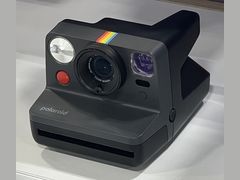 Polaroid Now+ | |
|---|---|---|
| Price | $599.99 at Polaroid (October 2026) | $150 when Digital Camera World compared them; Casual Photophile put the gap at $450 |
| Lens | 3-element 98mm, f/8 to f/64; noticeably sharper prints per PCMag | Single-element lens, f/11 maximum |
| Exposure control | Auto, aperture priority, shutter priority and manual on the camera | No on-camera manual exposure, per PCMag |
| Viewfinder | Large and bright, with close-up frame lines and an exposure readout | PCMag calls the I-2's finder far better |
| Dim light | Digital Camera World's shots on a February afternoon came out fine | The same session's Now+ shots were almost completely black |
Pick the Polaroid I-2 if
- You want to set aperture and shutter speed yourself on the camera
- You shoot in dim light or want a blurred background at f/8
- You want filters, a tripod or studio flash with Polaroid film
Pick the Polaroid Now+ if
- You mostly take casual snapshots and Auto is enough
- You agree with Dan Finnen that 90% of the camera for a quarter of the price is the better deal
- You are new to instant film and don't want to burn packs learning manual exposure
Sources: digitalcameraworld.com, au.pcmag.com, casualphotophile.com, danfinnen.com, polaroid.com
Common problems, blinking lights and fixes
These are the problems owners and reviewers report most, with fixes from Polaroid's support pages and iFixit's official repair guides. No US repair shop publishes I-2 repair prices, so the costs below are genuine Polaroid parts sold by iFixit.
Auto and priority modes overexpose or behave erratically
Raised in 5 opinions
- How you notice
- Auto, aperture priority and shutter priority give inconsistent exposures; outdoor shots in Auto often come out too bright.
- Fix
- Pair the camera with the Polaroid app and update the firmware; v1.02.1 is the release reported to fix the auto modes. If prints are still bright, set exposure compensation to -1/3 or -2/3, as several owners do. On a used camera, check the firmware version.
- Typical cost
- $0 (free update through the Polaroid app)
Sources: analog.cafe, oldtimefocus.com, danfinnen.com
Film jams, double ejects or a torn film shield
Raised in 1 opinion
- How you notice
- The camera tries to eject two photos at once and jams, which throws off the film counter; the black film shield that covers a freshly ejected photo tears or sticks.
- Fix
- Under warranty, contact Polaroid support. Out of warranty, the film shield is a genuine replacement part with an official iFixit guide rated moderate, 45 minutes to 1 hour.
- Typical cost
- Free under warranty; genuine film shield $14.99 from iFixit ($19.99 with tools)
Sources: oldtimefocus.com, ifixit.com, polaroid.com
Spots, stripes or uneven development on prints
- How you notice
- Large dots, underdeveloped patches, lines or stripes across photos.
- Fix
- Clean the rollers with a cotton bud every 2 to 3 packs, with the camera empty and the door open. If marks persist, the film door may be warped or damaged; iFixit sells a genuine film door with an official guide rated moderate, 20 to 30 minutes.
- Typical cost
- $0 to clean; genuine film door $64.99 from iFixit
Sources: polaroid.com, ifixit.com
Flash sync port with no protection against high-voltage strobes
Raised in 1 opinion
- How you notice
- In the camera Forrest Bourke repaired, the camera turned on but shut off after an indeterminate time, and an external flash on the 2.5mm port did not fire.
- Fix
- Use only low-voltage flash triggers: Bourke found the port has no isolation and a very low sync voltage. In his repair, replacing a switch chip on the main board fixed the camera, a board-level job; he does not say what damaged the chip.
- Typical cost
- No published shop price; board-level repair
Sources: forrestbourke.com
Battery wear or a camera that won't charge
Raised in 4 opinions
- How you notice
- The camera won't hold a charge, dies unexpectedly or doesn't charge from the cable.
- Fix
- The battery is sealed inside the body with no door for owners to open (Casual Photophile), but iFixit sells a genuine battery with an official guide rated difficult, 2 to 3 hours. If the camera won't charge at all, the USB-C port board is a separate genuine part.
- Typical cost
- Genuine battery $34.99; USB-C port board $24.99, both from iFixit
Sources: ifixit.com, ifixit.com, casualphotophile.com
A whole pack exposed wrong because the film type is set wrong
- How you notice
- Every shot in an SX-70, 600 or i-Type pack comes out too light or too dark.
- Fix
- The camera can't detect the film type. With the film door open, press mode-OK, turn the selection dial to the film you loaded and confirm, every time you change film.
- Typical cost
- $0; a wasted pack costs $18.99 to $21.99 at Polaroid's October 2026 prices
Sources: support.polaroid.com, polaroid.com, polaroid.com
A tripod plate blocks the film door
- How you notice
- With some quick-release plates attached, the film door won't open to change packs.
- Fix
- Use a small tripod plate, or remove the plate before reloading.
- Typical cost
- $0
Sources: au.pcmag.com, digitalcameraworld.com
Viewfinder or outer display failure
Raised in 1 opinion
- How you notice
- A cracked, damaged or dead display; one owner's viewfinder display stopped working after a wave soaked the camera.
- Fix
- Keep the camera dry: Polaroid told The Phoblographer it has no weather resistance. iFixit sells a genuine I-2 display with an official guide rated difficult, 45 minutes to 1 hour; its listing does not say whether that is the viewfinder or the outer display, so check before ordering.
- Typical cost
- Genuine display $24.99 from iFixit ($29.99 with tools)
Sources: forrestbourke.com, ifixit.com, thephoblographer.com
Where to buy it
Polaroid sells the I-2 for $599.99 at its US store, the same as its launch price in September 2023, and the three camera stores we checked list it at the same price. The Starter Set adds a pack of color i-Type film for $15 more. Used bodies sell for much less: Unique Photo listed one in excellent condition at $349.95, and it had sold by October 28, 2026.
Polaroid US store
New, camera only; the store shows a free film pack offer
$599.99
See listingPolaroid US store
New, Starter Set: camera plus one pack of color i-Type film
$614.99
See listingPolaroid US store
New, Travel Set: camera, case, one color and one black and white i-Type pack; out of stock
$649.99
See listingBrooklyn Film Camera (Brooklyn, NY)
New, camera only, in stock
$599.99
See listingAustin Camera (Austin, TX)
New, camera only, sold out
$599.99
See listingGlazer's Camera (Seattle, WA)
New, camera only, sold out
$599.99
See listingUnique Photo (Fairfield, NJ)
Used, excellent, body rated 90-95% cosmetic condition, sold out
$349.95
See listing
Prices checked on October 28, 2026. They move every week, so treat them as a range, not a quote. Prices at B&H, Adorama, KEH, MPB, eBay, Best Buy, Target and Walmart could not be confirmed on their own pages, so they are not listed. Register a new I-2 on polaroid.com within 30 days to add 6 months to the 1-year US warranty; the extension only applies to cameras bought new from Polaroid or an official retailer. On a used camera, ask about the firmware version, battery health and the state of the rollers.
Specifications
Lens and focus
- Apertures
- f/8, 11, 16, 22, 32, 45, 64
- Closest focus
- 0.4 m (1.3 ft)
- Field of view
- 43 degrees horizontal, 44 degrees vertical
- Filter thread
- 49mm
Exposure
- Shutter speeds
- 1/250 sec to 30 sec, plus bulb up to 99 hours
- Exposure compensation
- +/- 2 EV in 1/3-stop steps
- Multiple exposure
- 2, 3 or 4 exposures on one frame
- Self-timer
- 3 to 12 seconds
Flash and power
- Built-in flash
- Up to 8.2 ft (2.5 m) at f/8
- External flash
- 2.5mm sync port, sync up to 1/250 sec
- Battery life
- Up to 15 packs per charge (Polaroid's product bullet); 28 packs in the same page's spec table
- Battery aging (Polaroid claim)
- Up to 82% of capacity after 300 charge cycles
Body
- Tripod thread
- Standard 1/4-20
- Released
- September 7, 2023, at $599.99
Video reviews worth your time

Testing the NEW Polaroid I-2
The Polaroid I-2 offers improved optics, manual controls, and dependable auto exposure, making it a versatile upgrade for instant photography.

Polaroid I-2 Review & Breakdown - A generational camera, is it the SX-70 killer?!
The Polaroid I-2 is a groundbreaking instant camera that combines sharp optics, a precise LiDAR autofocus system, and comprehensive on-board manual controls into a premium body.

Polaroid I-2 - Their Most Advanced Camera Yet
The Polaroid I-2 delivers advanced controls and accurate LiDAR autofocus in an instant camera, making its higher price worthwhile for creative photographers.

Polaroid I-2 Review
The Polaroid I-2 is a high-end instant camera offering exceptionally sharp image quality, comprehensive manual controls, and a refined design.

How to use the Polaroid I-2 Camera
The Polaroid I-2 is a premium instant camera featuring advanced manual controls, a sharp lens, and app connectivity for creative control.
Questions people ask about the I-2
Is the Polaroid I-2 worth it?
It depends on how you shoot. PCMag says it is worth it if you want the best results from expensive i-Type film, and Casual Photophile's reviewer says it is justified for him, a self-described camera nerd, but probably not worth it for casual photographers. Dan Finnen says the Polaroid Now+ gives you 90% of the camera for a quarter of the price. At $599.99 new (October 2026) plus $2.00 to $2.75 a photo, it makes most sense if you will use the manual modes.
Sources: au.pcmag.com, casualphotophile.com, danfinnen.com, polaroid.com
What film does the Polaroid I-2 use?
It takes Polaroid i-Type, 600 and SX-70 film, 8 photos per pack. i-Type is the cheapest choice because the pack has no battery; 600 film has the same ISO 640 speed, and SX-70 film is ISO 160, so it needs more light or a tripod. The camera can't detect which film is loaded, so set the film type with the film door open each time you load a different pack.
Sources: polaroid.com, casualphotophile.com, polaroid.com, support.polaroid.com
Is the Polaroid I-2 better than an SX-70?
In some ways. Digital Camera World notes the I-2 matches the SX-70's f/8 maximum aperture and adds full manual control of aperture and shutter speed, where the SX-70 only offers exposure compensation, and Shoot It With Film found the I-2 lens sharper than an SX-70 or SLR 680. The SX-70 keeps a true SLR viewfinder with manual focus, and Dan Finnen says the I-2 does not dethrone the SLR 680. The [Polaroid SX-70 guide](/cameras/polaroid-sx-70/) covers the vintage side.
Sources: digitalcameraworld.com, shootitwithfilm.com, danfinnen.com
Does the Polaroid I-2 have manual focus?
No. It focuses with LiDAR autofocus on a single central point, from 0.4 m (1.3 ft) to infinity, and has no manual focus mode. Half-press the shutter to lock focus and exposure, then recompose; the measured distance shows in the viewfinder. PCMag says that if you prefer manual focus, you'll need an old SX-70 or the Nons SL660.
Sources: casualphotophile.com, au.pcmag.com, keithwee.com
Is the Polaroid I-2 lens glass?
Sources disagree. PCMag says the three-element lens uses EP3500 optical plastics rather than glass, and Casual Photophile describes polycarbonate and acrylic elements, while Digital Camera World calls it a glass lens. All three describe the same optics: a 98mm f/8 lens with three elements, about 38mm in full-frame terms, which Polaroid calls its sharpest lens ever.
Sources: au.pcmag.com, casualphotophile.com, digitalcameraworld.com
How long does the Polaroid I-2 battery last, and can you replace it?
Polaroid's product page says up to 15 film packs per USB-C charge, though the same page's spec table says 28 packs; PCMag shot three packs before the gauge dropped one bar. The lithium-ion battery is sealed inside the body, which Dan Finnen and Casual Photophile criticize. A genuine replacement costs $34.99 from iFixit, with an official guide rated difficult, 2 to 3 hours.
Sources: polaroid.com, au.pcmag.com, danfinnen.com, casualphotophile.com, ifixit.com
Can you take selfies with the Polaroid I-2?
Not easily at arm's length. The closest focus is 0.4 m (1.3 ft) and there is no macro mode; Digital Camera World's reviewer, who is 6'1", could not hold it far enough away to get a selfie in focus. Dan Finnen suggests the built-in self-timer, 3 to 12 seconds, or the remote shutter in the Polaroid app instead.
Sources: digitalcameraworld.com, danfinnen.com, vintageinstantcamera.com, casualphotophile.com
Is the Polaroid I-2 weather sealed?
No. Polaroid's reps told The Phoblographer it has no weather resistance built in, though it should survive a light shower if you wipe it down. Forrest Bourke's I-2 kept working after a wave soaked it, but its viewfinder display died. Keep it covered in the rain and away from water.
Sources: thephoblographer.com, forrestbourke.com
What people compare it with
Polaroid's cheaper app-connected i-Type camera. Digital Camera World compared the $600 I-2 with the $150 Now+ Gen 2, and Dan Finnen says the Now+ gives you 90% of the camera for a quarter of the price, without on-camera manual exposure or the I-2's sharper lens.
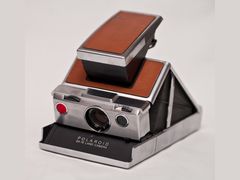
The classic folding Polaroid SLR that reviewers often compare the I-2 with: through-the-lens viewing and manual focus, but exposure control limited to exposure compensation.
Polaroid Flip
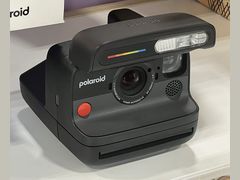
Polaroid's point-and-shoot with sonar autofocus and a 4-lens hyperfocal system, $219.99 at Polaroid's US store (October 2026): a simpler, cheaper way to get autofocus Polaroids if you don't need manual exposure.
Nons SL660 or Mint Instakon SF70
Manual-control cameras for Instax Square film, which PCMag's 2023 review listed at $599 and $899. Prints are smaller, 2.4 inches square against about 3.1 for Polaroid, and the SL660 takes SLR lenses.
Every source behind this page
Read them yourself. How we pick and count them is in our methodology.
Show all 49 sources
Manuals and references 24
- austincamera.com: Polaroid i‑2 Instant Camera
- brooklynfilmcamera.com: Polaroid I
- support.polaroid.com: Just a moment...
- vintageinstantcamera.com: What You Need to Know About the New Polaroid i
- glazerscamera.com: Polaroid I-2 Instant Camera
- ifixit.com: Polaroid I-2 Battery Replacement
- ifixit.com: Polaroid I-2 Display Replacement
- ifixit.com: Polaroid I-2 Film Door Replacement
- ifixit.com: Polaroid I-2 Film Shield Replacement
- ifixit.com: Polaroid I-2 USB-C Port Board Replacement
- polaroid.com: | Education
- polaroid.com: | Education
- polaroid.com: Pictures look weird? Now what. Here ...
- polaroid.com: Discover the Polaroid I-2 Instant Photo Camera
- polaroid.com: Buy Polaroid 600 Instant Camera Film
- polaroid.com: Shop Polaroid Film Packs
- polaroid.com: Warranty Policy
- polaroid.com: polaroid apps
- polaroid.com: Color i-Type Film
- polaroid.com: Color SX-70 Film
- polaroid.com: Polaroid I
- precision-camera.com: Polaroid Color i-Type Instant Film (Double Pack, 16 Exposures)
- uniquephoto.com: Polaroid Color Film I
- uniquephoto.com: Used Polaroid I-2 Instant Film Camera
Independent blogs 12
- KeithWee Photography: Polaroid I-2 review
- KeithWee Photography: Portraits with the Polaroid I-2 & Nicole
- KeithWee Photography: Polaroid Go Gen 3 Review: Smaller, sharper, still wonderfully imperfect - KeithWee
- Dan Finnen: Polaroid I
- Dan Finnen: New: Polaroid I
- Kelsey Smith Photography: Polaroid I-2: The Sharpest Instant Camera ...
- Shoot It With Film: The New Polaroid I-2 Camera
- Shoot It With Film: Polaroid I-2 Review: Polaroid's New Top-of-the
- Analog.Cafe: Update the firmware on your Polaroid I
- Oldtimefocus: Read This Before You Buy Polaroid I
- Oldtimefocus: Is Polaroid I-2 The Best Instant Camera? My Review &Phots
- Forrest Bourke: Reverse Engineering and Repair of the Polaroid I
Editorial reviews 6
Video reviews 5
Forums 2
Keep reading
Instant cameras
Polaroid 600 film is ISO 640 with a battery in every 8-photo pack and costs $20.99. See which cameras take 600, i-Type, SX-70 or Go film, and how to store it.
Instant cameras
What 155 owner and reviewer opinions say about the Polaroid SX-70: refurbished prices of $399-$685, film at about $3 a shot, common faults and how to test one.
Instant cameras
Polaroid Go vs Polaroid Now: the Go Gen 3 is $89.99 with $1.37 photos; the Now Gen 3 is $129.99 with autofocus and a picture 2.8x bigger. Specs and picks.
Instant cameras
The best instant camera for most people is the Instax Mini 13, $89.95 in October 2026. See 8 picks from reviewer consensus, plus Polaroid film cost per photo.
Instant cameras
Polaroid vs Instax: Instax Mini costs $0.77-0.91 a photo and develops in 90 seconds. Polaroid gives a bigger picture for $2.13-2.37. Here is which to buy.
Instant cameras
Yes. Polaroid film is best used within 12 months of the production date on the box. How to read the date, store packs, test old film and keep prints.