Explainer
Where to Develop a Disposable Camera in 2026
The short answer
You can develop a disposable camera at a Walgreens, CVS or Walmart photo counter, at a local photo lab, or by mailing the whole camera to a lab such as The Darkroom, Dwayne's Photo, Mpix or Old School Photo Lab.
Walgreens charges $15.99 for 24 exposures with a photo CD and quotes 3 to 5 business days, but the chains ship your film to an outside lab and usually do not return the negatives. Mail-in labs charge from $5.99 to develop only (Process One) to $25 all-in with scans and shipping both ways (Old School Photo Lab), and they send your negatives back.
- Walgreens
- $15.99 per 24 exposures, prints + CDphoto.walgreens.com
- Negatives from Walgreens, CVS, Walmart
- Rarely returnedthedarkroom.com
- Cheapest mail-in developing
- $5.99 at Process One, before scansprocessonephoto.com
- All-in mail-in price
- $25 at Old School Photo Laboldschoolphotolab.com
- Fastest turnaround
- Next day at some local labs, such as PhotoLoungemyphotolounge.com
- Photos per camera
- 27 on a Fujifilm QuickSnapfujifilm.com
Where to develop a disposable camera: your three options
Three kinds of places still take disposable cameras in the US: a drugstore or big-box photo counter (Walgreens, CVS, Walmart), a local camera shop or photo lab, and a mail-in lab you ship the camera to. They are not the same service. The Darkroom, a mail-in lab, points out that the big chains now send film across the country to third-party labs and rarely return the negatives.
A local lab with its own processing machine is usually the fastest: PhotoLounge in Philadelphia says most disposables are ready the next day. A mail-in lab works from anywhere and returns your negatives, but you add mail time; The Darkroom says mail reaches it in 2 to 5 days from almost anywhere in the US.
Phoenix Photo Lab notes that most Fuji and Kodak disposables hold regular 200 or 400 speed color film, developed exactly like film from a regular camera, so any of these places can handle them. The one real exception is a true black-and-white camera such as the Ilford HP5 Plus single-use, covered further down.
- Drugstore or Walmart: the easiest drop-off, 3 to 10 business days quoted, prints and a CD, negatives usually not returned.
- Local lab: next day to about a week at the labs listed below, negatives back, but only in some towns.
- Mail-in lab: works from anywhere, scans online 1 to 7 business days after the camera arrives at most labs (Dwayne's quotes about 12), negatives back by mail.
Sources: thedarkroom.com, myphotolounge.com, thedarkroom.com, phoenixphotolab.com
Disposable camera developing prices and wait times compared
Prices come from each store's or lab's own page, checked in October 2026, except CVS and Walmart, where a named guide fills the gap. Turnaround is what each business quotes, not a timed result: Camera Dojo has not sent a camera to any of these places.
| Where | Price | Turnaround quoted | What you get | Negatives back |
|---|---|---|---|---|
| Walgreens (in store) | $15.99 per 24 exposures | 3-5 business days | Prints and a photo CD | No |
| CVS (in store) | $14.99 for 27 exposures, single prints (Shotkit, undated) | 7-10 business days | 4-inch prints and a CD | No, the lab disposes of them |
| Walmart (in store) | Not posted; about $8 for 12 exposures (Cultured Kiwi) | About 6 days; 1-3 weeks reported | 4x6 prints; a CD or USB can cost extra | Usually not |
| The Darkroom (mail-in, California) | From $17 with scans, plus $6.95 return shipping | 2-4 days in the lab | Scans in a web gallery and app | Always |
| Dwayne's Photo (mail-in, Kansas) | From $7.50 develop only, scans +$4.00, $5.00 return shipping and handling | About 12 business days in the lab | Develop only, or add scans or prints | Yes, unless you opt out for a shipping refund |
| Mpix (mail-in, Kansas) | $13.95 per disposable with standard scans | 1-3 business days | Scans in your Mpix account | Your choice: returned or discarded |
| Old School Photo Lab (mail-in, New Hampshire) | $25 all-in, or $18 develop only | 4-5 business days for color | Download link, CD/DVD or USB | Always, cut and sleeved |
| Process One (mail-in) | $5.99 develop only; scans $4.99 with prints or $8.99 alone | Usually starts within 1-2 days | Prints, Dropbox, CD or USB | Always |
| Local lab, e.g. PhotoLounge (Philadelphia) | Varies by lab | Next day for most disposables | Scans by Dropbox link | Always |
Sources: photo.walgreens.com, slashgear.com, shotkit.com, photos3.walmart.com, culturedkiwi.com, thedarkroom.com, thedarkroom.com, dwaynesphoto.com, dwaynesphoto.com, dwaynesphoto.com, mpix.com, oldschoolphotolab.com, processonephoto.com, myphotolounge.com
Does Walgreens develop disposable cameras?
Yes, at stores that still have a photo department. Walgreens' film processing page says it prints images from film, negatives or disposable cameras through its Film Roll Processing service, and its banner lists $15.99 per 24 exposures of 35mm film with a free photo CD, ready for pickup in 3 to 5 business days. SlashGear reported the same price in June 2024, and QuerySprout listed $14.99 in January 2023, so the price has crept up.
There are two catches. Not every Walgreens still offers the service, so SlashGear suggests calling your store first. And the same Walgreens banner says orders will not include negatives, so the prints and the CD are all you keep. If you might want bigger prints or better scans later, a lab that returns negatives is the safer choice.
Walgreens also says film can still be processed past its expiration date and typically lasts several years beyond it, depending on how it was stored, so an old camera from a drawer is worth dropping off. For the chain-by-chain details, see developing film at CVS, Walgreens or Walmart.
Call your Walgreens before you go: whether it still takes film varies by store.
Sources: photo.walgreens.com, slashgear.com, querysprout.com
Can you develop a disposable camera at CVS, Walmart or Target?
CVS: yes, at stores with a photo center, but nothing is developed in the store. Shotkit says CVS sends film to a Fujifilm-run lab in Greenwood, quotes 7 to 10 business days for 35mm color (up to three weeks for other formats) and charges $14.99 for 27 exposures with single prints or $18.99 for doubles, with a low-resolution CD. Elsewhere in the same article Shotkit says to expect about three weeks, and it says the lab disposes of your negatives. Its prices are undated, so confirm them at the counter, and use CVS's store locator to find a location that still offers the service.
Walmart: Walmart's own page says to bring the film or disposable camera to the Photo Center, where an Entertainment associate helps with the drop-off, and that 4x6 prints and a CD are ready in about 6 days. Its FAQ adds that saving the images to a USB or CD costs a small additional charge. Walmart posts no price; Cultured Kiwi puts it at around $8 for a 12-exposure roll with 4x6 prints, says real-world turnaround runs one to three weeks, and says Walmart usually does not return the original negatives. It also reports photo centers phased out at some smaller stores, so call first.
Target: no. QuerySprout says Target does not develop disposable cameras and only prints digital photos, and it points readers to Walmart, CVS or Walgreens instead.
Old School Photo Lab, a mail-in lab, sums up the pharmacy route as one to two weeks with low-resolution scans and, in many cases, no negatives.
Sources: shotkit.com, photos3.walmart.com, culturedkiwi.com, querysprout.com, oldschoolphotolab.com
Mail-in labs that develop disposable cameras
A mail-in lab is the best route if you want your negatives and good scans and there is no lab near you. You order online, mail the whole camera in a padded envelope, get scans by email or in an online gallery once the lab has processed it (1 to 7 business days at most of the labs below), and the negatives follow by mail. This is what the main US labs list on their own pages as of October 2026; for a wider comparison, see the best mail-in film labs.
- The Darkroom (Southern California): from $17 with scans, $6.95 flat-rate return shipping, and a free prepaid label at checkout or a free mailer on request. Scans post 2-4 days after the camera arrives; standard scans are 1024x1536 pixels and enhanced scans 2048x3072. Negatives always come back.
- Dwayne's Photo (Parsons, Kansas): from $7.50 to develop, +$4.00 for standard scans and $5.00 shipping and handling for the first roll. You pay the postage to get the camera there, and in-lab time is generally 12 business days. If you skip the negatives, Dwayne's refunds the return shipping charge.
- Mpix (Pittsburg, Kansas): $13.95 per disposable with standard scans, per its FAQ, with scans online 1-3 business days after the camera arrives. Its order page says film shipping is included while the FAQ says prices do not include shipping, so check at checkout. Mpix cannot process true black-and-white film and recycles every camera.
- Old School Photo Lab (Dover, New Hampshire): $25 all-in for developing, scans and shipping both ways, or $18 to develop only with the negatives returned. A prepaid, trackable label arrives by email, and color film takes 4-5 business days once it reaches the lab.
- Process One: $5.99 to develop, then 4x6 prints at 49 cents each, or scans for $4.99 with prints and $8.99 on their own (2400x3600 pixel JPEGs). It always returns negatives; its disposable page does not state return shipping.
- North Coast Photo Services (The Great American Photo Lab): $24.24 per camera to develop, scan at 2048x3072 and email you a download link, or $29.63 with larger enhanced scans.
- Boutique Film Lab (Nashville): asks you to allow 5 to 7 business days, returns negatives and any prints, and has a drop-off for locals. Its disposable page lists no per-camera price.
Shutter Junkies still shows up in searches for disposable developing, but it stopped taking film developing orders on April 4, 2026. Choose another lab.
Sources: thedarkroom.com, thedarkroom.com, dwaynesphoto.com, dwaynesphoto.com, dwaynesphoto.com, mpix.com, oldschoolphotolab.com, processonephoto.com, northcoastphoto.com, boutiquefilmlab.com, shutterjunkies.org
Disposable camera developing near me: how to find a local lab
Search for film lab or photo lab plus your city rather than only disposable camera developing, and look for a lab that develops film in its own machine. Those are the fast ones; a shop that sends film out to another lab adds shipping time, just as a drugstore does.
Here is what a few local labs post, checked October 2026:
- PhotoLounge, Philadelphia: most disposables ready the next day, a 24/7 outdoor drop box and courier pickup, scans by Dropbox link and negatives always returned.
- Total Photo, Solana Beach (San Diego County): $7.50 to develop a 24-exposure roll or disposable, $14.90 with a digital download, next business day for color film. Black and white takes 7-10 business days, and the lab keeps negatives for you to collect for up to 2 months.
- Latitude Chicago: $8.50 to develop plus $10.00 for basic scans; 3 business days for develop only, 5-7 with scans. It takes mail-in orders too.
- Austin Camera, Austin, Texas: color development for 35mm and single-use cameras from $7.49, processed in-house, with negatives returned.
Before you hand it over, ask two things: is the film developed on site, and do the negatives come back?
Sources: myphotolounge.com, totalphoto.net, latitudechicago.org, austincamera.com
Black-and-white and waterproof disposables: which labs can develop them
Most black-and-white disposables do not need a special lab. Fujifilm says the QuickSnap Black and White works with standard color film processing, and CineStill says the Ilford XP2 Super single-use can go to any lab that offers C-41 processing, or be developed at home with C-41 chemistry. The Ilford XP2 Super guide covers how that film looks.
The exception is the Ilford HP5 Plus single-use, which holds true black-and-white film. Glazer's Camera warns it is not compatible with some in-store lab services, and Mpix says it cannot process true black and white. Send it to a lab that lists black and white, such as The Darkroom or Dwayne's Photo; Old School Photo Lab quotes 7-10 days for black and white. More on the film in the Ilford HP5 Plus guide.
Waterproof disposables hold ordinary color film in a sealed housing. The Fujifilm QuickSnap Waterproof is loaded with ISO 800 film and rated to 35 feet, and both Mpix and The Darkroom say they develop waterproof cameras (Mpix only if the film is color).
| Camera | Film inside | Where to develop it |
|---|---|---|
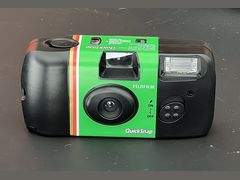 Fujifilm QuickSnap, Kodak FunSaver and most color disposables | Color negative film (C-41) | Anywhere: drugstore, local lab or mail-in |
| Fujifilm QuickSnap Waterproof | ISO 800 color negative | Any color lab |
| Fujifilm QuickSnap Black and White | Black and white made for standard color processing | Any color lab |
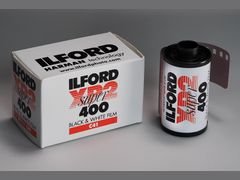 Ilford XP2 Super single-use | Black-and-white chromogenic film (C-41) | Any C-41 lab, or home C-41 chemistry |
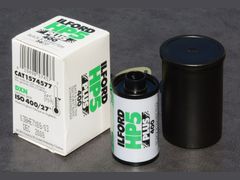 Ilford HP5 Plus single-use | True black and white (HP5 Plus, ISO 400) | Only a lab with black-and-white processing; not Mpix; ask before leaving it at a drugstore |
Sources: fujifilm.com, fujifilm.com, cinestillfilm.com, glazerscamera.com, mpix.com, thedarkroom.com, dwaynesphoto.com, oldschoolphotolab.com, phoenixphotolab.com
Can you still develop an old disposable camera?
Usually, yes. Dwayne's Photo says it often gets recognizable pictures from rolls left undeveloped for 40 years, though you should expect reduced contrast, color shifts, heavy fog and some frames that do not come through. Old School Photo Lab says it develops 10- and 20-year-old cameras regularly and that the images are very often recoverable.
Storage matters more than age. Old School puts it this way: "a camera that spent fifteen years in a cool cupboard will usually beat one that spent five in a hot attic." A blog post from Shutter Junkies, which has since stopped developing film, says most exposed film should be developed within 6 months of shooting, though it adds that a 2-year-old disposable will not be that bad. Sooner is better, even if old rolls often survive.
Dwayne's notes that processing is charged at the normal price even when results are poor, since the work is the same. Old School says it corrects each frame individually rather than running one profile over the whole roll, which helps with faded film. For what age does to unexposed film, see our expired film guide.
Sources: dwaynesphoto.com, oldschoolphotolab.com, shutterjunkies.org, photo.walgreens.com
How to mail a disposable camera to a lab
The routine is the same at most mail-in labs. A drugstore is simpler: call ahead, hand the whole camera to the photo counter and wait for the call.
- 1
Do not open the camera
Send the whole camera. Dwayne's Photo warns that breaking the case open yourself risks exposing the film to light and ruining the pictures; the lab opens it in the dark.
- 2
Finish the roll, or send it as is
You can mail it with frames left. The Darkroom develops all exposed frames, and the unused end of the roll simply comes back blank.
- 3
Check what film is inside
Color, QuickSnap Black and White and XP2 cameras can go to any lab. An HP5 Plus single-use needs a lab that lists true black and white.
- 4
Order online
Choose the scan size, any prints and whether you want the negatives back. Dwayne's refunds the return shipping charge if you skip the negatives.
- 5
Pack it in a padded mailer
Use a bubble mailer or a small box, not a paper envelope, which Dwayne's says can tear in the mail. Include your order number, which Dwayne's asks for, and your name, email, return address and phone number, which Boutique Film Lab asks for.
- 6
Ship with tracking
Use the lab's shipping label if it gives you one: The Darkroom and Old School provide prepaid labels, and Mpix has you print one from its site and warns that labels older than a couple of weeks can get mail discarded or delayed. Otherwise Dwayne's suggests a tracked USPS service, since the lab is not liable if the carrier loses the package.
- 7
Get your scans, then your negatives
Labs email a download link or post scans to an online gallery once the film is processed, from 1-3 business days at Mpix to about 12 at Dwayne's. Negatives and prints follow by mail; Mpix mails negatives 5 business days after processing.
Sources: dwaynesphoto.com, thedarkroom.com, glazerscamera.com, boutiquefilmlab.com, oldschoolphotolab.com, mpix.com
Can you develop a disposable camera at home?
Yes, though if you are sending it to a lab, leave it closed: Dwayne's and Old School both say opening the case yourself risks ruining the film. To develop it at home, the film has to come out in total darkness, in a darkroom or a changing bag, and go straight onto a reel in a light-tight developing tank. Format's home developing guide suggests starting with black and white, which needs less equipment.
Match the chemistry to the film: an HP5 Plus single-use needs black-and-white developer and fixer, while color disposables and the XP2 need C-41 chemistry. For equipment, times and step-by-step instructions, see how to develop film at home.
Sources: format.com, glazerscamera.com, cinestillfilm.com, dwaynesphoto.com
Questions people ask
Does Walgreens still develop disposable cameras?
Yes, at stores with a photo department, though not every store still offers it, so call first. Walgreens' film page lists $15.99 per 24 exposures of 35mm film with a free photo CD, ready in 3 to 5 business days. The film is sent out to a lab, and Walgreens says orders will not include negatives.
Sources: photo.walgreens.com, slashgear.com, thedarkroom.com
How much does it cost to develop a disposable camera?
Develop-only prices start at $5.99 at Process One, $7.50 at Dwayne's Photo and $8.50 at Latitude Chicago, before scans and shipping. With scans, Mpix lists $13.95 per camera before shipping, The Darkroom $17 plus $6.95 return shipping, and Old School Photo Lab $25 including shipping both ways. Walgreens charges $15.99 for 24 exposures with prints and a CD. Our [film developing cost table](/developing/cost-to-develop-film/) has more.
Sources: processonephoto.com, dwaynesphoto.com, latitudechicago.org, mpix.com, thedarkroom.com, oldschoolphotolab.com
Will I get my negatives back?
Not from Walgreens or CVS, and usually not from Walmart. Local and mail-in labs return them: The Darkroom, Process One and Old School always do, Dwayne's returns them unless you opt out, and Mpix lets you choose. Old School points out that a negative can be rescanned at any resolution decades later, while a low-resolution scan cannot.
Sources: photo.walgreens.com, shotkit.com, culturedkiwi.com, oldschoolphotolab.com, mpix.com
What if I still have exposures left on the camera?
Send it anyway. The Darkroom says it develops all exposed frames, and any unexposed frames at the end of the roll just come back without images. Do not open the camera to check; the lab opens it in the dark.
Sources: thedarkroom.com, dwaynesphoto.com
Can I take an undeveloped disposable camera through airport security?
Yes. TSA allows film in carry-on and checked bags but recommends keeping undeveloped film and cameras containing it in your carry-on, or asking for a hand inspection at the checkpoint. Dwayne's Photo warns that the newer CT scanners at many airports can fog film, sometimes after a single pass, and it also recommends asking for a hand inspection.
Sources: tsa.gov, dwaynesphoto.com
How do I get disposable camera photos on my phone?
Order scans. Mail-in and local labs email a download link or post the scans to an online gallery, and The Darkroom also has an iPhone and Android app. Walgreens and Walmart give you a CD instead, and Walmart can save the images to a USB for a small extra charge.
Sources: thedarkroom.com, myphotolounge.com, photos3.walmart.com, slashgear.com
Where can I buy a disposable camera?
Drugstores, camera shops and some labs still sell them. In October 2026 Walgreens listed the Kodak HD Power Flash at $27.99, CineStill sold the Ilford XP2 Super single-use for $24.95, and The Darkroom sold its own Darkroom Cam for $15.99. See our [best disposable cameras](/cameras/best-disposable-cameras/) guide for how they compare.
Sources: walgreens.com, cinestillfilm.com, thedarkroom.com
Do disposable cameras expire?
The film inside has an expiration date, but Walgreens says film can still be processed after it and typically lasts several years past the date, depending on storage. Once you have taken pictures, get them developed reasonably soon. Old School Photo Lab says heat does more damage than age: a camera kept in a cool cupboard for years usually beats one stored in a hot attic.
Sources: photo.walgreens.com, oldschoolphotolab.com, shutterjunkies.org
Sources
Every fact on this page comes from one of these. How we choose and check sources is in our methodology.
Show all 31 sources
official 21
- Walgreens Photo: Film Processing & Development
- Walmart Custom Print: Film Developing
- TSA: Film
- Fujifilm: QuickSnap
- Fujifilm: QuickSnap Black and White
- The Darkroom: Disposable Camera Developing by Mail
- The Darkroom: Where should I get my film developed?
- Dwayne's Photo: Film Processing Services
- Dwayne's Photo: Disposable Camera Processing
- Dwayne's Photo: FAQ
- Mpix: Film Developing
- Old School Photo Lab: Disposable Camera Developing by Mail
- Process One: Disposable Camera Developing
- NCPS: Disposable Camera Developing & Processing
- Boutique Film Lab: Disposable Camera Developing
- PhotoLounge: Disposable Camera Developing
- Total Photo San Diego: Film Developing
- Latitude Chicago: Film Services
- Austin Camera: Film Processing
- Phoenix Photo Lab: Film & Disposable Camera Developing
- Shutter Junkies: Develop Your Film
Editorial reviews 5
retailer 3
Independent blogs 2
Keep reading
Developing and scanning
Yes, CVS, Walgreens and Walmart still develop 35mm film and disposable cameras. Prices, wait times, formats and if you get negatives back, checked Oct 2026.
Developing and scanning
The best US labs for mail-in film developing, with October 2026 prices, shipping costs, turnaround times and scan sizes for The Darkroom, Dwayne's and more.
Developing and scanning
A roll of 35mm film costs $5 to $11.50 to develop at US labs, or $11.50 to $29 with scans. Prices from 12 labs and the big chains, checked October 2026.
Developing and scanning
Most US labs take 2 to 7 business days once your film arrives, plus 2 to 6 days of mail. Walmart, CVS, black and white, slide and home developing times.
Film cameras
The Kodak FunSaver is the best disposable camera for most people. Seven picks for color, black and white and water, with US prices checked October 2026.
Film cameras
Kodak FunSaver: 27 shots of ISO 800 film for $15.95 to $21.99. What 94 reviewer and owner opinions say, flash tips, and what developing really costs.