Comparison
Portra 400 vs Portra 800: Which Kodak Film Should You Buy?
The short answer
Portra 400 vs 800 comes down to light: Portra 400 is the better everyday film, with finer grain, a lower price, sheet film as well as 35mm and 120, and a one-stop push to 800 that labs say works well.
Portra 800 is worth its premium, usually $1.26 to $3.00 more per 35mm roll at the same US store in October 2026, when you need a true extra stop in dim rooms or with slow medium format lenses, and Kodak says it pushes to 1600. Both are also sold as Kodak Ektacolor Pro 400 and 800, the same films under a new label.
- Box speed
- ISO 400 vs ISO 800kodakprofessional.com
- Grain (Kodak PGI, 4x6 from 35mm)
- 37 vs 48, lower is finerimaging.kodakalaris.com
- Formats
- 400: 35mm, 120, sheets. 800: 35mm and 120 onlykodakprofessional.com
- Pushing
- Kodak: Portra 800 pushes to EI 1600kodakprofessional.com
- 35mm roll, Oct 2026
- $16.99 vs $19.59 at Looking Glass Photolookingglassphoto.com
- Same film, new name
- Ektacolor Pro 400 and 800, since March 24, 2026photoworkout.com
Portra 400 vs 800 at a glance
 Portra 400 | Portra 800 | |
|---|---|---|
| Box speed | ISO 400 | ISO 800 |
| Same film sold as | Kodak Ektacolor Pro 400 | Kodak Ektacolor Pro 800 |
| Formats | 35mm, 120 and sheet film from 4x5 up to 20x24 | 35mm and 120 only |
| Grain, Kodak PGI for a 4x6 from 35mm (lower is finer) | 37 | 48 |
| Look, per labs and reviewers | Middle saturation, low grain | More saturation, slightly more contrast |
| Dynamic range (Analog.Cafe estimate) | About 12 stops | About 12.5 stops |
| Pushing | One stop to 800 works well; 1600 gets iffier | Kodak: to EI 1600; its data sheet also covers EI 3200 |
| How reviewers and labs rate it | Box speed or EI 200 | Box speed, or EI 400 for denser shadows |
| Tungsten light with an 80A filter (Kodak data sheets) | EI 100 | EI 200 |
| 35mm roll, Oct 2026 | $15.99 to $17.99 | $18.25 to $22.50 |
| 120 five-pack, Oct 2026 | $73.99 to $85.00 | $84.99 to $100.00 |
| Airport X-ray | Carry on; hand check recommended | Carry on; ask for a hand check (ISO 800 film) |
Pick the Portra 400 if
- You shoot mostly in daylight, open shade or bright interiors
- You want the finest grain at 400 speed, especially in 35mm
- You shoot large format: Portra 800 does not come in 4x5 or 8x10
- You only need one extra stop now and then: push it to 800 (The Darkroom's order page lists a $3 push)
- You want the cheaper of the two for everyday shooting
Pick the Portra 800 if
- You shoot indoors without flash, at dusk, at receptions or concerts
- You use slow or long lenses, such as medium format f/2.8 to f/4 or long telephotos
- You may need EI 1600 (Kodak's stated push) or more
- You like a slightly more saturated, contrasty Portra look
- You shoot 120: a 4x6 from a 6x6 Portra 800 negative scores 36 on Kodak's grain scale, about the same as 35mm Portra 400 (37)
Sources: kodakprofessional.com, kodakprofessional.com, kodak.com, imaging.kodakalaris.com, imaging.kodakalaris.com, thedarkroom.com, fstoppers.com, analog.cafe, analog.cafe, bluemooncameracodex.com, rifilmlab.com, decafjournal.com, thedarkroom.com, tsa.gov
Is Kodak Ektacolor Pro the same as Portra 400 and 800?
Yes. Since March 24, 2026, Eastman Kodak has sold the Portra emulsions in its own boxes as Kodak Ektacolor Pro 160, 400 and 800, while Kodak Alaris keeps selling Portra-branded boxes. The new name exists because Kodak Alaris holds the Portra trademark, according to PhotographyTalk, so US shelves now carry both.
The Darkroom lab says Portra 800 and Ektacolor Pro 800 are the exact same emulsion, made by Eastman Kodak in Rochester, New York. Analog.Cafe's advice is simple: since the films are identical, buy whichever box is cheaper. One small difference it did report: the new Ektacolor Pro 400 base felt noticeably thinner and more prone to curling than Portra 400.
The two boxes are not always priced the same. On October 28, 2026, Glazer's Camera listed Ektacolor Pro 800 at $18.50 against $19.49 for its Portra 800 roll, and Reformed Film Lab had Ektacolor Pro 800 at $21.00 against $22.50 for Portra 800.
If you order by part number, Kodak lists Ektacolor Pro 800 as 7519531 (35mm, 36 exposures) and 7519614 (120 five-pack). Ektacolor Pro 400 is listed as 7519606 (120 five-pack), 7520786 (4x5, 10 sheets) and 7523129 (8x10, 10 sheets), and US stores such as the Film Photography Project Store and Glazer's also stock it in 35mm.
Everything on this page applies to both labels: Portra 400 is Ektacolor Pro 400, and Portra 800 is Ektacolor Pro 800.
Sources: photoworkout.com, photographytalk.com, thedarkroom.com, analog.cafe, analog.cafe, glazerscamera.com, glazerscamera.com, reformedfilmlab.com, reformedfilmlab.com, kodak.com, kodak.com, filmphotographystore.com
When does the extra stop of Portra 800 matter?
 800T
One stop is twice the light. Switching from Portra 400 to Portra 800 lets you keep 1/125 second where 400 would need 1/60, or shoot at f/4 instead of f/2.8 at the same shutter speed. In a bright room that is a convenience; in a dim church, a restaurant or a reception after sunset it can decide whether the frame is sharp.
Medium format is where one reviewer finds Portra 800 hardest to do without: Decaf Journal's reviewer calls it almost essential at times, because those lenses tend to be f/2.8, f/3.5 or f/4. Kodak Alaris sells Portra 800 on best-in-class underexposure latitude and says it can be pushed to 1600 when you need more speed.
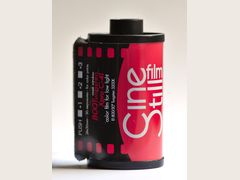
Both films are daylight balanced, so artificial light renders warm. Shoot It With Film found Portra 400 leans heavily yellow and orange in artificial lighting, and Kodak's data sheets give both films the same 80A blue filter for 3200 K tungsten light, which drops Portra 400 to EI 100 and Portra 800 to EI 200. Decaf Journal's reviewer prefers CineStill 800T at night because it is tungsten balanced.
If stops and EI ratings are new to you, Film ISO Explained covers the basics.
Sources: decafjournal.com, kodakprofessional.com, shootitwithfilm.com, kodak.com, imaging.kodakalaris.com, imaging.kodakalaris.com
Is Portra 800 grainier than Portra 400?
Yes, and your format decides how much it shows. Kodak's 2016 data sheets rate each film on a Print Grain Index: lower is finer, 25 is roughly where grain becomes visible, and four points equal one just-noticeable difference. For a 4x6 print from 35mm, Portra 400 scores 37 and Portra 800 scores 48, an 11-point gap, or almost three noticeable steps (11 divided by 4).
Analog.Cafe puts that 48 in context: it is close to the 44 that Kodak Gold 200 gets for the same print. Decaf Journal's reviewer sees noticeably more grain from Portra 800 in 35mm, and Carmencita Film Lab says any Portra shot in 35mm shows more grain and slightly less depth of color than in medium format.
Format moves the numbers as much as the film does. A 4x6 from a 6x6 Portra 800 negative scores 36 on Kodak's scale, about the same as 35mm Portra 400 at 37. The gap between the two films stays 11 points in 120 (25 against 36), but both start from a finer base, and Decaf Journal's reviewer says concerns over grain are mostly negligible in 120. 35mm vs 120 Film explains why the bigger negative matters so much.
For the whole family, Blue Moon Camera says Portra 800 is grainier than 400 in the same way 400 is grainier than Portra 160. Kodak Alaris still markets Portra 400 as the world's finest-grain high-speed color negative film.
| Negative and print size | Portra 400 | Portra 800 |
|---|---|---|
| 35mm, 4x6 print | 37 | 48 |
| 35mm, 8x10 print | 59 | 70 |
| 35mm, 16x20 print | 89 | 99 |
| 120 (6x6), 4x6 print | 25 | 36 |
| 120 (6x6), 8x10 print | 37 | 48 |
| 120 (6x6), 16x20 print | 59 | 70 |
| 4x5 sheet, 16x20 print | 36 | Not made |
Sources: imaging.kodakalaris.com, imaging.kodakalaris.com, analog.cafe, decafjournal.com, carmencitafilmlab.com, bluemooncameracodex.com, kodakprofessional.com
How do Portra 400 and 800 differ in color and contrast?
Labs and reviewers mostly agree Portra 800 is the punchier film. The Darkroom says it has more saturation and slightly higher contrast than Portra 160 and 400, Carmencita Film Lab calls it higher in saturation and slightly grainier, and Fstoppers' medium format side-by-side found it the most saturated Portra, sometimes over the top.
Portra 400 sits in the middle. The same Fstoppers comparison says its middle-of-the-road saturation, low grain and dynamic range still make it the film to beat. On skin tones opinions split: The Phoblographer's reviewer felt Portra 400 lightens and warms skin, while Portra 800 is more color accurate.
The two work side by side. Blue Moon Camera says Portra 800 was tweaked to stay consistent with Portra 400 and 160, and that you can shoot a roll of each in the same session. That makes a simple split possible, such as 400 for a daylight ceremony and 800 for the reception.
One technical footnote you may see online: sources disagree on whether Portra 800 uses Kodak's Vision3 technology. Carmencita says only Portra 400 does, The Darkroom says 800 does too, and Kodak's own data sheets credit Vision film technology only on the Portra 400 sheet. It does not change how you choose between them.
Sources: thedarkroom.com, carmencitafilmlab.com, fstoppers.com, thephoblographer.com, bluemooncameracodex.com, imaging.kodakalaris.com, imaging.kodakalaris.com
How should you expose Portra 400 and Portra 800?
Both films have a lot of dynamic range on paper, and the sources here lean toward giving them extra light. Analog.Cafe estimates about 12 stops for Portra 400 and 12.5 stops for Portra 800.
Portra 400 is easy. Rhode Island Film Lab recommends rating it at ISO 200, a full stop more light than box speed, and The Phoblographer's reviewer also exposes it at 200. Box speed works too: Kodak Alaris rates it at a true ISO 400.
Portra 800 splits opinion. The Phoblographer's reviewer gets the best results at box speed, ISO 800. Decaf Journal's reviewer meters it at ISO 400 to make sure the shadows are exposed, and Carmencita says it looks great overexposed, even by four stops, but turns grainy with muddy colors when underexposed.
Reading across those sources, a sensible default is to meter Portra 800 at 800 when the light is tight, and rate it at 400 whenever you can afford the extra stop.
Carmencita's short version for Portra 800: overexposed looks good, underexposed does not.
Sources: analog.cafe, analog.cafe, rifilmlab.com, thephoblographer.com, decafjournal.com, carmencitafilmlab.com, kodakprofessional.com
Is Portra 400 pushed to 800 as good as Portra 800?
For one stop, often yes; the sources differ mainly on how close it gets. Carmencita says pushing Portra 400 one stop usually gives more satisfying results than Portra 800 at box speed. Blue Moon Camera says a pushed roll of 400 gets fairly close to real Portra 800, and Rhode Island Film Lab reports minimal visible change in grain at 800 with accurate color.
Pushing does change the look. Shoot It With Film found Portra 400 pushed one stop picked up noticeable contrast and a little saturation. Past one stop the balance tips toward 800: Blue Moon Camera says pushing Portra 400 to 1600 gets a bit iffier, though it can be done, Kodak Alaris says Portra 800 can be pushed to 1600, and Analog.Cafe pushed Portra 800 two stops to EI 3200 without a big jump in grain size.
Not everyone agrees. Carmencita calls Portra 800 the least pushable Portra, though it still does the job rated at 1250 and pushed one stop, and in an older Flickr Film Photography Podcast thread a member who shot both at 1600 preferred Portra 400 for its much finer grain.
The money is close to even in 35mm. At Looking Glass Photo on October 28, 2026, Portra 400 was $16.99 and Portra 800 was $19.59. The Darkroom's order page lists a $3 push add-on (its FAQ still says $2). Added to the Looking Glass Photo price, one pushed roll of Portra 400 comes to $19.99 ($16.99 plus $3), 40 cents more than the 800. The catch is that the whole roll gets pushed, so every frame has to be shot at the same rating. Our guide to pushing and pulling film covers how to mark the roll; write the push on the order form, as The Darkroom asks, and see our mail-in labs list for where to send it.
Sources: carmencitafilmlab.com, bluemooncameracodex.com, rifilmlab.com, shootitwithfilm.com, kodakprofessional.com, analog.cafe, flickr.com, lookingglassphoto.com, lookingglassphoto.com, thedarkroom.com, thedarkroom.com
Portra 400 and 800 prices in October 2026
| Seller | Item | Price | Note |
|---|---|---|---|
| Looking Glass Photo | Portra 400, 35mm, 36 exp | $16.99 | About $0.47 a frame |
| Looking Glass Photo | Portra 800, 35mm, 36 exp | $19.59 | About $0.54 a frame; $2.60 more than Portra 400 |
| Film Photography Project Store | Portra 400, 35mm | $15.99 | Ektacolor Pro 400 35mm is also $15.99 |
| Film Photography Project Store | Portra 800, 35mm | $18.99 | $3.00 more than Portra 400 |
| Pro Photo Supply | Portra 400, 35mm, 36 exp (unboxed) | $16.99 | |
| Pro Photo Supply | Portra 800, 35mm, 36 exp | $18.25 | $1.26 more than Portra 400, the smallest gap found |
| Glazer's Camera | Ektacolor Pro 400, 35mm, 36 exp | $16.75 | |
| Glazer's Camera | Ektacolor Pro 800, 35mm, 36 exp | $18.50 | Portra 800 box is $19.49 at the same store |
| Arts Cameras | Ektacolor Pro 400, 35mm, 36 exp | $17.99 | |
| Arts Cameras | Ektacolor Pro 800, 35mm, 36 exp | $19.95 | |
| Reformed Film Lab | Ektacolor Pro 400, 35mm, 36 exp | $17.00 | Sale price; regular $19.00 |
| Reformed Film Lab | Ektacolor Pro 800, 35mm, 36 exp | $21.00 | Portra 800 box is $22.50 at the same store; $4.00 more than the sale-priced 400, $2.00 more than its regular $19.00 |
| Looking Glass Photo | Portra 400, 120, single roll | $15.99 | |
| Looking Glass Photo | Portra 800, 120, single roll | $18.29 | |
| Film Photography Project Store | Portra 400, 120, 5-roll pro pack | $73.99 | Ektacolor Pro 400 five-pack is also $73.99 |
| Film Photography Project Store | Portra 800, 120, 5-roll pro pack | $84.99 | $11.00 more than the 400 five-pack; Ektacolor Pro 800 is also $84.99 |
| Pro Photo Supply | Portra 400, 120, 5-pack | $79.99 | |
| Pro Photo Supply | Portra 800, 120, 5-pack | $89.99 | |
| Glazer's Camera | Ektacolor Pro 400, 120, 5-pack | $75.95 | Portra 400 five-pack is $79.95 |
| Glazer's Camera | Ektacolor Pro 800, 120, 5-pack | $89.95 | Portra 800 five-pack is $95.95 |
| Reformed Film Lab | Ektacolor Pro 400, 120, 5-roll pro pack | $85.00 | |
| Reformed Film Lab | Ektacolor Pro 800, 120, 5-roll pro pack | $100.00 |
Prices checked October 28, 2026. They change often.
Questions people ask
Which is better for weddings, Portra 400 or 800?
One option is to carry both: Portra 400 for daylight portraits and the ceremony, Portra 800 for dim churches and the reception. Blue Moon Camera says Portra 800 was tweaked to stay consistent with Portra 400, so rolls of each can be mixed in one shoot, and calls 800 hard to beat for low light wedding work. If you can only bring one, shoot Portra 400 and push the roll to 800 for the dark parts, but the whole roll gets pushed, so every frame on it is shot at 800.
Sources: bluemooncameracodex.com, thedarkroom.com
Which Portra should I use for indoor portraits?
By a bright window, Portra 400 is plenty, and Rhode Island Film Lab suggests rating it at ISO 200 for a full stop more light. In a dim room without flash, use Portra 800 or push Portra 400 one stop; Rhode Island Film Lab calls a push to 800 a good default for indoor events. Both are daylight balanced, so artificial light renders warm, and Shoot It With Film found Portra 400 leans heavily yellow and orange under it.
Sources: rifilmlab.com, shootitwithfilm.com, carmencitafilmlab.com
Is Portra 800 worth the extra money?
If you regularly shoot in low light, with slow lenses or in medium format, yes: in October 2026 it usually costs $1.26 to $3.00 more per 35mm roll at the same store, and it gives you a real stop plus Kodak's stated push to 1600. For daylight work, Portra 400 has finer grain and costs less. If you only need 800 occasionally, a pushed roll of 400 costs about the same: $19.99 at Looking Glass Photo ($16.99 plus The Darkroom's $3 push fee), against $19.59 for Portra 800.
Sources: prophotosupply.com, filmphotographystore.com, kodakprofessional.com, lookingglassphoto.com, lookingglassphoto.com, thedarkroom.com
Is Portra 800 discontinued?
No. Kodak Alaris still lists Portra 800 in 35mm and 120 pro packs, and Eastman Kodak sells the same film as Ektacolor Pro 800, catalog 7519531 for 35mm and 7519614 for 120 five-packs. Both boxes were listed at US stores in October 2026.
Sources: kodakprofessional.com, kodak.com, glazerscamera.com
Does Portra 800 come in 4x5 or 8x10 sheet film?
No. Kodak lists Portra 800 and Ektacolor Pro 800 only in 35mm and 120. For sheet film, Portra 400 comes in sizes from 4x5 up to 20x24, and Ektacolor Pro 400 is listed in 4x5 and 8x10 boxes of 10 sheets.
Sources: kodakprofessional.com, kodakprofessional.com, kodak.com
Can Portra 800 go through airport X-ray?
Keep it in your carry-on and ask for a hand inspection. TSA recommends carry-on bags or a hand check for undeveloped film, and its 2020 guidance, quoted by Kodak Alaris, listed film of ISO 800 or higher among the film to pull out for hand inspection. Kodak warns never to pack unprocessed film in checked baggage, and the Portra 800 data sheet also suggests requesting visual inspection.
Sources: tsa.gov, kosmofoto.com, kodak.com, imaging.kodakalaris.com
Can Portra 800 do long exposures?
Not without testing past 1 second. Kodak's data sheets say neither Portra 400 nor Portra 800 needs filter correction or exposure compensation from 1/10,000 second to 1 second, and for longer exposures they say to make your own tests. Blue Moon Camera suggests adding about one stop to Portra 800 by the time you reach 10 seconds.
Sources: imaging.kodakalaris.com, imaging.kodakalaris.com, bluemooncameracodex.com
What is the difference between Portra 160, 400 and 800?
Portra 160 has the finest grain and the lowest saturation, Portra 400 sits in the middle, and Portra 800 adds a stop of speed with more saturation, contrast and grain, according to Carmencita Film Lab, Fstoppers, The Darkroom and Blue Moon Camera. All three are now also sold as Ektacolor Pro 160, 400 and 800.
Sources: carmencitafilmlab.com, fstoppers.com, thedarkroom.com, bluemooncameracodex.com, kodak.com
Sources
Every fact on this page comes from one of these. How we choose and check sources is in our methodology.
Show all 31 sources
Editorial reviews 11
- PhotoWorkout: Kodak Launches Ektacolor Pro and Ektapan Film
- PhotographyTalk: Kodak Ektacolor Pro and Ektapan explained
- The Darkroom: Portra 800 / Ektacolor Pro 800
- Fstoppers: A Comparison of Kodak's Portra 160, 400, and 800
- Carmencita Film Lab: An Introduction to the Portra family
- The Phoblographer: Film Emulsion Review, Kodak Portra 800 (120)
- Decaf Journal: A Review of Kodak Portra 800 Film
- Blue Moon Camera Codex: Kodak Portra 800 Film Review
- Blue Moon Camera Codex: Kodak Portra 400 Film Review
- Rhode Island Film Lab: Kodak Portra 400, The Complete Guide
- Kosmo Foto: Kodak Alaris on film damaged by CT scanners (TSA 2020 guidance)
official 9
- Kodak Alaris: Kodak Professional Portra 400 Film
- Kodak Alaris: Kodak Professional Portra 800 Film
- Kodak Alaris: Portra 400 technical data E-4050 (PDF, 2016)
- Kodak Alaris: Portra 800 technical data E-4040 (PDF, 2016)
- Kodak: Ektacolor Film (Pro 160, 400, 800)
- Kodak: Ektacolor Pro 400 Film
- Kodak: Ektacolor Pro 800 Film
- TSA: Film
- Kodak: Transporting and storing film
retailer 6
Independent blogs 4
Forums 1
Keep reading
Film stocks
Kodak Portra 400 is an ISO 400 color film loved for skin tones and latitude. What 113 opinions say, how to expose and push it, and US prices from $15.99.
Film stocks
Kodak Portra 160 is a fine-grain ISO 160 color film, $13.99 to $17.99 a 35mm roll in Oct 2026. What 148 opinions say about skin tones, latitude and low light.
Film stocks
How to push film: what a stop means, what to set on your camera, how to tell the lab, one-stop fees from $0 to $4, home development times and how to pull film.
Film stocks
CineStill 800T is an ISO 800 tungsten film made for night and neon. What 112 opinions say, how to shoot it in daylight, push it, and US prices from $17.00.
Film stocks
35mm vs 120 film: common 120 frames are 2.7 to 5.4 times bigger than 35mm but give 8 to 16 shots a roll. Cost per frame, lab prices and which to pick.
Film stocks
Lomography 800 is an ISO 800 C-41 color film with Portra 800-like grain, $57.90 a 3-pack. What 104 opinions say on color, latitude and ISO, plus the 400.