Mamiya RB67: used prices, which version to buy and what to check
The short answer
The Mamiya RB67 is a fully mechanical 6x7 medium format SLR made from 1970 to 2010, with a rotating film back, bellows focusing and a leaf shutter in every lens.
Camera-and-lens kits were listed at $599.95 to $900 at two US shops on October 28, 2026, though all three were sold out, and owners rate its negatives, build and battery-free design very highly. The trade-offs are weight, about 5.9 lb with a 127mm lens and back, a slow two-lever routine and decades-old foam seals that often need replacing.
- Made
- 1970-2010 (Pro, Pro-S, Pro-SD)
- Format
- 6x7 on 120, 10 frames a roll
- Battery
- None (fully mechanical)
- Weight
- 5.9 lb with 127mm lens and back
Built from 156 opinions from 35 pages and videos. Not yet tested by Camera Dojo. Updated .
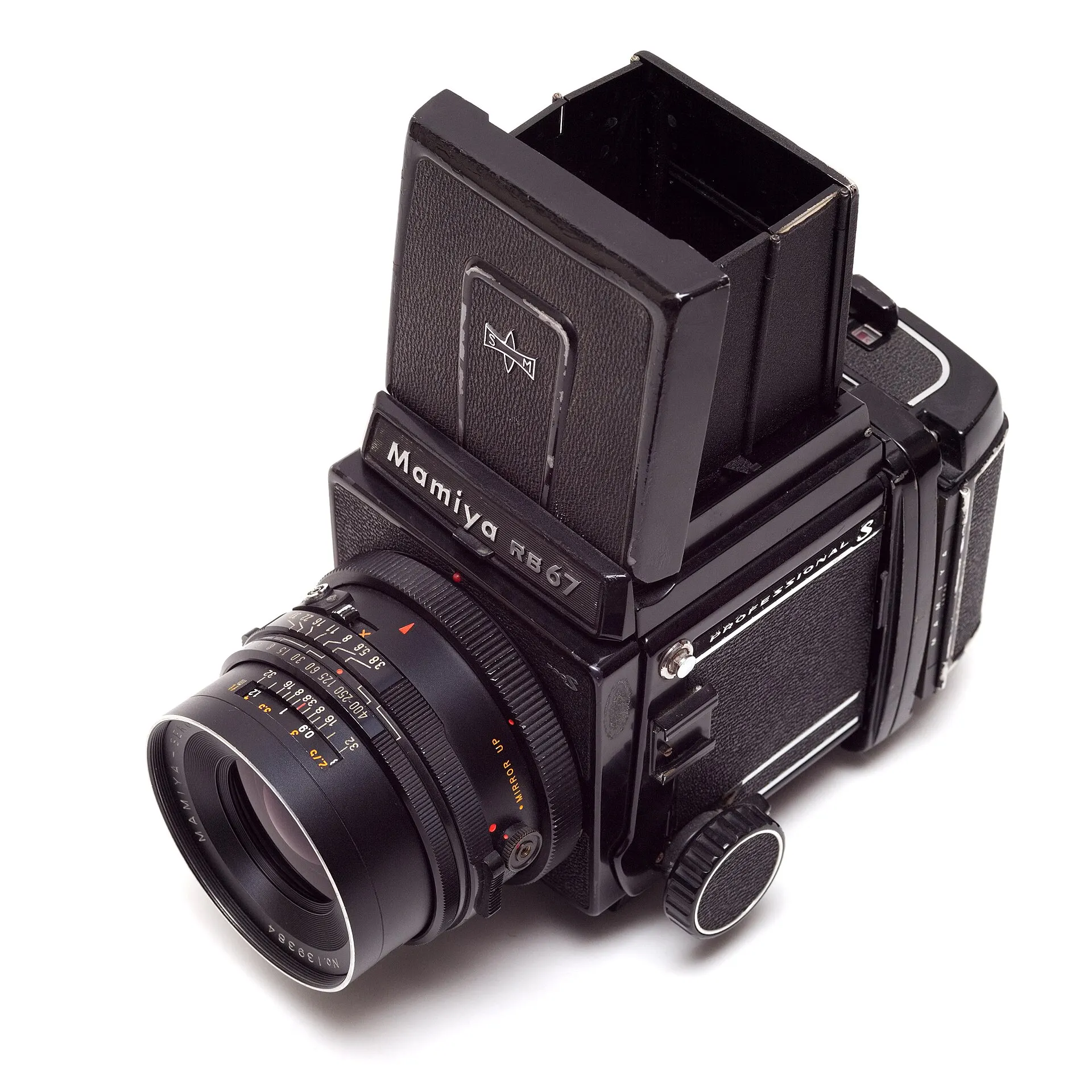
Is the Mamiya RB67 a good camera? The short version
The praise is close to unanimous where it matters most. All 12 comments on image results are positive, as are all 7 on batteries and 11 of 12 on build; Brooktree Film Lab calls the 6x7 negatives "stupidly sharp". Owners also like the bright waist-level finder, the rotating back that switches between horizontal and vertical frames without turning the camera, and bellows that focus close without extension tubes. Because the leaf shutter syncs flash at every speed up to 1/400 s, Photoethnography calls it particularly suited to studio work.
The complaints are about weight and age. Thirteen of 16 comments on size are negative, and 11 of 18 on reliability today are negative, mostly age-related faults such as perished foam, bent interlock pins or sticky lens shutters; a 2023 repair write-up says the average RB67 for sale has 30 to 40 year old light seals and the chance of light leaks is very high. There is no built-in meter, and Precision Camera Works, which calls itself the official North American repair center for Mamiya legacy products, paused taking RB67 Pro and Pro SD bodies and lenses for repair on March 19, 2026. On a tripod or in a studio, owners rate it highly and one calls it one of the best values in medium format; as a walk-around camera, even devoted owners admit it is not fun to carry.
Good fit if
- You want big 6x7 negatives for portraits, still life or landscapes shot from a tripod
- You shoot with studio flash: the leaf shutter syncs at every speed up to 1/400 s
- You want a camera that runs without batteries, even in the cold
- You like close-ups: the built-in bellows focus close without extension tubes
- You want one of the most affordable ways into a modular 6x7 system
Think twice if
- You want a camera to carry all day or shoot handheld on the street
- You need a built-in light meter or any kind of automation
- You shoot fast action or need shutter speeds above 1/400 s
- You want an untested bargain and have no budget for seals or a lens service
What owners and reviewers say, topic by topic
We sorted 156 opinions about the RB67 from 35 pages and videos on 29 websites and channels. Each row shows how many people raised a topic and how many of them were positive. Open a row to read short quotes, each linked to its source.
Owner voices come mostly from long-form reviews and blogs (Fstoppers, EMULSIVE, Light Leaks, Brooktree Film Lab, Land & Colors, Photoethnography, Retro Pixel), The Photography Forum, TalkPhotography, the Flickr RB67 group, photographyreview.com user reviews (some likely from the 2000s) and five YouTube reviews. Reddit, Photrio, photo.net and DPReview threads could not be checked. Most writers are committed owners, which tilts results and build positive; the weight and reliability complaints come from the same people.
Reliability today33% positiveof 18
Mostly negative (11 of 18), and the faults are age-related: perished foam seals, worn or bent interlock pins that stop the shutter or the film advance, and lens shutters gummed by old grease. Four of the six positive comments credit the all-mechanical design, three of them by comparison with the electronic RZ67, and one says Pro SD backs fix the light leaks of earlier backs.
“Those pins seem to always get bent or full of dirt”
“after some 50+ firing i started having some problems”
Flickr Mamiya RB67 group: Discussing Shutter firing problem in Mamiya RB67Owner
“the chances of disintegrating light seals and bellows with light leaks are very high”
Salvaged Circuitry: Reviving a Legend, Mamiya RB67 Repair 2023Owner
“Pro SD eliminates light leaks at film backs”
Viewfinder and focusing71% positiveof 17
Twelve of 17 positive and none negative. Owners love the large, bright ground glass and the bellows, which focus close enough for product and macro-style shots. The mixed comments: the waist-level image is reversed left to right, the edges are a little dim, and nailing focus wide open at f/3.8 takes care.
“Looking at the ground glass always puts a smile on my face”
Deployant: TGIFridays, Review of the vintage Mamiya RB67 Pro SD 2023Owner
“A finder which, I have to say is a sheer joy to look through.”
Robert J Davie, EMULSIVE: Camera Review, Me and my Mamiya RB67 Pro-SOwner
“Composing an image with this huge finder is a fun experience like no other.”
Wesley King, Beyond the Aperture: Review, Mamiya RB67 Professional S 2020-03Owner
“The reversed image takes time to adjust to.”
Kendall Wheeler, LIGHT LEAKS: one year with the Mamiya RB67 2026Owner
Size and weight13% positiveof 16
The biggest complaint: 13 of 16 comments are negative. One owner calls it the least convenient camera he owns, and another could not hold it at eye level with a prism for more than a few seconds. Two disagree: one carried it on serious hikes in the Alps and another says the weight has never been a problem.
“It's not fun to carry. It's not quick to shoot.”
Brooktree Film Lab: Why I'll Die with a Mamiya RB67 in My Hands 2025Owner
“The Mamiya RB67 is no doubt the least convenient camera I own.”
Kendall Wheeler, LIGHT LEAKS: one year with the Mamiya RB67 2026Owner
“Shooting handled is possible, but all day would quickly become a pain.”
Quentin Décaillet, Fstoppers: Getting Into Medium Format on a Budget 2017Owner
“I did some serious hikes in the Alps this year and the weight was not a problem at all.”
Price and value67% positiveof 15
Mostly positive (10 of 15): owners call it one of the best values in medium format, and EMULSIVE's reviewer put most lenses at $75 to $280 in an undated review; K&M Camera listed a used 90mm at $299.99 in October 2026. The negatives are running costs, since film and lab fees add up at 10 frames a roll, and one repairer balked at paying about $500 for any RB67.
“it's still an expensive way to take photos”
Jason Round, Roundeye Gallery: Mamiya RB67, The Joy Of Medium Format Film 2018-12Owner
“It's also one of the best values in medium format.”
Kendall Wheeler, LIGHT LEAKS: one year with the Mamiya RB67 2026Owner
“For a first medium format camera, it's tough to beat the value.”
James Madison, Fstoppers: Five Times Bigger Than Full Frame at a Fraction of the CostOwner
“This system has to be the best bang for the buck, as most lenses are anywhere between $75 and $280 US.”
EMULSIVE: Camera review, Mamiya RB67 Pro-S, Scott McClarinOwner
Lenses79% positiveof 14
Eleven of 14 positive. Owners call the Sekor C and K/L lenses sharp corner to corner, with the 50mm, 90mm and 180mm singled out. The cautions: older lenses can show chromatic aberration, RZ lenses do not fit an RB body, and one long-term owner had grease migrate onto the shutter blades.
“Mamiya glass is fantastic.”
James Madison, Fstoppers: Five Times Bigger Than Full Frame at a Fraction of the CostOwner
“easily the equal of any other medium format lens series out there, even the Hasselblad”
“The lens creates beautiful bokeh while maintaining the total sharpness of your subject.”
RPeterThomas Photographic: Film Friday, Mamiya RB67 2020-12Owner
“Mamiya Sekor C lenses are known to be exceptionally sharp, although you should avoid older lenses if you don't like chromatic aberration.”
EMULSIVE: Camera review, Mamiya RB67 Pro-S, Scott McClarinOwner
Controls and features64% positiveof 14
Mostly positive (9 of 14), led by the rotating back, plus the low-vibration leaf shutter and an open-ended mirror lock-up for landscapes. The complaints are the separate levers for film advance and shutter cocking and a 1/400 s top speed that one owner finds a nuisance in bright sunlight.
“its top shutter speed caps at 1/400, which can be a nuisance when shooting in bright sunlight”
Thomas C 137 Photo: Two Years with the Mamiya RB67 Pro-SOwner
“This allows you to quickly switch between portrait and landscape orientations.”
“I prefer to lock up the mirror and wait for the clouds to move round, the wind to drop”
“The leaf shutter lets you get away with slightly slower shutter speeds without as much vibration”
Kendall Wheeler, LIGHT LEAKS: one year with the Mamiya RB67 2026Owner
Ease of use23% positiveof 13
Mostly negative (8 of 13). Reviewers ruined early frames by forgetting that cocking the shutter does not advance the film, and a first-time medium format user calls the learning curve steep. Of the three positive voices, a former wedding, sports and news photographer says he shot about as fast as the 35mm crowd, one user finds it the easiest of his three medium format cameras, and one reviewer says the mirror is well damped.
“It's loud. The mirror slap is basically a gunshot.”
Brooktree Film Lab: Why I'll Die with a Mamiya RB67 in My Hands 2025Owner
“Having never shot medium-format film before, the learning curve was steep.”
Jason Round, Roundeye Gallery: Mamiya RB67, The Joy Of Medium Format Film 2018-12Owner
“I have 2 other medium format camera's, this actually is the easiest to use.”
photographyreview.com: Mamiya RB67 Pro SD user reviews, page 2Owner
“It's a slow camera to use, and you know, that's one of it's finest qualities.”
Robert J Davie, EMULSIVE: Camera Review, Me and my Mamiya RB67 Pro-SOwner
Image results100% positiveof 12
All 12 comments are positive. Owners describe very sharp 6x7 negatives that scan and print big, and Kyle McDougall's long-term video review compares the results with far more expensive 6x7 cameras.
“The image quality the camera produces is outstanding.”
Martijn Roos: Mamiya RB67 Pro S Sample Images and Review 2020Owner
“the imagery from this camera is wonderful and often dream like”
EMULSIVE: Camera review, Mamiya RB67 Pro-S, Scott McClarinOwner
“Stupidly sharp. You can scan it big, print it huge, crop it tight.”
Brooktree Film Lab: Why I'll Die with a Mamiya RB67 in My Hands 2025Owner
“the results are always razor-sharp with a beautiful depth of field”
Thomas C 137 Photo: Two Years with the Mamiya RB67 Pro-SOwner
Build quality92% positiveof 12
Eleven of 12 positive: owners call it a tank, and one video reviewer's body kept working after a fall onto concrete. The one mixed comment says the build is solid but the bellows deserve careful handling.
“It is built like a brick privy”
“It feels extremely solid in hand.”
Quentin Décaillet, Fstoppers: Getting Into Medium Format on a Budget 2017Owner
“Good solid construction and very reliable.”
photographyreview.com: Mamiya RB67 Pro SD user reviews, page 2Owner
“I am very impressed how well build these cameras are.”
Repairs and servicing50% positiveof 8
Split (4 positive, 2 mixed, 2 negative). The mechanical design is easy to work on and the service manual is easy to find; one owner fixed a jammed back himself and a CLA revived a stuck 50mm lens. The downside is parts: one repairer found none for sale, and another owner warns parts and accessories are getting rare.
“Parts and accessories are getting rare.”
photographyreview.com: Mamiya RB67 Pro SD user reviews, page 2Owner
“My 50mm stuck open during MU, and a CLA made it function like new!”
Flickr Mamiya RB67 group: Discussing Shutter firing problem in Mamiya RB67Owner
“I'm just glad It's a completely mechanical machine. It was pretty easy to fix.”
The Photography Forum: Problem with a Mamiya rb67 pro-sdOwner
“Installing them is time-consuming and tedious, but it's not particularly complicated.”
Wesley King, Beyond the Aperture: Review, Mamiya RB67 Professional S 2020-03Owner
Batteries and power100% positiveof 7
All 7 comments are positive. The body, shutter and lenses need no battery, which owners value in winter and as one less thing to fail; only metered finders and power-drive backs take cells.
“The camera is fully mechanical (no battery required)”
Deployant: TGIFridays, Review of the vintage Mamiya RB67 Pro SD 2023Owner
“The build of the RB67 Pro is very solid, and purely mechanical: no batteries required!”
Martijn Roos: Mamiya RB67 Pro S Sample Images and Review 2020Owner
“if I was starting again I would be tempted to go for the all-manual approach of the RB”
“they are fully mechanical and there is no battery needed, so it is great during winter time”
Light meter and exposure0% positiveof 5
No positive comments, because there is nothing to praise: the body has no meter. Four owners note the missing meter and work with a handheld meter, a phone app or by eye, and one found the metered prism heavy, dark and awkward to use.
“The Prism is VERY heavy and I think its rather dark and the metering is rather cumbersome so a external meter is required.”
“The RB67 Pro-SD is not equipped with a light meter”
Deployant: TGIFridays, Review of the vintage Mamiya RB67 Pro SD 2023Owner
“There is no built-in meter and I use an app on my phone”
Robert J Davie, EMULSIVE: Camera Review, Me and my Mamiya RB67 Pro-SOwner
“the RB67 is traditionally a manual camera that doesn't feature an in-built light meter”
Thomas C 137 Photo: Two Years with the Mamiya RB67 Pro-SOwner
Film availability40% positiveof 5
Only 5 comments. 120 film is still made, but two owners say 220 is not (one dates the end to 2015), so a landscape photographer carries several loaded backs instead. One reader worries about lab access for E-6 and C-41, while another says film use is growing.
“220 roll film ceased production in 2015”
Deployant: TGIFridays, Review of the vintage Mamiya RB67 Pro SD 2023Owner
“unfortunately they do not make any 220 films”
“Recorded on 120 film, which is still available today.”
Dennis Gelner, Retro Pixel: The Mamiya RB67 Pro S 2018-08Hands-on review
“There is plenty of film stock and chemistry, in fact film use is on the rise”
Fstoppers: Five Times Bigger Than Full Frame at a Fraction of the Cost
PositiveMixedNegative
Mamiya RB67 Pro vs Pro-S vs Pro-SD: which one to buy
All three versions share the same body, rotating back and bellows. The original Professional arrived in 1970, the Pro-S in 1974 and the Pro-SD in 1990, and Wikipedia gives production through 2010. The Pro-S added a double-exposure interlock, a horizontal or vertical indicator in the finder, a self-erecting hood and a focus lock. The Pro-SD added a larger lens throat and 6x8 power-drive backs.
The long-running owner guide at rb67.helluin.org says to buy a Pro-SD unless you find a particularly great deal on an older body, because the price gap is small; asked again in 2025, its author said the main reason is the later production date. The bigger difference is the film back: Pro-SD backs use mechanical light blocks instead of foam seals, fit Pro-S bodies, and are the ones the guide says to buy even if they cost more.
Backs interchange across all three bodies, with one catch: an original Pro back on a Pro-S or Pro-SD body loses the double-exposure protection.
| Pro (1970) | Pro-S (1974) | Pro-SD (1990) | |
|---|---|---|---|
| Double-exposure interlock | No | Yes | Yes |
| Orientation indicator in finder | No | Yes | Yes |
| Lens throat | Standard | Standard | Larger; only body for the 75mm shift and 500mm APO L lenses |
| Original film backs | Foam light seals | Foam light seals | Mechanical light blocks, no foam |
| 6x8 backs | Needs 6x8 power back plus light baffle | Needs 6x8 power back plus light baffle | Introduced with this model |
Whatever body you buy, Pro-SD backs avoid the foam seals that perish in Pro and Pro-S backs, though the mirror foam still ages.
Sources: rb67.helluin.org, rb67.helluin.org, rb67.helluin.org, en.wikipedia.org
How to shoot a Mamiya RB67, step by step
The RB67 does nothing for you, and its interlocks block the release if you skip a step. This sequence follows an owner's walkthrough on The Photography Forum, the rb67.helluin.org guide and the Pro-SD manual; the general process is in how to load film.
- 1
Load the 120 back
Open the back, take out the film insert and load the roll. According to the manual, use a 120 holder for 120 film, then move the advance lever until the arrow on the leader paper lines up with the start mark on the holder.
- 2
Set aperture and shutter speed on the lens
Both rings are on the lens, because each lens carries its own Seiko #1 leaf shutter, with speeds from 1 s to 1/400 s plus T.
- 3
Cock the shutter
Push the lever on the side of the body all the way. It cocks the mirror and the lens shutter together, but it does not advance the film.
- 4
Compose and focus
Look down into the waist-level finder, where the image is reversed left to right, and turn either focus knob to move the bellows. For close-ups, correct the exposure with the scale on the side of the body that appears as the bellows extend.
- 5
Pull the dark slide
According to the manual, the release button cannot be pressed while the dark slide is fully inserted. When an owner's walkthrough on The Photography Forum left this step out, a moderator asked about it and another member replied that the camera would not have fired.
- 6
Release, then wait
Press the release on the front of the body. One forum owner's advice: when you hear the mirror go up, wait a second more so the shutter can finish.
- 7
Advance the film and cock again
Wind the lever on the back to the next frame, then cock the body for the next shot. One reviewer exposed his first frame about five times by skipping this, and an original Pro body will not stop you.
- 8
Use T and mirror lock-up on a tripod
For long exposures, set the lens to T, press the release, time it and push the cocking lever forward to close the shutter. For mirror lock-up, set older lenses to M, or screw a cable release into the M. UP socket on K/L lenses.
Sources: thephotoforum.com, rb67.helluin.org, rb67.helluin.org, retro-pixel.com, photoethnography.com, createmooremedia.com, pacificrimcamera.com
Mamiya RB67 lenses: C vs K/L, and which to buy first
There are three lens generations: the original single-coated lenses from 1970, the multi-coated C lenses from 1974 and the later K/L lenses. The rb67.helluin.org author finds no clear consensus on the best series and calls the optical gap between C and K/L unclear, while lenses with no C or K/L marking are the oldest and, per Fstoppers, tend to be the least sought after. Most bodies came with the 90mm f/3.8 C.
For a first lens, the 90mm is the normal lens, Brooktree Film Lab uses the 127mm for portraits and the 180mm for compression, and the 140mm C is the system's macro lens. On October 28, 2026, K&M Camera in New York listed used 90mm f/3.8 and 180mm f/4.5 lenses at $299.99 each.
Check the fit before you buy. K/L lenses ship with an adapter ring for the Pro-SD that comes off for a Pro or Pro-S; sources disagree on C lenses, since the manual says to fit the ring on a Pro-SD and the helluin author mounts his without it. RZ67 lenses do not fit an RB body because they have no shutter speed ring, though RB lenses do mount on an RZ.
| Lens | 35mm equivalent | What owners use it for |
|---|---|---|
| 50mm f/4.5 | about 24mm | Wide angle; Land & Colors, a landscape photographer, finds the Sekor 50 very sharp when carefully focused |
| 90mm f/3.8 C | about 44mm | Normal lens; most bodies came with it |
| 127mm f/3.8 | about 61mm | Portraits |
| 140mm C | about 67mm | Macro, with a floating element |
| 180mm f/4.5 | about 86mm | Compression; a former studio owner praises its sharpness corner to corner |
Check every lens on its own: each has its own shutter, so one good lens says nothing about the next.
Sources: rb67.helluin.org, fstoppers.com, brooktreefilmlab.com, kmcamera.com, rb67.helluin.org, photoethnography.com, landandcolors.com, hackaday.com
Light meter, batteries and film for the RB67
The body has no meter. Most owners use a handheld meter or a phone app, because the metered prism finders are heavy and expensive; outdoors, the Sunny 16 rule is a fallback. Close focusing on the bellows costs light, so correct the exposure with the scale on the side of the body.
The body, shutter and lenses use no battery; only metered finders and power-drive backs do. The CdS prism and chimney finders take 1.5 V cells of the LR44 type (a German battery table lists 2x LR44 for the CdS prism), and commenters on the helluin guide say LED chimney finders and the PD prism take a 6 V cell such as a 4LR44 or PX28, though one commenter says his PD prism uses two 1.5 V cells. Battery Junction sold the 6 V Energizer A544 for $4.75 and the Duracell PX 28L for $8.95 on October 28, 2026. The CdS meters have no auto-off, so switch them off after use.
The camera takes 120 roll film, 10 frames of 6x7 per roll (35mm vs 120 film explains the format). Owners say 220 film is no longer made (one dates the end of production to 2015), so 120 backs are the simple choice; one former user ran 120 through a 220 back and had to keep track of his shots himself so as not to go past 10. Create Moore Media's reviewer put film plus developing at around $30 a roll, which over 10 frames is about $3 a frame; see what developing costs.
Sources: photoethnography.com, emulsive.org, retro-pixel.com, rb67.helluin.org, en.wikipedia.org, rb67.helluin.org, ausgeknipst.de, batteryjunction.com, batteryjunction.com, rb67.helluin.org, brooklynfilmcamera.com, deployant.com, thephotoforum.com, createmooremedia.com
What to check before buying a used Mamiya RB67
The body, the back and every lens age separately, so check each one. A 2023 repair write-up notes that most RB67s for sale were made in the late 1970s and 1980s. These checks come from the rb67.helluin.org owner guide, that repair write-up and US shop listings; our guide to buying and testing used film cameras covers the basics.
- Fire it with the back off: you should hear a click from the lens and a much bigger whoosh from the mirror.
- With no film loaded, the advance lever on the back should go all the way forward and return fully.
- Fire every lens and turn every aperture ring, since each lens has its own shutter.
- Shine a bright flashlight through each lens: dust is normal, misty deposits (fungus) and big scratches are not.
- Turn both focus knobs. A stiff knob can mean a dropped camera with a bent focus shaft, and the 2023 repairer found no spare parts.
- Inspect the bellows for uneven folds; that repairer checked for pinholes with lights inside the body in a dark room.
- Read the listing for seals. Green Mountain Camera's $129.00 Pro S kit said plainly that the film compartment seals and mirror foam needed replacing.
- Prefer a serviced camera with a warranty covering body and lens, as Brooklyn Film Camera's 2026 buying guide advises.
The helluin guide's author says every Pro and Pro-S back he bought needed new seals, so budget for them unless a listing says they were replaced.
Sources: rb67.helluin.org, salvagedcircuitry.com, hackaday.com, gmcamera.com, brooklynfilmcamera.com, brooklynfilmcamera.com
Mamiya RB67 problems and what repairs cost
Most RB67 problems come from age rather than design: foam that has crumbled after decades, interlock pins that get bent, and old grease in lens shutters. Booking a repair is also harder than it was, since Precision Camera Works paused taking RB67 Pro and Pro SD repairs in March 2026.
Perished light seals and mirror foam
Raised in 6 opinions
- How you notice
- Light leaks, often as streaks along one edge of the frame. Pro and Pro-S backs rely on foam; Pro-SD backs use mechanical light blocks, but the foam the mirror closes on ages in every body, and a Hackaday commenter calls it the biggest problem even on excellent RB67s.
- Fix
- Replace the seals yourself with a precut kit, which one owner calls tedious but not complicated, or have a shop do it. Buying Pro-SD backs removes the back foam from the equation.
- Typical cost
- Kit: $12.00 plus $7.20 airmail to the US from Aki-Asahi in Japan. Shops: Blue Moon Camera lists RB67 back seals at $110.00, and Brooklyn Film Camera charges $80 to $120 for light seal jobs in general.
Sources: aki-asahi.com, rb67.helluin.org, rb67.helluin.org, salvagedcircuitry.com, hackaday.com, bluemooncamera.com, brooklynfilmcamera.com
Sticky, slow or non-firing lens shutter
Raised in 4 opinions
- How you notice
- Slow speeds that overexpose, or a shutter that hesitates or stops firing, sometimes only after dozens of test shots. Owners point to old grease, and one Flickr group member was told that an hour in a hot car can vaporize the grease and make the shutter stick.
- Fix
- A lens service (clean, lubricate, adjust). Each lens has its own Seiko shutter, so every lens needs checking. One owner was told replacing a shutter costs less than cannibalizing another lens.
- Typical cost
- Blue Moon Camera lists RB67 lens shutter service at $195.00; Brooklyn Film Camera lists medium format lens CLAs at $165 to $275.
Sources: flickr.com, bluemooncamera.com, brooklynfilmcamera.com, brooklynfilmcamera.com, rb67.helluin.org
Release or film advance blocked by an interlock
Raised in 5 opinions
- How you notice
- The release only goes partway, the camera fires with the back in one orientation but not the other, or the advance lever will not move after a frame. Some older backs also fail to trigger the counter, which leads to double exposures.
- Fix
- Rule out the usual causes first: dark slide out, mirror cocked, film advanced, back clicked fully into position. Then look at the pins between body and back, which a forum regular says often get bent or dirty because people rest the camera on them. Two owners fixed theirs by straightening a slightly bent pin or track with small pliers.
- Typical cost
- $0 for the DIY fixes reported; Brooklyn Film Camera lists unjamming at $80 to $120.
Sources: thephotoforum.com, thephotoforum.com, rb67.helluin.org, brooklynfilmcamera.com
Pinholes in the bellows
Raised in 2 opinions
- How you notice
- Pinhole light leaks. Fstoppers' writer says forum posts make the bellows look like the camera's achilles heel, though he has never met an owner who had the problem.
- Fix
- Test with a light inside the body in a dark room and inspect the folds; replacement bellows are still made.
- Typical cost
- eTone Photo listed a replacement 6x7 bellows at $65.99 (sold out on October 28, 2026), plus fitting; no US shop price for fitting turned up.
Sources: etonephoto.com, hackaday.com, fstoppers.com, salvagedcircuitry.com
Bent focus shaft or broken focus knob after a drop
Raised in 2 opinions
- How you notice
- A very stiff focus knob, sometimes with a cracked bakelite knob.
- Fix
- In a 2023 repair the owner straightened the brass shaft on a lathe and 3D-printed a new knob around the original brass insert, because he found no parts for the RB67. With no parts sold, a damaged shaft or knob can mean a donor body.
- Typical cost
- No shop price found. That repairer paid $150 for the broken body rather than spend about $500 on a working one.
Sources: salvagedcircuitry.com, hackaday.com
Haze, fungus or separation in old lenses
Raised in 1 opinion
- How you notice
- Misty deposits visible with a flashlight; one repairer's 150mm f/4 lens had a large amount of balsam separation. A lens that will not come off is usually not fully cocked: according to the manual, the mirror and lens shutter must both be cocked before the lens will come off.
- Fix
- Skip lenses with fungus, separation or big scratches, and push the cocking lever all the way before removing a lens.
- Typical cost
- Brooklyn Film Camera lists medium format lens CLAs at $165 to $275.
Sources: rb67.helluin.org, hackaday.com, pacificrimcamera.com, brooklynfilmcamera.com
Drained battery in a metered finder
- How you notice
- The CdS prism and chimney meters have only an on/off switch, so the cells run down if the meter is left on. The CdS chimney meter is not coupled to the camera, so you set the reading on the lens by hand.
- Fix
- Fit fresh cells, or skip the meter and use a handheld one, as most owners do.
- Typical cost
- $4.75 (Energizer A544) to $8.95 (Duracell PX 28L) at Battery Junction on October 28, 2026.
Sources: rb67.helluin.org, batteryjunction.com, batteryjunction.com
Fewer places to get it repaired
Raised in 3 opinions
- How you notice
- Precision Camera Works, which calls itself the official North American repair center for Mamiya legacy products, posted on March 19, 2026 that it must pause taking RB67 Pro and Pro SD bodies and lenses.
- Fix
- Independent shops still list RB67 work. Ask for a quote and turnaround time before you ship anything.
- Typical cost
- ICT Camera Services lists an RB67 body CLA at $340 plus parts; Blue Moon Camera quotes about $300 and up for a body and $200 and up for a back.
Sources: precisioncameraworks.com, precisioncameraworks.com, ictcamera.com, bluemooncamera.com
Photos taken with a Mamiya RB67
Two frames shot on a Mamiya RB67 by Wikimedia Commons contributors, one on black and white film and one on Fujifilm color film.
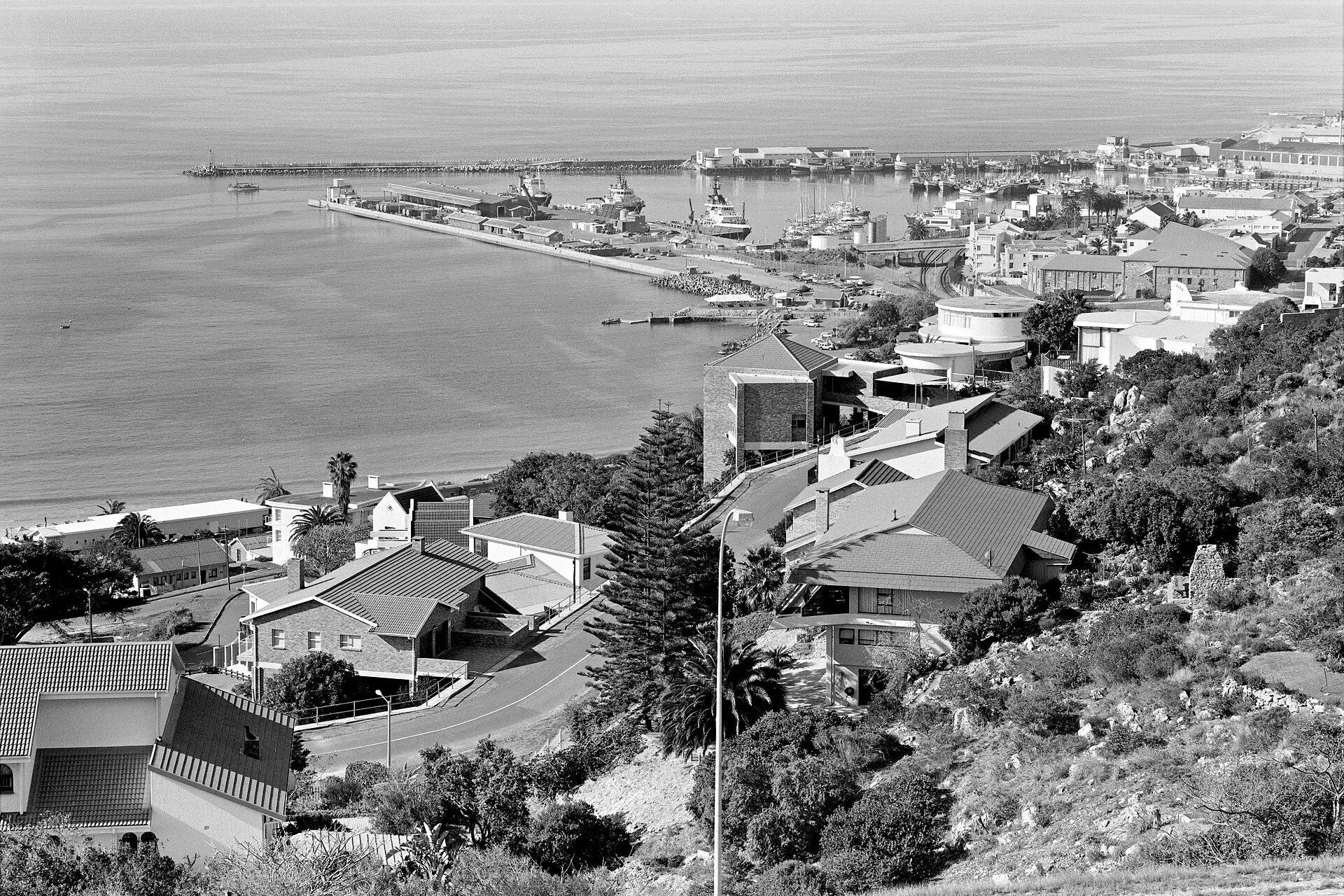
Mossel Bay, South Africa, 2008, on 6x7 black and white filmPhoto: Dawidl (talk), CC BY-SA 3.0 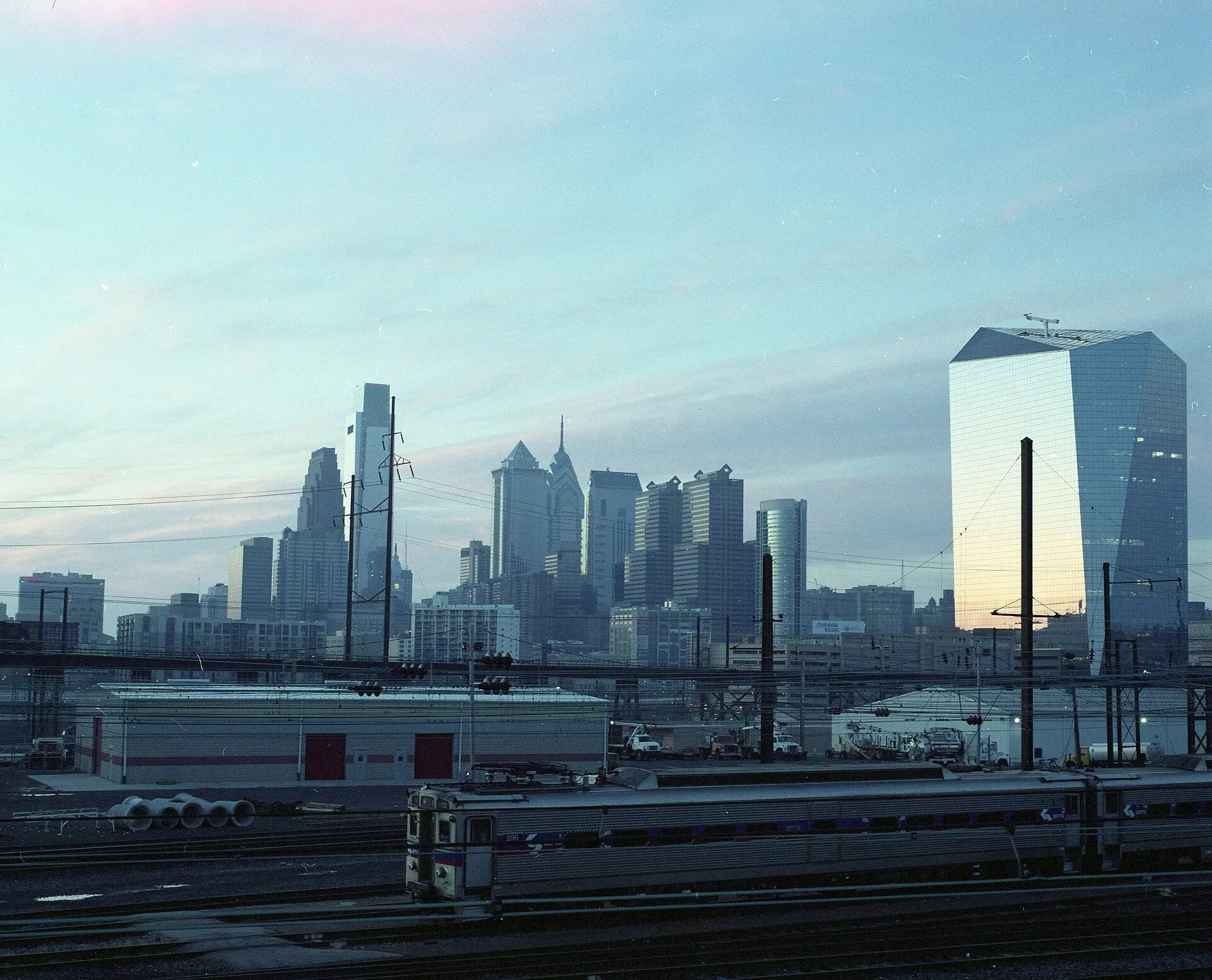
Philadelphia, about 2008, on Fujifilm color filmPhoto: Mmatthias, CC BY-SA 3.0
How much is a Mamiya RB67 worth in 2026?
A working RB67 needs four parts: body, finder, film back and lens. On October 28, 2026, a complete kit listed at $599.95 at Unique Photo (Pro S with waist-level finder, 90mm lens and 120 back, Good condition, out of stock), and Brooklyn Film Camera listed serviced RB67s with a lens at $850 and $900 (both sold out, 6-month warranty); those two listings do not say which finder or back come with them. Buying the parts separately at K&M Camera came to $899.97: $399.99 for a body with waist-level finder, plus $199.99 for a 120 back, plus $299.99 for a 90mm f/3.8 lens, close to Brooklyn's $900.
Unique Photo (New Jersey)
Used, Good; out of stock, Pro S with waist-level finder, Sekor 90mm f/3.8 C lens and 120 back
$599.95
See listingBrooklyn Film Camera (Brooklyn, NY)
Serviced in-house, new light seals, 6-month warranty; sold out, RB67 with 65mm f/4.5 Mamiya-Sekor lens; listing does not say which finder or back are included
$850.00
See listingBrooklyn Film Camera (Brooklyn, NY)
Serviced, 6-month warranty; sold out, RB67 with 127mm lens; listing does not say which finder or back are included
$900.00
See listingK&M Camera (New York, NY)
Used, store grade 9, Body with waist-level finder, no lens or back
$399.99
See listingK&M Camera (New York, NY)
Used, store grade 8, Pro S body only
$499.99
See listingK&M Camera (New York, NY)
Used, store grade 8, 120 film back
$199.99
See listingK&M Camera (New York, NY)
Used, store grade 9, Mamiya-Sekor 90mm f/3.8 lens
$299.99
See listingK&M Camera (New York, NY)
Used, store grade 8, Sekor 180mm f/4.5 lens
$299.99
See listingK&M Camera (New York, NY)
Used, store grade 7, Eye-level prism finder, no meter
$249.99
See listingGreen Mountain Camera (Vermont)
Used, tested, cosmetic 8; seals and mirror foam need replacing; out of stock, Pro S body with waist-level finder, 120 back and grip
$129.00
See listingDistrict Camera
Used, Chimney finder only
$99.00
See listingKamerastore (international)
Restored, 12-month warranty; in stock, Pro SD body with waist-level finder, no lens
$1,228.00
See listingKamerastore (international)
Certified to restored, Pro SD units on the same listing page
$1,142.00 to $1,530.00
See listing
Prices checked on October 28, 2026. They move every week, so treat them as a range, not a quote. eBay sold prices, KEH, MPB, B&H and Adorama were blocked or would not load without JavaScript, so none appear here. Kamerastore is an international retailer that prices in US dollars and adds duties and taxes at checkout. Owners' older figures run lower: Fstoppers said roughly $300 for a Pro-S in good condition in 2020, and a Light Leaks writer said a complete setup could be found for around $500 in early 2026.
Video reviews worth your time

Mamiya RB67 Pro SD - Long Term Review
The Mamiya RB67 is a highly modular, excellent value entry into 6x7 medium format film photography, though its size and weight make it cumbersome when fully outfitted with eye-level viewfinders.

Mamiya RZ67 vs RB67 - Which one should YOU buy?
The Mamiya RB67 is a fully mechanical, highly reliable, and budget-friendly medium format camera that offers great value despite its cumbersome two-step winding and bulky feel.

Mamiya RB67 5 Year Review - Before You Buy
The Mamiya RB67 delivers outstanding image quality and benefits from a fully mechanical, repairable design, but its immense weight, complex operation, and frequent mechanical flaws make it challenging for handheld or casual photography.

Nothing Beats This Camera, Right? // Mamiya RB67 Review
The Mamiya RB67 is an affordable, fully mechanical medium format camera that serves as a reliable studio workhorse, though its heavy weight limits portability.

8 Years of Shooting With the Mamiya RB67
The reviewer considers the Mamiya RB67 an outstanding medium format camera that delivers exceptionally sharp images and versatile features, despite its heavy and bulky design.
Specifications
Camera
- Production
- 1970 to 2010
- Frames per roll
- 10 frames of 6x7 on 120
Shutter, mount and focusing
- Flash sync
- All shutter speeds
- Flange distance
- 110 mm
Standard lens and viewing
- Standard lens
- Mamiya-Sekor 90mm f/3.8 C
- 90mm f/3.8 C design
- 7 elements in 5 groups, 52 degree field of view, 17.6 in minimum focus
- 35mm equivalent
- Multiply focal length by 0.48 (90mm is about 44mm)
Questions people ask about the RB67
Is the Mamiya RB67 a good camera?
For tripod, studio and close-up work, owners rate it very highly: all 12 comments on image results are positive and 11 of 12 praise the build. It is fully mechanical, so it runs without batteries. The catch is weight and pace: 13 of 16 comments on size are negative, and it rewards slow, deliberate shooting rather than street or travel work.
Sources: landandcolors.com, photographyreview.com, brooktreefilmlab.com
Why won't my Mamiya RB67 shutter fire?
Usually an interlock. Check that the dark slide is out (the manual says the release cannot be pressed with it fully inserted), the cocking lever went all the way, the film has been advanced and the back is clicked fully into horizontal or vertical. On older lenses, a selector left on M (mirror up) means the body release only raises the mirror and the shutter fires from a cable release on the lens. One Pro-SD owner traced his problem to a bent metal track in the revolving back, and sticky lens shutters need a CLA.
Sources: thephotoforum.com, flickr.com, rb67.helluin.org, rb67.helluin.org
Why won't the film wind on my RB67?
The back's advance depends on pins between body and back, and a forum regular says those pins often get bent or dirty because people rest the camera on them. Make sure the revolving back is clicked in properly, since the same forum regular says a back that is not fully clicked in also blocks normal operation. One owner fixed his by straightening a slightly bent actuating wire with small pliers.
Sources: thephotoforum.com, rb67.helluin.org
Do I need a light meter for the Mamiya RB67?
Yes, or a phone app. The body has no meter and the metered prism finders are heavy and expensive, so most owners meter by hand. At close focus, add exposure for the bellows extension using the scale on the side of the body.
Sources: photoethnography.com, emulsive.org, fstoppers.com, retro-pixel.com
Can you handhold the Mamiya RB67?
Yes, for short stretches. The leaf shutter causes little vibration: one owner calls 1/60 totally usable and another got reasonably sharp handheld frames below 1/30. The weight is the limit, since Fstoppers' reviewer found handheld shooting possible but painful over a full day; Kyle McDougall's long-term review says the official left-hand grip helps a lot.
Sources: lightleakss.substack.com, emulsive.org, fstoppers.com, youtube.com
Mamiya RB67 vs RZ67 or 645: which should you buy?
Pick the RB67 for a fully mechanical, battery-free camera and lower used prices; TalkPhotography members who know both lean RB for extreme conditions. Pick the RZ67 for an electronic shutter, a slightly lighter body and more modern lenses: Brooklyn Film Camera's price guide put it at $2,000-2,450 on October 28, 2026, and RB lenses mount on an RZ but RZ lenses do not fit an RB. Pick the Mamiya 645 for something you can carry: its first model, the M645, was built from 1975 to 1987, and on October 28, 2026 K&M Camera listed a used 645E at $1,000.00 and an M645 1000S at $849.99 (out of stock).
Sources: brooktreefilmlab.com, talkphotography.co.uk, rb67.helluin.org, youtube.com, brooklynfilmcamera.com, en.wikipedia.org, kmcamera.com, brooklynfilmcamera.com
How heavy is the Mamiya RB67?
About 5.9 lb (2,690 g) with a lens and 120 back: Photoethnography lists that weight with a 127mm lens, and Wikipedia gives the same 2.69 kg. A prism finder adds more, and one reviewer could hold the camera at eye level with a prism for only a few seconds. Owners shooting landscapes plan on a sturdy tripod.
Sources: photoethnography.com, en.wikipedia.org, emulsive.org, thephotoforum.com
Can the Mamiya RB67 still use 220 film?
The 220 backs still work, but owners say 220 film is no longer made, and one dates the end of production to 2015. Use 120 film, which gives 10 frames of 6x7 per roll. A former user says he ran 120 through a 220 back and had to keep track of his shots himself so as not to go past 10.
Sources: deployant.com, landandcolors.com, brooklynfilmcamera.com, thephotoforum.com
What people compare it with
Mamiya RZ67
The same 6x7 family with an electronic shutter, a slightly lighter body and more modern lenses, per Brooktree Film Lab's 2025 comparison. Brooklyn Film Camera's price guide put it at $2,000-2,450 on October 28, 2026, and RB lenses fit the RZ but not the other way round.
The classic square 6x6 rival. Brooklyn Film Camera's price guide put the 500CM at $4,200 on October 28, 2026, against $850 to $900 for its serviced RB67s (both sold out).
Mamiya 645 (1000s, Super, Pro)
Smaller 6x4.5 frames, 15 or 16 per roll, with an eye-level prism and grip. Brooklyn Film Camera calls it the one to carry and the better pick for street, travel and events.
Pentax 67
The same 6x7 negative, but with a focal-plane shutter instead of leaf shutters in the lenses. Photoethnography's 2011 page names it and the Hasselblad as better ideas for street work.
Every source behind this page
Read them yourself. How we pick and count them is in our methodology.
Show all 65 sources
Manuals and references 30
- aki-asahi.com: Mamiya RB-67 Light Seals Replace Kit | Aki
- ausgeknipst.de: Mamiya Battery Type for Every Film Camera Model
- batteryjunction.com: Duracell PX 28L L544 6V Lithium (LiMNO2) Battery - 1 Piece
- bluemooncamera.com: repair faq
- brooklynfilmcamera.com: Best Medium Format Film Cameras for Beginners (2026 Guide)
- brooklynfilmcamera.com: How Much Is a Film Camera? 2026 Prices by Type
- brooklynfilmcamera.com: Film Camera Repair Cost
- brooklynfilmcamera.com: Mamiya RB67 | 65mm 4.5 Mamiya
- brooklynfilmcamera.com: Search
- en.wikipedia.org: Mamiya 645
- en.wikipedia.org: Mamiya RB67
- ictcamera.com: ICT Camera Services
- kamerastore.com: Mamiya RB67 Pro SD - Camera
- kamerastore.com: Mamiya RB67 Pro SD + Waist Level Finder
- kmcamera.com: Used Mamiya RB67 Medium Format Camera Body w/ Waist Level Finder
- kmcamera.com: Search
- kmcamera.com: Search
- rb67.helluin.org: Mamiya RB67 Camera Guide
- rb67.helluin.org: Accessories
- rb67.helluin.org: Backs
- rb67.helluin.org: Lenses
- rb67.helluin.org: Using
- batteryjunction.com: Energizer A544 28A 140mAh 6V Alkaline Button Top Photo Battery - Equiv
- districtcamera.com: Search
- etonephoto.com: Professional Made Replacement Bellows For Mamiya RB67 RZ67 6x7 Camera - eTone
- gmcamera.com: Used Mamiya RB67 Pro S w/ Waist Level Finder 120 Rotating Back
- pacificrimcamera.com: 00223.pdf
- precisioncameraworks.com: PCW
- precisioncameraworks.com: Mamiya
- uniquephoto.com: Used Mamiya RB67 Pro S w/ WL Finder, 90mm 3.8 C, and 120 Back
Independent blogs 16
- Land & Colors: Mamiya RB 67: Mamiya RB 67
- Photoethnography: Mamiya RB67 Pro: Mamiya RB67 Pro - Photoethnography.com's Classic Camera ...
- Alex Luyckx: CCR Review 40, Mamyia RB67: CCR Review 40
- RPeterThomas Photographic: Film Friday, Mamiya RB67: Mamiya RB67
- Brooktree Film Lab: Why I'll Die with a Mamiya RB67 in My Hands: Why I'll Die with a Mamiya RB67 in My Hands
- Retro Pixel: The Mamiya RB67 Pro S: The Mamiya RB67 Pro S
- Create Moore Media: Mamiya RB67 Review and Sample Photos: Mamiya RB67 Review and Sample Photos
- LIGHT LEAKS: one year with the Mamiya RB67: one year with the Mamiya RB67
- Deployant: TGIFridays, Review of the vintage Mamiya RB67 Pro SD: TGIFridays: Review of the vintage Mamiya RB67 Pro SD
- Salvaged Circuitry: Reviving a Legend, Mamiya RB67 Repair: Reviving a Legend
- Mamiya RB67 Camera Guide: Bodies: Bodies
- Beyond the Aperture: Review, Mamiya RB67 Professional S: Review: Mamiya RB67 Professional S Medium Format Film Camera
- Martijn Roos: Mamiya RB67 Pro S Sample Images and Review: Mamiya RB67 PRO S 120mm Camera Sample Images and Review - Martijn Roos
- Roundeye Gallery: Mamiya RB67, The Joy Of Medium Format Film: Mamiya RB67: The Joy Of Medium Format Film - Roundeye Gallery | Jason Round
- Thomas C 137 Photo: Two Years with the Mamiya RB67 Pro-S: Two Years with the Mamiya RB67 Pro-S
- Soperfect Images: Mamiya RB67 ProS camera review: Mamiya RB67 ProS - Camera Reviews
Editorial reviews 6
- Fstoppers: A Long Term Review Of the Mamiya RB67 Pro-SD: A Long Term Review Of the Mamiya RB67 Pro
- Fstoppers: Five Times Bigger Than Full Frame at a Fraction of the Cost: Five Times Bigger Than Full Frame at a Fraction of the Cost
- Fstoppers: Getting Into Medium Format on a Budget: Getting Into Medium Format on a Budget: Fstoppers Reviews the Mamiya RB67
- EMULSIVE: Camera Review, Me and my Mamiya RB67 Pro-S: Camera Review: Me and my Mamiya RB67 Pro
- EMULSIVE: Camera review, Mamiya RB67 Pro-S, Scott McClarin: Camera review: Mamiya RB67 Pro-S, Scott McClarin
- Bright Hub: A Review of the Mamiya RB67 Pro SD Camera: A Review of the Mamiya RB67 Pro SD Camera
Forums 5
- The Photography Forum: Problem with a Mamiya rb67 pro-sd: Problem with a Mamiya rb67 pro
- The Photography Forum: Mamiya RB67 Film Winding Issue: Mamiya RB67 Film Winding Issue
- The Photography Forum: Mamiya RB67 -- is this the camera for me?: Mamiya RB67 -- is this the camera for me?
- Flickr Mamiya RB67 group: Discussing Shutter firing problem in Mamiya RB67: Discussing Shutter firing problem in Mamiya RB67
- Talk Photography: Mamiya Medium Format owners group: Mamiya Medium Format owners group | Page 10
Video reviews 5
- Kyle McDougall: Mamiya RB67 Pro SD - Long Term Review
- Willem Verbeeck: Mamiya RZ67 vs RB67 - Which one should YOU buy?
- William Sheepskin: Mamiya RB67 5 Year Review - Before You Buy
- TIPSinc: Nothing Beats This Camera, Right? // Mamiya RB67 Review
- linusandhiscamera: 8 Years of Shooting With the Mamiya RB67
Other 3
- Hackaday comments: Reviving A Legend, Mamiya RB67 Repair: Reviving A Legend
- photographyreview.com: Mamiya RB67 Pro SD user reviews: Mamiya RB67 Pro SD Medium Format user reviews : 4.5 out of 5 - 31 reviews
- photographyreview.com: Mamiya RB67 Pro SD user reviews, page 2: Mamiya RB67 Pro SD Medium Format user reviews : 4.5 out of 5 - 31 reviews
Keep reading
Film cameras
What 140 owner and reviewer opinions say about the Hasselblad 500C/M (500CM): used prices, serviced kits at $3,450-$4,200, batteries, CLA costs and jams.
Film cameras
What 158 owner and reviewer opinions say about the Mamiya 7 and 7II: used 7II bodies at $2,495-$4,095 in October 2026, the six lenses, faults and repairs.
Film stocks
35mm vs 120 film: common 120 frames are 2.7 to 5.4 times bigger than 35mm but give 8 to 16 shots a roll. Cost per frame, lab prices and which to pick.
Film cameras
Where to buy film cameras used in the US: KEH, MPB, B&H, local shops, eBay and thrift, with warranties, October 2026 prices and a checklist to test one.
Techniques and editing
The sunny 16 rule: f/16 at 1/ISO in clear sun, wider for clouds and shade. Chart by ISO, backlight fixes, zone focusing presets and how to meter film.
Developing and scanning
A roll of 35mm film costs $5 to $11.50 to develop at US labs, or $11.50 to $29 with scans. Prices from 12 labs and the big chains, checked October 2026.