Mamiya 7 and 7II: used prices, lenses and common faults
The short answer
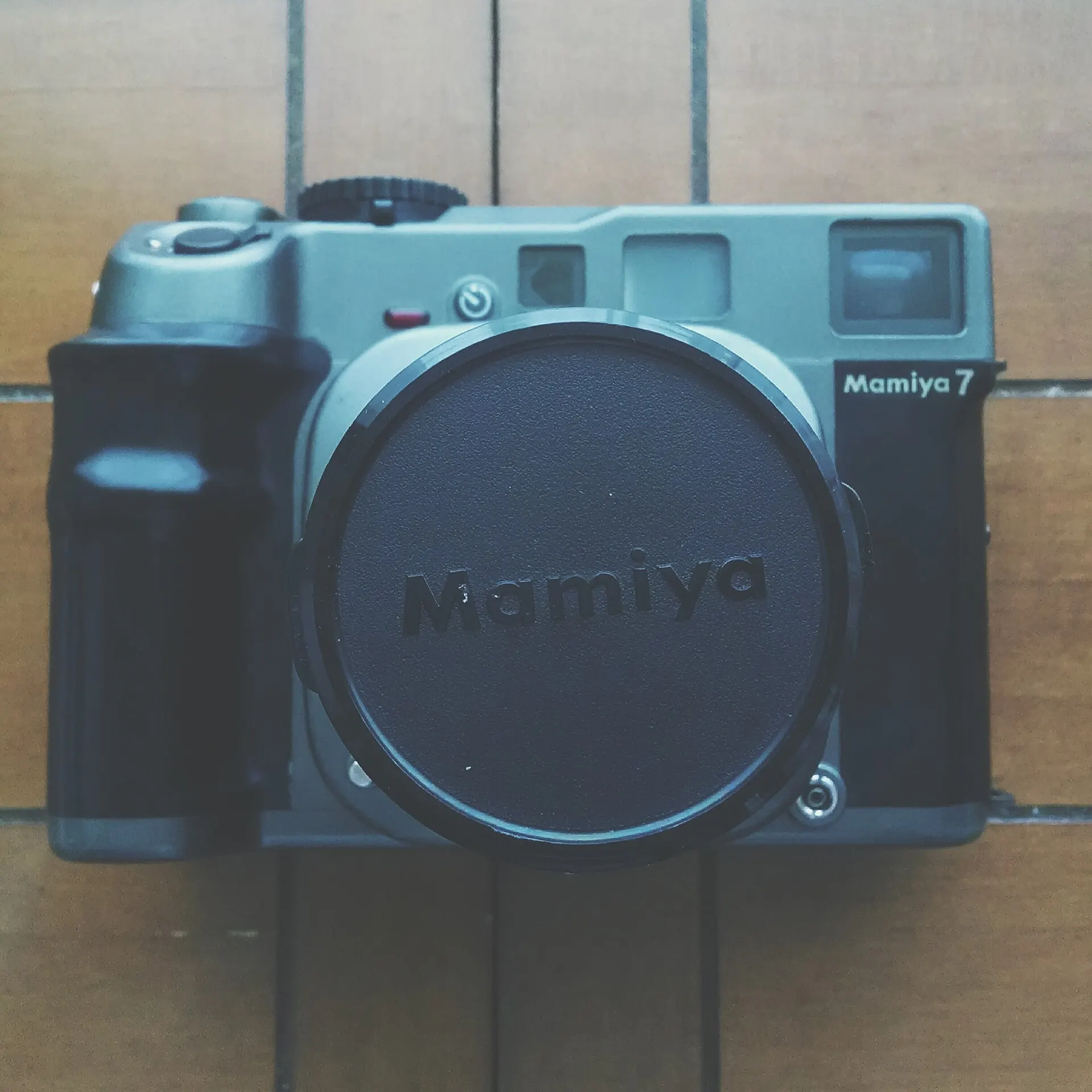
The Mamiya 7 (1995) and 7II (1999) are 6x7 medium format rangefinders that reviewers call probably the only interchangeable-lens 6x7 cameras light enough to travel with: about 1,210 g with the 80mm lens, against 2,235 g for a Pentax 6x7 in Hung Supply's comparison.
The catch is price and age: used 7II bodies listed at $2,495 to $4,095 in October 2026, the body is mostly plastic, and rangefinder adjustment and lens electronics are the usual repairs.
- Format
- 6x7 cm, 10 frames per 120 roll
- Lenses
- Six, 43mm to 210mm
- Weight
- 1,210 g with the 80mm
- Battery
- One 6V 4LR44 or 4SR44
Built from 158 opinions from 35 pages and videos. Not yet tested by Camera Dojo. Updated .
The short version
Across 158 opinions from owners, shop staff, reviewers and five YouTube reviews, the praise centers on the pictures and the handling. Image results get 14 positive comments out of 16, and all 11 comments on ease of use are positive. The Radavist's John Watson, who has carried his 7II for more than a decade, says the glass "could slice paper", and Philip Greenspun calls it probably the only interchangeable-lens 6x7 camera practical for travel or street photography.
The complaints are about age and money. Reliability is the most criticized topic, with 14 of 19 comments negative: rangefinders knocked out of adjustment, failed lens flex circuits and shutters that stop firing. Price is the other big complaint, with only 1 of 13 comments fully positive, and Drew Evans of Shoot It With Film, who loves his, says plainly that it is overpriced. Mamiya ended production in 2014, so even the newest copies are about 12 years old.
Good fit if
- You shoot landscapes, travel or street and want 6x7 negatives from a camera you can carry all day
- You are happy composing through a rangefinder and working mostly at 65mm or 80mm, where no external finder is needed
- You want a near-silent leaf shutter with flash sync at every speed up to 1/500
- You can spend $4,000 or more on a body and one lens and still keep money aside for a rangefinder adjustment
Think twice if
- You want close-ups or tight portraits: most lenses focus no closer than 1 m, and framing near that distance is approximate
- You need fast lenses for low light: the brightest lenses in the system are f/4
- You are hard on gear: owners report cracked plastic and broken rangefinders after short drops
- You want exact framing: at infinity the film records about 18% more than the frame lines show
- You want the cheapest way into 6x7: Matt Osborne of MrLeica calls a Mamiya RZ67 much cheaper than a 7, and the RB67 cheaper still, if you can carry the weight
What owners and reviewers say, topic by topic
We sorted 158 opinions about the Mamiya 7 from 35 pages and videos on 22 websites and channels. Each row shows how many people raised a topic and how many of them were positive. Open a row to read short quotes, each linked to its source.
Owner voices come mainly from long-form blogs and shop journals (35mmc, Shoot It With Film, The Radavist, Hung Supply, Beau Photo, MrLeica), Flickr's Mamiya 7 group, two repair technicians and five YouTube reviews. Reddit, Photrio, Rangefinderforum and Fred Miranda threads could not be read, and some sources are old (Greenspun 2000, PhotographyReview 1999-2005).
Reliability today21% positiveof 19
The most criticized topic, with 14 of 19 comments negative: rangefinder drift, lens flex-circuit and circuit-board failures, shutters that won't fire, advance faults and a hazy or separated 80mm. Four owners report years of dependable use, including through drops.
“Body needed RF adjustment.”
Ken Schwarz, PhotographyReview.com: Mamiya 7 65mm f/4 user reviews 1999-10Owner
“While light, the coverings tend to crack over time.”
Mark S., Beau Photo Supplies: The Mamiya 7, Is it Worth It? 2023-10Owner
“I and a few others have had circuit boards fail in the lens.”
Shinrin-yoku, Flickr, Mamiya 7 and 7II group: Shutter won't fire on Mamiya 7Owner
“the camera appears fully dependable”
Lenses58% positiveof 19
Largely positive, with 11 positive, 7 mixed and 1 negative. Owners call every lens sharp and compare the 65mm with Hasselblad glass; the mixed notes are the external finders for the 43mm, 50mm and 210mm, f/4 maximum apertures and no close-up option.
“The lenses are flawless and stellar, all of them.”
Alan, 35mmc: The Cost of the Mamiya 7 2024-07Owner
“All the lenses are sharp so that is not really an issue.”
“The Mamiya 7II lenses produce flare that is cooler in tone, often appearing purple or blue.”
Radostina Boseva, Shoot It With Film: The Mamiya 7II, What It Does Better and Worse 2026-02Owner
“having to remove and replace it every time one takes it out of, and returns it to the bag is a bit bothersome”
Viewfinder and focusing33% positiveof 18
Split, with 6 positive, 4 mixed and 8 negative. The patch is bright and quick to focus and some find the parallax correction exact, but owners complain the frame lines show only 80 to 90 percent of what reaches the film, close focus stops at 1 m and the 210mm can't be focused through the finder.
“the focusing patch will not move. It seems to be stuck at 1m.”
xviphgbe28, Flickr, Mamiya 7 and 7II group: Mamiya 7ii Problem with Focus Patch 2021-06Owner
“even with super careful framing you invariably would be cropping afterward”
Simon Casson, 35mmc: The Cost of the Mamiya 7 2024-07Owner
“the viewfinder is SO MUCH BRIGHTER”
Mark S., Beau Photo Supplies: The Mamiya 7, Is it Worth It? 2023-10Owner
“As someone that wears glasses everyday, I find the viewfinder to be somewhat finicky.”
Drew Evans, Shoot It With Film: Mamiya 7 Review, Does This Medium Format Rangefinder Live Up to the Hype? 2022-04Owner
Image results88% positiveof 16
14 of 16 comments are positive: owners describe very sharp, contrasty negatives with little distortion that hold up to big enlargements. Matt Osborne did not see the resolution advantage in real photos, and one former owner found the rendering sharp but lifeless.
“the pictures staggered me by their presence and quality”
agp, PhotographyReview.com: Mamiya 7 65mm f/4 user reviews 2005-04Owner
“The 43mm is extremely sharp, with very little distortion.”
“The glass could slice paper; it is so sharp, it's brutally honest.”
John Watson, The Radavist: Obscura, Sell the Bike, Keep the Camera, A Mamiya 7ii Review 2024-04Owner
“The sharpness and contrast from the Mam 7 are just out of this world.”
Anant Deboor, Steve Huff Photo: Friday Film, Mamiya 7 Review by Garry Taylor 2011-05Owner
Controls and features57% positiveof 14
8 positive and 6 negative. The quiet leaf shutter, flash sync at every speed, the self-timer and the finder LED for manual exposure win praise; the complaints are full-stop manual settings, a springy multi-function dial, a hair-trigger release and parallax near 1 m.
“However it seems the original 135 adapter is the way to go if I will shoot a lot of 35mm on the Mamiya.”
Xinghua Zhao, MrLeica.com (Matt Osborne): Mamiya 7 35mm Review 2023-06Owner
“the shutter release button is quite sensitive though, so I have to beware not to accidentally trigger it”
Filip Wawer, 35mmc: Mamiya 7ii, Rollei RPX25 and an Old Datsun 120Y 2021-05Owner
“the camera has a timer, which is awesome for when we travel”
“the lone dial atop the camera is both tactile and easy to manage”
Mark S., Beau Photo Supplies: The Mamiya 7, Is it Worth It? 2023-10Owner
Price and value8% positiveof 13
Only 1 of 13 comments is fully positive. Owners and reviewers agree it is expensive, several call it overpriced, and long-time owners note how far prices have risen since the 2010s; a few say the quality still justifies it for working photographers.
“Now I couldn't afford to buy it all back it's become so expensive.”
Art Meripol, 35mmc: Plus X and a Mamiya 7II in Venice 2026-08Owner
“Simply put, the Mamiya 7 is overpriced. There's really no way around that.”
Drew Evans, Shoot It With Film: Mamiya 7 Review, Does This Medium Format Rangefinder Live Up to the Hype? 2022-04Owner
“The Mamiya 7 is expensive. There's no denying that.”
Mark S., Beau Photo Supplies: The Mamiya 7, Is it Worth It? 2023-10Owner
“finally finding a Mamiya 7ii for cheap ($800 for the body plus the 80 mm lens) in 2012”
John Watson, The Radavist: Obscura, Sell the Bike, Keep the Camera, A Mamiya 7ii Review 2024-04Owner
Size and weight75% positiveof 12
9 of 12 comments are positive: owners call it compact and light for 6x7, at 1,210 g with the 80mm. One finds about 1.4 kg with the 50mm too heavy for hiking, and one commenter calls it big and awkward.
“Big maybe compared to 35mm, but for medium format it's downright compact”
Mark A. Sperry, Steve Huff Photo: Friday Film, Mamiya 7 Review by Garry Taylor 2010-08Owner
“It's quiet, efficient, and remarkably portable for a medium format film camera.”
Radostina Boseva, Shoot It With Film: The Mamiya 7II, What It Does Better and Worse 2026-02Owner
“Incredible camera for travel. Small but with beautiful 6X7 negatives. Tiny but brilliant lenses.”
Art Meripol, 35mmc: Plus X and a Mamiya 7II in Venice 2026-08Owner
“I doubt lugging 1.4 kilograms around the neck for hiking is a good idea.”
Shiang Liew, The CWO: ANALOGUE, Mamiya 7ii 2020-06Owner
Ease of use100% positiveof 11
All 11 comments are positive. Owners call it intuitive to learn and comfortable to hold, praise the single top dial and the angled grip, and Philip Greenspun got a higher keeper rate than with the Canon EOS system he had used for six years.
“The Mamiya 7ii is a very comfortable camera to shoot with”
Filip Wawer, 35mmc: Mamiya 7ii, Rollei RPX25 and an Old Datsun 120Y 2021-05Owner
“I personally found the Mamiya 7 very intuitive to pick up and learn.”
Morgan Rudolph, Hung Supply Magazine: Road Test, Mamiya 7 2023-09Owner
“The '7 is better as a point and shoot camera, less setup time required”
MrLeica.com (Matt Osborne): Mamiya 7 Review, 5 Reasons Not to Buy 2018Owner
“the single dial on the top of the camera is tactile and easily maneuverable”
Drew Evans, Shoot It With Film: Mamiya 7 Review, Does This Medium Format Rangefinder Live Up to the Hype? 2022-04Owner
Build quality18% positiveof 11
Mostly negative, 6 of 11 comments. Owners call the plastic body fragile and report cracks after drops or heavy tripod use; two find it solid, one saying it feels like a tank.
“These are really fragile cameras.”
Jeff Wieser, Flickr, Mamiya 7 and 7II group: Broke my 7. Be Careful 2012-01Owner
“the Mamiya 7 has more than average and the body can feel a bit fragile at times”
Drew Evans, Shoot It With Film: Mamiya 7 Review, Does This Medium Format Rangefinder Live Up to the Hype? 2022-04Owner
“In regards to quality and body rigidity, it feels like a tank.”
Shiang Liew, The CWO: ANALOGUE, Mamiya 7ii 2020-06Owner
“It is often said that the Mamiya 7 takes amazing photos, but the build quality of the camera is only so-so.”
Steve Huff Photo: Friday Film, Mamiya 7 Review by Garry Taylor 2010-08Owner
Light meter and exposure50% positiveof 10
Mostly favorable, with 5 positive, 4 mixed and 1 negative. Owners rate the meter as accurate in aperture priority, but its fixed angle changes the pattern with each lens, backlight needs extra exposure, and Greenspun found full-stop manual control hard with slide film.
“The light meter is pretty darn good and the ergonomics are wonderful.”
Charles Kronauer, Shoot It With Film: Mamiya 7 Review, Does This Medium Format Rangefinder Live Up to the Hype? 2022-04Owner
“not using a meter this accurate to its fullest potential would be a crime”
Mark S., Beau Photo Supplies: The Mamiya 7, Is it Worth It? 2023-10Owner
“The Mamiya's meter is somewhat unpredictable, as it is somewhere between a spot meter and a centre weighted one”
Steve Huff Photo: Friday Film, Mamiya 7 Review by Garry Taylor 2010-08Owner
“the meter has a constant angle of view, which in effect changes its pattern when lenses of different focal lengths are used”
Repairs and servicing63% positiveof 8
5 positive, 1 mixed and 2 negative, mostly from 2010-2012 Flickr threads, when owners praised Mamiya's US, German and Japanese service. Today independent technicians such as Bill Rogers do the work, and William Sheepskin says qualified ones are few.
“I had a total CLA on both of them and payed 700.00 you would think they would fix it.”
Rotated-Axis, Flickr, Mamiya 7 and 7II group: Shutter won't fire on Mamiya 7 2011-10Owner
“I also service all the lenses for Mamiya 7/7II and have equipment to adjust and restore them to factory specifications.”
Mamiya Repair (Bill Rogers): Mamiya 7 Body and Lenses 2020-09
“Thanks to Mamiya Service in Germany my Mamiya7 is like new again.”
Johan Stam, Flickr, Mamiya 7 and 7II group: Shutter won't fire on Mamiya 7Owner
“who in turn sent it to Mamiya Japan, where they did a terrific job”
Henri-Antoine, Flickr, Mamiya 7 and 7II group: Shutter won't fire on Mamiya 7Owner
Film availability25% positiveof 4
Only four comments. Matt Osborne notes 120 is cheaper and easier to process than 4x5 sheet film and the 35mm adapter opens up more stocks, but owners feel the cost of color film and lab fees, and E6 slide developing is expensive and hard to find.
“good E6 developing can be both expensive and hard to come by”
Sam Westenskow, 35mmc: 5 Frames along the Oregon Coast with the Mamiya 7ii and Kodak Ektachrome E100 2026-07Owner
“120 film is easier to process and cheaper to buy”
MrLeica.com (Matt Osborne): Mamiya 7 Review, 5 Reasons Not to Buy 2018Owner
“very conscious of the cost of color film and developing”
Andrew, 35mmc: The Cost of the Mamiya 7 2024-07Owner
“one further benefit of loading 35mm film is it gives access to a much broader range of film stocks”
Batteries and power100% positiveof 3
Only three comments, all positive: a repair technician says drain is low, and owners say a 4LR44 lasts for years or that one or two cells cover a year. No one gives a rolls-per-battery figure.
“Plus, the camera's 4LR44 battery seemingly lasts for years”
John Watson, The Radavist: Obscura, Sell the Bike, Keep the Camera, A Mamiya 7ii Review 2024-04Owner
“this camera does not drain the batteries much”
awayrepairs (LiveJournal): Mamiya 7II after popular local repairman + 65mm metering issue 2022-08
“So with one or two refills you could have the whole year covered.”
Jorge Ferrufino, Dusty Grain: Mamiya 7 Review, Is This The Best Camera Ever Made? 2022-11
PositiveMixedNegative
How to load and shoot the Mamiya 7
The camera is electronic, so it does nothing without a 6V battery, and the built-in dark slide (a light curtain) is behind several of the questions owners post on MrLeica and in Flickr threads. Philip Greenspun warns it is not a camera you can just grab and go, so walk through these steps once before loading a roll you care about.
- 1
Fit a fresh battery
Fit one 6V cell: 4LR44 alkaline or 4SR44 silver oxide. MrLeica says a blinking shutter-speed LED at the bottom left of the finder means the battery is low.
- 2
Close the dark slide and open the back
MrLeica suggests closing the dark slide (twist the dial on the base) while loading, to keep dust off the inside of the lens. Release the back with the switch on the left-hand grip and press the spool release buttons inside the bottom of the film chamber.
- 3
Set the pressure plate for 120 or 220
Rotate the pressure plate inside the back to match your film; this also changes the film index window. A roll of 120 gives ten 6x7 frames and 220 gives 20.
- 4
Line up the start arrow
Put the new roll in, thread the backing paper onto the take-up spool on the right and line up the start arrow on the paper with the start mark on the body. Close the back and advance the film; loading is semi-automatic from there.
- 5
Set the film speed
Lift the outer ring of the shutter speed dial and turn it to your film's ISO. The range is ISO 25 to 1600.
- 6
Open the dark slide and take off the lens cap
MrLeica lists a dark slide still in place as a possible cause when the shutter won't fire, so open it before the first frame. Take the lens cap off too: you look through a separate finder, so you won't see the cap.
- 7
Shoot in A, AEL or manual
Set the aperture on the lens, leave the dial on A and the camera picks the shutter speed, shown by an LED in the finder. AEL locks the speed when you half-press the release so you can recompose, and compensation runs plus or minus 2 EV in 1/3 steps.
- 8
Close the curtain to change lenses
The lens will not come off unless the dark slide is closed, which protects the film, so you can swap lenses mid-roll. Open it again before the next shot.
Sources: mrleica.com, camera-wiki.org, olegnovikov.com, kamerastore.com
Mamiya 7 lenses: the six options and which need an external finder
Mamiya made six lenses for the 7 and 7II: 43mm f/4.5, 50mm f/4.5, 65mm f/4, 80mm f/4, 150mm f/4.5 and 210mm f/8, each with its own leaf shutter. Only the 65mm, 80mm and 150mm have frame lines in the camera's finder; the 43mm, 50mm and 210mm need an external finder in the hot shoe, which Matt Osborne of MrLeica calls big and expensive. Sources disagree on the 150mm: Hung Supply's table says it needs a finder, while Oleg Novikov says an optional one exists but most users find it unnecessary.
The 80mm is the smallest and lightest lens at 290 g, but Osborne says the 65mm, close to a 32mm view in 35mm terms, may be the more practical single lens. Novikov says most owners settle on three lenses, for example 50, 80 and 150mm, and the 50mm and 150mm share a 67mm filter thread. Owners rate every lens in the line as sharp, so the choice comes down to focal length.
The 210mm is the odd one out: it does not couple to the rangefinder and focuses no closer than 7 m, so you estimate distance by hand. Osborne loves it anyway. Whatever you buy, Novikov suggests reading the depth-of-field scales at least one stop conservatively. In October 2026 Kamerastore's US store had sold out of both the N 80mm and N 65mm at $1,462 each.
| Lens | Framing | Closest focus | Weight |
|---|---|---|---|
| 43mm f/4.5 | External finder | 1 m | 390 g |
| 50mm f/4.5 | External finder | 1 m | 456 g |
| 65mm f/4 | Built-in frame lines | 1 m | 380 g |
| 80mm f/4 | Built-in frame lines | 1 m | 290 g |
| 150mm f/4.5 | Built-in frame lines (Hung Supply lists an external finder) | 1.8 m | 520 g |
| 210mm f/8 | External finder, not coupled to the rangefinder | 7 m | 481 g |
Check any N 80mm f/4 L for haze on the rear element before you pay: a repair technician who owns one calls haze that lens's one big issue.
Sources: olegnovikov.com, en.wikipedia.org, hungsupply.com, mrleica.com, mrleica.com, kamerastore.com, kamerastore.com, awayrepairs.livejournal.com
Mamiya 7 battery: 4LR44, 4SR44 or 2CR1/3
The Mamiya 7 and 7II run on one 6V cell. Kamerastore lists the 7II's battery as 4LR44 (alkaline), and Camera-wiki and Shoot It With Film give 4SR44 (silver oxide) or 2CR1/3 (lithium). The camera will not work at all without one: MrLeica points out that the shutter is electronic and needs a battery to operate.
The easy US replacement is the Energizer A544, a 6V alkaline cell sold as a 4LR44 equivalent, at $4.75 from Battery Junction on October 28, 2026. The silver oxide Exell S28PX (4SR44) was $12.25. For lithium, batteryequivalents.com says two 3V CR11108 cells replace one 6V 2CR1/3N, so don't confuse that 6V pack with a single 3V CR1/3N.
Drain is low. The Radavist's John Watson says his 4LR44 seemingly lasts for years, and Dusty Grain's reviewer figures one or two batteries cover a whole year. If the shutter-speed LED at the bottom left of the finder starts blinking, the battery is low, MrLeica says, so carry a spare on long trips.
Our film camera battery finder lists the cells for other film cameras too.
Sources: kamerastore.com, camera-wiki.org, shootitwithfilm.com, mrleica.com, batteryjunction.com, batteryjunction.com, batteryequivalents.com, theradavist.com, dustygrain.com
Metering, exposure and flash on the Mamiya 7
The meter reads through its own window on the body, not through the lens, and its angle never changes. Oleg Novikov says that makes it center-weighted with the 80mm, roughly averaging with the 150mm and almost a spot meter with the 43mm, and you must add exposure yourself when you use filters. William Sheepskin's video notes that the sensitive area sits a little below and to the right of the rangefinder patch.
Owners mostly trust it. The Radavist's John Watson rates it among the most accurate meters on any film camera he has used, and Stephen Milner found it closely matches an external spot meter. Richard de Bulat of Soperfect Images suggests a stop of extra exposure for backlit subjects, and Garry Taylor got a couple of badly off frames in four rolls.
Manual mode is coarser than on most cameras: shutter speeds and aperture clicks are full stops only, which is why Novikov and Greenspun find it awkward for slide film. The top speed is 1/500, so in midday sun Taylor suggests slow film or an ND filter. On the plus side, the leaf shutter syncs with flash at every speed through the hot shoe or PC terminal, and with no mirror Novikov gets sharp handheld frames at slower speeds than usual.
Sources: olegnovikov.com, youtube.com, theradavist.com, youtube.com, soperfectimages.co.uk, stevehuffphoto.com, philip.greenspun.com, camera-wiki.org
Best film for the Mamiya 7: 120, 220 and 35mm panoramic
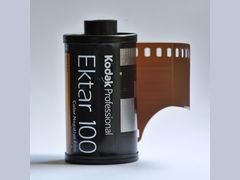 Ektar 100
A roll of 120 gives ten 6x7 cm frames and 220 gives 20. Owners shoot every kind of film: The Radavist's photos are on Kodak Ektar 100 and Portra 400, Drew Evans of Shoot It With Film shows Portra 400 and 800, and Garry Taylor rated Portra 160VC at ISO 100 to give it half a stop of extra exposure. If medium format is new to you, our guide to 35mm vs 120 film covers the basics.
Slide film shows off the lenses but costs more to finish. 35mmc's Sam Westenskow, who shoots Kodak Ektachrome E100 in his 7II, says good E6 developing is expensive and hard to find; he names Nichols Photo Lab and The FIND Lab as the two Utah labs he knows that develop E6 in house, and prefers Nichols for its lower price, $8.50 for 120 instead of $18.00. Our table of film developing costs compares lab prices.
With Mamiya's 35mm panoramic adapter kit, a 36-exposure roll gives 16 frames of 24 x 65 mm, and Kamerastore listed a used adapter set at $737. MrLeica says the official kit lets you rewind the film in daylight, while cheaper 3D-printed adapters work but mean unloading in a changing bag.
Sources: en.wikipedia.org, theradavist.com, shootitwithfilm.com, stevehuffphoto.com, 35mmc.com, camera-wiki.org, kamerastore.com, mrleica.com
How to check a used Mamiya 7 before you buy
Independent technician Bill Rogers says rangefinder adjustment is most of his Mamiya 7 work, and lens electronics fail too, so bring a fresh battery and, if you can, a second lens. Our guide on where to buy used film cameras covers sellers and return policies.
- 1
Check the rangefinder far and near
Focus on something at infinity and on something about 1 m away and confirm the patch merges where the lens scale says. If the images are offset vertically, center your eye in the eyepiece first: a forum user quoted on Tom Westbrook's page says looking off-center can cause it.
- 2
Test every lens on the body
If the overexposure LED keeps blinking with a fresh battery, try another lens before blaming the body; in Flickr group threads the fault traced back to the lens more than once. A Flickr group member advises cleaning the gold contacts on body and lens with a soft pencil eraser first.
- 3
Dry fire it the right way
With no film loaded, the shutter only fires with the back open, or on a 7II with the multiple exposure switch on, a Flickr group member says, citing the manual. A camera that won't fire with the back closed and no film is normal.
- 4
Work the dark slide and lens release
Close the curtain, take each lens off, refit it and open the curtain again. After one owner's two-foot fall, the light curtain would not close and the 43mm was stuck on the body.
- 5
Look for cracks and dust
Beau Photo says the plastic top and bottom covers tend to crack over time, and Hung Supply found dust getting into the unsealed viewfinder. Willem Verbeeck says heavy tripod use cracked his baseplate.
- 6
Inspect the 80mm for haze
Shine a light through any N 80mm f/4 L and look at the rear element, where haze usually starts according to a repair technician who owns one. He says it tends to appear after a change in humidity or temperature, such as carrying the camera from winter streets into a warm room.
- 7
Buy with a return window
Ask for a service history and buy where you can send it back: Looking Glass Photo, for example, gave a 30-day guarantee on its 7II in October 2026.
Sources: mamiyarepair.com, tomwestbrook.com, flickr.com, flickr.com, flickr.com, beauphoto.com, hungsupply.com, youtube.com, awayrepairs.livejournal.com, lookingglassphoto.com
Known problems and what fixing them costs
These are the faults owners and repairers report most. Repair figures are dated forum reports or general price lists from US shops that do not name the Mamiya 7, so get a written estimate before you commit.
Rangefinder knocked out of adjustment
Raised in 5 opinions
- How you notice
- The focusing patch no longer merges where the lens is actually focused, at infinity, at 1 m or vertically. A Flickr group owner says it does not take much to knock it out, and Willem Verbeeck says travel bumps can do it.
- Fix
- A technician checks the lens flange and adjusts the rangefinder for infinity, close range and vertical alignment. Bill Rogers (mamiyarepair.com, Las Vegas) says most of his Mamiya 7 and 7II work is rangefinder adjustment.
- Typical cost
- No current published price. Brooklyn Film Camera lists a full CLA on a premium compact or rangefinder at $250-400, though its page does not name the Mamiya 7. In a 2012 Flickr thread, a member said Nippon in New York quoted lowest for a rangefinder calibration.
Sources: mamiyarepair.com, flickr.com, tomwestbrook.com, brooklynfilmcamera.com
Blinking overexposure light or a lens the meter ignores
Raised in 4 opinions
- How you notice
- The overexposure LED keeps blinking with a fresh battery, or exposures ignore the aperture you set. Owners traced it to a broken track in the lens flex circuit, and a repair blogger found a broken flex cable in a 65mm that stopped it reporting its aperture to the body.
- Fix
- Swap lenses to see whether the fault follows the lens, then clean the gold contacts with a soft pencil eraser. If it persists, the lens flex circuit needs repair or replacement.
- Typical cost
- 2010 forum figures: $175 for a local shop to replace a lens flex PCB, about GBP 60 in the UK, and $135 for an erratic meter on KEH's repair menu at the time. Old figures, not current quotes.
Sources: flickr.com, awayrepairs.livejournal.com
Shutter will not fire, or fires only once per roll
Raised in 5 opinions
- How you notice
- The shutter stays dead with film loaded, or fires only on the first frame. William Sheepskin calls the advance lever spring a known failure point that can disengage the frame counter and lock the shutter.
- Fix
- Rule out the simple causes first: battery orientation, dirty contacts and a closed dark slide. Then dry fire with the back open, the way the camera is meant to fire without film. If it still fails it needs a technician; one Flickr owner says circuit boards in the lenses have failed for him and others.
- Typical cost
- In a 2011 Flickr thread a buyer paid $700 for a CLA on body and lens and it still would not fire. As a general benchmark, Precision Camera & Video in Austin lists a film camera CLA at $150 for most cameras and $175 for some professional models.
Sources: flickr.com, precision-camera.com, youtube.com
Hazy or separated N 80mm f/4 L lens
Raised in 2 opinions
- How you notice
- Haze on the rear, sometimes front, element lowers contrast; the owner-technician says it tends to appear after a change in humidity or temperature, such as moving from winter streets into a warm room. A 35mmc writer's 80mm was a write-off from severe balsam separation.
- Fix
- Inspect before you buy. The technician's own fix was to open the lens and clean the surface, and the haze came back; he traces it to leaking cement in a cemented group and lists re-gluing the elements with modern optical adhesive as an option. The 35mmc writer's separated 80mm was written off.
- Typical cost
- No published US price for this repair. As benchmarks, Precision Camera & Video lists internal lens cleaning or fungus removal at $78.50-$228.50 and Brooklyn Film Camera a medium format lens CLA at $165-275; neither names the Mamiya 7.
Sources: awayrepairs.livejournal.com, 35mmc.com, precision-camera.com, brooklynfilmcamera.com
Damage from a drop
Raised in 4 opinions
- How you notice
- After a two-foot fall in a case, one owner's 7 would not wind, the light curtain would not close, the rangefinder was cracked and the 43mm was stuck on the body. Stephen Milner warns a cracked plastic body can leak light.
- Fix
- Treat any dent or crack as a reason to test everything twice, or walk away. The 2012 owner's camera needed a full overhaul.
- Typical cost
- 2012 forum report: techs estimated $200-300 for a full overhaul, and the bill for the camera and 43mm lens was quoted at $690 and cut to $536.
Sources: flickr.com, youtube.com
Cracked covers and dust in the viewfinder
Raised in 3 opinions
- How you notice
- The plastic top and bottom covers crack over time, and the unsealed finder lets dust in. Willem Verbeeck's baseplate cracked from heavy tripod use.
- Fix
- Mostly cosmetic, but cracks show how hard a camera was used, and Verbeeck's cracked baseplate eventually had to be replaced.
- Typical cost
- No cost reported.
Sources: beauphoto.com, hungsupply.com, youtube.com
Photos taken with a Mamiya 7
Photos taken with the Mamiya 7II by Wikimedia Commons contributors: a Velvia dawn above Malibu and a school corridor in Taiwan.

Dawn above Malibu, California, on Fuji Velvia, 2001Photo: Doug Dolde at English Wikipedia, Public domain 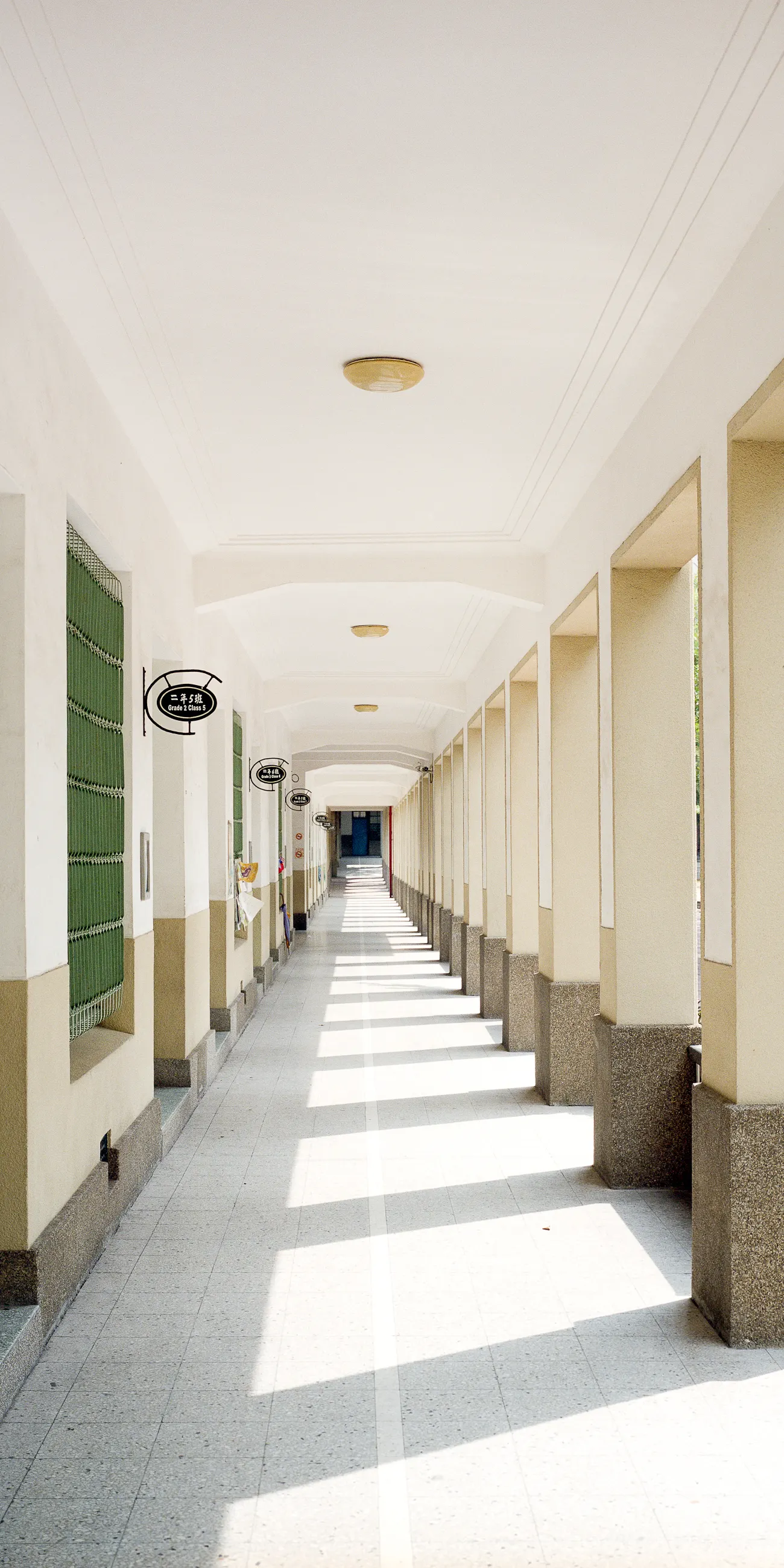
Zhongzheng Elementary School, Changhua County, Taiwan, 2010Photo: lordcolus, CC BY 2.0
What a Mamiya 7 costs today
Used Mamiya 7II bodies listed at $2,495 to $4,095 at dealers in October 2026, and an eBay sale logged by CameraWorth went for $3,452 in August. Lenses add a lot: Kamerastore's N 65mm and N 80mm both sold out at $1,462. A 35mmc owner wrote in July 2026 that a nice 7II with the 65mm can't really be found for less than $4,000. For perspective, The Radavist's John Watson paid about $800 for a 7II with the 80mm in 2012, and a Flickr owner paid $1,600 for a 7II with the 65mm a couple of years before 2013.
Looking Glass Photo (Berkeley, CA)
Used, very good, 30-day guarantee (listing shows both low stock and sold out), 7II body only, black
$3,995.00
See listingLooking Glass Photo (Berkeley, CA)
Used, good, dented base-plate corner (sold out), 7II body only, champagne
$2,495.00
See listingKamerastore (Finland, US store in USD)
Used, certified, machine tested (sold out), 7II body only
$4,095.00
See listingeBay sold, via CameraWorth log
Used, condition not stated, sold Aug 4, 2026, 7II body only
$3,452
See listingeBay sold, via CameraWorth log
Used, CLA'd, listed as top mint, sold Jul 24, 2026, 7II black late-model body with N 80mm f/4 L
$8,000
See listingKamerastore (Finland, US store in USD)
Used, certified (sold out), N 80mm f/4 L lens
$1,462.00
See listingKamerastore (Finland, US store in USD)
Used, certified (sold out), N 65mm f/4 L lens
$1,462.00
See listingKamerastore (Finland, US store in USD)
Used, certified, 35mm panoramic adapter set
$737.00
See listingUnique Photo
Used, good (out of stock, likely a past price), 7II body only, black
$1,449.95
See listingUnique Photo
Used, excellent (out of stock, likely a past price), 43mm f/4.5 lens with external finder
$799.95
See listingUnique Photo
Used, excellent (out of stock, likely a past price), 80mm f/4 lens
$595.00
See listingUnique Photo
Used, good (out of stock, likely a past price), 150mm f/4.5 lens
$249.99
See listing
Prices checked on October 28, 2026. They move every week, so treat them as a range, not a quote. KEH, MPB, B&H, Adorama and eBay search pages blocked our price checks, so they are missing. Kamerastore ships from Finland and adds duties and taxes at checkout. Unique Photo's listings are out of stock and sit far below 2026 market levels, so treat them as past prices.
Video reviews worth your time

Mamiya 7 Review
The reviewer regards the Mamiya 7 as his favorite camera, praising its incredible 6x7 medium format resolution, extremely quiet leaf shutter, and outstandingly sharp lenses.

Mamiya 7 Review
The Mamiya 7 is an exceptionally comfortable, quiet, and capable medium format rangefinder with outstanding lens sharpness, despite its premium price.

Mamiya 7ii 4 Year Review - Before You Buy
The reviewer regards the Mamiya 7 as a legendary, lightweight medium-format camera with exceptional optics, though its high market price, repair difficulties, and parallax errors make it best suited for working professionals rather than hobbyists.

5 Years of Mamiya 7 Photos
The Mamiya 7 is a favorite lightweight medium-format camera for landscape photography, but high current prices and potential repair issues make it difficult to recommend today.

My Mamiya 7 Long Term Review
The Mamiya 7 is a compact and lightweight medium-format rangefinder camera that delivers exceptional image quality and sharp optics, despite its plastic build and high second-hand price.
Specifications
Film and format
- Film speed
- ISO 25 to 1600
Lenses and shutter
- Flash sync
- All speeds, hot shoe and PC terminal
Exposure and viewfinder
- Exposure modes
- Aperture-priority AE, AE lock, manual
- Compensation
- Plus or minus 2 EV in 1/3 EV steps
- Framing accuracy
- Film records about 18% more than the frame at infinity
Body
- Dimensions
- 159 x 112 x 66 mm
- Weight, body only
- 920 g (7II)
- Weight with 80mm lens
- 1,210 g
- Construction
- Plastic body and lens barrels
History
- Introduced
- Mamiya 7 in 1995, Mamiya 7II in 1999
- Discontinued
- 2014
Questions people ask about the Mamiya 7
Is the Mamiya 7 worth it in 2026?
It depends on what you shoot and what you can spend. Most owners praise the lenses and light weight for landscape and travel, but used 7II bodies listed at $2,495 to $4,095 in October 2026, and Willem Verbeeck, after five years with his, finds it hard to recommend to newcomers at today's prices. If you want 6x7 for less and can carry more weight, a [Mamiya RB67](/cameras/mamiya-rb67/) is the usual alternative.
Sources: lookingglassphoto.com, lookingglassphoto.com, kamerastore.com, youtube.com, vintagecamerahut.com
Is the Mamiya 7 reliable?
Mixed. Reliability is the most criticized topic in our sources, with 14 of 19 comments negative, mostly rangefinders knocked out of adjustment, failed lens flex circuits and shutters that stop firing. Others report long trouble-free use: a 35mmc commenter says his 7II and Mamiya 6, both bought new, have always worked perfectly, and John Watson's 7II still works after more than a decade of drops.
Sources: flickr.com, flickr.com, flickr.com, 35mmc.com, theradavist.com
What battery does the Mamiya 7 use?
One 6V cell: 4LR44 alkaline, 4SR44 silver oxide or 2CR1/3 lithium. The Energizer A544 is a common 4LR44 equivalent, $4.75 at Battery Junction in October 2026. The camera does nothing without a battery, because the shutter is electronic.
Sources: kamerastore.com, camera-wiki.org, batteryjunction.com, mrleica.com
What is the difference between the Mamiya 7 and the 7II?
The 7II arrived in 1999 with a finder that reduces glare, multiple exposures and an extra strap lug; the lens mount is the same, so lenses fit both bodies. Beau Photo's Mark S. says the 7II finder is much brighter and worth paying extra for. Kamerastore says the original 7 came only in champagne, while the 7II was made in black or champagne.
Sources: camera-wiki.org, en.wikipedia.org, beauphoto.com, kamerastore.com
Why won't my Mamiya 7 take a picture or let me remove the lens?
Usually the dark slide. MrLeica's first answer for a camera that won't shoot is a dark slide still in place, and the lens won't come off unless the slide is closed, so close it to change lenses and open it before shooting. Also check that the film is advanced and the battery is fresh. With no film loaded, the shutter only fires with the back open, or on a 7II with the multiple exposure switch on.
Sources: mrleica.com, flickr.com
Which Mamiya 7 lens should I buy first?
The 80mm f/4 or the 65mm f/4. Both use the built-in frame lines, and the 80mm is the smallest lens at 290 g; Matt Osborne says the 65mm, close to a 32mm view in 35mm terms, may be more practical, and that all six lenses are sharp. The 43mm and 50mm wides need an external finder.
Sources: mrleica.com, mrleica.com, hungsupply.com, en.wikipedia.org
Can the Mamiya 7 shoot 35mm film?
Yes, as panoramas. With Mamiya's 35mm panoramic adapter kit, a 36-exposure roll gives 16 frames of 24 x 65 mm, and the official kit lets you rewind in daylight; Kamerastore listed a used set at $737 in October 2026. 3D-printed adapters cost less, but you unload the film in a changing bag.
Sources: camera-wiki.org, mrleica.com, kamerastore.com
Can you still get a Mamiya 7 repaired?
Yes, through independent technicians. Bill Rogers in Las Vegas services 7 and 7II bodies and all the lenses; his site says it has no connection with the Mamiya trademark holder, and he asks you to describe the fault before shipping. William Sheepskin warns that qualified technicians are few, so major repairs can be slow and costly.
Sources: mamiyarepair.com, mamiyarepair.com, mamiyarepair.com, youtube.com
What people compare it with
Mamiya 6 / 6 MF
The 6x6 sibling. Matt Osborne says it is cheaper, none of its lenses need an external finder and the collapsing mount makes it slimmer, but its widest lens is a 50mm against the 7's 43mm.
Fujifilm GF670
A folding 6x6 or 6x7 rangefinder, much slimmer than the 7, with one fixed 80mm lens; Osborne says it is less common outside Japan and usually costs more.
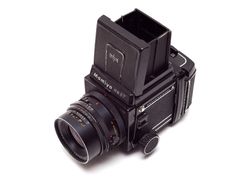
A studio-weight 6x7 SLR that Vintage Camera Hut ranks among the best values for negative size, with the close focusing a rangefinder lacks; Hung Supply lists the RB67 at 2,595 g against the 7's 1,210 g with the 80mm.
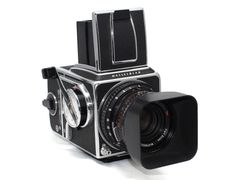
A modular 6x6 SLR with macro and portrait options; Osborne says Hasselblad bodies cost less than a Mamiya 7 but are bigger and heavier, especially with a long lens.
Every source behind this page
Read them yourself. How we pick and count them is in our methodology.
Show all 56 sources
Manuals and references 21
- batteryequivalents.com: CR11108, CR1/3N, CR-1/3N, DL1/3N, 2L76, 2LR44 3V Lithium Non-Rechargeable Battery Equivalents and Replacements
- brooklynfilmcamera.com: Film Camera Repair Cost
- camera-wiki.org: Mamiya 7 - Camera-wiki.org
- en.wikipedia.org: Mamiya 7
- kamerastore.com: Mamiya 7 Cameras, Lenses, & More - Shop Our Selection
- kamerastore.com: Mamiya 65mm f4 L N - Lens
- kamerastore.com: Mamiya 7 II - Camera
- kamerastore.com: Mamiya 80mm f4 L N - Lens
- mamiyarepair.com: Mamiya Repair
- mamiyarepair.com: Sending Cameras For Repair
- mrleica.com: Mamiya 7 Lens Review (Comparison & Photos)
- tomwestbrook.com: Tom Westbrook
- batteryjunction.com: Energizer A544 28A 140mAh 6V Alkaline Button Top Photo Battery - Equiv
- batteryjunction.com: Exell S28PX 4SR44 150mAh 6V Silver Oxide (Zn/Ag20) Camera Battery - Eq
- cameraworth.com: Mamiya 7 Price - Sold Values & Specs (2026)
- lookingglassphoto.com: Preowned Mamiya 7 II Black Camera Body | Looking Glass
- lookingglassphoto.com: Preowned Mamiya 7 II Champagne Body | Looking Glass
- precision-camera.com: Precision Camera & Video
- uniquephoto.com: Used Mamiya 7II Black
- uniquephoto.com: Mamiya Brand Digital Cameras and Lenses
- vintagecamerahut.com: Mamiya Film Camera Buying Guide: 645, RB67, RZ67, C-Series and 6/7
Editorial reviews 14
- Steve Huff Photo: Friday Film, Mamiya 7 Review by Garry Taylor: Friday Film
- The CWO: ANALOGUE, Mamiya 7ii: Mamiya 7ii
- Hung Supply Magazine: Road Test, Mamiya 7: Road Test: Mamiya 7
- Philip Greenspun (photo.net): Mamiya 7 II Review: Mamiya 7 II Review
- The Radavist: Obscura, Sell the Bike, Keep the Camera, A Mamiya 7ii Review: Sell the Bike, Keep the Camera - A Mamiya 7ii Review
- Shoot It With Film: The Mamiya 7II, What It Does Better and Worse: The Mamiya 7II: What It Does Better - and Worse
- Shoot It With Film: Mamiya 7 Review, Does This Medium Format Rangefinder Live Up to the Hype?: Mamiya 7 Review: Does This Medium Format Rangefinder Live Up to the Hype? » Shoot It With Film
- Dusty Grain: Mamiya 7 Review, Is This The Best Camera Ever Made?: Mamiya 7 Review: Is This The Best Camera Ever Made?
- 35mmc: The Cost of the Mamiya 7: The Cost of the Mamiya 7
- 35mmc: Hasselblad SWC vs. Mamiya 7 with 43mm lens: Hasselblad SWC vs. Mamiya 7 with 43mm lens - A Personal Wide-Angle Medium Format Showdown
- 35mmc: 5 Frames along the Oregon Coast with the Mamiya 7ii and Kodak Ektachrome E100: 5 Frames along the Oregon Coast with the Mamiya 7ii and Kodak Ektachrome E100
- 35mmc: Plus X and a Mamiya 7II in Venice: Plus X and a Mamiya 7II in Venice
- 35mmc: 5 Frames with the Mamiya 43mm f/4.5: 5 Frames with the Mamiya 43mm f/4.5
- 35mmc: Mamiya 7ii, Rollei RPX25 and an Old Datsun 120Y: Mamiya 7ii, Rollei RPX25 and an Old Datsun 120Y - By Filip Wawer
Independent blogs 10
- Oleg Novikov Photography: Mamiya 7II camera review: Mamiya 7II camera review
- Soperfect Images: Mamiya 7ii review: Mamiya 7ii review - Camera Reviews
- MrLeica.com (Matt Osborne): Mamiya 7 35mm Review: Mamiya 7 35mm Review (No 35mm adapter required!)
- MrLeica.com (Matt Osborne): Mamiya 6 Review & Guide: Mamiya 6 Review & Guide (vs Mamiya 7, Hasselblad..)
- Beau Photo Supplies: The Mamiya 7, Is it Worth It?: The Mamiya 7 - Is it Worth It?
- Kyle M Travel Blog: Mamiya 7 + 43mm: Mamiya 7 + 43mm
- awayrepairs (LiveJournal): mamiya 7 N 80 4 L infamous haze issue: mamiya 7 N 80 4 L infamous haze issue
- awayrepairs (LiveJournal): Mamiya 7II after popular local repairman + 65mm metering issue: MAMIYA 7II AFTER POPULAR LOCAL REPAIRMAN + 65MM ...
- MrLeica.com (Matt Osborne): Mamiya 7 Review, 5 Reasons Not to Buy: Mamiya 7 Review: 5 Reasons Not to Buy!
- MrLeica.com (Matt Osborne): Mamiya 7 Lens Review: Mamiya 7 Lens Review (Comparison & Photos)
Video reviews 5
Forums 4
- Flickr, Mamiya 7 and 7II group: Shutter won't fire on Mamiya 7: Mamiya 7 and 7II
- Flickr, Mamiya 7 and 7II group: Broke my 7. Be Careful: Discussing Broke my 7. Be Careful! in Mamiya 7 and 7II
- Flickr, Mamiya 7 and 7II group: Possible defective light meter: Mamiya 7 and 7II
- Flickr, Mamiya 7 and 7II group: Mamiya 7ii Problem with Focus Patch: Mamiya 7ii Problem with Focus Patch
Other 2
Keep reading
Film cameras
What 156 owner and reviewer opinions say about the Mamiya RB67: kit prices of $599.95 to $900 (Oct 2026), Pro-S vs Pro-SD, common faults and repair costs.
Film cameras
What 140 owner and reviewer opinions say about the Hasselblad 500C/M (500CM): used prices, serviced kits at $3,450-$4,200, batteries, CLA costs and jams.
Film cameras
Rangefinder vs SLR: an SLR shows the scene through the lens, a rangefinder frames through a side window and focus patch. Lenses, size, flash and 2026 prices.
Film stocks
35mm vs 120 film: common 120 frames are 2.7 to 5.4 times bigger than 35mm but give 8 to 16 shots a roll. Cost per frame, lab prices and which to pick.
Film cameras
Where to buy film cameras used in the US: KEH, MPB, B&H, local shops, eBay and thrift, with warranties, October 2026 prices and a checklist to test one.