Explainer
Light Leaks: What They Are and How to Get (or Avoid) Them
The short answer
Light leaks are streaks or blotches of stray light, usually orange, red, yellow or white, that fog part of a frame when light slips past a camera's seals or reaches the film while the back is open.
On old 35mm cameras a common cause is crumbling foam light seals, which Brooklyn Film Camera charges $80-120 to replace (October 2026), and you can also get the look on purpose by cracking the back for a moment, shooting pre-exposed film like Dubblefilm Solar or adding an overlay in editing.
- What it is
- Stray light fogging part of the film or sensoren.wikipedia.org
- Two most common causes
- Worn foam seals; opening the back with film loadedshootitwithfilm.com
- Orange, red or yellow leak
- Light usually came in through the backanalog.cafe
- Shop seal replacement
- $80-120 at Brooklyn Film Camera (Oct 2026)brooklynfilmcamera.com
- How often to reseal
- Ideally no more than once a decade, per analog.cafeanalog.cafe
- Pre-exposed leak film
- Dubblefilm Solar 200 or 400, $16.99-$17.99 a roll (sold out online, Oct 2026)glazerscamera.com
What is a light leak?
A light leak is a hole or gap in a camera body that lets stray light into the chamber that should be light-tight, so part of the film (or a digital sensor) gets extra exposure and fogs. That is Wikipedia's definition.
On a print or scan, leaks show up as bursts of white or of red, orange and yellow, often in a streak pattern, according to Shoot It With Film; Carmencita Film Lab calls them fire-like patterns. On the negative the same area is dense and dark, because a heavily fogged spot is black on the negative and nearly white on the print. On black-and-white film, any leak reads white or light gray.
Wikipedia notes that for most purposes a leak is considered a problem, while the Lomography movement sees it as a positive effect that gives photos character.
Sources: en.wikipedia.org, shootitwithfilm.com, carmencitafilmlab.com, talkphotography.co.uk, analog.cafe
What causes light leaks on film?
Shoot It With Film names two usual suspects: opening the camera back while film is loaded, and bad or missing light seals. In most 35mm cameras those seals are foam strips that break down with age, and the film door is a frequent leak point, per Wikipedia. Brooklyn Film Camera says foam seals from the 1970s and 1980s are all past their shelf life.
A camera with fresh seals can still leak, though. Other causes:
- Loading in bright sun. A commenter on Shoot It With Film says this fogs the first one or two frames even when the seals are fine, which is why loading film in subdued light matters.
- Cracks, misalignment or a missing screw. Analog.cafe's writer found a missing screw only after a few rounds of wasted film.
- Bellows and interchangeable backs. Medium and large format cameras can leak between their interchangeable parts or through old leather bellows, according to Wikipedia.
- The red window. On an old box camera, light can reach the film through the frame-number window, per a Talk Photography thread. The same window is a known weak point on the Holga (covered below).
- The door or the shutter. Carmencita Film Lab recommends checking that the back closes evenly and the shutter works, not only the foam.
Sources: shootitwithfilm.com, en.wikipedia.org, brooklynfilmcamera.com, analog.cafe, talkphotography.co.uk, carmencitafilmlab.com
Is it a light leak or lens flare?
Not every colored splash is a leak. A Talk Photography regular points out that most splashes of color seen on film or digital images come from light entering the lens and being refracted between the elements: lens flare. A leak that spills past the frame into the film edges is a different case: Thomas Hunter reads that pattern as light coming from the camera back.
Stripes that look the same on every frame can be another impostor. A member of The Photo Forum notes that consistent stripes look very similar to light piping through the film canister, not a hole in the camera.
Sources: talkphotography.co.uk, thomashunter.name, thephotoforum.com
How do you tell where a light leak is coming from?
Look at the negatives, not just the scans, and start with position. Thomas Hunter, who traced a leak in his Minolta X-370, uses this rule: light contained inside the frame and butting up against its edges comes from the front (the shutter assembly), while light that spills into the film edges outside the frame comes from the back.
Color is the second clue. Analog.cafe explains that color film's red-sensitive layer usually faces away from the lens, so light entering through the back reads orange, red or yellow; blue points to bad bellows or a faulty lens mount.
Timing is the third. Hunter found that frames following an outdoor shot were more likely to show the leak, and a Talk Photography member saw worn seals leak badly after the camera sat for a few days but barely at all on shots taken in quick succession. Brooklyn Film Camera says orange or magenta streaks along one edge of the frames are almost certainly an $80-120 fix, not a dead camera.
| What you see | Likely source |
|---|---|
| Leak spills past the frame into the film edges | Camera back: door seals or hinge |
| Leak stays inside the frame and butts up against its edges | Front of the camera: shutter assembly |
| Orange, red or yellow on color film | Camera back, through the film base |
| White on color film | Front of the camera, though not a firm rule |
| Blue on color film | Bellows or lens mount |
| White or light gray on black-and-white film | Any side; color tells you nothing here |
| Worst on the first frame after the camera sat for days | Worn seals |
| Fog on the first one or two frames only | Loading in bright light |
| Colored splashes on film or digital images | Often lens flare (light entering the lens), not a leak |
Treat color as a hint, not proof: Hunter's back-hinge leak came out white instead of red, and a member of The Photo Forum has seen white and colored leaks on the same roll.
Sources: thomashunter.name, analog.cafe, shootitwithfilm.com, talkphotography.co.uk, brooklynfilmcamera.com, thephotoforum.com
How to test a film camera for light leaks
Run these checks before paying for seals or a repair, and on any used camera before trusting it with a good roll. Our guide to buying and testing used film cameras covers the rest of the inspection.
- 1
Check the foam
Probe the seals of the empty camera with a toothpick. A Classic Camera Repair Forum veteran says black specks near the seals, or foam you can dig out easily, means they need replacing. Check the back door, the film channels and, on an SLR, the mirror box.
- 2
Check the door and shutter
Make sure the back closes evenly, then check that the shutter works, as Carmencita Film Lab recommends.
- 3
Do a flashlight test
In a dark room, put a bright light inside the camera and look for light escaping, as one forum member suggests. A Talk Photography member spotted a thin arc of light around the lens by shining a torch at the front and looking through the back.
- 4
Confirm with a test roll
Back-door seals can't be inspected with the back open, another forum member warns, so only film shows those leaks. Wind a cheap roll to frame one, fire an electronic flash two or three times around the back, shoot the rest normally and read the negatives.
Sources: hauslendale.com, coastalfilmlab.com, carmencitafilmlab.com, talkphotography.co.uk
How do you fix a light leak?
Tape buys time. Shoot It With Film says masking or painter's tape over the back seams is usually enough and comes off easily when you unload. A Talk Photography regular prefers a double layer of black insulating tape, and Wikipedia notes electrical tape is often used on medium and large format cameras.
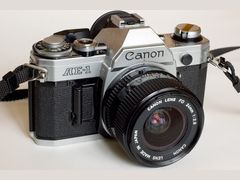
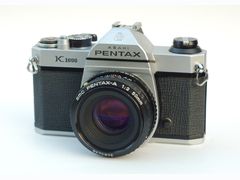
New seals are the real fix for an old 35mm camera: do them yourself (steps below) or pay a shop. If fresh seals don't stop the leak, commenters on Shoot It With Film point to strips not seated in the groove, twisted strips or foam that is too thin, and analog.cafe adds cracks and misalignment. That is when a full CLA (clean, lubricate, adjust) makes sense; Brooklyn Film Camera prices one for common SLRs like the Canon AE-1 and Pentax K1000.
| Fix | Cost | Good for |
|---|---|---|
| Black tape over the back seams | $22.95 for a 2 in x 90 ft roll of Shurtape CP 743 (Glazer's Camera) | A film roll or two before you reseal |
| Replace the seals yourself | A light seal kit plus basic tools | Leaks from crumbling foam, if you're handy |
| Shop light seal replacement | $80-120 (Brooklyn Film Camera) | Foam-only leaks |
| Shop cleaning plus new seals | $100.00 (Coastal Film Lab) | A camera that also needs a basic clean |
| Full CLA | $225-325 for a common 35mm SLR (Brooklyn Film Camera) | Leaks plus other faults, or seals that didn't solve it |
Sources: shootitwithfilm.com, talkphotography.co.uk, en.wikipedia.org, glazerscamera.com, analog.cafe, brooklynfilmcamera.com, coastalfilmlab.com
How to replace light seals yourself
This follows the method analog.cafe and Thomas Hunter describe for 35mm SLRs.
- 1
Gather the tools
Analog.cafe lists a tiny flat screwdriver, cotton swabs, rubbing alcohol, an X-Acto knife, a cutting mat, a ruler and a light seal kit.
- 2
Mask the shutter
Cover the shutter curtain before you scrape anything. Hunter used a cut-up business card held in place with painter's tape.
- 3
Strip the old foam
Analog.cafe scrapes the bulk of the old foam out with a tiny screwdriver, then wipes the remaining gunk away with alcohol-dipped swabs until every channel is clean. Hunter went straight to the swab and says old foam breaks down into black, sticky goo.
- 4
Cut the new strips
Measure each channel and cut strips against the ruler. If you mark a generic seal sheet on its paper side, analog.cafe says to draw the markings mirrored, because the strip gets flipped.
- 5
Fit them and close the door
Press each strip fully into its groove without twisting it. New seals can feel thick, and Hunter says the door will probably need more force to close at first.
- 6
Test before trusting it
Run the flash test on frame one of the next roll and check the negatives before loading anything important.
Sources: analog.cafe, thomashunter.name, shootitwithfilm.com, hauslendale.com
Is the roll ruined if you open the camera back?
Usually not all of it. If much of the roll is already wound tightly on the take-up spool, the layers of film around those frames protect most of them, as a reader explains in Shoot It With Film's comments. The film lying open across the back takes the damage.
Close the back right away. Opening the camera mid-roll resets the frame counter on most cameras, so note roughly where you were.
If the film is jammed and you have to open the camera mid-roll, do it inside a changing bag. Coastal Film Lab sells a Dot Line bag (27 x 30 in) for $29.99 and says it is completely light tight when sealed properly.
Sources: shootitwithfilm.com, coastalfilmlab.com
Light leaks on instant film: Polaroid and instax
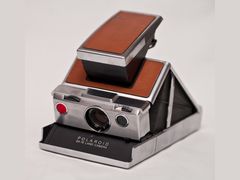 SX-70
Fujifilm says blank or white instax prints are usually caused by opening the film door after a pack is loaded. Keep shooting and the first few sheets come out blank, but some of the rest should come out normally. Opening the back with film inside also resets the exposure counter, according to instax US.
Polaroid film stays sensitive to light even after it is ejected. For the first few seconds the camera's film shield extends over the photo to protect it, and Polaroid says every new and refurbished camera it sells has one pre-installed. If a camera has no shield, Polaroid strongly recommends buying one and has install guides for the 600 and the vintage Polaroid SX-70. Once the print is out from under the shield, Polaroid says to keep it away from strong light while it develops, for example face down on a table. Other instant faults are covered in Instax Mini 12 flashing orange light and other instant camera problems.
Sources: instax.co.uk, instaxus.com, support.polaroid.com
Do Holga cameras always leak light?
A Holga can leak, but owners report very different results. Envato Tuts+ lists the Holga's weak points: the film counter window, the metal clamps that hold the back, the camera edges, and a shiny black interior that bounces stray light around. AlternativePhotography.com suggests a piece of black tape over the red window to minimize leaks.
A 35mmc writer who shoots 13 different 120 Holgas says his only leaks came when he was sloppy loading or unloading, and that missing foam pads under the spools make the film easier to unspool. Another 35mmc writer taped a Holga 120N in several places and still got leaks on two frames. Coastal Film Lab lists an upgraded latch and pressure plate kit for the 120N at $39.99, though it showed sold out in October 2026.
Sources: photography.tutsplus.com, alternativephotography.com, 35mmc.com, 35mmc.com, coastalfilmlab.com
Ways to get light leaks on purpose
Some methods risk frames on a real roll, one costs a roll of special film, and some happen in front of the lens or entirely in editing. Pick by how many frames you're willing to lose and how much say you want over where the light lands.
| Method | Works with | Cost | Control |
|---|---|---|---|
| Crack the camera back for a moment | Any film camera | Free, but it can cost frames | Low: depends on the light, ISO and where it hits |
| Pre-exposed film (Dubblefilm Solar 200 or 400) | 35mm cameras, C-41 developing | $16.99-$17.99 a 36-exposure roll (sold out online on Oct 28) | None: placement is random |
| A leaky toy camera such as a Holga | 120 film | The camera itself | Low: each one behaves differently |
| Freelensing | Interchangeable-lens cameras | Free | Some: you tilt the lens away by hand |
| Colored page markers in front of the lens | Any camera | A pack of sticky page markers | Good: you place the color yourself |
| Overlay in Photoshop or a video editor | Digital photos, video, film scans | Free overlay packs exist | Full: position, blend mode, opacity |
Sources: talkphotography.co.uk, procam.com, glazerscamera.com, glazerscamera.com, 35mmc.com, expertphotography.com, fujixweekly.com, studiobinder.com
How to make light leaks with a film camera
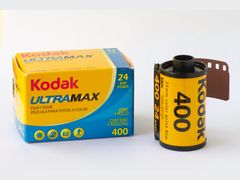 Ultramax 400
The free way is to open the back for a moment. A Talk Photography member suggests doing it near the beginning of the roll, so that if the light is excessive only the few frames already out of the canister are affected. ExpertPhotography does it quickly after the last frame, before rewinding.
Crack it only a little. Cizucu warns that opening the back too far turns the entire frame white, and recommends cloudy or rainy days for beginners because the leaks come out softer. Results also depend on where the light falls and the film's ISO, and one forum member says the biggest risk is letting in too much and fogging half the roll.
Pre-exposed film gets the look without opening anything. Dubblefilm Solar is a color negative film pre-exposed for a warm, hazy, bright look; Solar 200 is ISO 200 and develops in standard C-41, and Solar 400 uses Kodak Ultramax as its base. Glazer's Camera listed Solar 200 at $16.99 and Solar 400 at $17.99, and Procam had Solar 200 at $17.49, but all three showed sold out or out of stock online on October 28, 2026.
Sources: talkphotography.co.uk, expertphotography.com, cizucu.com, procam.com, glazerscamera.com, glazerscamera.com
How to add light leaks to digital photos and video
Most digital light leaks are overlays: an image or clip of colored light laid over your photo or footage. In Photoshop, ExpertPhotography drags the overlay onto the image, changes the layer mode to Screen and adjusts the opacity. Video editors set leak clips to Screen or Add, and StudioBinder keeps a list of 76 free overlay and video effects.
You can also get the effect in camera. Fuji X Weekly describes photographer Maciej Pietuszynski holding colorful sticky page markers in front of the lens, and ExpertPhotography suggests freelensing, slightly detaching the lens from the camera. Wikipedia describes photographers and videographers removing the lens while recording to overload the sensor, then laying that footage over other images or video.
If you're after a complete film look rather than one effect, see our comparison of film emulation software.
Sources: expertphotography.com, studiobinder.com, fujixweekly.com, en.wikipedia.org
Questions people ask
Is a light leak the same as fogged film?
Close, but people draw the line in different places. Wikipedia describes fogging as the result of a leak: stray light gives part of the film extra exposure. One longtime shooter on Shoot It With Film argues that opening the back is fogging, not a light leak, and keeps the term for light getting past failed seals.
Sources: en.wikipedia.org, shootitwithfilm.com
Do light leaks ruin the whole roll?
Usually only some frames: worn seals tend to hit the first shot after the camera has sat around, and a back opened late in the roll spares most frames on the take-up spool. A severe leak can wipe out a roll, though. The Darkroom lab lists severe light leaks among the common causes of blank rolls.
Sources: talkphotography.co.uk, shootitwithfilm.com, thedarkroom.com
How often should light seals be replaced?
Analog.cafe says that ideally you shouldn't need to replace light seals more than once a decade. Brooklyn Film Camera says foam seals from the 1970s and 1980s are all past their shelf life, so an unserviced camera from that era almost certainly needs new ones.
Sources: analog.cafe, brooklynfilmcamera.com
How much does it cost to fix a light leak?
In October 2026 Brooklyn Film Camera charged $80-120 for light seal replacement, and Coastal Film Lab charged $100.00 for a basic cleaning plus new seals. A full CLA on a common 35mm SLR runs $225-325 at Brooklyn Film Camera. A DIY reseal costs a seal kit and some patience.
Sources: brooklynfilmcamera.com, coastalfilmlab.com
Can the lab cause light leaks?
Yes. Fuji X Weekly notes that film handled incorrectly during development can show light leaks too, not only film from a leaky camera. If the marks don't fit the camera clues, such as position on the negative and which frames they hit, ask the lab how the roll was handled.
Sources: fujixweekly.com
Sources
Every fact on this page comes from one of these. How we choose and check sources is in our methodology.
Show all 31 sources
retailer 9
- Brooklyn Film Camera: Film Camera Repair Cost, CLA and Repair Pricing
- Coastal Film Lab: Basic Camera Cleaning and Sealing
- Coastal Film Lab: Dot Line Film Changing Bag 27x30
- Coastal Film Lab: Holga 120N Upgraded Latch and Pressure Plate Kit
- Procam: Dubblefilm Solar 200 Color Negative Film, 35mm, 36 Exposures
- Glazer's Camera: Dubblefilm Solar 400, 36 Exposures
- Glazer's Camera: Dubblefilm Solar 200, 36 Exposures
- Glazer's Camera: Shurtape CP 743 Photographic Black Masking Tape
- The Darkroom Photo Lab: Film Developing FAQs
Independent blogs 8
- Shoot It With Film: 10 Common Film Issues and How to Fix Them
- analog.cafe: How to Replace Light Seals on a Film Camera
- Thomas Hunter II: Repairing a Minolta X-370 Light Leak
- cizucu: How to Intentionally Create Film Light Leaks
- Fuji X Weekly: How To Add Light Leaks To Your Photos Using Page Markers
- 35mmc: Holga Tips from a Holga Nut
- 35mmc: 5 Frames with Holga 120N and Kodak Portra 160
- AlternativePhotography.com: Medium format Holga
Forums 6
- Talk Photography: What causes light leaks to produce different colours?
- Talk Photography: How do I purposely create light leaks using Canon AE-1 and 35mm film?
- Talk Photography: What might be causing this light leak / flare?
- Talk Photography: Film problems and their causes
- The Photo Forum: Light leak differences?
- Classic Camera Repair Forum: Testing Light Seals
Editorial reviews 4
official 3
Manuals and references 1
Keep reading
Film cameras
How to load film step by step in 35mm SLRs, point-and-shoots, 120 and instant cameras, plus how to check it caught, rewind it and fix film that won't advance.
Film cameras
Where to buy film cameras used in the US: KEH, MPB, B&H, local shops, eBay and thrift, with warranties, October 2026 prices and a checklist to test one.
Techniques and editing
To make a double exposure on film, expose one frame twice and cut each shot by one stop (ISO 400 film set to 800). Methods by camera, prices, mistakes, fixes.
Film stocks
Expired film still works if it was stored well. Rate color negative about one stop slower per decade, keep slide film near box speed, and develop normally.
Techniques and editing
Film emulation software compared: Dehancer, DxO FilmPack 8 ($149.99), RNI All Films 5, VSCO, Fujifilm simulations and FilmBox, with October 2026 US prices.
Instant cameras
Instax Mini 12 flashing orange light? Slow blinks mean the flash is charging, slow plus quick means low batteries, and quick means a jam or lens error.