Comparison
HP5 vs Tri-X: Contrast, Grain, Pushing and Price Compared
The short answer
HP5 vs Tri-X comes down to contrast: reviewers and owners generally find Kodak Tri-X 400 punchier and higher in contrast, while Ilford HP5 Plus is flatter, tends to keep more shadow detail and is usually called the more forgiving film.
Both are ISO 400 traditional-grain films made for pushing (Ilford rates HP5 Plus to EI 3200, Kodak allows a 3-stop push on Tri-X), and in October 2026 a 36-exposure 35mm roll of either cost between $8.75 and $13.99 at the US stores checked.
- Box speed
- ISO 400 for both (Tri-X sheet film is ISO 320)emulsive.org
- Maker push rating
- HP5 Plus to EI 3200; Tri-X 400 up to 3 stopsglazerscamera.com
- D-76 stock at 68F
- HP5 Plus 7 1/2 min, Tri-X 6 3/4 minkodakprofessional.com
- 35mm, 36 exp (Oct 2026)
- HP5 $8.75 to $13.99, Tri-X $9.29 to $12.99richardphotolab.com
- Launched
- Tri-X in 35mm and 120: 1954; HP5: 1976 (original Ilford HP: 1935)emulsive.org
HP5 vs Tri-X at a glance
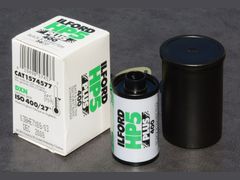 Ilford HP5 Plus | 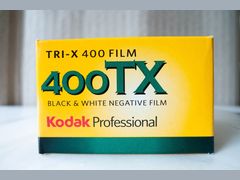 Kodak Tri-X 400 | |
|---|---|---|
| Box speed | ISO 400 in every format | ISO 400 in 35mm and 120; the sheet version is Tri-X 320 |
| Contrast | Low to medium (Ilford calls it medium contrast) | High, usually described as punchy |
| Grain | Traditional grain; reviewers split on whether it is grainier | Traditional grain; Kodak rates rms granularity 17 (fine) |
| Shadows and midtones | Holds more shadow detail, per Analog Reference and a Flickr printer | Smoother midtones, but loses shadow detail sooner |
| Maker's push rating | Good results from EI 400 to EI 3200 | Up to 3 stops underexposure with push processing |
| D-76 stock, 68F, box speed | 7 1/2 min (Ilford datasheet) | 6 3/4 min, small tank (Kodak datasheet) |
| Formats | 35mm (24 and 36 exp), 120, sheets, 55 and 100 ft bulk, single-use camera | 35mm (24 and 36 exp), 120, 50 and 100 ft bulk, single-use camera; sheets as Tri-X 320 |
| 35mm, 36 exp (Oct 2026) | $8.75 to $13.99 | $9.29 to $12.99 |
| 120 roll (Oct 2026) | $9.75 to $9.99 | $8.79 to $11.99 |
| Made and sold by | Ilford Photo (Harman Technology) | Eastman Kodak, directly since January 2026 |
Pick the Ilford HP5 Plus if
- You are new to black and white and want more room for exposure mistakes
- You print in a darkroom and want a flatter negative that needs less dodging and burning
- You shoot in hard, contrasty light and want to keep detail in the shadows
- You push very hard: EMULSIVE preferred HP5 Plus at EI 12800
- You want the same ISO 400 film in 35mm, 120 and sheets
Pick the Kodak Tri-X 400 if
- You want punchy contrast and deep blacks straight off the negative
- You mostly scan: a Flickr printer preferred Tri-X until he started printing
- You like smooth midtones on faces and skin
- You push to EI 1600 and up, where one Flickr owner says Tri-X pushes better
- You want the cheaper single-use camera: $19.95 for Tri-X vs $22.99 for HP5 at Glazer's
Sources: emulsive.org, en.wikipedia.org, en.wikipedia.org, analogreference.substack.com, flickr.com, kodakprofessional.com, mail.kennethleegallery.com, glazerscamera.com, emulsive.org
Which is better, HP5 or Tri-X?
HP5 PlusNeither film wins outright. Wikipedia names Tri-X 400 as the main competitor of HP5 Plus, and Casual Photophile calls both "reportage" films, designed for uncontrolled light and given wide latitude. Reformed Film Lab, which says these are the two black-and-white films it develops most, calls the question of which is best subjective and dependent on many factors.
The real split is the look and your workflow. Tri-X is the high-contrast, punchy film; HP5 Plus is the flatter, more forgiving one.
A short rule: start with Ilford HP5 Plus if you are still learning exposure or you print in a darkroom, and start with Kodak Tri-X 400 if you scan and want drama straight from the negative. Then shoot one roll of each in the same light and compare.
Sources: en.wikipedia.org, casualphotophile.com, reformedfilmlab.com, camerajabber.com, glazerscamera.com, glazerscamera.com
Is Tri-X more contrasty than HP5?
Yes, by most accounts. Analog Reference sorts the classic 400 films this way: Tri-X is high contrast with traditional grain, HP5 is low contrast with traditional grain, and Kodak T-Max sits in the middle with smoother grain. Analogue Wonderland describes Tri-X's contrast as punchy, giving a dramatic and bold look, and HP5's as more balanced. The Ilford product description repeated on Glazer's product page calls HP5 Plus a medium-contrast film.
That contrast has a cost in the shadows. A darkroom printer who has used both extensively, posting in Flickr's I Shoot Film group, finds Tri-X very smooth in the midtones but says it loses out to HP5 in shadow detail, and Analog Reference found that Tri-X's harsh contrast lost the shadow detail completely, while HP5 and T-Max both kept good shadow detail.
HP5 Plus is not a shadow miracle either. EMULSIVE's review notes that at box speed it holds highlights better than it captures shadow detail. Both films also change a lot with chemistry: owners in the Flickr thread stress that developer choice affects both films significantly, so compare them in the same developer before you decide.
Sources: analogreference.substack.com, analoguewonderland.co.uk, glazerscamera.com, flickr.com, emulsive.org
Is HP5 grainier than Tri-X?
Opinions split, and the spec sheets can't settle it. Ilford calls HP5 Plus fine grain and Kodak lists fine grain as a Tri-X 400 feature, but only Kodak publishes a number: according to its datasheet, Tri-X 400 has a diffuse rms granularity of 17 (fine), measured in HC-110 (B) at 68F. The Ilford HP5 Plus technical sheet we read gives no granularity figure, so there is no like-for-like spec comparison.
Shooters disagree. The Kash Photo blog usually finds HP5+ the grainier film, and its author shoots both about equally. Analogue Wonderland says the opposite, that HP5 has a more subdued grain than Tri-X. An EMULSIVE contributor who pushed both to EI 1600 loved the evenness of Tri-X's grain but found the negatives too dense in places.
Two things matter more than the brand. Grain grows as you push and changes with developer, and a 120 negative is enlarged far less than a 35mm one, so either film looks finer in medium format (see 35mm vs 120 film). Also discount comparisons from before 2007, when Kodak re-engineered Tri-X with finer grain.
Sources: glazerscamera.com, glazerscamera.com, kodakprofessional.com, kashphoto.com, analoguewonderland.co.uk, emulsive.org, en.wikipedia.org
Which pushes better to 1600 or 3200, HP5 or Tri-X?
Both are built for it. Ilford says HP5 Plus responds well to push processing and can be rated up to EI 3200, and its technical sheet promises good image quality anywhere from EI 400 to EI 3200, with the best results at 400. Kodak recommends Tri-X 400 for push processing, and its datasheet says you can underexpose it by three stops with longer development, at the cost of more contrast, more grain and less shadow detail.
For Tri-X, Wikipedia sums up the usual experience: EI 800 in a standard developer gives very good results, while EI 1600 needs more careful processing. One owner in the Flickr thread says Tri-X pushes better at 1600 and above. EMULSIVE's side-by-side at EI 1600 in HC-110, shot on a Mamiya 7II in the Moscow Metro, went the other way: the contributor wrote that "Tri-X just didn't give me the depth that HP5 did."
In darker scenes the gap can vanish. Kash Photo pushed both to 1600 for night-time views of busy Central London on a Hasselblad XPan and got very similar results, mostly because the frames were full of black space. At the extreme end, EMULSIVE's EI 12800 shootout found both films held up, but the author would pick HP5 Plus to push that far again, and its HP5 review calls 5 to 6 stop pushes (EI 12800 to 25600) surprisingly workable.
If you plan to push most of your rolls, read our guide to pushing and pulling film and test at the exact EI you will use.
Sources: glazerscamera.com, mail.kennethleegallery.com, glazerscamera.com, kodakprofessional.com, en.wikipedia.org, flickr.com, emulsive.org, kashphoto.com, emulsive.org, emulsive.org
Is HP5 or Tri-X better for beginners?
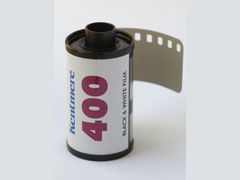 Kentmere 400
HP5 Plus usually gets the nod. Camera Jabber calls it arguably the easier film for complete beginners, and Analogue Wonderland says Tri-X is not as forgiving, though it praises Tri-X for predictable, consistent results. Kodak still lists wide exposure latitude as a Tri-X feature, and Casual Photophile describes both as wide-latitude films. Not everyone agrees on who is easier: one Flickr owner finds Tri-X a bit more adaptable and forgiving overall.
The difference shows in the shadows. Analog Reference found HP5 kept good shadow detail where Tri-X lost it, which leaves more to recover in a scan or a print if you underexpose.
If price matters more than the name on the box, compare the other ISO 400 options in our best black and white film guide, including Kentmere 400, before you buy a brick of either.
Sources: camerajabber.com, analoguewonderland.co.uk, glazerscamera.com, casualphotophile.com, analogreference.substack.com, flickr.com
Developing HP5 and Tri-X: times, tanks and negative curl
The two films don't share a development time. According to Kodak's datasheet and Ilford's technical sheet, Tri-X 400 needs 6 3/4 minutes in D-76 stock at 68F (20C) in a small tank and HP5 Plus needs 7 1/2 minutes at EI 400 in a spiral tank, so a fair side-by-side uses two tanks. The table has the pushed and DD-X times. Kodak's sheet is dated October 2021 and the Ilford copy we read is undated, so check each maker's current sheet before you mix. If you are new to tank work, our guide to developing film at home covers the full process.
Tri-X negatives have a reputation for curling. Two owners in the Flickr thread complain about it, and one who loves Tri-X's tonality said the curl was what would drive him to Ilford.
Storage advice differs by source. Kodak's October 2021 datasheet says to keep unexposed Tri-X at 75F (24C) or lower in the sealed package, while Camera Jabber recommends 55F (13C) or lower. Anything at or below 55F (13C) meets both.
| Ilford HP5 Plus | Kodak Tri-X 400 | |
|---|---|---|
| D-76 stock, box speed | 7 1/2 min at EI 400 | 6 3/4 min, small tank |
| D-76 stock, pushed | 9 1/2 min at EI 800, 12 1/2 min at EI 1600 | 9 1/2 min at EI 1600, 11 min at EI 3200 (small tank) |
| Ilfotec DD-X 1+4 | 9 min at EI 400, 20 min at EI 3200 | Not listed in Kodak's datasheet |
Sources: kodakprofessional.com, mail.kennethleegallery.com, flickr.com, camerajabber.com
Which looks better scanned, and which prints better?
This is where workflow beats reputation. A printer in the Flickr thread preferred Tri-X while he only scanned, then switched to HP5 once he started printing in a darkroom, because HP5 gives a flatter tonal range that is much easier to print and needs less dodging and burning.
The same printer says Tri-X's much wider range of tones is great for scanning but not for printing. Analog Reference makes a related point about HP5 in scans: it wanted slightly more contrast off the scanner, but says adding contrast in post is really easy. Judge both films in the workflow you actually use, not in someone else's scans.
Sources: flickr.com, analogreference.substack.com
HP5 and Tri-X prices in October 2026
| Seller | Item | Price | Note |
|---|---|---|---|
| Glazer's Camera (Seattle) | Ilford HP5 Plus 35mm, 36 exp | $9.99 | |
| Glazer's Camera (Seattle) | Kodak Tri-X 400 35mm, 36 exp (new Eastman Kodak box) | $10.25 | Listed as coming soon; older box unavailable |
| Reformed Film Lab | Ilford HP5 35mm, 36 exp | $8.75 | Sale price, regular $9.75 |
| Reformed Film Lab | Kodak Tri-X 400 35mm, 36 exp | $10.25 | |
| Richard Photo Lab (California) | Ilford HP5+ 35mm, 36 exp | $10.99 | |
| Richard Photo Lab (California) | Kodak Tri-X 400 35mm, 36 exp | $9.29 | |
| Legacy Photo Lab (Texas) | Ilford HP5 Plus 35mm, 36 exp | $13.99 | |
| Legacy Photo Lab (Texas) | Kodak Tri-X 400 35mm, 36 exp | $12.99 | |
| Glazer's Camera (Seattle) | Ilford HP5 Plus 120 | $9.99 | Single roll |
| Glazer's Camera (Seattle) | Kodak Tri-X 400 120 | $8.79 | Single roll; 5-pack $43.95, coming soon |
| Reformed Film Lab | Ilford HP5 120 | $9.75 | Single roll |
| Richard Photo Lab (California) | Kodak Tri-X 400 120 | $9.99 | Single roll |
| Legacy Photo Lab (Texas) | Ilford HP5 Plus 120 | $9.99 | Single roll |
| Legacy Photo Lab (Texas) | Kodak Tri-X 400 120 | $11.99 | Single roll |
| Glazer's Camera (Seattle) | Ilford HP5 single-use camera with flash, 27 exp | $22.99 | |
| Glazer's Camera (Seattle) | Kodak Tri-X 400 single-use flash camera, 27 exp | $19.95 |
Prices checked October 2026. They change often.
Which is cheaper, HP5 or Tri-X?
It depends on the store, so don't pick either one as the budget film. On October 28, 2026, a 36-exposure 35mm roll of HP5 Plus was cheaper at Glazer's ($9.99 vs $10.25) and Reformed Film Lab ($8.75 on sale vs $10.25), but Tri-X was cheaper at Richard Photo Lab ($9.29 vs $10.99) and Legacy Photo Lab ($12.99 vs $13.99). In 120, Tri-X was cheaper at Glazer's ($8.79 vs $9.99) and HP5 Plus was cheaper at Legacy ($9.99 vs $11.99).
Bulk rolls are the exception. At Glazer's, a 100 ft roll of HP5 Plus was $167.99 and a 100 ft roll of Tri-X was $239.95, and the Tri-X roll was sold out.
Older forum threads, such as a 2016 Flickr discussion, call Tri-X the pricier film, but that changed. In January 2024 Kosmo Foto reported that Kodak Alaris cut the price of 35mm Tri-X by up to 30%, depending on the region, and Analog.cafe's US price tracking saw the average Tri-X price fall from $14.56 to $10.82 over the following months. Analog.cafe also found in July 2025 that every Ilford film cost more than it had six months earlier.
Availability may be patchy while Tri-X changes boxes. Eastman Kodak took distribution back from Kodak Alaris (Wikipedia dates it to January 2026; Camera Jabber says the handover was complete by March 2026), and Tri-X now ships in a new yellow-and-black box. At Glazer's, the new-box 35mm roll and 120 5-pack showed as coming soon, and the old-box 35mm roll was unavailable. Our list of where to buy 35mm film has more US stores to check.
Sources: glazerscamera.com, glazerscamera.com, reformedfilmlab.com, richardphotolab.com, legacy-photolab.com, glazerscamera.com, glazerscamera.com, kosmofoto.com, analog.cafe, en.wikipedia.org, camerajabber.com, flickr.com
Is HP5 a copy of Tri-X? A short history of both films
No. Ilford's HP line is as old as Tri-X: EMULSIVE dates the original HP in 35mm and 120 to 1935, nearly two decades before Tri-X reached those formats in 1954. HP5 launched at Photokina in 1976 and became HP5 Plus in late 1989.
Tri-X started around 1940 as a sheet film rated ASA 200 in daylight. Its jump to ASA 400 around 1960 came from a change in the ASA standard, not a new emulsion. In 2007 Kodak re-engineered it as 400TX with finer grain and less silver, so today's Tri-X is not the same emulsion as the 1960s film.
Kodak Alaris handled Tri-X from 2013 until Eastman Kodak took it back in 2026, and the name survived, unlike T-Max, which Eastman Kodak now sells as Ektapan.
Sources: casualphotophile.com, emulsive.org, en.wikipedia.org, camerajabber.com
How to run your own HP5 vs Tri-X test
Reviews disagree on grain, pushing and shadows, so settle it with one roll of each, shot and developed the same way.
- 1
Buy one roll of each
Use the same format and length. At Glazer's on October 28, 2026, 36-exposure rolls were $9.99 for HP5 Plus and $10.25 for Tri-X 400, $20.24 for the pair.
- 2
Shoot the same scenes at the same EI
Camera Jabber suggests new shooters run a roll of each side by side. Include a bright, contrasty scene and a shadowy one, since that is where the films differ most.
- 3
Develop each film for its own time
In D-76 stock at 68F, the makers list 6 3/4 minutes for Tri-X 400 (small tank) and 7 1/2 minutes for HP5 Plus at EI 400. Use two tanks if you can.
- 4
Test at the EI you will really use
If you plan to push, shoot the test at that rating. Ilford rates HP5 Plus for good results up to EI 3200, and Kodak tells you to expose test rolls to find the speed that suits your work.
- 5
Compare in your own workflow
One darkroom printer found HP5's flatter negative easier to print and Tri-X better for scanning. Judge prints if you print and scans if you scan.
Sources: glazerscamera.com, camerajabber.com, kodakprofessional.com, mail.kennethleegallery.com, flickr.com
Questions people ask
Which is better for street photography, HP5 or Tri-X?
Both are classic street films. Tri-X gives grit and contrast, and HP5 Plus gives more room for exposure errors when you shoot fast in mixed light. A reader comment on EMULSIVE's EI 1600 comparison notes that Tri-X's dramatic look is so common in street work that it is sometimes almost a cliche.
Sources: emulsive.org, analoguewonderland.co.uk
Which is better for portraits and skin tones?
A darkroom printer in Flickr's I Shoot Film group finds Tri-X very smooth in the midtones and HP5 clumpier on skin, but says HP5 holds more shadow detail. On that account Tri-X suits smooth skin and HP5 Plus is the safer choice when faces fall into deep shadow. It is one printer's view, though Analogue Wonderland also recommends Tri-X for portraits.
Sources: flickr.com
Can you develop HP5 and Tri-X in the same tank?
Only with a compromise time. In D-76 stock at 68F, Kodak lists 6 3/4 minutes for Tri-X 400 in a small tank and Ilford lists 7 1/2 minutes for HP5 Plus at EI 400, so one film will be slightly under or over its published time.
Is today's Tri-X the same as the old Tri-X?
No. Kodak re-engineered Tri-X in 2007 as 400TX, with finer grain and less silver, so comparisons from before then describe a different film. The name and ISO 400 rating are unchanged.
Sources: en.wikipedia.org, camerajabber.com
What is the difference between Tri-X 320 and Tri-X 400?
Tri-X 400 (400TX) is the 35mm, 120 and bulk-roll film most people mean. Tri-X 320 (320TXP) is the sheet-film version for large format. HP5 Plus, by contrast, is ISO 400 in every format, sheets included.
Sources: en.wikipedia.org, emulsive.org
Is there a difference between HP5 and Tri-X in 120?
Both are ISO 400 in 120, and the larger negative is enlarged less, so grain looks finer than in 35mm. Most reviews we read do not separate 120 from 35mm, so treat the contrast and shadow differences above as applying to both. On October 28, 2026, a 120 roll cost $9.75 to $9.99 for HP5 Plus and $8.79 to $11.99 for Tri-X at the US stores checked.
Sources: reformedfilmlab.com, glazerscamera.com, legacy-photolab.com
Who makes Tri-X and HP5 now?
Tri-X is made by Eastman Kodak, which took over distribution from Kodak Alaris and has sold it directly since January 2026. HP5 Plus is made by Harman Technology, which trades as Ilford Photo and is based in Cheshire, England.
Sources: en.wikipedia.org, en.wikipedia.org
Do I need reciprocity correction for long night exposures?
Yes, with both films once you go past about a second. Kodak's datasheet asks for one extra stop at a metered 1 second (give 2 seconds) and 10% less development, and two stops at 10 seconds. Ilford's sheet says HP5 Plus needs no correction between 1/2 and 1/10,000 second, so its correction starts slightly sooner, and it gives a graph for longer exposures.
Sources
Every fact on this page comes from one of these. How we choose and check sources is in our methodology.
Show all 26 sources
retailer 10
- Analogue Wonderland: The Eternal Debate: Kodak Tri-X vs. Ilford HP5 Plus
- Glazer's Camera: Ilford HP5 Plus 35mm 36 exposures
- Glazer's Camera: Kodak Tri-X 400 35mm 36 exposures (Eastman Kodak)
- Glazer's Camera: Kodak Tri-X 400 120
- Reformed Film Lab: Ilford HP5 35mm 36 exposure roll
- Reformed Film Lab: Kodak Tri-X 400 35mm 36 exposure roll
- Legacy Photo Lab: Ilford HP5 Plus 35mm
- Legacy Photo Lab: Kodak Tri-X 400 35mm
- Richard Photo Lab: Ilford HP5+ 35mm
- Richard Photo Lab: Kodak Tri-X 400 35mm
Editorial reviews 8
- EMULSIVE: Film review: ILFORD HP5 PLUS in 35mm, 120 and sheet formats
- EMULSIVE: ILFORD HP5 PLUS vs Kodak Tri-X 400 at EI 1600 in the Moscow Metro
- EMULSIVE: Black and white film high EI shootout part 1 (EI 12800)
- Camera Jabber: Why Kodak Tri-X is still the black-and-white film to beat in 2026
- Casual Photophile: Ilford HP5 Plus black and white film profile
- Kosmo Foto: Kodak Alaris reduces price of Tri-X 35mm film by up to 30%
- Analog.cafe: Film prices up 9% since February 2025
- Reformed Film Lab: Tri-X vs HP5
Manuals and references 3
official 2
Independent blogs 2
Forums 1
Keep reading
Film stocks
Ilford HP5 Plus is an ISO 400 black-and-white film known for latitude and easy pushing. What 112 opinions say, how to shoot it, and US prices from $9.99.
Film stocks
Kodak Tri-X 400 is an ISO 400 black-and-white film with classic grain and wide latitude, $8.99 to $10.41 a roll. What 116 opinions say about grain and pushing.
Film stocks
Ilford HP5 Plus is the best black and white film for most people. Compare Tri-X, Kentmere 400, Ektapan (T-Max), XP2 Super and Delta 3200, with US prices.
Film stocks
How to push film: what a stop means, what to set on your camera, how to tell the lab, one-stop fees from $0 to $4, home development times and how to pull film.
Developing and scanning
How to develop film at home: the gear and chemistry you need with October 2026 prices, black and white and C-41 steps with times, and fixes for bad negatives.
Film stocks
Kentmere 400 is Harman's budget ISO 400 black and white film, $8.39 to $10.99 a 36-exposure roll. What 135 opinions say about grain, contrast and pushing.