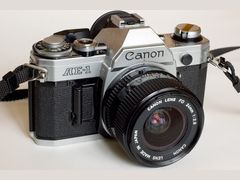
Minolta X-700: prices, how to use it and the capacitor problem
The short answer
The Minolta X-700 is Minolta's 1981 35mm SLR, its first with a Program mode, and owners still rank it among the best-value film SLRs for its big, bright viewfinder and cheap Rokkor lenses.
In October 2026, US camera shops listed used, restored and CLA'd copies with a 50mm f/1.7 at about $280 to $475 (the cheapest have sold out). The known risk is a failed capacitor that stops the shutter firing, so buy a serviced copy with a warranty or budget for a repair.
- Made
- 1981-1999
- Modes
- Program, aperture priority, manual
- Battery
- Two LR44 or SR44 (or one CR-1/3N)
- Shop price
- $280-$475 with 50mm
Built from 149 opinions from 40 pages and videos. Not yet tested by Camera Dojo. Updated .
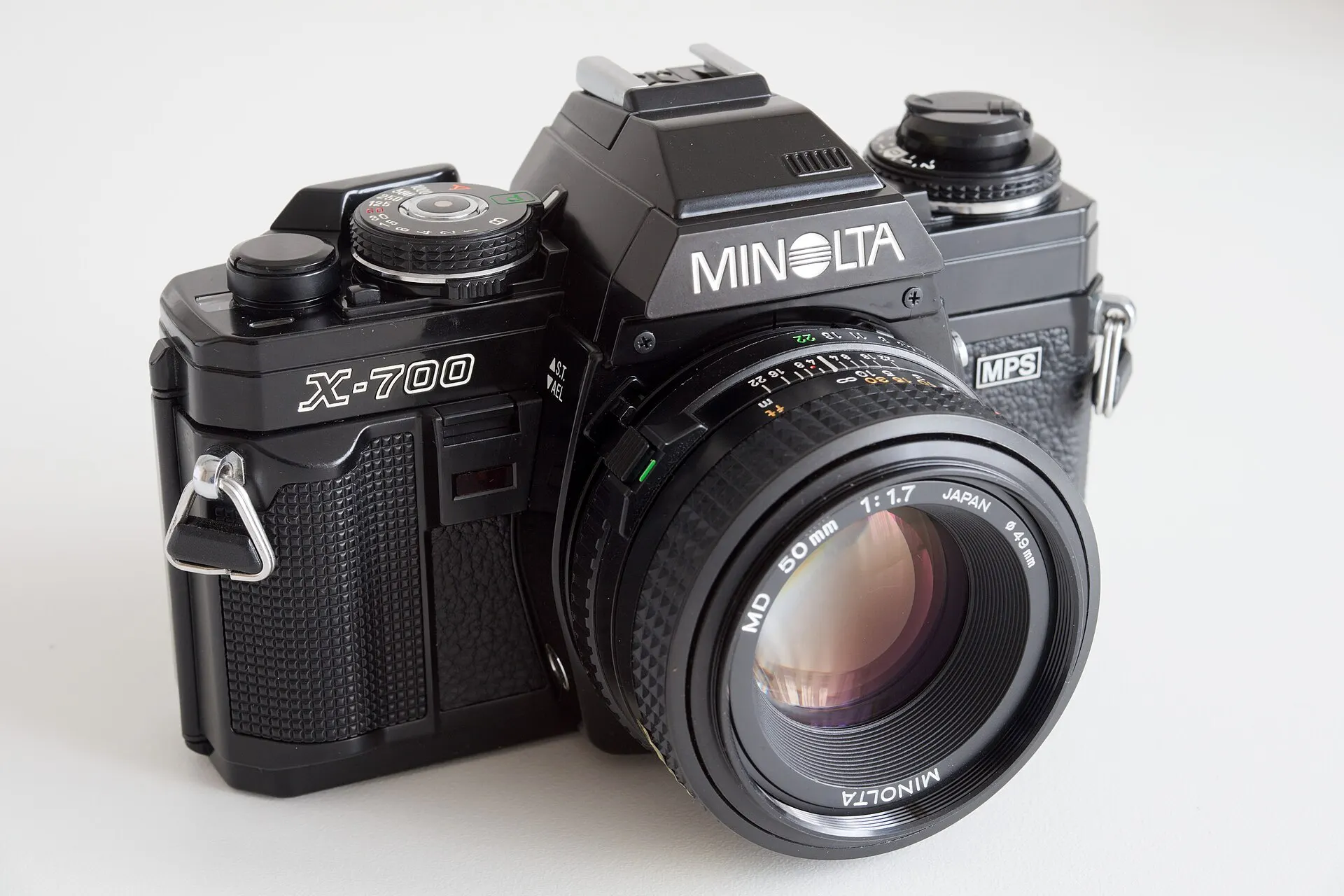
The short version
Owners and reviewers keep coming back to three things: the viewfinder (Jim Grey calls it big and bright, and High5 Cameras rates its focusing screen above the flagship XD's), the choice of Program, aperture priority and manual, and access to almost every Minolta Rokkor lens ever made. Fstoppers, KingJvpes and Pushing Film all point beginners to it.
The catch is age. Reliability is the most negative topic in the research, with 13 of 18 comments negative, and most of them describe the same fault: Minolta switched to cheaper electrolytic capacitors in the mid-1980s, and when one fails the viewfinder LEDs go out and the shutter will not fire. Mike Eckman and Jim Grey both hold back their recommendation for that reason. The parts are cheap but the job is fiddly, so a serviced copy is worth the extra money.
Good fit if
- You want a first film SLR with Program mode for easy shooting and aperture priority for learning depth of field
- The viewfinder matters to you: owners rank its big, bright screen and split-image focusing among the best they have used
- You want cheap, good lenses: Minolta MD and MC Rokkor primes and zooms are plentiful
- You are buying a serviced copy with a warranty, or an early body with tantalum capacitors
Think twice if
- You want a camera that fires with no battery: the X-700 has no mechanical backup speed
- You shoot mostly in manual and want to see the speed you set in the finder (the X-570 shows it)
- You want shutter priority or a flash sync faster than 1/60
- You need a dependable body for travel or paid work and cannot get it serviced first
- You are buying an untested body with no budget for repairs
What owners and reviewers say, topic by topic
We sorted 149 opinions about the X-700 from 40 pages and videos on 26 websites and channels. Each row shows how many people raised a topic and how many of them were positive. Open a row to read short quotes, each linked to its source.
Owner voices come mostly from long-form blogs and editorial reviews (Jim Grey, Mike Eckman, Casual Photophile, 35mmc, High5 Cameras, Kamerastore, Alex Luyckx) plus Flickr group threads and five YouTube reviews. Reddit, Photrio, photo.net and DPReview threads could not be read, so forum voices are thinner than usual.
Controls and features61% positiveof 23
Owners like having Program, aperture priority and manual, plus exposure compensation, a well-placed AE lock and depth-of-field preview. The complaints: a cloth shutter that tops out at 1/1000, an ISO floor of 25, locking buttons on the dials and an annoying warning beep.
“Unfortunately, the X-700 only goes down to 25 ISO, so I stopped down a tad.”
Joseph Jacobs, EMULSIVE 2022-08Owner
“I find it intuitive to access and adjust settings quickly.”
Island in the Net (Khürt Williams) 2023-08Owner
“I have used mine successfully with flash -- you can use ANY shutter speed shower than 1/60th”
“It's a good camera, not as featureful as some of its contemporary MF cameras like the OM-4 or Canon T-90”
Reliability today17% positiveof 18
The weakest topic: 13 of 18 comments are negative, mostly about late-production capacitors that stop the shutter firing, plus dead meters and bodies that will not power on. A few owners report decades of trouble-free use, and one bought six untested copies that all worked.
“I've owned three X-700s now, and the first two both locked up.”
Jim Grey, Down the Road 2024-01Owner
“Anything other than that, you're in for a lousy time eventually.”
Alex Luyckx blog 2016-03Owner
“You may have just become a victim of the dreaded capacitor issue.”
“I have ordered a half dozen Minolta X-700s online without knowing if they would work; all of them worked.”
Mik Milman blog 2018-05Owner
Light meter and exposure36% positiveof 14
Opinions split. Several owners call the center-weighted meter accurate across color, black-and-white and slide film, while others find it underexposes slightly, especially in low light, and say Program mode favors wide apertures and fast speeds. The most repeated complaint is that manual mode shows only the recommended speed.
“This in my opinion is the one weakness of the X-700”
“you can see in many of these images that the metering is dead accurate with multiple film stocks, both B&W and colour.”
Alex Luyckx blog 2016-03Owner
“it's exposure meter is so good, I have much more trouble getting slides exposed the way I want with the computerized matrix meters”
Torsten Kathke, 35mmc 2018-05Owner
“In Program mode I find the X-700 tends to favour speed over aperture a bit too much for my liking”
Mel, High5 Cameras 2023-02Owner
Lenses100% positiveof 13
All 13 comments are positive: the X-700 takes almost every Minolta MC and MD Rokkor lens, and owners say most cost little and perform well, from the 50mm f/1.7 to the 28mm f/2.8 and 45mm f/2.
“This lens more than competes with any modern kit lens found with DSLR's.”
Ken Cork, Soperfect Images 2023-05Owner
“I use a Rokkor MC-PF 55mm f/1.7 which is one of my favourite lenses for my X-700”
“If there is one thing that the X-700 has going for it, it is access to some fine lenses.”
Alex Luyckx blog 2016-03Owner
“Get a Minolta X-700 for less than it's Canon equivalent and enjoy access to lots of affordable lenses.”
Mik Milman blog 2018-05Owner
Repairs and servicing38% positiveof 13
Mixed: the capacitors cost little and some owners replace seals or resolder wires themselves, but finding a capable US technician can be hard, one owner spent hundreds over five years, and High5 Cameras says it has seen a fair few fragile circuit boards written off by shoddy soldering.
“Finding a capable camera repair technician locally or nationally in the USA is a challenge.”
“I soldered that back on and right away the meter worked normally.”
“to see if my attempt at replacing the light-seals on the camera had worked”
James Billings, 35mmc 2024-08Owner
“The first thing I did was change the seals as they were completely degraded.”
Peggy, Camera Go Camera 2023-08Owner
Build quality50% positiveof 12
Most say the plastic body still feels solid and light, and one geologist used hers as a field camera through the 1980s and 1990s. Others worry about how the plastic ages, Casual Photophile expects the shell to crack in a hard drop, and Pushing Film warns that plastic parts in controls like the ISO dial can break.
“A drop from any reasonable height onto a relatively hard surface will most definitely result in a cracked and shattered shell.”
James Tocchio, Casual Photophile 2015-08Hands-on review
“lightweight camera made of plastic. Nevertheless, it feels of high quality.”
Robert Kapp, 35mmc 2022-09Owner
“I have used both Minolta and Pentax bodies and feel that this model was the best-built and most dependable despite the many features.”
“the X-700 is unabashedly plastic- something I can respect.”
Mik Milman blog 2018-05Owner
Price and value92% positiveof 12
Nearly all comments call it great value, and a few say it costs less than a Canon AE-1 or AE-1 Program. Owner price figures from 2016 to 2021 run from free to about $150, with eBay copies around $100, well below what US shops charge for serviced copies today.
“But you can't beat the X-700 in terms of price/performance.”
Torsten Kathke, 35mmc 2018-05Owner
“Keep in mind that the “regular” black versions can be had anywhere from FREE to $100”
Sam, Camera Legend 2016-10Owner
“You can pick one up used on eBay for around $100, and they are pretty straightforward to learn.”
Marc Bergreen, Fstoppers 2021-04Owner
“you can get an X-700 and at least one lens for under 200$, with most going for between 90 and 150$.”
Alex Luyckx blog 2016-03Owner
Ease of use90% positiveof 10
Nine of ten comments are positive, with owners calling it easy and intuitive, and Fstoppers recommends it as a cheap first film camera. One Fstoppers commenter calls it clumsy and awkward.
“Its fun easy to use no matter which mode you chose I tend to stick with Aperture Priority.”
Ken Cork, Soperfect Images 2023-05Owner
“While less prestigious than other cameras of the same age, it is a good and easy to use camera.”
Marco Debiasi, 35mmcOwner
“If you're looking for a cheap, compact, and easy-to-use film camera to get started, I highly recommend the Minolta X-700.”
Marc Bergreen, Fstoppers 2021-04Owner
“let the camera do the thinking, get out and have fun, jump up and down analog photographic joy, it's a hard camera to beat.”
JR Smith, The Fogdog Blog 2018-05Owner
Viewfinder and focusing90% positiveof 10
The camera's strongest point: owners call the finder huge and bright and rank its focusing screen among the best they have used. The one complaint is that it does not show the shutter speed set in manual.
“It has the best focusing screen of all cameras I used (if not best its 2nd).”
Casual PhotophileOwner
“That viewfinder is big and bright, which really enhances the pleasure of using the X-700.”
Jim Grey, Down the Road 2024-01Owner
“Not only is it huge, bright, and somehow makes anything you're looking at through it seem instantly better looking”
Will Mordell, Will Wander Photography 2021-01Owner
“The viewfinder has an excellent split prism, so focusing is easy, and the LED lights work well for low-light shooting.”
Alex Luyckx blog 2016-03Owner
Batteries and power43% positiveof 7
Owners like that LR44 and SR44 cells are cheap and easy to find, but the camera does nothing without them: there is no mechanical backup speed, and one long-term owner admits it is poorly suited to sub-zero weather.
“The Camera requires batteries to operate there is no Battery Check built in”
Ken Cork, Soperfect Images 2023-05Owner
“in sub-zero weather (for which I will admit that its battery-dependence is not well suited)”
“It uses off the shelf SR44 batteries so its easy to power”
Mel, High5 Cameras 2023-02Owner
“These are super common, and probably the most popular battery for 35mm SLRs.”
Connor Brustofski, Kamerastore blog 2023-10Hands-on review
Size and weight86% positiveof 7
Owners find the roughly 17-ounce body light enough to carry all day; one carries it almost everywhere and another took it alone on a trip to Paris. One says larger hands can slip at the bottom of the grip.
“I bring my Minolta x700 with me almost everywhere”
Joelle Poulos, EMULSIVE 2019-08Owner
“I decided to “travel light” and take just my Minolta X-700”
James Billings, 35mmc 2025-07Owner
“At 17 ounces, the body is comfortable in the hands or over your shoulder.”
Jim Grey, Down the Road 2024-01Owner
“The camera is comfortable to hand, but if you have larger hands, you can get a bit of slipping at the bottom.”
Alex Luyckx blog 2016-03Owner
Image results83% positiveof 6
Five of six comments are positive: owners and reviewers report sharp, well-exposed results, especially with the 50mm f/1.7 and f/1.4 lenses, and one found infrared film gave his most consistent results on it. One new owner found her first roll disappointing.
“But when I developed my first film the photos came out a little bit disappointing”
“I'll never forget the realness you can bring out with this model”
Camera LegendOwner
“this camera (with the 50/1.7 lens) just plays in a wholly different league than my other gear”
“The exposure was spot on and the 50mm f1.7 lens captured them perfectly, with beautiful bokeh and colours.”
Peggy, Camera Go Camera 2023-08Owner
Film availability50% positiveof 4
It takes ordinary 35mm film, still sold in a wide range, including niche slow stocks at B&H. The drawback owners mention is the running cost of film and developing.
“Love Film Photography except for the COST.”
35mmcOwner
“Fortunately, I found some at B&H.”
Joseph Jacobs, EMULSIVE 2022-08Owner
“It is the most common film format and there is still a very large selection of films.”
“With each press of the shutter, it will cost you a minimum of $1 per frame (film and development).”
Marc Bergreen, Fstoppers 2021-04Owner
PositiveMixedNegative
How to use the Minolta X-700: Program, aperture priority and manual
The shutter speed dial on top also holds the automatic modes: P for Program, A for aperture priority, and a speed number for manual. The lens aperture ring decides whether Program can work. Everything is electronic, so start with fresh batteries.
- 1
Fit the batteries
Unscrew the battery cap on the base counterclockwise with a coin and fit two LR44 or SR44 cells with the + side facing up into the camera. Then switch on and touch the shutter button to check the cells (see the battery section below).
- 2
Set the film speed
On the dial around the rewind knob, lift the ridged ring and turn it until the ISO from the film box shows in the window. The dial runs from ISO 25 to 1600 in 1/3-stop clicks.
- 3
Program (P)
Set the shutter speed dial to P and turn an MD lens to its smallest aperture, the number marked in green. The camera then picks both aperture and speed. A blinking P means the lens is not at minimum aperture or is not an MD lens.
- 4
Know what Program favors
Program leans toward fast shutter speeds and wide apertures, so expect shallow depth of field, and the finder never shows which aperture it chose. Switch to A when you need more of the scene in focus.
- 5
Aperture priority (A)
Set the dial to A, choose the aperture on the lens and the camera sets a stepless speed from 4 s to 1/1000 s, shown by LEDs on the right of the finder. It works with older MC lenses too, and some owners use it most of the time. The finder scale stops at 1 second, so a 1 s and a 4 s exposure look the same.
- 6
Manual (M)
Set the speed on the dial, from 1 s to 1/1000 s plus B. The LED shows only the meter's recommended speed, not the one you set, so check the dial itself before you shoot.
- 7
Fine-tune the exposure
Exposure compensation runs plus or minus 2 EV in half-stop clicks and works in all three modes. For backlit subjects, meter the important area, hold the AE lock switch on the front, recompose and shoot; AE lock works in the automatic modes, A and P.
- 8
Beeps and self-timer
The power switch has two on positions, and the one with the sound-wave symbol adds beeps for slow speeds or exposure problems. The 10-second self-timer switch stays engaged after use, so push it back down or your next shot will be delayed too.
Sources: kamerastore.com, blog.jimgrey.net, rokkorfiles.com, mir.com.my, mikeeckman.com
How to load film in the X-700 (and which film to use)
Any 35mm film works: color negative, black and white or slide. FilmPhotography.eu suggests Kodak Gold 200 as a forgiving first roll for checking a camera you just bought. Our film loading guide covers the basics for any camera.
- 1
Open the back
Pull the rewind knob up past its first stop and the spring-loaded door pops open.
- 2
Thread the leader
Drop the cassette in and push the rewind knob back down so it holds the canister. Pull the leader across to the take-up spool on the right, then pull the advance lever until the film feels secure.
- 3
Close the back and check the film-advance window
Close the back until it clicks, then fire and advance until the frame counter shows 1. A small window above and to the right of the advance lever shows a white bar that jiggles as you wind, a sign the film is moving.
- 4
Use the full lever stroke
Push the advance lever all the way to the end of its stroke every time. One owner on the Classic Camera Repair Forum got a shutter that would not fire working again by pushing the lever a fraction further, because the shutter was not fully cocked.
- 5
Rewind at the end of the roll
When the lever stops, press the rewind button on the base, then crank the rewind knob until the leader comes off the take-up spool. Only then open the back.
Sources: kamerastore.com, mikeeckman.com, hauslendale.com, filmphotography.eu
Minolta X-700 battery: which ones, and what happens when they die
According to the manual, the X-700 takes two 1.55V SR44 silver-oxide cells (Eveready S-76 or EPX-76), two 1.5V LR44 alkalines (A-76), or one 3V CR-1/3N lithium. Never use 1.35V mercury MR44 cells, which have a similar shape and size. There is nothing to charge: powering it up just means fitting new button cells.
In October 2026, Battery Junction sold the Energizer 357 silver-oxide cell for $1.95 and the Energizer A76 alkaline for $1.45, one piece each (the camera takes two), and a Duracell DL1/3N lithium, which replaces both, for $6.65. For shooting around freezing or below, the manual recommends silver-oxide cells, since a lithium cell may stop working below 0 C (32 F).
The batteries run everything: there is no mechanical backup speed, not even on B. As the cells weaken, the LEDs stop lighting first, then the shutter locks. The manual advises taking the batteries out if the camera will sit unused for more than two weeks, especially old ones.
Battery check: switch on and touch the shutter button. If any LED lights in the finder, the batteries are working. Our battery finder covers other film cameras.
Sources: mir.com.my, mir.com.my, en.wikipedia.org, batteryjunction.com, batteryjunction.com, batteryjunction.com
Lenses, flash and winders for the X-700
The mount is the Minolta SR bayonet. MD lenses give you all three modes, older MC lenses work in aperture priority and manual, and lenses older than MC mount but meter stopped down with the depth-of-field preview button. Only autofocus lenses (A-mount, marked AF) do not fit. To tell MD from MC, look at the smallest aperture: green on MD lenses, white on MC. Tamron, Sigma and Vivitar also made lenses for the mount.
It was sold with an MD 50mm f/1.2, f/1.4 or f/1.7, and High5 Cameras says the late MD 50mm f/1.7, the standard lens, is very sharp and gives excellent contrast. One Flickr group member pairs the camera with the MD 28mm f/2.8 for street photography, and Khürt Williams runs MD Rokkor-X 50mm f/1.7, 45mm f/2 and 28mm f/2.8 lenses on his. In October 2026, Victory Camera listed an MD Rokkor-X 50mm f/1.4 for $89.95, an MD Rokkor-X 45mm f/2 for $139.95 and a Vivitar 28mm f/2.8 for Minolta MD for $79.95.
With an ordinary hot-shoe flash, set the dial to 1/60, the sync speed. Minolta's 280PX, 132PX, 360PX and Macro 80PX flashes talk to the camera's TTL meter, which reads the flash off the film with a second cell. Minolta also made the Auto Winder G (up to 2 frames per second) and Motor Drive 1 (up to 3.5 fps); Victory Camera had an Auto Winder G for $39.95. Flash basics are in our flash photography guide.
Sources: camera-wiki.org, kamerastore.com, mikeeckman.com, mir.com.my, high5cameras.com, rokkorfiles.com, victorycamera.com, victorycamera.com
What to check before buying a used Minolta X-700
Every X-700 was made between 1981 and 1999, so the electronics matter more than scuffs. Bring two LR44 or SR44 cells to any in-person sale: the camera cannot fire without them, so a seller who cannot test it is selling an unknown. More tips in where to buy used film cameras.
- 1
Fit fresh batteries and check the LEDs
Switch on and touch the shutter button. The LEDs should light in the finder. No LEDs with fresh cells points to corroded contacts or a deeper electrical fault.
- 2
Test for the capacitor fault
Fire the shutter several times. The tell-tale symptom is LEDs that go out when you press the shutter while nothing fires. It can work on and off before it fails for good, so one good click proves little.
- 3
Test the shutter with no lens
In A mode, point the camera at something dark and fire: the shutter should be slow. Point it at bright light and it should be fast.
- 4
Ask about the capacitors or serial number
Ask the seller to remove the bottom plate: a blue tantalum capacitor near the motor-drive contacts is the durable early type, and Mike Eckman says there is no external way to tell. High5 Cameras says bodies with serials below 2000000 used tantalum capacitors, but owners disagree on the exact cutoff.
- 5
Check the seals and the lens
Crumbling foam on the door hinge and in the channels above and below the film means the seals need replacing, or they will cause light leaks. Shine a phone flashlight through the lens: a little dust is fine, fog or spiderweb threads (fungus) are not.
- 6
Prefer a warranty over a bargain
Shops such as Victory Camera (90 days on its CLA'd copy) and Brooklyn Film Camera (6 months) sell serviced copies with a warranty. An untested body is a gamble: one Fstoppers commenter warned that untested X-700s often have an electrical fault that adds repair cost.
Sources: kamerastore.com, high5cameras.com, mikeeckman.com, victorycamera.com, brooklynfilmcamera.com, fstoppers.com
Minolta X-700 vs X-570, XD-11 and Canon AE-1 Program
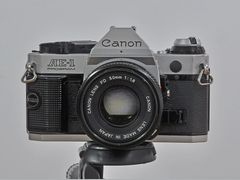 AE-1 Program
The X-570 (sold as the X-500 outside North America) shares the X-700's basic mechanics, but in manual it shows both the speed you set and the meter's recommendation, and it allows slow-sync flash. It drops Program mode and exposure compensation, so Rokkor Files calls it the preferable body for experienced manual shooters. The cheaper X-370 (X-300) is basically an X-700 minus the frills, with no Program mode, TTL flash or depth-of-field preview.
The XD-11 was Minolta's earlier flagship, with a vertical metal shutter, 1/100 flash sync and shutter priority, for buyers who want a sturdier shutter. The X-700 sold for about $100 less at launch thanks to its glass-filled polycarbonate body and simpler cloth shutter.
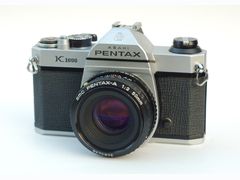
The Canon AE-1 Program is the direct 1981 rival. It also has Program mode, but pairs it with shutter priority instead of aperture priority and takes Canon FD lenses. In KingJvpes' comparison video the X-700 wins on aperture priority, a lower body price and cheaper lenses, and Mik Milman calls the X-700 a better camera than the AE-1 that probably cost him less. Kamerastore says Minolta aimed the X-700 at Canon's consumer market and that it surpassed the AE-1 and AE-1 Program in many ways. If you want nothing electronic to fail, the mechanical Pentax K1000 works without a battery.
Sources: rokkorfiles.com, mikeeckman.com, kamerastore.com, youtube.com, mikmilman.com, high5cameras.com, en.wikipedia.org
Known problems and what fixing them costs
These are the faults owners, repairers and repair guides mention most; costs are published figures from US shops checked in October 2026, and most shops quote after inspection.
Failed capacitors (the 'locked shutter' or 'locked winder' problem)
Raised in 12 opinions
- How you notice
- You press the shutter, the viewfinder LEDs go out and nothing fires; the advance lever stays locked. It may work on and off or reset after switching off and on, then fail again. Fresh batteries do not help.
- Fix
- Replace the two electrolytic capacitors (220uF 4V): the shutter-release capacitor under the bottom plate and the aperture-control capacitor under the top cover. Early bodies with blue tantalum capacitors rarely fail. The top one is fiddly, and High5 Cameras says it has seen a fair few fragile circuit boards written off by shoddy soldering, so unless you solder well, leave it to a technician.
- Typical cost
- No US shop checked publishes a flat X-700 capacitor price. Cute Camera Co. (Austin) charges $59.99 for a diagnosis including one hour of labor and return shipping, with parts and extra labor billed. Brooklyn Film Camera charges a $50 inspection fee credited to the repair. The capacitors themselves cost about $1 each, according to a Flickr group member.
Sources: high5cameras.com, high5cameras.com, thephotoforum.com, mikeeckman.com, cute.camera, brooklynfilmcamera.com, flickr.com
Crumbling light seals
Raised in 2 opinions
- How you notice
- Light leaks on the negatives. The foam seals on the door hinge and in the channels above and below the film compartment crumble away with age.
- Fix
- Replace the foam seals. Kamerastore says it is not a hard repair to do yourself but needs special foam and glue; two owners in the research replaced them themselves, and shops do it too.
- Typical cost
- $85-$150 at Brooklyn Film Camera; Victory Camera values a seal replacement at $75.
Sources: kamerastore.com, mikeeckman.com, brooklynfilmcamera.com, victorycamera.com
Dead camera or dead meter
Raised in 4 opinions
- How you notice
- No LEDs when you touch the shutter button and the shutter will not release, or the meter shows only one arrow whatever the light.
- Fix
- Fit two fresh SR44 or LR44 cells (+ side up) or one CR-1/3N, and clean corroded contacts and the battery cap. If it is still dead, the fault may be in the flex cable or circuit board. One Flickr owner cured a meter stuck on one arrow by resoldering a loose wire on the meter chip.
- Typical cost
- A few dollars for batteries; otherwise a bench diagnosis ($39.99 exam fee at Austin Camera, $59.99 at Cute Camera Co.).
Sources: ifixit.com, kamerastore.com, mir.com.my, austincamera.com, flickr.com
Shutter not fully cocked (stiff advance)
Raised in 1 opinion
- How you notice
- The LEDs light but the shutter will not fire, and the last bit of the advance stroke needs a firmer push.
- Fix
- Push the advance lever all the way to the end of its stroke. One forum member found the last fraction of a millimeter needed a firmer push; if it keeps happening, have a technician check the mechanism.
- Typical cost
- Free if it is technique; if it keeps happening, a bench inspection costs $50 at Brooklyn Film Camera, credited to the repair.
Sources: hauslendale.com, brooklynfilmcamera.com
Shutter and mirror stuck mid-cycle
- How you notice
- The shutter and mirror stick mid-cycle and the camera will not fire; one user reported it after the camera suddenly lost power.
- Fix
- One iFixit answer suggests pulling the shutter cloth toward the rewind knob. If you are unsure, have a shop unjam it.
- Typical cost
- $90-$150 for an unjam at Brooklyn Film Camera.
Sources: ifixit.com, brooklynfilmcamera.com
Other shutter and electronic faults
Raised in 2 opinions
- How you notice
- The camera refuses to fire like a capacitor failure but new capacitors do not cure it, or part of the frame comes out black at high speeds.
- Fix
- Technician diagnosis. High5 Cameras lists shutter derails, faulty shutter electromagnets, lack of lubrication on the shutter rollers and, more rarely, IC or circuit board failures. A Flickr member traced partial black frames to a shutter adjustment.
- Typical cost
- Quote after inspection ($50 inspection fee at Brooklyn Film Camera, credited to the repair); a full camera CLA runs $325-$850 there.
Sources: high5cameras.com, brooklynfilmcamera.com, flickr.com
Fungus or haze in the bundled lens
- How you notice
- Fog or spiderweb-like threads when you shine a light through the lens.
- Fix
- A lens cleaning (CLA) or a replacement lens; MD 50mm lenses are plentiful.
- Typical cost
- $150-$250 for a lens CLA at Brooklyn Film Camera; a used MD Rokkor-X 50mm f/1.4 was $89.95 at Victory Camera.
Sources: kamerastore.com, brooklynfilmcamera.com, victorycamera.com
Missing aperture-window mirror
- How you notice
- The f-number window at the bottom of the viewfinder shows nothing.
- Fix
- A technician refits the small mirror under the top cover, next to the window that shows the aperture.
- Typical cost
- Quote after inspection; no published US price found.
Sources: high5cameras.com
Photos taken with a Minolta X-700
Photos taken with Minolta X-700 cameras by Wikimedia Commons contributors, from Berlin in July 1990 to Sassnitz, Germany, in autumn 2009.

Reichstag, Berlin, July 1990Photo: Dietmar Rabich, CC BY-SA 4.0 
Berlin Wall on the Spree, July 1990Photo: Dietmar Rabich, CC BY-SA 4.0 
Eurasier puppy in its first snow, 1998Photo: PtrQs, CC BY-SA 4.0 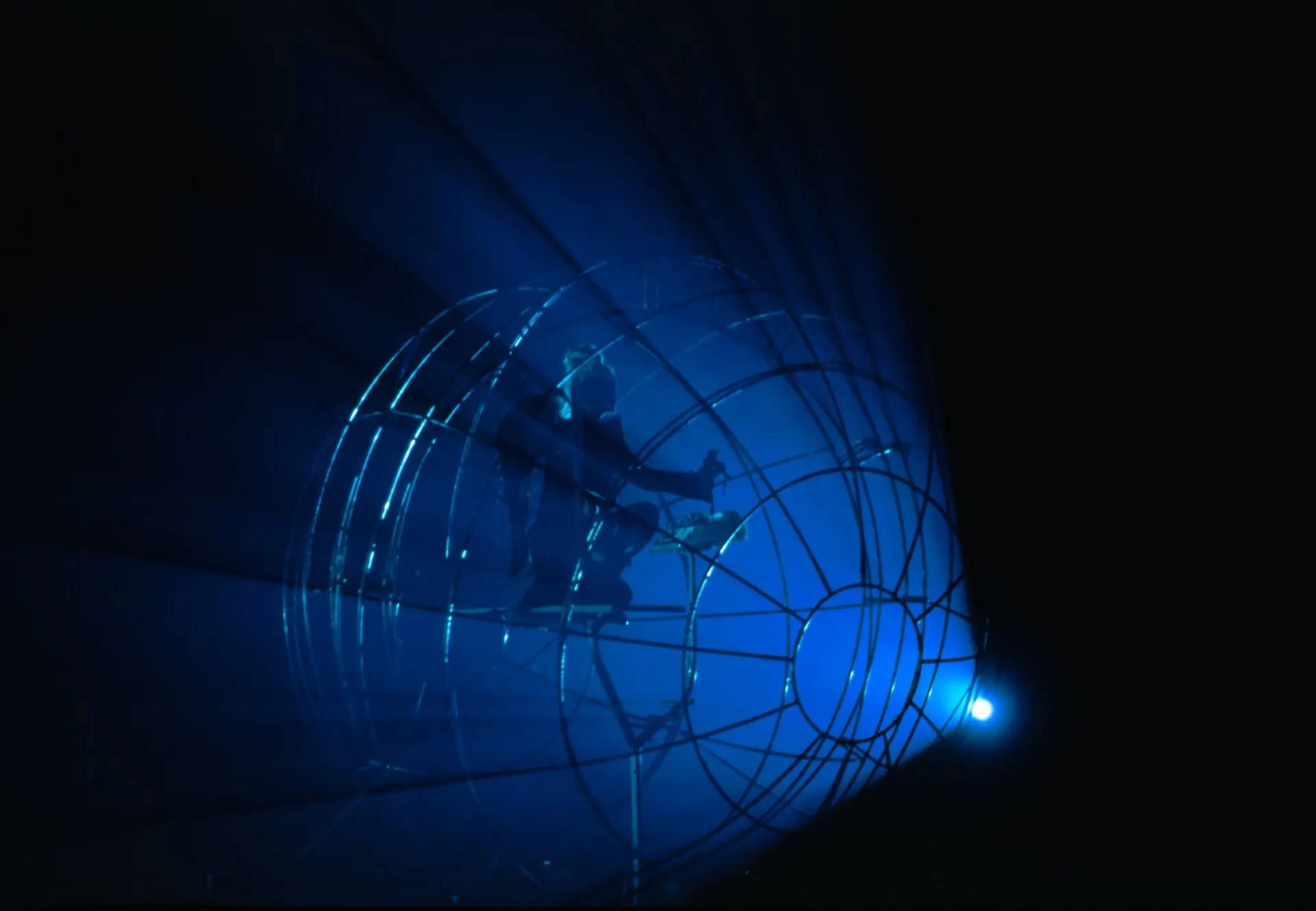
Street performance, Braunschweig, Germany, about 2005 (slide scan)Photo: PtrQs, CC BY-SA 4.0 
Alley off Via dei Musei, Brescia, Italy, July 2007Photo: Mediatus, CC BY-SA 3.0 
Hotel Fuerstenhof, Sassnitz, Germany, autumn 2009 (slide scan)Photo: PtrQs, CC BY-SA 4.0
What a Minolta X-700 costs today
US camera shops listed used, restored or CLA'd X-700s with a 50mm lens at about $280 to $475 (several of the cheapest are sold out). Many come with a 60-day return window or a 90-day to 6-month warranty. Graded used copies at Legacy Photo Lab sold for $225.99 to $329.99 depending on condition and lens. Owners who bought on eBay between 2016 and 2021 paid around $100, so expect to pay more today for a serviced copy.
Legacy Photo Lab (Fort Worth, TX)
Used, rated 7.5 out of 10, well used (sold), Body with Minolta 50mm f/2
$225.99
See listingLegacy Photo Lab (Fort Worth, TX)
Used, rated 7 out of 10 (sold), Body with Tokina 35-105mm zoom
$229.99
See listingLegacy Photo Lab (Fort Worth, TX)
Used, rated 6 out of 10 (sold), Body with Minolta MD 28-85mm zoom
$239.99
See listingFilm Supply Club
Used, fresh CLA (sold out), Body with Minolta MD 50mm f/1.7
$280.00
See listingBrooklyn Film Camera (Brooklyn, NY)
Serviced, 6-month warranty (sold out), Body; price varies with cosmetic grade
$280-$320
See listingLegacy Photo Lab (Fort Worth, TX)
Used, rated 9 out of 10 (sold), Body with MD Rokkor 50mm f/1.2
$289.99
See listingRetrospekt (Milwaukee, WI)
Vintage refurbished, 90-day warranty (sold out), Body with Minolta MD 50mm f/1.7 and lens cap
$299.00
See listingCute Camera Co. (Austin, TX)
Restored, Average cosmetic grade, 60-day returns, Body with Minolta Rokkor 50mm f/1.7 and fresh batteries
$309.99
See listingVictory Camera (Boulder, CO)
Used, excellent plus, Black body with 50mm f/1.7
$325.00
See listingLegacy Photo Lab (Fort Worth, TX)
Used, rated 9.5 out of 10 (sold), Body with Vivitar 28mm f/2.8
$329.99
See listingCute Camera Co. (Austin, TX)
Restored, Good cosmetic grade, Body with Minolta Rokkor 50mm f/1.7 and fresh batteries
$339.99
See listingAustin Camera (Austin, TX)
Used (sold out), Body with 50mm f/1.7
$349.99
See listingCute Camera Co. (Austin, TX)
Restored, Very Good cosmetic grade, Body with Minolta Rokkor 50mm f/1.7 and fresh batteries
$399.99
See listingVictory Camera (Boulder, CO)
Used excellent, CLA'd, new light seals, 90-day warranty, Black body with 50mm f/1.7, batteries and lens cap
$475.00
See listing
Prices checked on October 28, 2026. They move every week, so treat them as a range, not a quote. eBay, KEH, MPB and B&H blocked our price checks, so marketplace sold prices and untested bodies are not listed. Sold and sold-out listings are included because they show what recent copies went for.
Video reviews worth your time

The BEST 35mm Film Camera : Minolta X-700 Review
The Minolta X-700 is a versatile, user-friendly SLR camera with excellent ergonomics and an affordable lens system.

Vintage Camera Review: Minolta X 700
The Minolta X-700 is an impressive, feature-packed 35mm SLR with reliable TTL exposure automation, a brilliant viewfinder, and access to budget-friendly lenses.

Best Budget Beginner Film Camera - Canon AE 1 Program vs MInolta x-700
The reviewer considers the Minolta X-700 to be the best beginner 35mm film camera because of its aperture priority mode, lower price point, and affordable lens selection.

Minolta X-700 Review
The Minolta X-700 is an intuitive and feature-rich 35mm SLR camera that produces great images, making it an excellent choice for beginners despite plastic build concerns and complete dependency on battery power.

Shoot Film: Minolta X-700
The reviewer considers the Minolta X-700 to be an excellent, comfortable SLR camera that is easy to use, despite its light meter slightly underexposing images.
Specifications
Camera and history
- Production
- 1981 to 1999
- Original US price
- $399.50 body only, $438.50 with a 35-105mm f/3.5-4.5 zoom (1981)
- Standard lenses
- MD 50mm f/1.2, f/1.4 or f/1.7
Shutter and exposure
- Mechanical backup
- None; the shutter needs batteries at every setting, including B
- Auto-exposure range
- EV 1 to EV 18
- Exposure compensation
- Plus or minus 2 EV in 1/2-stop clicks, in P, A and M
- Flash sync
- 1/60 s maximum
- Dedicated TTL flashes
- Minolta 280PX, 132PX, 360PX and Macro 80PX
- Self-timer
- Electronic, 10-second delay
Viewfinder, power and size
- Finder display
- LED shutter speed scale on the right of the finder; in manual it shows only the recommended speed
- Focusing screen
- Split-image and microprism standard; P1, P2, PD, M, G, L, S and H screens fitted at Minolta service
- Meter activation
- Touch-sensitive shutter button, stays on for 15 seconds
- Winder and motor drive
- Auto Winder G up to 2 fps; Motor Drive 1 up to 3.5 fps
Questions people ask about the X-700
How much is a Minolta X-700 worth?
In October 2026, US camera shops listed used, restored or CLA'd X-700s with a 50mm f/1.7 for about $280 to $475: Cute Camera Co. at $309.99 to $399.99 by cosmetic grade, and Victory Camera at $325.00, or $475.00 for a CLA'd copy with new seals and a 90-day warranty. Graded used copies sold at Legacy Photo Lab for $225.99 to $329.99. Value depends mostly on whether it works: Fstoppers put an ordinary used eBay copy at around $100 in 2021.
Sources: cute.camera, victorycamera.com, legacy-photolab.com, fstoppers.com
What batteries does the Minolta X-700 take, and can you charge it?
There is nothing to charge. According to the manual, it takes two LR44 alkaline or SR44 silver-oxide button cells, or one 3V CR-1/3N lithium, and never 1.35V mercury MR44 cells. Battery Junction sold the Energizer 357 (SR44) for $1.95 a cell in October 2026. If any LED lights in the finder when you switch on and touch the shutter button, the batteries are working.
Sources: mir.com.my, batteryjunction.com
How do you change the ISO on a Minolta X-700?
On the dial around the rewind knob, lift the ridged ring and turn it until the film's ISO shows in the window. The dial runs from ISO 25 to 1600 in 1/3-stop clicks. To brighten or darken a shot, use the separate exposure compensation dial (plus or minus 2 EV) rather than changing the ISO.
Sources: kamerastore.com, mir.com.my
Why is my Minolta X-700 not taking pictures?
Start with fresh batteries, and make sure the advance lever went through its full stroke, because a shutter that is not fully cocked will not fire. If the LEDs go out when you press the shutter and nothing fires, that is the classic capacitor failure, fixed by replacing the two 220uF capacitors. No LEDs at all with fresh cells points to corroded contacts or a deeper electrical fault.
Sources: high5cameras.com, high5cameras.com, hauslendale.com, mir.com.my
Which Minolta X-700 serial numbers have the good capacitors?
High5 Cameras says bodies with serial numbers below 2000000 used durable tantalum capacitors; Minolta switched to cheaper electrolytic ones in the mid-1980s. Owners disagree on the exact cutoff, and Mike Eckman says there is no external way to tell. The surest check is to look under the bottom plate for a blue tantalum capacitor near the motor-drive contacts.
Sources: high5cameras.com, mikeeckman.com
Can I use Program mode with an MC Rokkor lens?
No. Program needs an MD lens set to its smallest aperture, which is marked in green; MC lenses work in aperture priority and manual only. A blinking P in the finder means the lens is not at minimum aperture or is not an MD lens.
Sources: camera-wiki.org, kamerastore.com, mikeeckman.com
Is the Minolta X-700 good for beginners?
Most reviewers say yes. Fstoppers recommends it as a cheap, easy first film camera, Program mode lets it work like a point-and-shoot, and aperture priority is an easy way to learn depth of field. Jim Grey and Mike Eckman both hold back their recommendation over the capacitor reputation, so a beginner should buy a serviced copy with a warranty. More options in [best film cameras for beginners](/cameras/best-film-cameras-for-beginners/).
Sources: fstoppers.com, blog.jimgrey.net, mikeeckman.com
Is Minolta still in business?
Not as a camera maker. Minolta merged with Konica in 2003, and Konica Minolta left the camera business in January 2006, selling part of its SLR business to Sony. X-700 repairs now come from independent shops; Garry's Camera Repair (mail-in) and Cute Camera Co. in Austin both list it for service.
Sources: en.wikipedia.org, garryscamerarepair.com, cute.camera
What people compare it with
The direct 1981 rival with a Program mode, but shutter priority instead of aperture priority and Canon FD lenses. Used bodies usually cost more than an X-700, according to KingJvpes.
Minolta X-570 (X-500)
Same basic mechanics, and in manual it shows the speed you set as well as the recommended one. It drops Program mode and exposure compensation, so manual shooters often prefer it.
Minolta XD-11
Minolta's earlier flagship, with a vertical metal shutter, 1/100 flash sync and shutter priority, for buyers who want a sturdier shutter.
A mechanical, manual-only SLR that works without a battery, a natural pick if the X-700's electronics worry you.
Every source behind this page
Read them yourself. How we pick and count them is in our methodology.
Show all 67 sources
Manuals and references 27
- brooklynfilmcamera.com: Minolta Film Cameras for Sale
- brooklynfilmcamera.com: Camera Repair NYC: Film Camera Repair in Brooklyn + Mail
- camera-wiki.org: Minolta X-700 - Camera-wiki.org
- cute.camera: Minolta X-700
- cute.camera: Camera Diagnostic & Repair Assessment
- en.wikipedia.org: Minolta
- en.wikipedia.org: Minolta X-700
- en.wikipedia.org: Pentax K1000
- filmsupply.club: Search: 2 results found for "x-700"
- high5cameras.com: Minolta X-700 Capacitor Replacement
- kamerastore.com: How to Use: Minolta X-700
- legacy-photolab.com: Search: 45 results found for "minolta x-700"
- retrospekt.com: Minolta X-700 SLR 35mm Film Camera
- austincamera.com: Camera Repairs
- austincamera.com: Search results: 14 results for “minolta x-700”
- batteryjunction.com: Duracell DL CR1/3N 2L76 Lithium Coin Cell Battery - 1 Pack
- batteryjunction.com: Energizer 357/303 148mAh 1.55V Silver Oxide Coin Cell Watch Battery -
- batteryjunction.com: Energizer A76 153mAh 1.5V Alkaline Coin Cell Watch Battery - 1 Piece B
- garryscamerarepair.com: Garry's Camera Repair
- ifixit.com: How to fix stuck shutter and mirror? - Minolta X-700
- ifixit.com: Why won’t my camera turn on - Minolta X-700
- mir.com.my: Minolta X-700 SLR camera
- mir.com.my: Minolta X-700 SLR camera
- rokkorfiles.com: The Rokkor Files - The Minolta X
- victorycamera.com: Minolta X-700 X700 Black 35mm SLR Film Camera w/ 50mm f1.7 Lens ~CLA'd
- victorycamera.com: Search
- victorycamera.com: Search: 26 results found for "minolta x
Independent blogs 18
- Camera Legend: Monday Mystery Camera: The Minolta X
- Camera Go Camera: Minolta X
- Will Wander Photography: Gear Review 7: Minolta X
- The Fogdog Blog: The Minolta X-700
- Jim Grey, Down the Road: Minolta X-700 - Down the Road
- Soperfect Images: Minolta X700 MPS - Camera Reviews
- Mik Milman blog: 5 Reasons You Should get a Minolta X700
- Mike Eckman: Minolta X-700 (1981)
- 35mmc: The Whole Roll - 24 exp. HP5+, Minolta x-700, Minolta MD 50mm f/1.7 - By Robert Kapp
- 35mmc: 5 Frames with a Minolta X-700 and Tri-X
- 35mmc: 5 Frames with a Minolta X-700 and Harman Phoenix in Krakow, Poland
- 35mmc: Rollei Retro 400S in Paris, with a Minolta X700
- 35mmc: Minolta X-700 and 45mm f2 Lens - A love story with an uncertain ending - By Torsten Kathke
- EMULSIVE: 5 Frames... Around my Houston neighborhood on Adox CMS 20 II Pro (EI 20 / 35mm Format / Minolta X-700 + MD Rokkor 35mm f/2.8) - by Joseph Jacobs
- EMULSIVE: 5 Frames... With Kodak ULTRAMAX 400 (EI 400 / 35mm format / Minolta X-700)
- Island in the Net: Experience Report: Minolta X-700
- Alex Luyckx blog: Camera Review Blog No. 34 - Minolta X-700 - Alex Luyckx
- m. werneburg: review: Minolta X-700 camera
Forums 11
- ThePhotoForum: Minolta X
- Classic Camera Repair Forum: Minolta x700
- Flickr Minolta X-700 group: Flickr: Discussing Light meter problem? in Minolta X
- Flickr Minolta X-700 group: Flickr: Discussing What lenses work with the x700? in Minolta X
- Flickr Minolta X-700 group: Flickr: Discussing Mintola X - 700 light meter issue. in Minolta X
- Flickr Minolta X-700 group: Flickr: Discussing Lens for Minolta X-700 in Minolta X
- Flickr Minolta X-700 group: Flickr: Discussing Photos not very sharp even when wide open in Minolta X
- Flickr Minolta X-700 group: Flickr: Discussing Strange photo in Minolta X
- Flickr Minolta X-700 group: Flickr: Discussing OOF and echoing, springy shutter sound? in Minolta X
- Flickr Minolta X-700 group: Flickr: Discussing Cheap minolta with no defects in Minolta X
- Flickr Minolta X-700 group: Flickr: Discussing Syncing with a strobe in Minolta X
Editorial reviews 6
Video reviews 5
Keep reading
Film cameras
The best film camera for beginners is usually a used Canon AE-1 Program or Pentax K1000. Compare 8 picks, October 2026 US shop prices and what to check first.
Film cameras
What 116 owner and reviewer opinions say about the Canon AE-1 Program: $289-$445 shop prices, the 6V battery it needs, common faults and how to check one.
Film cameras
Where to buy film cameras used in the US: KEH, MPB, B&H, local shops, eBay and thrift, with warranties, October 2026 prices and a checklist to test one.
Film cameras
How to load film step by step in 35mm SLRs, point-and-shoots, 120 and instant cameras, plus how to check it caught, rewind it and fix film that won't advance.
Techniques and editing
Light leaks are stray light fogging your film, usually from worn seals or an opened back. How to find the source, fix it for $80-120 or get the look on purpose.