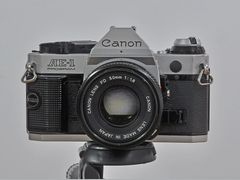
Canon AE-1 Program: prices, how to use it and what goes wrong
The short answer
The Canon AE-1 Program is Canon's 1981 35mm SLR that added a fully automatic Program mode to the AE-1, and reviewers and owners rank it among the easiest film SLRs to learn on.
In October 2026, US camera shops listed copies with a 50mm lens for about $289 to $445 (a few of those had already sold). It needs a 6V 4LR44 battery to work at all, and owners report that old copies can squeal, jam or die, so budget for a CLA (Brooklyn Film Camera quotes $280) unless you buy one that has been serviced.
- Released
- April 1981
- Modes
- Program, shutter priority, manual
- Battery
- One 6V 4LR44 (PX28)
- Shop price
- $289-$445 with 50mm
Built from 116 opinions from 26 pages and videos. Not yet tested by Camera Dojo. Updated .
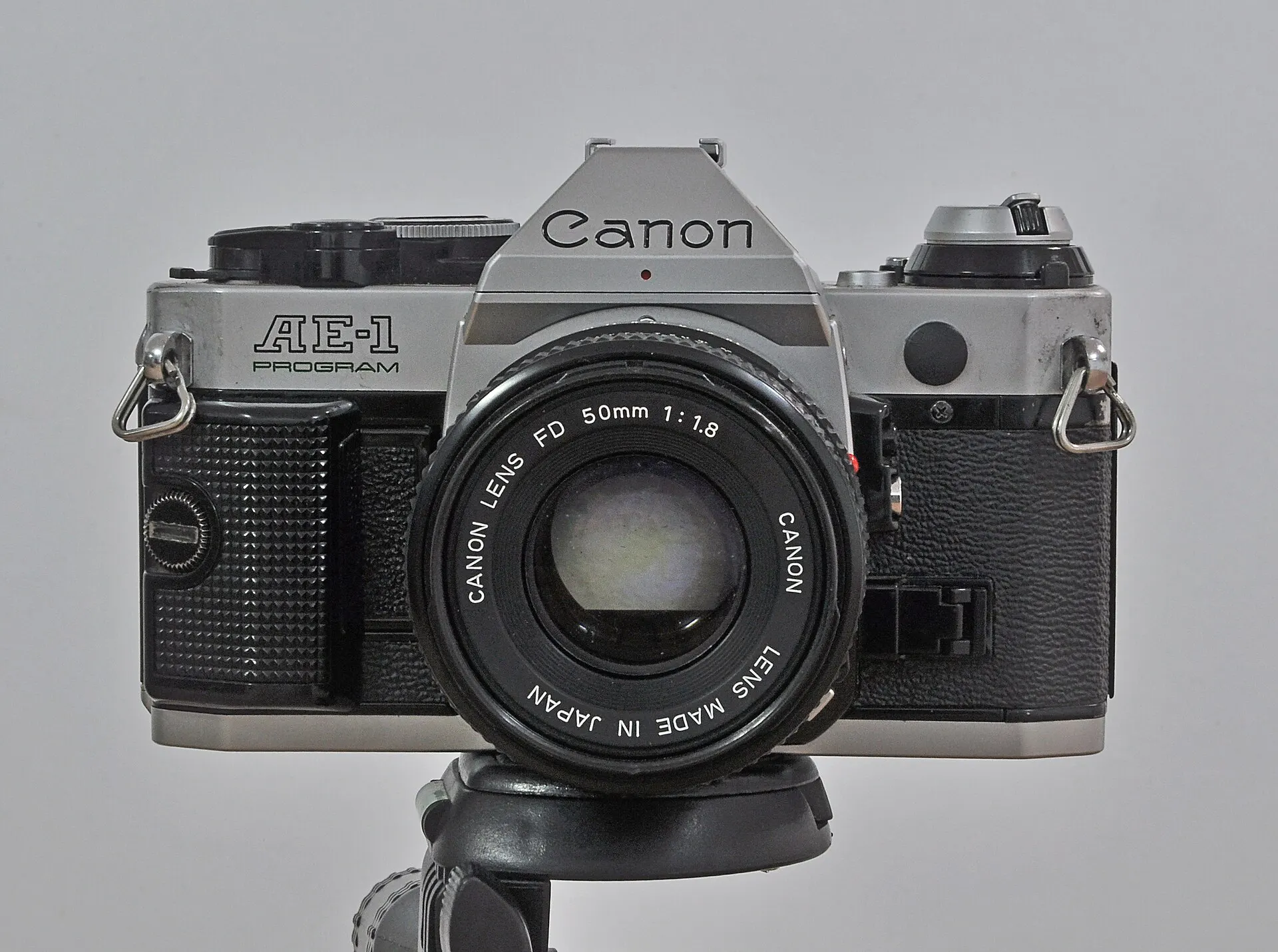
The short version
Owners keep praising how little it asks of a beginner: shutter dial on PROGRAM, lens on A, focus and shoot. Shutter priority and full manual are there when you want more control, the finder is bright, and Canon FD lenses are cheap. Broken Camera Club, Cameras By Max and Dave Montejano's YouTube review recommend it to newcomers, and Digital Camera World calls it one of the easiest 35mm film cameras to use.
The catch is age. Most negative comments are about reliability and repairs: the shutter squeal, a film advance that locks up, fragile plastic battery doors and electronic faults that some technicians refuse to touch. Buy a tested or CLA'd copy with a warranty, or set money aside for service.
Good fit if
- You want a first film SLR that can handle exposure while you learn focusing and framing
- You want room to grow into shutter priority and full manual without buying a second body
- You want cheap lenses: Canon FD primes and zooms, including third-party FD glass, are plentiful
- You are buying a serviced copy from a shop that gives a warranty
Think twice if
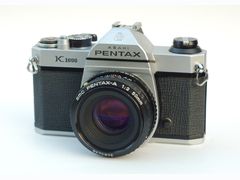
- You want a camera that fires with no battery (look at the Pentax K1000)
- You want aperture priority (the Canon A-1 has it)
- You want autofocus or plan to reuse Canon EF lenses, which do not fit
- You need a quiet shutter for discreet street shooting
- You are buying an untested body with no budget for repairs
What owners and reviewers say, topic by topic
We sorted 116 opinions about the AE-1 Program from 26 pages and videos on 22 websites and channels. Each row shows how many people raised a topic and how many of them were positive. Open a row to read short quotes, each linked to its source.
Owner voices come mostly from blogs and editorial reviews (Casual Photophile, 35mmc, Jim Grey, Mike Eckman, Shotkit, Digital Camera World, Alex Luyckx) plus five YouTube reviews. Reddit threads could not be read and forum voices are limited to two iFixit questions, so the page leans on long-form owner reviews. Three customer reviews come from a restoring seller's own site and lean positive.
Controls and features78% positiveof 18
Owners like the layout, the easy ISO setting and the switch between automatic and manual. Complaints: no aperture-priority mode and a loud shutter.
“Can't not hear the shutter on the AE-1, stealth is not it's forte!”
Greg May, 35mmc 2018-03Owner
“The way it moves between automatic and manual without any fuss means I can shoot however the moment demands”
Ian J Myers, IJM Photography 2023-09Owner
“The main reason I chose the Canon AE-1 Program when I started film photography was for the automatic and manual settings”
Cameras By Max 2022-07Owner
“The dials and buttons are all in the right place and respond smoothly without feeling like they're constantly slipping past the settings you want.”
Ease of use100% positiveof 12
All 12 comments call it easy to learn, and reviewers and owners recommend it as a first film SLR because Program mode takes care of exposure.
“Sometimes it is ok for photography to be easy. To be, of all things, fun.”
Greg May, 35mmc 2018-03Owner
“It does not take long to learn how to use the camera at all. It is not an overwhelming camera.”
Cameras By Max 2022-07Owner
“It's just advanced enough to give you room to play, and not so much that it gets in its own way.”
Will Mordell, Will Wander Photography 2019-12Owner
“It was almost an instant understanding of how to operate the camera as soon as I picked it up and started.”
Alex Luyckx blog 2015-02Owner
Viewfinder and focusing73% positiveof 11
Owners praise the large, bright finder and split-image focusing. The caveats: used finders are often marked or cloudy, manual focus takes practice up close, and the display shows no shutter speed.
“Comparing the two viewfinders, both are good, but the Canon's is better.”
mike eckman dot com 2019-08Owner
“Focussing is pretty easy, and you have the assistance of the split finder too.”
Simon Rikowski, 35mmc 2021-07Owner
“The viewfinder is bright and clear with a split-image prism in the middle, so focusing manually is quick”
Ian J Myers, IJM Photography 2023-09Owner
“The only thing I would say you have to expect is some clouding or damage to the viewfinder.”
Build quality55% positiveof 11
Split opinions: several owners say it feels solid and survives drops, while others point to fragile plastic parts such as the battery door, grip and shutter lock lever.
“The grip and battery door are well known to break easily.”
Down the Road (Jim Grey) 2013-06Owner
“Solid, a bit heavy, no creak in the hinges.”
Ian J Myers, IJM Photography 2023-09Owner
“It's a very well built bit of kit and that FD glass is beautiful.”
Robert_, 35mmc reader comment 2020-08Owner
“Battery doors, for instance, are notoriously delicate on the AE-1, though reportedly fare somewhat better on later models such as the A-1 and AE-1P”
Daniel J. Schneider blog 2015-02
Reliability today18% positiveof 11
This is the weak spot. Most comments describe the shutter squeal, a locked film advance or a copy that died. Only two owners report no trouble, one over a good while of use and one on the first rolls of a restored copy.
“The camera just begins to beep constantly.”
maggieheiser2, iFixit Answers 2019-02Owner
“the film advance just locked up. I changed the battery, nada.”
Simon Rikowski, 35mmc 2021-07Owner
“I've had mine for a good while now and it hasn't let me down once.”
Ian J Myers, IJM Photography 2023-09Owner
“the number of faults between the two is much higher on the Canon”
mike eckman dot com 2019-08Owner
Lenses100% positiveof 10
All 10 comments praise the Canon FD system: lenses are plentiful, sharp and cheap, and third-party FD glass keeps costs down further.
“It's affordable, small, and sharp!”
Natalie Anne, Myles Katherine Photography 2025-04Owner
“the best is that this stuff cost me less than 100€ because FD canon mount are so cheap”
Noan MOUSY, 35mmc reader comment 2018-09Owner
“they don't have to be Canon branded either, which means you can get cheap lenses for the camera”
Cameras By Max 2022-07Owner
“since the FD system was dropped in 1987, you can get a lot of the lenses for a song these days.”
Alex Luyckx blog 2015-02Owner
Light meter and exposure75% positiveof 8
Most find the center-weighted meter accurate and Program mode dependable; two call the meter basic or quirky but fine once you learn it.
“The camera's meter, a centre-weighted unit, is dead-on accurate with both colour and black & white films.”
Alex Luyckx blog 2015-02Owner
“The Canon's meter is a Silicon Photo Diode which has increased sensitivity over the CdS in the Pentax, especially in low light.”
mike eckman dot com 2019-08Owner
“Kept the mode dial on Program and just prayed the camera knew what it was doing. Luckily enough all the shots came out quite good.”
Tashdique Mehtaj, EMULSIVE 2020-09Owner
“The exposure meter in the camera is somewhat primitive but perfectly functional”
Simon Rikowski, 35mmc 2021-07Owner
Repairs and servicing38% positiveof 8
Mixed. Plenty of shops still fix them and some repairs were cheap, but electronic faults can be expensive and some technicians will not work on them.
“Electronics have gotten harder to repair as the years go on”
“several repair techs I know won't touch one with a barge-pole”
jon campo, mike eckman dot com reader comment 2019-08Owner
“does repairs on the AE-1P...did wonders for my second one”
Richard Costello, Down the Road reader comment 2023-04Owner
“Get one while you can, have it gone over, do whatever preventive maintenance you can, and go shoot.”
Will Mordell, Will Wander Photography 2019-12Owner
Batteries and power57% positiveof 7
The 6V 4LR44 is easy to buy online and can last for years of light use, but it is a specialty cell, the camera does nothing without it, and one owner finds it picky about brands.
“every Canon AE-1 or AE-1 Program I've handled is very particular about which batteries they work with.”
mike eckman dot com 2019-08Owner
“These are readily available online and in some stores.”
Cameras By Max 2022-07Owner
“I have the same battery since 2 years and I have shooted like 10 films with it.”
Noan MOUSY, 35mmc reader comment 2018-09Owner
“Now the battery is a speciality one, the 4LR44, in stores you do need a camera shop or a battery store.”
Alex Luyckx blog 2015-02Owner
Price and value43% positiveof 7
Several owners still call it good value, but three comments note that prices have crept up, and one reviewer points out the A-1 can cost less.
“The value is still extremely good for this retro camera.”
“at 1/10th of the price of the FM3A the canon AE1-Program is still a gem especially for beginners”
Simon Rikowski, 35mmc 2021-07Owner
“There's plenty of them still out there, albeit trading at ever higher prices.”
Will Mordell, Will Wander Photography 2019-12Owner
“they are becoming quite desirable, so the prices are creeping up and good models are hard-fought for”
Gareth Bevan, Digital Camera World 2023-01Hands-on review
Image results100% positiveof 6
All six comments are positive: owners report sharp, pleasing results, and one adds that good lenses and film still matter.
“I was incredibly happy with the results.”
Andre Ritchie, 35mmc 2026-10Owner
“easy and fun to shoot, yielding pleasing results”
Down the Road (Jim Grey) 2013-06Owner
“Still a great camera when used with good lenses and film.”
Dave Mockford, Casual Photophile reader comment 2016-01Owner
“both cameras are very capable of making excellent photographs”
mike eckman dot com 2019-08Owner
Size and weight83% positiveof 6
Most find it a comfortable weight that balances well from a 50mm to big telephotos; one owner calls it a bit heavy but does not mind.
“It's nice and chunky in the hand”
Simon Rikowski, 35mmc 2021-07Owner
“The balance with all of these lenses is just right.”
“The camera is the perfect weight, not too light to think it cheap, but not too heavy to wear after a few hours of use.”
Alex Luyckx blog 2015-02Owner
“While it is a bit weighty, this adds to its charm.”
Natalie Anne, Myles Katherine Photography 2025-04Owner
PositiveMixedNegative
How to use the Canon AE-1 Program: Program, shutter priority and manual
Two controls set the mode: the shutter dial on top and the A mark on the lens aperture ring. Where those two sit decides whether the camera picks the aperture, the shutter speed, both or neither.
- 1
Set the film speed
Press the silver button next to the ISO window and move the tab by the rewind knob to the speed printed on the film box. The range is ISO 12 to 3200, set by hand, so you can push or pull a roll just by dialing in a different number.
- 2
Put the lens on A
Hold the small lock button next to the A on an FD lens and turn the aperture ring onto A. Program and shutter priority both need it; setting only the shutter dial will not work properly.
- 3
Program: dial on PROGRAM
Turn the shutter dial to PROGRAM. The camera picks both shutter speed and aperture, favoring about f/5.6 to f/8 in good light, and shows a P and the chosen aperture on the right side of the finder.
- 4
Watch for a blinking P
A blinking P warns that the shutter speed is slow enough for camera shake. Sources disagree on the threshold: Camera-wiki says below 1/60 second, while the manual and a Canon Classics owner review say 1/30 second or slower. Brace the camera or use a tripod.
- 5
Shutter priority: pick a speed
Leave the lens on A and turn the dial to any speed from 2 seconds to 1/1000. The camera chooses the aperture and shows it in the finder, with over and under warnings when the light is out of range.
- 6
Manual: take the lens off A
Turn the aperture ring off A and a red M appears. The LED now shows the aperture the meter suggests, not the one set on the lens, so turn the ring to match it or set your own.
- 7
Backlit subjects: use AE lock
Meter the main subject, press the AE lock button with the shutter half-pressed, then reframe. There is no exposure compensation dial, so AE lock or changing the ISO setting is the only way to adjust exposure in the automatic modes.
Sources: kamerastore.com, analog.cafe, camera-wiki.org, canonclassics.com, global.canon
How to load film in the AE-1 Program (and which film to use)
Any 35mm film works: color negative, black and white or slide. Set the ISO to the box speed, since the camera does not read DX codes. If you are not sure which stock to start with, see Kodak Gold 200 vs Ultramax 400.
- 1
Open the back
Pull the rewind knob up until the back pops open.
- 2
Thread the leader
Drop the cassette in, pull the film leader across and push its end into one of the slots in the take-up spool, then work the advance lever so the film starts winding on.
- 3
Close it and wind to 1
Close the back, then fire and advance until the frame counter reaches 1, so your first real frame is not one that was fogged while loading.
- 4
Rewind at the end of the roll
When the lever stops, press the small rewind button on the bottom plate, then turn the rewind crank in the direction of the arrow until the tension lets go. According to the manual, do not open the back before the film is rewound.
- 5
Optional: a double exposure
After the first shot, take up the slack with the rewind crank, hold it, press the rewind button and work the advance lever. The shutter recocks while the film stays put, so the next shot lands on the same frame. More in double exposures on film.
Sources: kamerastore.com, brooklynfilmcamera.com, analog.cafe, shotkit.com, 35mm-compact.com, cute.camera
Canon AE-1 Program battery: which one, how long it lasts, how to change it
The camera runs on one 6V cell, sold as 4LR44 or A544 (alkaline), 4SR44 or PX28 (silver oxide) and PX28L (lithium). It powers both the meter and the shutter, so nothing works without it: there is no mechanical backup speed. The spec sheet lists about a year of normal use.
To change it, take off the front action grip by turning a coin in its slot to the left, then press the tab at the bottom of the battery door. Check the orientation, because a battery in backward leaves the camera dead. Then press the battery check button: six or more beeps a second means the cell is fine, three or fewer means replace it.
Owners disagree on how fussy it is. Max of Cameras By Max says the 4LR44 is easy to find online and in some stores, Alex Luyckx calls it a specialty cell worth carrying spares of, and Mike Eckman says every AE-1 and AE-1 Program he has handled works best with fresh name-brand batteries. Analog.Cafe prefers the 4SR44 silver-oxide version because its voltage stays steadier. Foto Pirata's YouTube review and Imaging Pixel both say a stack of four LR44 button cells taped together can stand in as a DIY substitute. The original AE-1 takes the same cell; our Canon AE-1 battery guide covers the original AE-1 in more detail.
| Battery | Type | Price |
|---|---|---|
| Energizer A544 (4LR44, PX28 equivalent) | 6V alkaline | $4.75 |
| Duracell PX28L (28L) | 6V lithium, 160 mAh | $8.95 |
Carry a spare: the shutter will not fire on a dead cell.
Sources: canonclassics.com, brooklynfilmcamera.com, kamerastore.com, analog.cafe, imagingpixel.com, batteryjunction.com, batteryjunction.com, camerasbymax.co.uk, alexluyckx.com, mikeeckman.com, youtube.com
Lenses and flash for the AE-1 Program
The mount is Canon FD. Canon FD and New FD lenses meter at full aperture; older Canon FL and other non-FD lenses mount but meter stopped down. Third-party FD lenses from Tamron, Sigma and Vivitar fit too, but Canon EF autofocus lenses do not. Analog.Cafe counts 134 FD lenses, from a 7.5mm fisheye to a 1,200mm super-telephoto.
The usual kit lens is the FD 50mm f/1.8, which Brooklyn Film Camera says sells clean for $40 to $100; the shop prices CLA'd copies at $70 and CLA'd chrome-nose FD 50mm f/1.4 lenses at $220-$240. Owners also praise the price: Alex Luyckx points out that Canon dropped the FD system in 1987, so many lenses sell cheaply today.
There is no built-in flash. The hot shoe has a dedicated contact for Canon Speedlites, and a PC socket takes cord flashes. With an ordinary manual flash, set the shutter dial to 1/60, the X-sync speed. With a dedicated Speedlite such as the 188A or 166A, the camera sets the shutter speed itself once the flash's pilot lamp glows, and the aperture follows the setting on the flash. Guide numbers and PC sync are covered in our flash photography guide.
Sources: canonclassics.com, kamerastore.com, analog.cafe, brooklynfilmcamera.com, brooklynfilmcamera.com, alexluyckx.com
What to check before buying a used Canon AE-1 Program
These cameras were made in the 1980s, so condition inside matters more than scuffs outside. Bring a fresh 6V battery to any in-person sale.
- 1
Fit a fresh battery first
Many 'dead' cameras just have a weak, reversed or corroded cell. Press the battery check button for fast beeps, and confirm the LEDs in the finder light up.
- 2
Listen to the shutter
It should be a crisp click. A squeal points to the dried mirror lubricant behind the 'Canon squeal', and a wheeze (the 'Canon cough') points to a dirty mirror magnet. Try slow speeds too, where the squeal is easiest to hear.
- 3
Test the meter with no lens
Take the lens off and fire the camera pointed at something dark, then at bright light. The shutter should fire slowly in the dark and quickly in the light.
- 4
Check the battery door and grip
The plastic battery door breaks easily, so make sure it latches. Ask whether the detachable action grip comes with it: Victory Camera calls it an often misplaced accessory, and it covers and protects the door.
- 5
Look through the finder and the lens
Shotkit's reviewer warns to expect some clouding or marks in a used viewfinder. Shine a phone flashlight through the lens: a little dust is fine, haze or spiderweb lines (fungus) are not.
- 6
Assume the light seals are done
Unless a camera store has replaced them, plan on new foam seals. Brooklyn Film Camera's guide prices the job at $80-120, or you can fit a pre-cut kit yourself following iFixit's guide.
- 7
Pay for testing when you can
Analog.Cafe advises paying more for a tested or film-tested copy from a reputable seller instead of gambling on repairs. Victory Camera, Retrospekt and Brooklyn Film Camera, all in the price table below, back their copies with 90-day to 6-month warranties; more options in where to buy used film cameras.
- 8
Know where to get it serviced
Garry's Camera Repair, an online US shop, lists the AE-1 Program among the models it services, with flat-rate estimates, a 7-10 day turnaround and a 90-day warranty. In New York, Nippon Photo Clinic repairs AE-1 Programs; inspections cost $5 per item and estimates take 1-2 weeks.
Sources: kamerastore.com, ifixit.com, victorycamera.com, shotkit.com, brooklynfilmcamera.com, ifixit.com, analog.cafe, garryscamerarepair.com, nipponphotoclinic.com
Canon AE-1 Program vs AE-1, A-1 and Pentax K1000
The AE-1 Program is the 1981 update of the 1976 AE-1. Canon built it because users wanted the A-1's Program mode, and it went on to become even more popular than the AE-1. It keeps the AE-1's shutter, lenses and battery but adds Program AE, an easier ISO setting, a brighter user-changeable focusing screen with an LED readout, and a grip. Full breakdown: Canon AE-1 vs AE-1 Program.
The Canon A-1 is the step up: it adds aperture priority and shows shutter speed as well as aperture in the finder, with the same FD lenses and battery. Analog.Cafe says the two are priced similarly, and Griffen Sander finds the A-1 often costs less despite doing more.
The Pentax K1000 is the other classic first SLR: fully mechanical, manual exposure only, and it fires with no battery. Mike Eckman, who has handled many of both, sees far more faults on the Canons, so he leans K1000 for students. The tradeoff is that the Pentax has no Program or shutter-priority mode.
| AE-1 Program | AE-1 | A-1 | |
|---|---|---|---|
| Made | 1981-1989 (Wikipedia) | 1976-1984 (Wikipedia) | Not checked |
| Exposure modes | Program, shutter priority, manual | Shutter priority, manual | All of those plus aperture priority |
| Viewfinder | Bright, user-changeable screen; LED aperture readout | Dimmer finder with a needle | Shows shutter speed and aperture |
| Grip and drives | Optional grip; Motor Drive MA | No grip | Optional grip |
| Lenses and battery | Canon FD, one 6V 4LR44 | Same | Same |
| Used price | $289-$445 with a 50mm at US shops | Similar, usually $200-$300 (Analog.Cafe) | Similar (Analog.Cafe); often less per Griffen Sander |
Sources: global.canon, camera-wiki.org, casualphotophile.com, analog.cafe, youtube.com, brooklynfilmcamera.com, mikeeckman.com, en.wikipedia.org, en.wikipedia.org
Known problems and what fixing them costs
These are the faults owners, repairers and repair guides mention most; costs are published estimates from US shops and repair guides checked in October 2026, and shops quote after inspection.
Shutter squeal (the 'Canon squeal')
Raised in 5 opinions
- How you notice
- A squeak or squeal from the mirror as it moves, loudest at slow speeds; left alone it can get worse.
- Fix
- Re-lubricate the mirror damper, normally as part of a CLA. iFixit has a DIY guide that puts a drop of oil through a lens-mount screw hole, but commenters warn that too much oil can reach the shutter and focusing screen.
- Typical cost
- Brooklyn Film Camera: $280 for an AE-1 Program body CLA plus a $50 diagnostic fee; its guide puts a full CLA on a common 35mm SLR at $225-325.
Sources: camera-wiki.org, casualphotophile.com, brooklynfilmcamera.com, brooklynfilmcamera.com, ifixit.com
Film advance jams or the shutter button sticks
Raised in 4 opinions
- How you notice
- The advance lever locks partway through a roll or the shutter button stays down. One iFixit owner's lever jammed around frame 20 on every roll.
- Fix
- Rule out a dead battery first. Otherwise a shop unjams and cleans the mechanism; an iFixit contributor blames a worn clutch in the take-up spool, which needs parts and disassembly.
- Typical cost
- Brooklyn Film Camera: $80-120 to unjam (its repairs page lists $90-150 from past jobs); ProfVolt estimates $120-$200 for a broken return spring on an AE-1.
Sources: brooklynfilmcamera.com, brooklynfilmcamera.com, profvolt.com, ifixit.com
Broken or missing plastic battery door
Raised in 2 opinions
- How you notice
- A cracked door, a broken hinge or no door at all, so the battery can fall out.
- Fix
- Keep the action grip on, since it covers the door. Replace the door (the same part fits the AE-1, AE-1 Program, A-1 and AT-1) or cover the gap with tape, as Victory Camera suggests for a door-less body.
- Typical cost
- Brooklyn Film Camera: $80-150 plus the part for minor parts replacement. Victory Camera lists a working body with no door for $129.95.
Sources: camera-wiki.org, casualphotophile.com, victorycamera.com, brooklynfilmcamera.com, ausgeknipst.de
Electronic faults
Raised in 4 opinions
- How you notice
- A dead or erratic camera even with a fresh battery. The extra Program electronics get blamed for more 'gremlins' than simpler bodies have.
- Fix
- Professional electronics repair. Wikipedia says some consider the AE-1 Program harder to repair than simpler A-series bodies, and one reader says several techs he knows will not touch one.
- Typical cost
- ProfVolt's repair guide estimates $150-$300 for AE-1 electronics repair; Brooklyn Film Camera's repairs page shows past camera CLAs of $325-850 across all camera types.
Sources: en.wikipedia.org, casualphotophile.com, profvolt.com, brooklynfilmcamera.com
Crumbling light seals
- How you notice
- Light leaks and fogged frames; the foam turns sticky or black.
- Fix
- Replace the foam in the back door channels, hinge and mirror damper, yourself with a pre-cut kit (iFixit has a guide) or at a shop.
- Typical cost
- Brooklyn Film Camera's guide: $80-120 (its repairs page lists $85-150 from past jobs). Victory Camera values a seal replacement at $75.
Sources: kamerastore.com, ifixit.com, brooklynfilmcamera.com, brooklynfilmcamera.com, victorycamera.com
'Canon cough' (sticky mirror magnet)
- How you notice
- A wheeze instead of a crisp click when you fire, which can throw off exposures.
- Fix
- Clean the mirror magnet. Brooklyn Film Camera's CLA includes checking the shutter magnets and replacing them if needed.
- Typical cost
- Brooklyn Film Camera does not price this fault by name; it lists a stuck shutter repair at $80-120 (no warranty) and a full CLA at $225-325.
Sources: kamerastore.com, brooklynfilmcamera.com
Weak, reversed or corroded battery mistaken for a dead camera
Raised in 1 opinion
- How you notice
- No beep, no viewfinder LEDs, and the shutter will not fire.
- Fix
- Fit a fresh 6V 4LR44 or PX28 the right way round and gently clean the contacts with a clean pencil eraser, as Energizer advises. Mike Eckman finds these cameras run best on fresh name-brand cells.
- Typical cost
- Battery Junction lists the Energizer A544 at $4.75 and the Duracell PX28L lithium at $8.95, though the PX28L showed as sold out.
Sources: ifixit.com, kamerastore.com, batteryjunction.com, batteryjunction.com, energizer.com
Flimsy plastic shutter lock lever
Raised in 1 opinion
- How you notice
- The plastic shutter lock lever, carried over from the A-1, can break even in normal use.
- Fix
- Parts replacement at a repair shop.
- Typical cost
- No lever-specific price found; Brooklyn Film Camera charges $80-150 plus the part for minor parts replacement.
Sources: casualphotophile.com, brooklynfilmcamera.com
Photos taken with a Canon AE-1 Program
Photos taken with Canon AE-1 Program cameras by Wikimedia Commons contributors, from 1980s Japanese railways to Paris and the US.
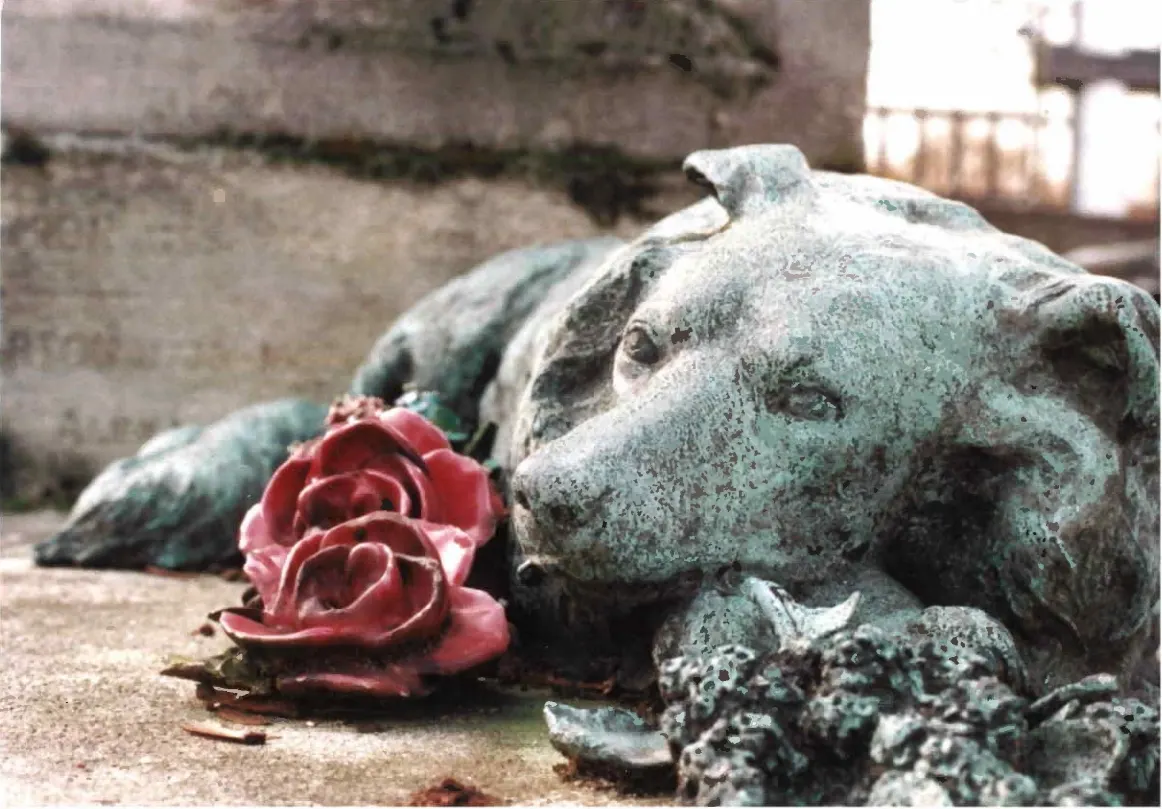
Père Lachaise Cemetery, Paris, 2011, on Kodak 400 filmPhoto: Dk58 - Renaud, CC BY 2.0 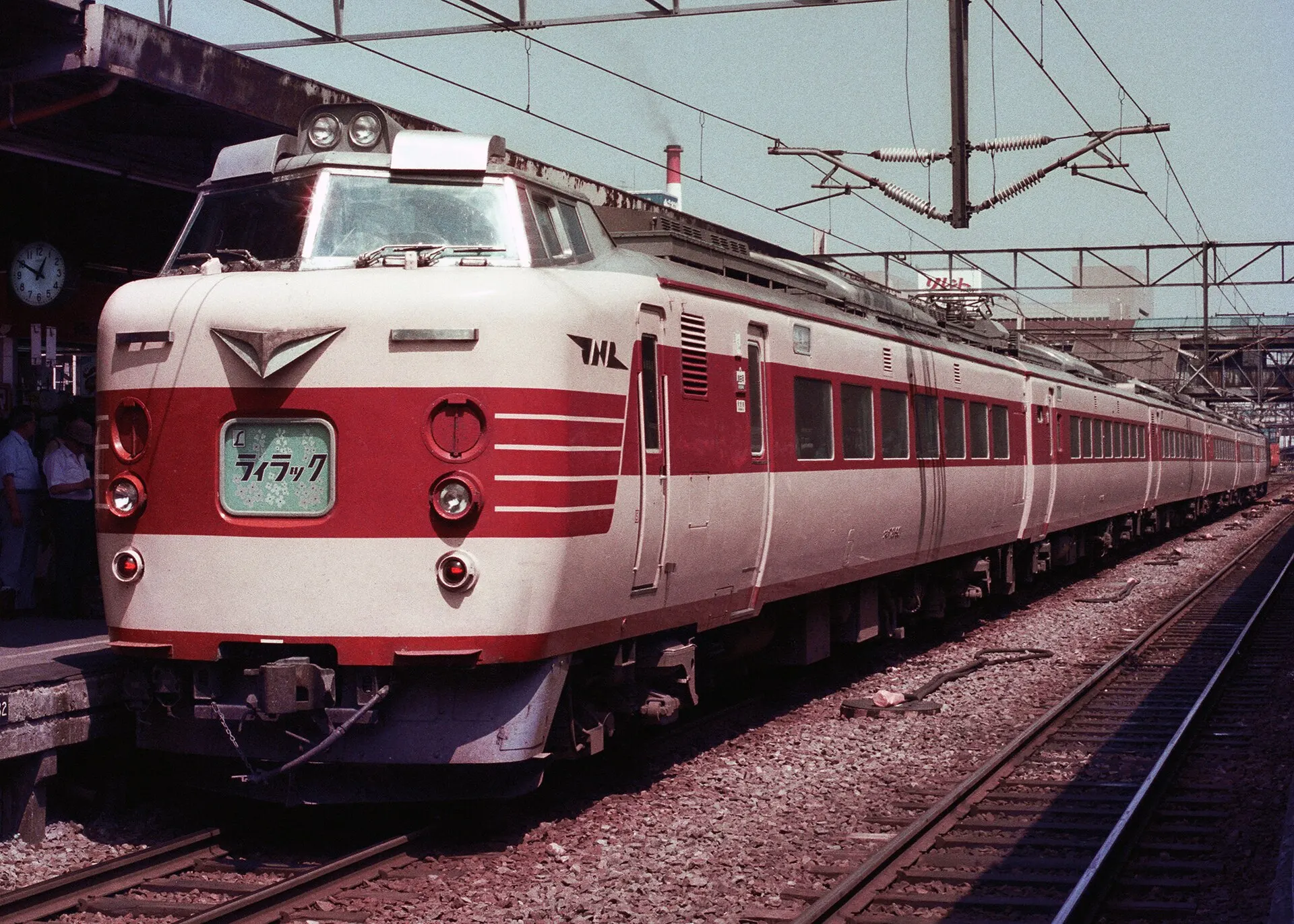
Sapporo Station, Japan, 1986Photo: spaceaero2, CC BY-SA 3.0 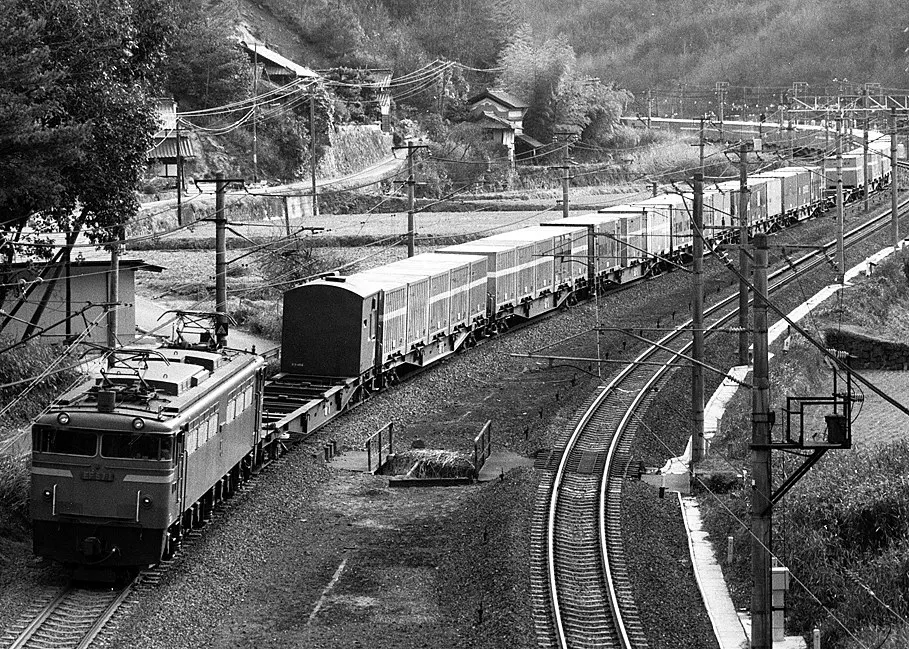
Sanyo Main Line between Seno and Hachihonmatsu, Japan, 1984Photo: Spaceaero2, CC BY-SA 3.0 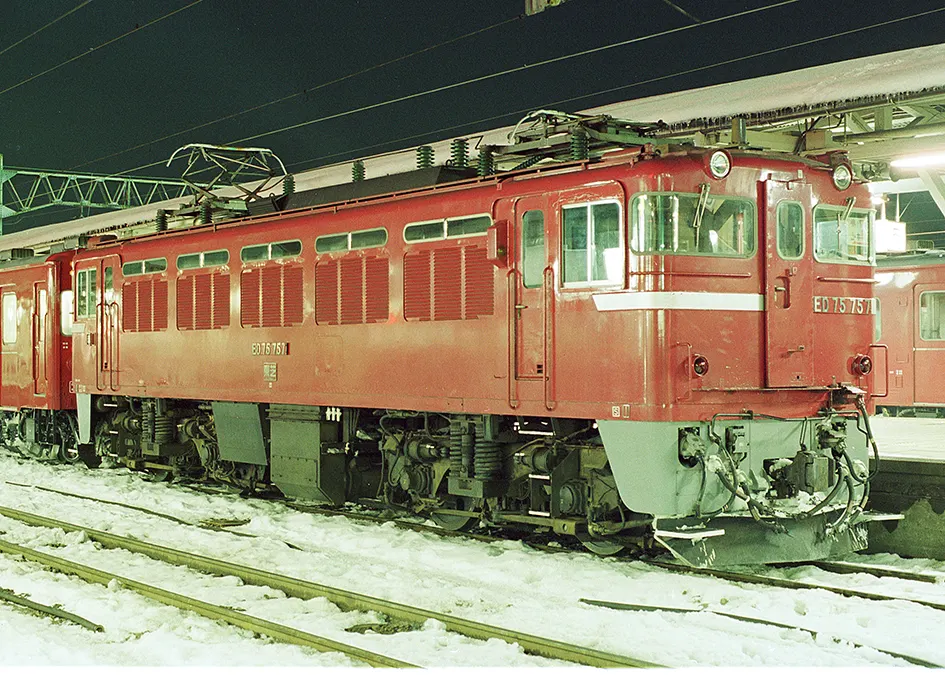
Yamagata Station, Japan, 1987Photo: Spaceaero2, CC BY-SA 3.0 
Long Grove, United States, 2017Photo: Mark Solarski marksolarski, CC0
What a Canon AE-1 Program costs today
US camera shops list AE-1 Programs with a 50mm lens for about $289 to $445 (several with a 90-day to 6-month warranty) and black bodies for $389 to $575. Reviewers' estimates for ordinary used copies run lower, roughly $150 to $350.
Victory Camera (Denver, CO)
Used, missing battery door, works, Chrome body only, 90-day warranty
$129.95
See listingLegacy Photo Lab (Dallas-Fort Worth, TX)
Used, rated 8 out of 10, Body with Sigma Zoom 35-70mm f/2.8-4 (FD mount)
$279.99
See listingLegacy Photo Lab (Dallas-Fort Worth, TX)
Used, rated 9.5 out of 10, tested (sold), Body with Canon FD 50mm f/1.8
$289.00
See listingRetrospekt (Milwaukee, WI)
Refurbished, 90-day warranty (sold out), Body with 50mm f/1.8 and lens cap
$299.00
See listingVictory Camera (Denver, CO)
Used excellent, new seals, no shutter squeak (out of stock), Chrome body with 50mm f/1.8 and grip
$345.00
See listingVictory Camera (Denver, CO)
Used excellent minus, scuffed front corners, Chrome body with Canon 50mm f/1.8, 90-day warranty
$384.95
See listingVictory Camera (Colorado)
Used excellent, Chrome body with 50mm f/1.8
$395.00
See listingBrooklyn Film Camera (Brooklyn, NY)
Refurbished, CLA'd, B grade, Body with 50mm f/1.8, 6-month warranty
$397.50
See listingFilm Supply Club
Used, CLA'd 2026 (sold), Body with FD 50mm f/1.8
$399.00
See listingFilm Supply Club
Used (sold), Body with FD 50mm f/1.4
$425.00
See listingBrooklyn Film Camera (Brooklyn, NY)
Refurbished, CLA'd B grade body and lens, Bundle: body, 50mm f/1.8, two rolls of film, strap, lens cap
$435
See listingVictory Camera (Denver, CO)
Used excellent, CLA'd by Garry's Camera Repair, new seals, Chrome body with 50mm f/1.8, grip, cap and battery, 90-day warranty
$445.00
See listingLegacy Photo Lab (Dallas-Fort Worth, TX)
Used, black body, rated 8 out of 10 (sold), Black body with Canon FD 50mm f/1.8
$389.00
See listingBrooklyn Film Camera (Brooklyn, NY)
Refurbished, black finish, Black body with chrome-nose 50mm f/1.8, 6-month warranty
$550.00
See listingVictory Camera (Denver, CO)
Used excellent, black, CLA'd by Garry's Camera Repair July 2026, Black body with 50mm f/1.8 and thumb grip, 90-day warranty
$575.00
See listingAnalog.Cafe (estimate, 2024)
Tested copy to mint boxed copy, Market estimate
$150-$350
See listingShotkit (estimate)
Typical used, Body with a basic 50mm lens
$150-$300
See listing
Prices checked on October 28, 2026. They move every week, so treat them as a range, not a quote. eBay, KEH, MPB and B&H blocked our price checks, so marketplace sold prices are not listed. Sold and out-of-stock listings are included because they show what recent copies went for. Analog.Cafe's range is from its 2024 review.
Video reviews worth your time

Canon AE-1 Program Review and How To
The Canon AE-1 Program is a user-friendly and feature-rich 35mm SLR camera that serves as an ideal entry point for beginner film photographers.

CANON AE-1 PROGRAM REVIEW: Greatest Film Camera Ever? 📷 🎞
The Canon AE-1 Program is an accessible, well-designed 35mm SLR that successfully combines classic vintage styling with modern automated features.

Canon A1 vs AE1 Program - Which should you get?
While both cameras are excellent 35mm SLRs, the reviewer prefers the Canon A-1 over the AE-1 Program due to its richer feature set and often lower price.

Canon AE-1 Program 35mm Film Camera - Review & User Guide.
The Canon AE-1 Program is an excellent, user-friendly film SLR ideal for beginners due to its fully automatic Program mode, despite lacking a true aperture-priority option.

Canon AE-1 Program: Review in Spanish (With Photos)
The Canon AE-1 Program is a versatile and user-friendly 35mm SLR that is great for beginners and experienced photographers, offering convenient automatic features alongside reliable manual operation.
Specifications
Camera and history
- Released
- April 1981
- Price new
- $225.50 US street price in 1981
- Size and weight
- 141 x 88 x 48 mm, 565 g body (Canon); Wikipedia says 575 g
Shutter and exposure
- Exposure modes
- Program AE, shutter-priority AE, AE with dedicated Canon flashes, manual; no aperture priority
- Film speed
- ISO 12 to 3200, set by hand
- Exposure compensation
- None; use the AE lock button or change the ISO setting
Viewfinder
Power and accessories
- Battery life
- About one year of normal use
- Without a battery
- Does not work
Questions people ask about the AE-1 Program
Can I use the Canon AE-1 Program without a battery?
No. The shutter and the meter are both electronic, so the camera does nothing without a working 6V battery, and there is no mechanical backup speed. If a new battery changes nothing, check that it faces the right way and that the terminals are not corroded. One iFixit poster's camera beeped constantly and refused to fire, which the owner suspected was a stuck battery check button.
Sources: canonclassics.com, brooklynfilmcamera.com, ifixit.com, ifixit.com
What battery does the Canon AE-1 Program use?
One 6V cell, sold as 4LR44 or A544 (alkaline), 4SR44 or PX28 (silver oxide) and PX28L (lithium). Battery Junction lists the Energizer A544 at $4.75 and the Duracell PX28L at $8.95 (October 2026), though the PX28L showed as sold out. Canon rated it for about a year of normal use; press the battery check button, and six or more beeps a second means it is still good.
Sources: canonclassics.com, batteryjunction.com, batteryjunction.com
Is the Canon AE-1 Program good for beginners?
Most reviewers and owners say yes: Program mode sets shutter speed and aperture for you, so you only focus and frame, and shutter priority and manual are there when you want more control. The counterpoint comes from Mike Eckman, who sees far more faults on AE-1s than on Pentax K1000s, so buy a tested or serviced body.
Sources: camerasbymax.co.uk, shotkit.com, mikeeckman.com
How do you use a flash on a Canon AE-1 Program?
Slide the flash into the hot shoe or plug its cord into the PC socket. With an ordinary manual flash, set the shutter dial to 1/60, the sync speed. With a dedicated Canon Speedlite such as the 188A or 166A, the camera sets the shutter speed itself once the flash's pilot lamp glows, and the aperture follows the setting on the flash.
Sources: kamerastore.com, canonclassics.com, 35mm-compact.com
My Canon AE-1 Program film won't rewind. What should I do?
Press the small rewind button on the bottom plate first, then turn the rewind crank in the direction of the arrow until the tension lets go. According to the manual, the frame counter then goes back to S. Do not open the back until the film is rewound into the cassette.
Sources: kamerastore.com, 35mm-compact.com
When was the Canon AE-1 discontinued?
Going by Wikipedia, the original AE-1 was made until 1984 (it dates it from April 1976) and the AE-1 Program, which went on sale in April 1981, until 1989. Sources differ on the Program: Alex Luyckx lists its production as 1981-7, and Canon's museum page gives the launch date but no end date. Luyckx also notes that Canon dropped the FD lens system in 1987.
Sources: en.wikipedia.org, en.wikipedia.org, global.canon, alexluyckx.com
Why does my Canon AE-1 Program squeak when I take a picture?
That is the well-known 'Canon squeal': the lubricant on the mirror damper dries out, so the mirror squeaks as it moves, most noticeably at slow speeds. Jim Grey found it annoying but harmless, though it can get worse. The proper fix is re-lubrication during a CLA (Brooklyn Film Camera quotes $280 for an AE-1 Program body plus a $50 diagnostic fee); iFixit has a DIY guide, but too much oil can reach the shutter.
Sources: casualphotophile.com, blog.jimgrey.net, brooklynfilmcamera.com, ifixit.com, camera-wiki.org
Does the Canon AE-1 Program have aperture priority?
No. You get Program, shutter priority and manual; for aperture priority you need the [Canon A-1](/cameras/canon-a-1/). Owners ask whether taking the lens off A with the dial on PROGRAM creates a hidden aperture priority. Casual Photophile's James Tocchio says it only works with the lens wide open, because the camera meters at full aperture and does not account for a stopped-down lens.
Sources: brooklynfilmcamera.com, casualphotophile.com
What people compare it with
The 1976 original: same shutter, lenses and battery, but no Program mode, a dimmer needle finder and no grip. Analog.Cafe says all three A-series bodies sell for similar money.
The step-up A-series body, with aperture priority and more manual control; same FD lenses and battery, and often similar money.
Fully mechanical and manual only, and it fires with no battery. Mike Eckman prefers it for students because it breaks less often.
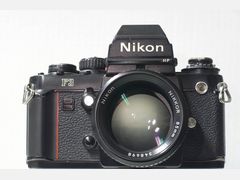
Shotkit's non-Canon pick for people who want a pro-grade body or already own Nikon lenses.
Every source behind this page
Read them yourself. How we pick and count them is in our methodology.
Show all 64 sources
Manuals and references 38
- 35mm-compact.com: Canon AE
- analog.cafe: Canon “A”
- ausgeknipst.de: Canon AE-1 & A-1 Battery Door Broken? Fix It Yourself
- brooklynfilmcamera.com: Canon AE-1 vs. Pentax K1000
- brooklynfilmcamera.com: Film Camera Repair Cost
- brooklynfilmcamera.com: Top 3 Best Lenses for the Canon AE
- brooklynfilmcamera.com: Camera Repair NYC: Film Camera Repair in Brooklyn + Mail
- brooklynfilmcamera.com: Pricing Estimate
- brooklynfilmcamera.com: Canon AE-1 Program For Sale - Refurbished A Grade w/ 6-Month Warranty
- brooklynfilmcamera.com: Canon AE-1 Program, Restored + 6
- brooklynfilmcamera.com: Canon AE-1 Program Bundle
- camera-wiki.org: Canon AE-1 Program - Camera-wiki.org
- en.wikipedia.org: Canon AE-1
- en.wikipedia.org: Canon AE
- filmsupply.club: Search: 27 results found for "ae-1 program"
- global.canon: AE-1 Program
- imagingpixel.com: <data
- kamerastore.com: How to Use: Canon AE-1 Program
- legacy-photolab.com: Search: 41 results found for "canon ae-1 program"
- profvolt.com: Canon AE-1 Stuck Shutter Button: Repair Guide
- retrospekt.com: Canon AE-1 Program SLR 35mm Film Camera
- vintagecameradigest.com: Canon AE
- analog.cafe: Canon AE
- batteryjunction.com: Duracell PX 28L L544 6V Lithium (LiMNO2) Battery - 1 Piece
- batteryjunction.com: Energizer A544 28A 140mAh 6V Alkaline Button Top Photo Battery - Equiv
- canonclassics.com: Canon AE-1 Program (1981)
- energizer.com: Battery Care - Dos Don'ts
- garryscamerarepair.com: Garry's Camera Repair
- ifixit.com: Canon AE-1 Program Light Seal Replacement
- ifixit.com: Canon AE-1p Shutter Squeak/Slowness Repair
- ifixit.com: Canon AE-1 Troubleshooting
- nipponphotoclinic.com: Services
- victorycamera.com: Canon AE-1 Program 35mm Chrome Film Camera Body -No Batt. Door
- victorycamera.com: Canon AE-1 Program Black 35mm Film SLR Camera 50mm f1.8 Lens -CLA'd
- victorycamera.com: Canon AE-1 Program Chrome 35mm Film SLR Camera 50mm f1.8 Lens -CLA'd
- victorycamera.com: Canon AE-1 Program Chrome 35mm Film SLR Camera 50mm f1.8 Lens [EXC
- victorycamera.com: Canon AE-1 Program Chrome 35mm Film SLR Camera 50mm f1.8 Lens [EXC]
- victorycamera.com: Search: 16 results found for "ae
Independent blogs 15
- Daniel J. Schneider blog: The Canon AE-1 and Canon A-1: Game
- Broken Camera Club: Canon AE
- Cameras By Max: Camera Review: Canon AE-1 Program 35mm SLR Camera
- IJM Photography: Canon AE-1 Program: Sample Photos & Long
- Will Wander Photography: Gear Review 3: Canon AE
- Myles Katherine Photography: canon ae-1 program travel review
- Alex Luyckx blog: Camera Review Blog No. 04 - Canon AE
- 35mmc: 5 frames with a Canon AE-1 Program - By Greg May
- 35mmc: 5 Frames a Canon AE-1 Program and Kodak 400TX
- 35mmc reader comment: 5 Frames with Fuji Venus 800 and a Canon AE1-P - by Robert / London Camera Project
- 35mmc: Returning to Film with a Canon, a Nikon and a Touch of GAS - By Simon Rikowski
- Down the Road: Canon AE-1 Program
- mike eckman dot com: Student Camera Showdown: Canon AE-1 Program vs Pentax K1000
- High5 Cameras reader comment: Canon AE-1 Review
- EMULSIVE: 5 Frames of portraits in Shillong on Kodak Portra 400 (35mm Format / EI 400 / Canon AE 1- Program + Canon FD 50mm f/1.8)
Video reviews 5
- Dave Montejano: Canon AE-1 Program Review and How To
- Dan Bullman Photography: CANON AE-1 PROGRAM REVIEW: Greatest Film Camera Ever? 📷 🎞
- Griffen Sander: Canon A1 vs AE1 Program - Which should you get?
- Film Camera Reviews: Canon AE-1 Program 35mm Film Camera - Review & User Guide.
- Foto Pirata: Canon AE-1 Program: Review in Spanish (With Photos)
Editorial reviews 3
Forums 2
Retailer customer reviews 1
Keep reading
Film cameras
Canon AE-1 vs AE-1 Program: the Program adds full auto, an LED finder readout and a grip on the same shutter and FD mount. Serviced copies run $375-$415.
Film cameras
The Canon AE-1 takes one 6V 4LR44 battery (PX28, A544 and PX28L fit too). How to open the front door, fit it the right way and check that it works.
Film cameras
The best film camera for beginners is usually a used Canon AE-1 Program or Pentax K1000. Compare 8 picks, October 2026 US shop prices and what to check first.
Film cameras
Canon AE-1 vs Pentax K1000: auto exposure vs fully manual, battery dependence, lenses, common faults and October 2026 prices, used and serviced.
Film cameras
Where to buy film cameras used in the US: KEH, MPB, B&H, local shops, eBay and thrift, with warranties, October 2026 prices and a checklist to test one.
Film cameras
How to load film step by step in 35mm SLRs, point-and-shoots, 120 and instant cameras, plus how to check it caught, rewind it and fix film that won't advance.