Nikon L35AF: price, how to use it and common problems
The short answer
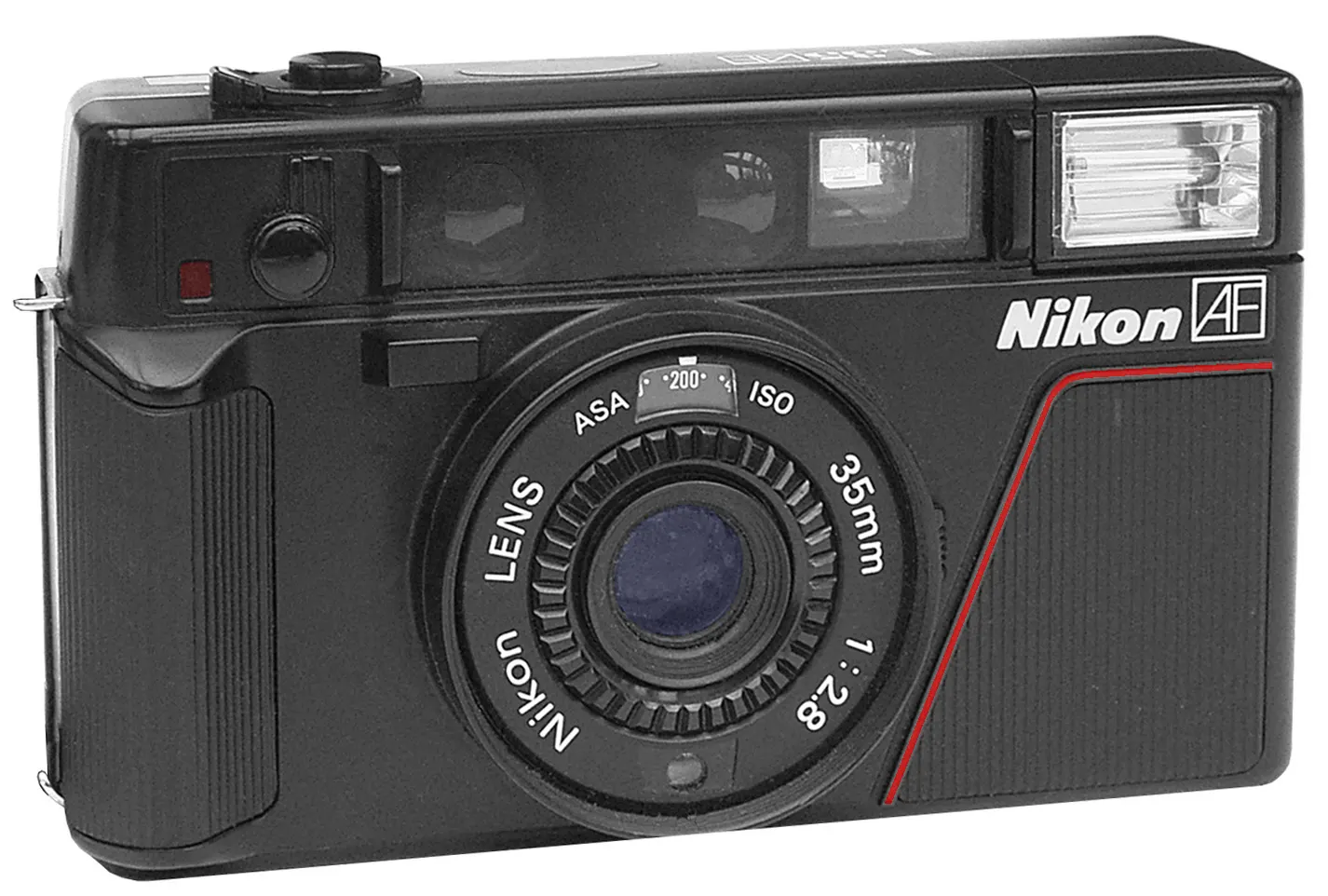
The Nikon L35AF is a 1983 autofocus point-and-shoot with a sharp 35mm f/2.8 lens, and most owners and reviewers say it still makes excellent pictures for a camera with almost nothing to set.
The catch is age: battery doors, on/off switches and film-transport faults are common. In October 2026 Kamerastore listed machine-tested copies with a 12-month warranty at $307 to $409 and Brooklyn Film Camera had a refurbished one with a 3-month warranty at $550. An untested for-parts copy on eBay was $55.
- Lens
- 35mm f/2.8, 5 elements
- Batteries
- Two AA alkaline
- Film speed
- ISO 50-400 or 50-1000
- Price with warranty
- $307-$550 (Oct 2026)
Built from 140 opinions from 29 pages and videos. Not yet tested by Camera Dojo. Updated .
The short version
Across 140 opinions from owners, reviewers and five YouTube reviews, the praise centers on pictures and focus. 10 of 12 comments on image results are positive, and Casual Photophile found the Nikon uniformly excellent where the rival Canon AF35M ranged from great to substandard. The needle in the viewfinder that shows where the lens focused is a favorite: 11 of 15 comments on focusing are positive.
Reliability is the weak spot, with 18 of 23 comments negative: battery doors that crack or pop open, fragile on/off switches, stiff or dead shutter buttons and rewind faults. Size is the other complaint, with 5 of 7 comments calling it bulky for a compact, and price splits opinion: in 2019 the FotodioX Pro blog described $6 to $10 thrift-store copies, while tested copies now sell for hundreds.
Good fit if
- You want a sharp 35mm f/2.8 lens with almost nothing to set: focus, exposure, flash and film advance are automatic
- You like seeing where the camera focused: a needle in the viewfinder points to distance symbols on a half-press
- You shoot black and white with filters: the 46mm thread meters through them, so there is nothing to compensate
- You want a camera that runs on two AA batteries you can buy anywhere
- You can buy a copy with a warranty or a return window
Think twice if
- You want a true pocket camera: 35mmc calls it the rhino of compacts, and it weighs 345 g without batteries
- You want to choose aperture or shutter speed, or switch the flash off: the only exposure override is a +2 EV backlight lever, and the flash stays down only while you hold it
- You plan to buy cheap and untested; battery doors, switches and rewind faults are common, and we found no US shop that publishes an L35AF repair price
- You want ISO 800 film on an early copy, which stops at ISO 400
- You shoot fast-moving subjects; the FotodioX Pro blog found the autofocus less than ideal for them
What owners and reviewers say, topic by topic
We sorted 140 opinions about the L35AF from 29 pages and videos on 21 websites and channels. Each row shows how many people raised a topic and how many of them were positive. Open a row to read short quotes, each linked to its source.
Owner voices come mostly from long-form blogs and reviews (35mmc, Casual Photophile, Japan Camera Hunter, Lens Lurker, Photo Thinking and others), the Flickr Nikon L35AF group and five YouTube reviews. Reddit, Photrio and US retailer reviews could not be read, and a few Flickr and Lightning in a Bottle comments come from owners of the later L35AF2 or L35AD2.
Reliability today13% positiveof 23
The weakest topic: 18 of 23 comments are negative, about battery doors that break or pop open, on/off switches, stiff or dead shutter buttons and rewind and counter faults. Teddy Juras, who sells cameras, still says it is one of the few 1980s compacts he sees working 40 years on.
“It just isn't made as sturdy as it should be.”
Tina Kino, Japan Camera Hunter 2016-05Owner
“i'm having the opposite problem with mine. the flash wont' pop up.”
Flickr: Nikon L35AF group 2016-02Owner
“The battery door is flimsy and prone to breaking. Ours is held down with tape.”
Lens Lurker 2023-08Owner
“36 years later the camera works flawlessly”
FotodioX Pro blog 2019-12Hands-on review
Viewfinder and focusing73% positiveof 15
11 of 15 comments are positive, mostly about the needle that shows the focus distance on a half-press and a hit rate Lens Lurker calls right almost all of the time. The negatives are copies with a needle stuck at one distance, finders that haze with age, and autofocus that struggles with moving subjects.
“they eventually haze up and some might have fungus or be smashed in due to careless storage”
haritography 2024-12Owner
“the autofocus is fast and accurate”
Giacomo Zema, 35mmc 2019-03Owner
“We find that we have no trouble getting properly focused photos almost all of the time.”
Lens Lurker 2023-08Owner
“The hit rate with the focus is actually really good for such an early auto focus camera.”
Photo Thinking 2019-09Owner
Price and value43% positiveof 14
Divisive, with 6 positive, 3 mixed and 5 negative comments. Older posts describe finds from $6.99 at Goodwill to $50 at a camera shop in 2016, while reviewers writing from 2016 onward say prices have climbed past what the camera is worth to them.
“for the sort of cash they now seem to go for, I think I'd pass”
Hamish Gill, 35mmc 2016-01Owner
“I bought it for $4.”
Flickr: Nikon L35AF group 2008-08Owner
“I rescued it from the local Goodwill for $6.99”
“eBay prices hover at $200-250 for the AF, $175-225 for the AD”
Ed Aldridge PhotographyHands-on review
Image results83% positiveof 12
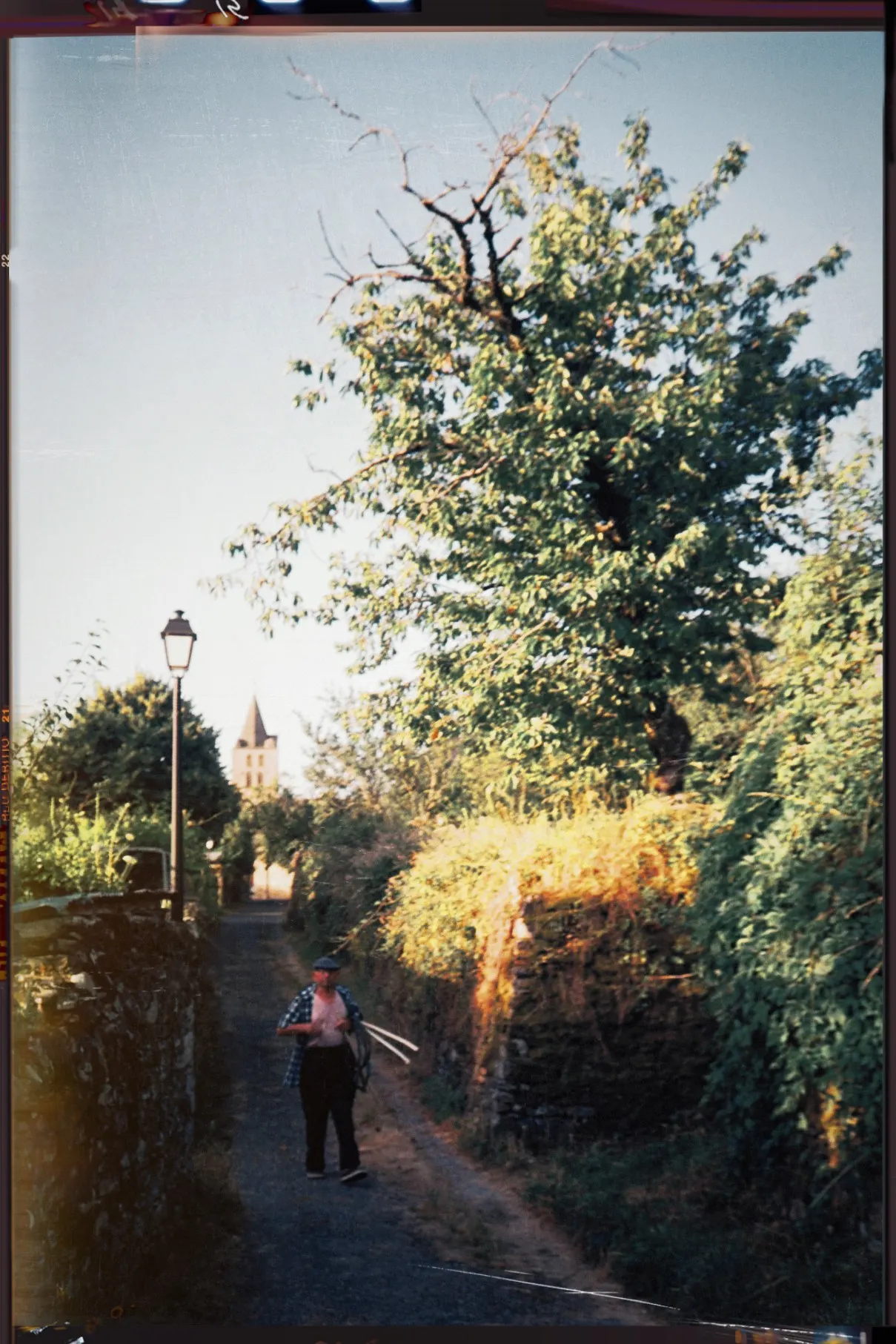
10 of 12 comments are positive, with reviewers calling the pictures sharp and punchy, and Film Retriever found them close to a Yashica T4's. One owner sold his copy because it did not match his other cameras, and Benj Haisch sees slightly lower contrast than pricier compacts.
“Delightful shutter sound and great photo results.”
haritography 2024-12Owner
“The Nikon L35AF takes pictures I like, in spite of its limitations.”
Jeb Inge, Casual Photophile 2019-09Owner
“the micro contrast and the sharpness in black and white reflect my taste to the letter”
Giacomo Zema, 35mmc 2019-03Owner
“The camera produces really nice pictures, virtually indistinguishable from the Yashica T4 for the 1/20th of the price.”
Film Retriever 2010-10Owner
Controls and features42% positiveof 12
Split, with 5 positive, 4 mixed and 3 negative comments. Owners value the manual ISO ring, the backlight lever and metering through filters; the complaints are a flash you can only stop by holding it down, a stiff ISO ring and a noisy motor.
“The main complain of the people who are using this camera is the noisy motor drive.”
Film Retriever 2010-10Owner
“I need flash almost always, so I get apprehensive that the flash won't pop up. But it always does.”
Flickr: Nikon L35AF group 2008-08Owner
“the Nikon has a +2 exposure compensation lever for use with backlit subjects”
James Tocchio, Casual Photophile 2015-02Hands-on review
“If you're a control freak you will hate this camera.”
Ease of use73% positiveof 11
8 of 11 comments are positive, most calling it easy: load, set the ISO and press the button, which is why Rob Moses and Lobapixel suggest it for first-time film shooters. The complaints are about feel, a mushy shutter button and an awkward grip when you hold the flash down.
“What Nikon should have thought better are the ergonomics.”
Film Retriever 2010-10Owner
“It is a very easy camera to use.”
Photo Thinking 2019-09Owner
“it fits in my hand like it was made for it and performs smoothly”
Giacomo Zema, 35mmc 2019-03Owner
“The camera couldn't be easier to operate and produces great results even with inexperienced users.”
Lens Lurker 2023-08Owner
Light meter and exposure89% positiveof 9
8 of 9 comments are positive, with Photo Thinking reporting consistent exposure, morning fog included, and owners crediting the +2 EV backlight lever and the metering through filters. Film Retriever felt it underexposed a little and plans to rate ISO 400 film at 320.
“Exposure has been very consistent. The meter has been able to handle most conditions including fog in the morning.”
Photo Thinking 2019-09Owner
“the original L35-AF is one of a select bunch of affordable compacts that take filters and meter behind the filters”
Eddy, 35mmcOwner
“+2 EV button is a lifesaver for tricky scenes”
Ed Aldridge PhotographyHands-on review
“It handles backlight better than most '90s point-and-shoots”
Lenses89% positiveof 9
8 of 9 comments are positive, mostly calling the 35mm f/2.8 lens sharp, and 35mmc's Hamish Gill prefers its character to the Olympus Mju II's almost clinical look. Photo Thinking notes softer edges, and owners like the 46mm filter thread.
“the Nikon is without any doubt a lens with character”
Hamish Gill, 35mmc 2016-01Owner
“it's packing a great 35mm f/2.8 lens, something you don't see often at this era/vintage in the point-and-shoot market”
haritography 2024-12Owner
“Reasonably fast coated 35mm Nikon lens, very quiet motor advance, and accurate autofocus are the standout features of this surprisingly heavy little compact.”
“The f/2.8 lens is tack-sharp; AF is quick and accurate for its era.”
Ed Aldridge PhotographyHands-on review
Repairs and servicing67% positiveof 9
6 of 9 comments are hopeful: many jams clear with a reset, cleaning the meter window fixed a stuck flash, and vinegar on the contacts revived dead copies. The other 3 come from owners who could not fix a focus or motor fault, one even after taking it to a repair shop.
“I was never able to fix the bad one I had.”
“The camera just has to reset and will simply function again.”
JJ Lee, The Shutter Goes Click 2014-02Owner
“come back to life just by scrubbing and scraping the contacts with vinegar”
Eddy, 35mmc 2016-02Owner
“Easy to open the camera and it was a relatively easy fix.”
Flickr: Nikon L35AF group 2016-02Owner
Build quality88% positiveof 8
7 of 8 comments call it solid, with a metal frame under the plastic shell and a reassuring weight; Lens Lurker picks it over its other compacts when it might get beat up. The one mixed note calls the body all plastic and a bit clunky when the flash pops up.
“The L35AF is a very beautifully built camera.”
Eddy, 35mmc 2016-02Owner
“The camera looks and feels like a precise instrument.”
Flickr: Nikon L35AF group 2008-08Owner
“It felt fantastic in my hand, with the perfect amount of weight and balance.”
Jeb Inge, Casual Photophile 2019-09Owner
“the L35AF is the one we feel most confident taking out if we know it might get beat up”
Lens Lurker 2023-08Owner
Batteries and power43% positiveof 7
Owners like that it takes two common AA batteries, but 3 of 7 comments are negative: picky voltage needs, a door that has to be wiggled or scrubbed for contact, and a power switch that turns on in a bag and drains the cells. A fourth, mixed comment calls the door hinge delicate.
“Most of the original L35s are very persnickety about power supply.”
Eddy, 35mmc 2016-02Owner
“Sometimes the battery door needs to be wiggled, or scrubbed with a toothbrush.”
Jeb Inge, Casual Photophile 2019-09Owner
“The Nikon L35AF battery is both easy to find and affordable.”
“The power switch is flimsy and easily turns on in a bag, draining the battery quickly.”
Lens Lurker 2023-08Owner
Size and weight29% positiveof 7
5 of 7 comments say it is big for a compact: 35mmc calls it the rhino of compacts, and Japan Camera Hunter's reviewer says it will not go in a jeans pocket the way a Mju II does.
“the camera doesn't fit in your jeans pocket like a Mju-II would”
Tina Kino, Japan Camera Hunter 2016-05Owner
“In the world of compact cameras, this thing is definitely the rhino.”
Hamish Gill, 35mmc 2016-01Owner
“This camera is larger than other popular compacts, not really a pocket camera.”
Photo Thinking 2019-09Owner
“Pocket-sized with solid build (minus the battery door)”
Ed Aldridge PhotographyHands-on review
Film availability25% positiveof 4
Only 4 comments, all about film speed: early copies stop at ISO 400, which limits low-light film choices, while later copies reach ISO 1000. Check the ring before you buy if you want fast film.
“unfortunately here you can only go from 100 to 400”
“the Nikon and Canon both support film speeds only as high as ISO 400, further hampering low-light shooting”
James Tocchio, Casual Photophile 2015-02Hands-on review
“Most L35AFs can shoot up to 1000 ISO so it's worth trying some high-ISO film stocks out.”
maxsphotoblog 2022-01Hands-on review
“The earlier one only goes up to 400 ASA. The later model goes all the way to 1000 ASA.”
PositiveMixedNegative
How to use the Nikon L35AF: batteries, film, focus and rewind
Everything except the film speed is automatic, so using the L35AF well comes down to a few habits. These steps follow the owner guides from Photo Thinking, Casual Photophile and Japan Camera Hunter, plus Nikon's manual.
- 1
Fit two fresh AA alkalines
The battery door is on the bottom. Use alkaline cells: the manual says NiCd batteries cannot be used, and 35mmc's Eddy says cheap or rechargeable cells can make an original L35 act up. Close the door gently, since it is the camera's best-known weak spot.
- 2
Load the film
Open the back, insert the cartridge and pull the leader out to the red mark. Close the back and press the shutter once: the motor winds three or four frames and stops at frame 1. Our film loading guide covers the basics.
- 3
Set the ISO ring
There is no DX code reading, so turn the small ring around the lens to your film's speed for every roll. Early copies run ISO 50 to 400, later ones 50 to 1000.
- 4
Focus, then recompose
Put the center spot on your subject and half-press. A needle in the viewfinder swings to a distance symbol, from a single person to a mountain for infinity, so you can see where it focused. Keep the half-press, recompose and press fully; closest focus is 0.8 m, about 2.6 ft. Lens Lurker warns it is easy to press all the way by accident.
- 5
Hold the lever for backlit scenes
For a subject against a bright sky or window, hold down the +2 EV lever to the left of the lens while you press the shutter. It only works while you hold it.
- 6
Decide about the flash
The flash pops up by itself when the meter reads low light. To shoot without it, push it down and hold it there; it pops up again on the next shot if the light is still low. To force it in daylight, cover the meter window under the lens with your hand and half-press.
- 7
Rewind at the end of the roll
Slide the switch on the bottom to the right and hold it, then press the button marked with a blue X; you can let go once rewinding starts. Casual Photophile says a full rewind takes about 25 seconds, and the camera leaves the leader out of the canister, which makes double exposures easy.
Sources: photothinking.com, casualphotophile.com, japancamerahunter.com, flickr.com, flickr.com, 35mmc.com, lenslurker.com, camera-wiki.org, cameramanuals.org
Best film for the Nikon L35AF
 Portra 400
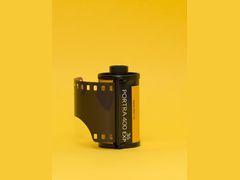
Any 35mm color or black-and-white film works, as long as you set the ring to match. Max Kent suggests Kodak Portra 400 or Portra 800, Kodak Gold and Ilford HP5 for black and white. Rob Moses was pleasantly surprised by a walk on Kodak Gold 200, and Ed Aldridge got punchy color and strong sharpness on Kodak Pro Image 100.
Check which version you have first. Early copies stop at ISO 400, so to shoot Portra 800 at its box speed you need a later ISO 1000 copy; Max Kent says most copies reach 1000, so faster film is worth a try. Because you set the speed by hand, you can also rate film on purpose: Film Retriever felt the camera underexposed slightly and planned to set ISO 400 film at 320, and Benj Haisch points out the ring lets you overexpose or push film on purpose.
For black and white, the 46mm thread takes screw-in filters, and because the meter sits inside the thread it reads through them. As 35mmc reader Eddy points out, that means no exposure compensation, which is rare on an affordable compact.
Sources: maxkent.co.uk, robmosesphotography.com, camera-wiki.org, filmretriever.blogspot.com, youtube.com, 35mmc.com
Nikon L35AF batteries: two AAs, and fresh alkalines matter
The L35AF runs on two AA alkaline batteries. Casual Photophile puts a pair at about 100 rolls of 24 exposures, and Lens Lurker passes on Nikon's estimate of roughly 100 rolls without flash, or 10 rolls with the flash firing on every frame.
Original L35s are picky about power. 35mmc's Eddy has seen dead spares-or-repair copies come back to life with Duracell AAs and contacts scrubbed with vinegar, and says small voltage differences from cheap or rechargeable cells can upset the camera. The manual says NiCd cells cannot be used, so stick with fresh alkalines.
Weak batteries can look like faults. With the flash up, the camera will not fire until the flash has charged, and Eddy notes the autofocus can default to infinity if the camera is broken, dirty or sometimes gets less than a full 3V from the batteries. If the shutter is erratic even with new cells, press on the battery door and try again. For other cameras, our film camera battery finder lists the cell each one takes.
Switch the camera off before it goes in a bag: a pressed shutter button makes the flash pop up and charge over and over, which drains the batteries.
Sources: camera-wiki.org, casualphotophile.com, lenslurker.com, 35mmc.com, 35mmc.com, japancamerahunter.com, cameramanuals.org
What to check before buying a used Nikon L35AF
Most L35AFs for sale are more than 40 years old, and Lightning in a Bottle complains of barely tested copies sold as working. Check these points, or buy from a seller with a return window; our guide to buying used film cameras covers sellers and testing in general.
- 1
Battery door and compartment
The door should close and stay shut with two AAs inside; Ed Aldridge warns that many copies end up taped shut. Look for AA leakage on the contacts, which Teddy Juras says is common.
- 2
On/off switch
Switch it on and off many times. Japan Camera Hunter's reviewer says that when these turn up faulty on the used market, it is most of the time the switch.
- 3
Shutter on every press
With fresh batteries, fire it several times. A shutter that ignores some presses, like the 35mmc review copy that failed about 60% of the time, or a stiff, stuck button is a reason to walk away.
- 4
Focus needle
Half-press on subjects near and far and watch the needle move between symbols. A needle that stays at the closest symbol points to an autofocus fault that one owner's repair shop could not fix. One stuck at infinity can be weak batteries or a dirty sensor, so retest with fresh alkalines.
- 5
Flash
Cover the meter window and half-press: the flash should pop up, charge and fire. In bright light it should stay down when you push it down. Owners report flashes stuck up and flashes that never pop up.
- 6
Film advance, counter and rewind
Run a test roll if the seller allows it: the motor should stop at frame 1 and the rewind should finish. The camera counts frames even when it is empty, so a moving counter does not prove film is loaded.
- 7
ISO ring, finder and seals
Read the numbers on the ISO ring: 1000 means the later, more desirable version. Look through the finder for haze or fungus, which haritography says these finders tend to develop, and check that the light seals are not crumbling.
Sources: lightninginabottle.co.uk, teddyjuras.com, japancamerahunter.com, 35mmc.com, flickr.com, flickr.com, flickr.com, casualphotophile.com, haritography.com, maxkent.co.uk
Nikon L35AF vs L35AF2 (One Touch)
| L35AF (1983) | L35AF2 / One Touch (1985) | |
|---|---|---|
| Lens | 35mm f/2.8, 5 elements in 4 groups | 35mm f/2.8, 4 elements in 3 groups |
| Filters | 46mm screw thread, meter reads through filters | Push-on filters, no thread |
| Film speed | Manual ISO ring, 50-400 or 50-1000 | Set automatically from the DX code |
| Used price | $307-$409 certified at Kamerastore (Oct 2026) | $225-250 per Max Kent's guide, an older estimate |
Pick the L35AF (1983) if
- You want to set film speed yourself, push film or shoot film without DX codes
- You shoot black and white with screw-in filters
- You want the 5-element lens owners praise
Pick the L35AF2 / One Touch (1985) if
- You want a camera that reads the film speed from the canister
- You find one for less and do not need filters or manual ISO
Sources: 35mmc.com, camera-wiki.org, maxkent.co.uk, photothinking.com, flickr.com, kamerastore.com
Known problems and what fixing them costs
These are the faults owners and reviewers report most. We could not find a US shop that publishes L35AF-specific repair prices, so the costs below come from Brooklyn Film Camera's general price list, checked in October 2026, and real quotes come after the shop assesses the camera.
Battery door cracks, pops open or loses contact
Raised in 9 opinions
- How you notice
- The plastic door will not stay shut, drops the AAs mid-shoot, or has already been replaced with tape. A loose door can also make the shutter erratic.
- Fix
- Tape works as a stopgap. If the shutter acts up, press on the door while you test and clean the contacts with vinegar. A 2026 35mmc review of the L35AF2 points to 3D-printable battery door fixes.
- Typical cost
- Tape costs almost nothing. Brooklyn Film Camera lists minor parts replacement, battery doors included, at $80-150 plus the part, with no warranty; that is its general list, not an L35AF quote.
Sources: maxkent.co.uk, haritography.com, lenslurker.com, 35mmc.com, 35mmc.com, brooklynfilmcamera.com
On/off switch breaks
Raised in 5 opinions
- How you notice
- The on/off switch beside the shutter button feels loose or stops turning the camera on. Photo Thinking calls it one of the camera's weaknesses, and Japan Camera Hunter's reviewer says it is the usual fault on used copies.
- Fix
- Test it repeatedly before you buy. A repair means opening the camera, and Brooklyn Film Camera says electrical issues are model-dependent, so ask a shop before you ship it.
- Typical cost
- No published L35AF price. The on/off switch is not on Brooklyn Film Camera's price list, whose named fixes (light seals, a stuck shutter, unjamming) run $80-120, and it says electrical issues are model-dependent.
Sources: photothinking.com, japancamerahunter.com, 35mmc.com, brooklynfilmcamera.com
Shutter button does nothing, or feels stuck
Raised in 2 opinions
- How you notice
- Some presses do nothing (about 60% of the time on the 35mmc review copy), or the button goes stiff as if something under it came loose.
- Fix
- Rule out power first: fresh alkaline AAs, clean contacts and a press on the battery door while testing. With the flash up, the camera also waits for the flash to charge before it fires. A seized button needs a repair shop.
- Typical cost
- Brooklyn Film Camera lists stuck shutter repair at $80-120, with no warranty (general list, not L35AF-specific).
Sources: maxkent.co.uk, 35mmc.com, 35mmc.com, brooklynfilmcamera.com
Rewind, frame counter or film advance jams
Raised in 8 opinions
- How you notice
- The rewind button does nothing, the counter sticks at 36, or the motor keeps winding with the back closed. JJ Lee calls malfunctioning rewinds and frame counters a consistent problem across the L35 series.
- Fix
- Make sure film is loaded, since the camera counts frames even when empty. Then reset it: JJ Lee started with the camera off, removed the batteries, put them back with the camera still off, turned it on and loaded film, and says he brought three L35-series cameras back this way. A Flickr member also suggests checking that the pin in the middle of the back door is not jammed.
- Typical cost
- Free if the reset works. Brooklyn Film Camera lists camera unjamming, which covers a stuck film advance, at $80-120 (general list). Some owners never fixed a runaway motor, and one planned to sell his for parts.
Sources: theshuttergoesclick.blogspot.com, flickr.com, flickr.com, flickr.com, brooklynfilmcamera.com
Autofocus stuck at one distance or at infinity
Raised in 3 opinions
- How you notice
- The needle only reaches the single-person symbol, or always swings to the mountain for infinity, and pictures come out soft.
- Fix
- Try fresh alkaline batteries and clean the autofocus windows: 35mmc reader Eddy says it defaults to infinity if it is broken, dirty or sometimes if the batteries give less than a full 3V. If that fails, treat it as a return; one owner's repair shop could do nothing and he sent the camera back.
- Typical cost
- No published repair price. A copy with this fault is best returned or bought as a parts body.
Sources: flickr.com, 35mmc.com
Flash stuck up, never pops up, or fires in daylight
Raised in 3 opinions
- How you notice
- The flash pops up on every shot even in bright light, will not stay down, or never pops up at all.
- Fix
- Check that the ISO ring is not set very low and clean the metering eye under the lens, which fixed a stuck-up flash on an L35AF2 in the Flickr group. Another member cured a flash that would not stay down by opening the camera, cleaning the catch and adjusting its small spring.
- Typical cost
- Free if cleaning works. No shop in our research publishes a flash repair price for this camera.
Sources: flickr.com, japancamerahunter.com
Old light seals and hazy finders
Raised in 1 opinion
- How you notice
- Light leaks on the negatives from crumbling foam seals, or a viewfinder that has gone hazy, which haritography says these finders tend to do with age.
- Fix
- Check the seals and look through the finder before buying, or buy a copy with new seals, such as Kamerastore's $409 unit.
- Typical cost
- Brooklyn Film Camera lists light seal replacement at $80-120, with no warranty (general list).
Sources: teddyjuras.com, haritography.com, kamerastore.com, brooklynfilmcamera.com
What a Nikon L35AF costs today
On October 28, 2026, Kamerastore listed machine-tested Certified copies with a 12-month warranty at $307 to $409 and Brooklyn Film Camera had a refurbished one for $550 with a 3-month warranty. Kamerastore's Rescue units, sold with functional problems and no warranty, were $167 and $204. An untested for-parts copy on eBay was $55 plus $41.53 shipping.
Brooklyn Film Camera (Brooklyn, NY)
Refurbished, 3-month warranty, Body, fresh batteries installed
$550
See listingKamerastore
Certified, light seals replaced, 12-month warranty, Body only
$409
See listingKamerastore
Certified (machine tested), 12-month warranty, Body only
$338
See listingKamerastore
Certified (machine tested), 12-month warranty, Body only
$307
See listingKamerastore
Rescue grade, functional problems, no warranty, Body only
$204
See listingKamerastore
Rescue grade, functional problems, no warranty, Body only
$167
See listingeBay
For parts, untested, Body only, plus $41.53 shipping
$55
See listingeBay (35mmc estimate, Oct 19, 2026)
Used, any L35AF-family model, Depends on condition and where it ships from; asking-price range, not confirmed sales
$150-300
See listingeBay (Ed Aldridge estimate, late 2025)
Used, working, Original L35AF; he gives $175-225 for the L35AD
$200-250
See listing
Prices checked on October 28, 2026. They move every week, so treat them as a range, not a quote. These are asking prices. eBay's sold listings and KEH blocked our checks, MPB had no L35AF in stock and B&H lists it as no longer available. Kamerastore is based in Tampere, Finland, shows prices in US dollars and adds duties, taxes and shipping at checkout; its Rescue units carry a 30-day refund policy instead of a warranty. The last two rows are reviewers' estimates of eBay prices, not listings we checked.
Video reviews worth your time

NIKON L35AF | (TUTORIAL/REVIEW)
The reviewer highly recommends the Nikon L35AF as a solid, compact, and user-friendly 35mm film camera for both beginners and experienced photographers.

The Most Underrated Film Camera? | Nikon L35AF Review
The Nikon L35AF is a practical vintage point-and-shoot film camera featuring manual ISO selection, useful viewfinder distance feedback, and convenient AA battery power.

The PERFECT point and shoot FILM camera | Nikon L35AF "Pikaichi" Review
The reviewer considers the Nikon L35AF his favorite point-and-shoot camera due to its excellent lens, smart metering, and great value despite minor build quirks.

The Best Point & Shoot Camera? Nikon L35AF Street Photography in LA ft. Fuji C200
The Nikon L35AF is an excellent 35mm point-and-shoot camera with a sharp five-element lens and a helpful focus indicator, though its fragile battery door is a notable weak point.

Small Camera - BIG Aperture! The Nikon L35 AF and Olympus Trip 35 - Reviewed!
The Nikon L35AF is a well-built, user-friendly point-and-shoot film camera featuring an outstanding lens that delivers exceptional image quality.
Specifications
Lens and focus
- Filter thread
- 46mm; the meter reads through screw-in filters
Exposure and flash
- Shutter speeds
- 1/8 s to 1/430 s, set automatically
- Backlight control
- +2 EV lever, active while held
- Self-timer
- 10 seconds
Film, power and body
Questions people ask about the L35AF
Is the Nikon L35AF a good camera?
For pictures, most owners say yes: 10 of 12 comments on image results are positive, and reviewers praise the sharp 35mm f/2.8 lens and accurate autofocus. The doubts are about age and price, with 18 of 23 reliability comments negative, mostly about battery doors, switches and film-transport faults. A copy with a warranty or return window is the safe way in.
Sources: lenslurker.com, casualphotophile.com, photothinking.com
How much does a Nikon L35AF cost?
On October 28, 2026, Kamerastore listed machine-tested copies with a 12-month warranty at $307 to $409 and Brooklyn Film Camera had a refurbished one for $550 with a 3-month warranty. Kamerastore's Rescue units with functional problems were $167 and $204. An untested for-parts copy on eBay was $55 plus shipping, and 35mmc puts eBay prices at about $150-300 for the L35AF family.
Sources: kamerastore.com, brooklynfilmcamera.com, ebay.com, 35mmc.com, kamerastore.com
When did the Nikon L35AF come out?
In 1983. Camera-wiki calls it Nikon's first compact camera with autofocus, and Photo Thinking says it was made for two years before the L35AF2 replaced it in 1985. In Japan it was nicknamed Pikaichi, meaning top notch.
Sources: camera-wiki.org, photothinking.com
What batteries does the Nikon L35AF take?
Two AA alkaline batteries. Casual Photophile says a pair lasts about 100 rolls of 24 exposures, and Lens Lurker cites Nikon's estimate of about 10 rolls if you use the flash on every frame. The manual says NiCd cells cannot be used, and owners find fresh alkalines such as Duracell work best.
Sources: camera-wiki.org, casualphotophile.com, lenslurker.com, cameramanuals.org, 35mmc.com
How do you turn off the flash on a Nikon L35AF?
There is no switch. Push the popped-up flash down and hold it while you take the picture; it pops up again on the next shot if the camera still thinks it is too dark. If it pops up in daylight, check that the ISO ring is not set very low and clean the meter window under the lens.
Sources: japancamerahunter.com, casualphotophile.com, flickr.com
Does the Nikon L35AF go up to ISO 1000?
Only later copies. Camera-wiki lists ISO 50-400 for the early version and 50-1000 for the later one, and Lens Lurker says some of the earliest copies accept only 25-400. Read the numbers on the ring around the lens; Casual Photophile and Japan Camera Hunter both call the ISO 1000 version the more desirable one.
Sources: camera-wiki.org, lenslurker.com, casualphotophile.com, japancamerahunter.com
Is the Nikon One Touch the same as the L35AF?
No. One Touch is the name on the L35AF2, which replaced the L35AF in 1985 with a 4-element lens, DX code reading instead of the ISO ring, and push-on filters instead of the 46mm thread. An older Max Kent guide prices the L35AF2 at $225-250.
Sources: 35mmc.com, maxkent.co.uk, photothinking.com
Why won't my Nikon L35AF rewind?
First check the order: slide the switch on the bottom to the right and hold it, then press the button marked with a blue X. The camera also needs film inside, since it counts frames even when empty. If nothing happens, a Flickr member suggests checking the pin in the middle of the back door, and JJ Lee says a batteries-out reset cleared jams on three L35-series cameras without opening them.
Sources: flickr.com, theshuttergoesclick.blogspot.com
What people compare it with
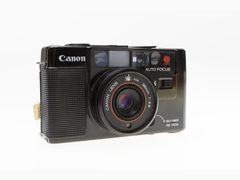
The camera Nikon answered with the L35AF. Casual Photophile found its image quality ranges from great to substandard and notes it lacks the Nikon's +2 EV lever; Lens Lurker still calls it its favorite point-and-shoot under $100.
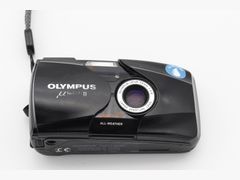
The pocket option: Japan Camera Hunter's reviewer says the L35AF will not fit a jeans pocket the way a Mju II does, while 35mmc's Hamish Gill finds the Mju II's lens more clinical.
Lens Lurker's next favorite after the L35AF, at around $200: a 35mm f/2.8 at 225 g, but it runs on two SR44 button cells instead of AAs.
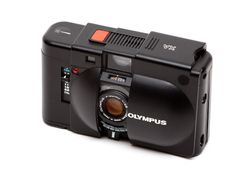
Nikon L35AF2 (One Touch)
The 1985 successor with DX coding and a 4-element lens, priced at $225-250 in an older Max Kent guide; you give up the ISO ring and the 46mm thread.
Every source behind this page
Read them yourself. How we pick and count them is in our methodology.
Show all 39 sources
Independent blogs 11
- maxsphotoblog: The Nikon L35 AF Review
- haritography: Testing my Nikon L35AF point and shoot
- Photo Thinking: Nikon L35AF - Pikaichi - Photo Thinking
- Ed Aldridge Photography: Ultimate Nikon L35 AF & AD Review
- Film Retriever: Nikon L35AF
- Teddy Juras: Nikon L35AF Battery + Film Camera Review (Pikaichi)
- Rob Moses Photography: Nikon L35AF Film Camera Review
- Matt's Classic Cameras: Nikon L35AF
- Lightning in a Bottle: Nikon L35 AF2: Exploring Point-and
- The Shutter Goes Click: Unkind rewind of the Nikon L35AF series
- FotodioX Pro blog: Nikon L35AF #filmsesh
Manuals and references 10
- brooklynfilmcamera.com: Film Camera Repair Cost
- brooklynfilmcamera.com: Nikon L35AF 35mm Point and Shoot
- camera-wiki.org: Nikon L35AF - Camera-wiki.org
- casualphotophile.com: Nikon L35AF - Japan's Pikaichi Point and Shoot
- kamerastore.com: Kamerastore Warranty
- kamerastore.com: Nikon L35AF - Camera
- kamerastore.com: Nikon L35AF
- 35mmc.com: Nikon L35AF2 - A Plastic Brick
- cameramanuals.org: nikon l35af.pdf
- ebay.com: Nikon L35AF 35mm Point and Shoot Film Camera for sale online
Editorial reviews 7
- Lens Lurker: Nikon L35AF
- Japan Camera Hunter: Camera Geekery
- 35mmc: Nikon L35AF - A review of a broken camera (that will see ...
- 35mmc: Nikon L35AF - a mini review - by Giacomo Zema
- 35mmc: Three simple, non-invasive things to try to repair dead or erratic Nikon L35AF - Guest post by Eddy
- Casual Photophile: Canon AF35M vs Nikon L35AF
- Casual Photophile: Funeral for a Friend
Forums 6
- Flickr: Nikon L35AF group: Nikon L35AF Review
- Flickr: Nikon L35AF group: Discussing Rewind not working in Nikon L35AF
- Flickr: Nikon L35AF group: Discussing Flash stuck up
- Flickr: Nikon L35AF group: Discussing Needle Stuck? in Nikon L35AF
- Flickr: Nikon L35AF group: Discussing Nikon L35AD2 film not loading in Nikon L35AF
- Flickr: Nikon L35AF group: Discussing Film advance keeps going! in Nikon L35AF
Video reviews 5
- Lobapixel: NIKON L35AF | (TUTORIAL/REVIEW)
- Benj Haisch: The Most Underrated Film Camera? | Nikon L35AF Review
- Zone Focused: The PERFECT point and shoot FILM camera | Nikon L35AF "Pikaichi" Review
- Faizal Westcott: The Best Point & Shoot Camera? Nikon L35AF Street Photography in LA ft. Fuji C200
- Zenography: Small Camera - BIG Aperture! The Nikon L35 AF and Olympus Trip 35 - Reviewed!
Keep reading
Film cameras
The best point-and-shoot film camera for most people is the Olympus Mju II, about $250-$600 used. Eight picks from $34.99 to $2,000, prices checked Oct. 2026.
Film cameras
Canon Sure Shot guide: the 1979 AF35M and later models, what 152 owner and reviewer opinions say, used prices of $84.97-$315 in Oct 2026, batteries and faults.
Film cameras
Olympus Mju II (Stylus Epic) guide: what 110 owner and reviewer opinions say, $399.99-$814 dealer listings in Oct 2026, common faults, film and battery tips.
Film cameras
Where to buy film cameras used in the US: KEH, MPB, B&H, local shops, eBay and thrift, with warranties, October 2026 prices and a checklist to test one.
Film stocks
Kodak Portra 400 is an ISO 400 color film loved for skin tones and latitude. What 113 opinions say, how to expose and push it, and US prices from $15.99.