Yashica T4: used prices, how to use it and the common faults
The short answer
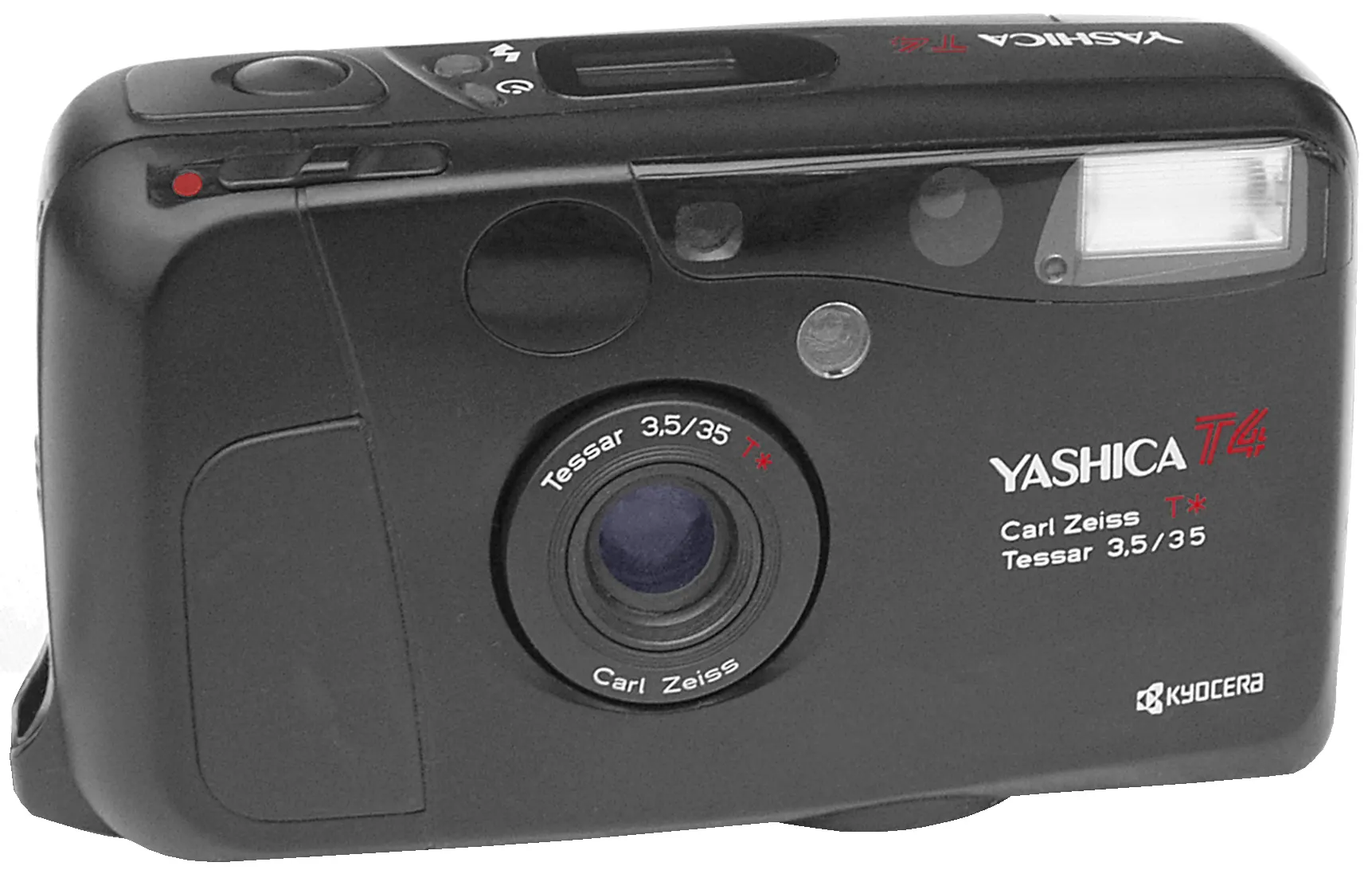
The Yashica T4 is Kyocera's plastic 35mm point-and-shoot from the early 1990s, and owners agree its Carl Zeiss Tessar 35mm f/3.5 lens is the reason to buy one: all 18 owner and reviewer comments on the lens are positive.
Working copies listed for $449.95 to $1,100 at US camera shops in October 2026, mostly sold out, for a fully automatic camera with no manual control and aging electronics whose spare parts are getting scarce.
- Lens
- Zeiss Tessar 35mm f/3.5
- Battery
- One CR123A (3V lithium)
- Exposure
- Fully automatic, 1 s to 1/700 s
- Used price
- $449.95-$1,100 at US shops (Oct 2026)
Built from 145 opinions from 33 pages and videos. Not yet tested by Camera Dojo. Updated .
The short version
Across 145 opinions from owners, reviewers and five YouTube reviews, the praise centers on the lens and the simplicity. Keith Wee calls shooting it a breeze, Cultured Kiwi says exposures are rarely off, and owners report T4s and T5s that survived concrete drops, nights out clubbing and even being run over by a car. It weighs 170 to 190 g depending on the source, and the plain plastic body draws little attention on the street.
The complaints are about money, settings and age. Price is the most criticized topic, with 13 of 19 comments negative: Casual Photophile calls it one of the most inflated price tags in photography, and 35mmc's Dmitry Zhilyaev believes cheaper compacts can produce photos hardly distinguishable from the T4's. The flash returns to auto every time you switch the camera off, autofocus can lag, and 11 of 14 reliability comments describe faults such as film that will not advance and a red light that never stops blinking.
Good fit if
- You want the Zeiss Tessar look in a camera anyone can use: there is nothing to set but the flash mode
- You shoot centered subjects on the street or while traveling, where an inconspicuous plastic body helps
- You want a light compact (170 to 190 g by source) that fits a jacket pocket or a small purse
- You can buy a tested copy with a warranty or return window and accept that it may one day fail for good
Think twice if
- You want any manual control: there is no aperture setting, focus override, ISO override or exposure compensation
- You hate re-setting the flash: it goes back to auto every time the camera is switched off
- You need fast autofocus for moving subjects, or dependable infinity focus without switching to landscape mode
- You want a camera any shop can fix: spare parts are scarce and Brooklyn Film Camera quotes electronically complex cameras case by case
- You want clearly better photos than a cheap compact gives: 35mmc's reviewer believes cheaper point-and-shoots produce photos hardly distinguishable from the T4's
What owners and reviewers say, topic by topic
We sorted 145 opinions about the Yashica T4 from 33 pages and videos on 24 websites and channels. Each row shows how many people raised a topic and how many of them were positive. Open a row to read short quotes, each linked to its source.
Owner voices come from long-form blogs (35mmc, Casual Photophile, Kosmo Foto, Lapse of the Shutter, Cultured Kiwi, Dave Tacon), Flickr Yashica group threads from 2010 to 2015, older forums (MFLenses in 2009, Photography Review user reviews from 2002 to 2004) and five YouTube reviews. Reddit, Photrio and DPReview threads could not be read, and no US retailer customer reviews turned up for this discontinued camera.
Viewfinder and focusing52% positiveof 21
The most discussed topic, with 11 positive, 5 mixed and 5 negative comments. Most owners find the center autofocus reliable if you half-press first, and the green and red finder lights easy to read. The doubts are lag, misses at infinity unless you pick the landscape mode, off-center frame lines, and the T4 Super's Super Scope, handy for high and low angles but reversed and fiddly to compose with.
“the viewfinder felt awkward and the release button seemed over-sensitive”
Clive Williams, 35mmc 2020-02Owner
“It's the superscope that makes it a good street camera.”
SomeDriftwood, Flickr group Yashica T5/T4 2010-03Owner
“the green one lights up when AF is focused and ready while the red one lights up when something is wrong”
Keith Wee, KeithWee Photography 2018-07Owner
“my T5 have top glass but need 1 sec to take a pic, only usable for landscape”
poilu, MFLenses forum 2009-07Owner
Price and value11% positiveof 19
The most criticized topic, with 13 of 19 comments negative: owners and reviewers say hype and dwindling supply inflate the price, and Casual Photophile calls it one of the most inflated in photography. The two positives come from owners who paid little: one $30 locally in 2009, another who called it a fantastic camera for the price. A mixed note comes from a 35mmc commenter who sold a T4 Super D for $460 after paying $125.
“turns out they're quite pricey on eBay”
TCWOS, Talk Photography forum 2017-02Owner
“It is very much over-hyped and attracts ridiculous prices to boot.”
Terry B, 35mmc 2019-08Owner
“they all seem to go for over $200!”
Katastrofo, MFLenses forum 2009-07
“I'm shocked by the reviews I've read about it + its selling price online!”
Lenses100% positiveof 18
All 18 comments are positive. Owners and reviewers call the Carl Zeiss Tessar 35mm f/3.5 sharp, contrasty and the reason for the camera's cult status, with close focus of about 35 cm; one Kosmo Foto commenter has seen only a Contax T3 beat it for sharpness.
“The glass is amazingly sharp.”
Push It A StopOwner
“That little Zeiss lens is sharp and contrasty.”
Dave Tacon Photography 2020-05Owner
“It's a super little compact, and the lens is a peach.”
alex, MFLenses forum 2009-07Owner
“It is a nice little camera, with sharp, fast optics. I love mine.”
mpclemens, Flickr group Yashica T5/T4 2010-03Owner
Reliability today21% positiveof 14
Eleven of 14 comments are negative: film that will not advance or is not detected, a red light that keeps blinking, a T5 that kept locking up, a T4 that died, and lens faults on parts cameras. Three owners report long service, including a T5 used for more than 20 years and a T4 Super that still worked after years in storage.
“the Yashica stopped working...dead”
Martin South of France, 35mmc 2019-08Owner
“My first T5 died - it kept locking up unpredicatably.”
Toby, Photography Review user reviews 2003-07Owner
“I loaded up a new roll in my camera and now it's not being detected by the camera”
Lawrence Chit, Flickr group Yashica T4 Users 2013-04Owner
“I've had my T5 for more than 20 years, and have always been delighted with it.”
Alan Fisk, Kosmo Foto 2020-10Owner
Build quality58% positiveof 12
Mostly positive: owners report T4s and T5s that survived concrete drops, nights out, a fall from a pram and even a car driving over one. Two video reviewers still call the plastic body fragile, Cultured Kiwi says it scratches easily, and Dave Tacon found the motor noise harsh.
“it is about the worst sounding P&S I can remember using”
Dave Tacon Photography 2020-05Owner
“It survived with just a few scratches though.”
Hamish Gill, 35mmc 2013-06Owner
“it takes a few bashes and produces good results. Can't fault it.”
Matthew Craven, Flickr group Yashica T5/T4 2010-03Owner
“I also dropped the T4 a bunch of times and the back started to leak but with some (lots of) electrical tape”
Push It A StopOwner
Controls and features17% positiveof 12
Ten of 12 comments are negative, and most say the same thing: the flash returns to auto every time the camera is switched off, so turning it off takes three presses each time, by one owner's count. Others miss any manual control. The two positives like the strong flash and having only the flash to decide.
“Distance setting returns to default after each shot. Only camera that I know that does this.”
Bob, Photography Review user reviews 2002-05Owner
“To turn it off you need to press the flash button located on the top of the camera three times.”
Dmitry Zhilyaev, 35mmc 2019-08Owner
“every time you close the cover on the lens and the camera turns off, you have to toggle back to the no flash option”
Push It A StopOwner
“The only decision I ever had was if I wanted the flash off for some low-light drama.”
Staci Kennelly, ViewFinders 2022-06Hands-on review
Ease of use70% positiveof 10
Mostly positive, 7 of 10: owners and reviewers call it a breeze, easy enough to hand to family, and as straightforward as a point-and-shoot should be. The complaints are about film that would not catch on first loading and the lag before the shot, which one 35mmc owner found too slow.
“Here comes my frustration with the Yashica. It is just not fast enough.”
Dmitry Zhilyaev, 35mmc 2019-08Owner
“Shooting the Yashica T4 was in simple words: a breeze and a joy.”
Keith Wee, KeithWee Photography 2018-07Owner
“I find the Yashica T4 to be good for all around general picture taking.”
Wallace Koopmans Artlog 2015-06Owner
“I love the yashica t5 though. I use mine for photographing on party's and just the good times with friends”
krasserdankras, Flickr group Yashica T5/T4 2010-03Owner
Image results67% positiveof 9
Six of nine comments praise sharp, characterful results, including a first roll of slide film that surprised Dave Tacon. A 35mmc owner calls the results good but not mind-blowing, a Casual Photophile commenter did not see the hype after two rolls, and one video review points to heavy corner vignetting.
“I shot two rolls through it and thought "meh". I don't get the hype”
Rob, Casual Photophile 2019-05Owner
“Results that are more in keeping with the cameras abilities.”
Wallace Koopmans Artlog 2015-06Owner
“none of my 35mm produce with any lenses better results than T4!!”
Attila, MFLenses forum 2009-07Owner
“I was pleasantly surprised when I got the roll developed back in Shanghai.”
Dave Tacon Photography 2020-05Owner
Light meter and exposure67% positiveof 9
No negative comments: owners say exposures are rarely off, slide film included, and that the half-press locks exposure along with focus. The mixed notes: highlights blew out on one bright day with Fomapan 400, a video reviewer says shadows can go dark, and Hamish Gill's T5 underexposed in low light rather than pick a very slow speed.
“The metering was spot on too.”
Dave Tacon Photography 2020-05Owner
“The T4 did a good job of getting the focus and exposure I wanted for this one.”
Clive Williams, 35mmc 2020-02Owner
“The images are very sharp and contrasty and the metering system works well in most situations.”
Pascal, Photography Review user reviews 2002-04Owner
“The brighter details of the bikes have blown out in some places, while darker leathers and shadows have still held plenty of texture.”
Roma Soper, Soperfect Images 2025-11Hands-on review
Size and weight63% positiveof 8
Mostly positive: it fits a small purse or a pocket, and the plain plastic body draws little attention on the street. Dave Tacon finds the curvier Olympus Mju II more pocketable, one video calls it slightly chunky for tight pockets, and a 2002 user review says it is too large to call micro-sized.
“it is stealth, and not so many people will take a second look”
“its strength recurs in its size, with which it manages to fit in any pocket”
Jorge Ferrufino, Dusty Grain 2021-09
“It is small and light- fitting in my smallest purse and not creating extra weight.”
Staci Kennelly, ViewFinders 2022-06Hands-on review
“the curved shape of the mju does make it more pocketable that the more oblong-oblong-shaped Yashica”
Dave Tacon Photography 2020-05Owner
Batteries and power50% positiveof 6
Split 3 to 3. Two reviewers say one CR123A lasts about 15 to 20 rolls, and a video reviewer praises the battery life. Against that, shutter response slows as the battery ages, a video review says the top LCD stays on and drains the cell, and the weatherproof T4 Super D's battery door is very hard to open.
“as the battery gets older, it takes longer to fire”
Push It A StopOwner
“The only complaint I've got about this is the battery door which, in the interest of weatherproofing, is deliberately and incredibly difficult to open.”
Ivan Lo, Vintage Camera Lab 2012-10Owner
“The Yashica T4 uses 3V CR123A lithium batteries, capable of being used for at least 15-20 reels.”
Jorge Ferrufino, Dusty Grain 2021-09
“One battery will last you around 20 rolls of 24-exposure film if you use flash about 50% of the time.”
Film availability25% positiveof 4
The four comments are about film speed, not film supply: the camera reads DX codes from ISO 50 to 3200 and sets anything else to ISO 100 with no override. One owner shot everything from ISO 100 to 3200 without problems, and Keith Wee sticks to ISO 400 for general and indoor use.
“I shot with everything from 100 to 3200 and never had problems.”
Push It A StopOwner
“I wouldn't really use an ISO100 indoors w/o flash and my tendency is to use ISO400 (kinda just nice for everything).”
“Anything out of the range and the camera will set the ASA automatically to 100.”
Ben Kepka, Cultured KiwiHands-on review
“It will default to ISO 100 for films that are outside the supported DX range or non-DX films.”
Repairs and servicing0% positiveof 3
All three comments are negative: Kosmo Foto says spares are scarce and dead cameras are stripped for parts, a Flickr member recalls a repairman saying point-and-shoots are not worth repairing, and a forum member doubts hobbyists can fix the blinking-light fault.
“There probably is but I bet it is way above our paygrades.”
“Several years ago a camera repairman told me that point and shoots were not economically reparable.”
“Spares are increasingly hard to find, and cameras that develop faults that can't be fixed get cannibalised to keep others in operation.”
Stephen Dowling, Kosmo Foto 2019-02
PositiveMixedNegative
How to use the Yashica T4: battery, film, focus and flash
There is almost nothing to set: the T4 picks focus, aperture and shutter speed, and the only real choice is the flash mode. Start with a fresh battery, since everything on the camera is electronic.
- 1
Fit a CR123A
The T4 runs on one 3V CR123A lithium cell. A new one is also the first test for a camera that has sat in a drawer: Clive Williams's T4 fired up straight away with a fresh cell, according to his 35mmc review.
- 2
Switch it on
Powering on slides the lens cover open and pushes the lens out; closing the cover switches the camera off and retracts the lens. Wallace Koopmans likes that the cover only opens when the camera is on, which helps keep rain off the lens.
- 3
Load the film
Drop the cassette in, pull the leader out to the red mark without bending it and close the back; Flickr group members say pressing lightly on the back as it closes helps the motor catch the film. If the counter stays at 0 or blinks, open up and pull the tab out a little more, or tape the leader to the take-up spool. Our film loading guide covers the basics.
- 4
Check the film speed
The T4 reads the DX code on the cassette from ISO 50 to 3200. Film without a code, or outside that range, is metered at ISO 100, and there is no manual override.
- 5
Focus on the center
Put your subject in the center, half-press the shutter to lock focus and exposure, then recompose and press fully. The green light in the finder blinks while the camera focuses and stays on once it is in focus. Casual Photophile says it focuses and fires within about half a second and quietly, though Dave Tacon found the motor unusually harsh-sounding.
- 6
Watch the red light
With the flash on, a steady red light means it is about to fire, and a blinking one means it is recharging. With the flash off or in landscape mode, a steady red light warns that the shutter speed is slow enough for camera shake.
- 7
Pick a flash mode
The flash button on top cycles through off, auto, red-eye reduction, always on, fill flash and landscape, which turns the flash off and focuses at infinity for distant scenes. The camera always sets the flash power, and it goes back to auto every time you switch it off, so turning the flash off means pressing the button again at each power-on (three presses, by 35mmc's count).
- 8
Use the self-timer if you need it
The only other button on top is the self-timer, next to the shutter release and the flash button.
- 9
Finish the roll
The T4 rewinds the film fully into the cassette, so no leader is left sticking out. 35mmc lists a mid-roll rewind function if you need to change film early.
Sources: camerawest.com, 35mmc.com, kosmofoto.com, wkoopmans.ca, pushitastop.com, flickr.com, flickr.com, lapseoftheshutter.com, casualphotophile.com, 35mmc.com
Yashica T4 battery: CR123A, battery life and what to avoid
The T4 takes one 3V CR123A lithium battery. Energizer's 123 cell lists CR123A, CR17345, 5018LC and EL123 among the types it replaces, so any of those labels will fit. In October 2026 Battery Junction sold a Panasonic CR123A 2-pack for $5.95 and a single shrink-wrapped cell for $2.75.
Battery life is good. Lapse of the Shutter says one cell lasts about 20 rolls of 24 exposures if you use the flash on half the shots, and Dusty Grain says at least 15 to 20 rolls. Push It A Stop's owner noticed the shutter taking longer to fire as the battery aged, so try a new cell before blaming the camera; grainydays also says in his video review that the always-on top LCD drains the battery.
Carry a spare: 35mmc's reviewer warns that a CR123A can be hard to find if yours dies while traveling. Do not swap in a rechargeable 16340 (RCR123A) without checking. Orbtronic says these peak at 4.2V, about 40 percent above a 3V CR123A, which can damage equipment built for 3V, and no source confirms they are safe in a T4.
Our film camera battery finder lists the cells for other film cameras too.
Sources: energizer.com, batteryjunction.com, batteryjunction.com, lapseoftheshutter.com, dustygrain.com, pushitastop.com, youtube.com, 35mmc.com, orbtronic.com
What to check before buying a used Yashica T4
Buy a tested camera from a seller who lists what works, ideally with a warranty. These are 1990s electronics: Lapse of the Shutter advises buying only tested copies in mint condition, because nobody can promise every capacitor and moving part still works. A broken T4 is rarely a bargain: Kosmo Foto says spares are increasingly hard to find, no US shop publishes a T4 repair price, and Brooklyn Film Camera, for one, quotes electronically complex cameras case by case.
Warranty and return terms vary a lot. In October 2026 Camera West offered 90 days, Brooklyn Film Camera 3 months on restored cameras, Kamerastore 12 months on certified ones and Unique Photo 30-day returns. Shoot a test roll inside whatever window you get: in a 35mmc side-by-side test, a working T4 still missed focus on 4 of 37 frames.
- The lens extends and retracts cleanly when you switch on and off
- The glass is clear, with no haze, marks or fungus
- The film winds on after you close the back and the counter moves
- Autofocus locks (steady green light), and the meter and self-timer work
- The flash fires and the red light stops blinking once it has recharged
- On a T4 Super, both the eye-level finder and the Super Scope are clear
- The battery compartment is free of corrosion and the door is not cracked; a stiff door alone is normal on some copies
- The listing names the exact model: T4 (Slim T in Japan), T4 Super or T5 (T Proof), a date-back version, or the T4 Zoom, which is a different camera
Our guide to where to buy used film cameras covers shops, marketplaces and how to test a camera when it arrives.
Sources: camerawest.com, lapseoftheshutter.com, brooklynfilmcamera.com, brooklynfilmcamera.com, kamerastore.com, uniquephoto.com, 35mmc.com, filmadvance.com, kosmofoto.com
Yashica T4 vs T4 Super (T5): which one to buy
 Yashica T4 | Yashica T4 Super (T5) | |
|---|---|---|
| Released | 1990 or 1992 (sources disagree; Kosmo Foto gives both) | 1995 |
| Name in Japan | Kyocera Slim T | Kyocera T Proof |
| Lens | Carl Zeiss T* Tessar 35mm f/3.5 | Same lens |
| Weather sealing | None | Sealed: can take some rain, not waterproof |
| Extra finder | None | Super Scope waist-level finder on top |
| Body | Plastic, 170 to 190 g by source | Slightly bigger, weatherproofed |
| US shop prices, Oct 2026 | $449.95 (Unique Photo, Excellent) to $1,100 (Brooklyn Film Camera, restored) | $495.00 (Camera West) and $499.95 (Unique Photo, Fair) |
| Mint price, Feb 2024 (Lapse of the Shutter) | $550 | $650 |
Pick the Yashica T4 if
- You want the original, slimmer body and do not shoot in the rain
- You never compose from the hip or overhead, so the Super Scope adds nothing for you
Pick the Yashica T4 Super (T5) if
- You shoot outdoors in drizzle and want some weather sealing
- You like shooting from the hip, over crowds or close to the ground with the Super Scope
- You find a working one for the same money: US shop T4 Supers listed at $495.00 to $499.95 in October 2026
Sources: kosmofoto.com, sabukaru.online, keithwee.com, lapseoftheshutter.com, uniquephoto.com, uniquephoto.com, camerawest.com, brooklynfilmcamera.com, wkoopmans.ca
Best film for the Yashica T4
 Ultramax 400
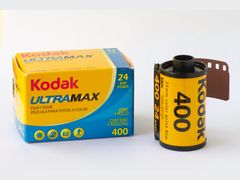
The T4 sets film speed from the DX code, from ISO 50 to 3200, so any modern DX-coded 35mm film works. Its f/3.5 lens is slower than the f/2.8 lenses on rivals like the Olympus Mju II and Nikon L35AF, which makes faster film useful once the light drops.
Owners lean on ISO 400. Keith Wee uses ISO 400 for nearly everything and would not shoot ISO 100 indoors without flash, while Push It A Stop's owner shot everything from ISO 100 to 3200 without problems. An ISO 400 color negative film such as Kodak Ultramax 400 or Kodak Portra 400 is an easy default.
Avoid film without a DX code unless it is rated close to ISO 100, because the camera will meter it at 100 with no way to change it. Slide film works too: Dave Tacon found the metering spot on with his first roll of it.
Our film ISO guide explains what the speed numbers mean.
Sources: kosmofoto.com, casualphotophile.com, keithwee.com, pushitastop.com, davetaconphotography.com
Known problems and what fixing them costs
These are the faults owners and repair notes mention most. No US shop publishes a T4 repair price, so the costs below are general bands from Brooklyn Film Camera, checked in October 2026, which does not list the T4 among the cameras it fully services.
Film does not advance, or the counter sticks at 0
Raised in 5 opinions
- How you notice
- After you close the back the motor does not wind the leader, or the counter stays at 0 or blinks as if no film is loaded. One Flickr owner says it happens about half the time on both his T4 and his T5.
- Fix
- Usually a free fix: pull the leader out to the red mark and keep it flat, press lightly on the back as you close it, pull the tab out a little more, or tape the leader to the take-up spool. If none of that works, the motor or electronics may be faulty.
- Typical cost
- $0 to try the loading fixes; no published US price for a motor or electronics repair.
Sources: flickr.com, flickr.com, flickr.com
Red light keeps blinking and the camera will not shoot
Raised in 3 opinions
- How you notice
- With film and a fresh battery loaded, the red light in the finder keeps blinking and no picture can be taken.
- Fix
- A blinking red light means the flash is recharging. One Photo Forum reply says that if it never stops, the flash circuit is probably faulty, and suggests switching the flash off to keep shooting. Otherwise it needs a technician, and a Flickr member recalls a repairman calling point-and-shoots not economically repairable.
- Typical cost
- No T4-specific US price found. Brooklyn Film Camera, which does not list the T4, quotes electronically complex cameras case by case.
Sources: thephotoforum.com, flickr.com, lapseoftheshutter.com, brooklynfilmcamera.com
Lens will not extend, over-extends or sticks
Raised in 1 opinion
- How you notice
- The lens does not come out at power-on, comes out too far, or sticks when you press the shutter. 35mmc's Hern Tan says every T4 and T5 sold for parts that he came across had some problem with the lens.
- Fix
- One iFixit commenter traces sticking to poor contact on the shutter flex cable or a failed optical sensor (an optoisolator) inside the lens, and a flex cable replacement guide exists for the T4 Super (T5). It is not a beginner job: the same guide warns the flash capacitors may still be charged when you open the camera.
- Typical cost
- No US shop price found. The safer route is a copy a dealer has checked: Camera West's T4 Super listing says the lens extends and retracts properly.
Sources: ifixit.com, mpb.com, camerawest.com, 35mmc.com
Autofocus lags or misses
Raised in 5 opinions
- How you notice
- Soft frames, a noticeable delay before the shot, or misses on distant scenes. In a 35mmc side-by-side test a working T4 missed focus on 4 of 37 frames, and Lapse of the Shutter found it struggles at infinity unless you set it manually.
- Fix
- Keep the subject in the center, half-press to lock focus before you recompose, and use landscape mode for distant scenes. No source we opened gives a DIY fix for frequent misses.
- Typical cost
- No published US price for T4 focus work. Brooklyn Film Camera, which does not list the T4, charges $250-$400 for a full CLA on a premium compact.
Sources: 35mmc.com, pushitastop.com, lapseoftheshutter.com, brooklynfilmcamera.com
Light leaks and a dusty viewfinder
Raised in 3 opinions
- How you notice
- Streaks of light on the negatives, or dust inside the finder. grainydays says in his video review that the rubber lens gasket can tear and let light in.
- Fix
- MPB's guide says light leaks are not uncommon on the T4 and a dusty viewfinder is fairly common. Push It A Stop's owner patched a back that leaked after repeated drops with electrical tape; worn seals and gaskets need a technician. Our [light leaks guide](/techniques/light-leaks/) shows how to spot them on negatives.
- Typical cost
- Brooklyn Film Camera charges $80-$120 for light seal replacement on cameras it works on; it does not list the T4, so ask first.
Sources: mpb.com, pushitastop.com, youtube.com, brooklynfilmcamera.com
Stiff, cracked or broken battery door
Raised in 1 opinion
- How you notice
- The battery door is so stiff it has to be pried open with a coin or screwdriver, or it cracks or breaks off: a 35mmc commenter says battery doors are breaking off as the plastic ages. Vintage Camera Lab says the weatherproof T4 Super D's door is deliberately hard to open.
- Fix
- A stiff door alone is normal on sealed versions; Camera West lists it as a condition note on a T4 Super. A cracked door needs a replacement part, usually from a donor camera.
- Typical cost
- Brooklyn Film Camera charges $80-$150 plus the part for minor parts such as battery doors on cameras it services; donor-part prices were not found.
Sources: camerawest.com, vintagecameralab.com, flickr.com, brooklynfilmcamera.com, 35mmc.com
Low-battery light stays on and the camera will not work
- How you notice
- The low-battery light comes on and does not go out, and the camera will not work. A manual-library note calls it a common problem on the T4 Super, and hobbyists report leaking capacitors and corroded circuit traces.
- Fix
- The manual-library note blames a bad capacitor, and one iFixit commenter fixed a camera with jumper wires and a new capacitor after finding leaked electrolyte. It is a soldering job for a technician or an experienced hobbyist, and the flash capacitor has to be discharged first.
- Typical cost
- No published T4 price for this repair; Brooklyn Film Camera quotes electronically complex cameras case by case.
Sources: butkus.org, ifixit.com, brooklynfilmcamera.com
Photos taken with a Yashica T4
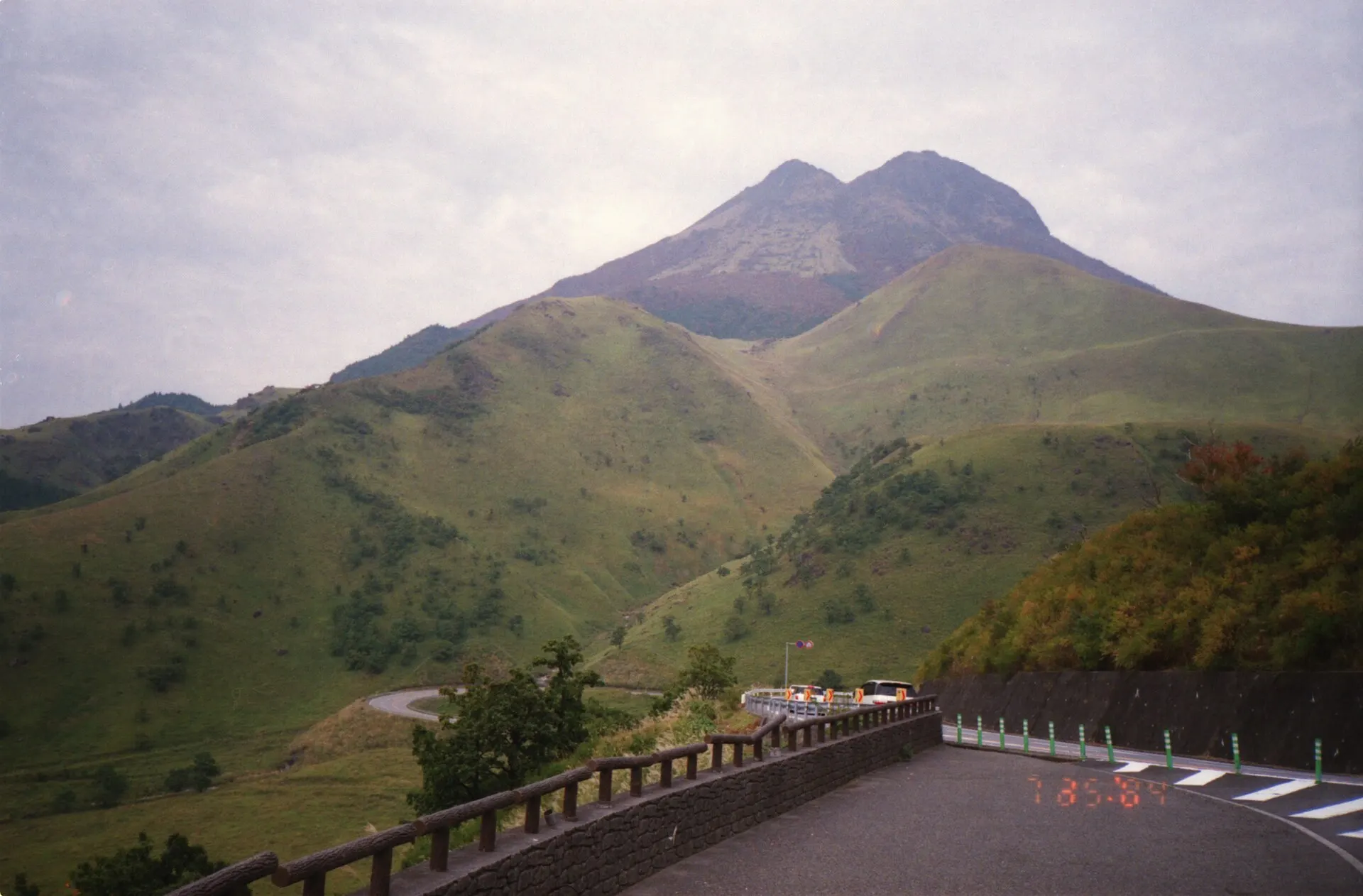
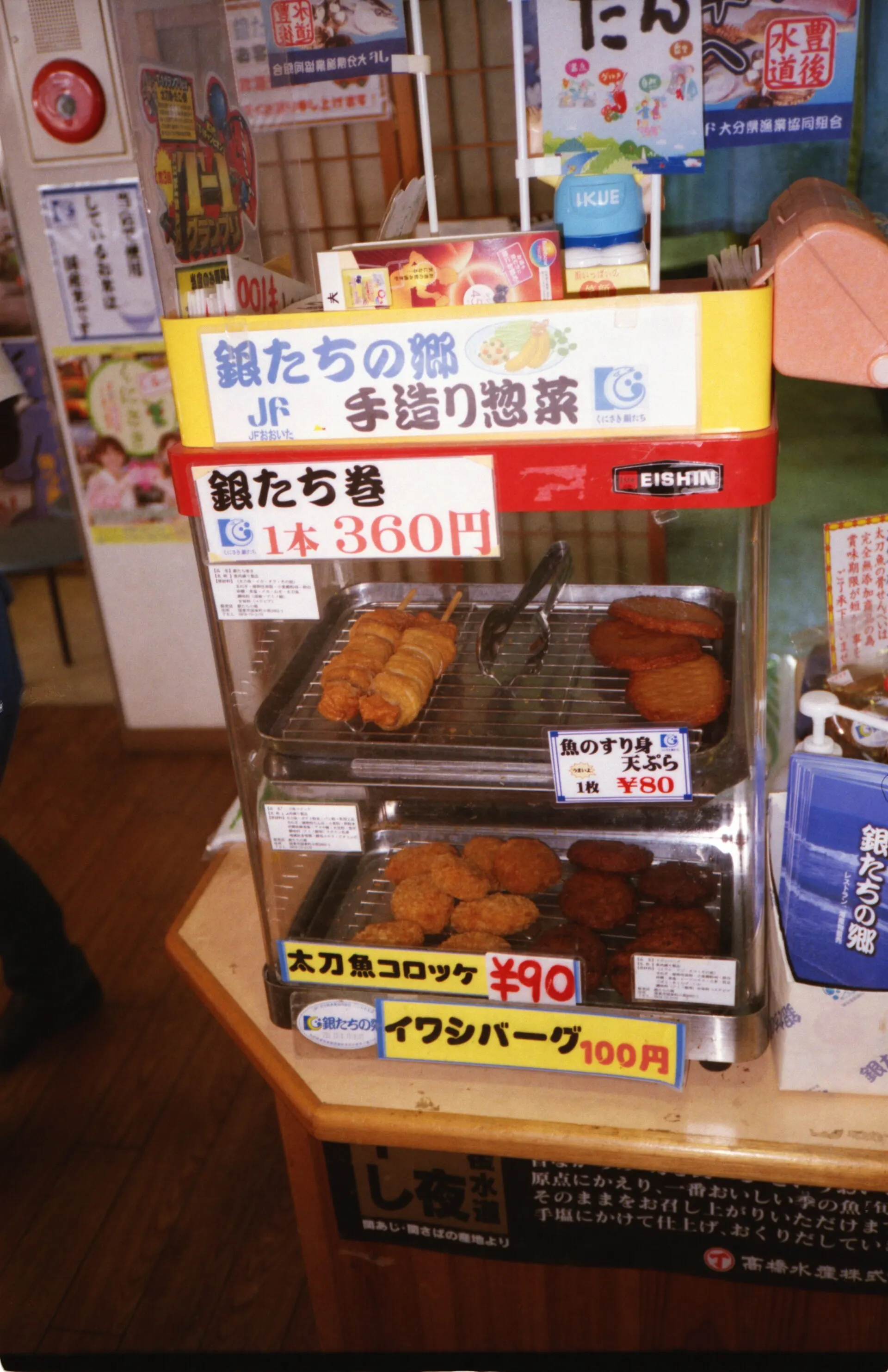
Photos from Wikimedia Commons contributors: San Francisco on Kodak Portra 400 with a T4, and Yufu and Oita, Japan, on Fuji 200, tagged T4 Super (Kyocera T Proof) by the photographer.

What a Yashica T4 costs today
Working T4s at US camera shops listed from $449.95 to $1,100 in October 2026, and nearly every listing was sold out. Brooklyn Film Camera's 2026 buyer's guide puts a T4 or an Olympus Mju II at $300 to $600. Prices have stayed high for years: Casual Photophile put the T4 at around $500 in 2019, and Lapse of the Shutter quoted $550 for a mint T4 and $650 for a mint T4 Super in February 2024.
Unique Photo (Fairfield, NJ)
Used, Excellent, 30-day returns (out of stock), Yashica T4, standard version
$449.95
See listingCamera West (Palm Springs, San Francisco, New York)
Used, cosmetic grade 9 of 10, working, 90-day warranty (out of stock), Yashica T4 Super with wrist strap
$495.00
See listingUnique Photo (Fairfield, NJ)
Used, Fair, 30-day returns (out of stock), Yashica T4 Super, champagne
$499.95
See listingBrooklyn Film Camera (Brooklyn, NY)
Restored, fresh battery, 3-month warranty (sold out), Yashica T4 (Slim T) body
$1,100.00
See listingKamerastore (US store, ships from Finland)
Certified condition (sold out), Yashica T4 body, average certified-condition price
$703.00
See listingKamerastore (US store, ships from Finland)
Certified, 12-month warranty, minor coating damage on the front element (sold out), Yashica T4 Safari (dark green) edition
$646.00
See listingeBay (W.H.I. Camera Japan, active listing)
Used, seller-graded near mint, Kyocera Slim T (Japanese T4) from Japan, plus $29.99 shipping
$579.90
See listingeBay (active listing)
Film tested, issue noted by the seller, Yashica T4 body, plus $93.14 shipping
$296.72
See listing
Prices checked on October 28, 2026. They move every week, so treat them as a range, not a quote. KEH, B&H and eBay sold listings blocked our price checks, MPB had no T4 in stock, and Blue Moon Camera's listing could not be verified, so they are not listed. Sold-out listings are included because they show what recent copies went for. Kamerastore is based in Finland and prices its US store in dollars.
Video reviews worth your time

Yashica T4
The Yashica T4 is a highly accessible point-and-shoot camera featuring a sharp Carl Zeiss lens, though its rising price, plastic construction, and unrepairable electronics make it a risky investment.

Best Point and Shoot 35mm Film Camera Ever ? || (Yashica T4 Review + Alternatives)
The Yashica T4 is a top-tier point-and-shoot film camera renowned for its sharp Zeiss lens and punchy flash, though its high secondhand price and total lack of manual controls may disincentivize beginners.

Why The Yashica T4 Is So Damn Good - Review & How To
The Yashica T4 is a highly portable, easy-to-use point-and-shoot film camera with an excellent Zeiss lens, though its high price tag and potential reliability issues make it hard to justify as a primary camera.

Point and shoot comparison: Yashica T4 Super vs. Olympus MJU 1
The Yashica T4 is a fast, reliable point-and-shoot camera with a sharp Zeiss lens and excellent autofocus, though its high market price makes it harder to justify over cheaper alternatives.

Cheap Yashica T4 Alternative - Almost Identical Point and Shoot
The Yashica T4 offers superior lens sharpness and micro-contrast, but its high price and common point of failure make cheaper alternatives more appealing to most users.
Specifications
Lens and exposure
- Lens construction
- 4 elements in 3 groups
- Apertures
- f/3.5 to f/16, set by the camera
- Shutter speeds
- 1 s to 1/700 s, stepless, automatic
- Exposure range
- EV 3.5 to EV 17 at ISO 100
- Exposure compensation
- None
- Manual controls
- None: no aperture, focus or ISO setting
Focus, finder and flash
- Autofocus
- Active infrared, 3-point
- Closest focus
- 0.35 m, about 14 in (one source says 30 cm)
- Top-plate buttons
- Shutter release, self-timer and one flash-mode button
Body, power and versions
- Battery
- One CR123A 3V lithium
- Size and weight
- 116.5 x 63.5 x 37 mm, 170 g (Kosmo Foto); 118 x 64.5 x 39.5 mm, 190 g (Lapse of the Shutter)
- Name in Japan
- Kyocera Slim T
Questions people ask about the Yashica T4
Is the Yashica T4 worth the hype?
For the lens, mostly yes; for the price, most commenters are critical, with 13 of 19 value comments in this research negative. Every lens comment in this research is positive, and Sabukaru says the praise is deserved for a compact. But Casual Photophile calls its price one of the most inflated in photography, and 35mmc's Dmitry Zhilyaev believes cheaper compacts such as the Olympus mju series and Canon Prima Mini can produce photos hardly distinguishable from the T4's.
Sources: sabukaru.online, casualphotophile.com, 35mmc.com
How much is a Yashica T4 worth in 2026?
In October 2026, used T4s at US camera shops listed from $449.95 (Unique Photo, Excellent) to $1,100 (Brooklyn Film Camera, restored with a 3-month warranty), and T4 Supers at $495.00 to $499.95; nearly all were sold out. Brooklyn Film Camera's 2026 buyer's guide puts a T4 at $300 to $600. Casual Photophile put it around $500 in 2019, and Lapse of the Shutter quoted $550 for a mint T4 in February 2024.
Sources: uniquephoto.com, brooklynfilmcamera.com, camerawest.com, brooklynfilmcamera.com, casualphotophile.com, lapseoftheshutter.com
What is the difference between the Yashica T4, T4 Super and T5?
The T4 Super and the T5 are the same camera: Kosmo Foto says the T4 Super arrived in 1995 and is usually called the T5. It keeps the Zeiss Tessar 35mm f/3.5 in a slightly bigger, weatherproofed body and adds the Super Scope, a waist-level finder on top. Lapse of the Shutter says the seals let it take some rain but it is not waterproof, while the plain T4 is not sealed; the T4 Zoom is a different camera with a Zeiss zoom lens.
Sources: kosmofoto.com, lapseoftheshutter.com, filmadvance.com
What battery does the Yashica T4 use?
One 3V CR123A lithium battery. Lapse of the Shutter says it lasts about 20 rolls of 24 exposures with flash on half the shots, and Dusty Grain says at least 15 to 20 rolls. A Panasonic CR123A 2-pack was $5.95 at Battery Junction in October 2026. Avoid 3.7V rechargeable 16340 cells, since no source confirms they are safe in a camera built for 3V.
Sources: camerawest.com, lapseoftheshutter.com, dustygrain.com, batteryjunction.com, orbtronic.com
Why does the red light keep blinking on my Yashica T4?
A blinking red light means the flash is recharging, according to Lapse of the Shutter. If it never stops with a fresh battery, one reply on The Photo Forum says the flash circuit is probably faulty and suggests switching the flash off so you can still shoot; repairs are hard to find. A steady red light with the flash off is different: it warns of a slow shutter speed and possible camera shake.
Sources: lapseoftheshutter.com, thephotoforum.com, flickr.com
Why won't my Yashica T4 advance the film?
Usually the leader is not seated. Flickr group members suggest pulling the leader out to the red mark and keeping it flat, pressing lightly on the back as you close the door, and if the counter stays at 0 or blinks, pulling the tab out a little more or taping it to the take-up spool. One owner says it happens about half the time on both his T4 and T5; if nothing works, the motor or electronics may be at fault.
Sources: flickr.com, flickr.com
How do you turn off the flash on a Yashica T4?
Press the flash button on top until the flash-off mode shows; 35mmc's Dmitry Zhilyaev counts three presses. The catch is that the T4 goes back to auto flash every time you switch it off, so you repeat this at every power-on. The other modes are auto, red-eye reduction, always on, fill flash and landscape, and the camera always sets the flash power itself.
Sources: 35mmc.com, casualphotophile.com, lapseoftheshutter.com
Is the Yashica T4 better than the Olympus Mju II or the Contax T2?
Not clearly. Dave Tacon found the T4's Zeiss lens sharp and contrasty but the curvier Mju II more pocketable, and Brooklyn Film Camera prices the two in the same $300 to $600 band, with an f/2.8 lens on the Olympus against f/3.5 on the T4. The Contax T2 is Kyocera's premium titanium compact; Lapse of the Shutter says the T4 was meant to compete with it at a lower price, trading titanium for plastic, and Brooklyn Film Camera's 2026 guide asks whether the T2 is worth $2,000.
Sources: davetaconphotography.com, brooklynfilmcamera.com, casualphotophile.com, lapseoftheshutter.com
What people compare it with
A faster f/2.8 lens in a smaller, weather-sealed body; Brooklyn Film Camera prices it in the same $300 to $600 band as the T4, and Dave Tacon finds it more pocketable.
Kyocera's premium titanium compact with Zeiss glass; Lapse of the Shutter says the T4 was meant to compete with it at a lower price, trading titanium for plastic, and Brooklyn Film Camera's 2026 guide asks whether the T2 is worth $2,000.
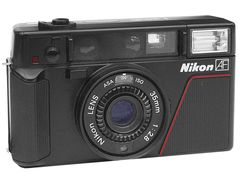
Casual Photophile names it as direct competition for the T4, with a faster 35mm f/2.8 Sonnar-pattern lens.
Olympus AF-10 Super (Infinity Jr.)
A budget early-1990s compact with a 35mm f/3.5 lens that 35mmc's Dmitry Zhilyaev shot side by side with his T4; it takes 2 AAA batteries or one CR123A.
Every source behind this page
Read them yourself. How we pick and count them is in our methodology.
Show all 52 sources
Manuals and references 19
- brooklynfilmcamera.com: Is the Contax T2 Worth $2,000 in 2026? Honest Buyer's Guide
- brooklynfilmcamera.com: Film Camera Repair Cost
- brooklynfilmcamera.com: Yashica T4 Slim T
- butkus.org: Yashica T4 Super, Super D instruction manual, PDF user manual
- camerawest.com: Yashica T4 Super 2857 · Camera West
- energizer.com: Energizer 123 Lithium Batteries (2 Pack), 3V Photo Batteries
- filmadvance.com: Favourite Cameras
- kamerastore.com: Yashica T4 - Camera
- kamerastore.com: Yashica T4 (Safari)
- keithwee.com: Review of the Yashica T4
- batteryjunction.com: Panasonic CR123A Batteries - Shrink Wrap
- batteryjunction.com: Panasonic CR123A - 2 Piece Retail Card
- ebay.com: Kyocera Yashica T4 35mm Point & Shoot Film Camera for sale online
- ebay.com: Yashica T4 35mm Compact Film Camera for sale online
- ifixit.com: Yashica T5D Shutter Flex Cable Replacement
- mpb.com: MPB
- orbtronic.com: Comparing CR123A Non-Rechargeable and 16340 Rechargeable Batteries
- uniquephoto.com: Used Yashica T4 Carl Ziess T* 35mm f/3.5 Standard Version
- uniquephoto.com: Used Yashica T4 Super Champagne Point and Shoot
Independent blogs 12
- KeithWee Photography: Yashica T4 Review | Old but still golden - KeithWee
- Push It A Stop: Yashica T4
- ViewFinders: Yahsica T4 Super: Camera Review
- Wallace Koopmans Artlog: Yashica T4 Super with Fuji Superia
- Wallace Koopmans Artlog: YashicaT4 Portra100T
- Soperfect Images: Yashica T4 - Camera Reviews
- 35mmc: Yashica T4 Review
- 35mmc: Yashica T4 Review - Goodbye to an old friend
- 35mmc: Yashica T5 - The Path to Enlightenment (Part 1)
- 35mmc: MS-Optics Converted Yashica T4 35mm f/3.5 Tessar - The Hunt for the Commute Camera pt.1 - By Hern Tan
- Dave Tacon Photography: Shanghai photographer on the Yashica T4
- Vintage Camera Lab: Yashica T4 Super D
Forums 8
- Talk Photography forum: Yashica T4 test pictures
- The Photography Forum: Yashica T4 issue
- MFLenses forum: Yashica T4 good as than it's reputation
- Flickr group Yashica T5/T4: Yashica T4 film not loading/advancing?
- Flickr group Yashica T4 Users: Yashica T4 film not advancing?
- Flickr group Yashica T4 Users: Discussing Film not being detected in Yashica T4 Users
- Flickr group Yashica T5/T4: Discussing Broken Flash on T4 in Yashica T5/T4
- Flickr group Yashica T5/T4: Flickr: Discussing T4 Super Questions in Yashica T5/T4
Editorial reviews 7
- Dusty Grain: Yashica T4 Review: The most hyped point and shoot camera
- Sabukaru: The Camera That Changed Analog Photography
- Kosmo Foto: Yashica T4/T5: Hipster hype or pocket
- Cultured Kiwi: Yashica T4 Review
- Lapse of the Shutter: Yashica T4 Review
- Lapse of the Shutter: Contax T2 vs Yashica T4
- Casual Photophile: Yashica T4 - A Hype
Video reviews 5
- grainydays: Yashica T4
- KILLIVVN: Best Point and Shoot 35mm Film Camera Ever ? || (Yashica T4 Review + Alternatives)
- Max Kent: Why The Yashica T4 Is So Damn Good - Review & How To
- Joe Tobiason (Wedding photographer): Point and shoot comparison: Yashica T4 Super vs. Olympus MJU 1
- William Sheepskin: Cheap Yashica T4 Alternative - Almost Identical Point and Shoot
Other 1
Keep reading
Film cameras
The best point-and-shoot film camera for most people is the Olympus Mju II, about $250-$600 used. Eight picks from $34.99 to $2,000, prices checked Oct. 2026.
Film cameras
What 114 owner and reviewer opinions say about the Contax T2: $1,500-$2,800 serviced prices in 2026, its Zeiss lens, common faults and repair costs.
Film cameras
Olympus Mju II (Stylus Epic) guide: what 110 owner and reviewer opinions say, $399.99-$814 dealer listings in Oct 2026, common faults, film and battery tips.
Film cameras
Nikon L35AF guide: what 140 owner and reviewer opinions say, $307-$550 with a warranty in October 2026, common faults, film, batteries and how to use it.
Film cameras
Where to buy film cameras used in the US: KEH, MPB, B&H, local shops, eBay and thrift, with warranties, October 2026 prices and a checklist to test one.