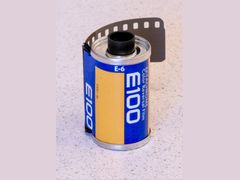
Kodak Vision3 250D for stills: look, ECN-2 developing and price
The short answer
Kodak Vision3 250D is Kodak's ISO 250 daylight-balanced motion picture color negative film (catalog number 5207 in 35mm), which independent shops respool into 35mm cassettes and 120 rolls for still cameras.
US stores listed 35mm rolls at $10.00 to $12.99 on October 28, 2026, and across the 125 owner and reviewer opinions collected here it wins praise for warm, rich daylight color, fine grain and very wide exposure latitude. The catch is that it is made for ECN-2 processing, which fewer labs offer and which costs more than C-41.
- Box speed
- EI 250 in daylight
- Process
- ECN-2 (Kodak)
- Formats
- 35mm and 120 respools
- 35mm roll
- $10.00-12.99
Built from 125 opinions from 30 pages and videos. Not yet tested by Camera Dojo. Updated .

The short version
Which roll you buy matters more than with most films. Older respools keep Kodak's black remjet backing, which the Film Photography Project says will foul a regular lab's C-41 equipment, so they need an ECN-2 lab or a home kit. In August 2025 Kodak replaced remjet with an anti-halation undercoat (AHU), and some shops sell no-remjet (NRJ) rolls that can be cross-processed in C-41, though reviewers who did it report color shifts they fixed in the scan. Read the listing, and line up a lab before you buy.
Supply is patchy. On October 28, 2026, the Film Photography Project called its 35mm roll discontinued while supplies last, Brooktree Film Lab's roll was out of stock and Nelson Photo & Video's Flic Film roll was backordered, while Atlanta Film Co's NRJ roll could still be ordered. Kodak itself still lists 250D among its motion picture camera films, and its technical data sheet was revised in March 2026.
Good fit if
- You shoot mostly in daylight or window light, the conditions Kodak rates it highest for.
- You want warm, cinematic color with fine grain at ISO 250.
- You have an ECN-2 lab you can mail film to, or you develop at home.
- You like a forgiving film: owners rate it anywhere from ISO 100 to 400 with normal development.
- You scan your negatives and don't mind a small color correction now and then.
Think twice if
- You want any lab to develop it: Kodak Portra 400 and CineStill 400D are C-41 films.
- You shoot mostly indoors under tungsten bulbs: Kodak rates it EI 64 there with an 80A filter. For night, look at CineStill 800T.
- Your camera only reads DX codes: many respools are not DX coded.
- You want the cheapest total cost per roll: Boutique Film Lab charges $15 to develop a 35mm roll in ECN-2 and $6 in C-41.
- You need one brand in steady supply for a long project: 250D listings go in and out of stock.
Photos shot on Kodak Vision3 250D
Photos shot on Kodak Vision3 250D in still cameras, shared under free licenses on Wikimedia Commons.

St Bartholomew-the-Great, City of London, 2023Photo: Xander11012, CC BY-SA 4.0 
Rybinsk station, Russia, March 2021Photo: Artem Svetlov from Moscow, Russia, CC BY 2.0 
TPP-16 rail branch, Moscow, April 2021Photo: Artem Svetlov from Moscow, Russia, CC BY 2.0 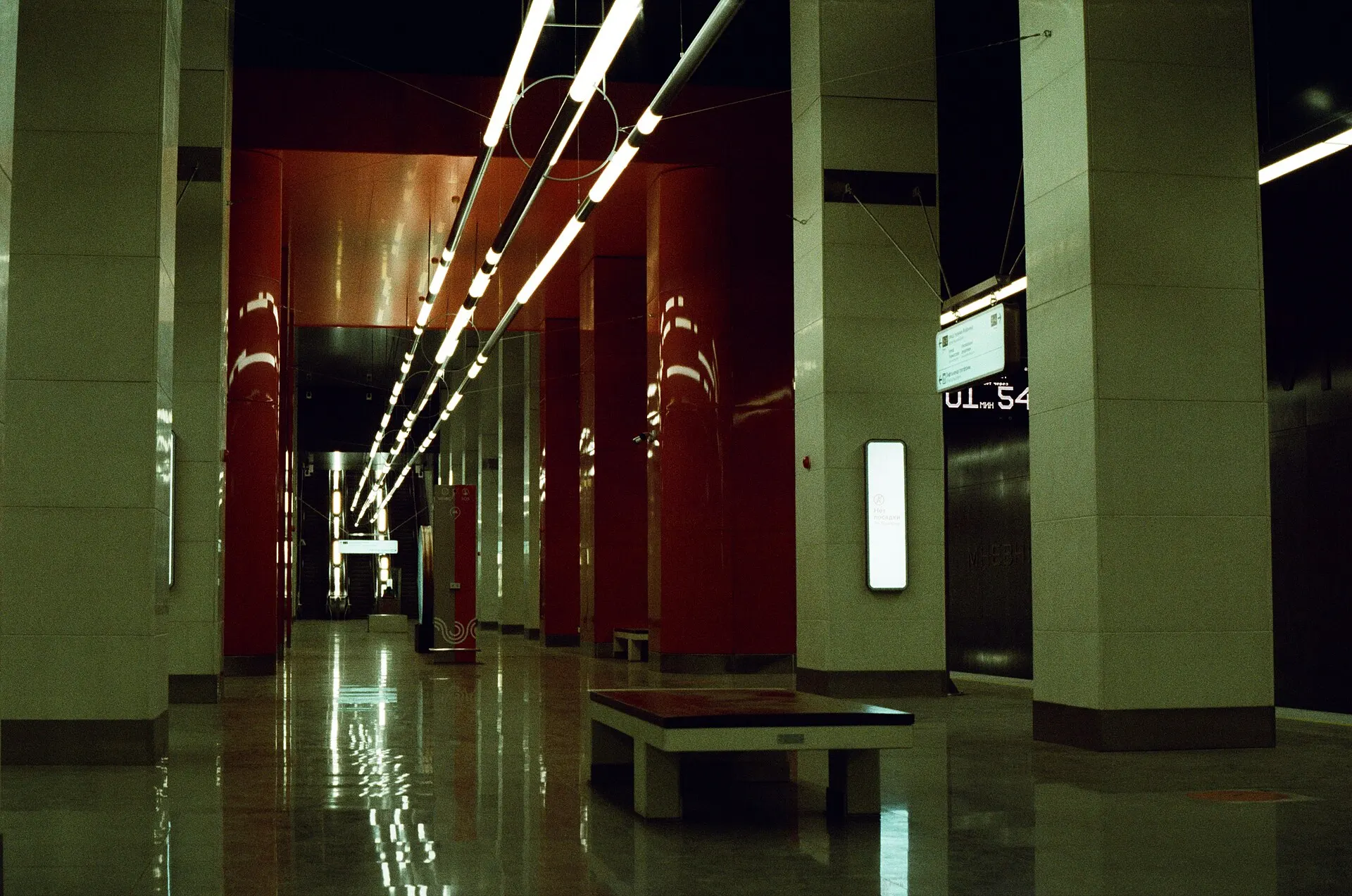
Mnevniki metro station, Moscow, April 2021Photo: Artem Svetlov from Moscow, Russia, CC BY 2.0 
Sokolnicheskaya Zastava Square, Moscow, December 2021, shot on 120 with a Moskva-5Photo: Artyom Svetlov, CC BY-SA 4.0
What owners and reviewers say, topic by topic
We sorted 125 opinions about the Vision3 250D from 30 pages and videos on 22 websites and channels. Each row shows how many people raised a topic and how many of them were positive. Open a row to read short quotes, each linked to its source.
Reddit, Photrio, DPReview, cinematography.com, Lomography and Facebook groups could not be read, so the opinions come from photographers' blogs and their comment threads (Tahusa, Alex Roddie, Alex Luyckx, 35mmc and EMULSIVE supply the most voices), one lab customer review and five YouTube reviews. A few opinions cover 120 respools or the newer AHU version, and several reviewers live outside the US, so their price comparisons are in pounds or ringgit.
Color71% positiveof 24
Mostly positive. Owners and reviewers describe bright, warm, rich color that stays short of oversaturated, with greens and reds that stand out in sun. The complaints are casts: green, yellow or reddish tints in some scans, which owners blame on C-41 cross-processing, the lab's scanner or the film itself in low light. One owner found it muted next to Kodak Gold 200.
“was wondering why most of my Kodak 250D came out in greeny tone”
“The colors are nice and bright”
David Mullin 2024-05Owner
“The 250D offered me very realistic colors; neither over-saturated nor muted.”
Khandker Montasir, EMULSIVE 2019-11Owner
“It's not the oversaturated, high-contrast look of some colour negative stocks.”
From My Lens 2026-03Owner
Overall look75% positiveof 20
Strongly positive. Several reviewers rank it among their favorite color films, describing a clean, cinematic, sometimes dreamy look that can resemble slide film in good light. The mixed notes say it looks true to life rather than cinematic, that lab scans can come back pale and flat, or that it is good but not a personal favorite.
“I would not say that it has a particularly vintage look”
Alex Roddie 2023-08Owner
“I do love the somewhat lower contrast rendering from it.”
Shafiq Hashim, axsatr 2024-12Owner
“I really like the results from this roll and now I can't wait to try the 500T”
Invernodreaming 2020-04Owner
“I think I'll shoot this film again, but not often.”
Khurt Williams, Island in the Net 2021-06Owner
Price and availability47% positiveof 15
Mixed. The film costs less per roll than Portra in reviewers' markets, and bulk rolling makes it cheaper still, but ECN-2 developing costs more and fewer labs offer it. One owner paid $10 for a roll and $24 to $34 to develop and scan it in 2021.
“The film ($10) and the development and scanning ($24-$34) are expensive.”
Khurt Williams, Island in the Net 2021-06Owner
“A favourite film stock of mine, not least because of its price”
Nico, 35mmc 2024-01Owner
“you can get it for £6.50 a roll, which is a lot cheaper than the £18 or so you'll pay for Kodak Portra”
Alex Roddie 2023-08Owner
“A lot of developing labs do not do this kind of processing”
David Mullin 2024-05Owner
Exposure latitude69% positiveof 13
Mostly positive. Owners call it almost bulletproof on exposure, holding highlights in hard sun and backlight, and an EMULSIVE reviewer claims about five stops either way. The doubts are about underexposure and process: a 35mmc tester found EI 250 too fast in ECN-2, one owner saw crushed shadows, and a video comparison lost a little highlight detail in C-41.
“The final scans are very well exposed”
Shafiq Hashim, axsatr 2024-12Owner
“It is almost bulletproof when it comes to exposure.”
Alex Roddie 2024-03Owner
“it balances shadow and highlights very well by protecting the highlights”
Khandker Montasir, EMULSIVE 2019-11Owner
“The sunset shots look kinda underexposed, but actually you can see lots of shadow detail in them”
Tim Lebedin, 35mmc 2019-12Owner
Skin tones70% positiveof 10
Mostly positive, with real disagreement. Reviewers call skin warm without being ruddy, and Tahusa prefers it to Portra, which he finds pale. Three owners could not get skin right: a documentary photographer's studio portrait looked off, a reader who home-developed in C-41 got a blue cast, and another could not correct darker skin from lab scans.
“Particularly Caucasian skin tones are reproduced very poorly.”
“Skin tones are warm without being ruddy.”
From My Lens 2026-03Owner
“I think it works quite well for skin tones.”
Neil Kashishian, Kashphoto 2017-09Owner
“This film stock is perfect for portraits and travel photography.”
Ivan, ShutterGroove 2022-09Hands-on review
Grain88% positiveof 8
Positive across the board. Owners call the grain smooth and fine for an ISO 250 film, and Alex Roddie compares it to Portra 160. One video reviewer saw clearly visible grain, but at a level that didn't bother him.
“the grain is smooth as silk”
David Mullin 2024-05Owner
“Despite being an ISO 250 film, it has a fine grain which I like as well.”
Khandker Montasir, EMULSIVE 2019-11Owner
“In some images it is almost grainless, while in others a little grain is visible (about what I'd expect from Portra 160).”
Alex Roddie 2023-08Owner
“The grain is very fine and the film has high definition.”
Phil Harrison, 35mmc 2019-07Hands-on review
Scanning and printing38% positiveof 8
Mixed. One reviewer calls it the easiest color film he has scanned and another needed almost no correction, but others had to remove red or yellow casts, say flatbed scans don't do it justice, or waited longer for a specialist lab.
“Of all the colour films I've had to scan, Vision3 250D is by far the easiest.”
Alex Luyckx Blog 2023-06Hands-on review
“The pictures almost don't need color correction; they were just cropped and scaled.”
Sergey Dozhdikov, EMULSIVE 2019-03Hands-on review
“this cinema film requires proper processing and scanning”
35mmc 2023-11Owner
“ECN-2 chemistry (which is required for Vision3) is ever so slightly expensive compared to C-41 process”
Shafiq Hashim, axsatr 2024-12Owner
Sharpness and detail100% positiveof 6
All six mentions are positive: clear, sharp frames, some of which an owner says could pass for digital, and two video reviewers rate it sharper than Kodak Gold.
“This film has some excellent clarity and sharpness to it.”
Neil Kashishian, Kashphoto 2017-09Owner
“some of these images look so sharp and clean that they could be digital”
Alex Roddie 2023-08Owner
“You also have incredibly sharp images.”
Alex Luyckx Blog 2023-06Hands-on review
“The film contains enough detail in lights and shadows and it was an interesting experience.”
Sergey Dozhdikov, EMULSIVE 2019-03Hands-on review
Low light and night50% positiveof 6
Split. Some reviewers liked it at night, rating it at ISO 400, and one praised long night exposures. Others found indoor shooting at ISO 250 hard, saw a strong warm shift under tungsten bulbs, or blamed the film for yellow-green tones in low light.
“The film was shot at stock and the light reading was fine, its just Vision3 that gives it these tones especially in low light”
Rick Davy 2024-01Hands-on review
“Shoot at night and you'll retain rich colours and deep blacks.”
EMULSIVE 2015-08Hands-on review
“It delivers excellent image quality if you shoot it during the day and surprisingly good at night.”
Anson (Tahusa), Tahusa 2021-02Hands-on review
“Shooting indoors with the Kodak Vision3 250D is quite a challenge and interesting.”
Ivan, ShutterGroove 2022-09Hands-on review
Halation and glow67% positiveof 6
Mostly positive. Reviewers credit the remjet for keeping halos small when shooting into the sun or bright highlights, and a video review of the newer AHU version says it avoids the strong halation of older remjet-removed film. One owner still saw minor halation in bright light, and EMULSIVE calls the remjet layer, which labs must remove, the film's one real drawback.
“I have to say, I've become a fan of remjet films.”
Molly Kate, Eclectachrome 2023-06Hands-on review
“With the anti-halation layer, it has extraordinary performance when you shoot it towards the sun or with any subject that has ultra bright highlights.”
Anson (Tahusa), Tahusa 2021-02Hands-on review
“there's not much bad to say about this film aside from the elephant in the room; Remjet”
EMULSIVE 2015-08Hands-on review
Consistency60% positiveof 5
Mostly positive but thin. Reviewers found results consistent across sun and overcast, and a lab customer reports hand-rolled cassettes running in many cameras without jams. One owner saw ghost images of sprocket holes on a hand-rolled roll, and another loves that the look shifts with the light but can't yet repeat it on purpose.
“On these portraits, I noticed a strange feature on some of the frames, there are ghost images of the sprockets”
Invernodreaming 2020-04Owner
“Runs beautifully on a wide variety of cameras, no jams. Will be buying more.”
“the Kodak 250D film delivered consistent results with its balanced tone and vibrant colors”
Anson (Tahusa), Tahusa 2023-10Hands-on review
“how its look can be very different depending on light and subject”
Alex Roddie 2024-03Owner
Pushing and pulling100% positiveof 4
All four mentions are positive. Owners rate it at ISO 400 with normal development or push it about a stop, and EMULSIVE says it goes three stops to ISO 2000 before struggling at 4000. Kodak's data sheet gives no push figures and only advises testing.
“It looks fine at 400 without pushing in development.”
Alex Roddie 2024-03Owner
“The film is also versatile enough to be pushed one stop.”
Anson (Tahusa), Tahusa 2023-10Hands-on review
“it'll comfortably go three stops to ISO2000 but starts struggling at ISO4000”
EMULSIVE 2015-08Hands-on review
“the main difference from shooting at box speed is the black and highlights which became more solid and rich than at normal speed”
Anson (Tahusa), Tahusa 2021-05Hands-on review
PositiveMixedNegative
What is Kodak Vision3 250D, and how does it get into a still camera?
Vision3 250D is a daylight-balanced color negative film Kodak makes for movie cameras. Kodak introduced it in 2009, after Vision2 250D (2004 to 2009), and catalogs it as 5207 in 35mm and 7207 in 16mm. Kodak rates it EI 250 in 5500K daylight and EI 64 under 3200K tungsten light with an 80A filter, and designs it for ECN-2, the motion picture process, rather than the C-41 process used for most still film.
Kodak doesn't sell it in 135 cartridges. It ships as long rolls in metal cans in 16mm, 35mm and 65mm, and shops such as Atlanta Film Co in Georgia, the Film Photography Project, Reflx Lab and Flic Film load the 35mm into still cassettes. The 120 version is cut down from 65mm: Atlanta trims 2mm from each side and spools it onto reused backing paper, and Reflx Lab says its 120 backing paper is recycled from labs and sometimes shows slight light leaks at the film edge. See 35mm vs 120 film for the format basics.
The film is current, not a leftover. Kodak still lists 250D among its motion picture camera films in 2026, and its latest technical data sheet is dated March 2026. What has changed is the backing on the film, covered in the next section.
Check the frame count before you order: FPP's 35mm roll has 24 exposures, while Reflx Lab's and Atlanta Film Co's have 36.
Sources: en.wikipedia.org, nelsonphotoandvideo.com, reflxlab.com, filmphotography.eu, eclectachrome.substack.com, atlantafilmco.com, reflxlab.com, kodak.com, kodak.com, filmphotographystore.com, atlantafilmco.com
Remjet, NRJ or AHU: which Vision3 250D are you buying?
For decades Kodak coated its motion picture films with remjet, a black carbon backing it invented in 1934 to prevent static and scratches and to control halation. ECN-2 begins with a prebath that lets the remjet wash off. Remjet film should never go through a standard C-41 machine: Atlanta Film Co says it contaminates the chemistry, which is why most labs won't accept it.
In August 2025 Kodak announced a redesign of all four Vision3 stocks, 250D included, replacing remjet with an anti-halation undercoat (AHU). Kodak says AHU comes off during processing and needs no change to processing, scanning or printing workflows. AHU stock has new catalog numbers, and Kodak said volume would be limited while it phases out remjet production, so remjet rolls are still on the shelves.
A third kind is sold as no-remjet. Atlanta Film Co marks these rolls NRJ and says they can be cross-processed in C-41, though it still strongly recommends ECN-2. Listings are not always clear about which version they contain, and a Flickr member points out that labs often can't tell what stock a re-rolled cassette holds, so ask the seller and tell your lab.
| Version | What it is | Developing | Examples (Oct 2026) |
|---|---|---|---|
| Remjet | Original black carbon backing left on | ECN-2 lab, or a home ECN-2 kit with a remjet removal step; never a regular C-41 lab | Reflx Lab 35mm and 120, FPP 35mm, Atlanta Film Co 120 |
| NRJ (no remjet) | Sold without the remjet layer | ECN-2 recommended; C-41 possible, but reviewers report color shifts | Atlanta Film Co Hand Rolled 250D (NRJ), 35mm |
| AHU | Kodak's 2025 redesign with an anti-halation undercoat | Kodak says no workflow change; Reflx Lab says its AHU roll works in ECN-2 and C-41 | Reflx Lab 320D AHU (the listing doesn't name the Kodak stock) |
If a listing doesn't say which version it is, treat the roll as remjet film and send it to an ECN-2 lab.
Sources: theasc.com, atlantafilmco.com, atlantafilmco.com, filmphotographystore.com, reflxlab.com, reflxlab.com, atlantafilmco.com, flickr.com
How to shoot Kodak Vision3 250D in a still camera
These are the habits owners describe, checked against Kodak's own data sheet and ratings.
- 1
Set the ISO by hand
Many respools aren't DX coded: FPP's and Brooktree's rolls are listed as non-DX, and a Flickr member notes Atlanta Film Co's cassettes won't register speed on DX cameras. Reflx Lab's 35mm is DX coded at 250. Set the speed yourself before the first frame; how to load film covers the rest.
- 2
Rate it at 250, or give it more light
Kodak's daylight rating is EI 250. Many owners overexpose: Alex Roddie started at ISO 125 and later wrote he'd happily shoot it at 100, axsatr used 200, and EMULSIVE's reviewer prefers half a stop over. A 35mmc tester found EI 250 too fast once the film went through ECN-2.
- 3
Shoot it in daylight and window light
Kodak's suitability ratings give it 5 of 5 stars for daytime interiors and window light, 4 for day exteriors and only 2 for a well-lit tungsten studio. Owners praise how it handles hard midday sun and backlit scenes.
- 4
Decide what to do about tungsten light
Under household bulbs most reviewers got a warm shift: ShutterGroove's reviewer saw a yellow-orange cast he liked, and grainydays a strong warm shift (Alex Luyckx describes a blue cast instead). Kodak's fix is an 80A filter, which drops the rating from EI 250 to 64, about two stops. Or correct it in the scan, or keep it.
- 5
For night, rate it at 400 and develop normally
EMULSIVE's reviewer rates it at ISO 400 after dark with no push, and Tahusa found it surprisingly good at night. According to Kodak's data sheet, exposures from 1/1000 second to 1 second need no correction; its brochure adds one stop and a CC10R filter around 10 seconds. For regular night work, ShutterGroove's reviewer preferred Vision3 500T.
- 6
Push it if you need speed
Shoot the whole roll at one rating and tell the lab. Tahusa rated a roll at 400 and had the lab push it one stop (250 to 400 is closer to two-thirds of a stop), and EMULSIVE says it goes three stops to ISO 2000. Boutique Film Lab charges $2 per stop for ECN-2 pushes. More in how to push and pull film.
Sources: filmphotographystore.com, brooktreefilmlab.com, flickr.com, reflxlab.com, nelsonphotoandvideo.com, alexroddie.com, alexroddie.com, axsatr.wordpress.com, emulsive.org, 35mmc.com, kodak.com, shuttergroove.com, alexluyckx.com, cinestillfilm.com, kodak.com, tahusa.co, tahusa.co, boutiquefilmlab.com
Developing Vision3 250D: ECN-2 or C-41?
ECN-2 is the process Kodak designed it for, and the only safe choice for a remjet roll. The Film Photography Project points its customers to Blue Moon Camera in Portland, Boutique Film Lab in Tennessee, The Camera Shop in Minnesota and Old School Photo Lab in New Hampshire. On October 28, 2026, Boutique charged $15 to develop a 35mm roll in ECN-2, or $24 with 4x6 prints and an index print. Brooktree Film Lab in Illinois takes ECN-2 if you pick that option and says turnaround is slightly longer; its site lists processing from $10.00 without a separate ECN-2 price. Atlanta Film Co's $12.99 ECN-2 service, run with Dunwoody Photo, was listed out of stock, with a site banner saying new processing orders were unavailable until November.
The trade-off is cost and choice. At Boutique the same 35mm roll costs $6 to develop in C-41 against $15 in ECN-2, and owners in Vietnam and Malaysia also paid more for ECN-2 than for C-41. Our pages on what developing costs and mail-in labs compare the options.
C-41 works once the remjet is gone, but it changes the result, and sources disagree on whether that is bad. Phil Harrison at 35mmc had the remjet removed and preferred C-41: full EI 250 speed, good tolerance for exposure errors and colors he found more pleasing, while ECN-2 gave lower contrast and more muted color. Alex Luyckx's earlier C-41 cross-processed frames looked a little green to him, though he still liked them, and an Armando Street Photography comparison found C-41's yellow cast correctable in the scan. Atlanta Film Co allows C-41 for its NRJ rolls but recommends ECN-2.
At home, ECN-2 kits come from brands including QWD, Flic Film, Bellini, Jobo and CineStill. For remjet film, FPP adds one step: after the last bath, rinse in a half bucket of 80 to 102F water and rub the base side gently with your thumb as the film comes off the reel. EMULSIVE's reviewer filters reused chemistry through coffee filters to catch remjet bits. Our home developing guide covers the black-and-white and C-41 basics.
Never drop a remjet roll at a regular C-41 counter: FPP warns the remjet will foul the lab's equipment.
Sources: filmphotographystore.com, filmphotographystore.com, boutiquefilmlab.com, brooktreefilmlab.com, atlantafilmco.com, atlantafilmco.com, dudeoi.com, axsatr.wordpress.com, 35mmc.com, alexluyckx.com, youtube.com, atlantafilmco.com, eclectachrome.substack.com, emulsive.org
Scanning Vision3 250D and fixing color casts
Scans vary more than the negatives. Alex Luyckx calls 250D by far the easiest color film he has scanned: it came out of SilverFast on an Epson V700 clean, needing only small curve and color-balance tweaks. An EMULSIVE contributor's ECN-2 scans needed almost no correction at all.
Others had to work for it. Phil Harrison removed a mild red cast from both labs' scans with the red curve in Photoshop, Mr. Negative says Fuji Frontier scans can lean yellow, and a 35mmc owner says flatbed and camera scans don't do the film justice. When a reader couldn't get his family's skin tones right, Tahusa's author suspected the scanning and suggested inverting the image in a phone app to see how the negative really looks.
Two practical snags. Luyckx's Nikon Coolscan V ED struggled to load the film because motion picture sprocket holes are shaped differently, and home-developed film cupped as it dried; back-rolling it for 48 to 72 hours or pressing cut strips under heavy books flattened it for his flatbed. Kodak's data sheet also warns that traditional 10-bit scanner encoding can lose the extra highlight range. If you develop at home, Boutique Film Lab scans developed 35mm from $8 an uncut roll, or see scanning film at home.
Sources: alexluyckx.com, emulsive.org, 35mmc.com, youtube.com, 35mmc.com, tahusa.co, kodak.com, boutiquefilmlab.com
Kodak Vision3 250D vs Kodak Portra 400
| Kodak Vision3 250D | 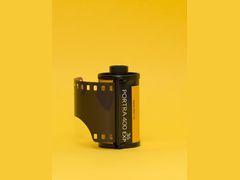 Kodak Portra 400 | |
|---|---|---|
| Made for | Movie cameras; respooled for stills by third parties | Still cameras; boxed by Kodak |
| Speed | EI 250 in daylight | ISO 400 |
| Process | ECN-2; C-41 only for remjet-free rolls, with a color shift | C-41 at any color lab |
| 35mm develop only, Boutique Film Lab (Oct 2026) | $15 in ECN-2 | $6 in C-41 |
| Exposure latitude | Alex Roddie finds it just as flexible as Portra 400 | Equally flexible, per Roddie |
| Skin tones | Tahusa prefers 250D's rendering | Tahusa finds Portra's pale |
| Film price | Alex Roddie paid £6.50 a roll in the UK (2023); axsatr paid RM 30 in Malaysia (2024) | Roddie: about £18 for Portra; axsatr: RM 75 for Portra 160 |
Pick the Kodak Vision3 250D if
- You shoot mostly in daylight and have an ECN-2 lab or kit.
- You want a cinematic look and a cheaper roll of film.
- You like to overexpose and scan your own negatives.
Pick the Kodak Portra 400 if
- You want any lab, anywhere, to develop it.
- You need ISO 400 for mixed or dimmer light.
- You want factory-made cassettes from a steady supply.
Sources: alexroddie.com, alexroddie.com, tahusa.co, axsatr.wordpress.com, boutiquefilmlab.com, 35mmc.com
What a roll of Vision3 250D costs
35mm rolls listed at $10.00 to $12.99 at the shops below, and 120 at $12.00 to $15.99 a roll, but several listings were out of stock or backordered. Kodak doesn't sell still-camera rolls, and B&H, Adorama and Freestyle couldn't be checked, so they aren't listed.
Reflx Lab
New, mixed stock signals, 35mm, 36 exposures, 3-pack, remjet, DX coded 250
$29.99
See listingAtlanta Film Co (Georgia)
New, spooled to order, 35mm, 36 exposures, 1 roll, no remjet (NRJ)
$12.99
See listingFilm Photography Project
New, 'discontinued - while supplies last', 35mm, 24 exposures, 1 roll, remjet, non-DX
$10.99
See listingBrooktree Film Lab (Illinois)
New, out of stock, 35mm, about 36 exposures, 1 roll, non-DX
$10.25
See listingNelson Photo & Video (San Diego)
New, backordered, Flic Film Vision3 250D, 35mm, 36 exposures
$12.12
See listingReflx Lab
New, 120, 3 rolls, remjet
$36.00
See listingAtlanta Film Co (Georgia)
New, out of stock, 120, 1 roll, remjet
$15.99
See listingBoutique Film Lab (Tennessee)
ECN-2 service, Develop only, 35mm; $24 with 4x6 prints and index print
$15.00
See listingAtlanta Film Co with Dunwoody Photo
ECN-2 service, out of stock (new orders unavailable until November, per site banner), Develop, 35mm, per roll
$12.99
See listingBrooktree Film Lab (Illinois)
Service, pick the ECN-2 option, Film processing, starting price
From $10.00
See listing
Prices checked on October 28, 2026. They move every week, so treat them as a range, not a quote. Reflx Lab's 3-packs work out to about $10.00 a 35mm roll ($29.99 / 3) and $12.00 a 120 roll ($36.00 / 3); its product page showed a sold-out label while its collection page listed the 35mm pack in stock. Bulk 16mm Kodak 7207 is also sold, for example a 100 ft roll for $84.99 at Legacy Photo Lab, but 16mm doesn't fit 35mm still cameras. Developing is extra; the last three rows are ECN-2 lab prices.
Technical data
Film (Kodak)
- Catalog number, 35mm
- 5207
- Catalog number, 16mm
- 7207
- Introduced
- 2009, after Vision2 250D (2004 to 2009)
- Process
- ECN-2
Exposure (Kodak)
- Daylight, 5500K
- EI 250, no filter
- Tungsten, 3200K
- EI 64 with an 80A filter
- Metal halide, HMI, Kino Flo 55
- EI 250, no filter
- Reciprocity
- No correction from 1/1000 s to 1 s
- Highlight latitude
- 2 stops of extended highlight latitude
- Best conditions (Kodak stars)
- Day interior and window light 5, day exterior 4, limited tungsten light 3, tungsten studio 2
Formats
- From Kodak
- 16mm, 35mm and 65mm rolls in metal cans
- 35mm respools
- 24 or 36 exposures, depending on the shop
Storage and handling (Kodak)
- Unexposed film
- 13 C (55 F) or lower
- Long-term storage
- -18 C (0 F) or lower
- After exposure
- Process promptly
- Handling
- Total darkness, no safelight
Video reviews worth your time

Kodak Vision3 250d
The reviewer highly praises Kodak Vision3 250D as a sharp, warm, and versatile daylight film stock that offers excellent color rendering and value.

The New Kodak Vision 3 250D AHU
The reviewer highly praises the film stock for its excellent dynamic range, color rendering, and surprising capability in long-exposure night photography.

Kodak Vision3 250D
The reviewer considers Kodak Vision3 250D an affordable, versatile, and cinematic film stock with natural colors, pleasing skin tones, and excellent editability.

What is Kodak Vision 3 250D?
Kodak Vision3 250D delivers a warm, cinematic appearance with fine grain and rich depth, making it an excellent daylight film stock when shot and scanned properly.

ECN-2 vs C41 Development Comparison on Kodak Vision3 250D
The reviewer concludes that Kodak Vision3 250D can be conveniently developed using standard C41 chemistry, as post-scan color correction yields results nearly identical to ECN2 processing.
Questions people ask about the Vision3 250D
Can you develop Kodak Vision3 250D in C-41?
Only once the remjet is gone. FPP warns that remjet rolls will foul a regular lab's C-41 equipment, so they need an ECN-2 lab, a home ECN-2 kit or a lab that strips the backing first. Atlanta Film Co says its no-remjet (NRJ) rolls can be cross-processed in C-41 but recommends ECN-2. Expect a color shift, often green or yellow, that you correct in the scan; 35mmc's Phil Harrison actually preferred the C-41 colors.
Sources: filmphotographystore.com, atlantafilmco.com, 35mmc.com, alexluyckx.com
Is Kodak Vision3 250D worth it?
For daylight shooters who can reach an ECN-2 lab, most reviewers say yes: Alex Roddie calls it almost bulletproof on exposure, and Alex Luyckx ranks it his favorite of the three Vision3 films he reviewed. The film is cheap per roll, $10.00 to $12.99 for 35mm in October 2026, but developing costs more: $15 in ECN-2 against $6 in C-41 at Boutique Film Lab. A few owners found it good but not special.
Sources: alexroddie.com, alexluyckx.com, boutiquefilmlab.com, rickdavy.co.uk
What ISO should I shoot Kodak Vision3 250D at?
Kodak rates it EI 250 in daylight, and many owners rate it lower for denser negatives: Alex Roddie at 125 and later 100, axsatr at 200, and a 35mmc tester found 250 too fast in ECN-2. If you shot a roll at ISO 100 by mistake, develop it normally; Roddie shoots it at 100 on purpose and has seen good results at 50. More in [film ISO explained](/film/film-iso-explained/).
Sources: nelsonphotoandvideo.com, alexroddie.com, alexroddie.com, axsatr.wordpress.com, 35mmc.com
Can you shoot Vision3 250D at night or indoors?
Yes, within limits. EMULSIVE's reviewer rates it at ISO 400 after dark and develops normally, and Tahusa found it surprisingly good at night. Indoors at ISO 250 is a struggle, and tungsten bulbs shift the color unless you use an 80A filter, which drops it to EI 64. Kodak gives it only 2 of 5 stars for a tungsten-lit studio, and ShutterGroove's reviewer preferred Vision3 500T for night.
Sources: emulsive.org, tahusa.co, shuttergroove.com, kodak.com, nelsonphotoandvideo.com
Where can I buy Kodak Vision3 250D in 35mm?
From respoolers, since Kodak doesn't sell it in 135 cartridges. On October 28, 2026, Atlanta Film Co listed its NRJ roll at $12.99, Reflx Lab a 3-pack at $29.99 and FPP a 24-exposure roll at $10.99 while supplies last; Brooktree's and Nelson Photo & Video's Flic Film rolls were out of stock or backordered. Some shooters bulk-roll their own from 400 ft cans. See [where to buy 35mm film](/film/where-to-buy-35mm-film/).
Sources: filmphotography.eu, atlantafilmco.com, reflxlab.com, filmphotographystore.com, flickr.com
What is the AHU version of Kodak Vision3 250D?
It is Kodak's 2025 redesign. In August 2025 Kodak replaced the black remjet backing on all Vision3 films with an anti-halation undercoat that comes off in processing and, Kodak says, needs no workflow change. AHU stock has new catalog numbers and was in limited supply while remjet production wound down. A London street photographer who shot the AHU version found skin tones warm but not ruddy and the color restrained.
Sources: theasc.com, frommylensphoto.com
Can you push Kodak Vision3 250D?
Yes. Tahusa rated a roll at 400 and had the ECN-2 lab push it one stop (250 to 400 is closer to two-thirds of a stop), and got richer blacks and slightly warmer color. EMULSIVE says it goes three stops to ISO 2000 and struggles at 4000. Kodak's data sheet gives no push figures and only advises testing, so tell the lab exactly what you did; Boutique Film Lab charges $2 per stop for ECN-2.
Sources: tahusa.co, emulsive.org, kodak.com, boutiquefilmlab.com
Why did my Kodak Vision3 250D come out green?
Usually the process or the scan. Alex Luyckx's frames from C-41 cross-processing looked a little green, though he still liked them, while Dude Oi found a green cast in the shadows hard to remove. Rick Davy saw yellow-green tones in low light even with a correct meter reading. Ask the lab for a neutral rescan, or correct the curves yourself.
Sources: alexluyckx.com, dudeoi.com, rickdavy.co.uk
What people compare it with
Kodak's C-41 portrait film that any lab develops. Alex Roddie finds 250D just as flexible on exposure and prefers its look, and Tahusa prefers 250D's skin tones.
A daylight-balanced ISO 400 film designed for C-41 at any lab, for people who want a cinema-style daylight film without hunting for an ECN-2 lab.
Kodak's everyday C-41 daylight film that any lab develops. axsatr found 250D lower in contrast and more muted next to it, and two video reviewers rate 250D sharper.
For night and tungsten light. ShutterGroove's reviewer preferred Vision3 500T after dark, and CineStill 800T is made from that film for C-41 labs.
Every source behind this page
Read them yourself. How we pick and count them is in our methodology.
Show all 53 sources
Manuals and references 23
- brooktreefilmlab.com: Fast & Affordable Film Processing
- cinestillfilm.com: KODAK 250D Color Negative Film VISION3 7207, 16mm
- en.wikipedia.org: List of motion picture film stocks
- filmphotography.eu: Kodak VISION3 250D
- filmphotographystore.com: 35mm Kodak Vision 3 Film
- filmphotographystore.com: 35mm Color Film - Kodak Vision3 250D (1 Roll)
- nelsonphotoandvideo.com: Flic Film Vision3 250D 135-36 Cine Film
- nelsonphotoandvideo.com: Kodak VISION3 250D Color Negative Film #7207 (16mm, 100' Roll)
- reflxlab.com: 3 ROLLS REFLX LAB 250D ECN-2 FILM-120
- reflxlab.com: 3-PACK 250D DAYLIGHT COLOR NEGATIVE FILM (ECN-2) 36EXP
- reflxlab.com: 3-PACK REFLX LAB 320D AHU COLOR FILM 36EXP
- theasc.com: The American Society of Cinematographers
- atlantafilmco.com: FAQ
- atlantafilmco.com: 35mm ECN-2 Development Service (per roll)
- atlantafilmco.com: Hand Rolled 250D - 120 Medium Format
- atlantafilmco.com: Hand Rolled 250D (NRJ)
- boutiquefilmlab.com: Pricing
- flickr.com: Flickr: Discussing Best Place to Purchase Vision Film and Best Place to Develop It in I Shoot Kodak Vision Films
- flickr.com: Flickr: Discussing New Vision 3 AHU (Anti-Halation Undercoat) Layer Film in I Shoot Kodak Vision Films
- kodak.com: KODAK VISION3 250D 5207 7207 brochure.pdf
- kodak.com: KODAK VISION3 250D 5207 7207 technical information.pdf
- kodak.com: VISION3 250D Color Negative Film 5207/7207
- kodak.com: Motion Picture Camera Films
Independent blogs 16
- Kashphoto: Week 46
- Tahusa: Kodak Vision 3 5207 250D (Daylight) Motion Picture Film
- Tahusa: Pushing Film - Kodak Vision 3 250D 1 Stop to ISO 400
- Tahusa: Travelling through Scotland Part 2: Isle of Skye and London with Kodak Vision 3 250D Film (120)
- ShutterGroove: Kodak Vision3 250D Night & Day Test Shots on Contax G1
- David Mullin: Trying Out Kodak Vision3 250D Film
- Eclectachrome: Is VISION3 250D the perfect mid-day film?
- Alex Roddie: My first two rolls of Kodak Vision3 250D
- Alex Roddie: The magic of cine film
- Alex Luyckx Blog: Film Review Blog No. 96 - Kodak Vision3 5207 250D - Alex Luyckx
- Rick Davy: Shooting Kodak Vision 250 3 D
- Dude Oi: Kodak Vision 3 Review
- From My Lens: Kodak Vision3 250D on the Streets of Soho
- axsatr: An Analog Affair
- Invernodreaming: Shooting Kodak Vision 3 - 250D Review
- Island in the Net: Kodak Vision3 250D
Editorial reviews 7
- EMULSIVE: Film stock review: Kodak VISION3 250D (5207) motion picture film
- EMULSIVE: 5 Frames... With Kodak VISION3 250D 5207 (EI 250 / 35mm format / Olympus OM-1)
- EMULSIVE: 5 Frames... With Kodak VISION3 250D 5207 (EI 200 / 120 format / Pentax 645N)
- 35mmc: Kodak Vision 3 250D - C41 or ECN2 - A quick comparison - by Phil Harrison
- 35mmc: 5 Frames with a Minolta XD7 and Kodak Vision 3 250D
- 35mmc: Pentax SF1n, Pentax-A 35-135mm and Kodak Vision 3 250D - My Personal Recipe for Photographic Nirvana
- 35mmc: 5 frames with Kodak Vision3 in Medium Format - by Tim Lebedin
Video reviews 5
Other 1
Retailer customer reviews 1
Keep reading
Film stocks
CineStill 400D is a daylight ISO 400 C-41 color film with warm color and soft halation. What 100 opinions say, how to expose and push it, and US prices.
Film stocks
Kodak Portra 400 is an ISO 400 color film loved for skin tones and latitude. What 113 opinions say, how to expose and push it, and US prices from $15.99.
Film stocks
CineStill 800T is an ISO 800 tungsten film made for night and neon. What 112 opinions say, how to shoot it in daylight, push it, and US prices from $17.00.
Film stocks
How to push film: what a stop means, what to set on your camera, how to tell the lab, one-stop fees from $0 to $4, home development times and how to pull film.
Developing and scanning
Scanning film with a DSLR, step by step: gear and October 2026 prices, exact camera settings, how it compares with a flatbed and fixes for common scan problems.
Developing and scanning
A roll of 35mm film costs $5 to $11.50 to develop at US labs, or $11.50 to $29 with scans. Prices from 12 labs and the big chains, checked October 2026.