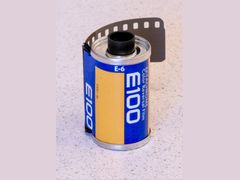
CineStill 400D: how it looks, how to shoot it, what it costs
The short answer
CineStill 400D is a daylight-balanced ISO 400 color negative film, developed in standard C-41, known for warm, slightly muted color, fine grain and a soft red glow (halation) around bright highlights.
A roll is $17.99 at CineStill in 35mm or 120 (October 28, 2026), and most of the 100 opinions collected here praise its look and exposure range, with price and occasional green or brown scans as the main complaints.
- Box speed
- ISO 400 (EI 200-800)
- Balance
- Daylight, 5500K
- Process
- C-41
- Formats
- 35mm, 120, 4x5
Built from 100 opinions from 21 pages and videos. Not yet tested by Camera Dojo. Updated .
The short version
It is a film you buy for the look more than for the speed. Reviewers compare it most often with Kodak Portra 400: grain is just as fine, but 400D is warmer, reds pop and skin tones lean red or golden. Brooklyn Film Camera, which sells and develops it, puts it plainly: as a general-purpose 400 film it is expensive, and Portra 400 or Kodak Ultramax 400 do that job for less.
Finding it is the other catch right now. On October 28, 2026, the 35mm roll showed out of stock at CineStill and at the seven other US shops checked, and CineStill limits it to 2 per customer when it returns. No discontinuation notice was found. The 120 roll was in stock at four of those shops, and CineStill was selling 4x5 sheets as a short-dated batch.
Good fit if
- You shoot mostly in daylight and want warm, vintage-leaning color with fine grain.
- You like the CineStill glow but want it subtler than CineStill 800T, with no 85B filter in the sun.
- You want one roll you can rate at 200, 400 or 800 with normal development, or push for dusk.
- You shoot 120 or 4x5: the 120 roll was easier to find than 35mm in October 2026, and CineStill's 25-sheet 4x5 box was $119.99, about $4.80 a sheet ($119.99 / 25), though that batch is short dated (EXP 10/2026).
- You scan your own negatives and enjoy fine-tuning color.
Think twice if
- You want neutral, cooler color as a blank slate for editing. Portra 400 is the usual pick.
- You shoot mostly at night under streetlights or tungsten bulbs, where 800T is balanced for the light.
- You want a cheap everyday film. Kodak Ultramax 400 or Kodak Gold 200 cost meaningfully less per roll.
- You need consistent, natural skin tones for paid portrait work. Reviewers split on 400D's skin.
- You need 35mm this week: it was out of stock at every US shop checked on October 28, 2026.
Photos shot on CineStill 400D
Two night frames shot on CineStill 400D in 35mm, shared under free licenses on Wikimedia Commons.
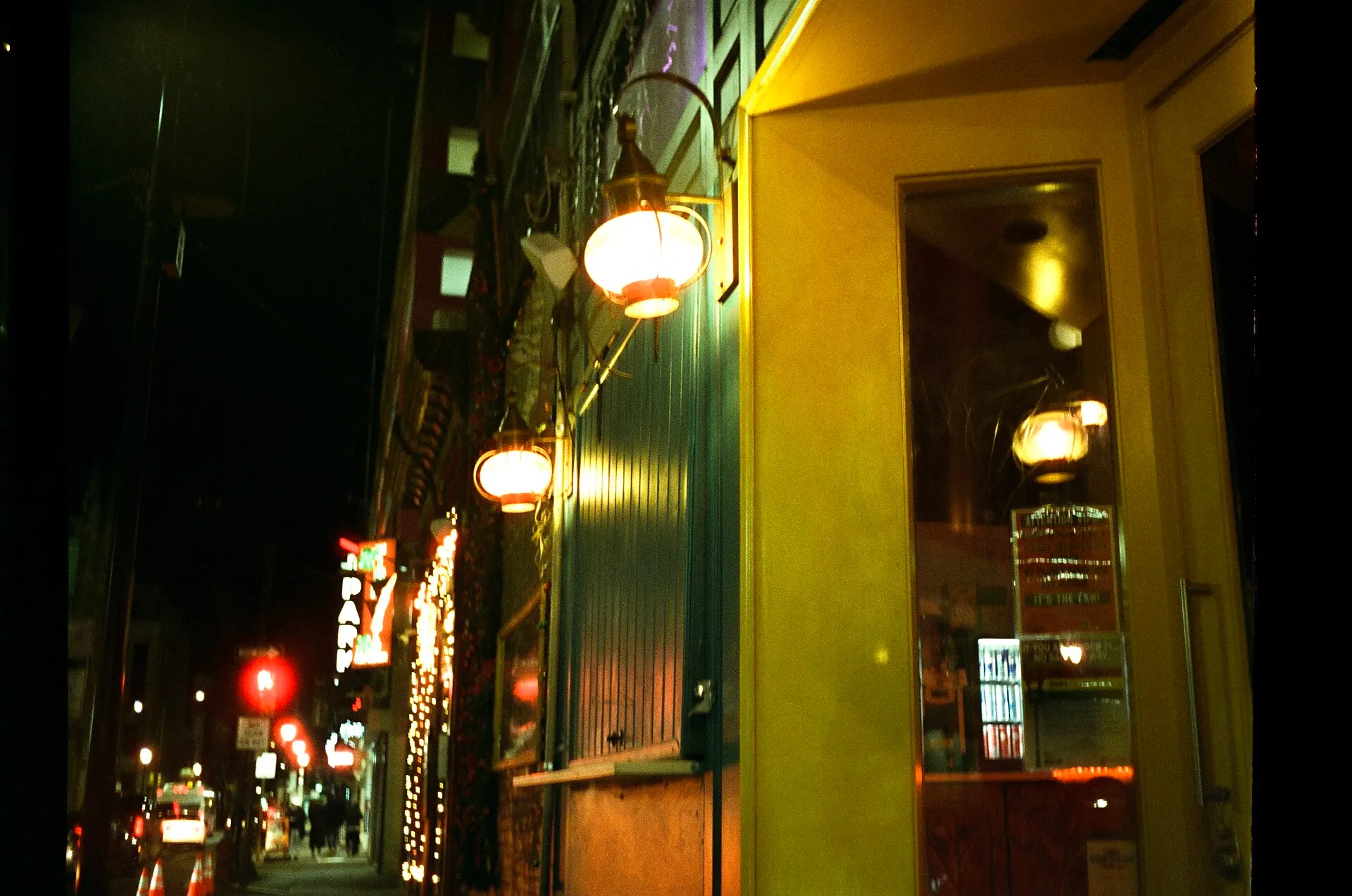
Philadelphia, February 2024. Minox 35 GT-E, shot at ISO 400.Photo: incidencematrix, CC BY 2.0 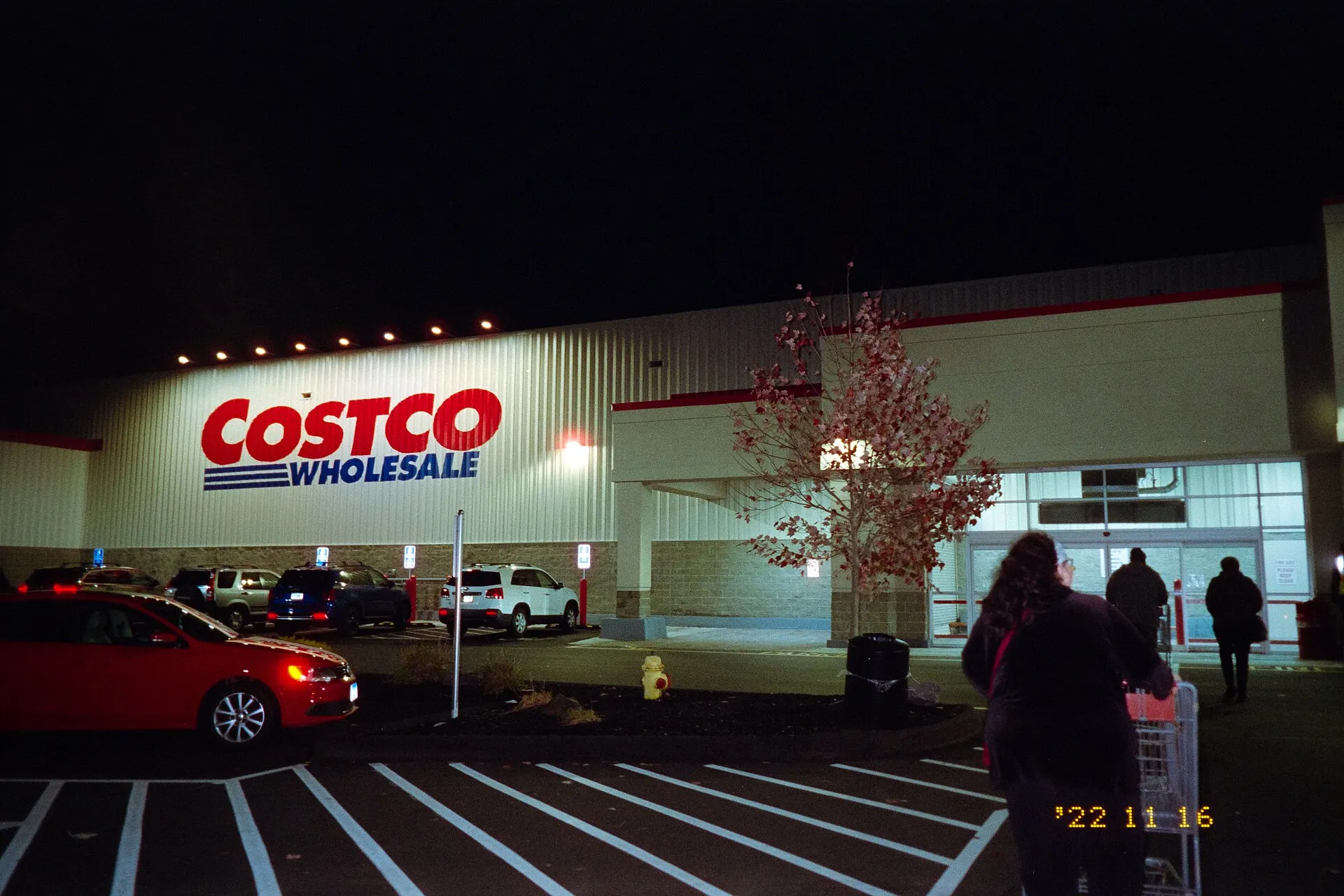
Costco parking lot at night, United States, November 2022. Fujifilm Klasse W, developed at home.Photo: Matthew Bellemare from Naugatuck, CT, United States, CC BY-SA 2.0
What owners and reviewers say, topic by topic
We sorted 100 opinions about the 400D from 21 pages and videos on 17 websites and channels. Each row shows how many people raised a topic and how many of them were positive. Open a row to read short quotes, each linked to its source.
Reddit, DPReview and Facebook groups could not be read, so owner voices are thin: the 100 opinions come mostly from editorial reviews, photographers' blogs and five YouTube reviews, many from 2022 and 2023, soon after launch. Brooklyn Film Camera, quoted often here, sells and develops the film.
Color69% positiveof 16
Mostly positive. Reviewers describe warm, slightly muted color with strong reds, softer than Ektar's, and some found whites and blues accurate straight from the scan. The mixed notes are about a slight mint or green cast on some scans and a reddish or yellow lean in overcast or mixed light that needs a little correction.
“I've been blown away by the rich, vibrant colors of 400D pushed 2 stops”
Matt Murray, Fstoppers: Is CineStill 400D Film the New Natura? 2022-08Owner
“it does a good job of rendering colours accurately, though it is a little on the warm side”
“the overall character is beautifully warm and adds a vintage feel to it - but not as much to look tacky”
Julia Beyer, Emulsive: 5 Frames through Western Canada on CineStill 400D 2022-10Owner
“the color response leans warm and slightly muted rather than punchy”
Halation and glow63% positiveof 16
The most discussed trait, and mostly liked. Reviewers enjoy the warm glow around bright highlights and backlight; most who compared it with 800T found it tamer, one found it stronger, and one daylight roll showed none. Some point out it isn't wanted in every frame.
“the halation seemed slightly tamer than 800T, which I was happy about”
Ryan Gabbard, Emulsive: Film Stock Review: CineStill 400D 2022-12Owner
“personally I love the look of this effect and think that it gives a retro feel to the images”
Sidekick Camera: Is CineStill's 400D Film Good?Hands-on review
“for those who prefer stronger blue tones and less halation, then the classics like Portra are likely to be a better bet”
“the halation is there, but it's restrained”
Grain80% positiveof 10
Positive. Reviewers rate the grain fine and controlled, on par with Portra 400 and less gritty than Ultramax 400. One video reviewer saw visible grain at box speed, and another found it coarse at ISO 1600.
“there is noticeably less grain than my Natura shots”
Matt Murray, Fstoppers: Is CineStill 400D Film the New Natura? 2022-08Owner
“grain is present but remarkably controlled, not only rendering high amounts of detail”
“I found the grain to be nice and controlled and not gritty like something like Ultramax 400”
Ryan Gabbard, Emulsive: Film Stock Review: CineStill 400D 2022-12Owner
“both films have an equally fine grain”
Parallax Photographic Coop: CineStill 400Dynamic Film ReviewHands-on review
Exposure latitude90% positiveof 10
One of the most praised traits. Reviewers say it keeps detail in both highlights and shadows in strong sun and difficult light, and that it likes extra exposure. The one caution, from Brooklyn Film Camera, is that 'muddy' results usually come from underexposure.
“it really seems to appreciate the extra exposure”
Ryan Gabbard, Emulsive: Film Stock Review: CineStill 400D 2022-12Owner
“the large dynamic range from top to bottom is handled well by the dynamic range of the film”
“it handled the contrast of strong sunlight and gave us good detail in both the shadows and highlights”
Parallax Photographic Coop: CineStill 400Dynamic Film ReviewHands-on review
“no matter how much contrast my scenes had, this film was able to capture virtually all shades an eye could see”
Dmitri, Analog.Cafe: CineStill 400D Dynamic Film Review 2022-09Hands-on review
Price and availability22% positiveof 9
The main complaint. Reviewers call it pricier than everyday Kodak films, about 15-20% above Portra 400 at launch according to Emulsive, and too costly to shoot daily; a few say it is worth the money. Supply was tight at launch in 2022.
“the price per roll is a bit off-putting as it exceeds Portra 400 by about 15-20%”
Ryan Gabbard, Emulsive: Film Stock Review: CineStill 400D 2022-12Owner
“at $16/roll (B&H Photo), I'm not likely to be buying too many rolls anytime soon”
Lee, 35mmc: CineStill 400D, A Bittersweet Review (reader comment) 2023-09Owner
“its accurate colours, fine grain, and post-production versatility are worth the expense”
Dmitri, Analog.Cafe: CineStill 400D Dynamic Film Review 2022-09Hands-on review
“supplies of 400D have been tight while CineStill fulfill orders”
Matt Murray, Fstoppers: Is CineStill 400D Film the New Natura? 2022-08Owner
Skin tones50% positiveof 8
Split. Some reviewers find skin believable with a warm, golden lift and rich on darker skin; others say it shifts toward red compared with Portra, can turn cooler in some light, or is inconsistent and not that natural, and Fstoppers was unsure it matches Fujifilm Natura 1600.
“Skin tones come out believable with a slight golden lift”
“it casts a beautiful yet unique skin tone beneath gray, overcast skies”
Taylor Pendleton, Long Weekend 2025-09Hands-on review
“the only thing I'm not convinced about is 400D's ability to match Natura's natural-looking skin tones”
Matt Murray, Fstoppers: Is CineStill 400D Film the New Natura? 2022-08Owner
“skins tones are quite different to what you'd get with Kodak Portra. There's definitely a shift towards red here as well”
Overall look88% positiveof 8
Strongly positive. Owners describe a warm, retro, slightly flat cinematic look, and one calls it possibly her favorite film while another added it to his regular rotation. Willem Verbeeck notes that such a distinct look straight off the scanner is less flexible than a neutral film like Portra.
“I will definitely be adding it to the rotation”
Eric L. Woods, 35mmc: 5 Frames with Hasselblad 501C and Cinestill 400D 2023-01Owner
“CineStill 400D might have become my favorite film I ever shot”
Julia Beyer, Emulsive: 5 Frames through Western Canada on CineStill 400D 2022-10Owner
“if you are looking for an especially retro vibe I recommend giving it a try”
Sidekick Camera: Is CineStill's 400D Film Good?Hands-on review
“to me, Cinestill 400D gives the range and rich colour of Portra 160, but faster”
Azriel Knight, 35mmc: CineStill 400D, A Bittersweet Review 2023-09Owner
Pushing and pulling71% positiveof 7
Mostly positive. A two-stop push to ISO 1600 impressed Fstoppers and others, and one reader rates it at ISO 250 instead. The trade-off reviewers mention is more grain and contrast and weaker shadows when pushed.
“I was blown away by the images that were pushed 2 stops”
Matt Murray, Fstoppers: Is CineStill 400D Film the New Natura? 2022-08Owner
“have you tried shooting 400D at ISO 250? That's how I've been using it in recent weeks”
Steve Macfarlane, 35mmc: Cinestill 400D vs Kodak Portra 400 (reader comment) 2022-12Owner
“it's a high-quality film stock that also responds well to pushing if desired”
Shiang, The CWO: Analogue: Cinestill 400D 2025-04Hands-on review
“pushes far, but it does get a ton of grain”
Taylor Pendleton, Long Weekend 2025-09Hands-on review
Low light and night83% positiveof 6
Mostly positive. Reviewers shot it indoors at ISO 400 with fast lenses and at dusk, and like how lights and neon glow at night. In a fading-light comparison pushed one stop, 35mmc found Portra 400 kept more shadow detail.
“shooting inside in low light is not an issue with ISO 400 and fast glass like my 35mm f1.4G”
“CineStill has revitalized my dusk and early evening shooting with their new color negative film”
Matt Murray, Fstoppers: Is CineStill 400D Film the New Natura? 2022-08Owner
“it's cinematic, great in low light”
Myles Katherine Photography blog 2025-03
“portra giving a lot more detail in the shadows around the marble doorway”
Ted Ayre, 35mmc: Cinestill 400D vs Kodak Portra 400 2022-12Hands-on review
Sharpness and detail100% positiveof 4
All positive, though only a few comment. Reviewers call 35mm results crisp, Analog.Cafe thinks it may resolve as well as Portra 400, and one owner saw a small edge for 120 over 35mm.
“my Pentax 6×7 shots do edge out over their F100 counterparts”
Azriel Knight, 35mmc: CineStill 400D, A Bittersweet Review 2023-09Owner
“400D gave us crisp, sharp images for 35mm”
Parallax Photographic Coop: CineStill 400Dynamic Film ReviewHands-on review
“I think it may resolve as well or even better than Portra 400”
Dmitri, Analog.Cafe: CineStill 400D Dynamic Film Review 2022-09Hands-on review
Scanning and printing50% positiveof 4
Split. Two reviewers got accurate scans with little correction, but others warn that scanner software can over-correct 400D into brown tones or neutralize the red halation as if it were a color cast.
“some scanning software reads the red bloom as a color cast and tries to neutralize it”
“I've seen examples of some scanning software over-compensating colour corrections for the 400D scans yielding brown-looking photos”
Dmitri, Analog.Cafe: CineStill 400D Dynamic Film Review 2022-09Hands-on review
“what you see is what the initial scan gave me for whites, which is pretty rare”
Azriel Knight, 35mmc: CineStill 400D, A Bittersweet Review 2023-09Owner
PositiveMixedNegative
What is CineStill 400D?
CineStill 400D, sold as 400Dynamic, is an ISO 400 color negative film balanced for daylight (5500K) and developed in standard C-41. The D stands for dynamic, not daylight, and Fstoppers ties that to the film's wide dynamic range: CineStill says it can be rated anywhere from EI 200 to 800 with normal development. It comes in 35mm (36 exposures, in DX-coded steel cassettes), 120 (single rolls or 5-roll ProPacks) and 4x5 sheets (25 to a box).
It started as a 2022 crowdfunding campaign in which over 11,000 backers put in over $800,000 to fund it. It went on general sale on October 19, 2022. CineStill's first commercial 4x5 sheet film went on sale on April 5, 2024. A 220 version was a campaign stretch goal that missed its target and was never made.
What it is made from is disputed. CineStill's help center says 400D is not a repackaged motion picture stock and has no rem-jet layer, only an anti-static lubricant coating that survives processing. Analog.Cafe says it is based on Kodak Vision 3 chemistry with significant modifications and that one component may be the cinema emulsion sold as Kodak Vision3 250D. Parallax Photographic and Brooklyn Film Camera describe it like other CineStill films, as motion picture film without the remjet, which leaves no anti-halation layer and explains the glow.
CineStill publishes no technical data sheet for 400D, a gap Analog.Cafe also points out, so there are no official grain, sharpness or latitude figures. What follows comes from CineStill's product pages and help center, reviewers and labs.
Check the date on the box: CineStill moved every batch after the first from a 2 year to a 3 year expiration date.
Sources: cinestillfilm.com, cinestillfilm.com, cinestillfilm.com, cinestillfilm.com, fstoppers.com, cinestillfilm.com, cinestillfilm.com, cinestillfilm.com, cinestillfilm.com, help.cinestillfilm.com, help.cinestillfilm.com, analog.cafe, parallaxphotographic.coop, brooklynfilmcamera.com
What does CineStill 400D look like?
 Portra 400
CineStill describes a soft color palette with natural saturation and warm skin tones. Reviewers agree on the warmth: 35mmc's Ted Ayre saw a clearly warmer cast than Portra 400 in the same light, Brooklyn Film Camera calls the color warm and slightly muted rather than punchy, and Long Weekend's Taylor Pendleton found the reds gorgeous but less saturated than Kodak Ektar. Analog.Cafe and Emulsive both saw a slight mint or green tint on some scans.
Grain is the other thing reviewers keep mentioning. Analog.Cafe calls 400D exceptionally fine-grained and thinks it may resolve as well as Portra 400, Parallax Photographic rates the grain equally fine, and Emulsive's Ryan Gabbard found it controlled and not gritty like Ultramax 400. Analog.Cafe says it looks very similar to CineStill 50D's grain, while Brooklyn Film Camera calls 50D the finer of the two.
Then there is the halation. CineStill says it can occur at in-focus, overexposed highlights, and Brooklyn Film Camera says it needs a bright point source against a darker background: streetlights, sun on chrome, bright windows, backlit hair. On an evenly lit overcast day there is almost none. How strong it gets is debated: Emulsive's Ryan Gabbard found it slightly tamer than 800T, Julia Beyer found it stronger than on other CineStill films, and Parallax saw none on its roll, shot in London.
Next to Portra 400, Parallax calls Portra the closest comparison, with 400D slightly warmer. Ayre preferred Portra's blue sky but 400D on old stonework and red brick, and calls Portra a crisp, blank slate with cooler tones. Gregory Owain sends anyone who wants stronger blues and less halation back to Portra.
Sources: cinestillfilm.com, 35mmc.com, brooklynfilmcamera.com, analog.cafe, emulsive.org, parallaxphotographic.coop, emulsive.org, gregoryowain.co.uk
How to shoot CineStill 400D
Like other color negative films, 400D forgives extra light far better than too little. These are the habits CineStill, reviewers and labs describe.
- 1
Rate it at 200 to 400
Brooklyn Film Camera suggests box speed for balanced results, or 200 for richer shadows and slightly stronger color. Emulsive's Ryan Gabbard shoots most 400 films at EI 320 and says 400D likes extra exposure, and a 35mmc reader rates it at 250. CineStill says normal development covers EI 200 to 800, so the lab needs no special instructions in that range.
- 2
Meter for the subject, not the scene
Brooklyn Film Camera says most 'muddy' complaints come from underexposure: a frame rated at 800 and slightly under comes back thin, cool and grainy in the shadows. With a backlit subject, meter for the subject.
- 3
Use it in daylight and mixed light
It is balanced for 5500K daylight, so it needs no filter in the sun, and Analog.Cafe found it handles mixed lighting well. Under streetlights and tungsten bulbs it turns warm and orange; Brooklyn Film Camera says it still works at dusk and blue hour, before artificial light takes over.
- 4
Put something bright in the frame for the glow
Halation shows around bright point sources against darker areas, such as streetlights, sun on chrome and backlit hair. If you don't want it, keep those highlights out of focus or out of the frame.
- 5
Push the whole roll when the light drops
For dim light, set the camera to 800 or 1600, or up to 2000 at the far end of CineStill's chart, for the entire roll and tell the lab how many stops to push. The table below shows CineStill's ranges.
- 6
Keep it cold and develop it soon
CineStill says to store unexposed film in a refrigerator at 13C (55F) or lower in the sealed package, let it warm to room temperature before opening, and process it as soon as possible after exposure.
Sources: brooklynfilmcamera.com, emulsive.org, 35mmc.com, help.cinestillfilm.com, cinestillfilm.com, analog.cafe, cinestillfilm.com
How far can you push CineStill 400D?
CineStill's current product page allows up to 3 stops of push processing, with an acceptable range of exposure indexes for each step. Its sources disagree at the top end: an April 2024 CineStill post calls the film pushable to 3200, while the current chart stops at EI 2000 for a 3-stop push. CineStill gives no pull-processing advice; its lowest rating is EI 200 with normal development.
Reviewers who pushed it were mostly impressed. Fstoppers' Matt Murray shot it at ISO 1600, had the lab push it 2 stops, and saw rich color and noticeably less grain than in his shots on Fujifilm Natura 1600, a discontinued low-light film. Long Weekend says it pushes far but gets a ton of grain, and Camera West TV found that pushing adds contrast and grain while shadows lose detail.
Many point-and-shoots read the DX code and can't be set to another speed, so Murray put an ISO 1600 DX code sticker on the canister. The 35mm canisters also carry markings for a 1, 2 or 3 stop push to tell your lab. The technique itself is covered in how to push and pull film, and what the numbers mean in film ISO explained.
| Rated at | Development | What sources report |
|---|---|---|
| EI 200 to 800 | Normal | CineStill's no-push range; Brooklyn Film Camera suggests 400, or 200 for richer shadows |
| EI 400 to 1000 | Push 1 stop | CineStill's range for a 1-stop push |
| EI 800 to 1600 | Push 2 stops | Rich color and less grain than Natura 1600 at ISO 1600 (Fstoppers); grain turned coarse at ISO 1600 (Camera West TV) |
| EI 1000 to 2000 | Push 3 stops | CineStill's current limit; an April 2024 CineStill post said pushable to 3200 |
A push applies to the whole roll, so shoot every frame at the same speed and write the push on the lab order.
Sources: cinestillfilm.com, cinestillfilm.com, help.cinestillfilm.com, fstoppers.com, youtube.com, brooklynfilmcamera.com
Developing and scanning CineStill 400D
400D runs in standard C-41 at any color lab, with no special process and no remjet for the lab to remove, Brooklyn Film Camera says. CineStill designed it for regular lab processors or any color negative chemistry at home. Its Cs41 powder kit (1000ml) costs $31.99 and is rated for 24 rolls, about $1.33 a roll in chemicals ($31.99 / 24) before water, tank and time. See developing film at home and what labs charge.
Scanning is where people run into trouble. Analog.Cafe says inverted scans tend to carry a slight mint cast and that some scanning software over-corrects 400D into brown-looking photos; its fix is to scan the negatives as positives, invert them manually and correct gently. Brooklyn Film Camera adds that some software reads the red halation bloom as a color cast and neutralizes it, so ask your lab for minimal correction if you want the glow kept.
The film dries flat, which Analog.Cafe says makes it easy to scan and archive, and its anti-static coating seems to work: Analog.Cafe saw static marks on some CineStill 800T frames but not on 400D. One 35mmc commenter reports fine dust clinging to CineStill negatives, 400D included, from two different labs. For your own scans, see scanning film at home and Negative Lab Pro.
Sources: brooklynfilmcamera.com, help.cinestillfilm.com, cinestillfilm.com, analog.cafe, 35mmc.com
CineStill 400D or 800T?
| CineStill 400D | 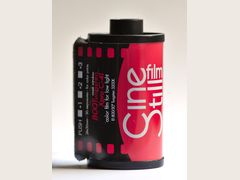 CineStill 800T | |
|---|---|---|
| Color balance | Daylight, about 5500K | Tungsten, about 3200K |
| Box speed | ISO 400 | ISO 800 |
| Best light (Brooklyn Film Camera) | Sun, golden hour, mixed light | Streetlights, neon, interiors |
| Halation (Brooklyn Film Camera) | Present, subtle | Present, pronounced |
| In daylight, no filter | Correct color | Heavy blue cast; an 85B filter fixes it but costs about two-thirds of a stop |
| Under tungsten light, no filter | Warm, orange cast | Correct color |
| Development | Standard C-41 | Standard C-41 (CineStill removes the remjet first) |
Pick the CineStill 400D if
- You shoot mostly in daylight, golden hour or mixed light.
- You want a subtler glow and a film you can leave in the camera all day.
Pick the CineStill 800T if
- You shoot at night under streetlights, neon or tungsten bulbs.
- You want the more pronounced halation. Brooklyn Film Camera's tip for a trip: load 400D for the day and switch to 800T after sunset.
Sources: brooklynfilmcamera.com, cinestillfilm.com, analog.cafe
What a roll of 400D costs
On October 28, 2026, the 35mm roll was listed at $15.99 to $18.00 but showed out of stock at CineStill and all seven other US shops checked. Single 120 rolls were in stock at CineStill, Pro Photo Supply, Reformed Film Lab and Looking Glass Photo for $16.99 to $18.00, and CineStill had 4x5 boxes at $119.99. B&H, Adorama, Freestyle, Samy's and KEH could not be read, and Walmart, Target, Best Buy and eBay were not checked.
CineStill
New, out of stock (limit 2 per customer), 35mm, 36 exposures, 1 roll
$17.99
See listingCineStill
New, in stock, 120, 1 roll
$17.99
See listingCineStill
New, short dated (EXP 10/2026), 4x5, 25 sheets (about $4.80 a sheet)
$119.99
See listingPro Photo Supply
New, out of stock, 35mm, 36 exposures, 1 roll
$15.99
See listingPro Photo Supply
New, in stock, 120, 1 roll
$17.99
See listingReformed Film Lab
New, out of stock, 35mm, 36 exposures, 1 roll
$17.00
See listingReformed Film Lab
New, in stock, 120, 1 roll
$18.00
See listingLooking Glass Photo
New, out of stock, 35mm, 36 exposures, 1 roll
$17.99
See listingLooking Glass Photo
New, in stock, 120, 1 roll
$16.99
See listingPictureline
New, out of stock, 35mm, 36 exposures, 1 roll
$16.99
See listingPictureline
New, out of stock, 120, 1 roll
$14.99
See listingGlazer's Camera
New, out of stock, 35mm, 36 exposures, 1 roll
$17.99
See listingGlazer's Camera
New, out of stock, 120, 5-roll pack (about $15.99 a roll)
$79.95
See listingArts Cameras
New, sold out, 35mm, 36 exposures, 1 roll
$17.99
See listingBrooklyn Film Camera
New, sold out, 35mm or 120, 1 roll
$18.00
See listing
Prices checked on October 28, 2026. They move every week, so treat them as a range, not a quote. At $17.99, a 36-exposure 35mm roll works out to about 50 cents a frame ($17.99 / 36) before developing. CineStill cut its 120 prices by 15% in April 2024. For comparison, CineStill's store listed a Kodak Portra 400 35mm 5-pack at a sale price of $84.95 the same day (list price $93.29): about $16.99 a roll on sale ($84.95 / 5) and $18.66 at list ($93.29 / 5).
Technical data
Film
- Color balance
- 5500K
- Exposure latitude
- Wide (CineStill's wording; no figure published)
- Rem-jet
- None (CineStill help center)
- Technical data sheet
- None published
Formats
- Base, 35mm and 120
- Acetate, with a process-surviving anti-static lubricant coating
- 220
- Never made
Push processing (CineStill)
- 1 stop
- EI 400 to 1000
- 2 stops
- EI 800 to 1600
Storage and dating
- Unexposed film
- Refrigerator, 13C (55F) or lower, sealed
History
- Crowdfunding (2022)
- Over 11,000 backers, over $800,000 raised
- General sale
- October 19, 2022 (35mm and 120)
- 4x5 launch
- April 5, 2024
Video reviews worth your time

I Tested the NEW Cinestill 400D - Is it Worth it?
The reviewer admires CineStill 400D for its unique, warm color rendering and distinctive look, though he prefers Portra 400 for a more neutral everyday film stock.

Cinestill 400d
The reviewer finds CineStill 400D to be a versatile 400-speed color negative film stock with warm, desaturated tones and distinctive red halation.

FINALLY Testing the NEW Cinestill 400D
The CineStill 400D is a versatile medium format film that excels at rendering warm skin tones and subtle halation, making it particularly effective for stylized portrait photography.

I Tested The Dynamic Range Of CineStill 400D
The CineStill 400D offers vibrant colors, impressive dynamic range, and pleasing halation, though its high price makes it more suited for special occasions.

CineStill 400D Review: Hands-On Review
The CineStill 400D is an extremely versatile 400-speed daylight-balanced film that delivers pleasant colors and signature halation, performing best at box speed or overexposed by one stop.
Questions people ask about the 400D
What does the D in CineStill 400D stand for?
Dynamic. CineStill sells it as 400Dynamic, and Fstoppers, reading CineStill's FAQ, says the D stands for dynamic, not daylight, and ties it to the film's wide dynamic range. It is also daylight balanced at 5500K; the D in CineStill 50D stands for 50Daylight.
Sources: fstoppers.com, cinestillfilm.com, cinestillfilm.com
Is CineStill 400D C-41? What about 800T?
Yes. 400D was designed for standard C-41 chemistry, so any lab that develops color film can process it, and there is no remjet for the lab to deal with. CineStill 800T also goes through normal C-41: CineStill removes the remjet layer from that motion picture film first, which Analog.Cafe says is what makes it safe for a typical lab.
Sources: cinestillfilm.com, brooklynfilmcamera.com, analog.cafe
Does CineStill make 120 film?
Yes. 400D comes in 120 as single rolls or 5-roll ProPacks, and a CineStill post on 120 lists four emulsions: 50D, 400D, 800T and BwXX. 400D has also come in 4x5 sheets, 25 to a box, since April 5, 2024. In October 2026 the 120 roll was easier to find than 35mm; more on the formats in [35mm vs 120 film](/film/35mm-vs-120-film/).
Sources: cinestillfilm.com, cinestillfilm.com, cinestillfilm.com
Is CineStill 400D better than Kodak Portra 400?
Not better, different. Reviewers find the grain equally fine, but 400D is warmer, with reds that stand out more, skin that leans red and halation around bright highlights. 35mmc's Ted Ayre calls Portra 400 a crisp, blank slate with cooler tones and recommends 400D for a warm, vintage feel. The price gap is small: $17.99 a roll for 400D at CineStill against about $16.99 a roll for a Portra 400 5-pack on sale at the same store ($84.95 for five, October 2026).
Sources: parallaxphotographic.coop, 35mmc.com, gregoryowain.co.uk, cinestillfilm.com
Can you shoot CineStill 400D at night?
You can, and reviewers like how lights glow, but it is balanced for daylight, so streetlights and tungsten rooms come out warm and orange. Brooklyn Film Camera says 400D works at dusk and blue hour, and that CineStill 800T, a tungsten-balanced ISO 800 film that suits streetlights, neon and interiors, is the better choice once artificial light takes over. For more speed, CineStill's chart allows a 2-stop push to EI 1600.
Sources: brooklynfilmcamera.com, cinestillfilm.com, cinestillfilm.com, youtube.com
Why do my CineStill 400D scans look green or brown?
Analog.Cafe says inverted 400D scans tend to show a slight mint cast, and that some scanning software over-corrects them into brown-looking photos. Its fix is to scan the negatives as positives, invert manually and correct gently. If a lab scans for you, Brooklyn Film Camera suggests asking for minimal correction so the software doesn't treat the red halation as a cast.
Sources: analog.cafe, brooklynfilmcamera.com
Is CineStill 400D discontinued?
No discontinuation notice was found as of October 28, 2026, and CineStill still lists it in 35mm, 120 and 4x5. The 35mm roll, though, was out of stock at CineStill, which limits it to 2 per customer when it returns, and at seven other US shops checked. The 120 roll was in stock at four of the eight shops, CineStill included, and CineStill had 4x5 boxes from a short-dated batch.
Sources: cinestillfilm.com, cinestillfilm.com, cinestillfilm.com
How should you store CineStill 400D, and does it expire?
CineStill says to keep unexposed film in a refrigerator at 13C (55F) or lower in its sealed package, let it warm to room temperature before opening, and process it as soon as possible after exposure. Check the date printed on the box: the first production run had a 2 year date, and CineStill extended all later batches to 3 years. The 4x5 box on sale in October 2026 was marked short dated, EXP 10/2026; see [shooting expired film](/film/expired-film/) for what age does.
Sources: cinestillfilm.com, cinestillfilm.com
What people compare it with
The film reviewers compare it with most: equally fine grain at the same speed, but cooler and more neutral, with less halation. About $16.99 a roll in a 5-pack on sale at CineStill's store ($84.95 for five, October 2026).
The tungsten-balanced sibling (3200K, ISO 800) with more pronounced halation; Brooklyn Film Camera's pick for streetlights, neon and interiors.
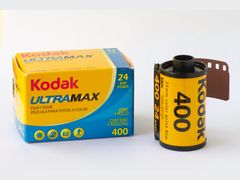
A cheaper everyday 400-speed color film; Brooklyn Film Camera says it costs meaningfully less per roll, and Emulsive found its grain grittier than 400D's.
Emulsive's Ryan Gabbard would shoot it or Portra 400 day to day before 400D, because of price.
Every source behind this page
Read them yourself. How we pick and count them is in our methodology.
Show all 48 sources
Manuals and references 27
- brooklynfilmcamera.com: Cinestill 400D Color
- cinestillfilm.com: BIGGER is BETTER with 120 Film!
- cinestillfilm.com: 400D NON-EARLY BIRD TIERS NOW SHIPPING!
- cinestillfilm.com: A 400D Thank You To All
- cinestillfilm.com: CineStill 400Dynamic: Available Now!
- cinestillfilm.com: New Lower Prices on CineStill 120 films!
- cinestillfilm.com: Something Big Is Finally Here: 400D in 4x5
- cinestillfilm.com: CineStill 400Dynamic Versatile Color Negative Film, 120 120 Medium Format, EI 400
- cinestillfilm.com: CineStill 400Dynamic Versatile Color Negative Film, 35mm 135 36exp. EI 400
- cinestillfilm.com: CineStill 400Dynamic Versatile Color Negative Film, 4x5 4x5, EI 400, 25 Sheets
- help.cinestillfilm.com: 37645550145805 400D 4x5 Loading and Handling Tips
- help.cinestillfilm.com: Just a moment...
- help.cinestillfilm.com: Just a moment...
- help.cinestillfilm.com: Just a moment...
- help.cinestillfilm.com: Just a moment...
- help.cinestillfilm.com: Just a moment...
- lookingglassphoto.com: Our awesome Pants in 70 characters or less.
- lookingglassphoto.com: CineStill 400D Dynamic Color Negative Film (35mm, 36 Exposures) - Sing
- pictureline.com: CineStill 400Dynamic 120 Color Neg. Film (One Roll)
- pictureline.com: CineStill 400Dynamic Color Negative Film (35mm Roll Film, 36 Exposures
- prophotosupply.com: CineStill 400Dynamic 400 Color Negative 120 Format Film
- prophotosupply.com: CineStill 400Dynamic 400 Color Negative 35mm Film, 36 Exposures
- reformedfilmlab.com: Cinestill 400 Dynamic Film Roll | 120
- reformedfilmlab.com: CineStill 400D 35 mm Film
- artscameras.com: CineStill 400Dynamic C-41 Color Negative Film (35mm Roll Film, 36 Expo
- glazerscamera.com: CineStill 400Dynamic Versatile Color Negative - 120 Film, 5 Pack
- glazerscamera.com: CineStill 400Dynamic Versatile Color Negative - 35mm Film, 36 Exposure
Independent blogs 11
- Long Weekend: The CineStill 400D Film Hands-On Review | New Favorite Go-To
- 35mmc: Cinestill 400D vs Kodak Portra 400: Cinestill 400D vs Kodak Portra 400
- 35mmc: CineStill 400D, A Bittersweet Review: CineStill 400D
- 35mmc: 5 Frames with Hasselblad 501C and Cinestill 400D: 5 Frames with Hasselblad 501c/Zeiss 80mm f/2.8 and Cinestill 400D - By Eric L. Woods
- Gregory Owain: CineStill 400D Film Review: CineStill 400D Film Review
- Brooklyn Film Camera: CineStill 400D Review: CineStill 400D Review
- Myles Katherine Photography blog: cinestill 400D film review
- Kelsey Smith Photography: CineStill 400D review: Cinestill 400D Review: Unveiling the Magic of a Film Photographer's Dream - Kelsey Smith | Film Photographer
- Parallax Photographic Coop: CineStill 400Dynamic Film Review: CineStill 400Dynamic Film Review
- Sidekick Camera: Is CineStill's 400D Film Good?: Is CineStill's 400D Film Good?
- The CWO: Analogue: Cinestill 400D: The CWO | Cinestill 400D
Editorial reviews 5
- Analog.Cafe: CineStill 400D Dynamic Film Review: CineStill 400D Dynamic Film Review
- Analog.Cafe: CineStill 400D for 4x5 large format: CineStill 400D for 4x5 Large Format Film Cameras
- Emulsive: Film Stock Review: CineStill 400D: Film Stock Review
- Emulsive: 5 Frames through Western Canada on CineStill 400D: 5 Frames... Through Western Canada on CineStill 400D (35mm Format / EI 400 / Lomography LC-A+) - by Julia Beyer
- Fstoppers: Is CineStill 400D Film the New Natura?: Is CineStill 400D Film the New Natura?
Video reviews 5
Keep reading
Film stocks
CineStill 800T is an ISO 800 tungsten film made for night and neon. What 112 opinions say, how to shoot it in daylight, push it, and US prices from $17.00.
Film stocks
Kodak Portra 400 is an ISO 400 color film loved for skin tones and latitude. What 113 opinions say, how to expose and push it, and US prices from $15.99.
Film stocks
Kodak Vision3 250D is ISO 250 daylight cinema film respooled for still cameras. What 125 opinions say, ECN-2 vs C-41, remjet vs AHU, and US prices from $10.
Film stocks
How to push film: what a stop means, what to set on your camera, how to tell the lab, one-stop fees from $0 to $4, home development times and how to pull film.
Developing and scanning
Scanning film with a DSLR, step by step: gear and October 2026 prices, exact camera settings, how it compares with a flatbed and fixes for common scan problems.
Film stocks
35mm vs 120 film: common 120 frames are 2.7 to 5.4 times bigger than 35mm but give 8 to 16 shots a roll. Cost per frame, lab prices and which to pick.