Fujifilm 400 film: what it looks like, who makes it, how to shoot it
The short answer
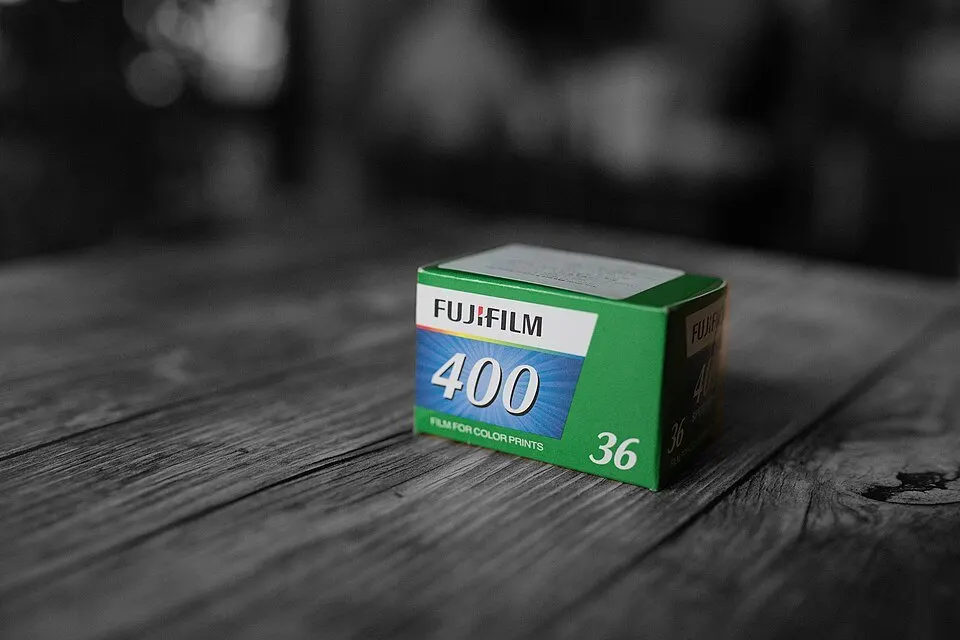
Fujifilm 400 is a decent, affordable ISO 400 color negative film for everyday 35mm shooting, at $10.99 to $14.00 a 36-exposure roll at US camera shops in October 2026.
The box says made in the USA, and it is widely reported to share its emulsion with Kodak's consumer films, so expect a look close to Kodak Ultramax 400 rather than the old Fujicolor Superia.
- Speed
- ISO 400
- Process
- C-41
- Format
- 35mm only, 36 exp
- Made in
- USA, per the box
Built from 61 opinions from 16 pages and videos. Not yet tested by Camera Dojo. Updated .
The short version
Reviewers split on the color. A 35mmc tripod test found no difference in sharpness or grain against Ultramax 400 and only a slight yellow bias, while The Phoblographer gave it three out of five stars and found the colors more muted, and the grain larger, than on Superia.
Where it earns praise is flexibility. Shops and reviewers recommend it for point-and-shoots, cloudy days and mixed light, and two reviewers who pushed it two stops to EI 1600 liked the results.
Good fit if
- You want an affordable ISO 400 color film for a point-and-shoot or an everyday 35mm camera
- You shoot in changing light: cloudy days, shade, evenings, indoors by a window
- You plan to push a roll to EI 800 or 1600 for indoor or night scenes
- You are new to film and want a forgiving, DX-coded stock that automatic cameras read on their own
- It costs less than Kodak Ultramax 400 where you shop
Think twice if
- You want the old Superia X-Tra 400 look: reviewers say this is a different, more Kodak-like film
- You need 120 or sheet film: Fujifilm's US site lists it in 35mm only
- Skin tones are the priority, especially darker skin: The Phoblographer found it warms and lightens skin, and Brooklyn Film Camera pitches Portra 400 for skin tones
- You want very fine grain at 400 speed: Brooklyn Film Camera rates the grain as noticeable, about Ultramax level
What owners and reviewers say, topic by topic
We sorted 61 opinions about the Fujifilm 400 from 16 pages and videos on 12 websites and channels. Each row shows how many people raised a topic and how many of them were positive. Open a row to read short quotes, each linked to its source.
Owner voices are thin. Most of the 61 opinions come from editorial reviews, photographers' blogs and five YouTube videos, and the six customer reviews are from a UK shop, Analogue Wonderland. Reddit, Facebook groups and big US retailer reviews could not be read. The Phoblographer received its review film free from Fujifilm.
Color46% positiveof 13
Voices lean positive, with rich greens and Fuji-like cyan blues, but most side-by-side comparisons put it close to Kodak Ultramax 400, a touch warmer or more yellow. The Phoblographer found it far more muted than Superia, and one wedding photographer finds it too green on grass.
“it ends up being too green”
Myles Katherine Photography 2026-02Hands-on review
“I was blown away by the depth & beauty of the greens.”
“I like the colours of the Fujicolor 400 too.”
“The colors definitely pop, and I can’t quite judge if that’s the film, or my setup.”
Mark Frey, EMULSIVE 2023-06Hands-on review
Price and availability60% positiveof 10
Most like the price and the multi-packs. 35mmc expected it to undercut Kodak-branded rolls in 2023, but Brooklyn Film Camera lists Ultramax cheaper in October 2026. Critics say price is its only real advantage, and one video mourns the loss of Superia.
“Overpriced when it's the exact same as Kodak UltraMax 400.”
“I picked up a 3-pack of 36 exposure rolls for today’s now-reasonable price of $24.98 plus sales tax”
Mark Frey, EMULSIVE 2023-06Hands-on review
“it seems that Fujifilm 400 will be the drug store option at present and prices will be lower than Kodak branded rolls”
Dave Palumbo, 35mmc 2023-07Hands-on review
“Other than the price, I don’t see a reason to seek out these Fuji stocks.”
Taylor Blanchard, Shoot It With Film 2026-03Hands-on review
Overall look33% positiveof 9
The most divided topic: some call it a versatile all-rounder with a slightly vintage, greenish feel, others call it dependable but sterile, and voices disagree on how closely it matches Ultramax.
“And for a film emulsion, the results are fairly sterile.”
Chris Gampat, The Phoblographer 2023-06Hands-on review
“There is a greenish element to the photos that make them feel more vintage and aged.”
Myles Katherine Photography 2026-02Hands-on review
“the Made In USA Fuji (to me) has a little more pop and “grit” than the UltraMax.”
Dana Brigham, EMULSIVE reader comment 2023-06Owner
“Fujifilm 400 probably wouldn’t be my first choice for landscapes & scenery”
Nick Orloff, 35mmc 2025-04Hands-on review
Exposure latitude63% positiveof 8
It handles bright sun and holds shadow detail reasonably well, and some shooters give it extra light: The Phoblographer shot a roll at ISO 200 and Michael Bennett rates it at ISO 250. Two video comparisons say Ultramax keeps slightly more detail in deep shadows.
“ISO400 colour negative film works great, even in bright sun.”
Timmy, 35mmc 2026-05Hands-on review
“The overexposure does make the colours look a bit pastel-like.”
“I see what seems to be slightly more forgiving shadow detail in the Fuji”
Dave Palumbo, 35mmc 2023-07Hands-on review
“More good tonal range from Fujifilm 400 Color, without losing details when going from deep shadows to bright highlights.”
Scott Ferguson, 35mmc 2025-09Hands-on review
Grain57% positiveof 7
Most reviewers call the grain acceptable or pleasantly film-like for a 400 film. 35mmc saw no difference from Ultramax, while The Phoblographer found it larger than Superia's.
“In our eyes, it had larger grain than Superia and more muted colors.”
Chris Gampat, The Phoblographer 2023-06Hands-on review
“Nice quality to the grain and good contrast on this.”
“Considering the film speed, grain is not objectionable at all”
Mark Frey, EMULSIVE 2023-06Hands-on review
“I see no difference in sharpness or grain at all.”
Dave Palumbo, 35mmc 2023-07Hands-on review
Skin tones33% positiveof 3
Only three voices, and they disagree: The Film Fellow liked skin tones across complexions, The Phoblographer says it warms and lightens skin and is not true to life for people of color, and Myles Katherine finds portraits cool in shade.
“I don’t think it’s very true to life for people of color as it warms the skin tones up while lightening them”
Chris Gampat, The Phoblographer 2023-06Hands-on review
“This film tends to look a bit cooler overall than Kodak film, especially for portraits and especially in the shade”
Myles Katherine Photography 2026-02Hands-on review
Low light and night100% positiveof 3
All three voices say the 400 speed copes with cloudy days, fading light and indoor scenes, including a roll pushed to EI 1600.
“It coped with cloudy weather and fading light.”
“it is able to manage indoor and outdoor scenes fairly well”
Myles Katherine Photography 2026-02Hands-on review
“The available light pics show nice shadows while still retaining detail in the window highlights.”
Mark Frey, EMULSIVE 2023-06Hands-on review
PositiveMixedNegative
How to shoot Fujifilm 400 film
Fujifilm 400 is an easy film to shoot. The 400 speed gives you room for shade, cloudy days and indoor light, and a little extra exposure helps the shadows.
- 1
Set the camera to ISO 400
The 35mm cartridge is DX-coded, so cameras that read the code set ISO 400 on their own, per The Phoblographer. On a manual camera, set the dial by hand. Film ISO Explained covers what the number means.
- 2
Lean toward more light, not less
Fujifilm claims wide exposure latitude but gives no range in stops. Brooklyn Film Camera rates it as having generous overexposure room, The Phoblographer shot a roll at ISO 200, and Michael Bennett rates it at ISO 250. A 35mmc reader noted that a frame shot at EI 200 looked a bit pastel, so extra exposure can push the colors toward pastel.
- 3
Meter for the shadows in contrasty light
Two YouTube comparisons, by Robin Férand and Exploring Analog, found it a little weaker than Ultramax 400 in deep shadows, and Exploring Analog added harsh mixed light. In high-contrast scenes, expose for the darker areas you want to keep.
- 4
Flash needs no filter
Fujifilm's data sheet says electronic flash needs no filter and that auto flash units should be set to ISO 400. It warns that at shutter speeds slower than 1/60 second, room lighting can throw off the color.
- 5
Expect casts under bulbs and tubes
The film is balanced for daylight. Under 3200K tungsten lamps, the data sheet calls for a Wratten 80A filter and two stops more exposure, an effective ISO 100, and says cameras with through-the-lens metering need no extra compensation. Fluorescent light can add a green tint, which Fujifilm says is corrected in printing.
- 6
Add exposure on long night shots
According to Fujifilm's data sheet, exposures from 1/4000 to 2 seconds need no correction. Open up 1/3 stop at 4 seconds, 2/3 stop at 16 seconds and a full stop at 64 seconds. A tripod helps at those speeds.
Sources: thephoblographer.com, brooklynfilmcamera.com, fujifilm.com, 35mmc.com, youtube.com, youtube.com, youtube.com, ishootfujifilm.com
Can you push Fujifilm 400 to 800 or 1600?
Yes. Two reviewers pushed it two stops and liked the results. Mark Frey at EMULSIVE shot a roll at EI 1600, two stops faster than box speed, and developed it at home. He saw more grain, more contrast and some minor color shifts, called it fun and useful, and warned that harsh daylight blocks the shadows.
Scott Ferguson pushed a roll two stops on a Leica M3 for a 35mmc survey of popular color films and called Fujifilm 400 the dark horse, close behind Portra 400. He said the pushed frames kept good tonal range from deep shadows to bright highlights, with no halation against a backlit midday sky.
Fujifilm's data sheet gives no push or pull instructions, so these results come from reviewers. To push, rate the film at 800 or 1600 for the whole roll and tell the lab: Shoot It With Film suggests writing '+1' on the roll and noting it on the order form. It adds that pulling color negative film is typically not done. How to Push and Pull Film explains the trade-offs.
Push in soft or indoor light: at EI 1600, EMULSIVE's reviewer found harsh daylight blocked up the shadows.
Sources: emulsive.org, 35mmc.com, shootitwithfilm.com
Who makes Fujifilm 400? Is it Kodak Ultramax 400?
Fujifilm has not said who makes it. The box says made in the USA, and the film is widely reported, including by Fstoppers in 2026, to share its emulsion with Kodak's consumer color films. The Phoblographer, which reviewed it at launch in 2023, said it could not confirm that Kodak makes it.
The physical clues point to Kodak. EMULSIVE's reviewer found edge markings that look like Kodak's rather than Fuji's, and film taped to the spool instead of Fuji's punched-hole catch. Cultured Kiwi says the DX codes on the rebate match Kodak Ultramax 400. The 35mmc author, comparing the new data sheet with the old Superia X-Tra one, thought it no longer shows Fuji's famous fourth cyan layer, though he allowed he might be misreading it.
On results, a 35mmc tripod test with two Nikon FE2 bodies found the two films close enough to treat as interchangeable: no difference in sharpness or grain, a slight yellow bias and slightly lower contrast on the Fuji. The author added that the published spectral and characteristic curves are not identical, and a reader looking at the same frames saw clear differences.
Sources: fstoppers.com, thephoblographer.com, emulsive.org, culturedkiwi.com, 35mmc.com
Fujifilm 400 vs Kodak Ultramax 400
 Fujifilm 400 | 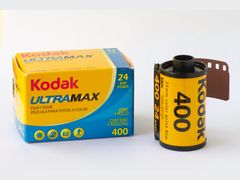 Kodak Ultramax 400 | |
|---|---|---|
| Price at Brooklyn Film Camera, Oct 2026 | $14.00 | $11.50 |
| Shop's description | Very close to Ultramax, a touch softer | Near twin, a bit more punch |
| Color | Sources disagree: slightly less warm (Brooklyn Film Camera) or slightly warmer (Robin Férand); slight yellow bias in 35mmc's test | Bluer bias in 35mmc's side-by-side |
| Grain and sharpness | No difference in 35mmc's tripod test | No difference in 35mmc's tripod test |
| Contrast | Slightly lower in 35mmc's test | A bit more punch, per Brooklyn Film Camera |
| Deep shadows | Disputed: slightly more forgiving in 35mmc's test (the author suspected shutter timing), slightly muddier in two YouTube comparisons | Slightly more shadow detail in the two YouTube comparisons |
Pick the Fujifilm 400 if
- It costs less where you shop: Exploring Analog's Paris comparison found it slightly cheaper than Ultramax in most stores, though US shops vary
- You like a slightly softer, lower-contrast rendering
Pick the Kodak Ultramax 400 if
- Ultramax is cheaper where you shop, as at Brooklyn Film Camera ($11.50 against $14.00)
- You want a bit more punch
- You often shoot deep shade or harsh mixed light
Sources: brooklynfilmcamera.com, 35mmc.com, youtube.com, youtube.com
Fujifilm 400 vs Superia X-Tra 400, Fujifilm 200 and Portra 400
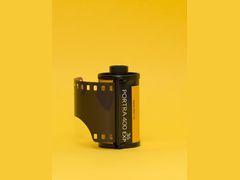 Portra 400
Fujifilm 400 took Superia X-Tra 400's place on US shelves starting in spring 2023. Sources differ on when Superia ended: 35mmc says Fujifilm paused it in April 2023, while Janda Studio, a UK lab, says it was officially discontinued in April 2024. Don't expect the Superia look: Fstoppers says not to buy it expecting the classic Fuji palette, and The Phoblographer found more muted colors and larger grain than on Superia.
Fujifilm 200 is the other current Fujifilm color negative film on Fujifilm's US site. Brooklyn Film Camera's comparison box lists a Fujicolor 200 at $9.50 as the pick for bright daylight, against $14.00 for Fujifilm 400. The same box lists Kodak Portra 400 at $17.50 and pitches it for pro skin tones and more latitude; see the Kodak Portra 400 guide. Fstoppers calls Kodak Gold 200 one of the cheaper color films and says at ISO 200 it suits bright conditions best, while Fujifilm 400's speed handles mixed and lower light far better than a slower film.
If you want the real Superia look, the options are old or imported stock. Cultured Kiwi says original Superia X-Tra 400 still turns up through international sellers and old stock, and advises checking the expiry date before paying collector prices. Shooting Expired Film covers what to expect from older rolls.
Sources: filmsupply.club, 35mmc.com, fstoppers.com, thephoblographer.com, fujifilm.com, brooklynfilmcamera.com, culturedkiwi.com
Developing, scanning and storing Fujifilm 400
Any lab that runs C-41, the standard color negative process, can develop it; Fujifilm's data sheet also lists its own CN-16 processes. The Darkroom advertises mail-in 35mm developing starting at $14. Brooklyn Film Camera charges $16 for members or $18 for guests to develop a roll with medium-resolution scans. EMULSIVE's reviewer developed his rolls at home in Kodak Flexicolor C-41 chemistry at standard times and temperatures. See how much it costs to develop film for more lab prices.
Scans vary with the workflow. 35mmc's side-by-side showed a slight yellow bias, and EMULSIVE's reviewer thought his Negative Lab Pro settings over-saturated the colors, so he turned saturation down. For a more Fuji-style rendering, Janda Studio suggests a lab that scans on a Fuji Frontier. 35mmc's author says the negatives dry flat, the same as Ultramax.
According to Fujifilm's data sheet, store unexposed film at 15°C (59°F) or below for the short term and 0°C (32°F) or below for the long term, and let it warm up before opening: more than 3 hours from the fridge, more than 6 hours from the freezer. Fujifilm warns that checked-bag X-ray machines can fog film, and TSA suggests carrying film on board or asking for a hand inspection.
Sources: ishootfujifilm.com, thedarkroom.com, brooklynfilmcamera.com, emulsive.org, 35mmc.com, tsa.gov
What a roll of Fujifilm 400 costs
On October 28, 2026, a 36-exposure roll of Fujifilm 400 cost $10.99 to $14.00 at US camera shops, and 3-packs ran $29.95 to $34.99. B&H, Adorama, Walmart, KEH and eBay could not be checked, so they are not listed.
Pro Photo Supply
New, 35mm, 36 exposures, single roll
$10.99
See listingGlazer's Camera
New, 35mm, 36 exposures, single roll
$11.49
See listingReformed Film Lab
New, 35mm, 36 exposures, single roll; flat-rate shipping
$12.00
See listingFilm Supply Club
New, 35mm, 36 exposures, single roll
$12.49
See listingDistrict Camera
New, 35mm, 36 exposures, single roll; pickup in VA and DC
$12.90
See listingAlpine Camera
New, 35mm, 36 exposures, single roll; sale price, regular $13.99
$12.99
See listingBrooklyn Film Camera
New, 35mm, 36 exposures, single roll
$14.00
See listingGlazer's Camera
New, 3-pack, 36 exposures each
$29.95
See listingPro Photo Supply
New, 3-pack, 36 exposures each; low-stock tag; web address says Superia
$29.99
See listingDistrict Camera
New, 3-pack, 36 exposures each
$31.90
See listingFilm Supply Club
New, 3-pack, 36 exposures each (web address says Superia)
$32.99
See listingAlpine Camera
New, 3-pack, 36 exposures each; low-stock tag
$34.99
See listing
Prices checked on October 28, 2026. They move every week, so treat them as a range, not a quote. Per roll, Glazer's 3-pack works out to about $9.98 ($29.95 / 3) and Alpine's to about $11.66 ($34.99 / 3); a $10.99 single is about $0.31 a frame ($10.99 / 36). Prices have climbed: EMULSIVE paid $24.98 for a Walmart 3-pack in June 2023, and Analog.Cafe reported in July 2025 that Fujifilm 400 had gone up by more than a dollar in six months.
Technical data
Film
- Speed
- ISO 400
- Process
- C-41
- Film base
- Cellulose triacetate
- Resolution
- 125 lines/mm at 1000:1 contrast
- DX coding
- Yes
Formats
- UPC, single roll
- 074101242508
- UPC, 3-pack
- 074101242485
Exposure (Fujifilm data sheet)
- Tungsten, 3200K
- ISO 100 with a Wratten 80A filter
- Daylight and flash
- No color-compensating filter needed
- Push and pull
- No official guidance
Storage (Fujifilm data sheet)
- Unexposed, short term
- 15°C (59°F) or below
- Unexposed, long term
- 0°C (32°F) or below
- Processed negatives
- Almost no change for 20+ years below 10°C at 30-50% humidity
- Data sheet
- Ref. AF3-0262E, issued April 1, 2023
Video reviews worth your time

Fujifilm 400 | The Everyday Film Stock
The reviewer considers Fujifilm 400 a reliable and accessible everyday film stock that produces warm, natural images when given sufficient light.

Comparing Fuji 400 (Made in USA) to Kodak Ultramax: Are they really the same?
The reviewer found Fujifilm 400 yielded warmer color tones and cyan-leaning blues with slightly muddier shadows compared to Kodak Ultramax 400, offering distinct character despite rebranding rumors.

The TRUTH About The New Fujifilm 400 Film
The reviewer concludes that the new Fujifilm 400 is likely repackaged Kodak film rather than a true new film stock, representing a net loss due to the discontinuation of Superia X-TRA 400.

The "New" FujiFilm 400
The reviewer considers Fujifilm 400 to be a versatile and affordable film with bold colors, strong contrast, sharp detail, and pleasing skin tones.

Comparing FUJIFILM 400 and KODAK Ultramax 400 at a Paris flea market (with photos)
The reviewer concludes that Fujifilm 400 is remarkably similar to Kodak UltraMax 400 at a slightly lower price point, though it handles shadow detail and mixed lighting slightly worse.
Questions people ask about the Fujifilm 400
Is Fujifilm 400 made by Kodak?
Fujifilm hasn't said. The box says made in the USA, and the film is widely reported to share its emulsion with Kodak's consumer color films: EMULSIVE found Kodak-style edge markings, and Cultured Kiwi says the DX codes match Kodak Ultramax 400. The Phoblographer said it could not confirm Kodak makes it, and 35mmc notes the data sheet curves are not identical to Ultramax's.
Sources: fstoppers.com, emulsive.org, culturedkiwi.com, thephoblographer.com, 35mmc.com
Is Fujifilm 400 the same as Kodak Ultramax 400?
Very close, by most accounts. A 35mmc tripod test found no difference in sharpness or grain, just a slight yellow bias and slightly lower contrast on the Fuji, and Brooklyn Film Camera calls Ultramax a near twin with a bit more punch. Two YouTube comparisons found Ultramax a little better in deep shadows. Buy whichever is cheaper where you shop; the [Kodak Ultramax 400 guide](/film/kodak-ultramax-400/) covers the Kodak side.
Sources: 35mmc.com, brooklynfilmcamera.com, youtube.com, youtube.com
Is Fujifilm 400 the same as Superia X-Tra 400?
No. It replaced Superia X-Tra 400 on US shelves starting in spring 2023, but it looks different: The Phoblographer found more muted colors and larger grain, and Fstoppers says not to buy it expecting the classic Fuji palette. Fujifilm's data sheet says its processing characteristics are almost the same as Superia X-Tra 400's, and that it prints on the same printer setup with similar results.
Sources: filmsupply.club, thephoblographer.com, fstoppers.com, ishootfujifilm.com
Why are my Fujifilm 400 photos so grainy?
Some grain is normal for this film: Brooklyn Film Camera rates it as noticeable, about Ultramax level, and The Phoblographer found it larger than Superia's. Pushing adds grain, according to Shoot It With Film, and two video reviewers found the film weaker in deep shadows. Reviewers who give it more light, such as Michael Bennett rating it at ISO 250, report better results.
Sources: brooklynfilmcamera.com, thephoblographer.com, shootitwithfilm.com, youtube.com
Can you push Fujifilm 400 to 1600?
Yes. Reviewers at EMULSIVE and 35mmc each pushed a roll two stops to EI 1600 and liked the results. EMULSIVE saw more grain and contrast and minor color shifts. Avoid harsh daylight at that speed, since the shadows block up. Fujifilm publishes no push guidance, so tell the lab how many stops to push.
Sources: emulsive.org, 35mmc.com, ishootfujifilm.com
Does Fujifilm 400 have a green tint?
Sometimes, and sources disagree. Myles Katherine sees a greenish, vintage cast that can get too green on grass, and an Analogue Wonderland customer praised its greens, while 35mmc's side-by-side saw a slight yellow bias against Ultramax. Fluorescent light also adds green, which Fujifilm says is corrected in printing.
Sources: myleskatherine.com, analoguewonderland.co.uk, 35mmc.com, ishootfujifilm.com
Is Fujifilm 400 good for beginners?
Yes. Fstoppers put it on its 2026 list of film stocks for beginners because its 400 speed handles mixed and lower light far better than a slower film, and Brooklyn Film Camera recommends it for point-and-shoots and cloudy days. It is DX-coded, so automatic cameras set the speed for you. [The best point-and-shoot film cameras](/cameras/best-point-and-shoot-film-cameras/) is a good place to find a camera for it.
Sources: fstoppers.com, brooklynfilmcamera.com, thephoblographer.com
How much does Fujifilm 400 cost?
On October 28, 2026, a 36-exposure roll cost from $10.99 at Pro Photo Supply to $14.00 at Brooklyn Film Camera, and 3-packs ran from $29.95 at Glazer's Camera to $34.99 at Alpine Camera. At the low end that's about $0.31 a frame ($10.99 / 36). Prices have risen since launch: EMULSIVE paid $24.98 for a Walmart 3-pack in June 2023.
Sources: prophotosupply.com, brooklynfilmcamera.com, glazerscamera.com, alpinecamerausa.com, emulsive.org
What people compare it with
The closest match: same speed, widely reported to share an emulsion, with a bit more punch, per Brooklyn Film Camera. That shop lists it at $11.50 against $14.00 for Fujifilm 400 in October 2026.
The professional step up for skin tones and latitude, at $17.50 a roll against $14.00 for Fujifilm 400 at Brooklyn Film Camera.
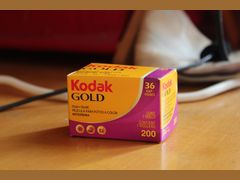
The other everyday budget color film, better suited to bright sun because of its slower ISO 200 speed.
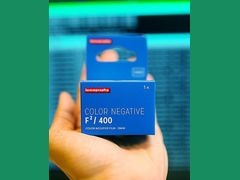
Same speed with more saturated color, per Brooklyn Film Camera's comparison.
Every source behind this page
Read them yourself. How we pick and count them is in our methodology.
Show all 38 sources
Manuals and references 22
- alpinecamerausa.com: Fujifilm 400 ISO 35mm Color Film, 36 Exp.
- alpinecamerausa.com: Fujifilm 400 ISO 35mm Color Film, 36 Exp. 3 Pack
- brooklynfilmcamera.com: Film Developing in Brooklyn - Drop-off & Mail
- brooklynfilmcamera.com: Fujifilm 400 35mm Color Negative Film
- filmsupply.club: Fujifilm 400 3pack 36 Exp. 35mm Film, Total 108 Exposures
- filmsupply.club: Fujifilm 400 35mm 36 Exp (single roll)
- fstoppers.com: 5 Best Film Stocks for Beginners in 2026
- reformedfilmlab.com: Fujifilm 400 35mm Color Negative Film
- shootitwithfilm.com: Pushing Film: Film Photography Guide » Shoot It With Film
- thedarkroom.com: 35mm Film Developing by Mail - From $14
- culturedkiwi.com: Fuji Superia 400 Review
- districtcamera.com: Fujifilm 400-36 (3Pk) Color Negative Film (35mm, 36 Exposures, 3 Pack)
- districtcamera.com: FUJIFILM 400 Color Negative Film (35mm, 36 Exposures)
- fujifilm.com: Consumer Film
- fujifilm.com: FUJIFILM 400
- fujifilm.com: FUJIFILM 400 Specifications
- glazerscamera.com: Fujifilm 400 Color Negative, 35mm Film - 36 Exposure, Single Roll
- glazerscamera.com: Fujifilm 400 Color Negative, 35mm Film - 36 Exposure, 3 Pack
- ishootfujifilm.com: SUPERIA%20400%20Data%20Sheet.pdf
- prophotosupply.com: Fujifilm 400 Color Negative 35mm Film, 36 Exposures, single roll
- prophotosupply.com: Fujifilm 400 Color Negative 35mm Film, 36 Exposures, 3-Pack
- tsa.gov: Film
Independent blogs 6
- 35mmc: Fujifilm 400 (made in the USA) vs. Kodak Ultramax 400
- Myles Katherine Photography: fujifilm 400 film review
- Janda Studio blog: The Best Fujifilm 400 Films for 35mm Photography
- 35mmc: Pushing Color - A Survey of Popular Color Films Pushed By Two Stops
- 35mmc: 5 frames of Fujifilm 400 with a Nikon F100 and a 24-85mm zoom on a very long drive
- 35mmc: Kodak Snapic A1 - the cure to overthinking everything
Video reviews 5
- Michael Bennett: Fujifilm 400 | The Everyday Film Stock
- Robin Férand: Comparing Fuji 400 (Made in USA) to Kodak Ultramax: Are they really the same?
- Overexposed: The TRUTH About The New Fujifilm 400 Film
- The Film Fellow: The "New" FujiFilm 400
- Exploring Analog: Comparing FUJIFILM 400 and KODAK Ultramax 400 at a Paris flea market (with photos)
Editorial reviews 3
Retailer customer reviews 1
Other 1
Keep reading
Film stocks
Kodak Ultramax 400 is a 35mm ISO 400 color film, $8.69 to $11.50 a 36-exposure roll. What 121 opinions say about its color, grain, latitude and low light.
Film stocks
Kodak UltraMax 400 vs Gold 200: UltraMax is one stop faster for shade, indoors and reusable cameras. Gold is warmer and cheaper, about $8.45 to $10 a roll.
Film stocks
How to push film: what a stop means, what to set on your camera, how to tell the lab, one-stop fees from $0 to $4, home development times and how to pull film.
Developing and scanning
A roll of 35mm film costs $5 to $11.50 to develop at US labs, or $11.50 to $29 with scans. Prices from 12 labs and the big chains, checked October 2026.
Film stocks
Where to buy 35mm film online in the US: B&H, CineStill, FPP, Midwest Photo and camera shops that ship. Kodak Gold 200 ran $8.49 to $9.49 in October 2026.
Film cameras
The best point-and-shoot film camera for most people is the Olympus Mju II, about $250-$600 used. Eight picks from $34.99 to $2,000, prices checked Oct. 2026.