Harman Phoenix film: Phoenix 200 vs Phoenix II, ISO and price
The short answer
Harman Phoenix is a line of C-41 color negative films from Harman Technology in Mobberley, UK, and a 36-exposure 35mm roll of the current Phoenix II costs $9.99 to $14.95 at most US shops (October 28, 2026).
Across 123 owner and reviewer opinions, the original Phoenix 200 (December 2023) reads as a high-contrast, grainy, warm film with strong red halation and little exposure latitude, while Phoenix II (July 2025) is described as finer-grained, sharper and easier to expose and scan, though its color is still stylized. Phoenix 125 (2026) keeps the original's contrast and grain at ISO 125, and all three are sold in 35mm and 120.
- Box speed
- ISO 200 (Phoenix II), ISO 125 (Phoenix 125)
- Process
- C-41
- Formats
- 35mm and 120
- 35mm roll
- $9.99-14.95
Built from 123 opinions from 23 pages and videos. Not yet tested by Camera Dojo. Updated .

The short version
If you want the Phoenix look today, you are choosing between Phoenix II and Phoenix 125. Harman calls Phoenix II "a completely new emulsion with very little in common with its predecessor", while Phoenix 125 keeps the original's high contrast and strong grain at a slower box speed of ISO 125. The original Phoenix 200 now turns up only as old stock: Harman said it would stay on sale only while stocks last.
Two habits come up again and again. Rate it slower than the box says: Harman says Phoenix II works best between EI 100 and 200, and reviewers rated the original at ISO 100 to 160. And take scanning seriously: Phoenix has no orange mask, so scanners set up for Kodak and Fujifilm film can get its color and contrast wrong.
Good fit if
- You want a bold, stylized look: saturated warm color in sun, deep contrast and visible grain.
- You like shooting toward the light and want a glow around highlights: red on the original, softer and golden on Phoenix II.
- You shoot outdoors in bright, even light and are willing to meter carefully or bracket.
- You scan at home, or use a lab that knows Harman's recommended scanner settings.
- You want to back a new color film: Harman says Phoenix sales are reinvested in its color film work.
Think twice if
- You need accurate skin tones for portraits or paid work. TAHUSA's reviewer says it can't match Portra's accurate skin tones; see Kodak Portra 400.
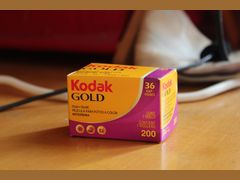
- You want predictable results from every roll. RedShark News and Adam Insights both call the original unpredictable. Kodak Gold 200 is the ISO 200 film Analogue Wonderland compared it with.
- You shoot mostly in dim light, indoors or at night: two reviewers found it dull or muddy without plenty of light.
- You dislike grain: Sidekick Camera found the original grainier than the ISO 400 film the shop normally shoots.
- You rely on standard lab scans and don't want to color-correct afterward.
Photos shot on Harman Phoenix color negative film (Phoenix 200, Phoenix II and Phoenix 125)
Photos shot on Harman Phoenix 200 and Phoenix II in 35mm and 120, shared under free licenses on Wikimedia Commons.

Shot on Phoenix II 200 in early 2026, unretouched scanPhoto: Mario A. P. from San Sebastian, Spain, CC BY-SA 4.0 
Bonneville Salt Flats, February 2026. Olympus Pen FT, Phoenix 200Photo: Gil Ortiz Jr., CC BY-SA 4.0 
West Berlin, summer 2025. Mamiya RZ67 on a tripod, Phoenix 200Photo: Felipe Tofani from Berlin, Germany, CC BY-SA 4.0
What owners and reviewers say, topic by topic
We sorted 123 opinions about the Harman Phoenix from 23 pages and videos on 20 websites and channels. Each row shows how many people raised a topic and how many of them were positive. Open a row to read short quotes, each linked to its source.
Most of the 123 opinions are about the original Phoenix 200. Phoenix II voices are thinner: three customer reviews at The Darkroom, staff reviews from Parallax Photographic and Analogue Wonderland, and three YouTube reviews, so its summaries lean on those. Only one review covers the 2026 Phoenix 125, and Reddit, B&H and Facebook groups could not be read.
Exposure latitude19% positiveof 21
The most common complaint. Many reviewers call the original's latitude narrow, with shadows that block up at box speed (TAHUSA compares it to slide film), and the usual fix is rating it at ISO 100 to 160; Phoenix II is described as more forgiving but still punishes underexposure.
“I’ll probably overexpose it by a good two stops and simply accept the halation because the shadow detail is abysmal.”
tammy, phillipreeve.net 2024-07Owner
“It struggles with shadow details.”
Albert G, The Darkroom customer review 2025-12Owner
“I find the dynamic range of Phoenix 200 to be quite impressive.”
lex, Adam Insights 2025-01Owner
“I find it is better to shoot it a little below box speed.”
Rob K., The Darkroom customer review 2026-07Owner
Color44% positiveof 18
Mostly liked, rarely called accurate. People enjoy the original's warm reds, oranges and yellows in sun but report green or cyan casts under artificial light; Phoenix II moves toward cooler blues and greens and is still described as stylized rather than true to life.
“The greens became much more vibrant and lush in the pushed images.”
Caleb KnuevenHands-on review
“There is also a warm, slightly orange, underlying colour to this film which worked well in the sun.”
Parallax Photographic Coop 2024Hands-on review
“It has very puncy reds and a slight faded vintage appearance in blue hues.”
Rob K., The Darkroom customer review 2026-07Owner
“fluorescent light became green, and LED light became cyan”
Anson, TAHUSA 2023-12Hands-on review
Overall look47% positiveof 15
Most describe a bold, contrasty, grainy look that suits some subjects and not others. Fans call it distinct and artistic; critics found it disappointing or too contrasty for everyday use.
“Overall we were disappointed with our experience shooting Harman Phoenix 200.”
Sidekick Camera blogHands-on review
“this film is perfect for that backlit glowing light.”
Lauren LakebergHands-on review
“I really like the images, I find the look and mood very appealing.”
Lothar Adler, phillipreeve.net 2024-07
“this colour negative film is punchy, grainy and unpredictable”
Anson, TAHUSA 2023-12Hands-on review
Grain38% positiveof 13
Evenly split. Several reviewers found the original grainier than an ISO 200 film should be, while others like the texture it adds; the 120 version and Phoenix II are both described as finer.
“pronounced grain that seems excessive for its ISO 200 speed”
Adam Insights 2024-01Hands-on review
“this film is actually grainier than the 400 speed we normally shoot”
Sidekick Camera blogHands-on review
“The rough grain adds a nice feel to the images.”
Parallax Photographic Coop 2023Hands-on review
“It definitely has that retro film vibe and is very grainy, which makes the images look unmistakably film-y.”
Myles Katherine PhotographyHands-on review
Halation and glow50% positiveof 12
Strong halation is the film's signature and most people like it. The phillipreeve.net reviewer thought it might be even worse than CineStill 800T, and a reader called it a nuisance if you don't want it; Phoenix II keeps a softer, golden version.
“Halation is also a bit of a problem here, I think it might be even worse than what I have seen from the Cinestill 800T.”
BastianK, phillipreeve.net 2024-07Hands-on review
“We shot this roll out in the bright sunshine, making the most of the halation glow.”
Parallax Photographic Coop 2024Hands-on review
“the original Phoenix produces a dramatic red glow, whereas Phoenix II offers a softer, golden sparkle”
Analogue Wonderland blog 2025-07Hands-on review
“Phoenix color film delivers halation stronger than most films on the market.”
Caleb KnuevenHands-on review
Scanning and printing10% positiveof 10
Reviewers who mention scanning say it decides the result. Caleb Knueven got much better results scanning at home than from standard lab scans, and the Phoenix 125 blogger got better, more consistent scans by scanning as a positive and inverting; Phoenix II is reported to scan more easily on standard lab scanners.
“the scanning result varies from different labs unless you do it on your own”
Anson, TAHUSA 2023-12Hands-on review
“It seems like a lot of photo labs really struggle with scanning this film in their workflows.”
Henry, phillipreeve.net 2024-07Owner
“the scanner and the scanning process can make or break your negatives”
Alex Luyckx | Blog 2024-05Hands-on review
“I found that scanning Phoenix film at home gave me significantly better results than standard lab scans.”
Caleb KnuevenHands-on review
Skin tones25% positiveof 8
The weak spot for portraits. The Darkroom calls the original not ideal for portraits and TAHUSA advises against it for people; Phoenix II does better, with Analogue Wonderland calling its flesh tones far more true-to-life, though one Darkroom customer still would not rely on it for accurate skin.
“Though not ideal for portraits, it excels in urban and minimalist scenes”
The Darkroom 2024-09
“can end up making your family look as if they’re eating their last meal under alien invasion”
Josh Edwards, RedShark NewsHands-on review
“It leans into cooler blue and green hues, with flesh tones that feel far more true-to-life.”
Analogue Wonderland blog 2025-07Hands-on review
“that really say my daughters skin tones in a real way”
David Griffin, The Darkroom customer review 2025-07Owner
Price and availability29% positiveof 7
Thin and mixed: the 35mmc author called the first version one of the cheapest films he could find, while an Adam Insights commenter thinks the price is too high for unpredictable results. Harman says Phoenix sales are reinvested in its color film work.
“Now that Harman has discontinued it I am left wondering why they don't just keep both versions in production alongside the new stuff?”
Russ Rosener, 35mmcOwner
“Thanks for reviewing this film, Bastian. Saved me $15.”
Brian, phillipreeve.net 2024-10
“Phoenix continues to be a limited edition film. Harman is using all the sales of this film towards developing future colour emulsions.”
Parallax Photographic Coop 2024Hands-on review
“But at least the first generation Phoenix was one of the cheapest films I could find these days.”
35mmc 2025-08Hands-on review
Sharpness and detail60% positiveof 5
Few comments. Reviewers credit Phoenix II with better sharpness and detail than the original, while critics mention lost shadow and highlight detail on the original (Sidekick Camera) and an inherent softness on Phoenix II (Willem Verbeeck's video).
“Large amounts of detail were lost in both areas.”
Sidekick Camera blogHands-on review
“There is significant grain, but nothing too bad; it does add to excellent edge sharpness.”
Alex Luyckx | Blog 2024-05Hands-on review
“You’ll notice finer, smoother grain, improved sharpness, better highlight and shadow retention, plus more controlled contrast.”
Parallax Photographic Coop 2025Hands-on review
Low light and night20% positiveof 5
Mostly negative: reviewers say it turns dull and muddy in dim light, though one found it surprisingly capable in low light for an ISO 200 film.
“in dull light or shadows, the colours will become muddy”
Alex Luyckx | Blog 2024-05Hands-on review
“Low light photography is my thing, but not for this film.”
35mmc 2025-08Hands-on review
“I found the film to do surprisingly well in low-light for a 200 speed film.”
Myles Katherine PhotographyHands-on review
“The shots from the dimly-lit forest show you just how warm this film can get in a “cooler” (dimmer) light.”
Lauren LakebergHands-on review
Consistency0% positiveof 5
No one calls it consistent. Reviewers describe the original as unpredictable, with a palette that shifts with the light and a few winners per roll.
“It’s unpredictable, and that unpredictability hampers my ability to work with it effectively.”
Adam Insights 2024-01Hands-on review
“I love Phoenix I but it is often a real challenge”
Random Photo (blogspot) 2026-10Owner
“it’s a little unpredictable, a lot of fun and occasionally, you do get some winners.”
Josh Edwards, RedShark NewsHands-on review
“expect variations in color palette depending on lighting situation and color temperature”
Film Photography Project 2023-12Hands-on review
Pushing and pulling75% positiveof 4
Few voices, and the positive ones are mostly about pulling: a one-stop pull recovered shadow detail for one reviewer and softened contrast for another. Harman's data sheets say push processing is not recommended.
“Pushing it both directions makes for very interesting color renderings one might want to use”
Tristan, Adam Insights 2024-05Owner
“Pulling Phoenix film one stop in development really helps recover shadow detail.”
Caleb KnuevenHands-on review
“which I think might have increased the grain and contrast effects on the film”
Myles Katherine PhotographyHands-on review
PositiveMixedNegative
What does Harman Phoenix look like?
The original Phoenix 200 is a warm, punchy film. Alex Luyckx describes vibrant reds, yellows and oranges, Parallax Photographic calls its colors "more impressionistic" than true to life, and many reviewers mention its strong contrast. Several reviewers call the grain heavy for ISO 200: Sidekick Camera found it grainier than the ISO 400 film the shop normally shoots, and RedShark News was surprised by how much showed up.
The signature is halation. The Film Photography Project Store's description of the original says it has no masking dyes and only limited antihalation in the base, so bright lights and reflections can glow. Caleb Knueven calls the halation stronger than most films on the market, and the phillipreeve.net reviewer thought it might be worse than CineStill 800T. Under artificial light, TAHUSA's scans turned green under fluorescent light and cyan under LEDs.
Phoenix II changes the palette. Analogue Wonderland, which shot both versions side by side with Kodak Gold 200, says the original's strong magenta and orange were dialed back for cooler blues and greens, with more true-to-life flesh tones and a softer, golden halation. Parallax reports finer, smoother grain, better sharpness and better highlight and shadow retention, but still "hints of pink and green in the midtones".
Format matters too. Parallax found the original less grainy and crisper in 120 than in 35mm, and The Darkroom calls 120 its favorite format for Phoenix II. For the general trade-offs, see 35mm vs 120 film. Two sources compare the look to expired film: the phillipreeve.net reviewer says the original's results remind him more of expired films, and The Darkroom calls Phoenix II a slightly expired-film aesthetic with far more consistency than actual expired film. More on that look in shooting expired film.
Phoenix 125 sits closer to the original: the one-roll review we found describes more muted color, reds that lean orange, halation still there, and better grain and shadow detail.
Sources: alexluyckx.com, parallaxphotographic.coop, sidekickcamera.com, redsharknews.com, filmphotographystore.com, calebknueven.com, phillipreeve.net, tahusa.co, analoguewonderland.co.uk, parallaxphotographic.coop, parallaxphotographic.coop, thedarkroom.com, randomphoto.blogspot.com
Phoenix 200 vs Phoenix II vs Phoenix 125: which is which?
Harman Phoenix is three films, not one. The original Phoenix 200 launched in December 2023 as a limited edition, experimental film, first in 35mm, with 120 added in September 2024. Phoenix II followed on July 16, 2025, in both formats at once; Harman says many people loved the original's character, while others found it hard to shoot and scan.
Phoenix 125 arrived in 2026. Harman says it keeps the characteristics people "loved (or hated)" about the original at a new box speed of 125, chosen "to reflect how you told us you shoot it". The Film Photography Project Store calls it a new 2026 emulsion, and the blogger who reviewed a roll says he doesn't know whether it is a rebranded Phoenix II or a tweaked emulsion.
| Phoenix 200 (original) | Phoenix II | Phoenix 125 | |
|---|---|---|---|
| Released | December 2023 (35mm), September 2024 (120) | July 16, 2025 (35mm and 120) | 2026 |
| Box speed | ISO 200 | ISO 200, DX-coded | ISO 125, DX-coded |
| Harman's rating advice | EI 100-400, best at 200 (launch data sheet); EI 100-200 in the September 2024 sheet | Best at EI 100-200; ISO 100, 125 or 160 for some scenes | Best at EI 100-160 (data sheet, which also prints EI 200 in one line) |
| Look | High contrast, strong grain, warm reds and oranges, red halation | Finer grain, more controlled contrast, cooler green-leaning color, golden halation | High contrast and strong, visible grain, like the original |
| Status | Old stock, sold only while stocks last | Current | Current |
| 35mm roll | $10.99 | $9.99-14.95 | $9.99-12.95 |
| 120 roll | Not found new | $8.95-12.00 | $8.49 |
Phoenix 125 is not a slower Phoenix II: buy Phoenix II for the calmer, cleaner look, and Phoenix 125 for the original's contrast and grain.
Sources: harmanphoto.co.uk, analoguewonderland.co.uk, filmphotographystore.com, harmanphoto.co.uk, harmanphoto.co.uk, filmphotographystore.com, randomphoto.blogspot.com, filmphotographyproject.com, harmanphoto.co.uk, harmanphoto.co.uk, parallaxphotographic.coop
How to shoot Harman Phoenix: exposure, light and metering
Harman's own advice and the reviewers who got good results point the same way: more light, even light and careful metering.
- 1
Rate it slower than the box
Harman says Phoenix II works best between EI 100 and 200 and suggests ISO 100, 125 or 160 for some subjects. With the original, Caleb Knueven found ISO 100 the sweet spot and TAHUSA shot at ISO 160, while the 35mmc author found every frame of his first roll almost a stop under at 200. Our film ISO explainer covers how rating film slower works.
- 2
Meter for the midtones
Harman suggests metering for the midtones to keep shadow and highlight detail, and says over or under exposure is not Phoenix's friend. Alex Luyckx recommends a camera with a good matrix meter rather than spot metering.
- 3
Wait for bright, even light
Harman says Phoenix 125 performs best in good, consistent light. Reviewers of the original found colors turned muddy in dull light and shadows, and that in heavily mixed light you lose either shadow or highlight detail depending on how you meter.
- 4
Bracket the first roll
Harman's Phoenix II data sheet recommends bracketing at first to find the settings that work for you. A Darkroom customer who shot Phoenix II in medium format says to expose dead on for the subject, or one stop over if unsure.
- 5
Use the glow, or keep lights out of frame
Harman notes that shooting into the light can bring halation, so keep bright sources out of the frame if you don't want it. Expect odd casts under artificial light, and on bright days Harman recommends a UV filter on Phoenix II for better color depth and contrast.
- 6
Develop normally, don't push
Any C-41 process works, at a lab or at home. Harman's data sheets say push processing is not recommended; some of Caleb Knueven's pushed frames had lusher greens, but a two-stop push left extremely thin negatives, and a one-stop pull helped his shadows. More in how to push and pull film.
Sources: harmanphoto.co.uk, calebknueven.com, tahusa.co, 35mmc.com, harmanphoto.co.uk, alexluyckx.com, harmanphoto.co.uk, thedarkroom.com, filmphotographystore.com
How to scan Harman Phoenix (and what to tell your lab)
Phoenix has no orange mask. Alex Luyckx describes a purple-grey base that looks more like black-and-white film, and Harman's data sheet says purplish negatives after C-41 are normal. RedShark News points out that most default scanner settings assume the color balance of Kodak or Fujifilm film, which is why lab scans of Phoenix can come back with the wrong color balance or contrast.
For the original Phoenix, Harman's FAQ says it created recommended settings for the most common lab scanners such as Fuji Frontier and Noritsu, and asks you to check that your lab knows them before you send film. It says Phoenix II is easier to scan than the original but still needs adjusted color balance and contrast, and Kyle McDougall's Phoenix II video reports much better results from standard lab scanners such as the Frontier.
At home, Harman's FAQ for the original Phoenix says the best method for natural-looking images is to scan the negative as a positive and invert it in Photoshop; its data sheet also names Negative Lab Pro, and says to use full auto exposure and auto color on an Epson flatbed. The Phoenix 125 blogger scanned positives on an Epson V700, inverted them, and called the results his best from any Phoenix film. See how to scan film at home and our Negative Lab Pro guide.
Collect your negatives: Harman always advocates it, whatever film you shoot, so you can rescan or print later.
Sources: alexluyckx.com, harmanphoto.co.uk, redsharknews.com, harmanphoto.co.uk, youtube.com, randomphoto.blogspot.com
Buying and storing Harman Phoenix
Check which Phoenix a listing means: shop names run from "Phoenix 200" to "Phoenix II 200" to "Phoenix 200 II". The Film Photography Project Store sells the original as an "original release emulsion" dated 12/2025 in limited quantities, separate from Phoenix II and Phoenix 125, and a US lab store listed original 35mm rolls marked expired 09/2025 as sold out. Ask for the date code on any original stock.
Harman's color film page lists Phoenix II, Phoenix 125, Red 125 and Switch Azure, each in 35mm and 120, with no separate entry for the original. For Phoenix II, Harman has set no end date or quantity and expects to keep selling it while it works on future color films. If you shoot a 620 camera, the Film Photography Project Store hand-rolls Phoenix 125 onto 620 spools for $20.99 a roll.
Store unexposed rolls cool and dry, at 50-68°F in the original packaging, according to Harman's data sheet; a fridge or freezer is fine if you give the film plenty of time to acclimatize, and exposed rolls should be processed as soon as practical. One reviewer's first roll was badly damaged by new airport scanners, and after he contacted his lab and then Harman, the conclusion was that the film apparently is very sensitive to those scanners. That is a single report, not published guidance, but you may want to ask for a hand inspection when you fly.
Sources: filmphotographystore.com, reformedfilmlab.com, harmanphoto.co.uk, harmanphoto.co.uk, filmphotographystore.com, harmanphoto.co.uk, phillipreeve.net
What a roll of Harman Phoenix costs
A 36-exposure 35mm roll of Phoenix II costs $9.99 to $14.95 at most of the US shops below, with one asking $18.99; 120 rolls run $8.95 to $12.00. B&H, Adorama, KEH, MPB and Freestyle could not be checked, so they aren't listed.
Film Photography Project Store
New, Phoenix II, 35mm, 36 exposures
$9.99
See listingGlazer's Camera (Seattle)
New, Phoenix II, 35mm, 36 exposures
$9.99
See listingCamera West
New, Phoenix II, 35mm
$9.99
See listingProcam
New, Phoenix II, 35mm, 36 exposures
$11.99
See listingPro Photo Supply
New, Phoenix II, 35mm, 36 exposures
$13.99
See listingFilm Supply Club
New, Phoenix II, 35mm
$13.99
See listingLooking Glass Photographic Outfitters
New, Phoenix II, 35mm, 36 exposures
$13.99
See listingLumentation
New, Phoenix II, 35mm
$13.99
See listingBellows Film Lab
New, Phoenix II, 35mm
$14.00
See listingVictory Camera
New, Phoenix II, 35mm, 36 exposures
$14.95
See listingAlpine Camera
New, sold out, Phoenix II, 35mm, 36 exposures
$14.99
See listingLegacy Photo Lab
New, Phoenix II, 35mm (highest price found)
$18.99
See listingGlazer's Camera (Seattle)
New, Phoenix II, 120
$8.95
See listingFilm Photography Project Store
New, Phoenix II, 120
$9.99
See listingPro Photo Supply
New, Phoenix II, 120
$11.99
See listingBellows Film Lab
New, Phoenix II, 120
$12.00
See listingFilm Photography Project Store
New, Phoenix 125, 35mm, 36 exposures
$9.99
See listingProcam
New, Phoenix 125, 35mm, 36 exposures
$9.99
See listingVictory Camera
New, Phoenix 125, 35mm, 36 exposures
$12.95
See listingFilm Photography Project Store
New, Phoenix 125, 120
$8.49
See listingFilm Supply Club
New, Phoenix 125, 120
$8.49
See listingFilm Photography Project Store
New, respooled by the store, Phoenix 125 hand-rolled onto a 620 spool
$20.99
See listingFilm Photography Project Store
New, original emulsion dated 12/2025, limited quantities, Original Phoenix 200, 35mm, 36 exposures
$10.99
See listingProcam
New, original emulsion, Original Phoenix 200, 35mm, 36 exposures
$10.99
See listingKM Camera
New, out of stock, Original Phoenix 200, 35mm, 36 exposures
$14.99
See listing
Prices checked on October 28, 2026. They move every week, so treat them as a range, not a quote. Sold-out listings are marked. At $9.99, a 36-exposure roll works out to about 28 cents a frame ($9.99 / 36) before developing. Shipping and developing are extra.
Technical data
Film
- Antihalation
- Limited, built into the base (original)
- Formats
- 35mm and 120
- 35mm cassette
- 36 exposures, DX-coded (data sheet)
Speed
- Phoenix II
- ISO 200, DX-coded; best at EI 100-200
- Phoenix 125
- ISO 125, DX-coded
- Phoenix 125 best range
- EI 100-160 (data sheet, which also prints EI 200 in one line)
- Original, launch sheet (Dec 2023)
- EI 100-400, best at EI 200
- Original, Sept 2024 sheet
- EI 100-200, many users prefer EI 160
Processing and storage (Harman data sheets)
- Push processing
- Not recommended
- Negatives
- Purplish after C-41, which is normal
- Reciprocity
- No correction from 1 to 1/10,000 second
Release dates
- Phoenix 200, 35mm
- December 2023
- Phoenix 200, 120
- September 2024
- Phoenix II
- July 16, 2025
- Phoenix 125
- 2026
Video reviews worth your time

Phoenix 200
The reviewer views Harman Phoenix 200 as a high-contrast, experimental film stock with distinctive warm colors and halation that serves as a promising first step for Harman's color film line.

Testing Harman’s NEW Phoenix II Colour Film!
Harman Phoenix II is a noticeable step up from the original release, featuring richer colors, finer grain, better sharpness, and significantly improved lab scanning performance.

A NEW Color Film in 2025 - Harman Phoenix 2 First Impressions
Harman Phoenix II is a notable step forward from the original release, offering vibrant images in punchy light, though its strong color casts, graininess, and tendency to halate require extra post-processing work.

Harman Phoenix in MEDIUM FORMAT! 120 Review With Example Photos
The Harman Phoenix 120 film is a vibrant and unique experimental color film that excels in bright summer light, offering rich red tones, distinct halation, and high contrast.

NEW color film - the only HONEST review of Phoenix ii
The Harman Phoenix II offers noticeable improvements in halation control over the original, but its harsh contrast, coarse grain, and cool skin tones position it as a quirky, experimental stock rather than a true-to-life film.
Questions people ask about the Harman Phoenix
What ISO should I shoot Harman Phoenix at?
Rate it slower than the box says. Harman says Phoenix II, labeled ISO 200, works best between EI 100 and 200 and suggests ISO 100, 125 or 160 for some scenes, and Phoenix 125 is already set at the speed Harman says people were using. For the original Phoenix 200, the launch data sheet listed EI 100 to 400 with the best results at EI 200, but reviewers settled on ISO 100 to 160, and one owner found his first roll almost a stop underexposed at 200.
Sources: harmanphoto.co.uk, harmanphoto.co.uk, filmphotographyproject.com, calebknueven.com, tahusa.co, 35mmc.com
What is the difference between Harman Phoenix and Phoenix II?
Harman calls Phoenix II a completely new emulsion with very little in common with the original. Reviewers describe finer grain, better sharpness, more controlled contrast and more shadow and highlight detail, with a cooler, green-leaning palette and a softer, golden halation instead of the original's red glow. It also launched in 35mm and 120 at the same time, and Harman says it is easier to scan.
Sources: harmanphoto.co.uk, parallaxphotographic.coop, analoguewonderland.co.uk
Is the original Harman Phoenix 200 discontinued?
Effectively, yes. When Phoenix II arrived, Harman said the original would stay available in 35mm and 120 only while stocks last, though it may coat it again if there is enough interest. Harman's color film page has no separate Phoenix 200 entry, but old stock still turns up: the Film Photography Project Store sells original-emulsion 35mm rolls dated 12/2025 for $10.99 (October 28, 2026).
Sources: harmanphoto.co.uk, harmanphoto.co.uk, filmphotographystore.com
What is Harman Phoenix 125?
A 2026 film that Harman says keeps the characteristics of the original Phoenix 200, high contrast and strong, visible grain, at a new box speed of ISO 125 that reflects how people were already shooting it. It comes in 35mm and 120 and costs $8.49 to $12.95 a roll in 35mm or 120 at US shops (October 28, 2026). One blogger who shot a roll found more muted color, better grain and better shadow detail than he got from earlier Phoenix films.
Sources: harmanphoto.co.uk, filmphotographystore.com, victorycamera.com, randomphoto.blogspot.com
Can you develop Harman Phoenix in regular C-41, and can you push it?
Yes to C-41: any lab that runs standard C-41 can develop it, and at home it goes through ordinary C-41 kits. Pushing is another matter, since Harman's data sheets say push processing is not recommended, and Caleb Knueven found a two-stop push left extremely thin negatives. Rate the film slower instead; a one-stop pull helped his shadow detail.
Sources: filmphotographystore.com, harmanphoto.co.uk, calebknueven.com
Why do my Harman Phoenix scans look purple, green or too contrasty?
Phoenix has no orange mask, so its negatives look purplish, and most default scanner settings assume Kodak or Fujifilm color balance. For the original Phoenix, Harman says it created recommended settings for common lab scanners such as Fuji Frontier and Noritsu and asks you to check that your lab knows them. At home, Harman's best method for natural-looking images is to scan the negative as a positive and invert it; a Phoenix 125 reviewer got better, more consistent scans the same way.
Sources: alexluyckx.com, redsharknews.com, harmanphoto.co.uk, randomphoto.blogspot.com
Is Harman Phoenix good for portraits?
Not if you need accurate skin. The Darkroom says the original is not ideal for portraits, and TAHUSA's reviewer advises against it because it can't match Portra's skin tones. Phoenix II is kinder: Analogue Wonderland calls its flesh tones far more true-to-life, though a Darkroom customer still would not use it where accurate skin tone matters.
Sources: thedarkroom.com, tahusa.co, analoguewonderland.co.uk, thedarkroom.com
Who makes Harman Phoenix, and is it Ilford film?
Harman Technology makes it in Mobberley, UK, and calls Phoenix the first color film made entirely at its factory there. Phoenix is sold under the Harman name, not Ilford: Harman says it does not have the rights to use the Ilford brand for color products. The company is named after Alfred Harman, who founded the original Ilford company in 1879.
Sources: harmanphoto.co.uk, harmanphoto.co.uk
What people compare it with
The ISO 200 yardstick. Analogue Wonderland shot it side by side with both Phoenix versions: Gold's anti-halation backing keeps bright water from glowing, and its color has a subtle warmth with more balanced tones and contrast.
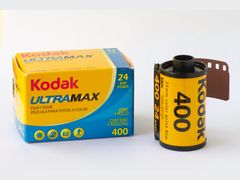
Analogue Wonderland wondered whether Phoenix II's green-first tones are closer to UltraMax 400, known for punchy saturation and a cooler bias, though UltraMax is a stop faster at ISO 400.
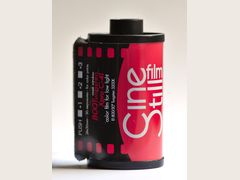
The film reviewers measure Phoenix's halation against: the phillipreeve.net reviewer thought Phoenix 200's glow might be even stronger than what he had seen from CineStill 800T.
Harman Red 125
Harman's redscale film, built on the Phoenix emulsion because of its high red sensitivity; redscale means exposing through the back of a color film.
Every source behind this page
Read them yourself. How we pick and count them is in our methodology.
Show all 50 sources
Manuals and references 27
- alpinecamerausa.com: Search: 2 results found for "phoenix"
- bellowsfilmlab.com: Search: 15 results found for "phoenix"
- camerawest.com: Search: 7 results found for "phoenix" · Camera West
- filmphotographystore.com: 120 Color Film - Harman Phoenix Color 125
- filmphotographystore.com: 120 Color Film - Harman Phoenix II Color 200
- filmphotographystore.com: 35mm Color - Harman Phoenix Color 200 (Original)
- filmphotographystore.com: 35mm Color - Harman Phoenix 125 Color Film
- filmphotographystore.com: 35mm Color - Harman Phoenix II Color 200
- filmphotographystore.com: 620 Color Film - Harman Phoenix 125
- filmsupply.club: Search: 9 results found for "phoenix"
- kmcamera.com: Search
- legacy-photolab.com: Search: 6 results found for "phoenix"
- lumentation.com: Harman PHOENIX II 200iso 35mm Color Film
- procam.com: Search: 5 results found for "phoenix"
- reformedfilmlab.com: Search: 9 results found for "phoenix"
- victorycamera.com: Search
- glazerscamera.com: Search: 7 results found for "phoenix"
- harmanphoto.co.uk: amfile file download file product
- harmanphoto.co.uk: amfile file download file product
- harmanphoto.co.uk: amfile file download file product
- harmanphoto.co.uk: FAQ's
- harmanphoto.co.uk: Harman Colour Film
- harmanphoto.co.uk: HARMAN PHOENIX 125 35mm
- harmanphoto.co.uk: HARMAN PHOENIX II
- harmanphoto.co.uk: Phoenix
- lookingglassphoto.com: Search: 8 results found for "phoenix"
- prophotosupply.com: Search: 17 results found for "phoenix"
Independent blogs 15
- phillipreeve.net: Analogue Adventures - Part 33
- Adam Insights: Harman Phoenix Colour Film Review
- Lauren Lakeberg: HARMAN PHOENIX 200 COLOR FILM
- The Darkroom: Harman's New "Colour" Film: Phoenix 200 review!
- Alex Luyckx | Blog: Film Review Blog No. 104
- Sidekick Camera blog: Harman Phoenix 200 Review
- Parallax Photographic Coop: Harman Phoenix 200 Film Review
- Parallax Photographic Coop: Harman Phoenix 200 120 Film Review
- Parallax Photographic Coop: Harman Phoenix II 200 Film Review
- Caleb Knueven: New Color Film, Phoenix
- TAHUSA: Harman Phoenix 200 Colour Negative Film Review
- Analogue Wonderland blog: Harman Phoenix vs Phoenix II vs Kodak Gold Compared
- 35mmc: Harman Phoenix 200 (first gen)
- Random Photo: HARMAN PHOENIX 125
- Myles Katherine Photography: harman phoenix 200 example photos
Video reviews 5
- grainydays: Phoenix 200
- Kyle McDougall: Testing Harman’s NEW Phoenix II Colour Film!
- Willem Verbeeck: A NEW Color Film in 2025 - Harman Phoenix 2 First Impressions
- Yvonne Hanson: Harman Phoenix in MEDIUM FORMAT! 120 Review With Example Photos
- Anjroo: NEW color film - the only HONEST review of Phoenix ii
Retailer customer reviews 1
Editorial reviews 1
Other 1
Keep reading
Film stocks
Kodak Gold 200 is a warm ISO 200 color film in 35mm and 120, $8.99 to $10.90 a 36-exposure roll. What 139 opinions say about grain, skin and low light.
Film stocks
CineStill 800T is an ISO 800 tungsten film made for night and neon. What 112 opinions say, how to shoot it in daylight, push it, and US prices from $17.00.
Film stocks
Film ISO is a roll's light sensitivity: double the number, one stop faster, more grain. Which ISO to buy, box speed, push and pull, and what a wrong ISO does.
Developing and scanning
How to use Negative Lab Pro: gear and prices ($99 plus Lightroom Classic), scan settings, the convert and edit steps, roll analysis and fixes for blue casts.
Film stocks
How to push film: what a stop means, what to set on your camera, how to tell the lab, one-stop fees from $0 to $4, home development times and how to pull film.
Film stocks
35mm vs 120 film: common 120 frames are 2.7 to 5.4 times bigger than 35mm but give 8 to 16 shots a roll. Cost per frame, lab prices and which to pick.