Sony RX100: which model to buy, problems and used prices
The short answer
The Sony RX100 is a line of pocket cameras with a 1-inch, 20 MP sensor, sold in seven generations from the 2012 original to the 2019 RX100 VII, and reviewers and owners mostly call its image quality excellent for a camera that fits a pocket.
On November 2, 2026, K&M Camera listed a new RX100 VII at $1,498.00, and Kamerastore had certified used cameras from $455 for the original to $1,059 for a VII.
- Sensor
- 1-inch, 20 MP CMOS (every model)
- Generations
- 7, from 2012 to 2019
- Lens
- 24-70mm f/1.8-2.8 (III-V) or 24-200mm (VI-VII)
- Price, Nov 2026
- $455 certified used to $1,498 new
Built from 120 opinions from 36 pages and videos. Not yet tested by Camera Dojo. Updated .
The short version
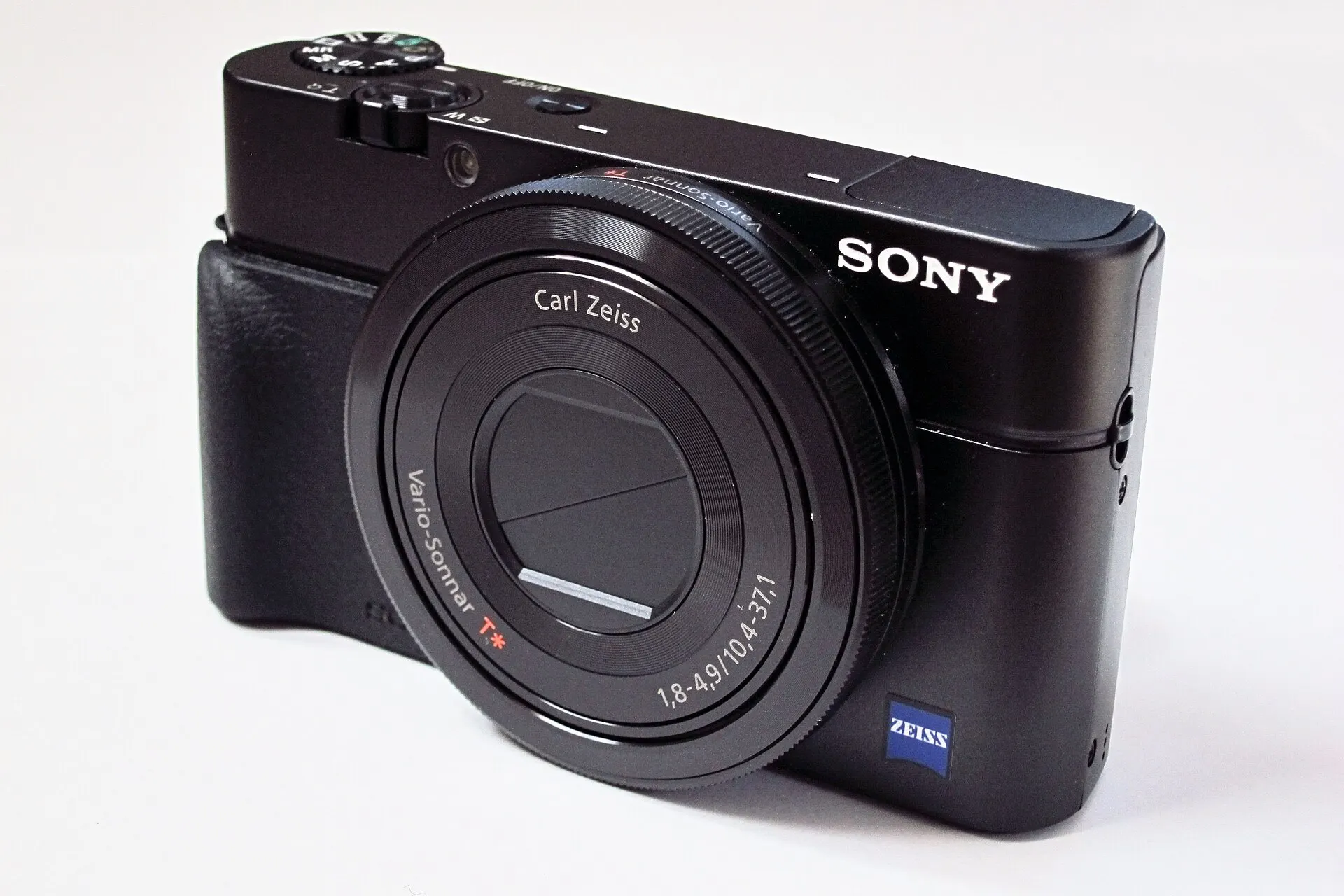
The split that matters is the lens. The RX100 III, IV and V have a bright 24-70mm f/1.8-2.8 zoom that reviewers favor in dim light, while the VI and VII trade it for a 24-200mm f/2.8-4.5 zoom with far more reach. The III added the pop-up viewfinder and the screen that flips up 180 degrees, the IV brought 4K, and the VII is the only RX100 with a microphone jack.
The complaints repeat across models: CIPA battery ratings of 220 to 350 shots, a slippery body with small buttons, Sony's menus, and prices reviewers called steep at launch that stay high used. Reliability reports are few, but owners describe lens errors on aging units, so run the zoom before you pay.
Good fit if
- You want a camera that fits a jeans or jacket pocket but gives cleaner files than a phone
- You shoot in dim light: the RX100 III, IV and V have an f/1.8-2.8 lens
- You want a pop-up viewfinder for bright sun, which every model from the III on has
- You film 4K or vlog: the IV and later shoot 4K, and the VII adds a mic jack
- You want a better webcam: owners run RX100s over HDMI into a cheap capture dongle
Think twice if
- You want a cheap digicam: a working 2012 original was still $455 to $506 at Kamerastore; see our cheap digicams list
- You want the CCD look of early-2000s digicams: every RX100 has a CMOS sensor, unlike older Sony Cyber-shot models
- You have large hands or want a real grip: the bodies are smooth aluminum with small buttons
- You shoot all day without spares: CIPA ratings run from 220 to 350 shots
- You want to mount a mic or flash on top: only the RX100 II has a hot shoe
Sony RX100 models compared: RX100 to RX100 VII
Every RX100 has a 1-inch, 20 MP sensor and a control ring around the lens. The real differences are the lens, the viewfinder, video and price, with the RX100 III as the turning point.
| Model | Year | Sensor | Why look for it |
|---|---|---|---|
| RX100 (DSC-RX100) | 2012 | 20.2 MP 1-inch Exmor CMOS | The cheapest way in: 28-100mm f/1.8-4.9 Zeiss lens, a pop-up flash that tilts for bounce, no viewfinder and a fixed screen. About $650 at launch and 330 shots per charge. |
| RX100 II (DSC-RX100M2) | 2013 | 20 MP 1-inch back-illuminated Exmor R CMOS | Adds a tilting screen, Wi-Fi and NFC, and the only hot shoe in the series. No built-in viewfinder, though Wikipedia's table lists an optional one. $750 at launch and 350 shots per charge. |
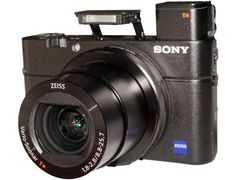 RX100 III (DSC-RX100M3) | 2014 | 20.1 MP 1-inch CMOS | The turning point: a brighter 24-70mm f/1.8-2.8 lens, a pop-up OLED viewfinder and a screen that flips up 180 degrees. Video stops at 1080p. About $800 at launch. See the RX100 III page. |
| RX100 IV (DSC-RX100M4) | 2015 | 20.1 MP 1-inch stacked CMOS with DRAM | First stacked sensor and first 4K, in 5-minute clips. Same 24-70mm f/1.8-2.8 lens and a sharper 2.36 million-dot finder. About $1,000 at launch. |
| RX100 V (DSC-RX100M5) | 2016 | 20.1 MP 1-inch CMOS with on-sensor phase detection | Adds 315-point phase-detect autofocus and 24 fps bursts for up to 150 JPEGs, with the bright lens and a built-in ND filter. Weakest battery at 220 shots. About $1,000 at launch. |
| RX100 VA (DSC-RX100M5A) | 2018 | Same as the V | A refresh, not a new camera: the V's body and list price with the VI's processor, which deepened the buffer from 150 to 233 JPEGs. |
| RX100 VI (DSC-RX100M6) | 2018 | 20.1 MP 1-inch CMOS | Swaps in a 24-200mm f/2.8-4.5 zoom, adds the first touchscreen (focus only) and a one-motion viewfinder. No mic jack. $1,200 at launch. |
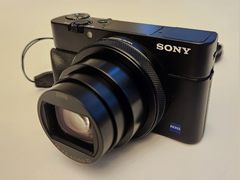 RX100 VII (DSC-RX100M7) | 2019 | 20.1 MP 1-inch stacked CMOS with DRAM | The last of the line: 357-point phase-detect autofocus (0.02 sec, per Photography Blog), the same 24-200mm zoom and the only RX100 with a 3.5mm mic jack. About $1,300 at launch and still sold new. See the RX100 VII page. |
Sources: en.wikipedia.org, imaging-resource.com, imaging-resource.com, imaging-resource.com, old.imaging-resource.com, imaging-resource.com, imaging-resource.com, old.imaging-resource.com, digitalcameraworld.com, photographyblog.com, photographyblog.com, sonyalphalab.com, kmcamera.com
What owners and reviewers say, topic by topic
We sorted 120 opinions about the Sony RX100 from 36 pages and videos on 17 websites and channels. Each row shows how many people raised a topic and how many of them were positive. Open a row to read short quotes, each linked to its source.
Owner voices are thin for the newest models: the RX100 II, IV and VII have almost none, so the VI and VII rest mostly on launch reviews from US and UK sites. Most owner opinions come from Hacker News comments, eBay reviews of the RX100 III and a UK forum thread about the original. Reddit and DPReview could not be read, and reliability evidence is a handful of repair posts, so it shows what fails, not how often.
Ease of use40% positiveof 20
The most divided topic, leaning negative. Reviewers and owners like the auto modes, quick autofocus and the lens control ring, but small or flush buttons, a smooth body with no grip and Sony's menus draw the most complaints.
“I don't love the menu-driven UI though, or the digital lens ring control.”
Hacker News comment by frosted-flakes 2020-06Owner
“Lacks the ergonomics and feel that I am used to.”
791979, eBay customer review, Sony RX100 III 2016-05Owner
“the AF speed is so much quicker”
Talk Photography forum: Sony RX100 thread (page 1) 2012-08Owner
“The RX100 is a very easy-to-use camera.”
Eric Reagan, Photography Bay: Sony RX100 Review 2012-11Hands-on review
Image look88% positiveof 17
Image quality is the clearest point of agreement: reviewers and owners call it excellent for the size, and several say files from the 2012 original still look current. Two voices are cooler: Expert Reviews rates the VII's stills adequate rather than outstanding, and one VII owner saw little gain over an iPhone 11 Pro in everyday shots.
“It has excellent picture quality and bokeh.”
Hacker News comment by azinman2 2021-08Owner
“For me, simply the output, it's stunning for such a small camera.”
Talk Photography forum: Sony RX100 thread (page 30) 2015-12Owner
“one of the few point and shoots from that era whose IQ, in my opinion, does not look dated”
Sam, Camera Legend: This Camera Was So Good, No Need To Upgrade 2025-10Owner
“It also takes really flattering photos of people”
annac9195, eBay customer review, Sony RX100 III 2016-05Owner
Low light and flash40% positiveof 15
Opinions split by model. The f/1.8-2.8 lens on the III, IV and V gets praise in dim light and reviewers like the pop-up flash, but the f/2.8-4.5 zoom on the VI and VII pushes ISO higher, so several reviewers send low-light shooters to the V.
“Great in low light conditions.”
jigods6, eBay customer review, Sony RX100 III 2021-01Owner
“RX100 lived up to its claims with fairly powerful bright and even illumination”
Ken McMahon, Cameralabs: Sony Cyber-shot RX100 review 2012-10Hands-on review
“on interior shots (at higher ISOs) of humans where the Mkiii is definitely much better in terms of skin tone, detail and overall IQ”
Talk Photography forum: Sony RX100 thread (page 30) 2015-12Owner
“ISO 3200 is not to bad as long as you get a good exposure, but ISO 6400 is not that good”
SonyAlphaLab: My Sony Cyber-Shot RX100 Review 2012Hands-on review
Screen and viewfinder62% positiveof 13
The pop-up viewfinder from the III on is popular, especially in bright sun, and the VI and VII made it a one-motion pop-up. Complaints: the VI and VII touchscreen only sets focus, glasses can nudge the eyepiece, the eye sensor can cut out, and the original's screen does not tilt.
“I wear glasses and sometimes the frame pushes the extended part resulting in a blurry view.”
2014seester, eBay customer review, Sony RX100 III 2020-04Owner
“however much of a compromise the pop-up digital viewfinder is, it works great in bright sunlight when the screen gets washed out”
Hacker News comment by frosted-flakes 2020-06Owner
“the 2,359,296-pixel, 0.39in display is nonetheless excellent.”
Expert Reviews: Sony RX100 VII review 2019Hands-on review
“this just feels lazy; it's as if the iPhone never happened.”
Andy Westlake, Trusted Reviews: Sony RX100 VI review 2018-07Hands-on review
Size and weight90% positiveof 10
Nearly everyone says it fits a jeans or jacket pocket. One RX100 V owner finds it a bit bulky in pants and carries it on a neck strap.
“into something that will easily fit in a pocket and is still F1.8 at the wide end”
Talk Photography forum: Sony RX100 thread (page 1) 2012-08Owner
“The RX100 could fit in my motorcycle jacket pocket, so I wouldn't even need to get off the bike.”
Hacker News comment by nicbou 2021-01Owner
“Small enough to fit in pocket.”
7511peter, eBay customer review, Sony RX100 III 2017-12Owner
“I had no problems putting the RX100 in my jeans front pocket”
Eric Reagan, Photography Bay: Sony RX100 Review 2012-11Hands-on review
Video78% positiveof 9
Strong overall: reviewers praise video from the original's 1080p to the VII's 4K, and the VII added a mic jack. Owners also use RX100s as webcams through cheap HDMI capture dongles; the VI's missing mic jack is the main complaint.
“there's still no Mic port, which sadly will continue to rule out the RX100 VI for more serious vlogging”
Photography Blog: Sony RX100 VI Review 2018-07Hands-on review
“My Sony RX100 runs all day without issue and acts as a fantastic webcam via a cheap HDMI to USB adapter.”
Hacker News comment by mdorazio 2022-12Owner
“The video quality on the Sony RX100 is very good I would say”
SonyAlphaLab: My Sony Cyber-Shot RX100 Review 2012Hands-on review
“its video performance is what makes it such a superb little unit.”
Expert Reviews: Sony RX100 VII review 2019Hands-on review
Price and value0% positiveof 9
No one calls it cheap. Reviewers balked at four-figure launch prices for the VI and VII, and The Phoblographer says a used RX100 V is worth buying only at about $200 in good condition.
“At a staggering £1150, it's £300 more than the TZ200”
Andy Westlake, Trusted Reviews: Sony RX100 VI review 2018-07Hands-on review
“there really is no getting away from that high price”
Amy Davies, T3: Sony RX100 VII review 2019Hands-on review
“Unless you can get it for maybe around $200 in good condition, I wouldn't think so.”
Chris Gampat, The Phoblographer: The Sony RX100V is 10 Years Old. Is it Good in 2026? 2026Hands-on review
“Good value only if you can pick one up for around £350”
2468rainer, eBay customer review, Sony RX100 III 2020-08Owner
Build quality86% positiveof 7
Praised across the board: the aluminum body feels solid and a little heavier than it looks. The one caveat, from The Phoblographer, is that the RX100 V has no weather sealing.
“it seems superbly built and a little heavier than i thought it would be as well”
Talk Photography forum: Sony RX100 thread (page 1) 2012-08Owner
“Solid build and has very cleverly designed pop up viewfinder.”
green.69tr.2010, eBay customer review, Sony RX100 III 2018-10Owner
“is very well engineered and built from a high quality aluminium body”
SonyAlphaLab: My Sony Cyber-Shot RX100 Review 2012Hands-on review
“There's no weather sealing, but there is an EVF that pops up when you want it to.”
Chris Gampat, The Phoblographer: The Sony RX100V is 10 Years Old. Is it Good in 2026? 2026Hands-on review
Reliability today29% positiveof 7
Evidence is thin. Two owners say their original RX100s still work after a decade or years of travel, while forum and iFixit posts describe lenses that stick with a power-off error, and reviewers note 4K clips stop at about five minutes to limit heat.
“can anyone help with a stuck lens on my MK I? It switches on as usual but the lens wont extend.”
Talk Photography forum: Sony RX100 thread (page 30) 2015-12Owner
“My Sony Rx100 lens cannot open fully n then won't close with the error message power off and on.”
iFixit Answers: Power off and on error, Sony Cyber-shot DSC-RX100Owner
“Ten years later, the camera is still cranking out great pictures”
Sam, Camera Legend: This Camera Was So Good, No Need To Upgrade 2025-10Owner
“4k clips are again limited to five minutes each to avoid overheating”
Gordon Laing, Cameralabs: Sony RX100 VI review 2018Hands-on review
Memory cards and transfer14% positiveof 7
Mostly negative. Bluetooth on the VI and VII only tags location, Photography Blog calls Sony's phone app clunky, and some owners went back to phones because offloading photos took too much work. The single slot on the VII is UHS-I only, and on the original the card door is blocked by a tripod plate.
“I prefer my smartphone, because it geotags and syncs my photos automatically.”
Hacker News comment by nicbou 2021-01Owner
“it's only used for geotagging your images”
Andy Westlake, Trusted Reviews: Sony RX100 VI review 2018-07Hands-on review
“Bluetooth can still only be used to geotag your images in conjunction with your smartphone”
Photography Blog: Sony Cyber-shot RX100 VII Review 2019-10Hands-on review
“you can still use the faster UHS-II cards, although you won't see any performance advantage in doing so.”
TechRadar: Sony Cyber-shot RX100 VII review 2019-10Hands-on review
Batteries and charging0% positiveof 6
Every source that mentions it calls battery life short, so a spare NP-BX1 is standard advice. One reviewer also wants USB-C instead of the VII's micro USB port.
“a second battery will be essential”
Amy Davies, Trusted Reviews: Sony RX100 V review 2016-12Hands-on review
“Battery life at 260 still shots continues to be poor on this new RX100 camera”
Photography Blog: Sony Cyber-shot RX100 VII Review 2019-10Hands-on review
“we killed the RX100 VII in perhaps two and a half hours, so a spare battery is a must.”
Expert Reviews: Sony RX100 VII review 2019Hands-on review
“These figures hardly thrill, but they're somewhat expected for a camera with such a small body”
TechRadar: Sony Cyber-shot RX100 VII review 2019-10Hands-on review
PositiveMixedNegative
Which Sony RX100 should you buy?
These picks come from reviewer and owner consensus in the sources below, not from our own testing. Prices are dealer asks read on November 2, 2026.
- 01
Sony RX100 III
Oldest model with a viewfinder and the bright lens
$499.99 used at K&M Camera (out of stock, Nov 2026)
It is the first RX100 with the pop-up viewfinder, the 180-degree flip-up screen and the bright 24-70mm f/1.8-2.8 lens, the mix most later models keep. eBay buyers praise its image quality and one calls it great in low light, though another found low light only adequate. A Hacker News owner says it is still quite good.
Watch out: Video stops at 1080p, and an owner who wears glasses says the frame can push the extended eyepiece and blur the view.
Sources: en.wikipedia.org, ebay.com, news.ycombinator.com, kmcamera.com
- 02
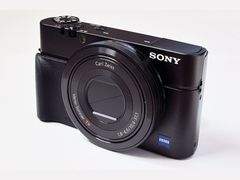
Sony RX100 V or VA
Low light, action and vlogging
$847 to $942 for a certified used RX100 V at Kamerastore (Nov 2026)
It keeps the III's f/1.8-2.8 lens and has 4K video, 315-point phase-detect autofocus and 24 fps bursts. Photography Blog says the cheaper V is still worth considering over the VII if you value faster apertures, and Cameralabs steers vloggers to the V over the VI.
Watch out: Its 220-shot CIPA rating is the weakest in the series, so carry spares.
Sources: digitalcameraworld.com, photographyblog.com, cameralabs.com, kamerastore.com
- 03
Sony RX100 VII
Longest zoom, plus the only mic jack
$1,498.00 new at K&M Camera; $1,059 certified used at Kamerastore (Nov 2026)
It has the 24-200mm zoom, 357-point autofocus and the series' only 3.5mm mic jack, and Photography Blog called it the best RX100 camera ever. It is still sold new.
Watch out: The f/2.8-4.5 lens pushes ISO up indoors, and Expert Reviews drained a battery in about two and a half hours.
Sources: photographyblog.com, trustedreviews.com, expertreviews.co.uk, kmcamera.com, kamerastore.com
- 04
Original Sony RX100 (2012)
Cheapest way into a 1-inch sensor
$455 to $506 certified used at Kamerastore (Nov 2026)
The 2012 original has the same size sensor, a 28-100mm f/1.8-4.9 lens and a pop-up flash that tilts for bounce. One owner says its files still do not look dated, and another says his is still going strong after traveling the world.
Watch out: No viewfinder and a fixed screen, and owners report lenses that stick with a power-off error, so test the zoom.
Sources: en.wikipedia.org, cameralegend.com, talkphotography.co.uk, kamerastore.com
Sony RX100 V vs RX100 VII: bright lens or long zoom
| RX100 V (2016) | RX100 VII (2019) | |
|---|---|---|
| Lens | 24-70mm, f/1.8-2.8 | 24-200mm, f/2.8-4.5 |
| Launch price | About $1,000 | About $1,300 (Photography Blog) |
| Autofocus | 315-point phase detect | 357-point phase detect, 0.02 sec |
| 4K clip length | 5 minutes | 5 minutes by default; Photography Blog says up to 30 minutes, Wikipedia says no limit |
| Microphone jack | No | Yes, 3.5mm |
| Touchscreen | No | Yes, for focus only |
| Built-in ND filter | Yes | No, per Photography Blog (Digital Camera World lists one) |
| Battery, CIPA with screen | 220 shots | 260 shots |
| Price, Nov 2026 | $847 to $942 certified used (Kamerastore) | $1,059 certified used (Kamerastore), $1,498.00 new (K&M Camera) |
Pick the RX100 V (2016) if
- You shoot indoors or at night and want the brighter f/1.8-2.8 lens
- You want a built-in ND filter for bright-light video at wide apertures
- You want to spend less: T3 says the Mark V or VI saves a decent amount if you do not need the VII's video extras
Pick the RX100 VII (2019) if
- You want 200mm reach for travel, kids or sports
- You vlog and need a microphone jack
- You want the newest autofocus and touch-to-focus
Sources: digitalcameraworld.com, imaging-resource.com, photographyblog.com, photographyblog.com, en.wikipedia.org, helpguide.sony.net, t3.com, kamerastore.com, kmcamera.com
Sony RX100 battery, charging and memory cards
Every RX100 takes the same NP-BX1 battery, so spares from an older body fit a newer one. CIPA ratings with the screen are short: 330 shots for the original, 350 for the II, 320 for the III, 280 for the IV, 220 for the V, 240 for the VI and 260 for the VII. Expert Reviews drained a VII in about two and a half hours of mixed video and stills, and Photography Blog says to budget for several spares on a serious shooting day.
The camera charges inside the body over micro USB, from the supplied adapter or a computer, and Trusted Reviews suggests a spare battery or a USB power pack for the VII. Sony quotes about 150 minutes for a full charge on the VII and about 230 minutes on the III. The original shipped with no external charger, only a USB power supply and cable, so check what comes with a used body. On November 2, 2026, K&M Camera listed a ProMaster NP-BX1 battery and charger kit at $41.95 and Sony's battery and travel charger kit at $71.99 (out of stock).
The single slot takes SD, SDHC and SDXC cards as well as Sony's Memory Stick PRO Duo. On the VII it is UHS-I only, so a UHS-II card works but gives no speed gain. For VII video, Sony lists a Class 10 or U1 card for 4K at 60 Mbps and a U3 card for 100 Mbps.
Format each card in the camera before you use it; Sony says a card formatted on a computer is not guaranteed to work. SDXC cards use exFAT, and an older computer or reader that lacks exFAT support may offer to format the card. Say no, because formatting erases the photos.
Buy at least one spare NP-BX1 before a full day out; the same battery fits every RX100.
Sources: digitalcameraworld.com, imaging-resource.com, expertreviews.co.uk, photographyblog.com, helpguide.sony.net, helpguide.sony.net, helpguide.sony.net, helpguide.sony.net, helpguide.sony.net, techradar.com, trustedreviews.com, en.wikipedia.org, kmcamera.com
Sony RX100 settings for a digicam look
Every RX100 has a 1-inch CMOS sensor, about four times the size of a typical 1/2.3-inch compact sensor and not a CCD, so it will not give the look of early-2000s digicams on its own. These in-camera tools from Sony's help guide, plus one owner's recipe, push it that way. For the full style, see our guide to the Y2K digicam look.
- 1
Pick a Creative Style
Creative Style is the main JPEG look control, with options from Standard and Vivid to Neutral, Black & White and Sepia. Each one lets you adjust contrast, saturation and sharpness, and six style boxes store your own versions.
- 2
Try a muted color recipe
One owner built a muted, film-like JPEG on an RX100 IV: Neutral style, contrast +1, saturation -2, sharpness -1, daylight white balance shifted amber +1 and magenta +1, and DRO level 2.
- 3
Shoot black and white in camera
The same owner uses Creative Style B&W with contrast +1 and sharpness -1 more than any other setting, and another RX100 owner on a 2026 forum thread liked the black and white it makes straight out of the camera.
- 4
Dial in -0.3 EV
The same owner shoots at -0.3 EV because he finds the meter a little bright, and clips a Black Mist 1/4 filter on a magnetic adapter for a glow settings cannot fake.
- 5
Use the flash and Picture Effect
Pop up the flash for the direct-flash snapshot look; reviewers found it bright and even, and on the original it tilts for bounce. Picture Effect adds Toy Camera (soft, shaded corners) and Retro Photo (faded sepia tones).
- 6
Add a date stamp only if you mean it
Write Date burns the shooting date into the picture itself, and it cannot be removed afterward.
- 7
Save the look to MR
Memory Recall (MR on the mode dial) stores a full set of shooting settings, so you can switch between a clean setup and your digicam look in one turn. Sony recommends JPEG if you are not going to edit on a computer.
Sources: imaging-resource.com, helpguide.sony.net, mijndertstuij.nl, thephotoforum.com, cameralabs.com, en.wikipedia.org, helpguide.sony.net, helpguide.sony.net, helpguide.sony.net, helpguide.sony.net
What to check before buying a used Sony RX100
Owner repair posts and Sony's own troubleshooting pages point to the same few checks.
- 1
Run the zoom several times
Turn the camera on and off and zoom end to end. A lens that sticks, judders or stops half out with 'Camera Error. Turn power off then on.' is the fault owners describe on iFixit and forums for the original and the III. Sony says not to force a lens that has stopped moving.
- 2
Pop the viewfinder and pull it
On the III, IV and V the finder pops up and then you pull the eyepiece toward you by hand; the VI and VII do both in one motion. A finder that looks stuck may only need the pull.
- 3
Check the menu language
Some used RX100s are imports from Japan. Ask the seller to confirm English menus, because one owner said Sony's Singapore service would not accept a Japanese-language camera for repair.
- 4
Ask what comes in the box
The camera charges over micro USB, and the original shipped with no external charger, so make sure a battery and a USB cable come with it.
- 5
Read the condition grade
At Kamerastore, Certified means machine-tested and working, while Rescue means the camera has functional problems. That explains a $392 RX100 VI or a $288 original, against $455 to $506 for a certified original.
- 6
Budget for a grip and a spare battery
The smooth body has no front grip. Sony's AG-R2 attachment grip was $17.99 at K&M Camera (out of stock) on November 2, 2026, and a ProMaster NP-BX1 battery and charger kit was $41.95 there.
Sources: helpguide.sony.net, helpguide.sony.net, ifixit.com, talkphotography.co.uk, thephotoforum.com, imaging-resource.com, kamerastore.com, kamerastore.com, kmcamera.com, photographyblog.com
Known problems and what fixing them costs
Reports are few and come from owner forums, iFixit and Sony's help guides, so they show what can go wrong, not how often.
Lens error: 'Turn power off then on' or a lens that sticks
Raised in 2 opinions
- How you notice
- The lens struggles to extend or retract, stops half out, or the screen shows 'Camera Error. Turn power off then on.' Owners describe it on the original RX100 and the RX100 III.
- Fix
- Sony says not to force the lens, to insert a charged battery and turn the camera on again, and for a camera error to remove and reinsert the battery, then consult a Sony service facility if it keeps happening. An iFixit community guide says the error on the original seems to come from an overly compressed ribbon cable and shows a foam-padding fix that means opening the camera.
- Typical cost
- No published US flat rate found. One RX100 III owner on iFixit was quoted more than $400 at a Sony service center, and a UK forum member was quoted at least what the camera is worth.
Sources: helpguide.sony.net, helpguide.sony.net, ifixit.com, ifixit.com, es.ifixit.com, talkphotography.co.uk
Short battery life
Raised in 5 opinions
- How you notice
- CIPA ratings run from 220 shots on the RX100 V to 350 on the RX100 II; fast bursts and the viewfinder drain the small NP-BX1 faster.
- Fix
- Carry spare NP-BX1 batteries, which fit every model, and top up in the camera over USB; Trusted Reviews suggests a USB power pack.
- Typical cost
- $41.95 for a ProMaster NP-BX1 battery and charger kit at K&M Camera (Nov 2, 2026)
Sources: digitalcameraworld.com, photographyblog.com, helpguide.sony.net, trustedreviews.com, en.wikipedia.org, kmcamera.com
Heat warning and short 4K clips
Raised in 2 opinions
- How you notice
- Sony's message 'Internal temp. high. Allow it to cool.' appears after long continuous shooting or recording. 4K clips on the IV, V and VI stop at 5 minutes, and the VII stops at 5 minutes by default.
- Fix
- Turn the camera off and let it cool, and shoot shorter clips. On the VII, TechRadar says the default five-minute 4K limit can be bypassed.
- Typical cost
- Nothing; it is built-in protection.
Sources: helpguide.sony.net, en.wikipedia.org, techradar.com, photographyblog.com
No grip and a slippery body
Raised in 2 opinions
- How you notice
- The aluminum body is smooth with no front grip, and reviewers call the VII a little slippery and hard to hold securely.
- Fix
- Add Sony's optional grip or a cheaper third-party one; Photography Blog mentions both.
- Typical cost
- $17.99 for the Sony AG-R2 at K&M Camera (out of stock, Nov 2, 2026)
Sources: photographyblog.com, digitalcameraworld.com, kmcamera.com
Viewfinder looks stuck (RX100 III, IV and V)
- How you notice
- The finder pops up, but the eyepiece stays retracted until you pull it toward you by hand, so it can look stuck.
- Fix
- Pull the eyepiece toward you after it pops up. The VI and VII extend it automatically.
- Typical cost
- Nothing.
Sources: thephotoforum.com, photographyblog.com
Card errors and SDXC cards a computer cannot read
- How you notice
- 'Unable to use memory card. Format?' appears when a card was formatted on a computer, and an older computer or card reader without exFAT support may offer to format an SDXC card that came out of the camera.
- Fix
- Format cards in the camera, and never accept a format prompt from an old reader; use an exFAT-capable reader or the camera's USB cable.
- Typical cost
- Nothing, as long as you decline the format prompt.
Sources: helpguide.sony.net, helpguide.sony.net
Photos taken with a Sony RX100 series (RX100 to RX100 VII)
Sample photos taken with the original 2012 RX100, from Wikimedia Commons.

Fern shot at f/1.8 on the original RX100, 2012Photo: Bobby Plasencia, CC BY 3.0 
Tree bark at f/1.8 on the original RX100, 2012Photo: Bobby Plasencia, CC BY 3.0 
Night test shot at Yokosuka Navy Base, Japan, on the original RX100Photo: Yamaguchi Yoshiaki from Japan, CC BY-SA 2.0
What a Sony RX100 costs today
On November 2, 2026, K&M Camera in New York listed a new RX100 VII at $1,498.00. Kamerastore, a dealer based in Finland with a US-dollar storefront, had certified used cameras that climbed with the model, from $455 for the 2012 original to $1,059 for a VII, and K&M's used RX100 III was listed at $499.99, out of stock.
K&M Camera (New York)
New, in stock, RX100 VII
$1,498.00
See listingK&M Camera (New York)
Used, grade u9 (out of stock), RX100 VII, black
$1,349.99
See listingK&M Camera (New York)
Used, grade u9 (out of stock), RX100 VII
$1,362.16
See listingKamerastore (Finland, USD)
Used, Certified, RX100 VII
$1,059.00
See listingKamerastore (Finland, USD)
Used, Rescue (functional problems), RX100 VI
$392.00
See listingKamerastore (Finland, USD)
Used, Certified, RX100 V
$942.00
See listingKamerastore (Finland, USD)
Used, Certified, RX100 V
$847.00
See listingKamerastore (Finland, USD)
Used, Certified, RX100 IV
$737.00
See listingKamerastore (Finland, USD)
Used, Certified, RX100 IV
$720.00
See listingK&M Camera (New York)
Used, grade u7 (out of stock), RX100 III
$499.99
See listingKamerastore (Finland, USD)
Used, Certified, RX100 (2012)
$506.00
See listingKamerastore (Finland, USD)
Used, Certified, RX100 (2012)
$455.00
See listingKamerastore (Finland, USD)
Used, Rescue (functional problems), RX100 (2012)
$288.00
See listingK&M Camera (New York)
New, in stock, ProMaster battery and charger kit for NP-BX1
$41.95
See listingK&M Camera (New York)
New (out of stock), Sony battery and travel DC charger kit with NP-BX1 (ACC-TRDCX)
$71.99
See listingK&M Camera (New York)
New (out of stock), Sony AG-R2 attachment grip
$17.99
See listing
Prices checked on November 2, 2026. They move every week, so treat them as a range, not a quote. Most K&M used listings were out of stock, so treat them as recent asks. Kamerastore's Rescue grade means the camera has functional problems. MPB, KEH, B&H and Adorama pages block automated checks, so their prices are not listed. The Phoblographer put a used RX100 V at around $325 in 2026 and said it is worth buying only near $200 in good condition, well below these dealer asks.
Questions people ask about the Sony RX100
Is the Sony RX100 worth it?
Most reviewers and owners say yes if you want a pocketable camera with a 1-inch sensor, but none of them call it cheap, and one VII owner saw little gain over an iPhone 11 Pro. On November 2, 2026, a new RX100 VII was $1,498.00 at K&M Camera and a certified used original was $455 to $506 at Kamerastore. The Phoblographer said a used RX100 V is worth it only at around $200 in good condition, so buy the model whose feature you need rather than the newest.
Sources: thephoblographer.com, ubergizmo.com, news.ycombinator.com, kmcamera.com, kamerastore.com
What is the price of a Sony Cyber-shot RX100?
Cyber-shot is Sony's compact camera brand, so prices vary widely; our [vintage Sony Cyber-shot guide](/cameras/sony-cyber-shot/) covers the older CCD models. For the RX100 line, launch prices ran from about $650 for the 2012 original to about $1,300 for the 2019 VII. On November 2, 2026, certified used cameras at Kamerastore ran from $455 (original) to $1,059 (VII), and K&M Camera listed a new VII at $1,498.00.
Sources: imaging-resource.com, photographyblog.com, kamerastore.com, kmcamera.com
What is the best RX100?
Photography Blog called the RX100 VII the best RX100 camera ever; it has a 24-200mm zoom, fast autofocus and the only mic jack in the line. T3 says you save a decent amount with the Mark VI or V if you do not need the VII's newer video features, and Photography Blog says the cheaper V is still worth considering for its brighter f/1.8-2.8 lens. On a budget, the RX100 III is the oldest model with a viewfinder and that bright lens.
Sources: photographyblog.com, t3.com, en.wikipedia.org
Is the Sony RX100 good in low light?
Yes for a compact, but it depends on the model. The RX100 III, IV and V have an f/1.8-2.8 lens that reviewers favor for dim light, while the f/2.8-4.5 zoom on the VI and VII means higher ISO settings indoors or at night. On the original, one reviewer found ISO 3200 acceptable with a good exposure but ISO 6400 weak.
Sources: trustedreviews.com, trustedreviews.com, trustedreviews.com, sonyalphalab.com
How long does a Sony RX100 battery last?
By CIPA ratings, 220 to 350 shots per charge depending on the model: 330 on the original, 350 on the II, 320 on the III, 280 on the IV, 220 on the V, 240 on the VI and 260 on the VII. Expert Reviews drained a VII in about two and a half hours of mixed video and stills. Every model uses the same NP-BX1, so carry spares.
Sources: imaging-resource.com, digitalcameraworld.com, expertreviews.co.uk, en.wikipedia.org
When was the Sony RX100 VII released?
Sony announced the RX100 VII on July 25, 2019, at about $1,300 according to Photography Blog, and it is the last of the seven generations. It added a 3.5mm microphone jack and a new stacked sensor with 357-point phase-detect autofocus.
Sources: en.wikipedia.org, photographyblog.com
Why is my Sony RX100 not turning on?
Start with the battery. If the camera stopped with the lens out, Sony says not to force the lens, to insert a charged battery and turn it on again; for 'Camera Error. Turn power off then on,' remove and reinsert the battery, and consult a Sony service facility if it keeps coming back. An iFixit community guide says repeated lens errors on the original seem to come from an overly compressed ribbon cable, a repair that means opening the camera.
Sources: helpguide.sony.net, helpguide.sony.net, ifixit.com
Does the Sony RX100 have a viewfinder?
The original and the RX100 II have no built-in one. A pop-up electronic viewfinder arrived on the RX100 III with 1.44 million dots, and the IV through VII use a 2.36 million-dot panel. On the III, IV and V you pull the eyepiece out by hand after it pops up; the VI and VII do it in one motion.
Sources: en.wikipedia.org, digitalcameraworld.com, thephotoforum.com
What people compare it with
Photography Blog lists it among the RX100 VII's main rivals, a compact aimed at both stills photographers and vloggers.
Imaging Resource lists it as a similar camera to the RX100 II and III.
Panasonic Lumix TZ200
For more reach: Photography Blog lists it as a rival with a 15x zoom in a pocketable body.
Sony ZV-1
Imaging Resource lists it as a similar camera to the RX100 V.
Every source behind this page
Read them yourself. How we pick and count them is in our methodology.
Show all 68 sources
Manuals and references 32
- Imaging-Resource.Com: Sony RX100 II Review
- Imaging-Resource.Com: Sony RX100 III Review
- en.wikipedia.org: Sony Cyber-shot DSC-RX100 series
- es.ifixit.com: Lens replacement on the Rx100 III - Sony CyberShot DSC-RX100 III
- helpguide.sony.net: Help Guide
- helpguide.sony.net: Help Guide
- helpguide.sony.net: Help Guide | The product stops with the lens portion extended./The product turns off with the lens portion extended.
- helpguide.sony.net: Help Guide
- helpguide.sony.net: Help Guide
- helpguide.sony.net: Help Guide
- helpguide.sony.net: Help Guide
- helpguide.sony.net: Help Guide
- helpguide.sony.net: Help Guide | Charging the battery pack while it is inserted in the camera
- helpguide.sony.net: Help Guide
- helpguide.sony.net: Help Guide | Battery life and the number of images that can be recorded/played back using a battery pack
- helpguide.sony.net: Help Guide
- helpguide.sony.net: DSC-RX100M7 | Help Guide | Charging the battery pack while it is inserted in the camera
- helpguide.sony.net: DSC-RX100M7 | Help Guide | Battery life and number of recordable images
- helpguide.sony.net: DSC-RX100M7 | Help Guide
- kamerastore.com: Kamerastore Used Item Condition
- kamerastore.com: Search: 215 results found for "sony rx100"
- kmcamera.com: Search
- mijndertstuij.nl: My Sony RX100 IV takes better photos now
- old.imaging-resource.com: Sony RX100 IV Deals and Prices
- old.imaging-resource.com: Sony RX100 VI Deals and Prices
- thephotoforum.com: Sony RX100
- digitalcameraworld.com: Sony RX100 III vs RX100 IV vs RX100 V vs RX100 VI vs RX100 VII
- ifixit.com: Fix "Turn power off then on" error: Sony Cyber-shot DSC-RX100
- imaging-resource.com: Sony RX100 V Review
- imaging-resource.com: Sony RX100 VA Review: Lab Tests & Sample Images
- imaging-resource.com: Sony RX100 Review: Lab Tests & Sample Images
- talkphotography.co.uk: Repair advice for Sony RX100 III
Editorial reviews 15
- Photography Blog: Sony Cyber-shot RX100 VII Review: Sony Cyber
- Photography Blog: Sony RX100 VI Review: Sony RX100 VI Review
- Cameralabs: Sony RX100 VI review: Sony RX100 VI review
- Cameralabs: Sony Cyber-shot RX100 review: Sony Cyber-shot RX100 review
- Trusted Reviews: Sony RX100 VII review: Sony RX100 VII Review
- Trusted Reviews: Sony RX100 VI review: Sony RX100 VI review: a brilliant but flawed gem of a travel camera
- Trusted Reviews: Sony RX100 V review: Sony RX100 V Review
- TechRadar: Sony Cyber-shot RX100 VII review: Sony Cyber-shot RX100 VII review
- T3: Sony RX100 VII review: Sony RX100 VII review
- Expert Reviews: Sony RX100 VII review: Sony RX100 VII review: The saviour of the compact camera?
- Ubergizmo: Sony RX100 VII review: Sony RX100 VII Review
- The Phoblographer: The Sony RX100V is 10 Years Old. Is it Good in 2026?: The Sony RX100V is 10 Years Old. Is it Good in 2026?
- diglloyd.com: Image Quality 4 Years Later: diglloyd.com: Image Quality 4 Years Later (Two Cycling Selfies at Full Res) (diglloyd.com excerpt)
- Digital Photography School: Sony Cyber-Shot RX100 REVIEW: Sony Cyber
- Photography Bay: Sony RX100 Review: Sony RX100 Review
Forums 15
- Hacker News comment by nicbou: I had all sorts of cameras, but the Sony RX100 was my trustiest companion. When ...
- Hacker News comment by mdorazio: Yeah, no, you don't need a DSLR. A point and shoot with a good sensor is more th...
- Hacker News comment by JayMickey: The key to this is really to find the "good enough" solution. For me that was a ...
- Hacker News comment by ptcampbell: As pointed out by others, a cheap HDMI to USB converter unlocks many possibiliti...
- Hacker News comment by jcims: I just bought a Sony rx100 and the software is just as terrible as I remember fr...
- Hacker News comment by mschaef: Some of it's size, some of it the fact that the camera is a second device, and s...
- Hacker News comment by okasaki: That's just not true. Even a 1" compact with a decent lens (like Sony RX100) is ...
- Hacker News comment by rythie: The Sony RX100 series would be in most top lists. Though personally I'm not sure...
- Hacker News comment by heisenbergs: Same. I actually bought a last gen Sony RX100 VII and the difference in quality ...
- Hacker News comment by hanklazard: True but with the longer lens, the RX has also gotten a smaller maximum aperture...
- Hacker News comment by azinman2: I have a Sony rx100 that I do this with, which is just a point-in-shoot. It has ...
- Hacker News comment by frosted-flakes: The good ones are still somewhat expensive (i.e, Sony RX100 series) and they are...
- Talk Photography forum: Sony RX100 thread: Sony RX100
- Talk Photography forum: Sony RX100 thread: Sony RX100 | Page 30
- iFixit Answers: Power off and on error, Sony Cyber-shot DSC-RX100: Power off and on error - Sony Cyber-shot DSC-RX100
Retailer customer reviews 4
- eBay customer review, Sony RX100 III: Reviews: Sony-Cyber-Shot-DSC-RX100M3-20-1-MP-Digital-Camera-Black
- eBay customer review, Sony RX100 III: Reviews: Sony-Cyber-Shot-DSC-RX100M3-20-1-MP-Digital-Camera-Black
- eBay customer review, Sony RX100 III: Reviews: Sony-Cyber-Shot-DSC-RX100M3-20-1-MP-Digital-Camera-Black
- eBay customer review, Sony RX100 III: Reviews: Sony-Cyber-Shot-DSC-RX100M3-20-1-MP-Digital-Camera-Black
Independent blogs 2
Keep reading
Digicams
Sony RX100 VII: what reviewers and owners say, the battery, heat and screen problems, best settings, and prices from $1,087 used to $1,498 new in October 2026.
Digicams
Sony RX100 III: what reviewers and owners say, the lens and battery problems to check, best settings, and used prices from $399 at US dealers in October 2026.
Digicams
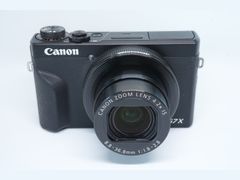
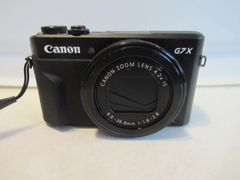
Canon PowerShot G7 X Mark III: what reviewers and owners say, overheating and autofocus problems, best settings, and why used ones topped $1,500 in 2026.
Digicams
Canon G7X alternatives you can buy: Sony ZV-1 II ($998), ZV-1F ($598) and RX100 VII ($1,498, on order). Eight picks by use, US prices checked October 2026.
Digicams
Vintage Sony Cyber-shot CCD cameras: which models to look for, used prices of $59.99 to $265 (Oct 2026), batteries, Memory Stick cards and common faults.
Digicams
The best vintage digital camera for most people is a Canon ELPH like the SD1000, $199 at a shop that tests. 7 digicam picks, US prices and what to check.