Sony RX100 III: is the 2014 pocket camera still worth buying?
The short answer
Mostly yes, according to reviewers and owners: the Sony RX100 III still suits anyone who wants a pocket camera with a built-in viewfinder and a bright lens and can live without 4K and fast autofocus.
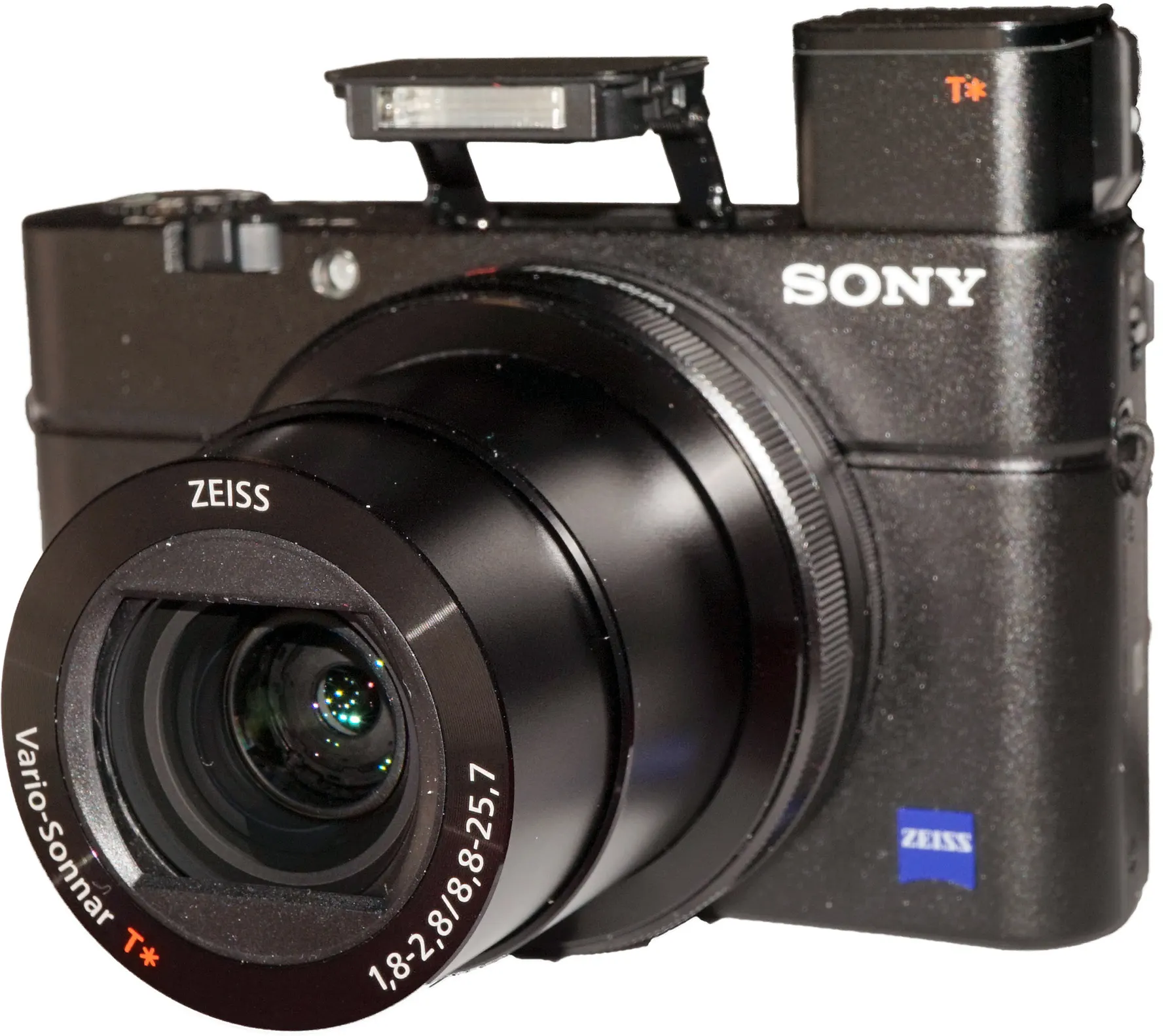
It is a 2014 camera with a 1-inch, 20.1 MP sensor, a 24-70mm f/1.8-2.8 Zeiss lens and a pop-up OLED viewfinder; it cost $799 at launch and is now discontinued, and US used listings seen on November 2, 2026 ran from $399 to $649.95, though most were sold out.
- Sensor
- 1-inch, 20.1 MP BSI CMOS
- Lens
- 24-70mm equiv., f/1.8-2.8
- Viewfinder
- Pop-up OLED, 1.44M dots
- Used, US dealers
- $399 to $649.95 (Oct 2026)
Built from 152 opinions from 36 pages and videos. Not yet tested by Camera Dojo. Updated .
The short version
The praise is consistent from 2014 launch reviews to recent owner write-ups: it fits a jacket pocket, the pop-up finder was the best EOSHD had seen on a compact, the screen flips up 180 degrees for selfies, and with the f/1.8 lens and a back-illuminated sensor, reviewers found files usable to about ISO 3200. Digital Camera World still called it a bargain buy in March 2025.
The complaints are just as consistent. Sony rates the battery at about 320 shots (230 with the viewfinder) and it charges inside the camera over micro-USB. Autofocus is contrast-detect only and hunts in dim light and video, the zoom stops at 70mm, and there is no 4K, microphone input, hot shoe or touchscreen. Age adds lens faults: owners report lenses that judder or won't extend, and one was quoted more than $400 at a Sony service center.
Good fit if
- You want a real viewfinder in a camera that fits a jacket pocket
- You shoot indoors and at night: the lens is f/1.8 at 24mm and f/2.8 at 70mm, which Expert Reviews puts at three times more light than the RX100 II at the long end
- You travel light and like a 24mm wide angle for streets, rooms and landscapes
- You take selfies or shoot from the waist: the screen flips up 180 degrees and down 45
- You like setting things yourself: P, A, S and M modes, a lens control ring and 42 functions you can put on buttons
Think twice if
- You need reach: the zoom stops at 70mm equivalent, while the RX100 VII goes to 200mm
- You film seriously: no 4K, no microphone input and autofocus that hunts during video
- You shoot kids, pets or sports: reviewers say contrast-only autofocus is where the III shows its age
- You hate carrying spares: the battery is rated at about 320 shots and the box has no external charger
- You want a touchscreen or a hot shoe for an external flash: it has neither
Sony RX100 family: from the original to the Mark VII
All seven RX100 generations use a 1-inch, 20 MP sensor, so the differences are the lens, the viewfinder, autofocus and video. The III was the first with a built-in viewfinder and the first with the brighter 24-70mm f/1.8-2.8 lens.
| Model | Year | Sensor | Why look for it |
|---|---|---|---|
| RX100 | 2012 | 1-inch, 20 MP CMOS | The original, and the first compact with a 1-inch sensor according to Expert Reviews. Longer 28-100mm f/1.8-4.9 lens, fixed screen, no viewfinder. See the original RX100 page. |
| RX100 II | 2013 | 1-inch, 20 MP back-illuminated CMOS | Same 28-100mm lens, plus a tilting screen, Wi-Fi and a Multi Interface Shoe for an add-on flash or viewfinder. |
 RX100 III | 2014 | 1-inch, 20.1 MP back-illuminated CMOS, Bionz X | This camera: built-in pop-up OLED viewfinder, brighter 24-70mm f/1.8-2.8 lens, 3-stop ND filter and a screen that flips up 180 degrees. The hot shoe is gone. |
| RX100 IV | 2015 | 1-inch, 20 MP | Same 24-70mm f/1.8-2.8 lens with 4K/30p video (in clips of up to 5 minutes), a 2,359k-dot viewfinder and 16 fps bursts. It cost $999 at launch. |
| RX100 V | 2016 | 1-inch, 20 MP | The first RX100 with hybrid phase-detection autofocus, with 315 focus points and 24 fps bursts: the fix for the III's main weakness. |
| RX100 VI | 2018 | 1-inch, 20 MP | Trades the bright lens for a longer 24-200mm f/2.8-4.5 zoom and adds touch focus. Digital Camera World's reviewer says that zoom would be his only reason to pick a VI or VII over the III. |
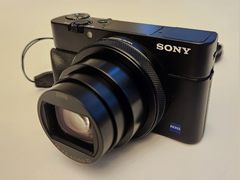 RX100 VII | 2019 | 1-inch, 20 MP | Keeps the 24-200mm lens and adds a 3.5mm microphone jack and no video time limit. See the RX100 VII page. |
Sources: en.wikipedia.org, expertreviews.co.uk, photoreview.com.au, apotelyt.com, digitalcameraworld.com
Sony RX100 III reviews: what owners and reviewers say, topic by topic
We sorted 152 opinions about the RX100 III from 36 pages and videos on 31 websites and channels. Each row shows how many people raised a topic and how many of them were positive. Open a row to read short quotes, each linked to its source.
About half of the opinions come from 2014 launch reviews and videos (Photo Review, Digital Trends, EOSHD, Imaging Resource, Cameralabs and others). Owner voices are scattered and thinner: blogs from 2015 and from 2024 to 2026, eBay UK buyer reviews from 2016 to 2022, a few forum threads, iFixit repair questions and five YouTube reviews. Reddit and DPReview threads could not be read, so the reliability picture shows what fails but not how often.
Screen and viewfinder57% positiveof 21
The pop-up OLED finder and the screen that flips up 180 degrees are among the most praised features. The mixed notes are practical: no eyecup, an eye sensor that can switch the finder off, glasses frames pushing the eyepiece, and no touchscreen.
“The LCD literally flips completely up to look you straight in the face.”
Diana Southern, North to South: Sony RX100 III Review 2015-05Owner
“articulating rear LCD (great for tall old people taking pictures of short young people)”
Philip Greenspun's Weblog: Sony RX100 III 2015-04Owner
“The pop-up view finder on the Mark III is nice, although has a few issues”
Jordan Barab, Inspired Eye: Street Photography with the Sony RX100 IIIOwner
“against my expectations, I mostly used the screen at the back of the camera and not the EVF”
Tucyard, SHELLZINE: Sony RX100 in Japan, a compact travel camera review 2026-03Owner
Image look63% positiveof 19
Most reviewers and owners praise the detail and natural color from the 1-inch, 20.1 MP sensor, and some say bright-light shots rival larger cameras. The mixed notes are about JPEG processing: heavy noise reduction, a slightly digital look, and one reviewer who says highlights clip easily.
“It also takes really flattering photos of people, and offers great depth to landscapes which can sometimes be tricky to capture.”
annac9195, eBay UK customer reviews 2016-05Owner
“The photos I took with the RX100 III were gorgeous”
Sean Captain, Tom's Guide: Sony RX100 III Review 2014-07Hands-on review
“The Mark III soaks in tons of detail with its 20.1MP sensor whilst rendering lovely and realistic colors.”
Kevin Lee, The Phoblographer: Review: Sony RX100 Mark III 2014-07Hands-on review
“produces nice enough Jpegs, but they definitely have a "digital" feel to them”
Nicklaus Walter, Decaf Journal: A Review Of The Sony Cyber-shot DSC-RX100 III 2024-02Owner
Ease of use28% positiveof 18
Mostly mixed: the controls work well once you program the buttons, but owners and reviewers call the menus, small buttons and power-button placement fiddly. Moving the focus area without a touchscreen is slow, and contrast-only autofocus is where the camera shows its age.
“My biggest gripe with the camera is the autofocus.”
Tucyard, SHELLZINE: Sony RX100 in Japan, a compact travel camera review 2026-03Owner
“I didn't find the menu system to be particularly difficult to navigate at all.”
Nicklaus Walter, Decaf Journal: A Review Of The Sony Cyber-shot DSC-RX100 III 2024-02Owner
“I do struggle a little with the focus though; sometimes it focuses on something I don't want it to.”
Flo, North to South: Sony RX100 III Review 2015-06Owner
“The ergonomics took a bit of getting used to - the buttons aren't as touch-friendly as they might be.”
Jordan Barab, Inspired Eye: Street Photography with the Sony RX100 IIIOwner
Low light and flash76% positiveof 17
The f/1.8 lens and back-illuminated sensor earn some of the strongest praise, with reviewers putting the practical limit between ISO 2,000 and 3200. The flash splits opinion: Gizmodo liked that it tilts back to bounce, Imaging Resource found it weak with narrow coverage.
“the RX100 has an f/1.8 lens which makes it super good in low light”
Diana Southern, North to South: Sony RX100 III Review 2015-05Owner
“At f/1.8 you can really get some nice background blur (bokeh) or take night photos handheld.”
Chris Keeney Photography: Sony Cyber-shot DSC-RX100 Mark III Camera 2024-11Owner
“Great in low light conditions.”
jigods6, eBay UK customer reviews 2021-01Owner
“At ISO 3200 noise becomes apparent but images are still usable.”
Kevin Lee, The Phoblographer: Review: Sony RX100 Mark III 2014-07Hands-on review
Size and weight75% positiveof 16
Nearly everyone praises the size: it fits a jacket pocket or a small purse and makes leaving a bigger camera at home easy. The mixed notes come from people with big hands who find it small and fiddly, and reviewers who say it no longer slips into pants pockets.
“I can't tell you how AMAZINGLY PRACTICAL that makes this camera for travel.”
Diana Southern, North to South: Sony RX100 III Review 2015-05Owner
“I also like that when I have it out, it doesn't scream CAMERA like it's bigger brothers.”
Chris Keeney Photography: Sony Cyber-shot DSC-RX100 Mark III Camera 2024-11Owner
“It fits in every pocket and is able to capture great photos from a range of perspectives.”
Tucyard, SHELLZINE: Sony RX100 in Japan, a compact travel camera review 2026-03Owner
“Frankly, the camera is smaller than I like, much smaller than my hand.”
David Keenan, Inspired Eye: A Street Photographer's Take on the New Sony RX100 III 2014Owner
Batteries and charging36% positiveof 14
Split almost evenly. Owners who shoot casually report 300 to 350 shots and days between charges, but the most repeated complaint is in-camera USB charging with no external charger in the box, and reviewers advise carrying a spare battery.
“One gripe is that Sony did not include an external battery charger in the box.”
David Keenan, Inspired Eye: A Street Photographer's Take on the New Sony RX100 III 2014Owner
“I was very surprised that it would only shoot 332 photos for a time lapse before the battery died.”
CherylL, The Photography Forum: Sony RX100iii battery life 2015-06Owner
“I have the Mkiii and I only shoot RAW...I also get more than 300-350 pix per battery charge.”
Jennifer Mitol, Backpacking Light forum: Any RX100 owners experiencing unusual battery drain? 2015-09Owner
“The power pack is rated a good 320 shots and it's charged in-camera via the supplied USB cable.”
David Elrich, Digital Trends: Sony Cyber-shot RX100 III review 2014-08Hands-on review
Price and value31% positiveof 13
Launch reviewers called the $799 price steep for a compact while agreeing it was the best of its class. Owners buying used are happier, calling it a great little camera at a low price, though one recent video review says used prices have climbed.
“Unfortunately, purchasers pay a premium for pocketability and performance.”
Photo Review: Sony Cyber-shot RX100 Mark III 2014Hands-on review
“the RX100 III is still a great little camera which can be found relatively cheaply for older generation models”
Tucyard, SHELLZINE: Sony RX100 in Japan, a compact travel camera review 2026-03Owner
“Good value only if you can pick one up for around £350”
2468rainer, eBay UK customer reviews 2020-08Owner
“While I do struggle with the price, you are getting best of class performance for the premium price.”
Ron Martinsen's Photography Blog: Sony RX100 III, the best quality point and shoot (Part II) 2014-07Hands-on review
Video45% positiveof 11
Reviewers rate the 1080p XAVC S video and the 120 fps slow motion as excellent for a compact, and one owner still uses it for travel clips. The limits are clear: no 4K, no microphone input, and autofocus that hunts during recording.
“The Sony RX100 III is a surprisingly useful vlogging / travel video camera even for today.”
Nicklaus Walter, Decaf Journal: A Review Of The Sony Cyber-shot DSC-RX100 III 2024-02Owner
“Totally brilliant for stills and video, Sony are at the top of the game”
mal8721, eBay UK customer reviews 2018-12Owner
“I don't really miss 4K, given that phones are a better option for video than most cameras anyway.”
James Artaius, Digital Camera World: The Sony RX100 III is a bargain buy 2025-03Hands-on review
“I think it's clear that the video quality of the Mark III is a visible step-up from its predecessor”
Gordon Laing, Cameralabs: Sony Cyber-shot RX100 III review 2014Hands-on review
Build quality67% positiveof 9
Reviewers and owners describe a tight, solid metal body that feels sturdier than most compacts. The doubts are small: a little play in the pop-up finder, a flash that feels less robust, and a tripod socket that blocks some quick-release plates.
“The build quality is excellent as I have come to expect from Sony.”
David Keenan, Inspired Eye: A Street Photographer's Take on the New Sony RX100 III 2014Owner
“you'll be hard pressed to find a single gap in the camera's construction”
Kevin Lee, The Phoblographer: Review: Sony RX100 Mark III 2014-07Hands-on review
“a little brute that feels far more durable than nearly any compact camera”
Sean Captain, Tom's Guide: Sony RX100 III Review 2014-07Hands-on review
“Build quality is excellent overall, but the pop-up viewfinder has just a little play in it.”
Jay, SonyAlphaLab: My Sony RX100 III Camera Review 2014-12Hands-on review
Reliability today0% positiveof 7
Few voices, nearly all negative: lenses that judder or stick, repair quotes over $400 or as much as the camera is worth, and a worn HDMI port cover. One street photographer says his III held up after a year, unlike his earlier RX100s.
“I am also facing the same issue, I need to replace my lens.”
Flaviu Ciobanu, iFixit Answers: Lens replacement on the Rx100 III 2015-11Owner
“the HDMI port cover on the side of the body doesn't fully close anymore”
Nicklaus Walter, Decaf Journal: A Review Of The Sony Cyber-shot DSC-RX100 III 2024-02Owner
“when powered on, the lens judders violently trying to open for about 10 seconds, before extending very slowly.”
merle, Talk Photography: Repair advice for Sony RX100 III 2026-08Owner
“So far, after about a year the Mark III seems to be holding up well.”
Jordan Barab, Inspired Eye: Street Photography with the Sony RX100 IIIOwner
Memory cards and transfer57% positiveof 7
Reviewers like the Wi-Fi phone app and how quickly XAVC S files copy off the card. The complaints: XAVC S video needs an SDXC card, typing Wi-Fi passwords with buttons is slow, and video files sit deep in nested folders.
“Manually entering SSIDs and passwords using a non-touchscreen can be laborious to say the least”
Gordon Laing, Cameralabs: Sony Cyber-shot RX100 III review 2014Hands-on review
“Also the clips are still stored in a sub folder of a sub folder of a sub folder in the PRIVATE folder.”
Andrew Reid, EOSHD: Sony RX100 III review 2014-06Hands-on review
“Sony has one of the better Wi-Fi implementations.”
David Elrich, Digital Trends: Sony Cyber-shot RX100 III review 2014-08Hands-on review
“The PlayMemories Mobile app for iOS and Android is very well designed.”
Mario Aguilar, Gizmodo: Sony RX100 III Review 2014Hands-on review
PositiveMixedNegative
Sony RX100 III vs RX100 IV: which one to buy
| RX100 III | RX100 IV | |
|---|---|---|
| Released | June 2014 (announced May 2014) | June 2015 |
| Launch price | $799 | $999 |
| Lens | 24-70mm, f/1.8-2.8 | 24-70mm, f/1.8-2.8 |
| Video | 1080p up to 60p, 720p at 120 fps | 4K/30p, in clips of up to 5 minutes |
| Viewfinder | Pop-up OLED, 1,440k dots | Pop-up OLED, 2,359k dots |
| Fastest burst | About 10 fps | 16 fps |
| Battery (CIPA) | About 320 shots | About 280 shots |
| Weight with battery | 290 g | 298 g |
| Autofocus | 25-point contrast detection | Contrast detection; phase detection arrived with the RX100 V |
Pick the RX100 III if
- You shoot photos more than video and 1080p is enough for your clips
- You want more shots per charge: Sony rates the III at 320 against 280 for the IV
- You want the same lens and sensor size for less money
Pick the RX100 IV if
- You need 4K and can live with clips of up to 5 minutes
- You shoot bursts or want a sharper viewfinder
- You want faster slow motion: the IV records up to 960 fps, against 120 fps at 720p on the III
Sources: apotelyt.com, en.wikipedia.org, photoreview.com.au, digitalcameraworld.com, apotelyt.com
Best settings for the Sony RX100 III
These are the settings reviewers and owners keep coming back to. They target the two file complaints that come up in reviews: blown highlights and heavy-handed JPEG noise reduction.
- 1
Shoot raw or raw plus JPEG
Ron Martinsen calls the in-camera noise reduction aggressive, and Expert Reviews recovered clipped cloud highlights from a raw file. Phoblographer says raw files also save a lot of shadow detail.
- 2
Expose a little low in bright light
Phoblographer calls highlight control the camera's weak point and suggests underexposing so skies don't turn into blank white. Dial in some negative exposure compensation for bright scenes.
- 3
Turn on the ND filter for f/1.8 in sun
The shutter tops out at 1/2000 s, so EOSHD found wide-open shots in bright light can overexpose even at ISO 200. The built-in 3-stop ND filter fixes that and can run manually or automatically.
- 4
Keep ISO at 3200 or below
Digital Trends saw quality hold to about ISO 2,000 and advised staying below 4,000. Phoblographer found ISO 3200 usable and ISO 6400 and up very noisy.
- 5
Put your key settings on buttons
Any one of 42 functions can go on the C button and the arrow-pad buttons, according to Photo Review. Phoblographer and Ron Martinsen both found the camera easier to live with once the buttons were reprogrammed.
- 6
Set the lens ring to step zoom
Choose 'zoom function on ring' in the setup menu and the ring jumps between 28mm, 35mm, 50mm and 70mm equivalents.
- 7
For selfies, stop down
Flip the screen up and use aperture priority at f/8 or f/11 in sun so the background is sharp too, as the North to South owner advises.
Sources: ronmartblog.com, expertreviews.co.uk, thephoblographer.com, eoshd.com, digitaltrends.com, photoreview.com.au, northtosouth.us
RX100 III battery, charging and memory cards
The RX100 III runs on Sony's NP-BX1 (3.6 V, 1240 mAh), the same battery as the original RX100 and RX100 II. Sony rates it at about 320 shots per charge with the screen and 230 with the viewfinder. Owners report similar numbers: more than 300 to 350 raw shots on the Backpacking Light forum, and 332 time-lapse frames from a fresh battery on The Photo Forum.
The battery charges inside the camera over micro-USB, and a new camera came with an AC adapter but no separate charger. Photo Review says that takes 230 minutes from the wall according to the manual, longer from a computer, and you can't shoot with a second battery while the first one charges. Sony's BC-TRX external charger does an NP-BX1 in about 90 minutes, according to ItsJustLight.
On November 2, 2026, Unique Photo listed the Sony NP-BX1/M8 at $59.99 in stock and the BC-TRX charger at $58.00, marked discontinued and sold out.
The single card slot takes SD, SDHC and SDXC cards plus Memory Stick PRO Duo. XAVC S video needs an SDXC card rated class 10 or faster: Digital Trends found an 8GB SDHC card could not record it. If you copy files with a card reader, make sure it reads SDXC, because SDXC cards use the exFAT file system that older SDHC-only readers can't open.
If your videos seem to be missing in playback, they are probably fine: EOSHD found the camera shows one file type at a time, so switch the view mode in the playback menu.
Sources: gmcamera.com, photoreview.com.au, backpackinglight.com, thephotoforum.com, digitaltrends.com, itsjustlight.com, uniquephoto.com, en.wikipedia.org, eoshd.com
Is the Sony RX100 III good for video and vlogging?
RX100 VIIFor casual clips, yes. It records 1080p at up to 60 fps in XAVC S at 50 Mbps (AVCHD runs at 28 Mbps), plus a 120 fps slow-motion mode at 720p that EOSHD found clean and usable, and the screen flips up so you can frame yourself. Digital Trends called its XAVC S clips some of the best it had ever taken with a digital camera, let alone a compact, and Decaf Journal's owner still calls it a surprisingly useful vlogging and travel video camera.
The limits matter for anything more serious. There is no 4K, no microphone input and no hot shoe, and EOSHD found autofocus hesitant and slow in video even though it is much faster for stills. AVCHD clips stop at about 29 minutes and MP4 clips at about 15 minutes because of the 2 GB file limit. If you need 4K and a mic jack in the same pocket size, the RX100 VII has both.
Sources: digitalcameraworld.com, digitaltrends.com, eoshd.com, decafjournal.com, photoreview.com.au, en.wikipedia.org
What to check before buying a used RX100 III
The RX100 III is a dozen years old, and the faults owners report are mechanical: the lens, its cover and the pop-up finder. Check these in person, or ask the seller to.
- 1
Cycle the lens
Turn the camera on and off several times. The lens should extend and retract smoothly; juddering, slow extension or a 'Turn the power off, then on again' message points to a lens fault, the problem owners report most.
- 2
Watch the lens cover
The small blades over the lens should open and close fully. iFixit has a guide for freeing a stuck lens cover on this model, but don't pay full price for one that sticks.
- 3
Work the viewfinder
Pop it up and push it down a few times: the camera should switch on and off cleanly. SonyAlphaLab noted a little play in the finder, and an iFixit owner reported a camera that turned itself on when the closed finder was pushed.
- 4
Check the screen and the port covers
Phoblographer warned that the screen scratches easily, and Decaf Journal's owner found the HDMI port cover no longer closed fully after several years.
- 5
Ask what comes with it
A new RX100 III shipped with a battery, an AC adapter, a USB cable and a wrist strap, but no external charger. Used kits vary: Green Mountain Camera's listing included a dual USB battery charger and a 256MB Memory Stick PRO Duo card.
- 6
Price a faulty lens as a big repair
We found no US shop that publishes a flat rate for this lens. One owner was quoted more than $400 at a Sony service center in 2015, and a 2026 forum reply noted that a used copy may cost less than the repair.
Sources: talkphotography.co.uk, discovercameras.com, ifixit.com, sonyalphalab.com, thephoblographer.com, decafjournal.com, digitaltrends.com, gmcamera.com, ifixit.com
Sony RX100 III problems and what fixing them costs
None of these comes from a Sony service notice: they come from owner repair threads, iFixit and reviews, so they show what can go wrong rather than how often.
Lens judders, won't extend, or shows 'Turn the power off, then on again'
Raised in 4 opinions
- How you notice
- An owner in August 2026 described a lens that judders for about 10 seconds on power-up, then extends very slowly, while an on-screen error blocks shooting. In 2015, iFixit owners reported stuck lenses, and one bought a replacement lens unit on eBay. Discover Cameras lists low battery voltage, sand or grit, a drop with the lens out and a tight case as common causes.
- Fix
- Try the free steps first: charge the battery, take out the battery and card for at least a minute, put the battery back alone, look for grit around the barrel and take off any tight case. Never force the lens. Discover Cameras says an error that keeps coming back points to an obstruction or a fault in the lens unit, and that professional service is usually the best option.
- Typical cost
- No published US flat rate. One owner was quoted more than $400 at a Sony service center (iFixit, 2015), and a Talk Photography poster in August 2026 was quoted 'at least as much as the camera is worth'. The iFixit poster who bought a replacement lens relays an eBay seller's claim that no calibration is needed; nobody in the thread confirmed it.
Sources: talkphotography.co.uk, ifixit.com, discovercameras.com
Stuck lens cover blades
- How you notice
- The small blades that cover the lens stick half open or don't open cleanly. iFixit has an owner question and a repair guide for this model.
- Fix
- Follow iFixit's guide, 'How to fix stuck lens cover on Sony CyberShot DSC-RX100 III'.
- Typical cost
- Free if you do it yourself with the iFixit guide; no shop price found.
Sources: ifixit.com
Viewfinder switches off, or the camera turns on when the closed finder is pushed
Raised in 4 opinions
- How you notice
- Owners describe the eye sensor flickering and switching the finder off mid-shot in some light, and one found dust on the sensor was the cause. An iFixit question reports a camera that turns itself on when the closed finder is pushed down. Closing the finder turns the camera off by design.
- Fix
- Clean the viewfinder's eye sensor with a manual air blower, as Decaf Journal's owner did. Before buying used, raise and lower the finder several times and watch that the camera switches on and off cleanly.
- Typical cost
- Free for the blower fix; no repair price found for the switch fault.
Sources: decafjournal.com, ifixit.com, thephoblographer.com
Short battery life
Raised in 6 opinions
- How you notice
- Sony rates about 320 shots with the screen and 230 with the viewfinder. Photo Review called the camera relatively power-hungry and said you need a spare battery for extended shooting.
- Fix
- Carry a spare NP-BX1, try airplane mode on long days (one Photo Forum owner says that saves battery), and add an external charger so one battery charges while you shoot with the other.
- Typical cost
- $59.99 for a Sony NP-BX1/M8 at Unique Photo on November 2, 2026; its Sony BC-TRX charger listing ($58.00) was discontinued and sold out.
Sources: photoreview.com.au, uniquephoto.com, thephotoforum.com
Screen scratches easily
- How you notice
- Phoblographer warned that even a headphone plug in the same pocket will scratch the rear screen.
- Fix
- Fit a screen protector and keep the camera in a pouch. The North to South owner used Sony's own protector and found it easy to apply.
- Typical cost
- $34.95 for a Phantom Glass protector listed at Unique Photo for RX100 models, which was sold out on November 2, 2026 and usually ships in 7 to 14 days, according to the listing.
Sources: thephoblographer.com, northtosouth.us, uniquephoto.com
Worn HDMI port cover
Raised in 1 opinion
- How you notice
- After several years of use, Decaf Journal's owner found the HDMI port cover on the side no longer closes fully.
- Fix
- No fix in the sources. Check that both port covers close before you buy a used one.
- Typical cost
- No repair price found.
Sources: decafjournal.com
Photos taken with a Sony RX100 III
Photos taken with an RX100 III by Wikimedia Commons contributors, from Stuttgart street facades to a Tokyo graveyard and a dim museum case.

Gutbrodstrasse 7, Stuttgart, Germany, 2022Photo: Zinnmann, CC BY-SA 3.0 
Kunugiyama Depot, Shin-Keisei line, JapanPhoto: PekePON, CC BY-SA 4.0 
Zenpukuji temple graveyard, Minato, TokyoPhoto: Daderot, CC0 
Ethnological Museum, BerlinPhoto: Daderot, CC0
What a used Sony RX100 III costs today
Sony no longer makes the RX100 III, and most US listings on November 2, 2026 were sold out. The last used prices shown at Green Mountain Camera and Unique Photo were $399.00 and $399.95, a certified refurbished unit at Tuesday Morning was $499.99, and an undated Imaging Resource widget showed a used 8/10 copy at B&H for $649.95.
Green Mountain Camera (Vermont)
Used, cosmetic rating 7, tested working (sold out), Camera, battery, wrist strap, dual USB charger and a 256MB Memory Stick; hairline crack on the left side noted
$399.00
See listingUnique Photo
Used, good (sold out), Body
$399.95
See listingTuesday Morning
Certified refurbished (sold out), Black body, listed against a $749.99 regular price
$499.99
See listingB&H (Imaging Resource price widget)
Used, 8/10, Body; undated widget
$649.95
See listingB&H and Adorama (Imaging Resource price widget)
New, Body; undated widget, possibly stale
$748.00
See listingUnique Photo
New, 'Shop new from' price shown on its used listing
$748.00
See listingUnique Photo
New accessory, in stock, Sony NP-BX1/M8 spare battery
$59.99
See listingUnique Photo
New accessory, discontinued (sold out), Sony BC-TRX external battery charger
$58.00
See listing
Prices checked on November 2, 2026. They move every week, so treat them as a range, not a quote. Sold-out listings show recent price points, not live stock. The Imaging Resource widget is undated, so confirm on B&H or Adorama. MPB, KEH, eBay and UsedPhotoPro pages could not be checked by script, so their prices are left out.
Video reviews worth your time

Sony RX100 III vs Fujifilm X30 Hands-on Review
The Sony RX100 III remains the superior compact camera over the Fujifilm X30 due to its pocketable size, sharper image quality, 180-degree tilt screen, and cleaner high ISO performance.

Tested In-Depth: Sony RX100 III Compact Camera
The Sony RX100 III is an outstanding compact companion camera featuring excellent image quality, a built-in electronic viewfinder, and a bright lens, despite its premium price and modest battery life.

I Bought A Sony RX100-III In 2024 And Here Are My First Impressions
The Sony RX100 III is a highly pocketable and discreet camera that delivers surprisingly good image quality for street photography, though its battery life is poor.

Is the Sony RX100 III Still Worth It in 2026?
The Sony RX100 III remains a well-built compact camera with good photo image quality, but high used prices and poor video capabilities limit its overall value.

Sony RX100 III Hands-On and Opinion
The Sony RX100 III is a highly pocketable compact camera with full manual controls and a pop-up viewfinder, offering strong overall performance despite lacking 4K video.
Questions people ask about the RX100 III
Is the Sony RX100 III discontinued?
Yes. Apotelyt lists it as discontinued and replaced by the RX100 IV, and Sony Alpha Rumors reported on February 4, 2024 that Japanese stores had marked it discontinued. A few US pages still show a new price of $748.00, but the refurbished and used listings checked on November 2, 2026 were mostly sold out, so expect to buy used.
Sources: apotelyt.com, sonyalpharumors.com, uniquephoto.com, imaging-resource.com
What year did the Sony RX100 III come out, and how old is it?
2014. Apotelyt dates the announcement to May 16, 2014 (Wikipedia's table says May 28), and it went on sale in June 2014 at $799. That makes it about 12 years old in 2026.
Sources: apotelyt.com, en.wikipedia.org
Which is better, the Sony RX100 Mark III or IV?
The IV keeps the same 24-70mm f/1.8-2.8 lens and 1-inch sensor and adds 4K/30p video (in clips of up to 5 minutes), a 2,359k-dot viewfinder and 16 fps bursts. The III is rated for more shots per charge (320 against 280), weighs a little less and cost $799 at launch against $999. Neither has phase-detection autofocus; that arrived with the RX100 V.
Sources: apotelyt.com, en.wikipedia.org, digitalcameraworld.com
How long does the RX100 III battery last?
Sony rates it at about 320 shots per charge with the screen and 230 with the viewfinder. One owner reports more than 300 to 350 raw shots per charge, and another got 332 time-lapse frames from a fresh battery. If it is your only camera on a trip, carry a spare NP-BX1.
Sources: photoreview.com.au, backpackinglight.com, thephotoforum.com, northtosouth.us
How do you charge the Sony RX100 Mark III?
Leave the battery in the camera and plug the micro-USB cable into the AC adapter or a computer. Photo Review says it takes 230 minutes from the wall according to the manual and longer from a computer. To charge a spare while you shoot, you need Sony's BC-TRX external charger, which does an NP-BX1 in about 90 minutes.
Sources: digitaltrends.com, photoreview.com.au, itsjustlight.com
Why is my Sony RX100 III not turning on?
Start with the battery: charge it in the camera, because Discover Cameras says low battery voltage can also stop the lens from starting up. Pushing the pop-up viewfinder back down also turns the camera off by design. If the lens judders and an error says to turn the power off and on again, take out the battery and card for at least a minute, check for sand around the lens, and take it to a repair shop if the error returns.
Sources: backpackinglight.com, thephoblographer.com, discovercameras.com, talkphotography.co.uk
How good is the Sony RX100 III, and is it still worth it in 2026?
As a pocket camera with a viewfinder and a bright lens, owners and reviewers mostly still say yes: Digital Camera World called it a bargain buy in March 2025, and SHELLZINE's owner calls it a great little camera at a low used price. Skip it if you need 4K, a long zoom or fast autofocus for moving subjects. Recent US used listings ran from $399 to $649.95.
Sources: digitalcameraworld.com, shellzine.net, gmcamera.com, imaging-resource.com
Does the RX100 III have a touchscreen or a hot shoe?
Neither. The 3-inch screen tilts up about 180 degrees and down about 45 but does not respond to touch. It also lacks the RX100 II's Multi Interface Shoe, so flash is limited to the small built-in unit, which Gizmodo says tilts back so you can bounce it off a ceiling.
Sources: digitalcameraworld.com, photoreview.com.au, gizmodo.com
What people compare it with
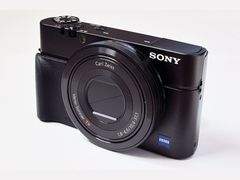
Sony RX100 IV (2015)
Same lens and body size with 4K/30p, a sharper finder and faster bursts, but fewer shots per charge (280) and a $999 launch price.
The one to get if the III's 70mm zoom, slow autofocus or missing mic jack bother you: a 24-200mm lens, phase-detection autofocus and a microphone input.
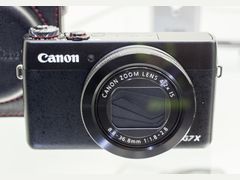
Canon's 1-inch rival with a touchscreen, $699 at launch, but no viewfinder and a battery rated at 210 shots against the III's 320.
The original has a longer but slower 28-100mm f/1.8-4.9 lens, a fixed screen and no viewfinder; Photo Review noted the earlier RX100 models cost less.
Every source behind this page
Read them yourself. How we pick and count them is in our methodology.
Show all 51 sources
Manuals and references 15
- apotelyt.com: Free Sony RX100 III PDF User Manual (509 pages)
- apotelyt.com: Sony RX100 III vs Sony RX100 IV Comparison Review
- discovercameras.com: Sony RX100 Lens Error: Causes, Fixes, and What to Do Next
- en.wikipedia.org: SD card
- en.wikipedia.org: Sony Cyber-shot DSC-RX100 series
- digitalcameraworld.com: The Sony RX100 III is a bargain buy - just beware this compact camera's compromises
- digitaltrends.com: Sony Cyber-shot RX100 III review
- expertreviews.co.uk: Sony RX100 III review: Still a modern classic
- gmcamera.com: Used Sony RX100 III Digital Point & Shoot Camera DSC-RX100M3
- ifixit.com: Sony Cyber-shot DSC-RX100 III Repair Help
- imaging-resource.com: Sony RX100 III Review
- itsjustlight.com: Sony RX100 III Review: The Ideal Travel Camera » ItsJustLight.com
- sonyalpharumors.com: Sony Cyber-shot DSC-RX100 III officially marked as “discontinued”
- tuesdaymorning.com: Certified Refurbished - Sony Cyber-shot DSC-RX100M3/B Digital Camera R
- uniquephoto.com: Used Sony DSC-RX100 Mark III
Editorial reviews 13
- The Phoblographer: Review: Sony RX100 Mark III: Review
- Digital Camera World: The Sony RX100 III is a bargain buy: The Sony RX100 III is a bargain buy - just beware this compact camera's compromises
- EOSHD: Sony RX100 III review: Sony RX100 III review
- Digital Trends: Sony Cyber-shot RX100 III review: Sony Cyber-shot RX100 III review
- Gizmodo: Sony RX100 III Review: Sony RX100 III Review: The Best Pocket Point-and
- Tom's Guide: Sony RX100 III Review: Sony RX100 III Review - Cyber-Shot Cameras
- Photography Blog: Sony Cyber-shot DSC-RX100 III Review: Sony Cyber-shot DSC-RX100 III Review
- Cameralabs: Sony Cyber-shot RX100 III review: Sony Cyber-shot RX100 III review
- Expert Reviews: Sony RX100 III review: Sony RX100 III review: Still a modern classic
- Imaging Resource: Sony RX100 III Review: Sony RX100 III Review: Lab Tests & Sample Images
- Photo Review: Sony Cyber-shot RX100 Mark III: Sony Cyber
- TechRadar: Sony Cyber-shot RX100 III review: Build and handling - Sony Cyber-shot RX100 III review - Page 3
- What Digital Camera: Sony Cyber-shot DSC-RX100 III field test: Sony Cyber-shot DSC-RX100 III field test
Independent blogs 10
- North to South: Sony RX100 III Review: Sony RX100 III Review
- SonyAlphaLab: My Sony RX100 III Camera Review: My Sony RX100 III Camera Review
- Decaf Journal: A Review Of The Sony Cyber-shot DSC-RX100 III: A Review Of The Sony Cyber-shot DSC
- Ron Martinsen's Photography Blog: Sony RX100 III, the best quality point and shoot: Ron Martinsen's Photography Blog: Sony RX100 III - The Best Quality Point and Shoot I’ve Ever Tested (Review Part II of II)
- Ron Martinsen's Photography Blog: Review of the Sony RX100 III: Ron Martinsen's Photography Blog: REVIEW: Sony RX100 III
- Inspired Eye: Street Photography with the Sony RX100 III: Street Photography with the Sony RX100 III By Jordan Barab
- Inspired Eye: A Street Photographer's Take on the New Sony RX100 III: A Street Photographer’s Take on the New Sony RX100 III
- Chris Keeney Photography: Sony Cyber-shot DSC-RX100 Mark III Camera: Sony Cyber-shot DSC-RX100 Mark III Camera
- Philip Greenspun's Weblog: Sony RX100 III: Sony RX100 III
- SHELLZINE: Sony RX100 in Japan, a compact travel camera review: Sony RX100 in Japan: A Compact Travel Camera Review with Image Samples
Video reviews 5
- DigitalRev TV: Sony RX100 III vs Fujifilm X30 Hands-on Review
- Adam Savage’s Tested: Tested In-Depth: Sony RX100 III Compact Camera
- Paul Takes Photos: I Bought A Sony RX100-III In 2024 And Here Are My First Impressions
- ShotFusion: Is the Sony RX100 III Still Worth It in 2026?
- Scott J. Waldron ~ Photo Video Audio: Sony RX100 III Hands-On and Opinion
Retailer customer reviews 4
- eBay UK customer reviews: Reviews: Sony-Cyber-Shot-DSC-RX100M3-20-1-MP-Digital-Camera-Black
- eBay UK customer reviews: Reviews: Sony-Cyber-Shot-DSC-RX100M3-20-1-MP-Digital-Camera-Black
- eBay UK customer reviews: Reviews: Sony-Cyber-Shot-DSC-RX100M3-20-1-MP-Digital-Camera-Black
- eBay UK customer reviews: Reviews: Sony-Cyber-Shot-DSC-RX100M3-20-1-MP-Digital-Camera-Black
Forums 4
- The Photography Forum: Sony RX100iii battery life: Sony RX100iii battery life
- Talk Photography: Repair advice for Sony RX100 III: Repair advice for Sony RX100 III
- Backpacking Light forum: Any RX100 owners experiencing unusual battery drain?: Any RX100 owners experiencing unusual battery drain?
- iFixit Answers: Lens replacement on the Rx100 III: Lens replacement on the Rx100 III
Keep reading
Digicams
Sony RX100 I to VII: what owners and reviewers say, which model to buy, lens errors to check, battery tips, and prices from $455 certified used to $1,498 new.
Digicams
Sony RX100 VII: what reviewers and owners say, the battery, heat and screen problems, best settings, and prices from $1,087 used to $1,498 new in October 2026.
Digicams
Canon PowerShot G7 X (2014): what reviewers and owners say, the faults to check, best settings, and used eBay asks of $629.99 to $794.99 in November 2026.
Digicams
Canon G7X alternatives you can buy: Sony ZV-1 II ($998), ZV-1F ($598) and RX100 VII ($1,498, on order). Eight picks by use, US prices checked October 2026.
Digicams
The best vintage digital camera for most people is a Canon ELPH like the SD1000, $199 at a shop that tests. 7 digicam picks, US prices and what to check.
Digicams
A digicam is a digital camera, but today the word means a 2000s compact point-and-shoot. Why they're back, US prices and how a digicam compares with an iPhone.