Sony RX10 IV: is the 24-600mm bridge camera still worth buying?
The short answer
The Sony RX10 IV is a 2017 bridge camera that pairs a 1-inch, 20.1 MP stacked sensor with a 24-600mm f/2.4-4 Zeiss zoom, and Imaging Resource called its 315-point phase-detection autofocus the most impressive it had seen in a fixed-lens camera.
It launched at $1,699 in October 2017, Sony stopped making it in March 2025 according to photoseek, and on November 2, 2026 used copies at MPB, B&H and Adorama ran from $959 to $1,729. Reviewers and owners mostly call it expensive but worth it if you need that reach and autofocus.
- Sensor
- 1-inch, 20.1 MP stacked CMOS
- Lens
- 24-600mm equiv., f/2.4-4
- Autofocus
- 315 phase-detect points, 24 fps
- Used, US dealers
- $959 to $1,729 (Nov 2026)
Built from 83 opinions from 15 pages and videos. Not yet tested by Camera Dojo. Updated .
The short version
The praise is consistent from 2017 launch reviews to owners writing in 2026. One lens covers 24mm to 600mm, photoseek's Tom Dempsey finds it sharp across the frame at f/4 up to 400mm, and owners say the autofocus catches birds in flight and fast-moving toddlers. It shoots 24 fps bursts and 4K video with microphone and headphone jacks, and at 1,095 g (2 lb 6.7 oz) it is far lighter than a DSLR with a long lens, though it is not pocketable.
The complaints are just as consistent: noise and slower focusing in dim light from the 1-inch sensor, menus Trusted Reviews calls chaotic, a UHS-I card slot that took 48 to 67 seconds to clear a full buffer in Imaging Resource's quick test at the launch event, no built-in ND filter, and a dust- and moisture-resistant body that photoseek warns is not rainproof. Because it is no longer made, clean used copies cost close to the launch price, and the RX10 V that replaced it in 2026 keeps the same lens and sensor for $2,298.00 new.
Good fit if
- You want one camera that covers 24mm to 600mm for travel, safaris or birding without changing lenses
- You photograph things that move, such as birds, sports or kids: phase-detection autofocus and 24 fps bursts are the reasons to pick the IV
- You want 4K video with microphone and headphone jacks, plus slow motion up to 960 fps
- You would rather carry 1,095 g than a DSLR and a long telephoto lens
Think twice if
- You shoot mostly indoors or at night: reviewers disagree on where noise becomes a problem, from about ISO 800 to above ISO 1600
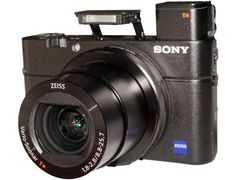
- You want a camera that fits in a pocket: look at a 1-inch compact such as the Sony RX100 VII
- You need a camera that can take rain: dust and moisture resistant is not waterproof
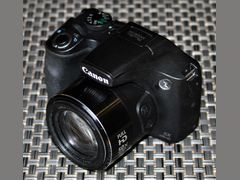
- You want a long zoom on a small budget: start with a budget bridge camera such as the Canon PowerShot SX530 HS
- You want a selfie screen: it tilts up and down but does not flip around
Sony RX10 family: from the 2013 original to the RX10 V
Every RX10 pairs a 1-inch sensor with a fixed zoom lens. The first two use a 24-200mm f/2.8 lens; the III, IV and V share the 24-600mm f/2.4-4, so the differences between those three are autofocus, speed, screen and battery.
| Model | Year | Sensor | Why look for it |
|---|---|---|---|
| RX10 | 2013 | 1-inch CMOS | On sale December 2013 with a constant f/2.8, 24-200mm (8.3x) lens. The cheapest way into the line: MPB listed used copies at $369 to $514 on November 2, 2026. |
| RX10 II | 2015 | 1-inch, 20.2 MP stacked CMOS with built-in DRAM | Same 24-200mm f/2.8 lens, plus 4K at 24 or 30 fps in clips of up to 29 minutes. MPB had three used at $584 to $704. |
| RX10 III | 2016 | 1-inch stacked CMOS | Moved to the 24-600mm f/2.4-4 lens the IV keeps, but focuses by contrast detection only and locks focus on the first frame of a 14 fps burst. Used at MPB: $754 to $1,349. |
| RX10 IV | 2017 | 1-inch, 20.1 MP stacked Exmor RS CMOS | This camera: adds 315 phase-detection autofocus points, 24 fps bursts with continuous autofocus and a touchscreen. Sony stopped making it in March 2025, per photoseek. |
| RX10 V | 2026 | Same 1-inch sensor as the IV, per Nick Lasure | Released August 2026 with faster autofocus, 50% longer battery life, better video, a sharper screen and no built-in flash, per photoseek. $2,298.00 new at B&H and Adorama on November 2, 2026. |
Sources: imaging-resource.com, imaging-resource.com, imaging-resource.com, imaging-resource.com, photoseek.com, photoseek.com, nicklasurephotography.com, mpb.com, mpb.com, mpb.com, bhphotovideo.com
Sony RX10 IV reviews: what owners and reviewers say, topic by topic
We sorted 83 opinions about the RX10 IV from 15 pages and videos on 12 websites and channels. Each row shows how many people raised a topic and how many of them were positive. Open a row to read short quotes, each linked to its source.
Owner voices are thin. Most opinions come from editorial reviews (Imaging Resource, Trusted Reviews), photoseek's long-term owner review and its reader comments, an EFTM reader review, Nick Lasure's 2026 retrospective and five YouTube reviews. One of those videos, Jared Polin's, is mainly about the RX10 V, so a few of its points describe the newer model. DPReview forums, Reddit and retailer reviews could not be read, so how often these cameras fail is unknown.
Ease of use62% positiveof 13
Autofocus earns the most praise on the page: owners say it nabs birds in flight and a fast-moving toddler, and Imaging Resource calls it the most impressive it has seen in a fixed-lens camera. The complaints are menus, which Trusted Reviews calls chaotic and overloaded, and a power zoom DPReview TV finds sluggish.
“it’s all still pretty chaotic and overloaded, and even with extensive recent experience shooting Sony cameras, I often struggled to locate items quickly”
Andy Westlake, Trusted Reviews: Sony Cyber-shot RX10 IV Review 2017-11Hands-on review
“I’m staggered by the AF system (nabs birds in flight effortlessly)”
Luke Peters, PhotoSeek: Review of Sony RX10 IV (reader comments) 2021-02Owner
“The autofocus is superfast and this alone makes it worth the money.”
Lukas Avgerinos, EFTM: Reader Review of Sony RX10 IV 2018-08Owner
“taking photos of my fast moving 2yr old grandson has never been so easy”
Keith Patrak, PhotoSeek: Review of Sony RX10 IV (reader comments) 2022-08Owner
Video82% positiveof 11
Video gets the warmest reviews: 4K, 120 fps Full HD, super slow motion and microphone and headphone jacks. The complaints are the missing built-in ND filter (photoseek) and how little control Sony gives over autofocus behavior (Trusted Reviews).
“RX10M4 lacks an electronic ND filter (Neutral Density)”
Tom Dempsey, PhotoSeek: Review of Sony RX10 IV / RX10M4 2026-07Owner
“the Sony RX10 IV really impresses with its video-capture capabilities”
Mike Tomkins, Imaging Resource: Sony RX10 IV Review 2018-04Hands-on review
“The RX10 IV can shoot full HD video at 120 fps which is a really nice feature to get in a camera”
Sagi (Tech Gear Talk), Tech Gear Talk: Sony RX10 IV Review 2018-03Hands-on review
“The main irritation, ironically, comes from the lack of control Sony provides over autofocus.”
Andy Westlake, Trusted Reviews: Sony Cyber-shot RX10 IV Review 2017-11Hands-on review
Build quality60% positiveof 10
Most reviewers like the deep grip and the dust- and moisture-resistant body, and Nick Lasure says his copy survived years of rain, snow and knocks. Imaging Resource says it lacks a rugged feel for the money, and photoseek warns not to let it get rained on after an RX10 III died that way.
“Despite Sony’s claim of “dust and moisture-resistant” body, DON’T EXPOSE YOUR RX10M4 or RX10M3 CAMERA TO RAIN”
Tom Dempsey, PhotoSeek: Review of Sony RX10 IV / RX10M4 2026-07Owner
“For a camera that is not technically weather sealed, it has held up to years of genuine abuse.”
Nick Lasure Photography: Sony RX10 IV, A Love Letter 2026-07Owner
“The grip is super deep so I can get my entire hand on the camera.”
Sagi (Tech Gear Talk), Tech Gear Talk: Sony RX10 IV Review 2018-03Hands-on review
“Not without its drawbacks (build quality, tripod mount location, slightly underwhelming ergonomics)”
Luke Peters, PhotoSeek: Review of Sony RX10 IV (reader comments) 2021-02Owner
Image look78% positiveof 9
Mostly praise: photoseek finds the lens sharp across the frame at f/4 from 24mm to 400mm, and owner Nick Lasure says some of his good-light images are his favorites from any camera he has used. The one complaint is Trusted Reviews finding JPEGs slightly flat, with a cool auto white balance, in dull light.
“it offers up slightly flat results, aided and abetted by an auto white-balance system that veers towards the cool side.”
Andy Westlake, Trusted Reviews: Sony Cyber-shot RX10 IV Review 2017-11Hands-on review
“In good light the RX10 produces images that have genuinely impressed me.”
Nick Lasure Photography: Sony RX10 IV, A Love Letter 2026-07Owner
“The Sony pic is super sharp with brightly lit faces, and the fire is not overexposed.”
Lukas Avgerinos, EFTM: Reader Review of Sony RX10 IV 2018-08Owner
“Sony RX10 IV and III are sharpest across the frame at all zoom settings when using the optimally crisp apertures of f/4 from 24-400mm”
Tom Dempsey, PhotoSeek: Review of Sony RX10 IV / RX10M4 2026-07Owner
Low light and flash25% positiveof 8
The most divided topic and the main weakness. Imaging Resource would use up to ISO 1600 in any conditions and one owner got a clean late-night shot without flash, but Nick Lasure says low light is where the relationship goes south, and video reviewers disagree on where noise bites, from about ISO 800 (Jared Polin, testing the RX10 V, which shares the sensor) to above ISO 1600 (Tech Through The Lens).
“Low light is where the relationship goes south.”
Nick Lasure Photography: Sony RX10 IV, A Love Letter 2026-07Owner
“you wouldn’t know it is late at night and I have not used flash or edited the shadow details.”
Lukas Avgerinos, EFTM: Reader Review of Sony RX10 IV 2018-08Owner
“the RX10 IV’s main disadvantage is that is seems to stop working sooner when light levels fall”
Andy Westlake, Trusted Reviews: Sony Cyber-shot RX10 IV Review 2017-11Hands-on review
“speaking personally I wouldn't hesitate to use anything up to ISO 1600 equivalent in any conditions”
Mike Tomkins, Imaging Resource: Sony RX10 IV Review 2018-04Hands-on review
Batteries and charging57% positiveof 7
Opinions split. Sony rates about 400 shots per charge, which photoseek calls respectable and Nick Lasure rarely runs through, but Imaging Resource still recommends a spare and two video reviewers found it drains quickly. One positive point counted here comes from a video about the RX10 V, which uses a bigger battery.
“Battery life is typically a pleasant non issue.”
Nick Lasure Photography: Sony RX10 IV, A Love Letter 2026-07Owner
“CIPA battery life is a respectable 400 shots per charge.”
Tom Dempsey, PhotoSeek: Review of Sony RX10 IV / RX10M4 2026-07Owner
“That's good battery life for a long-zoom, but we still recommend you pick up a spare battery for extended outings.”
Mike Tomkins and Jeremy Gray, Imaging Resource: Sony RX10 IV Review 2017-11Hands-on review
Screen and viewfinder50% positiveof 6
Trusted Reviews calls the viewfinder bright, clear and low-lag, and an owner likes holding the tilting screen overhead to frame shots. The gripes: the touchscreen only handles focus and playback zoom, and the screen tilts but does not flip around for selfies.
“The screen moves so you can hold the camera high in the air and still see the subject”
Lukas Avgerinos, EFTM: Reader Review of Sony RX10 IV 2018-08Owner
“It’s bright and clear, with accurate colour rendition and minimal lag.”
Andy Westlake, Trusted Reviews: Sony Cyber-shot RX10 IV Review 2017-11Hands-on review
“I really wish it was a full touch screen, Sony clearly invested in a touch screen, why not just make it work for everything?”
Sagi (Tech Gear Talk), Tech Gear Talk: Sony RX10 IV Review 2018-03Hands-on review
Price and value33% positiveof 6
Most voices call it expensive but worth it if you need the reach and the autofocus. photoseek recommends the IV over the cheaper III for action and wildlife, while one buyer balked at paying more than double the price of a used III.
“the faster-focusing RX10iv is strongly recommended, well worth the price premium.”
Tom Dempsey, PhotoSeek: Review of Sony RX10 IV (reader comments) 2021-01Owner
“The Sony DSC RX10M4 is a great camera, but then it needs to be to justify the price and size.”
Lukas Avgerinos, EFTM: Reader Review of Sony RX10 IV 2018-08Owner
“I understand the mk iv has the PD focusing, but it’s over double the price.”
Luke Peters, PhotoSeek: Review of Sony RX10 IV (reader comments) 2021-01
Memory cards and transfer40% positiveof 5
Sending photos to a phone over Wi-Fi works for quick sharing, according to an owner and Tech Gear Talk. photoseek prefers a card reader because Wi-Fi is slower and less reliable, and Imaging Resource calls card write speed the camera's Achilles heel, since the slot is UHS-I only.
“I don’t recommend transfer via Wi-Fi, which may be clumsier, slower, and less reliable.”
Tom Dempsey, PhotoSeek: Review of Sony RX10 IV / RX10M4 2026-07Owner
“flash card write speeds still look set to be an Achilles heel for the RX10 IV”
Mike Tomkins and Jeremy Gray, Imaging Resource: Sony RX10 IV Review 2017-11Hands-on review
“It connects wirelessly to both iOS and Android phones so you can share your pics to social media”
Lukas Avgerinos, EFTM: Reader Review of Sony RX10 IV 2018-08Owner
“Transfering files is pretty easy, you can just go to the menu and then hit send to smartphone”
Sagi (Tech Gear Talk), Tech Gear Talk: Sony RX10 IV Review 2018-03Hands-on review
Size and weight60% positiveof 5
Nobody calls it small, but the people who carry it compare it with a DSLR kit and find it far lighter, and Jefferson Graham calls the RX10 line his go-to travel camera. Nick Lasure points out it is not pocketable, and Tech Gear Talk says it is bigger than most vlogging cameras.
“the RX10M4 is very much lighter than those bulky and heavy DSLR stuff.”
Saffian Itam, PhotoSeek: Review of Sony RX10 IV (reader comments) 2019-10Owner
“the key point about the RX10 IV is that it’s so much smaller, meaning you’re much more likely to carry it around with you.”
Andy Westlake, Trusted Reviews: Sony Cyber-shot RX10 IV Review 2017-11Hands-on review
“The RX10 certainly isn't pocketable, which immediately disqualifies it from one version of the travel camera dream.”
Nick Lasure Photography: Sony RX10 IV, A Love Letter 2026-07Owner
“This isn’t a super light setup because the RX10 IV is bigger than most of your vlogging cameras”
Sagi (Tech Gear Talk), Tech Gear Talk: Sony RX10 IV Review 2018-03Hands-on review
Reliability today33% positiveof 3
Thin evidence. Nick Lasure describes random freezes that a restart fixes, and a commenter under photoseek's review says Sony's service center could not reproduce the freezing on theirs. One video reviewer recorded 4K for long stretches without overheating.
“Occasionally and with no obvious pattern, the camera simply freezes mid session.”
Nick Lasure Photography: Sony RX10 IV, A Love Letter 2026-07Owner
“We have had problem with camera freezing up not shooting, sent it in they couldn’t duplicate problem”
Kimberly, PhotoSeek: Review of Sony RX10 IV (reader comments) 2019-07
PositiveMixedNegative
Sony RX10 IV vs RX10 III: which one to buy used
| RX10 III | 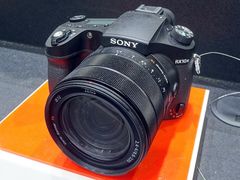 RX10 IV | |
|---|---|---|
| On sale | May 2016 | October 2017 |
| Lens | 24-600mm equiv., f/2.4-4 | 24-600mm equiv., f/2.4-4 |
| Autofocus | Contrast detection only | 315 phase-detection points plus contrast detection |
| Fastest burst | 14 fps, focus locked at the first frame | 24 fps with continuous autofocus |
| Touchscreen | No | Yes, for touch focus and touch pad AF |
| Battery (CIPA, screen / viewfinder) | 420 / 370 shots | 400 / 370 shots |
| Launch price | About $200 less than the IV, per Imaging Resource | $1,699 |
| Used at MPB, Nov 2, 2026 | $754 to $1,349 | $959 to $1,579 |
Pick the RX10 III if
- You shoot landscapes, travel scenes and other subjects that hold still, where contrast autofocus is quick enough
- You want the same 24-600mm lens for a few hundred dollars less
- You rarely shoot bursts: the III's focus lock on the first frame only matters for moving subjects
Pick the RX10 IV if
- You shoot birds, sports, kids or anything else that moves: photoseek calls the faster-focusing IV well worth the premium for action and wildlife
- You want to tap the screen to focus, or drag the focus point with your thumb while using the viewfinder
- You want long bursts: Sony rates the JPEG buffer at 249 frames, more than 10 seconds at 24 fps
Sources: imaging-resource.com, imaging-resource.com, photographyblog.com, photoseek.com, mpb.com, mpb.com
Best settings for the Sony RX10 IV
These come from photoseek's long-term owner review, Imaging Resource, Photography Blog and Sony's help guide. Most of them fix the things owners trip over: hunting at the long end, settings that get bumped in a bag, and video settings that leak into stills.
- 1
Set the focus limiter to Full
A switch on the lens barrel can limit focus to subjects beyond about 3 m (10 ft) once you zoom past 150mm equivalent, according to Imaging Resource. Leave it on Full for anything close, and use the limit setting only to stop hunting on distant action.
- 2
Turn off Pre-AF
photoseek turns Pre-AF off for more reliable half-press focus lock and quicker autofocus at 400mm to 600mm.
- 3
Try focus mode A, or a fixed point for fast action
Mode A, new on the IV, picks single or continuous autofocus based on how the subject moves. For fast action, Imaging Resource found a fixed focus point more reliable than tracking, which can jump to the wrong object.
- 4
Shoot at f/4 to f/5.6
Photography Blog found f/4 and f/5.6 the sharpest apertures, with diffraction softening detail from f/8. Handheld at 600mm, auto ISO chose 1/250 s and its shots came out sharp.
- 5
Keep ISO at 1600 or below
Imaging Resource would use anything up to ISO 1600 in any conditions, while Tech Through The Lens sees visible noise above that. In dim light, expect autofocus on moving subjects to give up sooner too, as Trusted Reviews found.
- 6
Guard the dials
The mode dial and exposure compensation dial get bumped in a bag. photoseek tapes the compensation dial at zero, turns on the Mode Dial Guide and disables Release w/o Card so the camera can't shoot without a card.
- 7
Reset Picture Profile after video
A Picture Profile set for video, such as S-Log3, stays on and also changes your JPEG and RAW stills, according to photoseek. Set it back to Off when you switch to photos.
- 8
Update to firmware 2.00 or later
photoseek says version 2.00 adds real-time animal eye AF and improves stability. Check the version in the setup menu before you start relying on eye AF for pets or wildlife.
- 9
For an older digicam look, use Picture Effect
Imaging Resource found the default color realistic, not punchy. For something closer to the Y2K digicam look, try the Toy Camera or Retro Photo effects (JPEG only), or Write Date, which stamps the date into JPEGs for good.
Sources: photoseek.com, imaging-resource.com, photographyblog.com, trustedreviews.com, helpguide.sony.net, helpguide.sony.net
RX10 IV battery, charging and memory cards
The RX10 IV runs on Sony's NP-FW50, the same pack as the RX10 III and earlier RX10s, so spares carry over. Sony rates it at about 400 shots per charge using the screen and 370 using the viewfinder, or about 75 minutes of actual movie shooting. photoseek calls that respectable, but Imaging Resource still recommends a spare for long days out.
It charges inside the camera over micro USB, in about 150 minutes with the supplied AC adaptor; the orange charge lamp goes off when it's full. You can also run it from a wall adaptor or a power bank, but only with a battery inserted, and it won't charge while it's switched on. In cold weather, keep the spare warm in a pocket.
Sources disagree on third-party batteries. Sony's help guide says to use only genuine Sony packs, while photoseek recommends Wasabi Power 1300mAh packs and B&H sells Watson ones.
The single slot takes SD, SDHC and SDXC cards up to UHS-I, plus Memory Stick PRO Duo. UHS-II cards work but fall back to UHS-I speed, so they are wasted money here. Sony calls for a U3 card for 4K at 100 Mbps, and a 64 GB card holds about 5,500 Fine JPEGs, 1,900 RAW+JPEG pairs or about 1 hour 15 minutes of 4K at 100 Mbps.
Format cards in the camera, not on a computer, and move files with a card reader: photoseek finds Wi-Fi transfer clumsier, slower and less reliable.
| Item | Price |
|---|---|
| Sony NP-FW50 battery | $69.95 |
| Watson NP-FW50 battery (1100 mAh) | $25.95 |
| Sony BC-TRW charger | $74.95 |
| SmallRig dual-bay NP-FW50 USB charger | $10.99 |
| SanDisk 64GB Extreme PRO UHS-I SDXC (V30/U3) | $36.99 |
| Sabrent USB SD card reader (UHS-I) | $9.99 |
If a computer or TV offers to format an SDXC card it can't read, say no: Sony says that erases everything on it.
Sources: photographyblog.com, imaging-resource.com, helpguide.sony.net, helpguide.sony.net, helpguide.sony.net, helpguide.sony.net, helpguide.sony.net, helpguide.sony.net, helpguide.sony.net, helpguide.sony.net, photoseek.com, bhphotovideo.com, bhphotovideo.com, bhphotovideo.com, bhphotovideo.com
Is the Sony RX10 IV good for video?
Yes, and reviewers rate video among its strengths. It records 4K at 24, 25 or 30 fps and Full HD at up to 120 fps; 60p is Full HD only, so there is no 4K at 60 fps. A 3.5mm microphone jack and a headphone jack let you record and monitor external audio, and the Picture Profiles include S-Log2 and S-Log3 for grading.
The HFR mode records super slow motion at 240, 480 or 960 fps, or 250, 500 or 1000 fps on PAL settings, which is why reviews quote both 960 and 1000. It needs plenty of light: Sony says ISO climbs and noise rises when light is short, and photoseek notes a minimum of ISO 800 in end-trigger mode, which saves the 4 seconds before you press record.
Two limits matter for long takes. A single clip stops at about 29 minutes at default settings and 77 F, and Sony warns that heat builds up until the camera shuts itself off. There is no built-in ND filter either, so for video in bright light photoseek suggests a glass ND filter on the 72mm thread.
Trusted Reviews' main irritation is how little control Sony gives over autofocus behavior in video. Imaging Resource, apart from frustrations with the high frame rate mode, came away impressed.
If recording stops with 'Internal temp. high. Allow it to cool.', switch off, get it out of the sun and wait before the next take.
Sources: imaging-resource.com, imaging-resource.com, helpguide.sony.net, helpguide.sony.net, helpguide.sony.net, helpguide.sony.net, photoseek.com, techgeartalk.com, trustedreviews.com
What to check before buying a used RX10 IV
Most of these come from Video One Repair's list of common RX10 IV repairs and photoseek's buying advice. With used prices near the launch price, ask the seller to show each one, or buy where you get a warranty.
- 1
Make sure it's a US-market body
photoseek says to avoid gray-market and direct-import copies. A PAL-native body used in the US shows a 'running on NTSC' message at every power-on that you have to dismiss.
- 2
Power it on and run the zoom end to end
Video One Repair lists 'Camera error. Turn power off then on.', no power and a black LCD among common faults. The lens should extend and zoom through the full range without an error.
- 3
Check the screen and viewfinder
The camera should switch between the LCD and the viewfinder automatically when you raise it to your eye. Look for cracks in the viewfinder glass and the LCD.
- 4
Look for dust and water
Check the lens for dust spots and the body for any sign of water exposure. photoseek's RX10 III died after one rainstorm, so treat a wet history as a deal breaker.
- 5
Test the card slot
Insert a card and make sure it locks in and reads. Bent card-reader pins are a known repair.
- 6
Check the focus limiter and firmware
A limiter left on can make close subjects at long zoom look like a focus fault, so slide it to Full before judging. Version 2.00 or later adds animal eye AF.
- 7
Buy with a warranty
On November 2, 2026, B&H's used listings carried a 90-day warranty, Adorama's a free 180-day warranty and MPB's 6 months.
Sources: videoonerepair.com, photoseek.com, imaging-resource.com, bhphotovideo.com, adorama.com, mpb.com
Sony RX10 IV problems and what fixing them costs
These come from owner reports, a US repair shop's list of common RX10 IV repairs and Sony's own help guide, so they show what can go wrong, not how often.
Freezes, 'camera error' messages or a body that won't power up
Raised in 2 opinions
- How you notice
- Nick Lasure says his camera occasionally freezes mid-session with no obvious pattern, and a commenter under photoseek's RX10 IV review says their camera kept freezing in a way the service center could not reproduce. Video One Repair, a US shop, lists 'Camera error. Turn power off then on.', no power and a black LCD among common RX10 IV repairs. In Sony's error codes, C:32 means trouble with the hardware (turn the power off and on again) and E:94 a malfunction when writing or deleting data, which needs repair.
- Fix
- Sony's steps: remove the battery, wait about one minute, put it back and switch on, then initialize the settings. Nick Lasure says popping the battery out and reinserting it resets his camera. If the code keeps coming back, it needs an authorized Sony service facility or a repair shop.
- Typical cost
- No published US flat rate. Video One Repair gives a free estimate and a 6-month guarantee on its repairs.
Sources: nicklasurephotography.com, photoseek.com, videoonerepair.com, helpguide.sony.net, helpguide.sony.net
Rain or water damage despite the weather sealing
Raised in 1 opinion
- How you notice
- Sony calls the body dust and moisture resistant, and its help guide warns that water, sand and dust left in the camera may cause a malfunction. photoseek's Tom Dempsey says one rainstorm shorted the focus and LCD of his RX10 III after 16 months, outside Sony's 1-year warranty, and he warns RX10 IV owners in capital letters not to expose it to rain.
- Fix
- Keep it covered in rain and treat any used body with signs of water exposure as a risk. When you move it from cold to warm air, Sony says to seal it in a plastic bag and wait about an hour so moisture doesn't condense inside.
- Typical cost
- photoseek faced an estimated $656 repair for the rain-damaged RX10 III, with the shop's 90-day guarantee voided by liquid damage, and recycled the camera instead.
Sources: photoseek.com, photoseek.com, helpguide.sony.net, photographyblog.com
Slow buffer clearing on a UHS-I card slot
Raised in 1 opinion
- How you notice
- After a long burst the camera stays busy while it writes. In a quick test at the launch event, Imaging Resource's founder timed about 48 seconds to clear a full buffer of Fine JPEGs and 67 seconds for RAW+JPEG, and the site called card write speed the camera's Achilles heel. UHS-II cards work but drop to UHS-I speed.
- Fix
- Use a fast V30/U3 UHS-I card (Sony calls for U3 for 4K at 100 Mbps), shoot shorter bursts, and skip expensive UHS-II cards.
- Typical cost
- A SanDisk 64GB Extreme PRO UHS-I card was $36.99 at B&H on November 2, 2026.
Sources: imaging-resource.com, helpguide.sony.net, bhphotovideo.com
Recording stops because the camera gets hot
- How you notice
- Sony's help guide says continuous high-quality movie recording heats the camera, especially the sensor, until it turns itself off and shows 'Internal temp. high. Allow it to cool.' Clips are limited to about 29 minutes at default settings and 77 F.
- Fix
- Switch off and let it cool, keep it out of direct sun, and turn it off between takes. One video reviewer, Maarten Heilbron, recorded 4K at length without overheating.
- Typical cost
- None: it is a design limit, not a fault.
Sources: helpguide.sony.net, helpguide.sony.net, youtube.com
Card won't stay in the slot, or 'memory card error'
- How you notice
- Video One Repair lists a card reader that stops working, or a card that won't lock in or stay in the slot, sometimes from bent pins. Sony says a card formatted on a computer isn't guaranteed to work, and an incompatible or damaged card brings up 'Memory card error'.
- Fix
- Format the card in the camera, reinsert it and try another card. If the slot won't hold any card, it needs a repair.
- Typical cost
- Slot repairs are quoted on request; Video One Repair's estimate is free.
Sources: videoonerepair.com, helpguide.sony.net, helpguide.sony.net
Close subjects won't focus at long zoom because the limiter is on
- How you notice
- A switch at the base of the lens barrel can limit focus to subjects beyond about 3 m (10 ft). Imaging Resource says Sony's manual applies the limit only once you zoom past 150mm equivalent, and photoseek notes a 'LIMIT' message when zoomed between 150mm and 600mm. Left on, a close subject at long zoom can be hard to focus on.
- Fix
- Slide it back to Full. photoseek keeps it at Full and uses the limit setting only for distant action.
- Typical cost
- None, but check it before you decide a used camera has a focus fault.
Sources: imaging-resource.com, photoseek.com
Photos taken with a Sony RX10 IV
Photos taken with a Sony RX10 IV by Wikimedia Commons contributors (the camera model comes from each file's camera data), from zoo animals in San Francisco to the Olympic rings on the Eiffel Tower.

Guanaco at the San Francisco Zoo, 2017Photo: Sanjay Acharya, CC BY-SA 4.0 
Magellanic penguin at the San Francisco Zoo, 2017Photo: Sanjay Acharya, CC BY-SA 4.0 
Olympic rings on the Eiffel Tower, Paris, 2024Photo: Ibex73, CC BY 4.0 
Stained glass in the Basilica of Saint-Donatien and Saint-Rogatien, Nantes, France, 2023Photo: François de Dijon, CC BY-SA 4.0 
Rue Henri-IV, Nantes, France, 2021Photo: François de Dijon, CC BY-SA 4.0 
Bergviken, 2018Photo: A.Torkin, CC BY-SA 4.0
What a used Sony RX10 IV costs today
Sony stopped making the RX10 IV in March 2025, according to photoseek, and B&H lists it as no longer available new, so used is the way to buy one. On November 2, 2026, used copies ran from $959 at MPB to $1,729.00 for a Mint copy at Adorama, which puts a clean one close to the $1,699 it cost in 2017.
MPB
Used, all grades (203 listed), Body; most listings include an NP-FW50 battery and a charger or USB cable; 6-month warranty
$959 to $1,579
See listingMPB
Used, Like new, Body with original packaging; 6-month warranty
$1,559 to $1,579
See listingB&H Photo
Used, condition 7, Body, B&H Used Department
$1,049.95
See listingB&H Photo
Used, condition 8 (well used), Body; 90-day warranty; in stock
$1,399.95
See listingB&H Photo
Used, condition 8+, Body, B&H Used Department
$1,474.95
See listingB&H Photo
Used, condition 9, Body; 90-day warranty
$1,649.95
See listingAdorama
Used, Heavy Use, Body
$1,149.00
See listingAdorama
Used, Average, Body
$1,569.00
See listingAdorama
Used, Mint, Body; free 180-day warranty
$1,729.00
See listingMPB
Used (28 listed), Sony RX10 III (2016), same 24-600mm lens, for comparison
$754 to $1,349
See listingB&H Photo
New, Sony RX10 V (2026), the replacement, body only
$2,298.00
See listing
Prices checked on November 2, 2026. They move every week, so treat them as a range, not a quote. B&H, Adorama and MPB block automated checks, so these prices were read in a browser and could not be re-checked by script. eBay and KEH could not be read, so they are left out. The RX10 III and RX10 V rows are there for comparison.
Video reviews worth your time

DPReview TV: Sony RX10 IV Review
The Sony RX10 IV is an exceptionally versatile bridge camera with class-leading autofocus, excellent image quality, and strong video features, though its high price, slow zoom motor, and limited battery life hold it back.

Sony RX10 IV Camera: Ultimate Review
The Sony RX10 IV is an outstanding all-in-one bridge camera offering extraordinary zoom range, rapid autofocus, and powerful video features.

Sony RX 10 IV Review | Watch Before You Buy
The Sony RX10 IV is a highly versatile all-in-one camera featuring an expansive zoom range, fast burst shooting, and excellent video options, though its low-light capability and battery life are lacking.

Sony RX10 IV detailed and extensive hands on review (4K)
The Sony RX10 IV is a highly versatile bridge camera with excellent zoom and video capabilities, though it is hindered by a complex menu system.

SONY RX10 V REAL WORLD pREVIEW: This Camera Makes NO SENSE…or does it??? (vs RX10 IV)
The Sony RX10 V offers impressive 24-600mm focal range versatility and modern AI autofocus upgrades, but its high price tag and 1-inch sensor limitations make it best suited for travel enthusiasts rather than full-frame shooters.
Questions people ask about the RX10 IV
Is the Sony RX10 IV still worth it in 2026?
Owners and reviewers still say yes if you need one camera for travel, wildlife or sports: the 24-600mm lens, 24 fps bursts and phase-detection autofocus are the reasons. The catch is price. Used copies ran $959 to $1,729 on November 2, 2026, close to the $1,699 launch price, and the RX10 V that replaced it keeps the same lens and sensor for $2,298.00 new.
Sources: imaging-resource.com, nicklasurephotography.com, mpb.com, adorama.com, bhphotovideo.com
Is the Sony RX10 IV discontinued?
Yes. photoseek reports that Sony discontinued it in March 2025, and B&H lists it as no longer available new. Its replacement, the RX10 V, was released in August 2026, so buying an RX10 IV now means buying used.
Sources: photoseek.com, bhphotovideo.com
Is Sony Cyber-shot still sold?
Yes, at least some are. On November 2, 2026, Adorama listed the Cyber-shot DSC-RX100 VII new at $1,498.00. The RX10 IV is not sold new: B&H lists it as no longer available new, and its replacement, the RX10 V, was $2,298.00 new at B&H and Adorama. Our [vintage Cyber-shot guide](/cameras/sony-cyber-shot/) covers the classic point-and-shoots you will find used.
Sources: bhphotovideo.com, adorama.com
What is the difference between Sony Clear Image Zoom and digital zoom?
Both enlarge the image past the 600mm optical limit, but Sony describes Clear Image Zoom as using an image process with less deterioration than plain digital zoom. On the RX10 IV it reaches about 50x at full 20 MP size, twice the 25x optical zoom, which works out to 1200mm equivalent, the digital figure Nick Lasure gives. Both are off by default and don't work when you shoot RAW or RAW+JPEG, and Nick Lasure finds the extra reach not worth it.
Sources: helpguide.sony.net, photographyblog.com, nicklasurephotography.com
Is the RX10 IV worth the extra money over the RX10 III?
For moving subjects, yes. The III focuses by contrast detection only and locks focus on the first frame of its 14 fps bursts, while the IV adds 315 phase-detection points and 24 fps with continuous autofocus. photoseek's Tom Dempsey calls the IV well worth the premium for action and wildlife. For landscapes and travel, a used III at $754 to $1,349 (MPB, November 2, 2026) has the same lens.
Sources: imaging-resource.com, photoseek.com, mpb.com
Should I buy the Sony RX10 V or the RX10 IV?
The RX10 V keeps the IV's lens and sensor, according to Nick Lasure, and adds faster autofocus, 50% longer battery life, better video and a sharper screen, per photoseek, plus a bigger, sharper viewfinder; it drops the built-in flash. It costs $2,298.00 new against $959 to $1,729 for a used IV. Adorama lists an NP-FZ100 battery for the V, so NP-FW50 spares from an IV won't carry over.
Sources: photoseek.com, nicklasurephotography.com, bhphotovideo.com, adorama.com
How long does the Sony RX10 IV battery last?
Sony rates it at about 400 shots per charge using the screen and 370 using the viewfinder, or about 75 minutes of actual movie shooting. photoseek calls that respectable and Nick Lasure rarely runs out on a full day, but Imaging Resource recommends a spare for long outings. A genuine Sony NP-FW50 was $69.95 at B&H on November 2, 2026.
Sources: photographyblog.com, helpguide.sony.net, photoseek.com, nicklasurephotography.com, imaging-resource.com, bhphotovideo.com
Why won't my Sony RX10 IV power up?
Start with Sony's reset: remove the battery, wait about one minute, put it back and switch on, then initialize the settings. Sony's codes: C:32 is trouble with the hardware, so try switching off and on again, and E:94 is a write or delete malfunction that needs repair. If the error keeps returning, Sony says to contact your dealer or an authorized service facility. US repair shops such as Video One Repair quote after a free estimate.
Sources: helpguide.sony.net, helpguide.sony.net, videoonerepair.com
What people compare it with
Sony RX10 III (2016)
The same 24-600mm f/2.4-4 lens for less money used ($754 to $1,349 at MPB in November 2026), but contrast-only autofocus, 14 fps bursts with focus locked on the first frame, and no touchscreen.
Sony RX10 V (2026)
The replacement: same lens and sensor with faster autofocus, 50% longer battery life and a sharper screen and viewfinder, at $2,298.00 new. It takes a different battery and has no built-in flash.
Panasonic Lumix FZ1000 II
Panasonic's 1-inch bridge camera, with a shorter 16x zoom (25-400mm f/2.8-4) and a fully articulating screen. photoseek's Tom Dempsey calls the FZ1000 line much cheaper and crisp but prefers the RX10 IV for publishing; MPB had used FZ1000 IIs at $989 to $1,269.
A pocketable 1-inch camera with an 8x zoom, for when the RX10 IV's 1,095 g is too much to carry every day. Adorama listed it at $1,498.00 new.
Every source behind this page
Read them yourself. How we pick and count them is in our methodology.
Show all 40 sources
Manuals and references 25
- helpguide.sony.net: DSC-RX10M4 | Help Guide
- helpguide.sony.net: DSC-RX10M4 | Help Guide
- helpguide.sony.net: DSC-RX10M4 | Help Guide
- helpguide.sony.net: DSC-RX10M4 | Help Guide
- helpguide.sony.net: DSC-RX10M4 | Help Guide | Self
- helpguide.sony.net: DSC-RX10M4 | Help Guide | Shooting super-slow
- helpguide.sony.net: DSC-RX10M4 | Help Guide | Charging the battery pack while it is inserted in the camera
- helpguide.sony.net: DSC-RX10M4 | Help Guide | Battery life and number of recordable images
- helpguide.sony.net: DSC-RX10M4 | Help Guide | Supplying power from a wall outlet (wall socket)
- helpguide.sony.net: DSC-RX10M4 | Help Guide
- helpguide.sony.net: DSC-RX10M4 | Help Guide | The zoom features available with this product
- helpguide.sony.net: DSC-RX10M4 | Help Guide
- helpguide.sony.net: DSC-RX10M4 | Help Guide
- helpguide.sony.net: DSC-RX10M4 | Help Guide
- helpguide.sony.net: DSC-RX10M4 | Help Guide
- helpguide.sony.net: DSC-RX10M4 | Help Guide
- helpguide.sony.net: DSC-RX10M4 | Help Guide
- adorama.com: adorama.com
- adorama.com: adorama.com
- imaging-resource.com: Sony RX10 II Review: Lab Tests & Sample Images
- imaging-resource.com: Sony RX10 III Review: Lab Tests & Sample Images
- imaging-resource.com: Sony RX10 IV Review: Lab Tests & Sample Images
- imaging-resource.com: Sony RX10 Review: Lab Tests & Sample Images
- photographyblog.com: Sony Cyber-shot RX10 IV Review
- videoonerepair.com: Sony RX10 IV Repair | Sony DSC
Independent blogs 8
- PhotoSeek: Review of Sony RX10 IV / RX10M4: Review: Sony RX10 IV / RX10M4 upgraded the ultimate travel camera 2018 - 2025
- PhotoSeek: Review of Sony RX10 IV: Review: Sony RX10 IV / RX10M4 upgraded the ultimate travel camera 2018 - 2025
- PhotoSeek: Review of Sony RX10 IV: Review: Sony RX10 IV / RX10M4 upgraded the ultimate ...
- PhotoSeek: Review of Sony RX10 IV: Review: Sony RX10 IV / RX10M4 upgraded the ultimate travel camera 2018 - 2025
- EFTM: Reader Review of Sony RX10 IV: Reader Review: Sony RX10 IV
- Nick Lasure Photography: Sony RX10 IV, A Love Letter: Sony RX10IV: Review & Retrospective
- Tech Gear Talk: Sony RX10 IV Review: Sony RX10 IV Review: The Best All-in
- Jefferson Graham: Shots on the new Sony RX10IV: Shots on the new Sony RX10IV
Video reviews 5
- DPReview TV: DPReview TV: Sony RX10 IV Review
- Tech Gear Talk: Sony RX10 IV Camera: Ultimate Review
- Tech Through The Lens: Sony RX 10 IV Review | Watch Before You Buy
- Maarten Heilbron: Sony RX10 IV detailed and extensive hands on review (4K)
- Jared Polin: SONY RX10 V REAL WORLD pREVIEW: This Camera Makes NO SENSE…or does it??? (vs RX10 IV)
Editorial reviews 2
Keep reading
Digicams
Sony RX100 VII: what reviewers and owners say, the battery, heat and screen problems, best settings, and prices from $1,087 used to $1,498 new in October 2026.
Digicams
Sony RX100 III: what reviewers and owners say, the lens and battery problems to check, best settings, and used prices from $399 at US dealers in October 2026.
Digicams
Canon PowerShot SX530 HS: what owners and reviewers say about its 50x zoom, low-light limits, E42 and battery problems, best settings and used prices.
Digicams
Vintage Sony Cyber-shot CCD cameras: which models to look for, used prices of $59.99 to $265 (Oct 2026), batteries, Memory Stick cards and common faults.
Digicams
Canon G7X alternatives you can buy: Sony ZV-1 II ($998), ZV-1F ($598) and RX100 VII ($1,498, on order). Eight picks by use, US prices checked October 2026.
Digicams
A digicam is a digital camera, but today the word means a 2000s compact point-and-shoot. Why they're back, US prices and how a digicam compares with an iPhone.